Lanzhou to Xiahe
It was a day of contrasts when we left Lanzhou and drove south into the Gannan Tibetan Autonomous Prefecture en route to Xiahe. China is a vast country with many different regional cultures, architectural styles and landscapes. We’d spent a few days in the large cities of Beijing and Lanzhou, both with their own unique mixes of traditional and hyper-modern architecture and now we were heading into the Gannan Tibetan Autonomous Prefecture, with another unique cultural identity and a vastly different landscape.
By the time we reached the town of Xiahe we had risen to an elevation of nearly 10,000 feet and the air was noticeably thinner. Xiahe has a population of just less than 100,000 (Lanzhou had been nearly 3.5 million, for comparison) and is home to the Labrang Monastery, one of the largest Tibetan Buddhist monasteries outside of the Tibet Autonomous Region. The city is long and narrow, following the Danxia River valley with the monastery on the west end of town.
Xiahe had a much different feel from the larger city of Lanzhou, just a few hours away, and with the mountains and elevation gain, it truly was starting to feel like a different world.
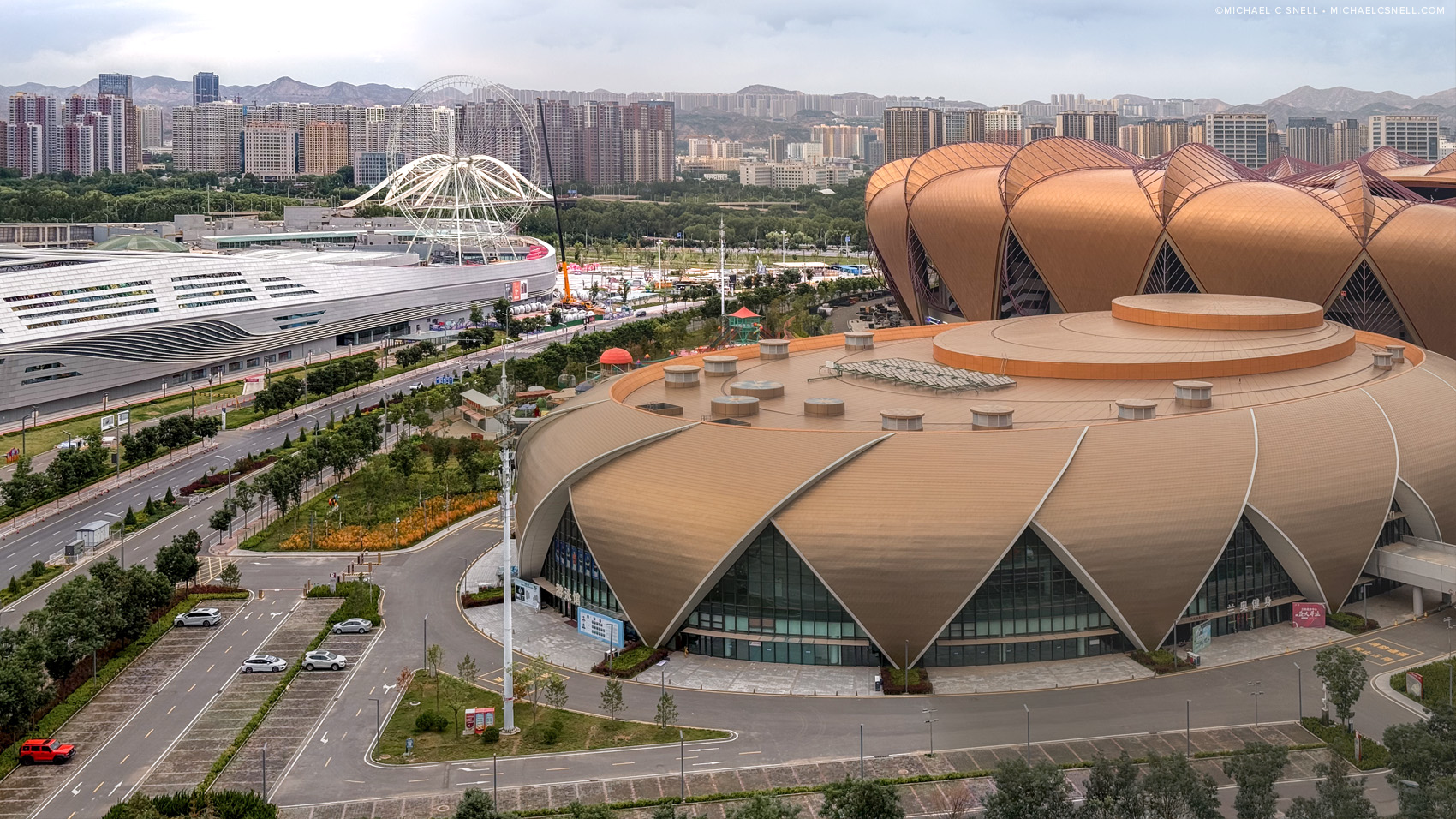
The view from my room at the Ruyi Huaxi Hotel overlooking the Lanzhou Olympic Sports Center seemed like a view of the future. (click the image to enlarge)
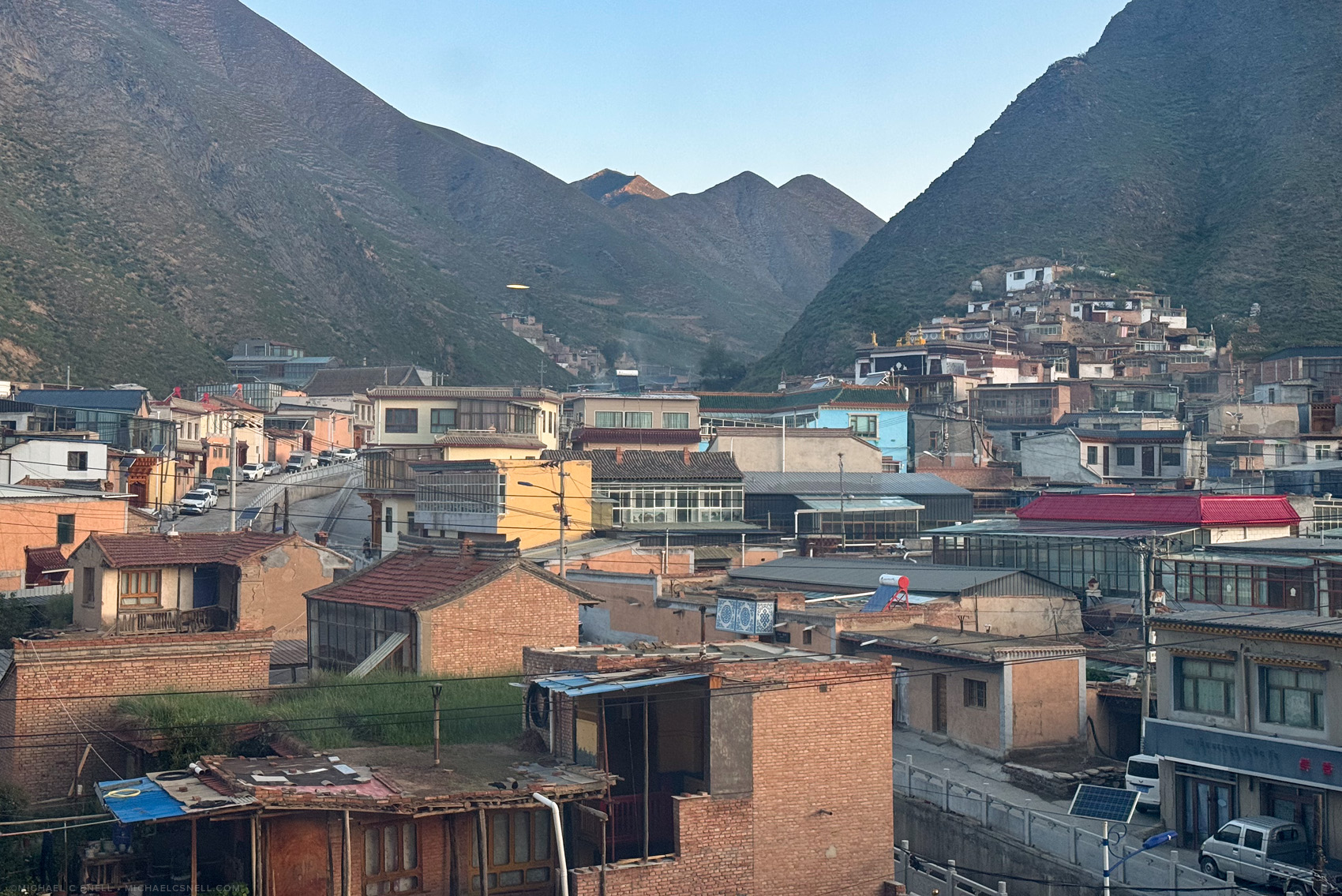
Conversely, the view from my room in Xiahe at the Ruyi Huaxi Hotel was like looking into the past. Also, I now found myself in the mountains that were far in the distance of my view in Lanzhou. (click the image to enlarge)
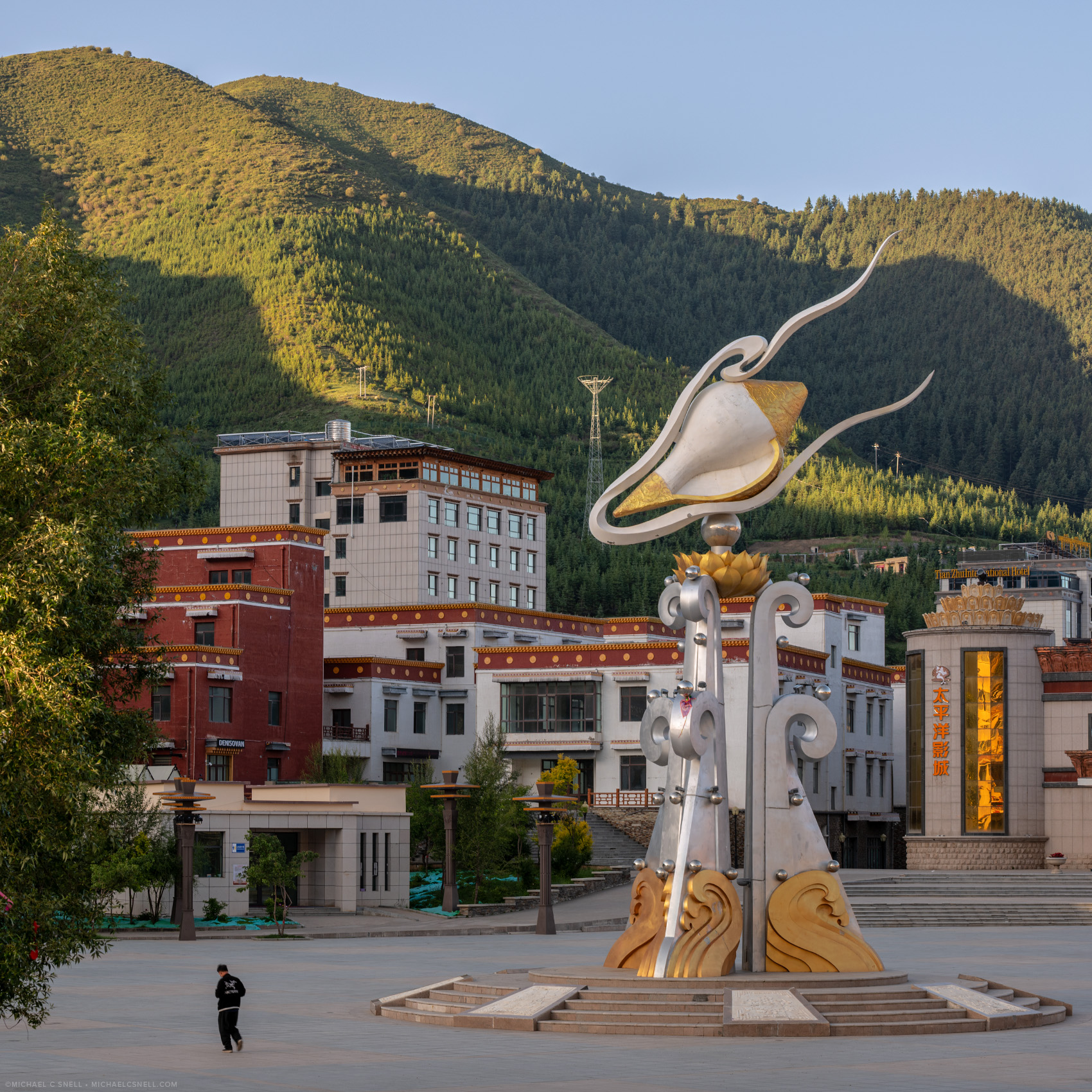
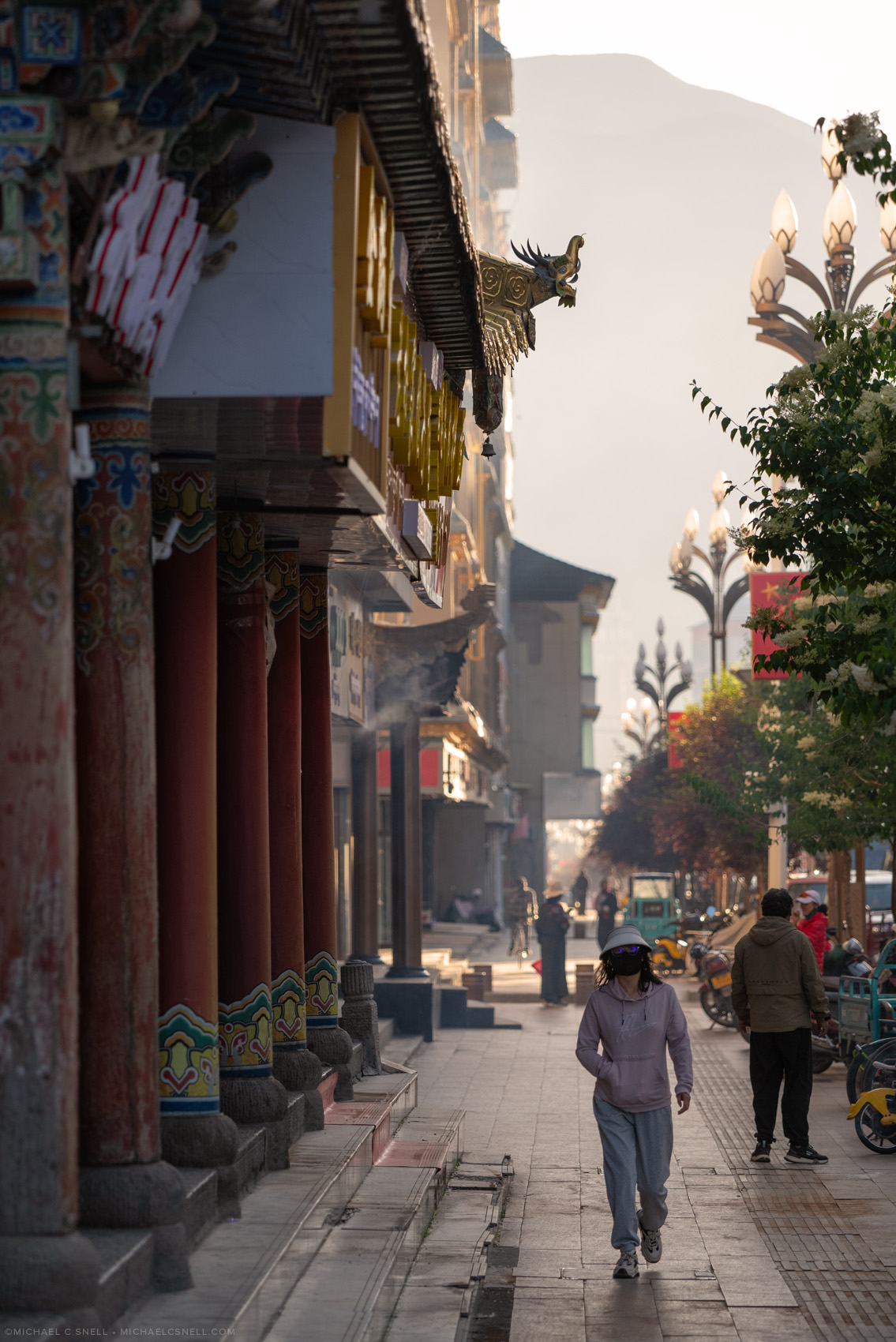
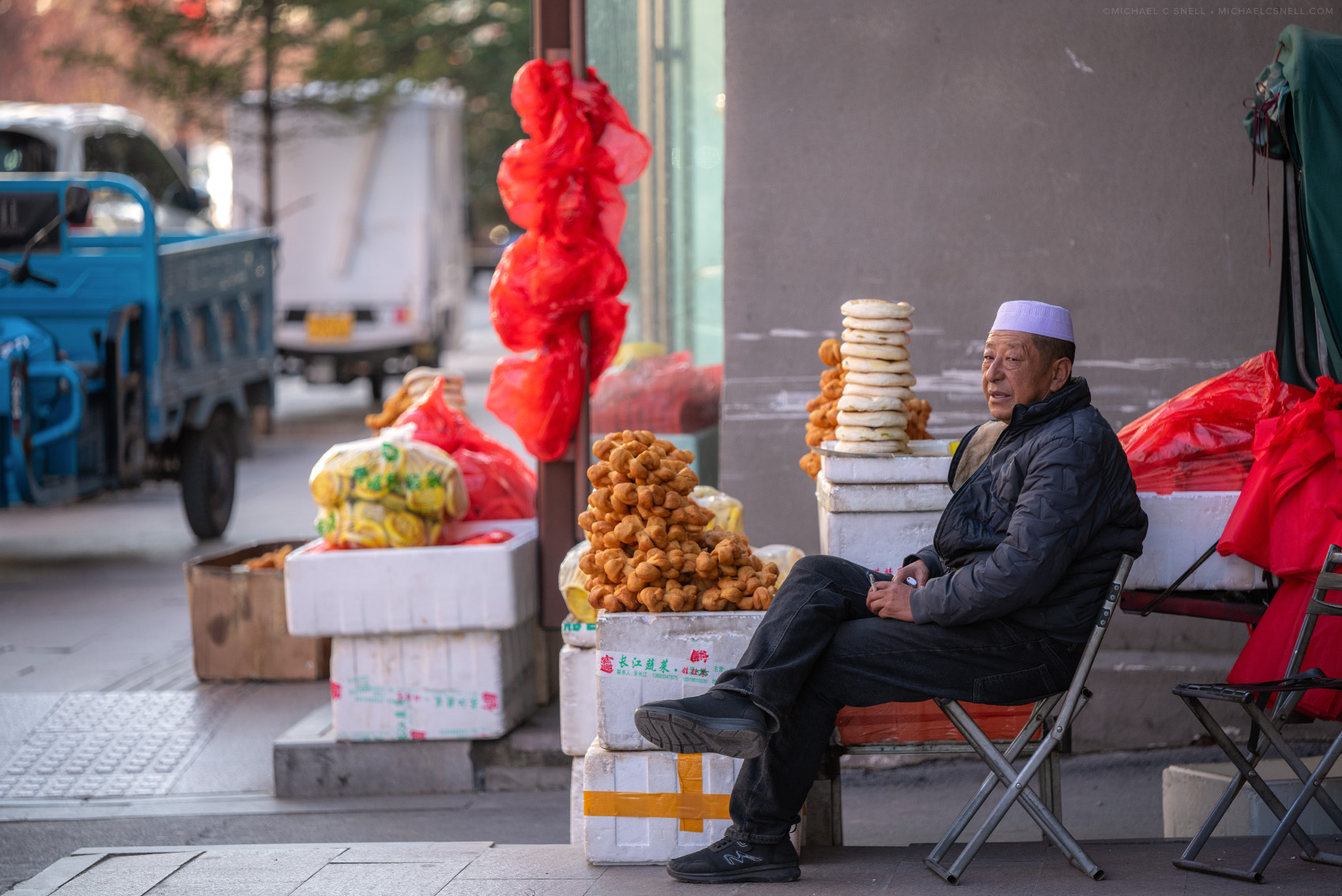
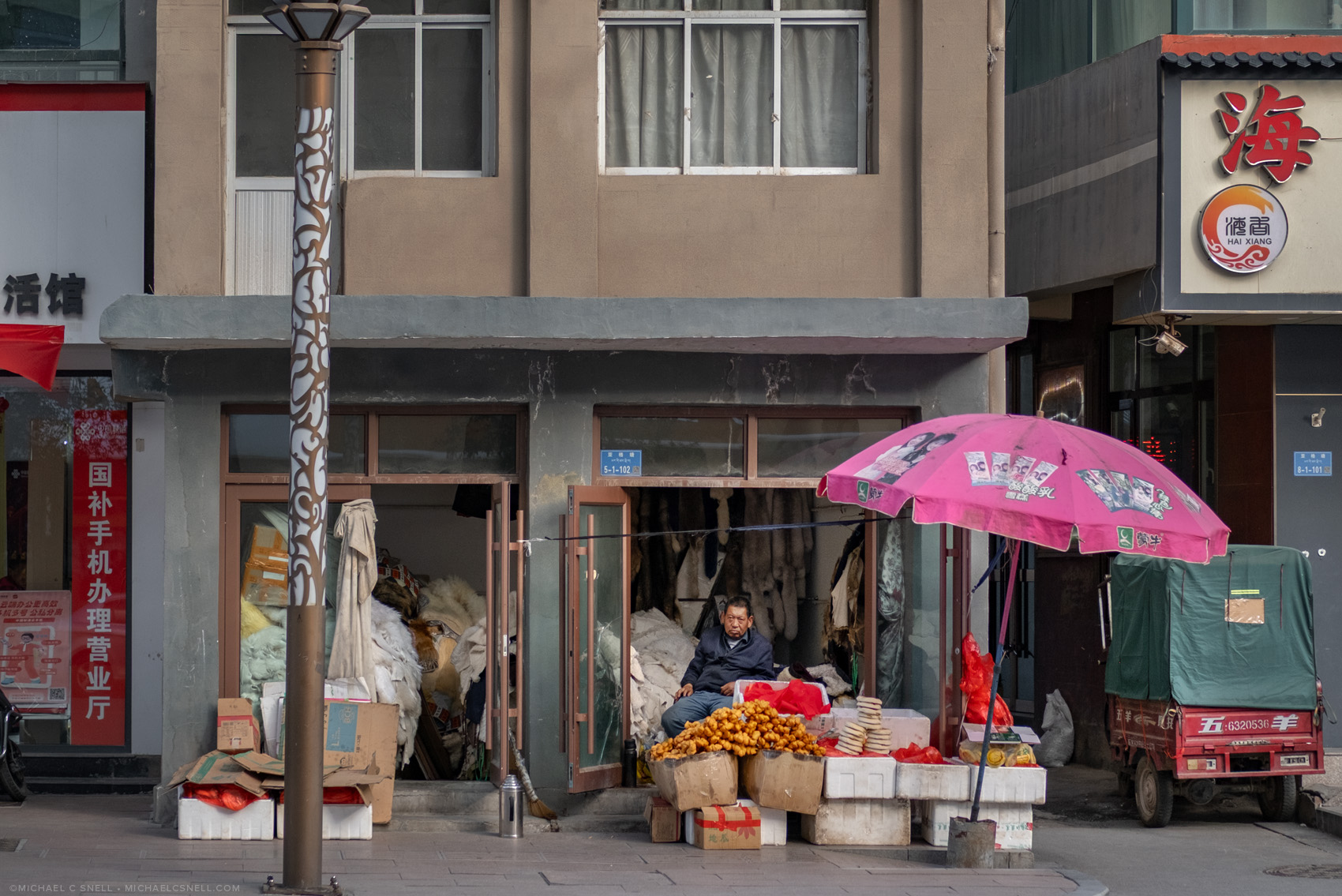
A few street scenes I took in Xiahe the following morning, when things were blissfully quiet and the town was just waking up.
Labrang Monastery
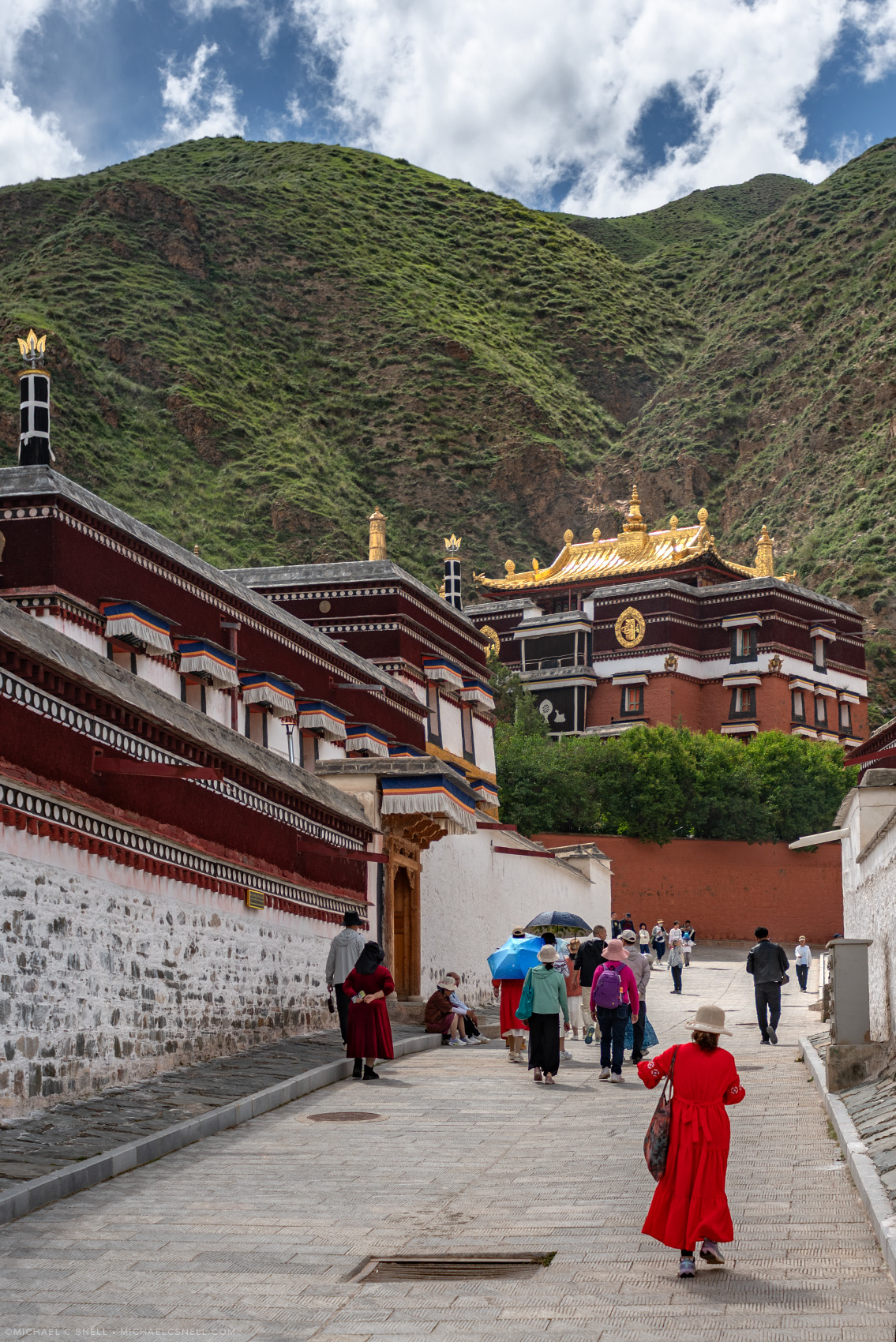
We’d arrived around noon so, after quickly checking in, we had lunch at the hotel and set off again to visit the Labrang Monastery. There was a substantial entrance building where tickets were sold and it was evident that tourism played a major part in town and at the monastery. Labrang is, however, a true and active monastery and as such there were some rules about photography. We were not to photograph monks without permission nor were photos to be taken inside many of the temples. Luckily, our guide — along with the sole English-speaking monk/guide — were able to let us know building-by-building what we were allowed to photograph. It can be a bit frustrating to be in such visually splendid buildings and not be allowed to photograph anything, but it’s always best to respect the local culture and follow the rules. We are in their house, we are the guests. I’ve seen many tourists try to sneak shots and it feels completely disrespectful to me. It’s one thing if you just don’t know, but if the rules have been made clear, it’s only polite to abide by them.
There were once as many as 4,000 monks in Labrang but that number is now closer to 1,500. The site consists of six scripture halls, more than 90 colleges, sutra halls, temples, and dormitories for the monks.
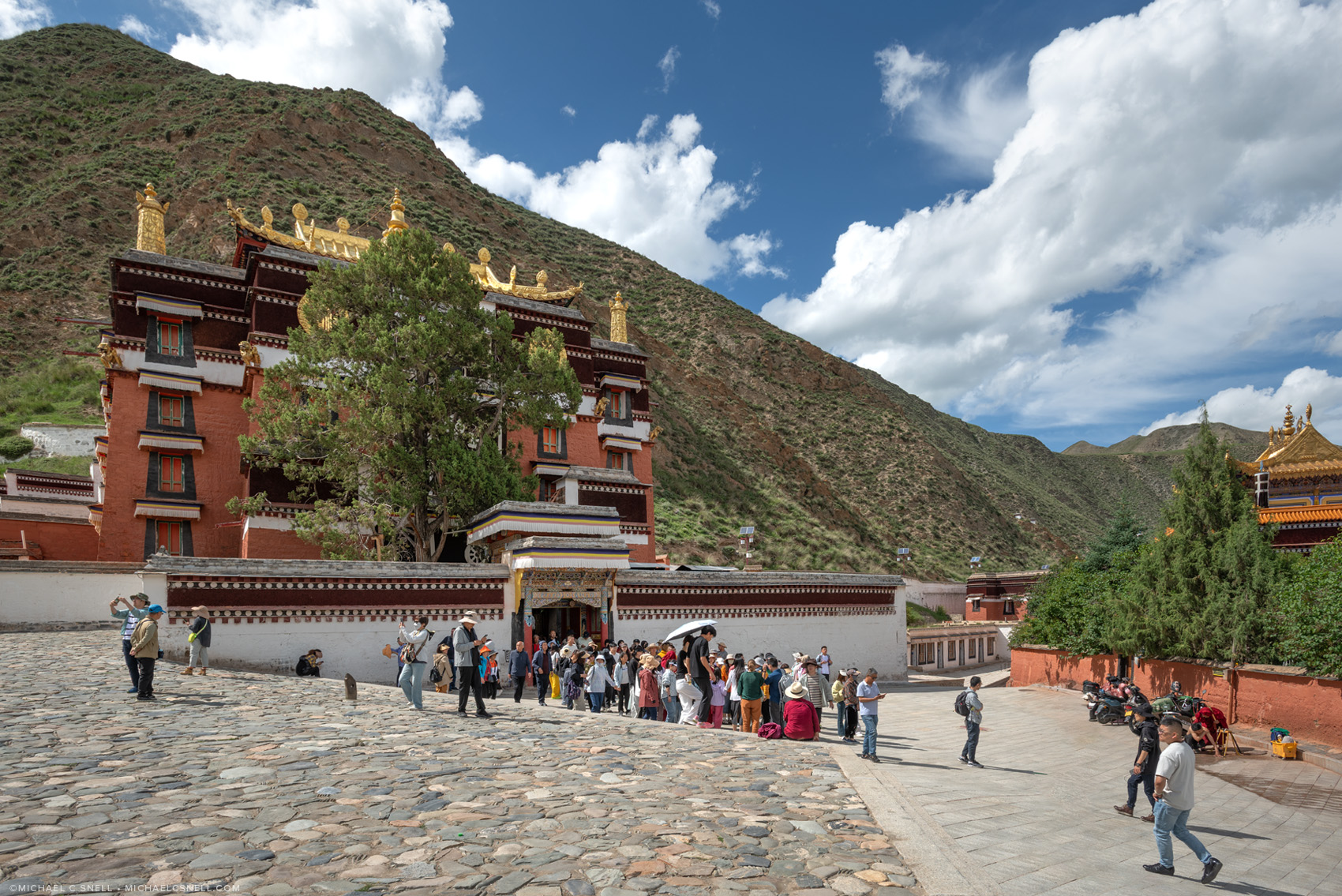
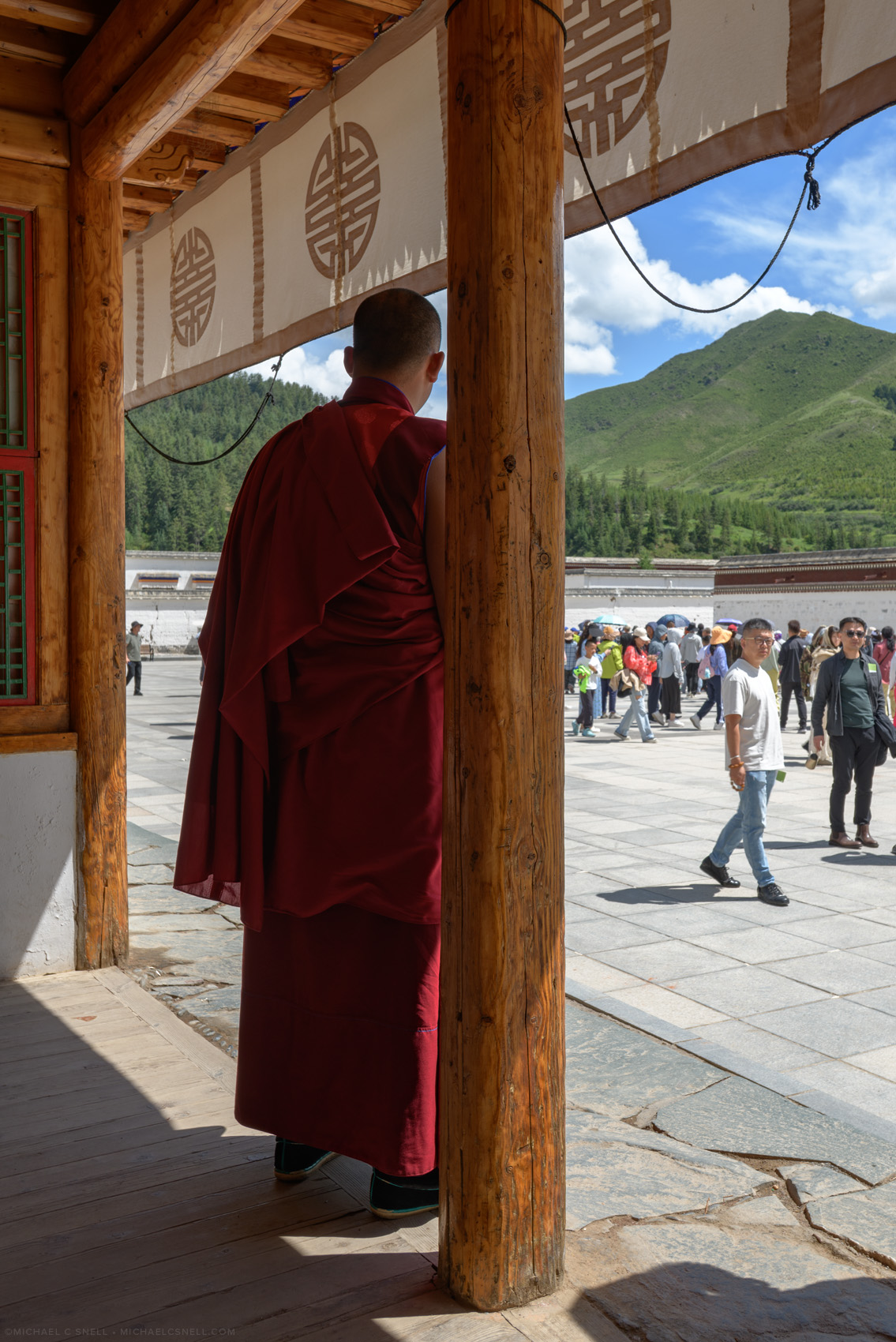
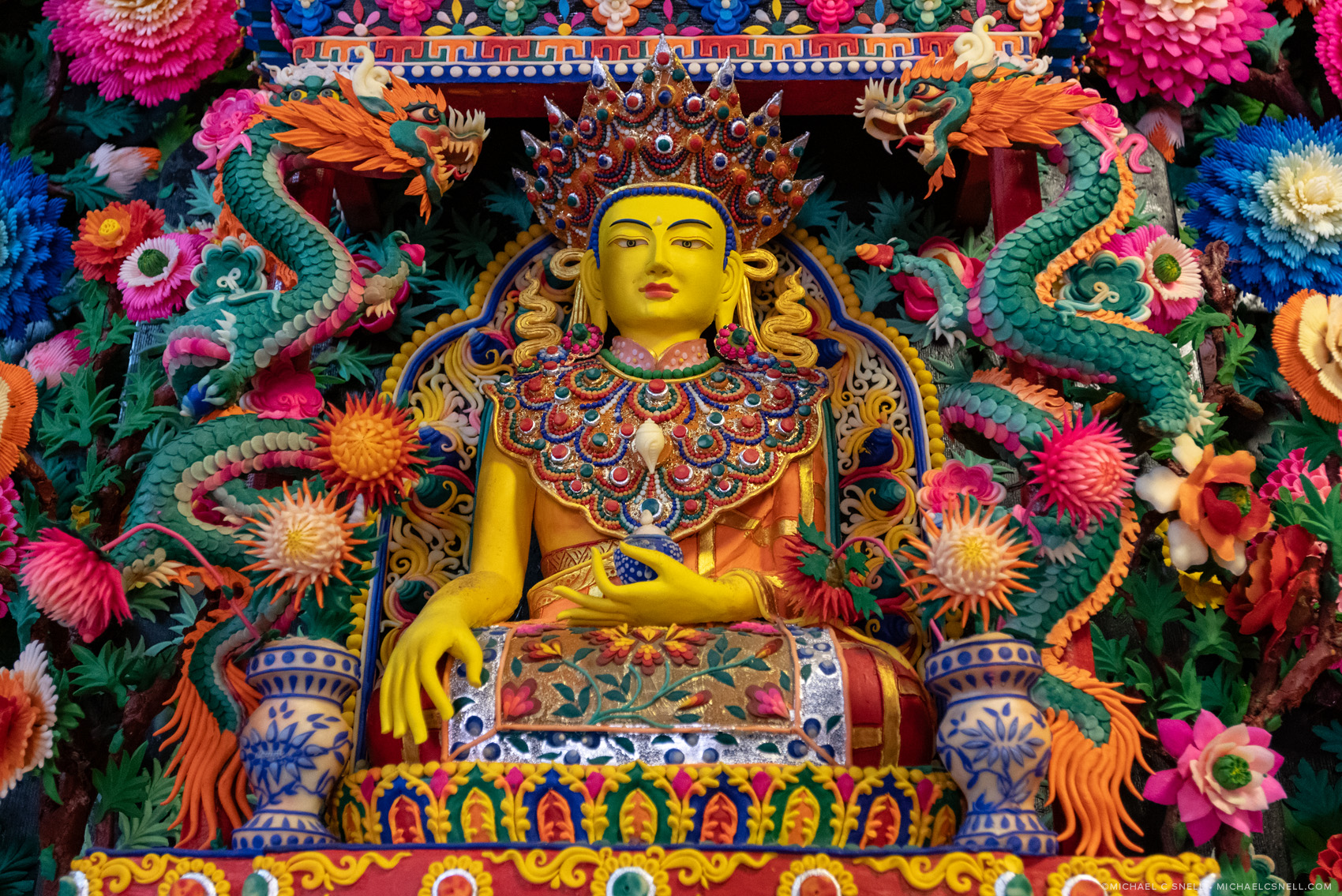
We were allowed to take photos inside of one building that contained several large, brightly-colored sculptures made with yak butter.
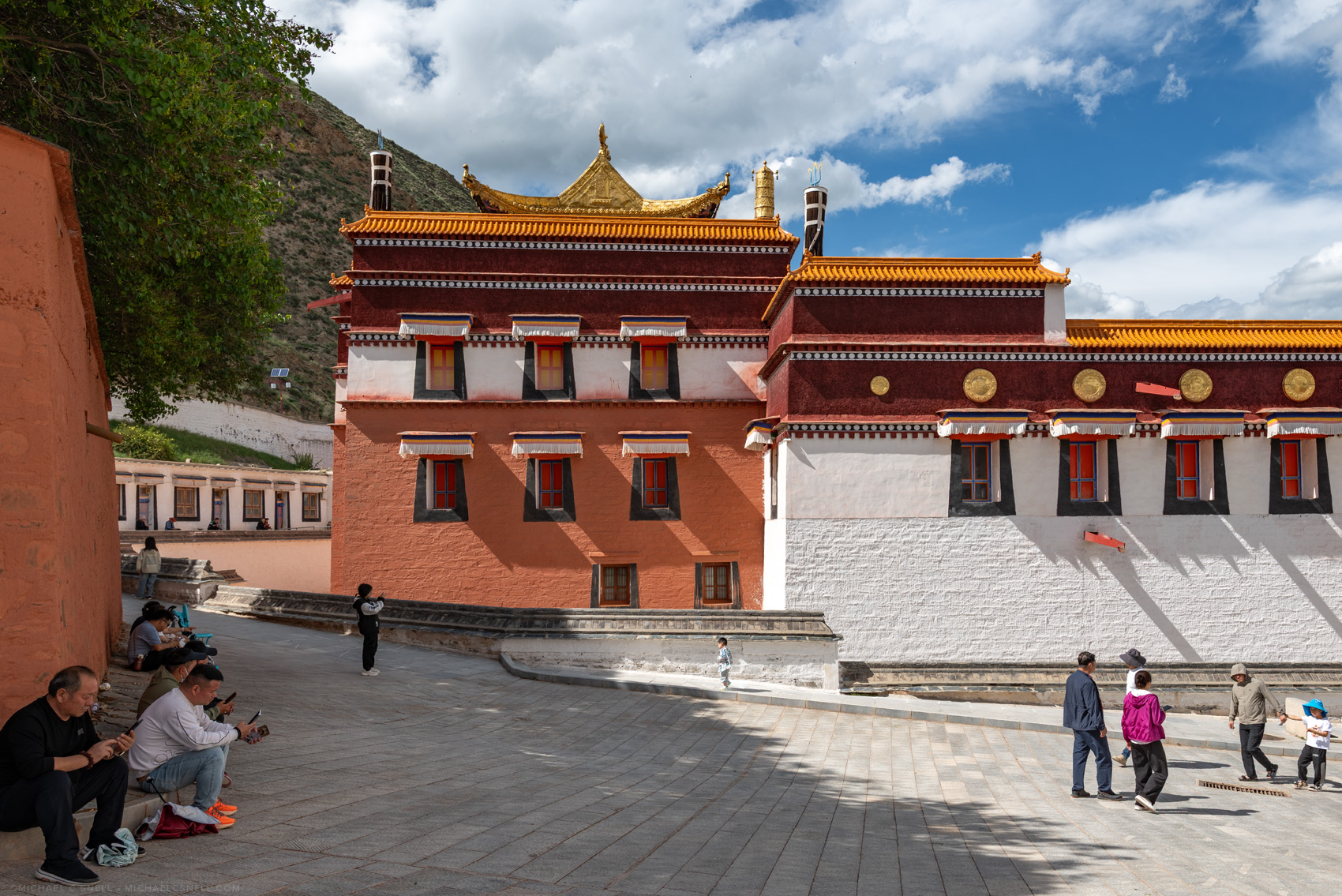
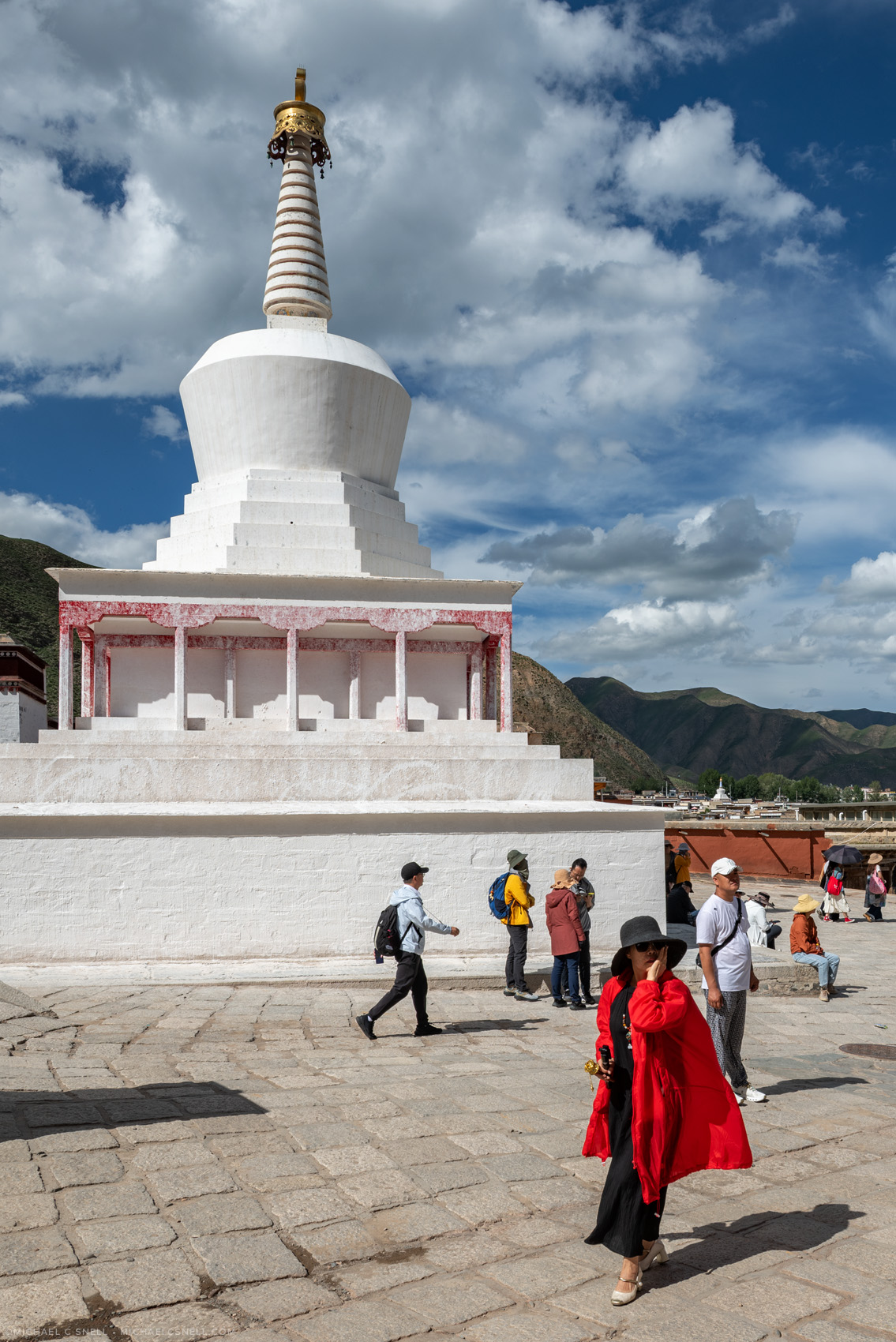
Labrang was a great introduction to the Tibetan culture that we would be further exploring over the following days as we made our way through the Gannan Tibetan Autonomous Prefecture. We would spend two more nights in the region before returning to Lanzhou and continuing our exploration of the Silk Road westward. For now, though, we were in the mountains, enjoying the crisp air and local culture.