Following my trip to Córdoba, Spain, last fall for the Flora Festival I spent a few more days on a route to promote Spanish Paradores. Those are the State-operated hotels that often are located in historic structures. I’m working on an updated version of my Parador e-book — this time as a printed book — but you can still find the previous e-book version here.
I’ll talk more about the Paradores as I get closer to publication of the book but, for now, I thought I’d mention a couple of new towns I explored along this route that didn’t actually have Paradores.
Frigiliana
After a short bus ride from Málaga, we arrived at one of Andalusia’s beautiful white villages, Frigiliana. Its steep, winding streets and whitewashed buildings with brightly painted doors (mostly blue) reminded me of Greek islands like Santorini or Mykonos.
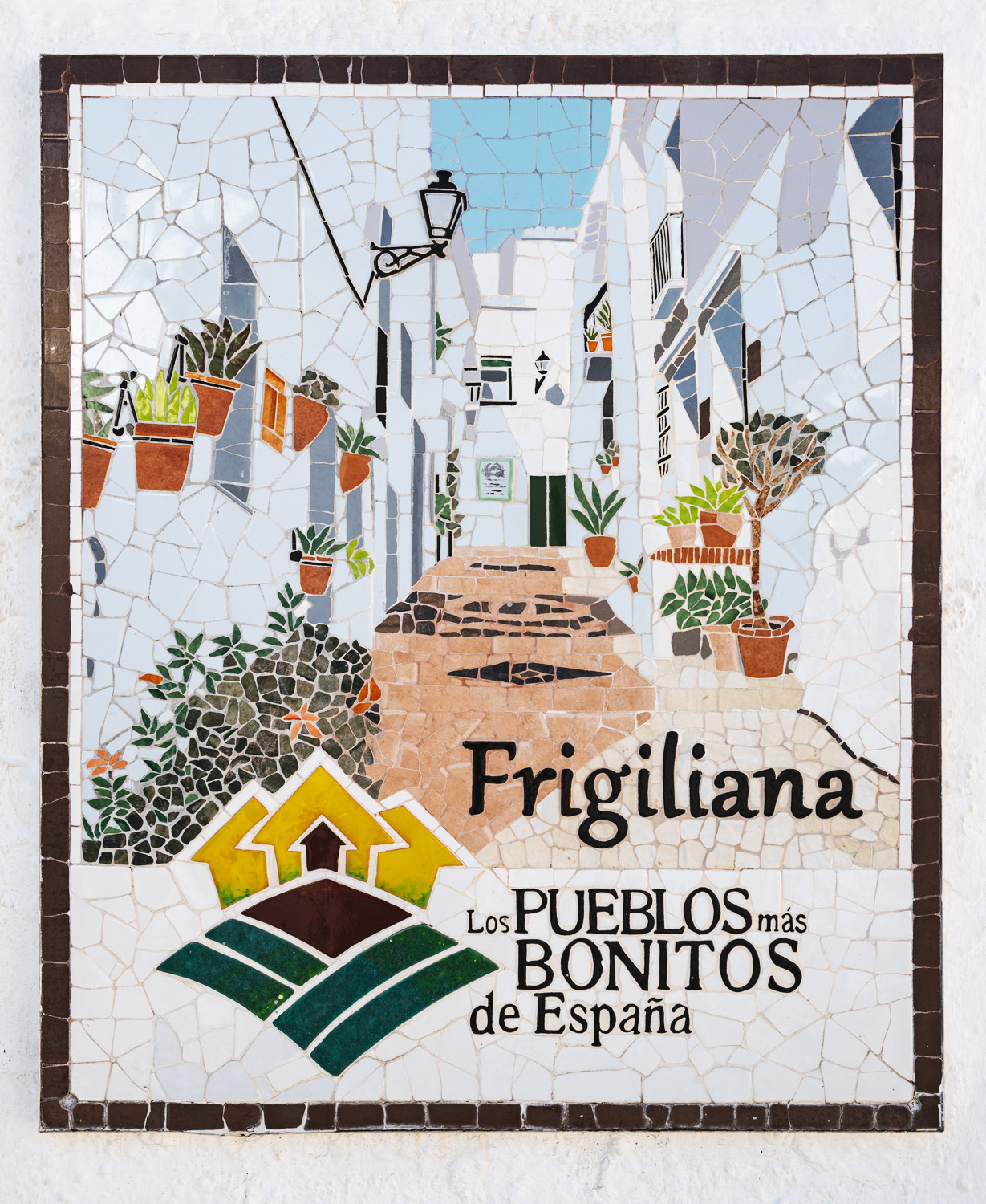
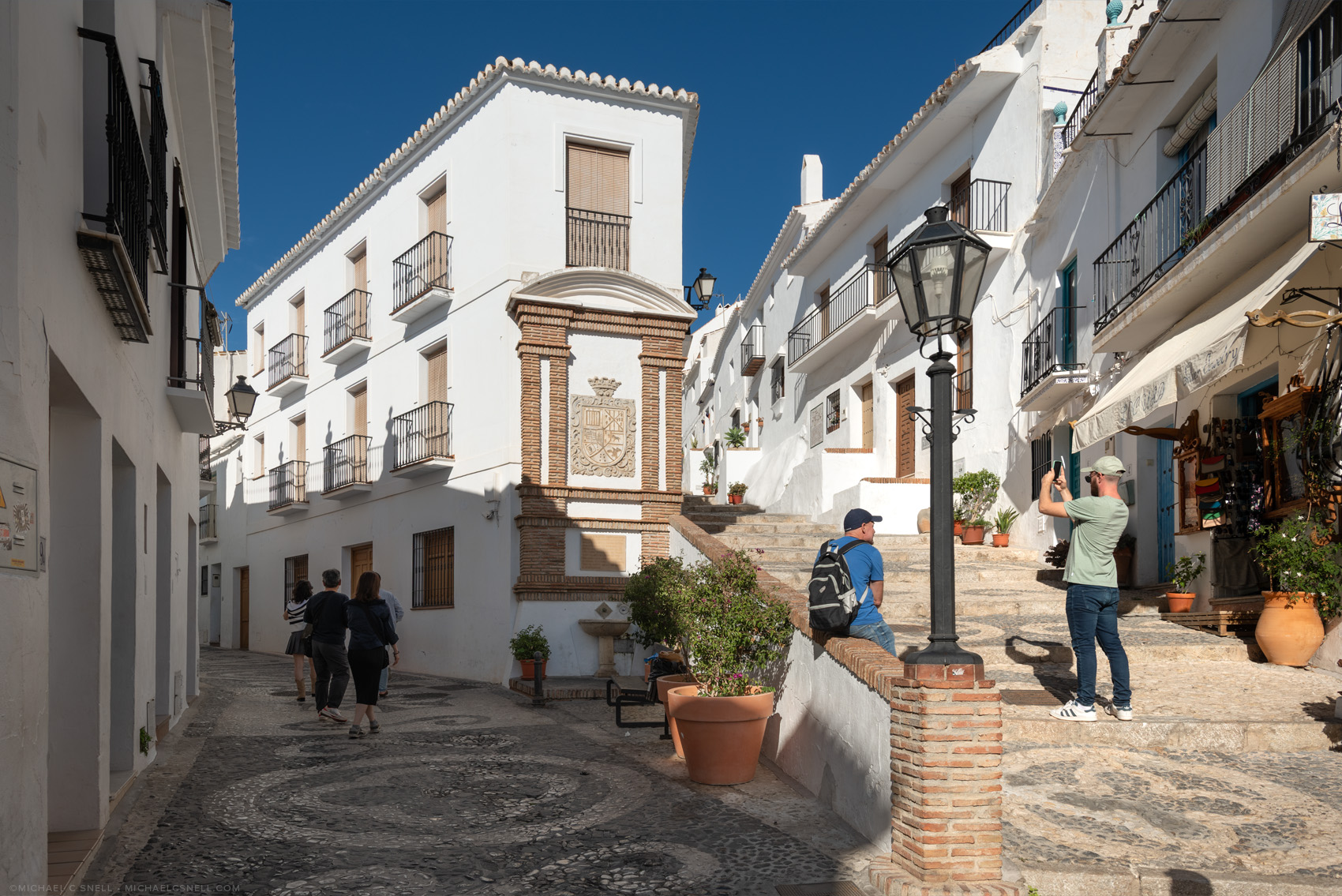
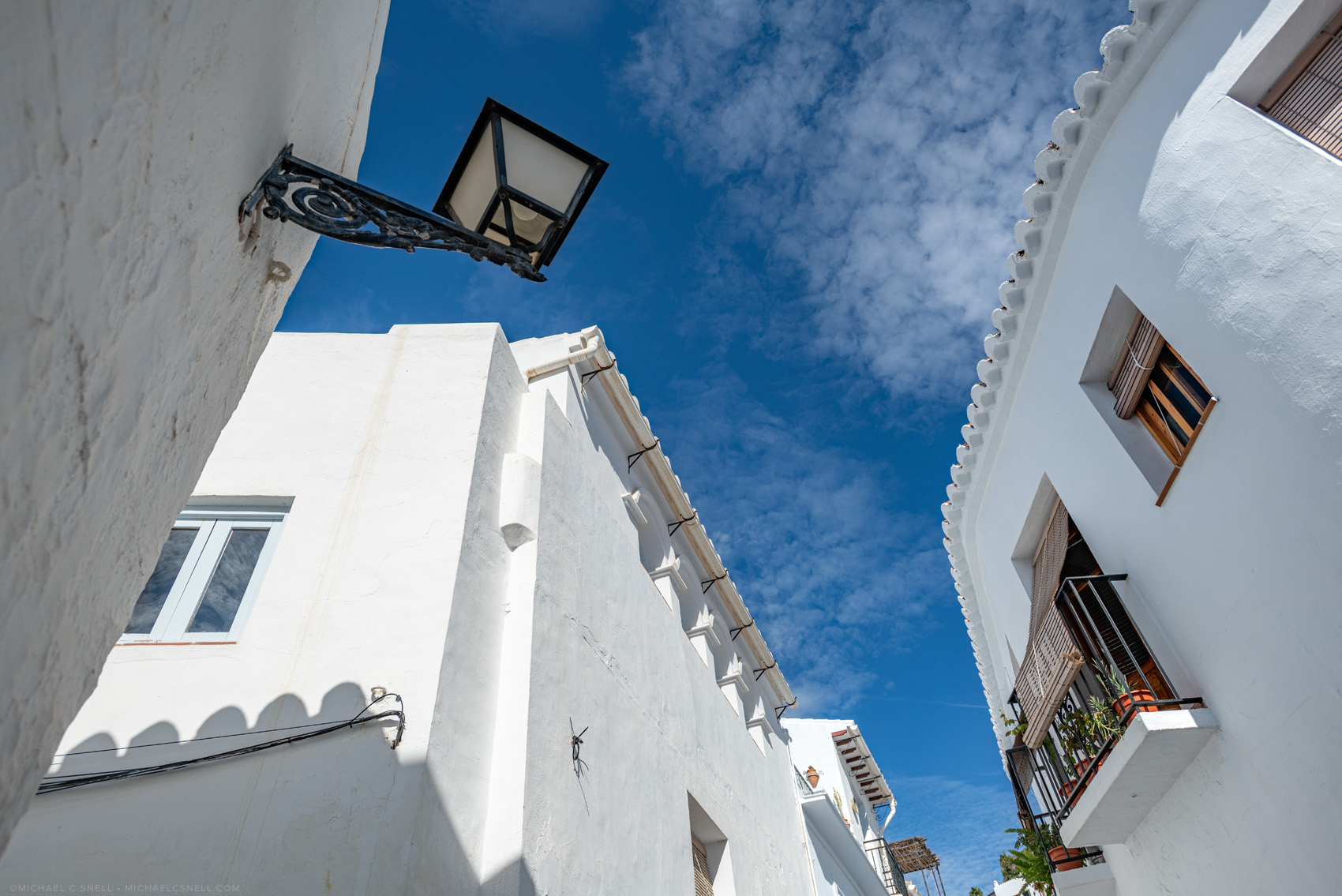
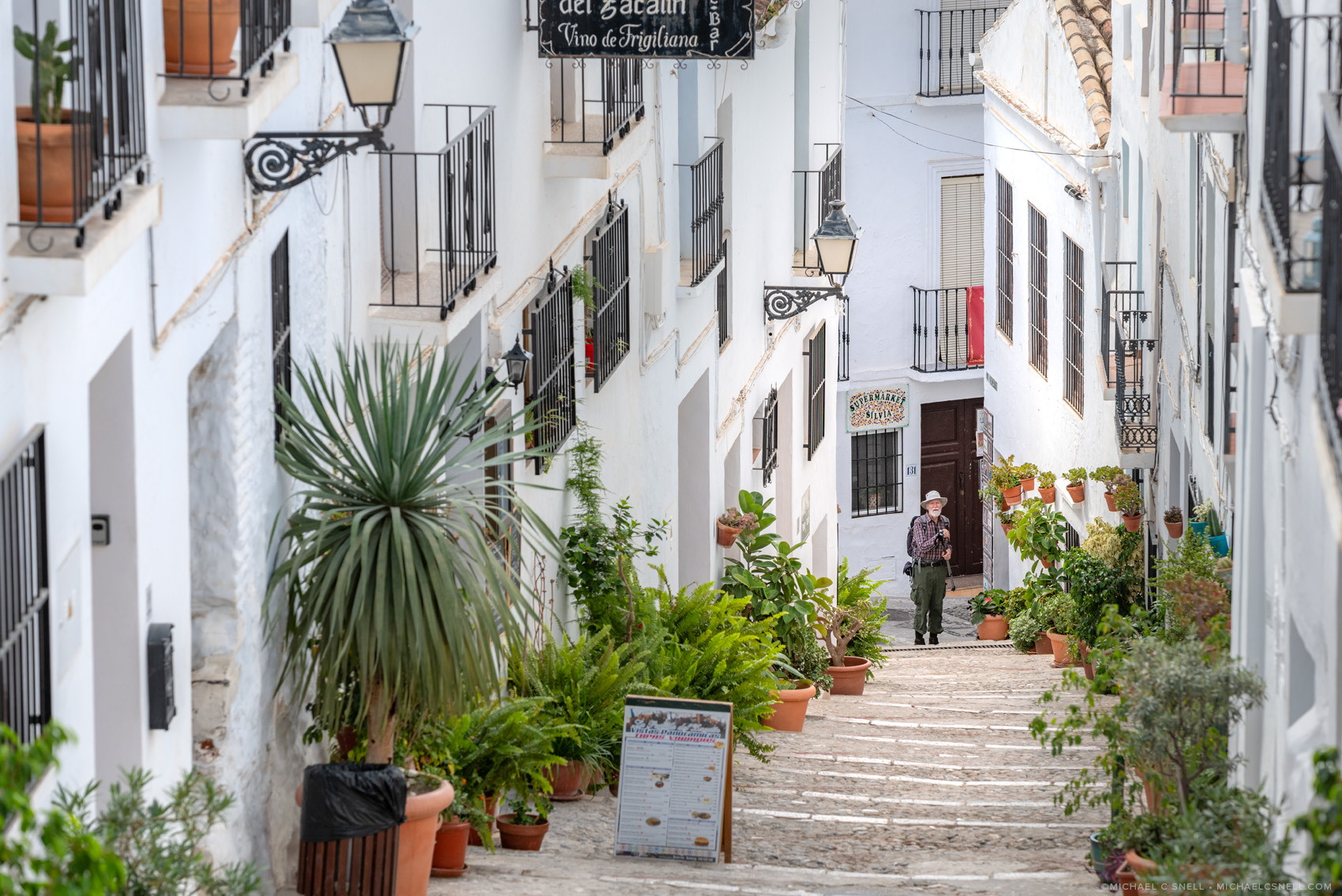
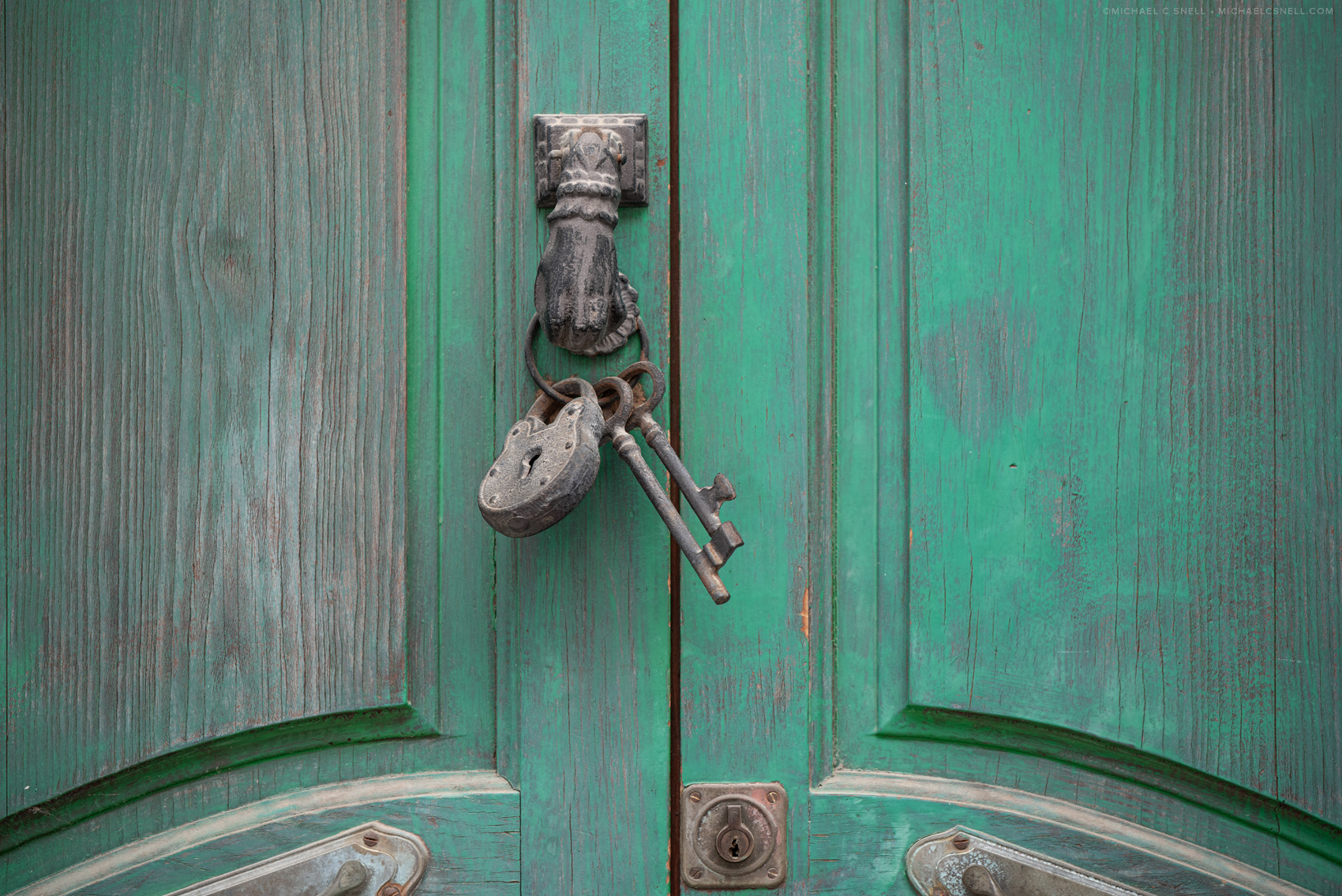
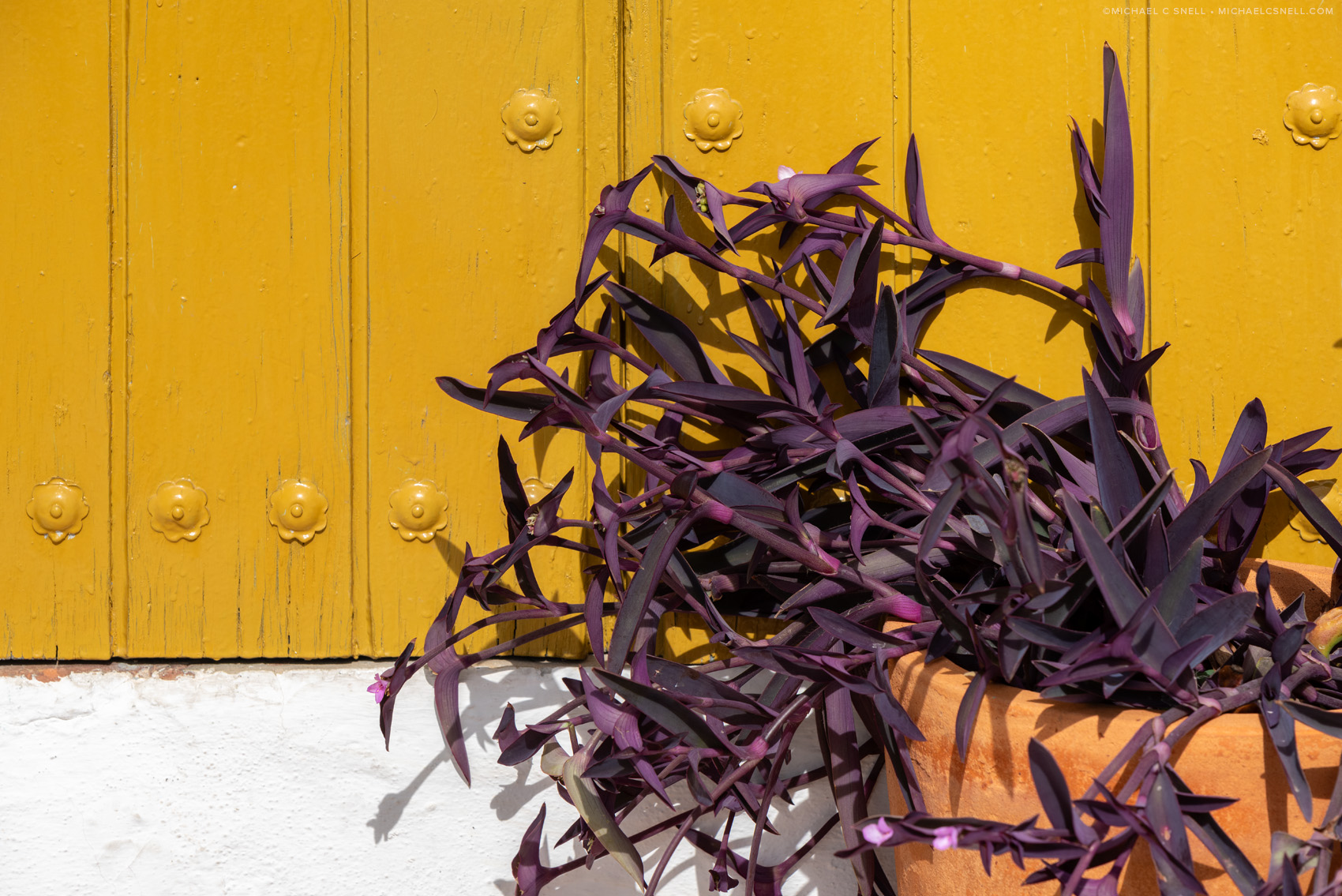
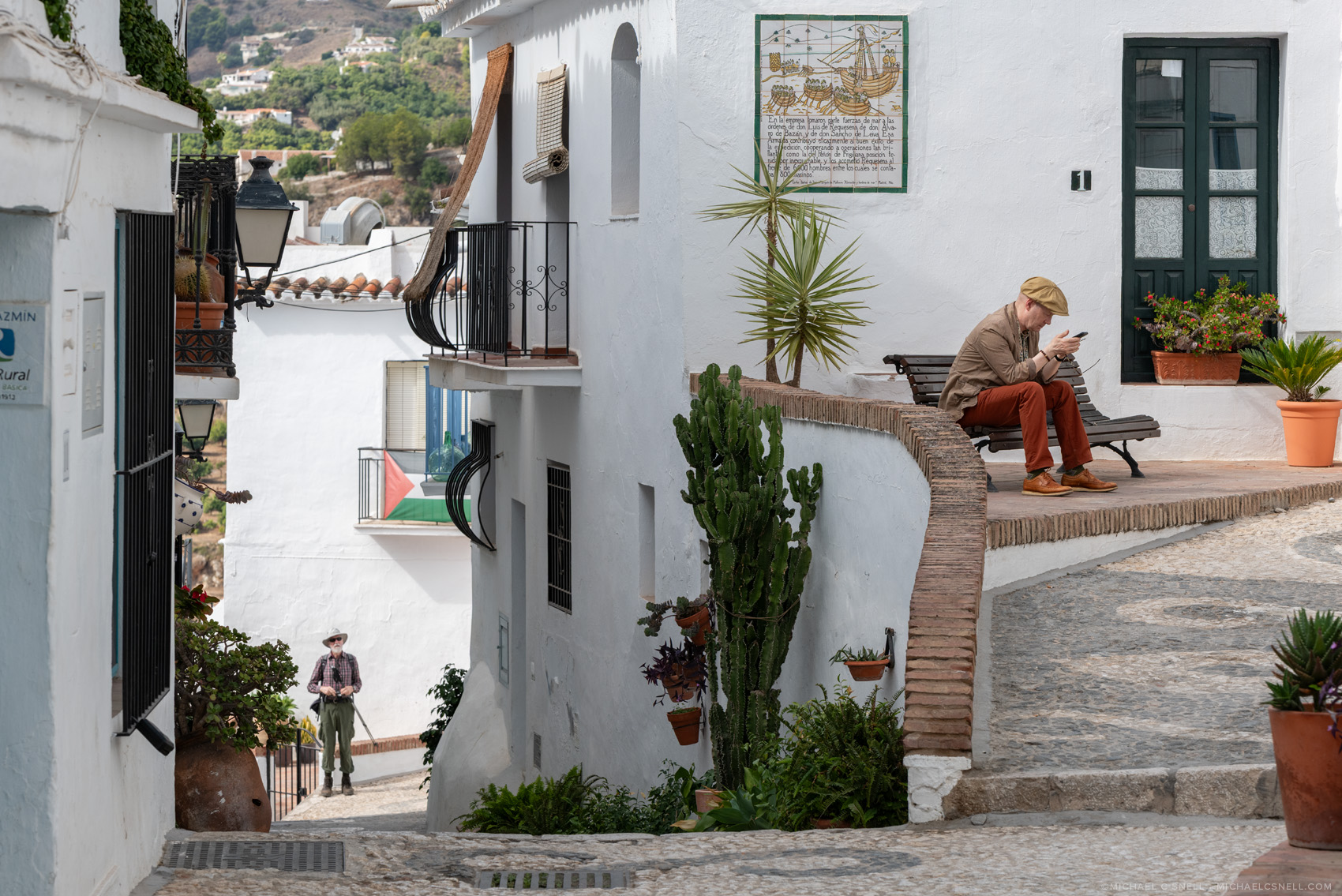
Frigiliana is a great town for photography. The white walls bounce light beautifully and the pops of color in the doors are spectacular. I spent most of my free time here wandering the streets and collecting doors of different shades and hues. The streets themselves are inlaid with black and white patterns and every house seems to have its own well-tended garden in pots, adding more color and texture.
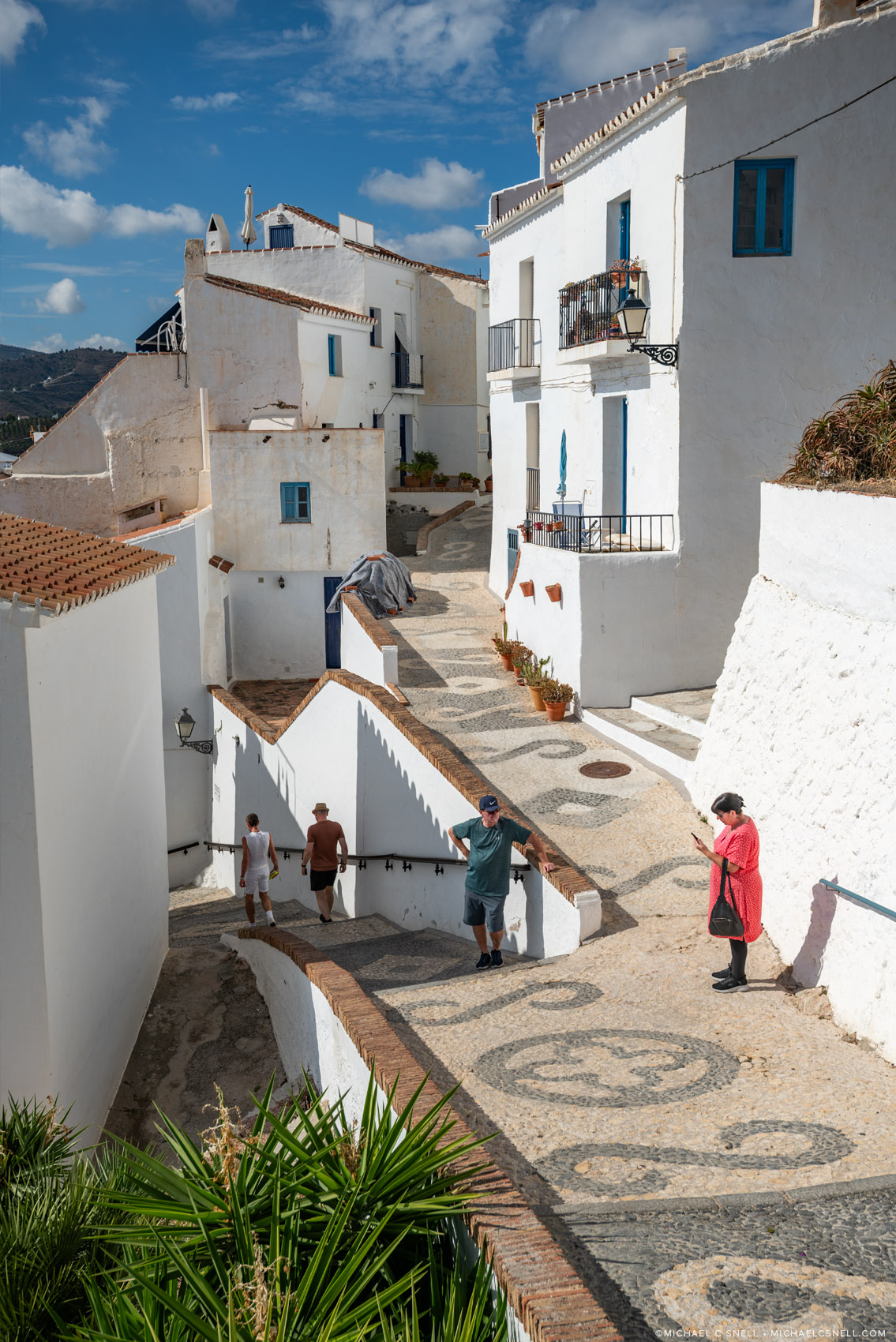
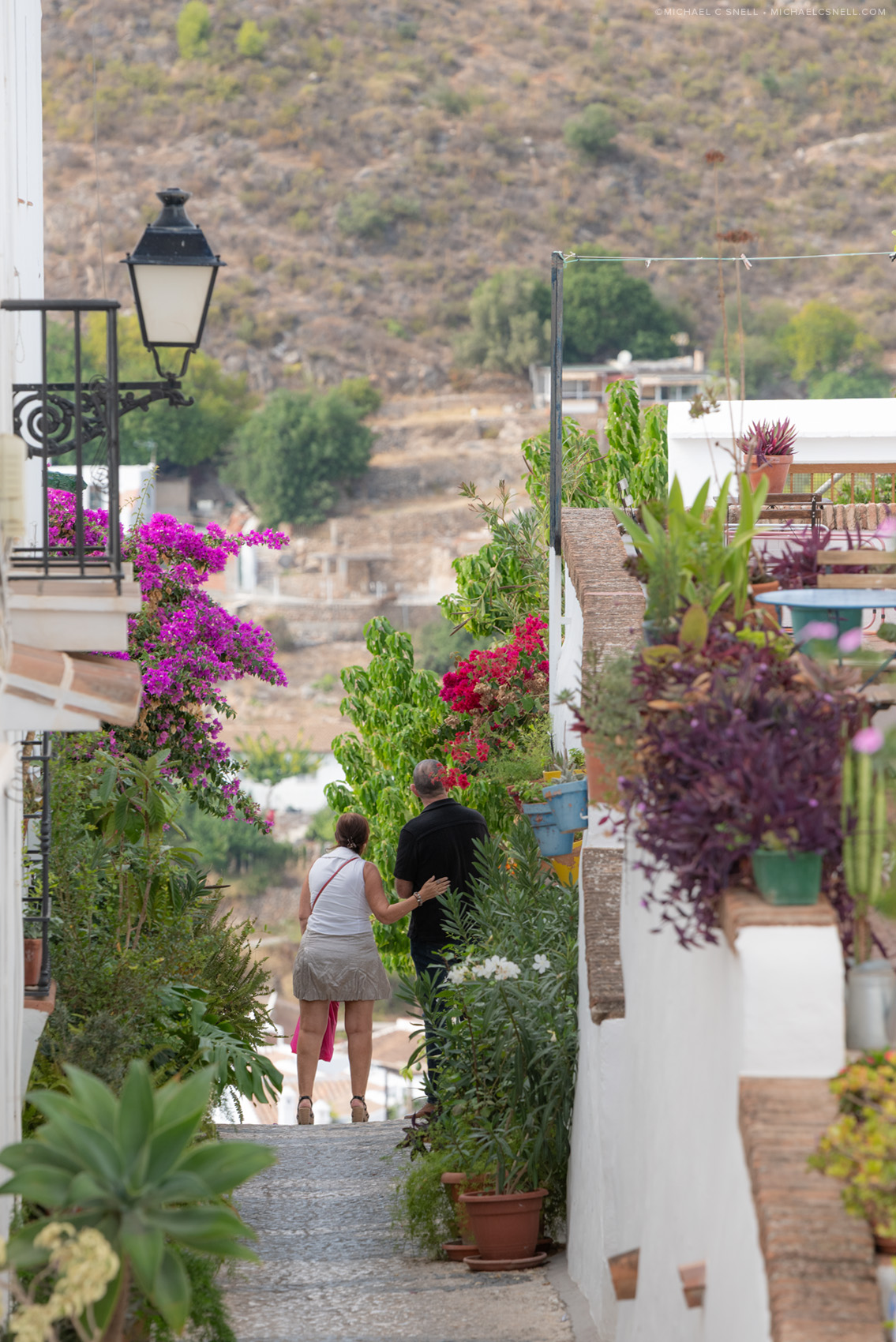
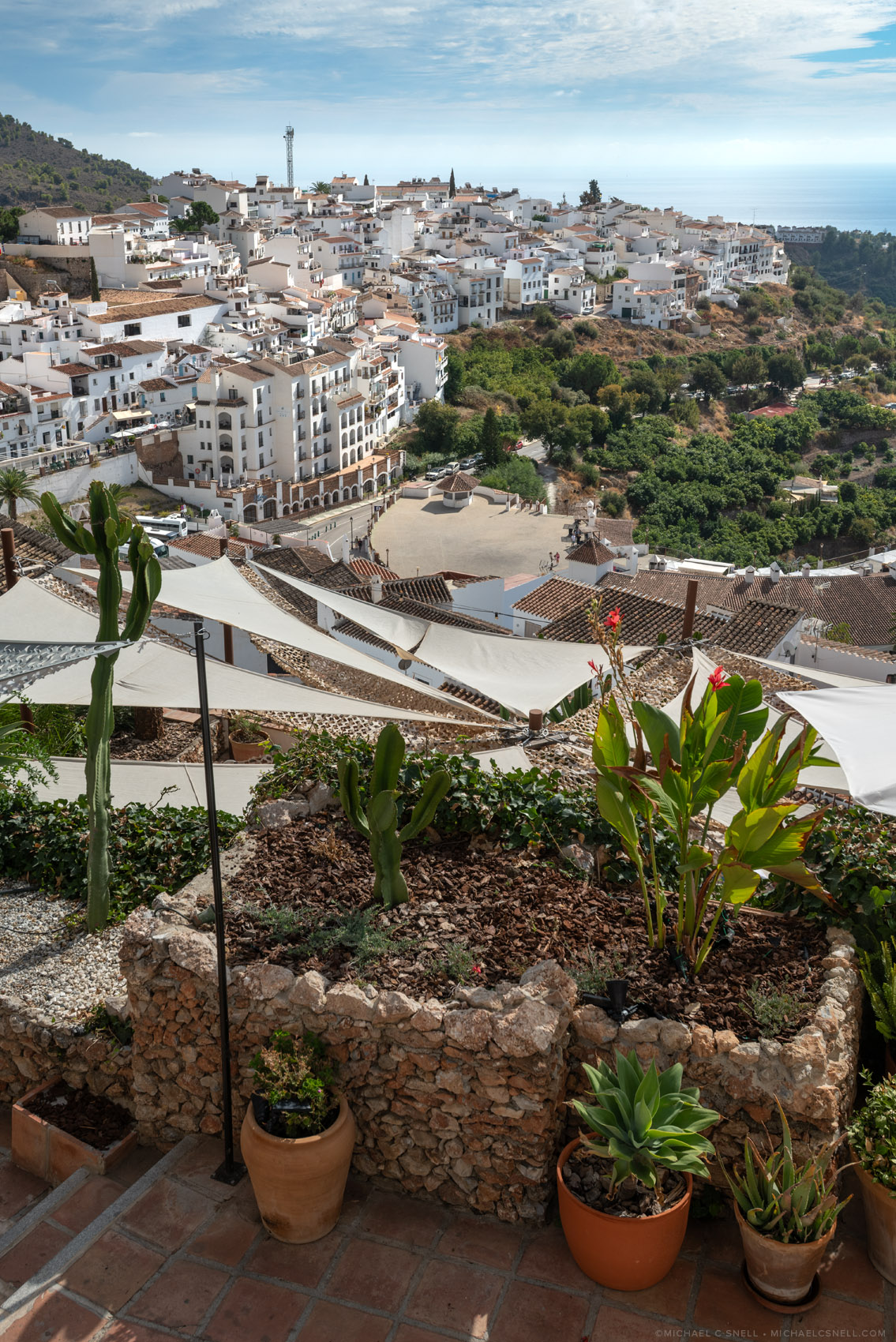
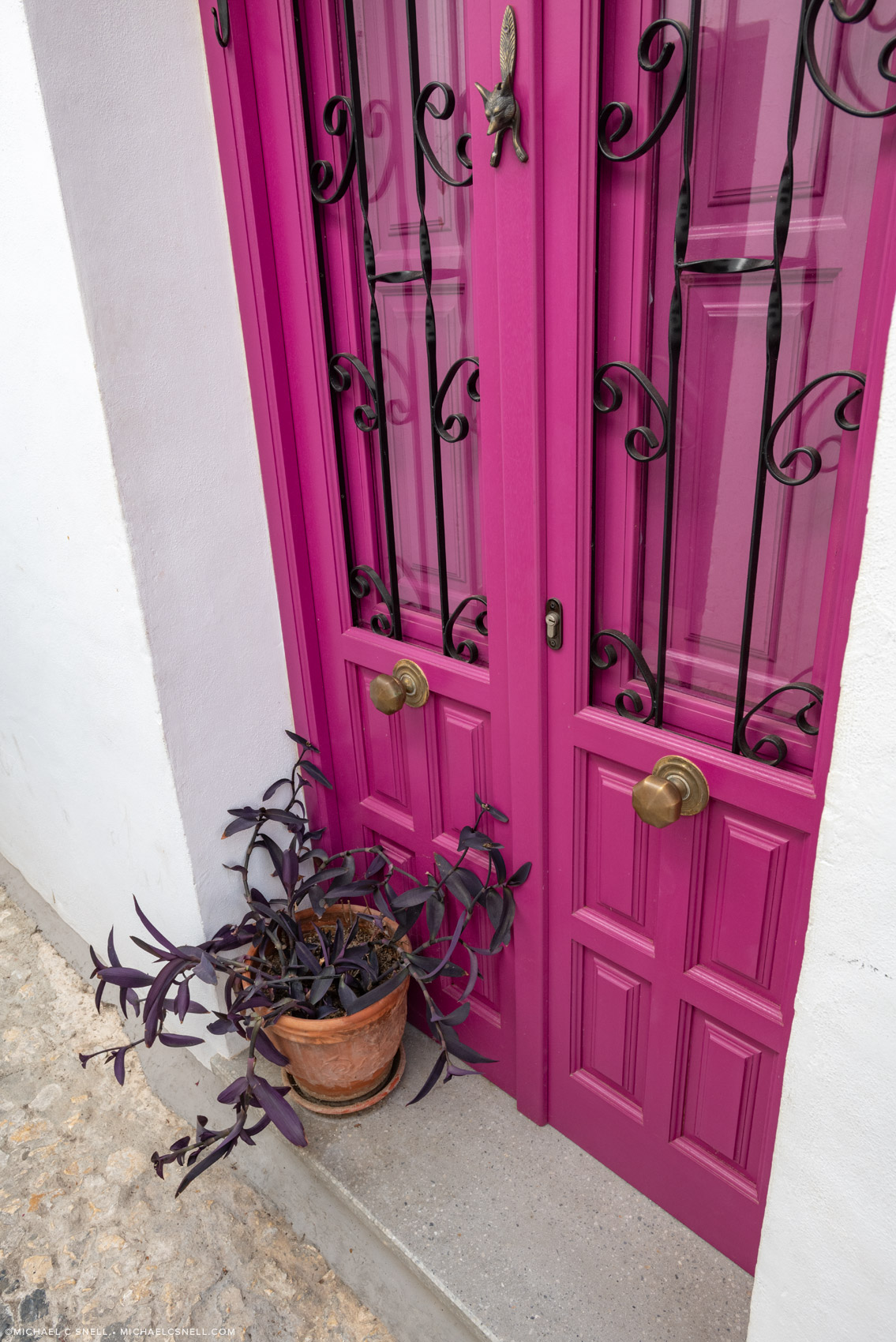
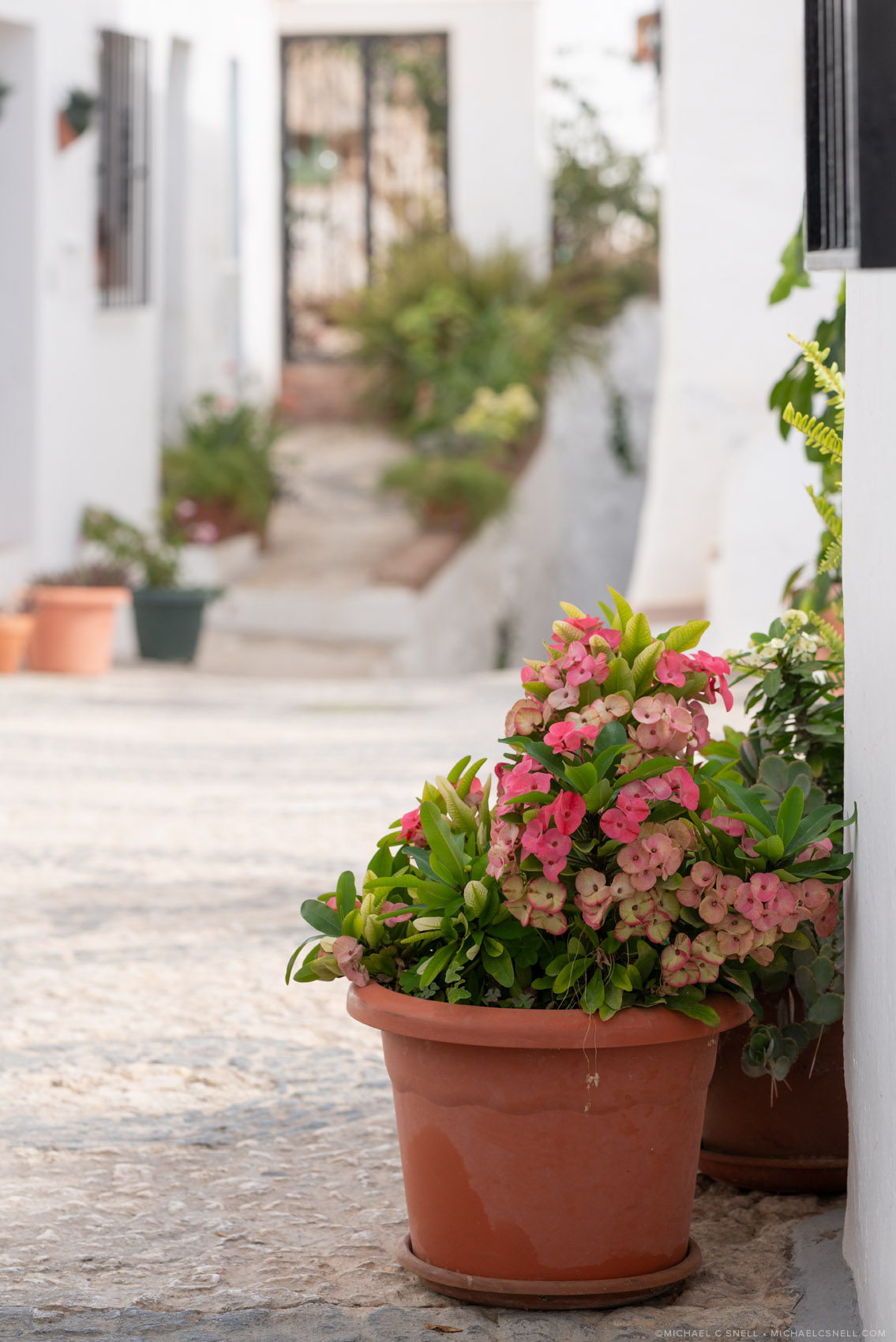
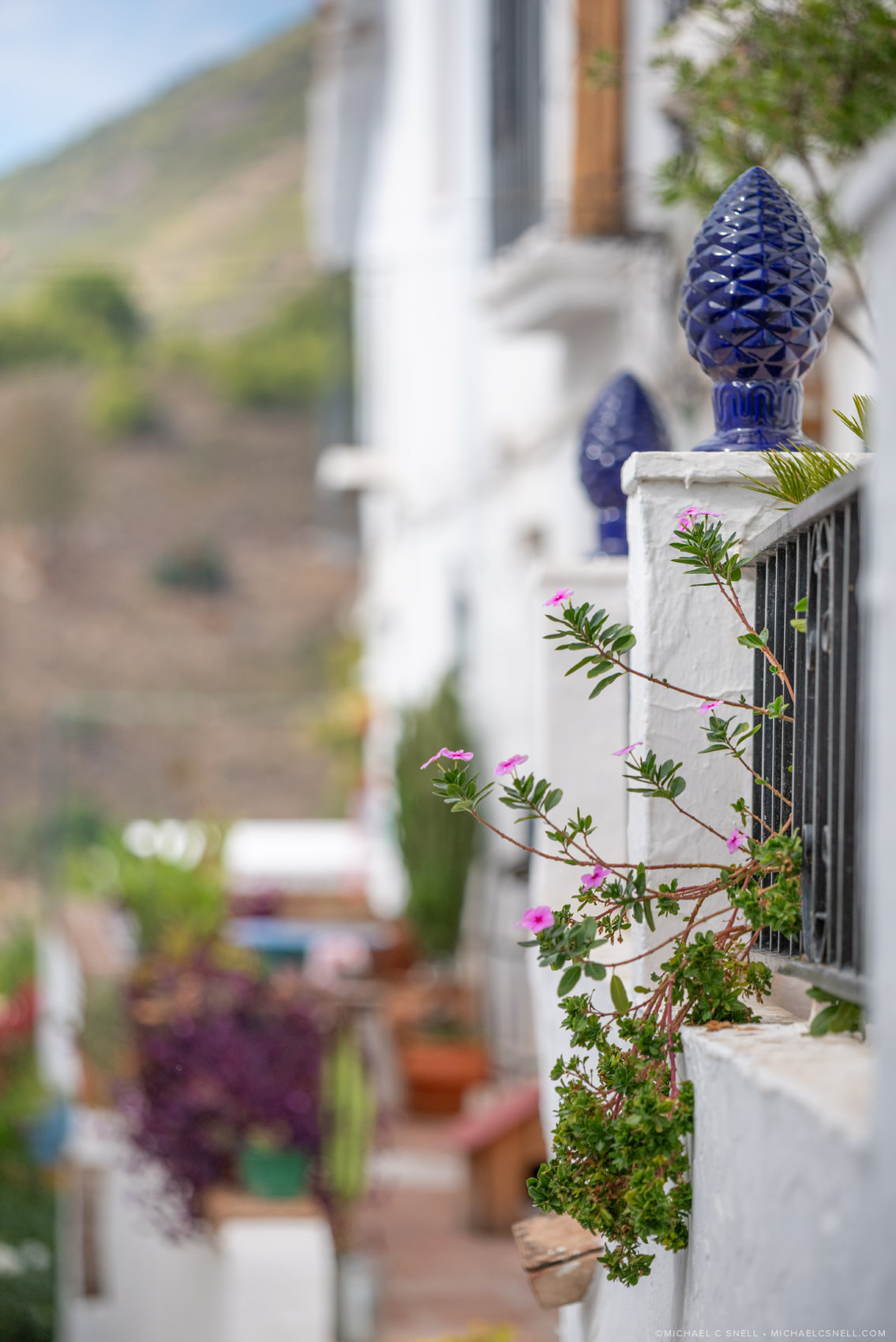
Photographing in a bright white locations like this takes the same kind of care as photographing in snow. Your camera’s meter will cause you to underexpose, but you also don’t want to compensate too much with overexposure to blow out all of your highlights. This is one of those situations where I really appreciate digital, where you can immediately see what you’ve captured, and even check the histogram to make sure you’re exposed correctly. There’s a lot more latitude than there was in transparency film!
After a walk up the hill, a lovely lunch overlooking the Mediterranean and hiking back down to the bus drop-off. It was time to head back to Málaga for the night. On a future trip, I’d love to spend a night in Frigiliana. I imagine the light at the start and end of the days is really special.