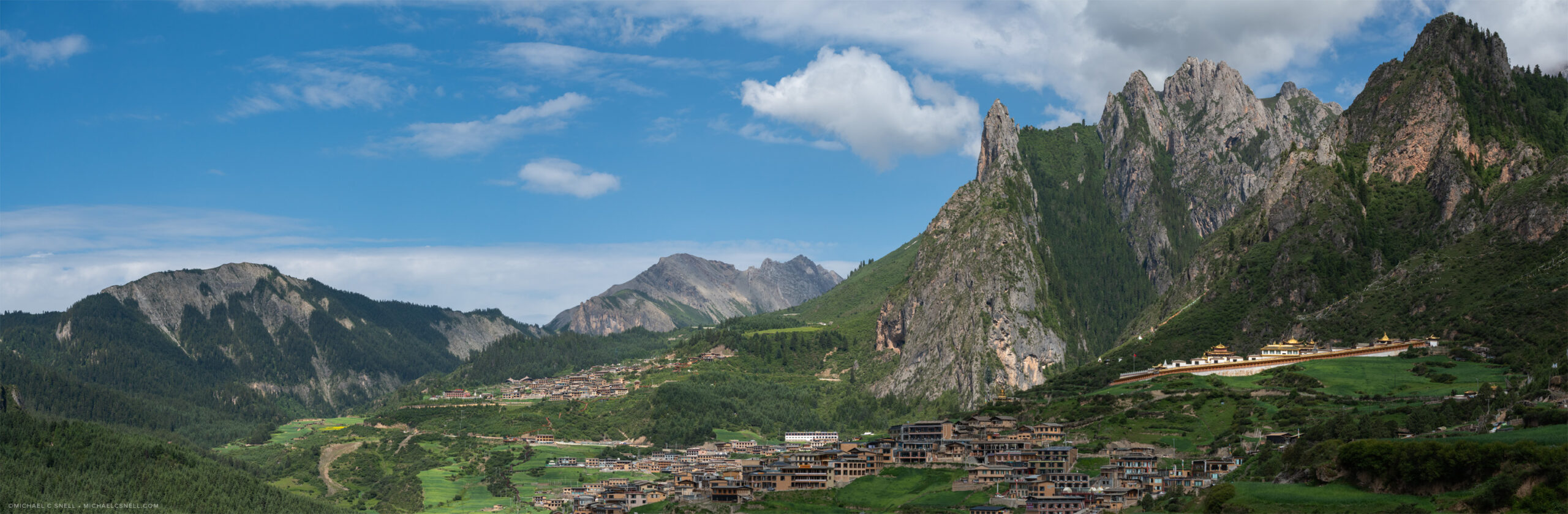
One last day in China’s Gannan Tibetan Autonomous Prefecture
Zhagana was named one of the “Best Tourism Villages” by UNWTO in 2023. I feel we barely scratched the surface on our visit. Four villages and a monastery are strung through a wide valley surrounded by jagged mountain peaks. Even after years of travel, there are still places that can surprise and stun me and Zhagana will live on in my mind as one of those places. Photos don’t do it justice. It is a magical setting.
A note about the wide image at the top of this post. It’s a pano stitched from several telephoto images shot at 70mm on my 70-200mm zoom. It was my primary lens on this hike although I did shoot a few with my 17-35mm or on my Fujifilm X100VI. In this case I got the wide angle view by creating a panorama instead. I shot several of these as we progressed up the trail. The benefit is no wide-angle distortion or corner softness, and you end up with an enormously large file that can be used for anything.
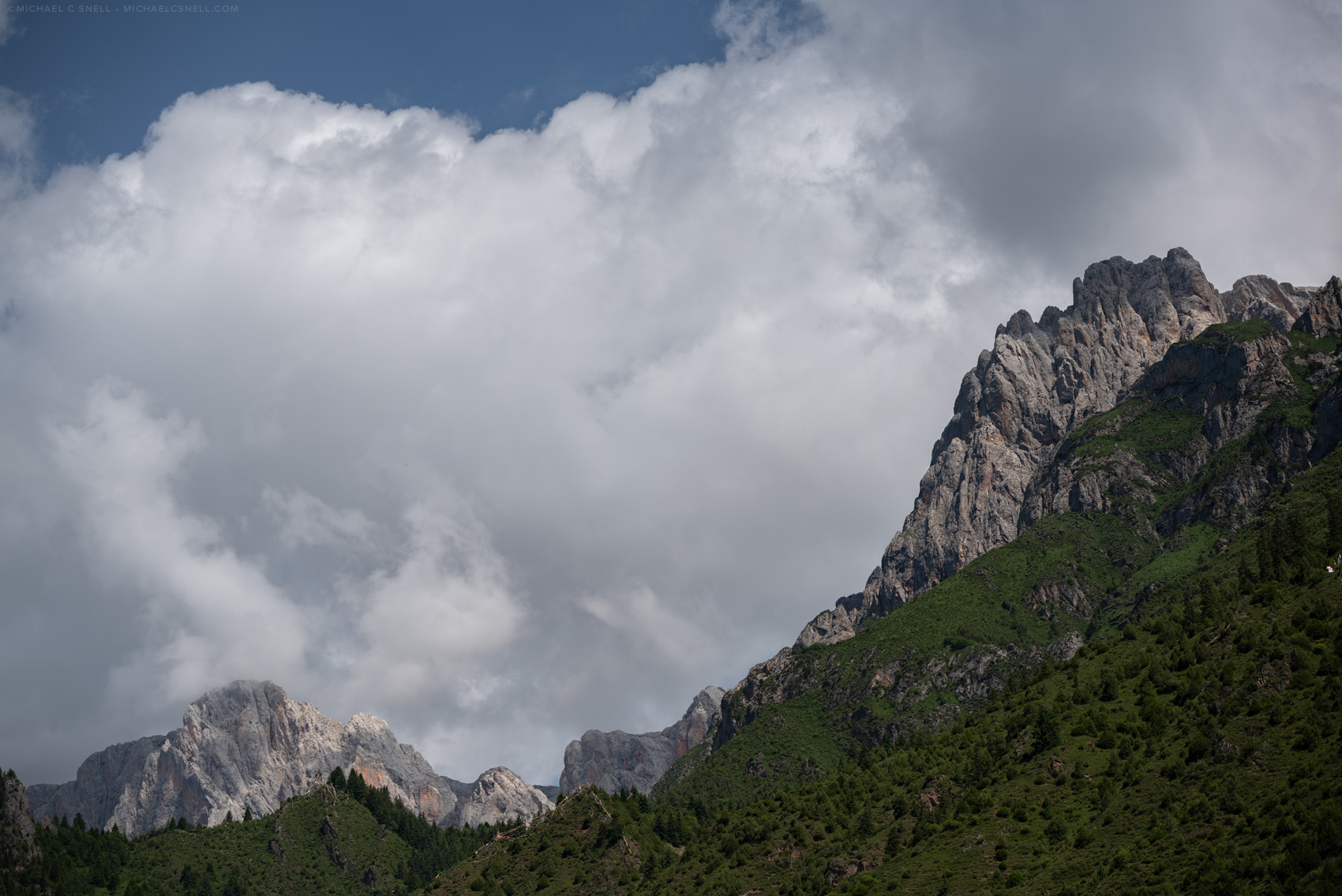
Ours was a quick visit. We took one long hike up and back down a mountainside to gain some different views of the monastery across the valley, then we taxied over to a small roadside restaurant for lunch. We might have spent more actual time in Zhagana than in some of the other towns and monasteries we’d visited in the past few days, but we visited from a distance. We never actually went to the monastery itself.
I think that this was, in fact, a good way to first visit Zhagana. More than any of the other sites we visited in the Gannan Tibetan Autonomous Prefecture, this one was more about the setting than the structures themselves. It was good to see from a distance — to take in the entire scope of the place.
Our hike was likely a little different than what most tourists do, and I’d recommend our approach for anyone visiting in the future. From the large parking lots at the foot of the village, busses leave to take tourists part way up the hillside. We didn’t take the bus but instead took a wooden footpath that more or less paralleled the route of the bus, but had several little pagoda-like lookouts from time to time that gave different views across the valley. In my opinion, these were some of the best views but we would have missed them by taking the bus.
I guess the takeaway from this is to always take the walking option if offered. It’s tempting to save some stairs by taking the bus, but you risk missing so much.
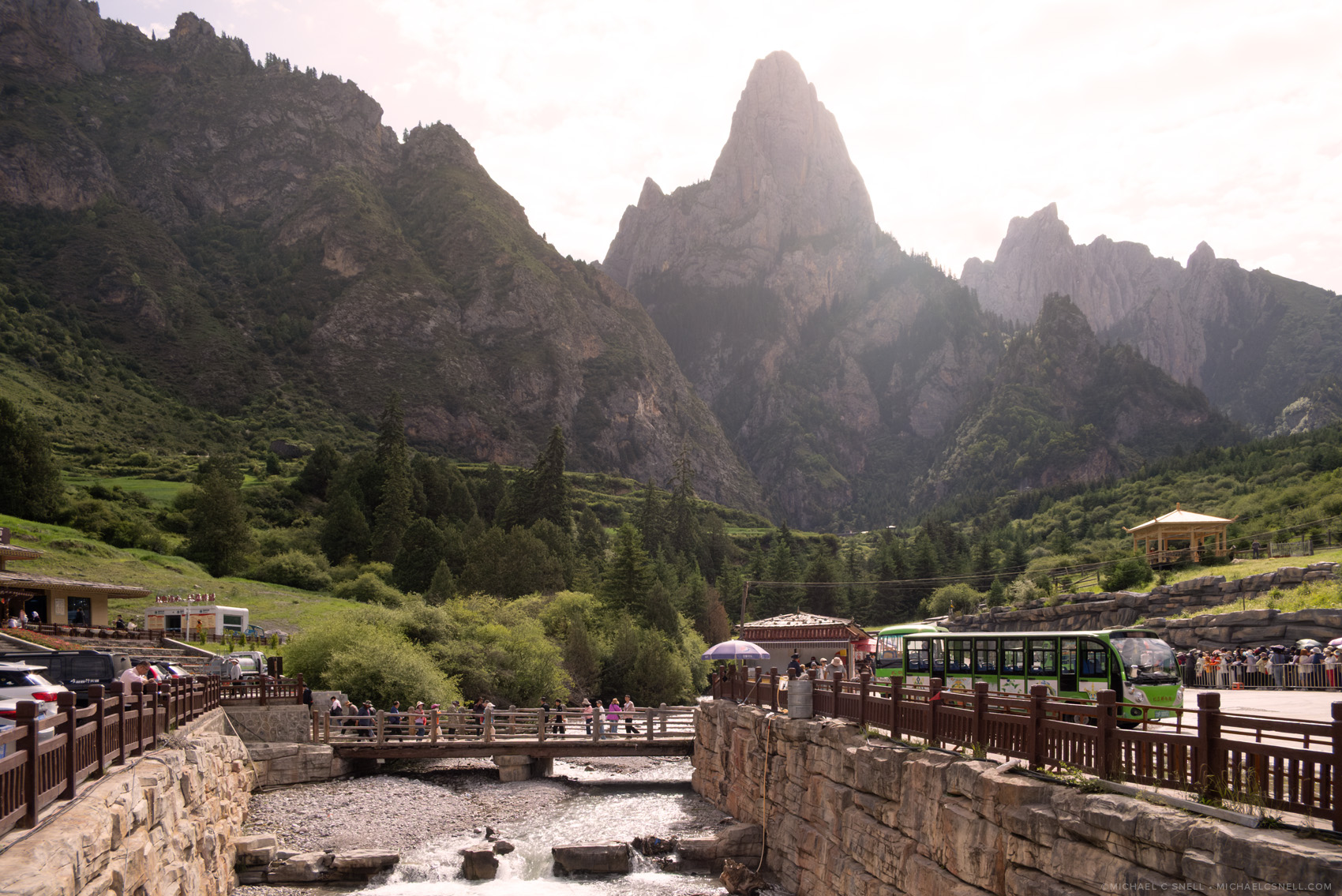
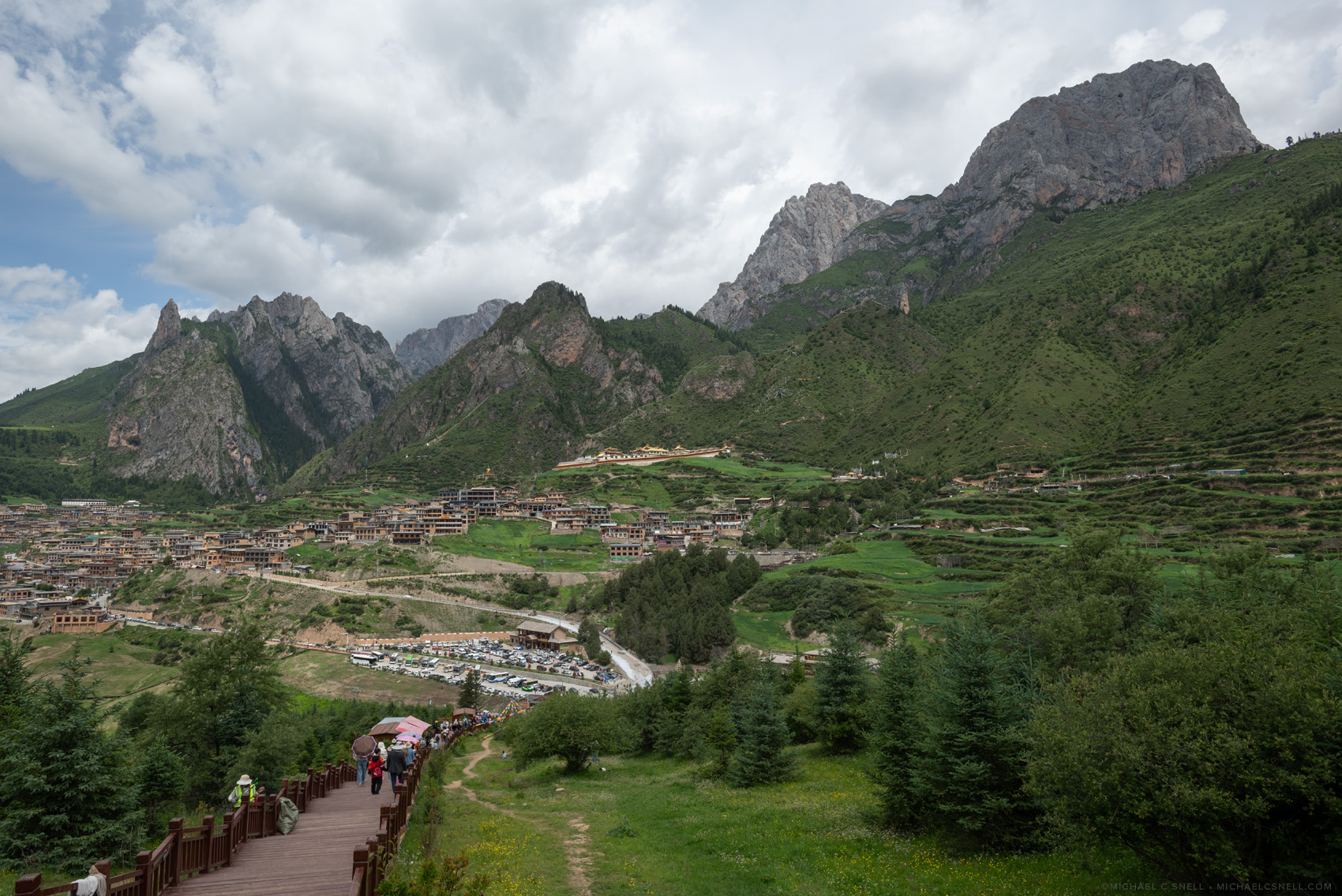
The starting point of our hike, but also the spot from which the busses shuttled tourists part way up the hillside. For those of us (fortunate to be) hiking, the trail first went to the pagoda seen in the far right, then up toward the center of the image where you can see distant rooftops of other pagoda lookouts glinting in the sunlight. (click image to view larger)
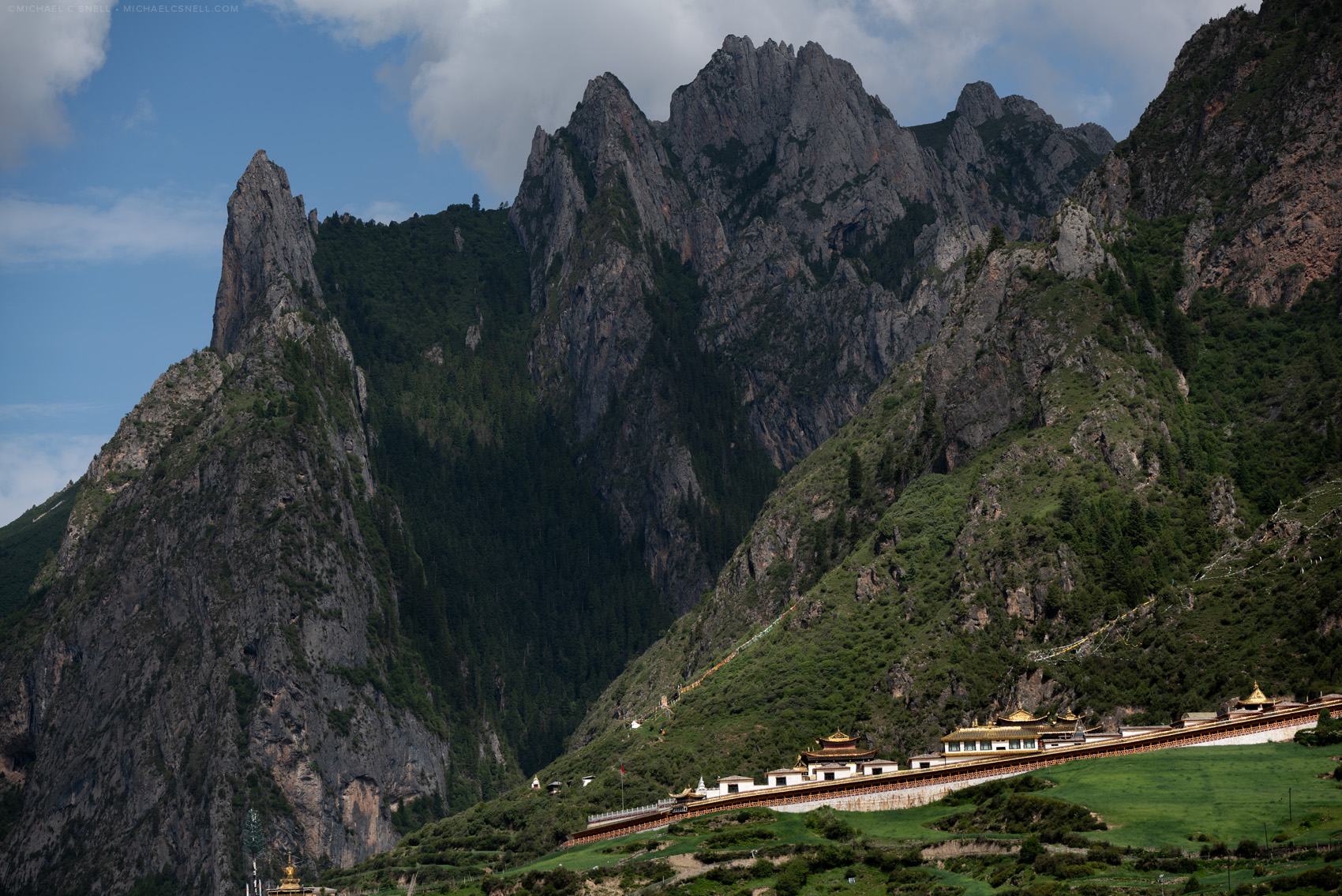
We met up with the busses at the point where they dropped off and joined the other tourists on a now much wider wooden footpath, on up the mountainside.
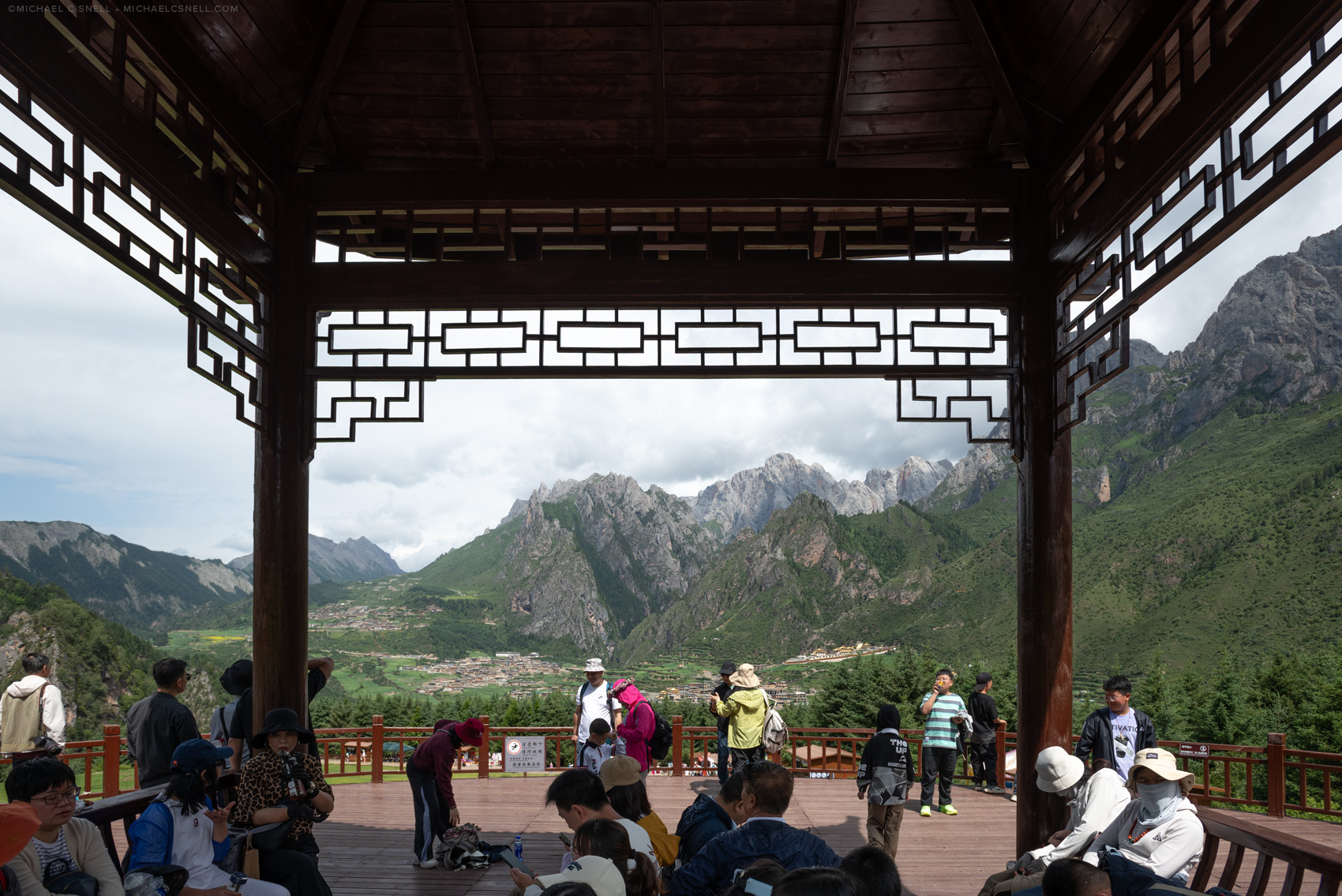
From this point there are kiosks along the way selling tourist items and food. Eventually you come to a wide open meadow with an even larger pagoda — more of a pavilion, really — with another, more distant view across the valley to the monastery and villages. It’s beautiful, but it’s not as impressive as some of the views from the earlier path. I’m so glad we did the entire hike rather than starting with the bus. The bus really takes you past the most interesting part of the walk as far as I’m concerned.
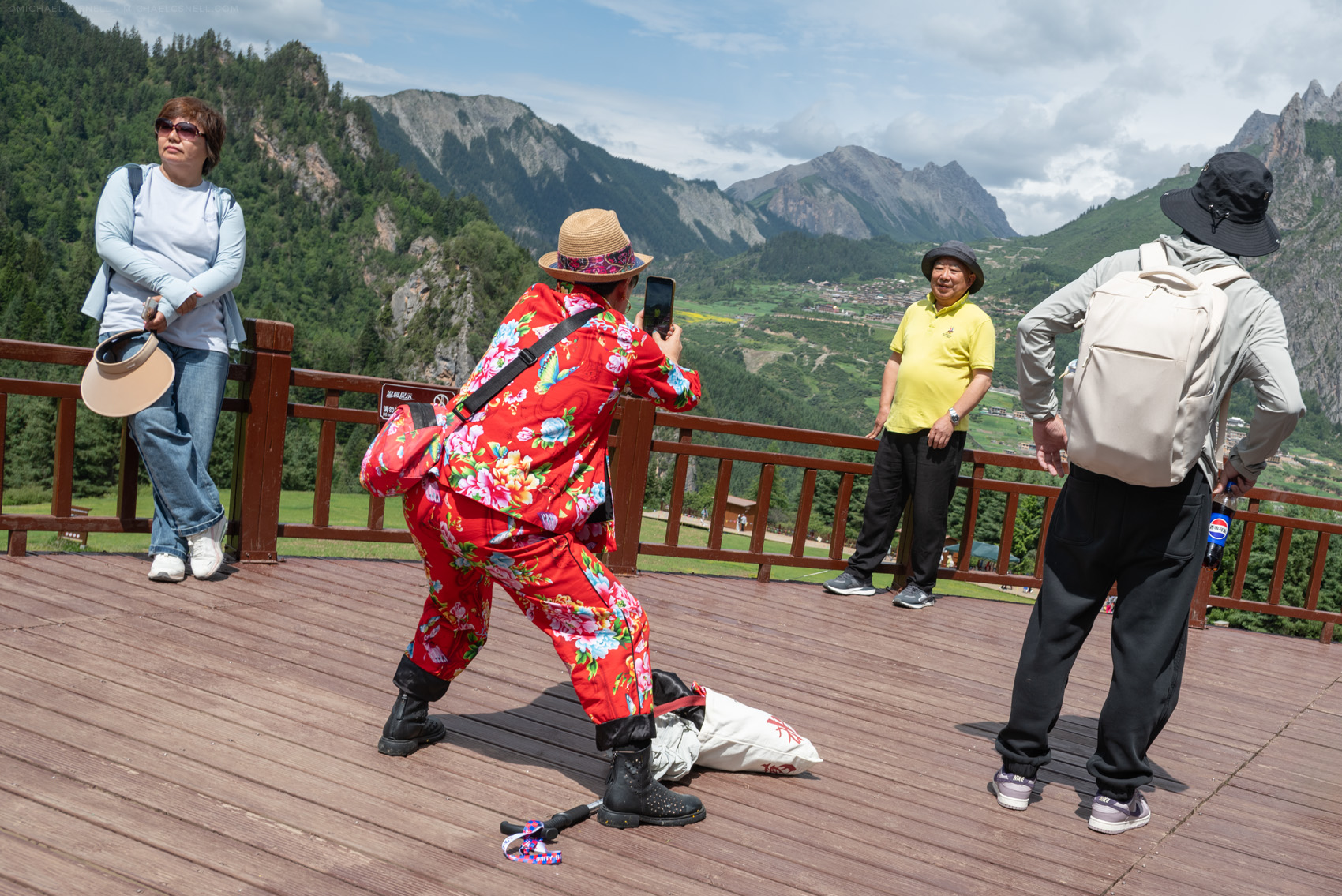
From the main pavilion, where everyone is taking their selfies, you can start down a much more direct set of wooden stairs back to the parking area. It’s well worth the full hike for the different views, especially on a day where the weather is changing and you get a variety of skies and low altitude clouds. If you were pressed for time, I’d say just walk up to where the busses drop off and take the bus back down. You’ll have seen the best views and avoided the crowds.
We overnighted in Hezou and on the way out of town the following morning, made a quick stop to see the Milarepa Palace and Tso Monastery. Then it was back to Lanzhou to rejoin the Silk Road.
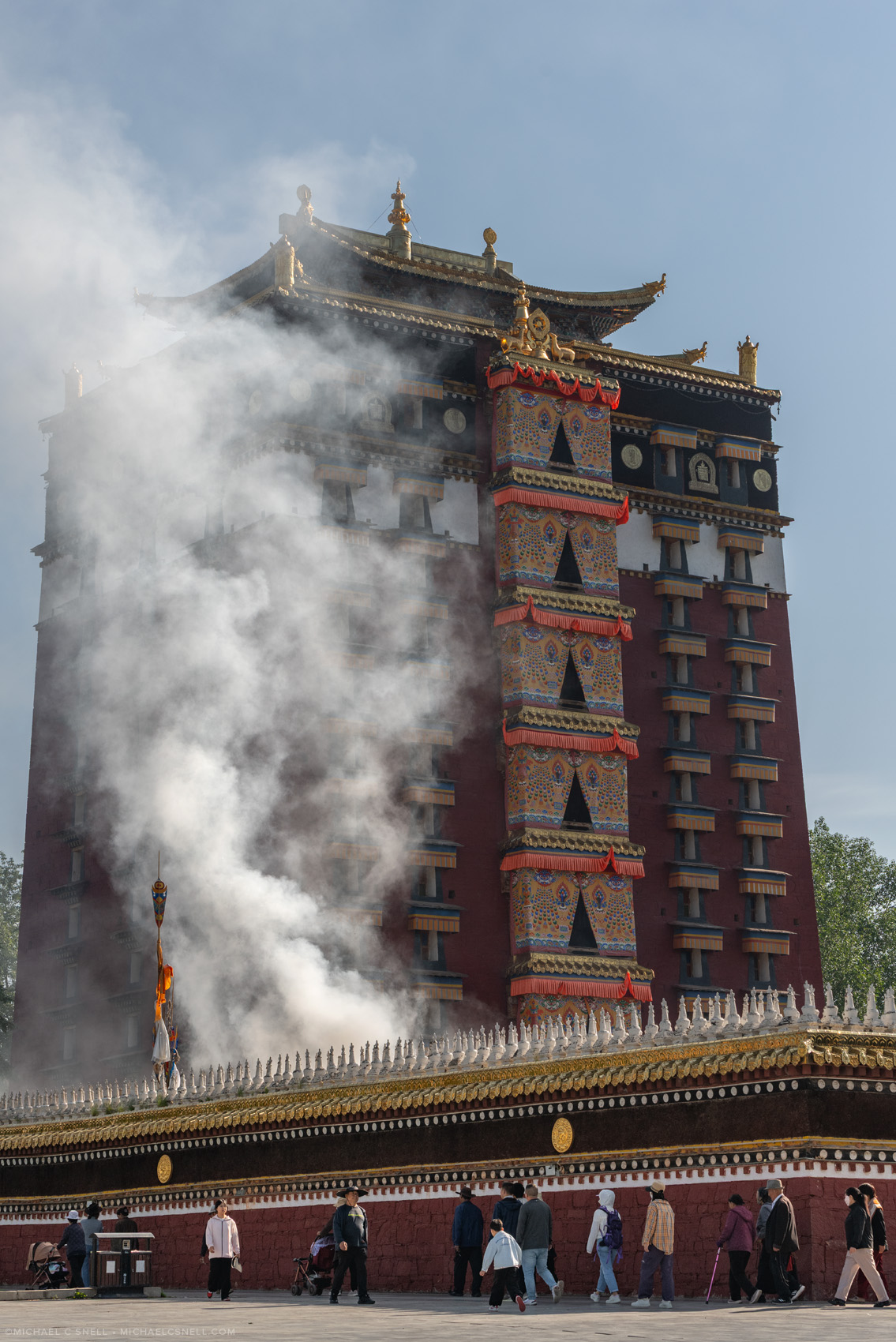
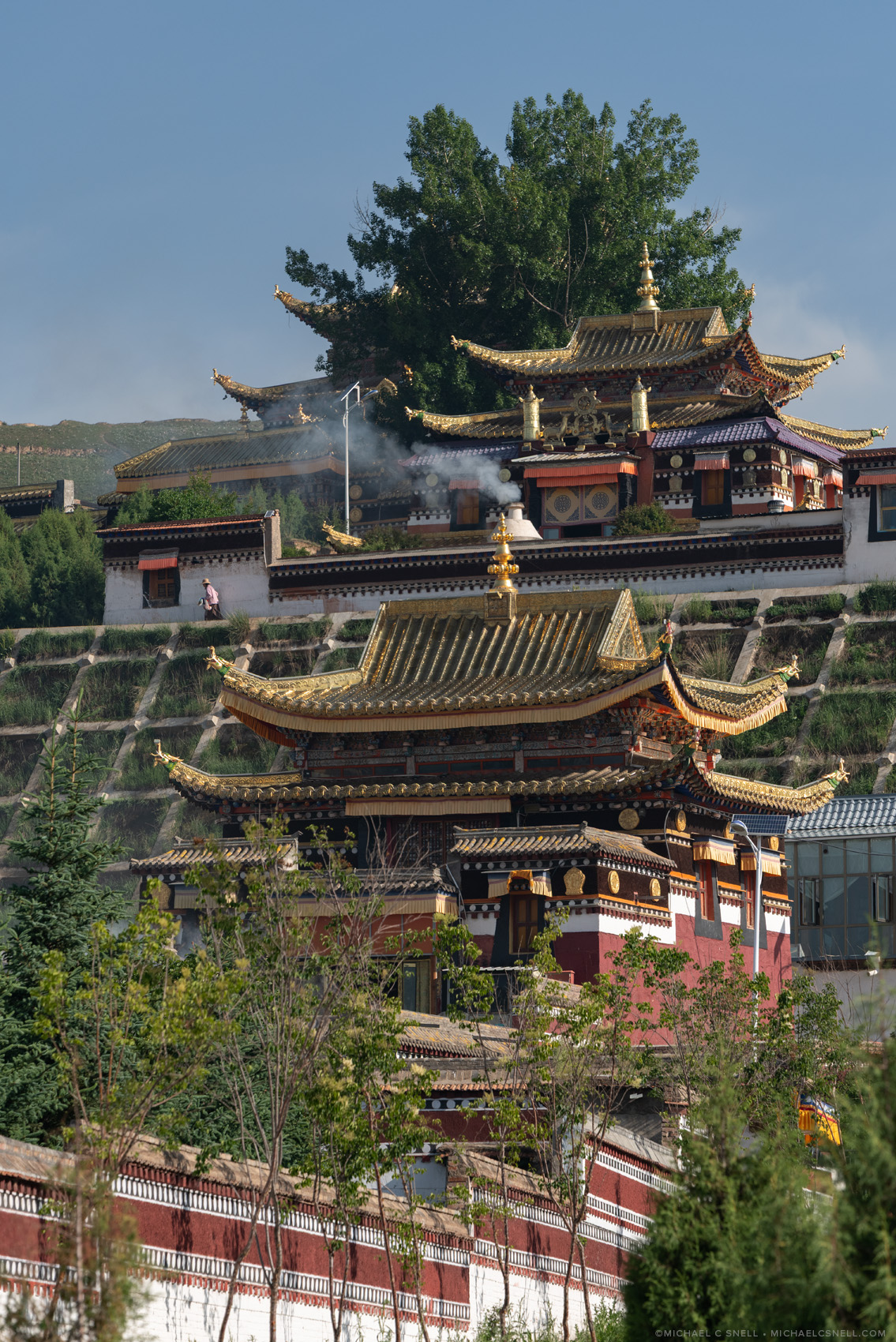
Tso Monastery in Hezuo.