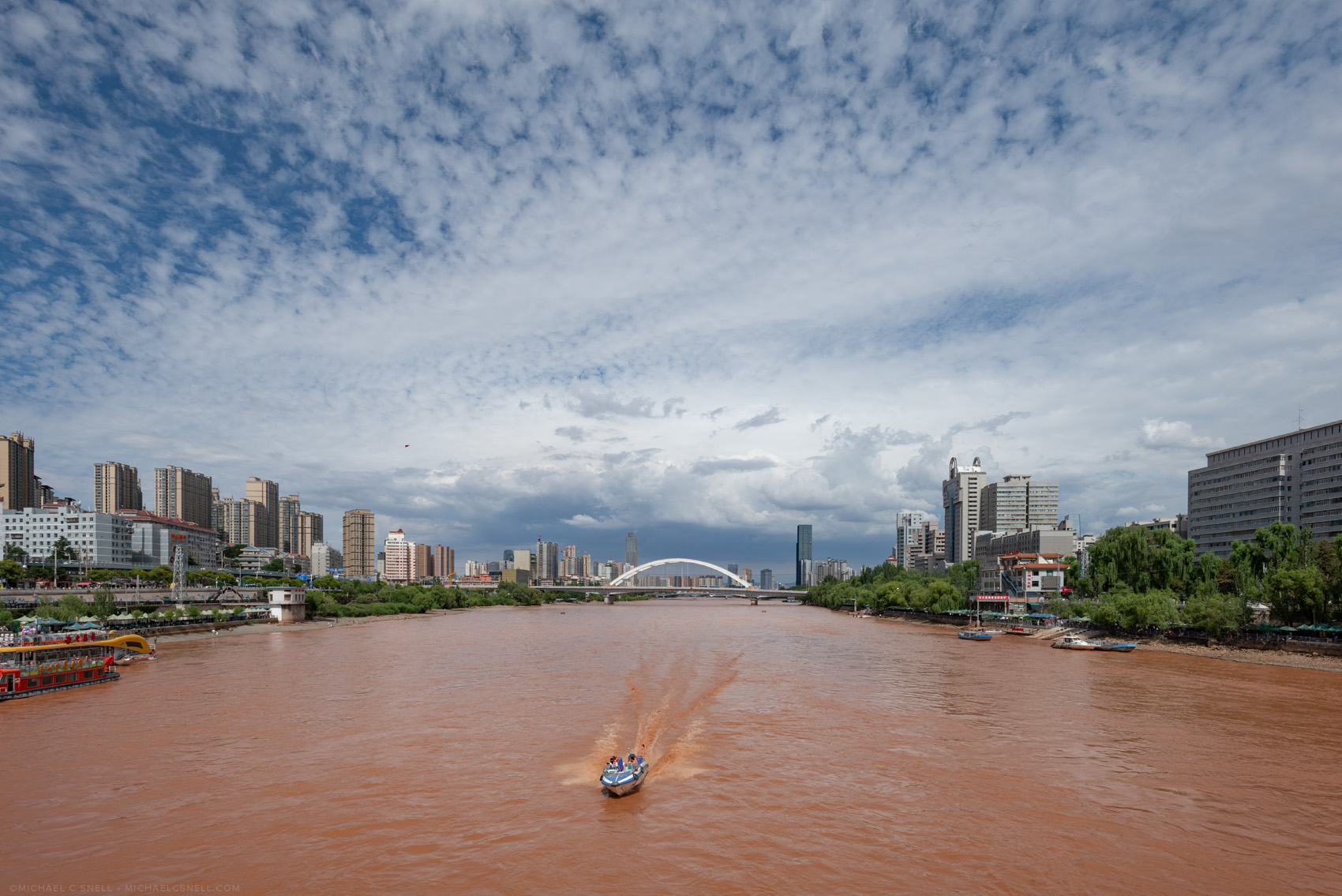
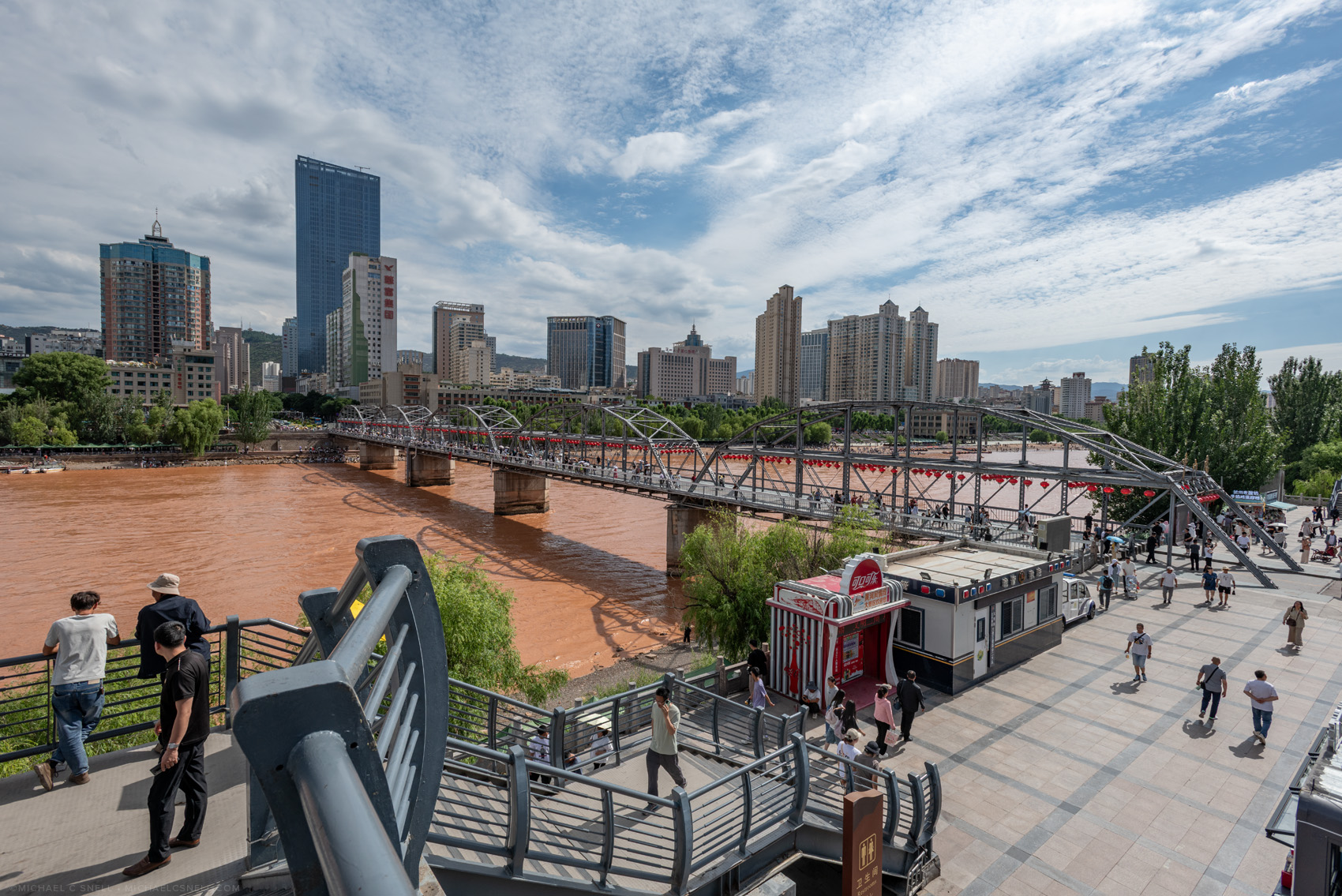
After three days of exploring the Gannan Tibetan Autonomous Prefecture, we found ourselves back in Lanzhou, China. When we’d first visited several days earlier, we’d only managed to see a few sites along the Yellow River, including the Zhongshan Bridge — the first permanent bridge ever built over the Yellow River.
Now on our second visit to Lanzhou we made a stop at the Lanzhou Noodle Museum for lunch and a quick lesson along with these kids on how to make noodles. Spoiler alert, the kids did much better than we did.
Beef noodles are a big thing in Lanzhou. According to the Wikipedia page, “In 2001, Lanzhou beef noodles were designed as one of China’s three main fastfood varieties (alongside Quanjude Peking duck and Goubuli baozi). In 2010, the dish was recognized with the Chinese equivalent of protected designation of origin. The skill of making Lanzhou beef noodles was included into China’s national intangible cultural heritage list in 2021.”

Lanzhou Night Market
To end the day, we paid a visit to a Lanzhou night market. We would visit a few of these over the course of our two weeks in China, but this was one of the most lively and photogenic. Between food vendors, people strolling and shopping, and families gathering for dinner, there was a great variety of subject matter for photography.
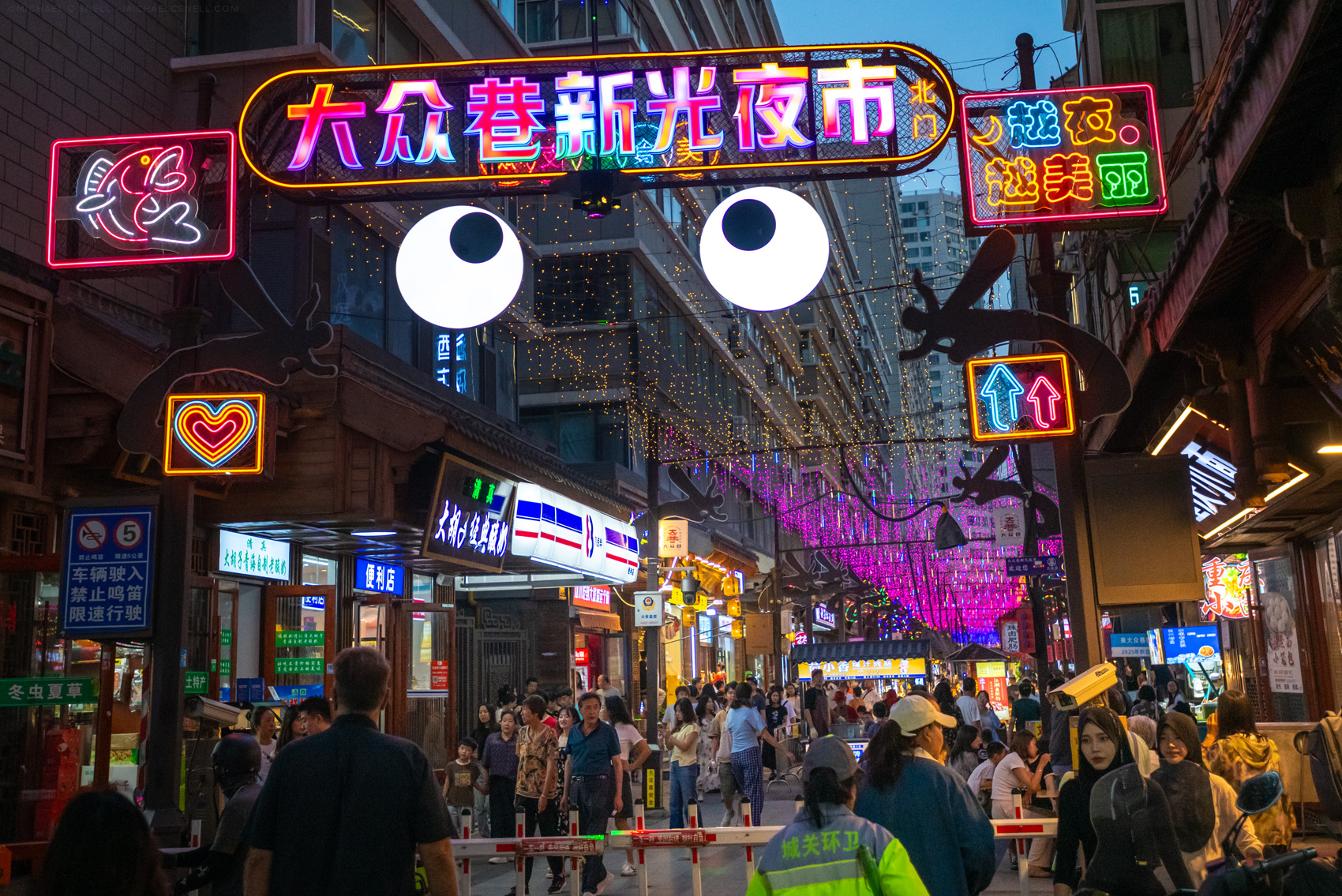
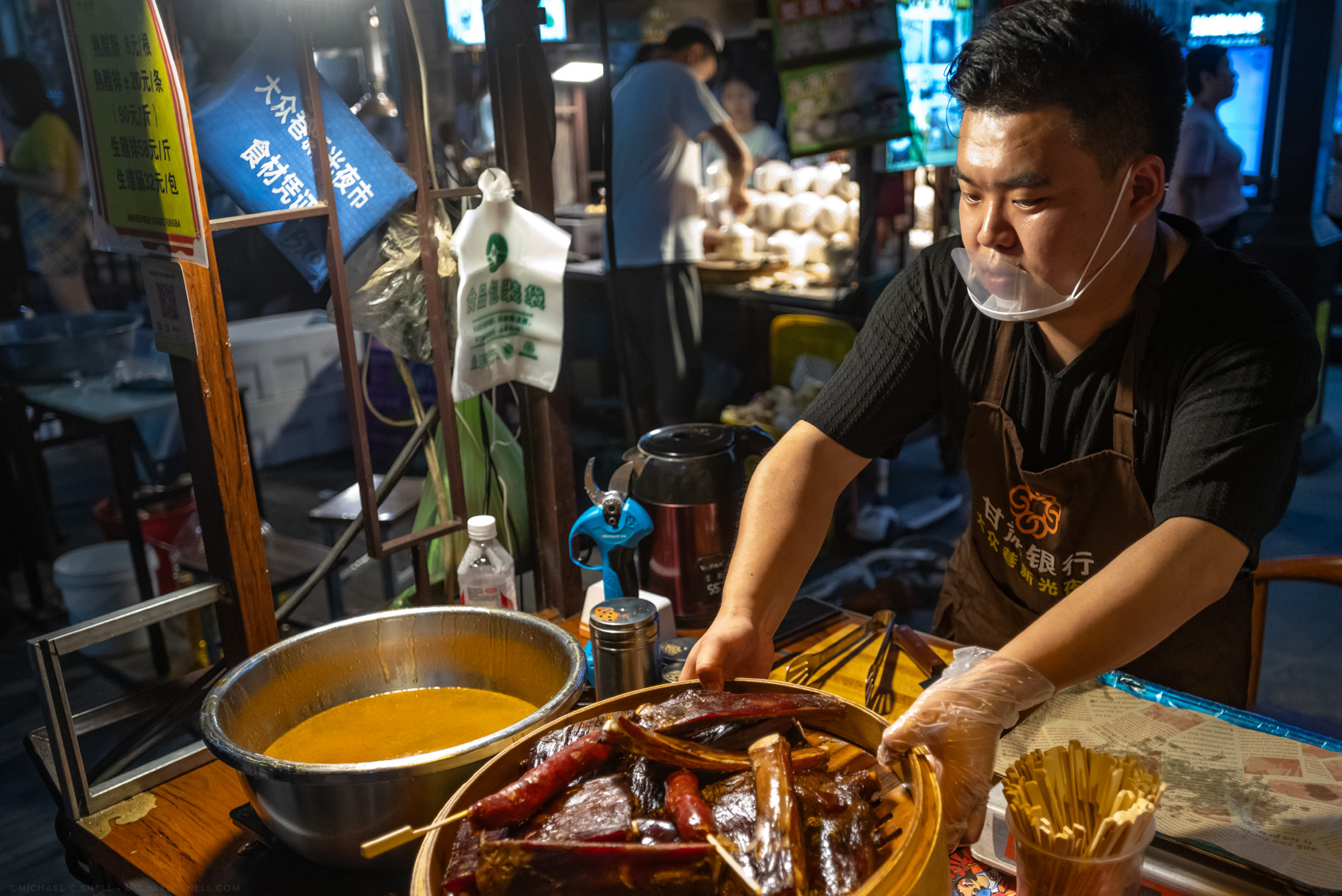
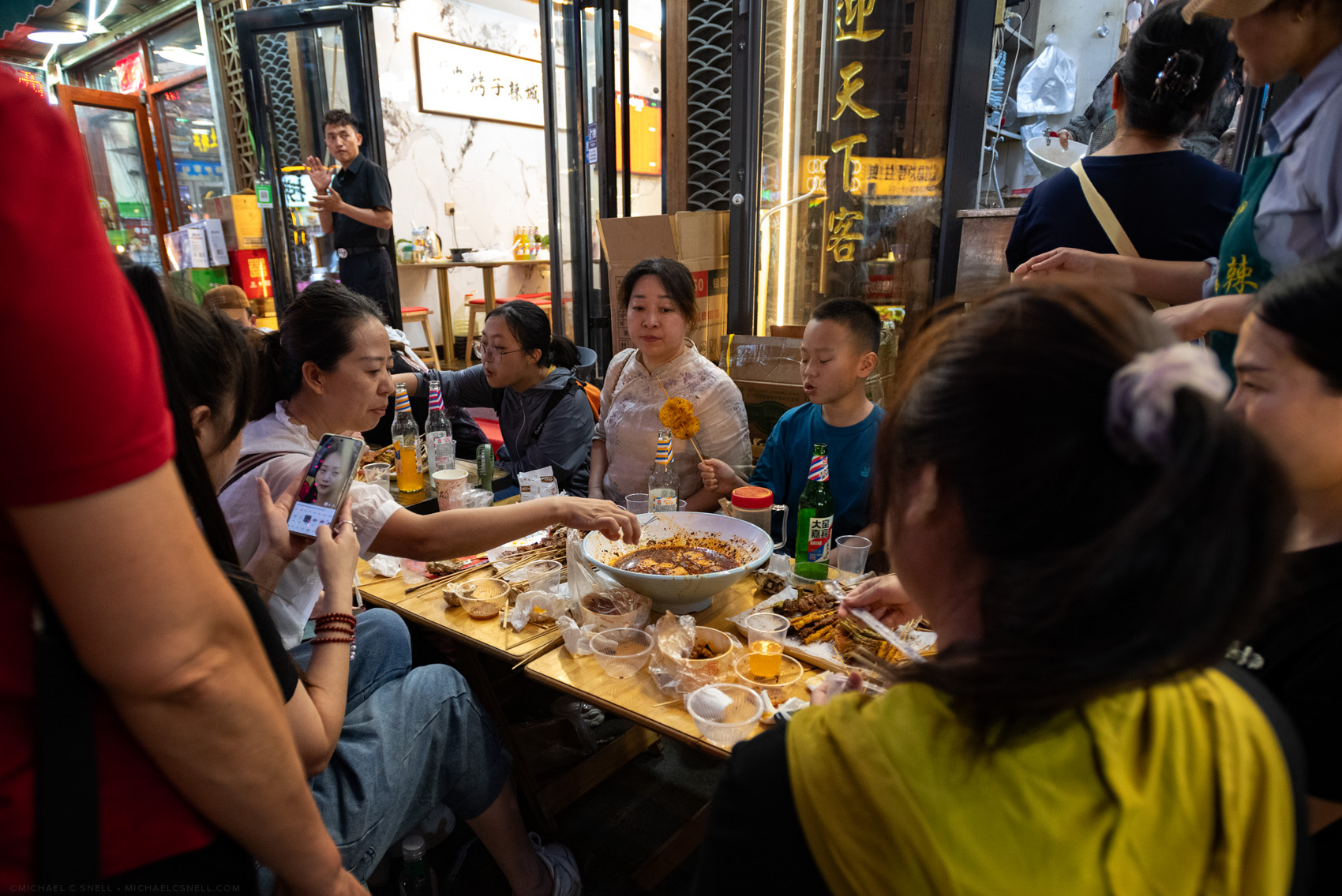
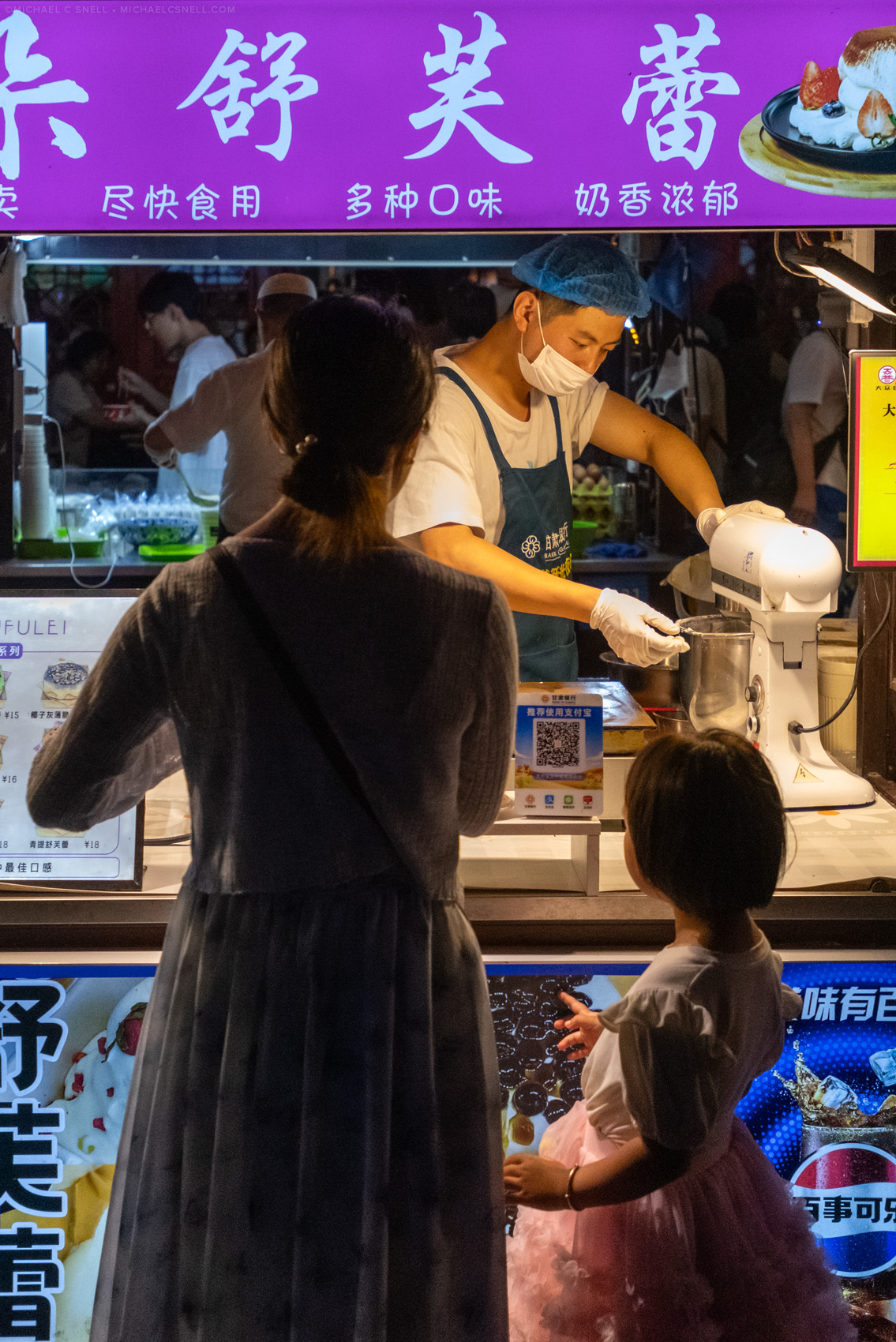
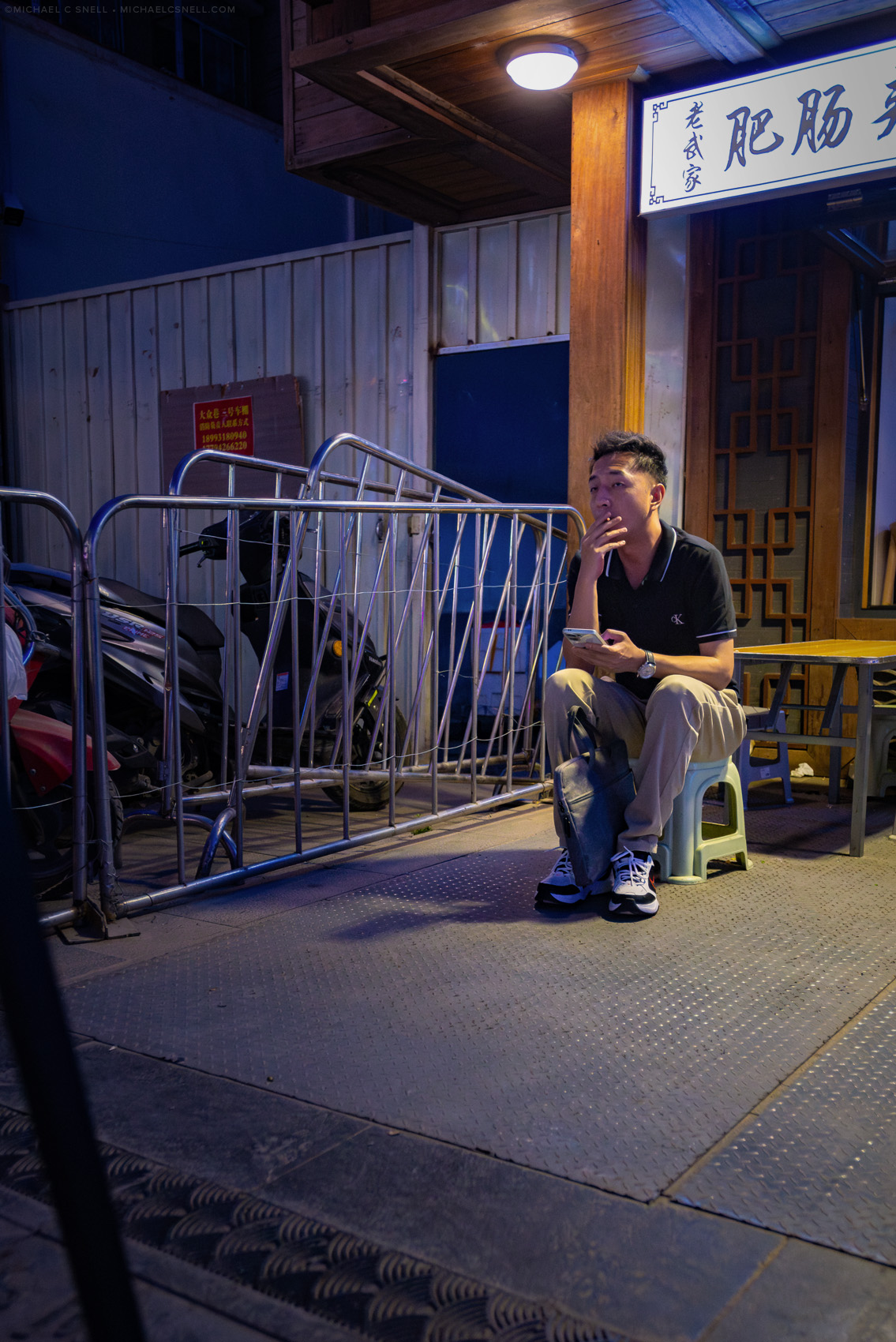
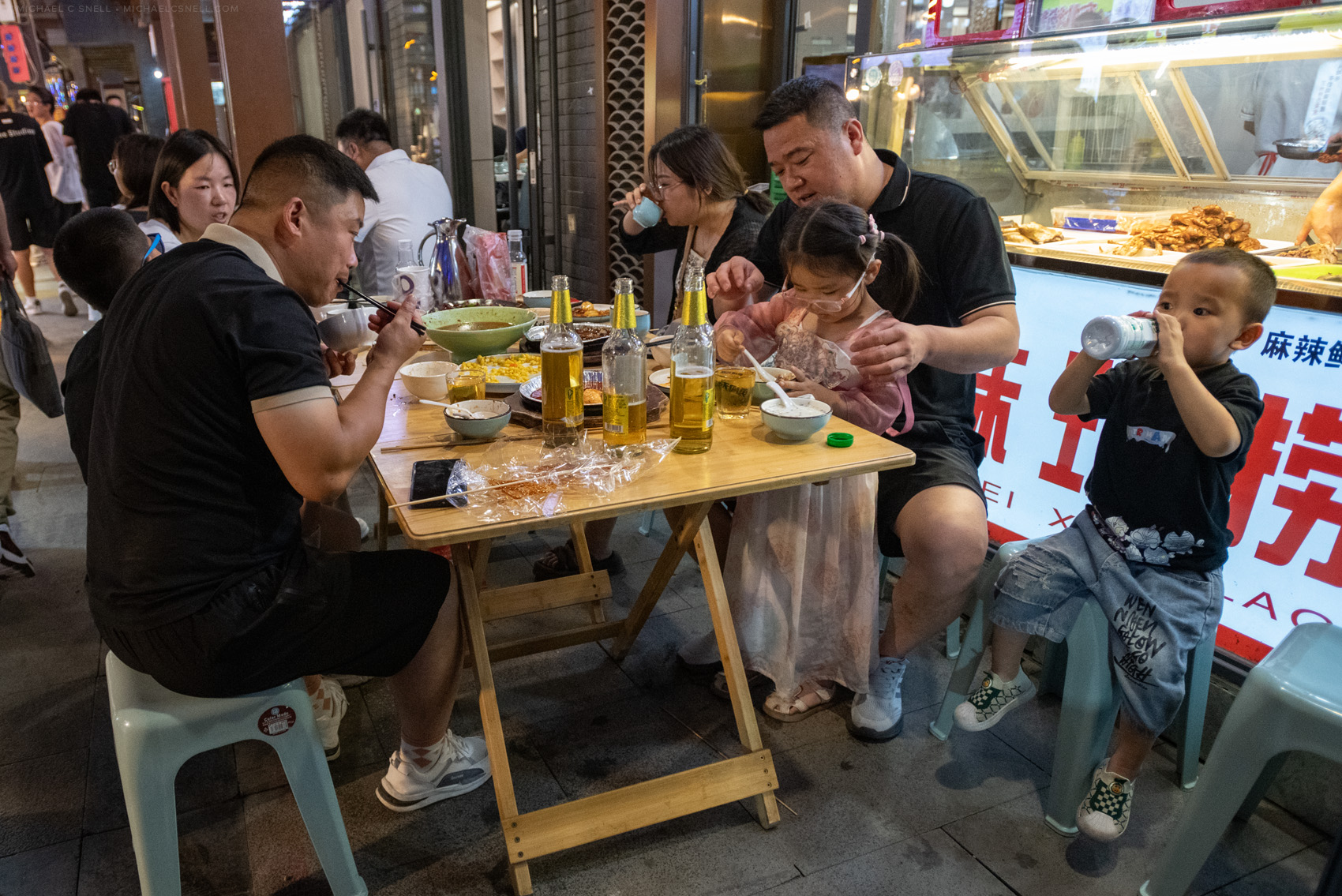
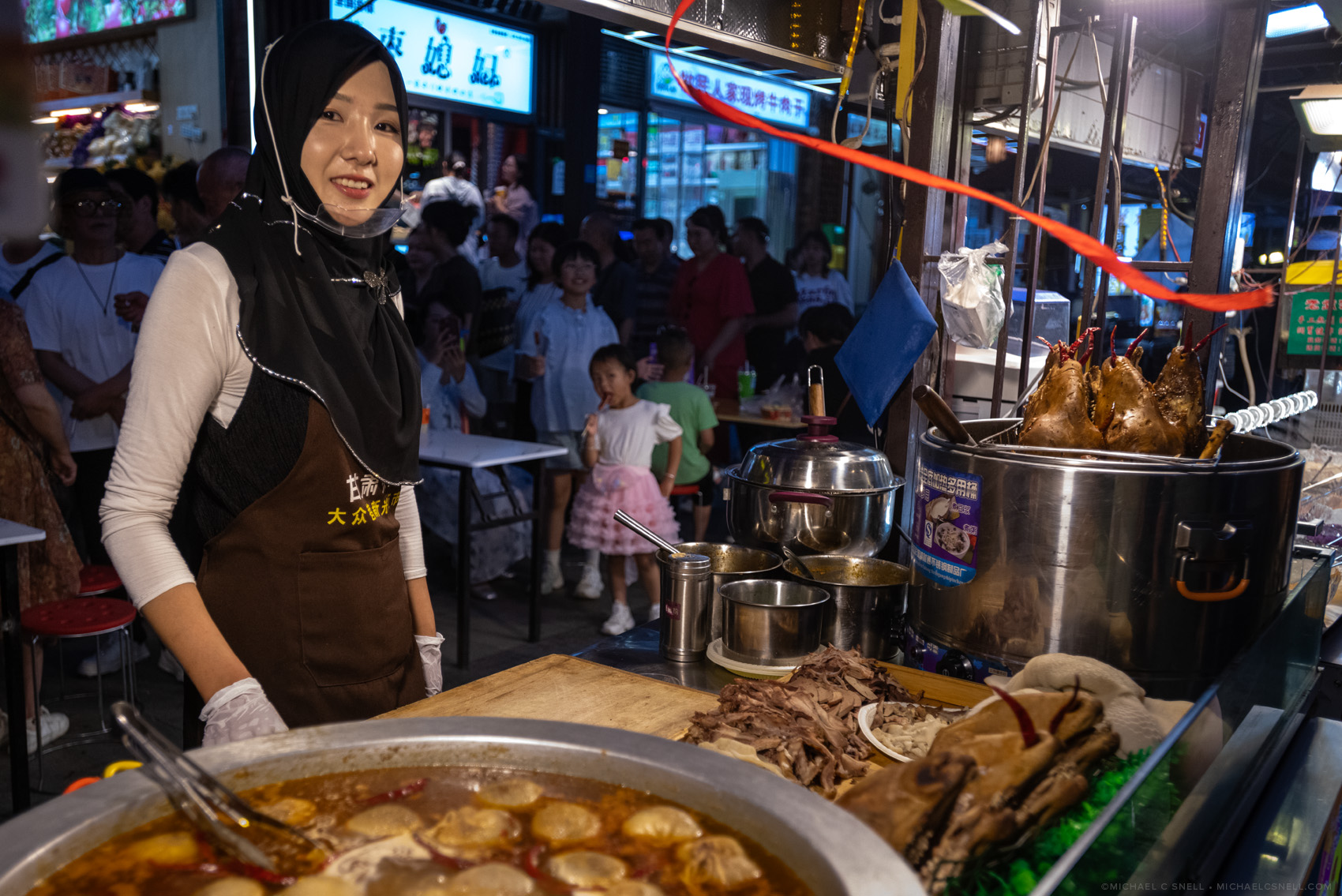
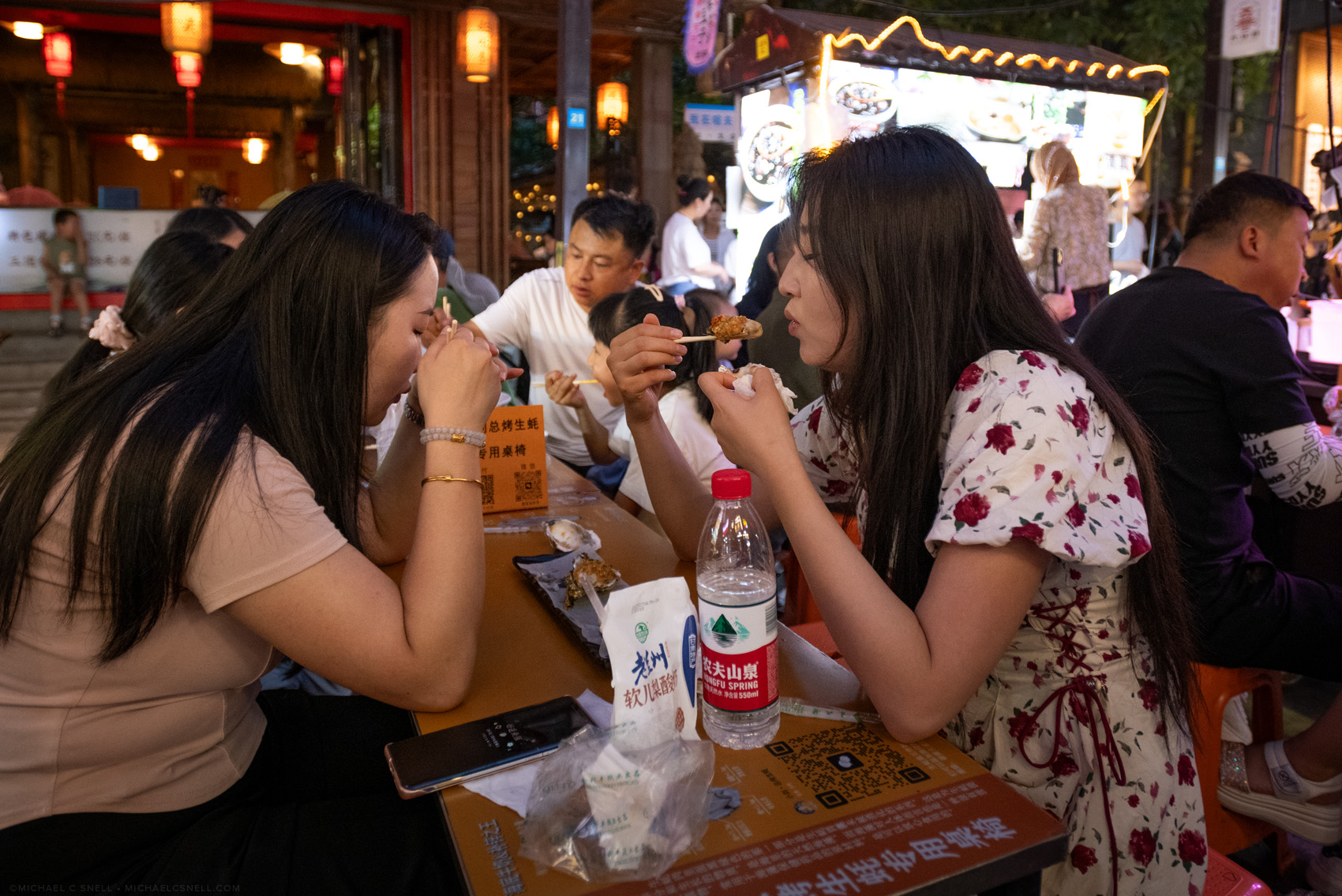
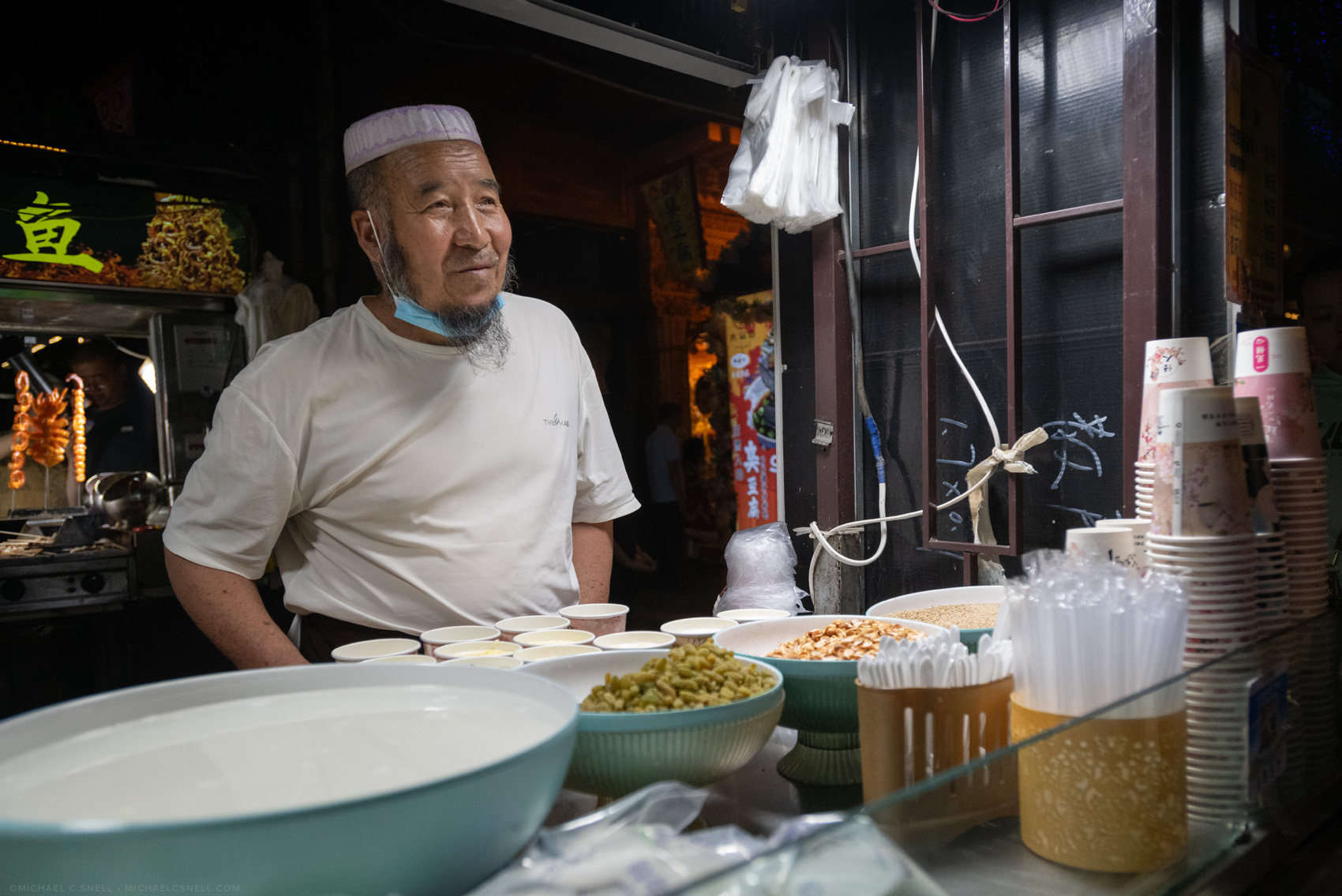
Photo tip: Lighting in areas like this night market is often a mix of a variety of types of light. Even though you don’t see it with the naked eye, some lights, like modern LEDs, rapidly flicker on and off. You can shoot at a slower shutter speed to capture these lights the way your eye sees them, but you’ll need to be slower than 1/50th or 1/60th of a second. With all of the activity and movement in the market, I was shooting at speeds around 1/500th of a second so that people wouldn’t be blurred. The trade-off was that my frames were hit-or-miss at whether they captured the lights properly.
Here is an example:
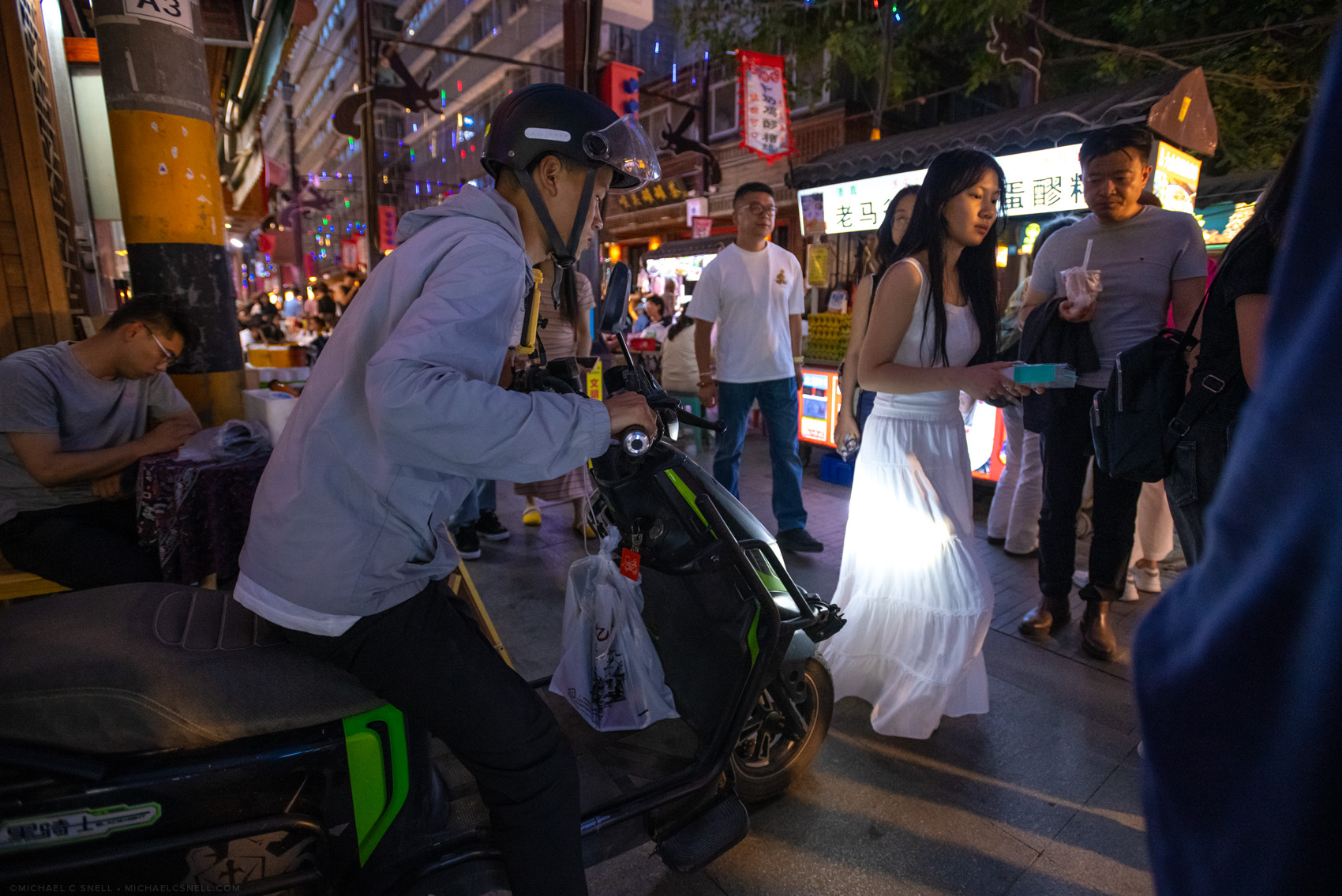
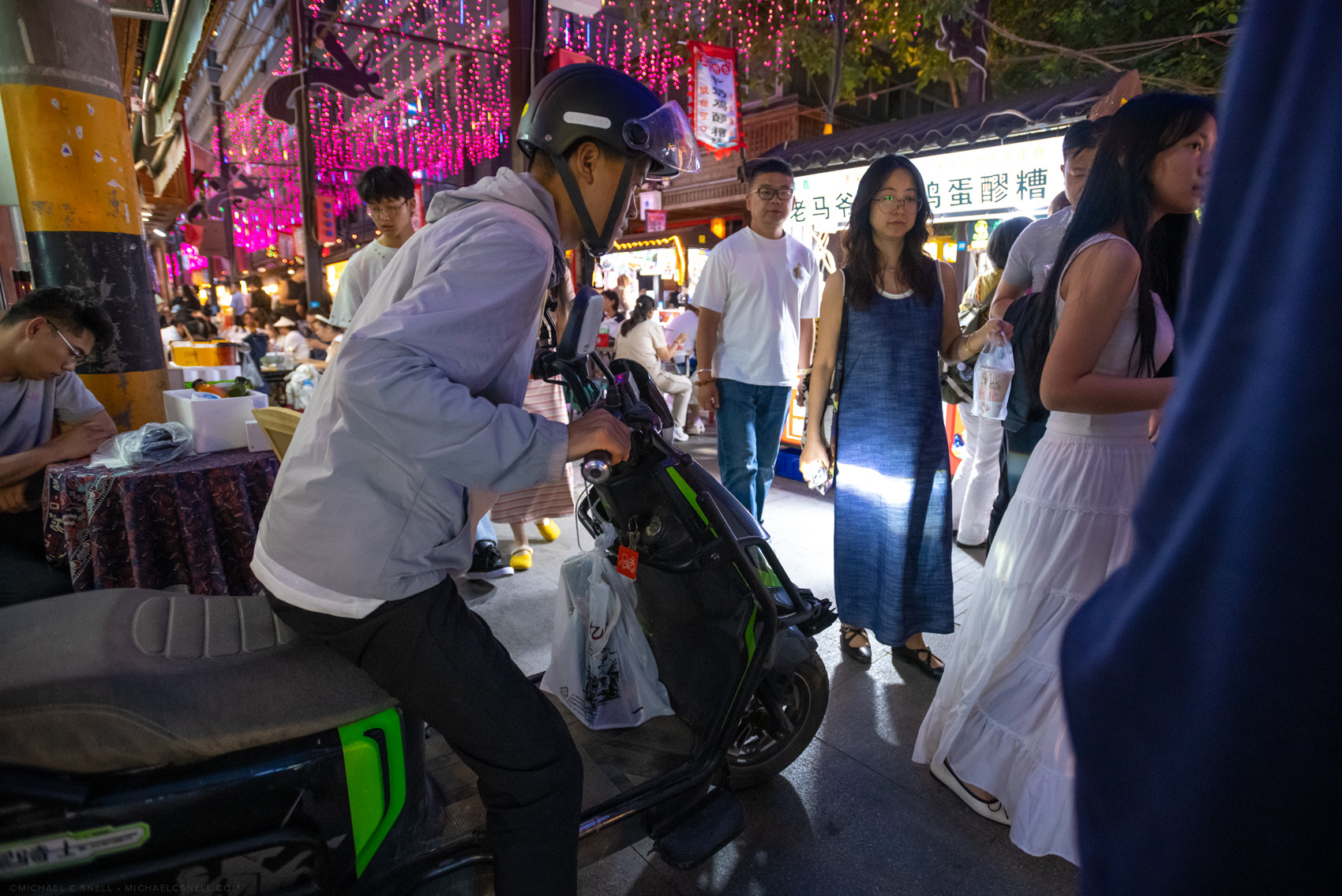
I shot these two images back to back and you can see how differently the lights recorded in each — especially the pink/purple lights hanging above the street. Once I was aware that the flickering was a problem, I just made a point of shooting short bursts of multiple images to try and ensure that at least one would capture the lights the way I was seeing them. Thankfully we have digital cameras that allow us to see our results immediately. Back in the film days this would have been a nasty surprise weeks later when I got the film back from the lab and saw that the lights were invisible in most shots.
A slow shutter speed can alleviate this problem, but you’d have to compromise with more motion blur. Just choose what’s most important to you or shoot some both ways and have some options.




One Comment