On our last day touring Gansu Province, China, we drove out of Dunhuang to visit the Yardang National Park and Yumen Pass. The dust storm of the day before had passed and I was at least able to get a distant glimpse of the sand dunes as we headed for Yardang National Park. The photo in the header of this post is the view of the dunes I had through the moving bus window.
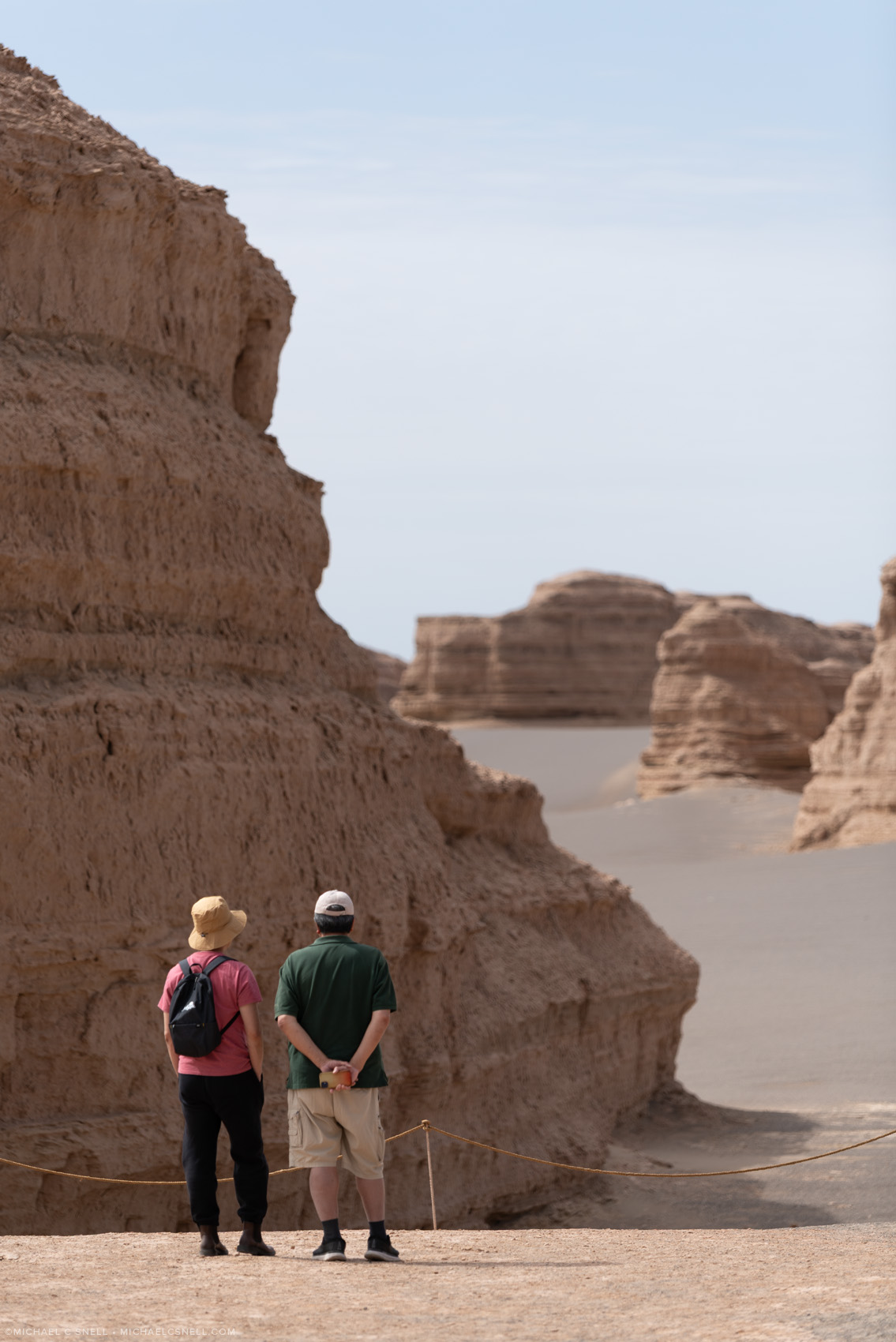
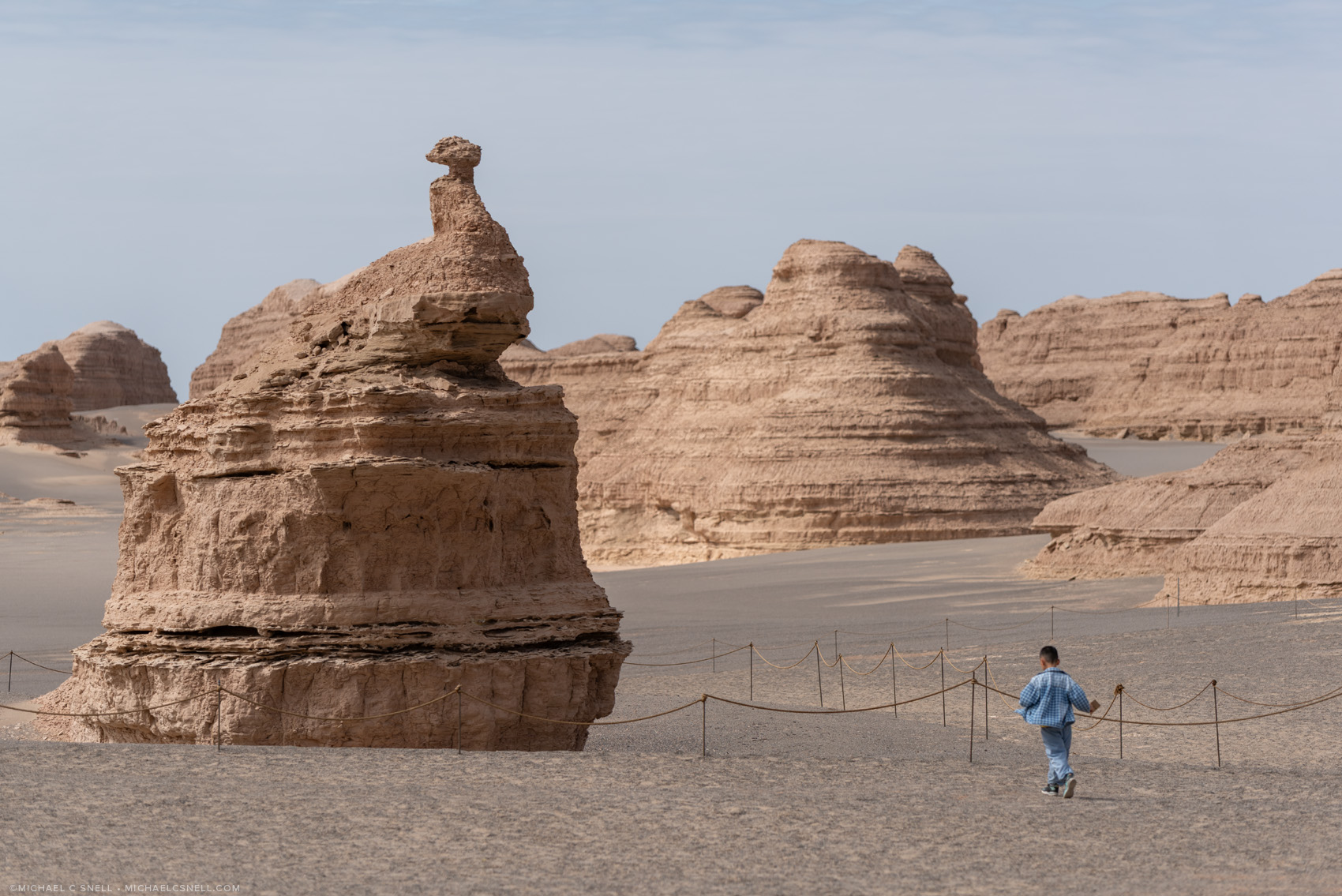
If you’re wondering what a Yardang is, Wikipedia describes it as “a streamlined protuberance carved from bedrock or any consolidated or semiconsolidated material by the dual action of wind abrasion by dust and sand and deflation (the removal of loose material by wind turbulence).”
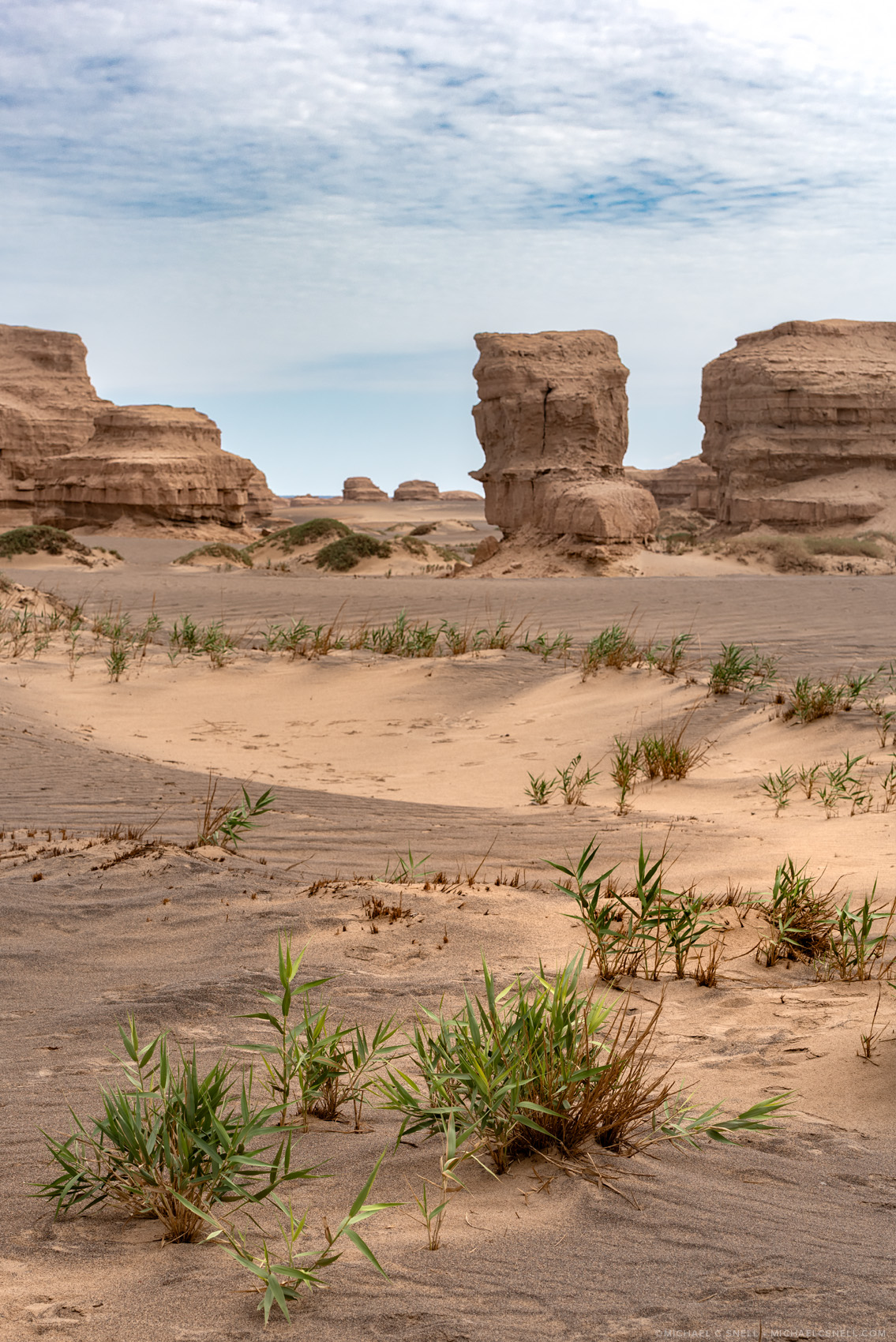
So there you go. Basically, Yardang National Park is a UNESCO site that covers a massive amount of space and holds many, many rock formations jutting out of the desert. It’s a fascinating and beautiful place.
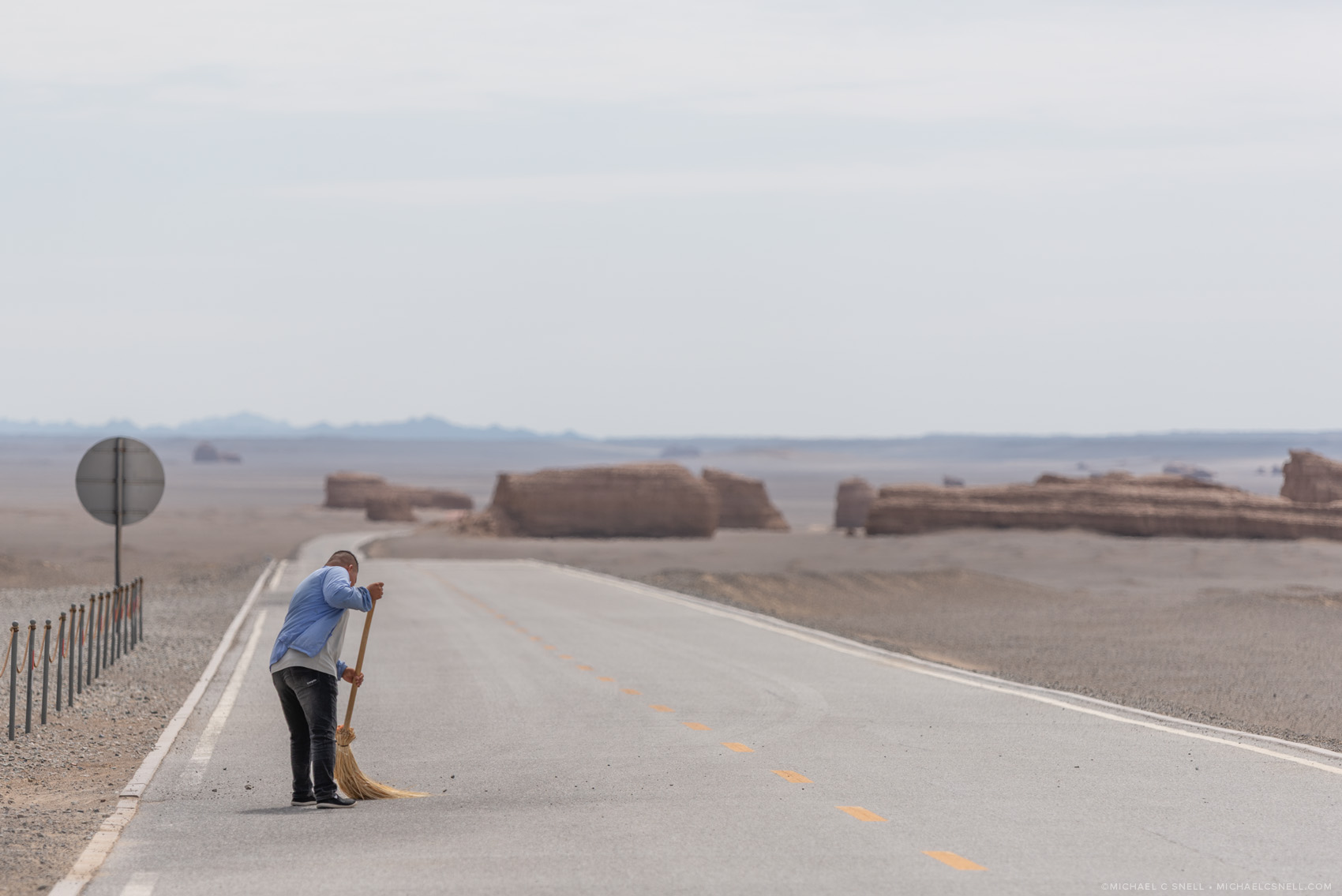
Once again, the park tour was by bus. You board a tourbus at the entrance and it shuttles you from stop to stop. As far as I could tell, the park was closed to private vehicles and all tourist traffic was handled by these busses (or big modified jeeps). I could be wrong about that, but I don’t recall ever seeing a private vehicle on the desolate roads. I had to chuckle as I saw this man manually sweeping the road surface. It’s not the first time I’ve seen that on remote highways in China and it never ceases to fascinate me.
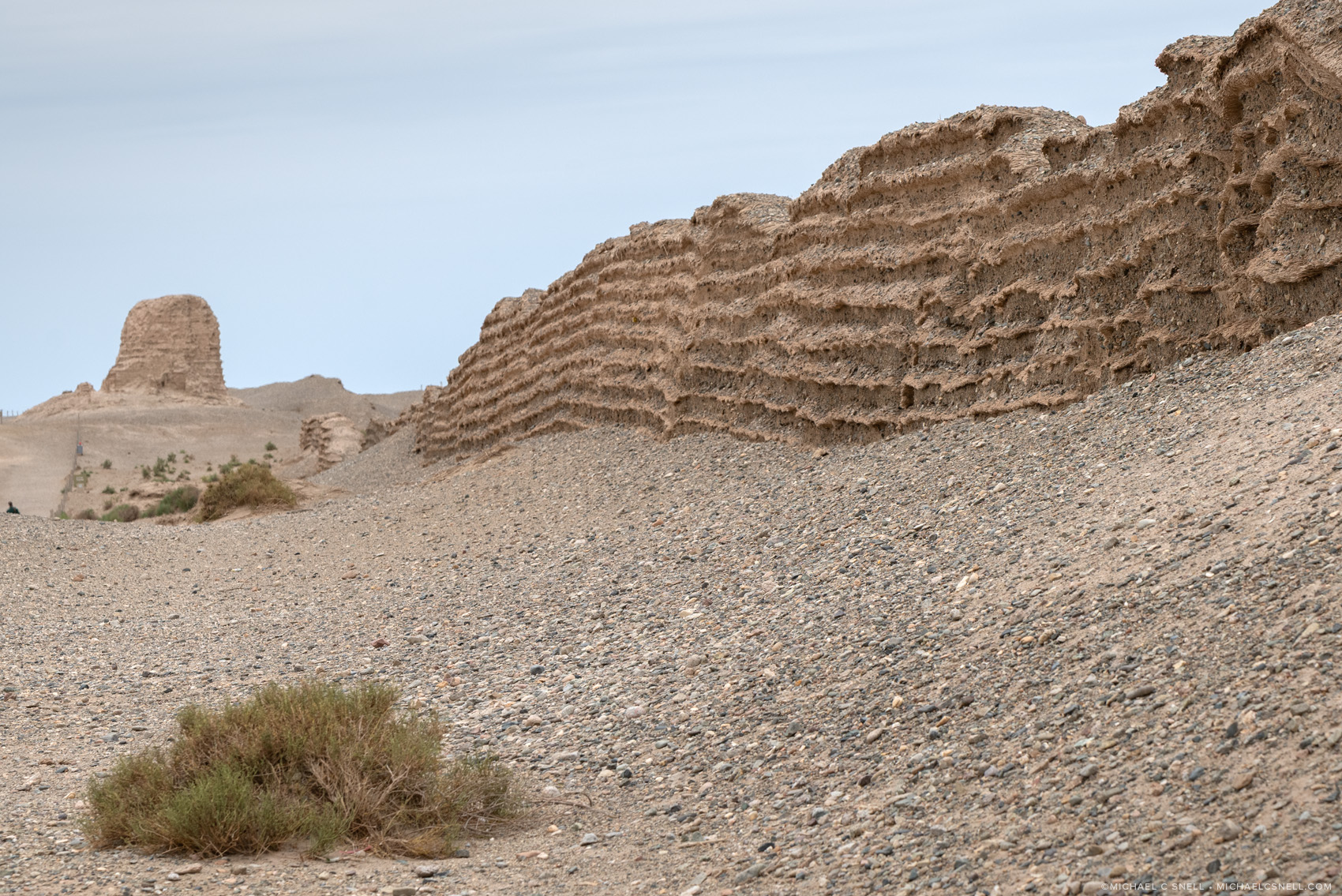
Our next stop was a complex of sites making up Yumen Pass. Yumen Pass, or Pass of the Jade Gate, was a corridor through which the Silk Road passed during the Han dynasty (202 BC – AD 220). This pass, along with other sites along the Silk Road are on the UNESCO World Heritage List as the Silk Roads: the Routes Network of Chang’an-Tianshan Corridor World Heritage Site.
Our bus made stops at several locations. First was this section of the Han dynasty Great Wall with a guard tower in the distance.
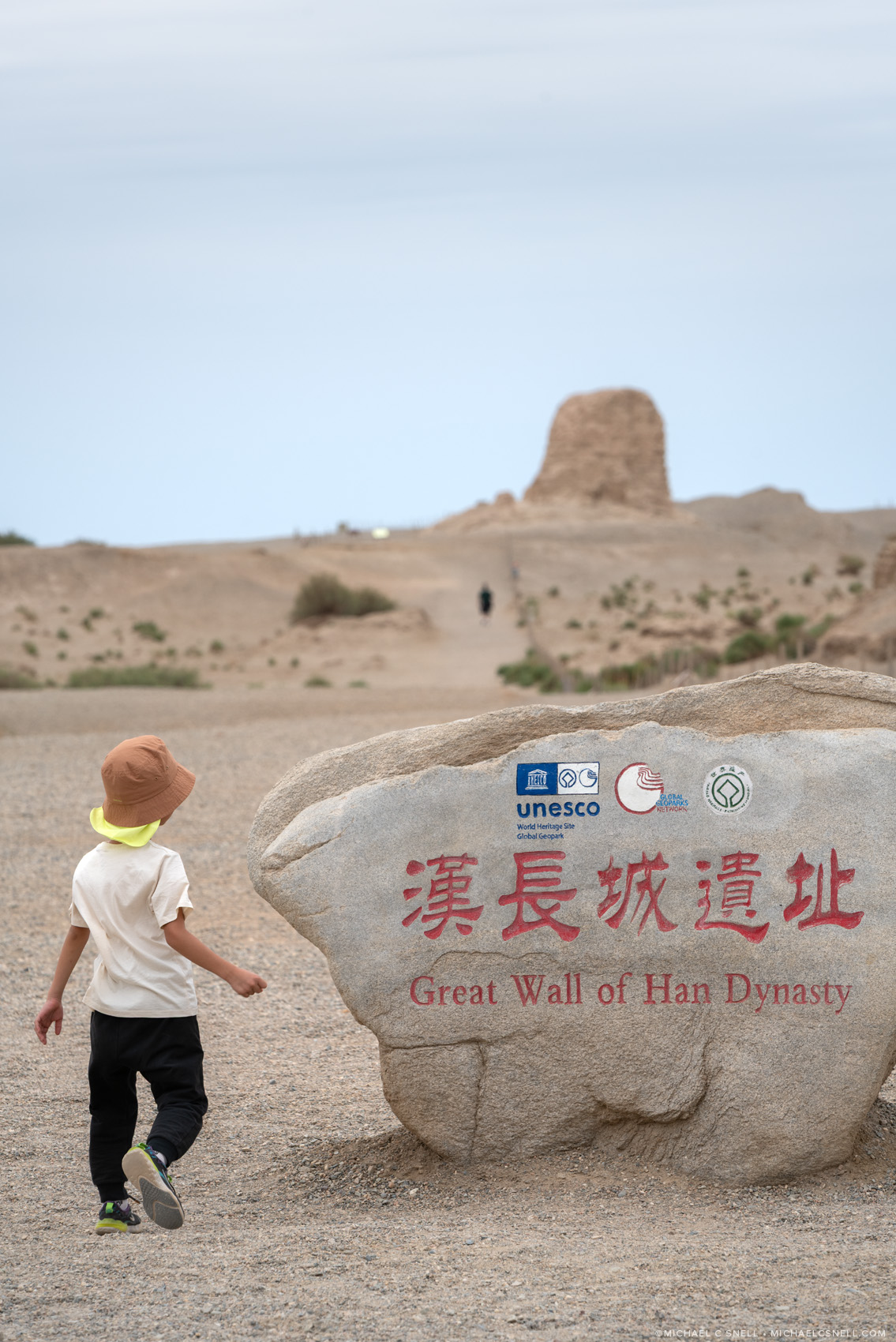
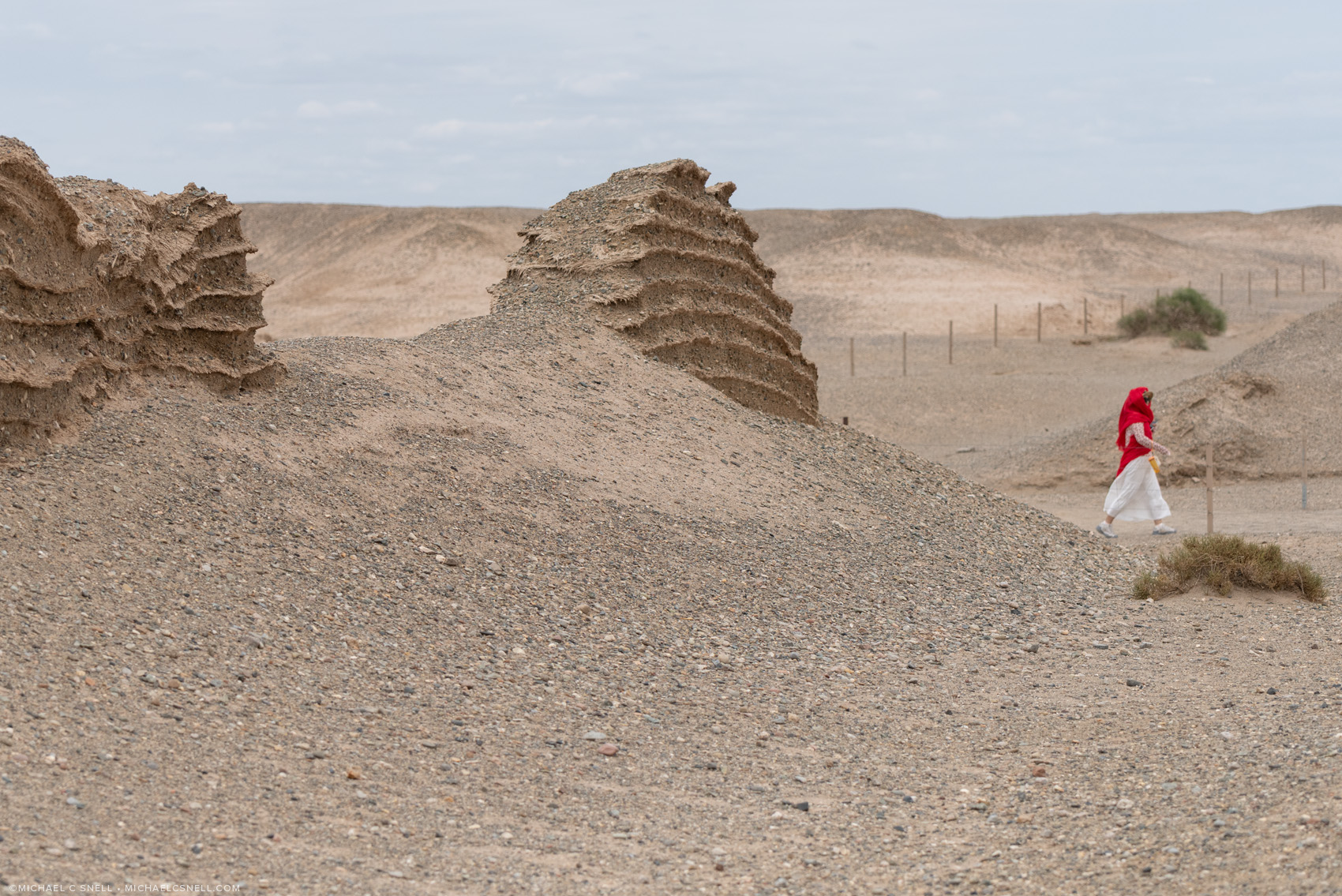
Next up was a visit to the ruins of the Big Fangpan Castle, a significant quartermaster depot from China’s Han Dynasty.
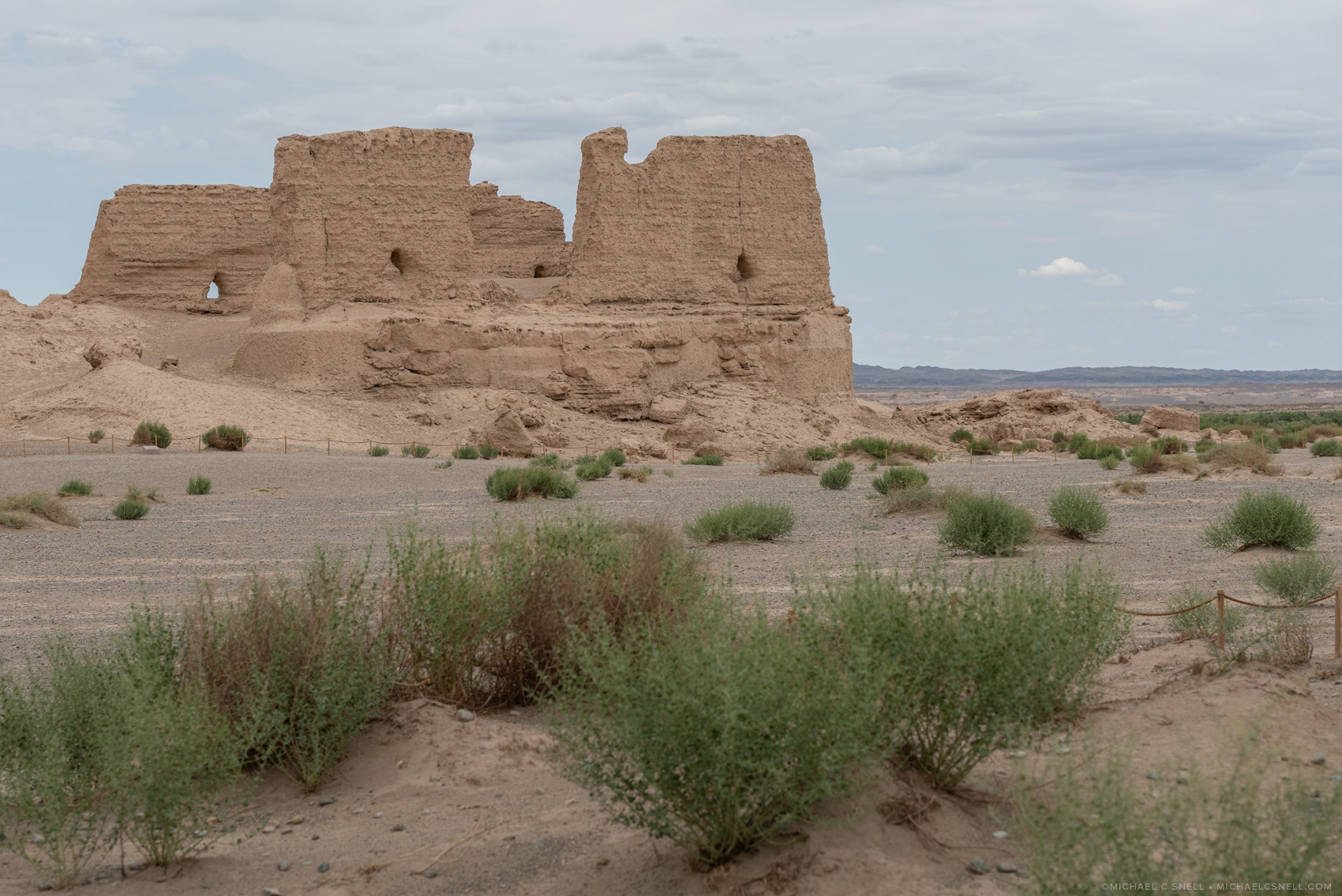
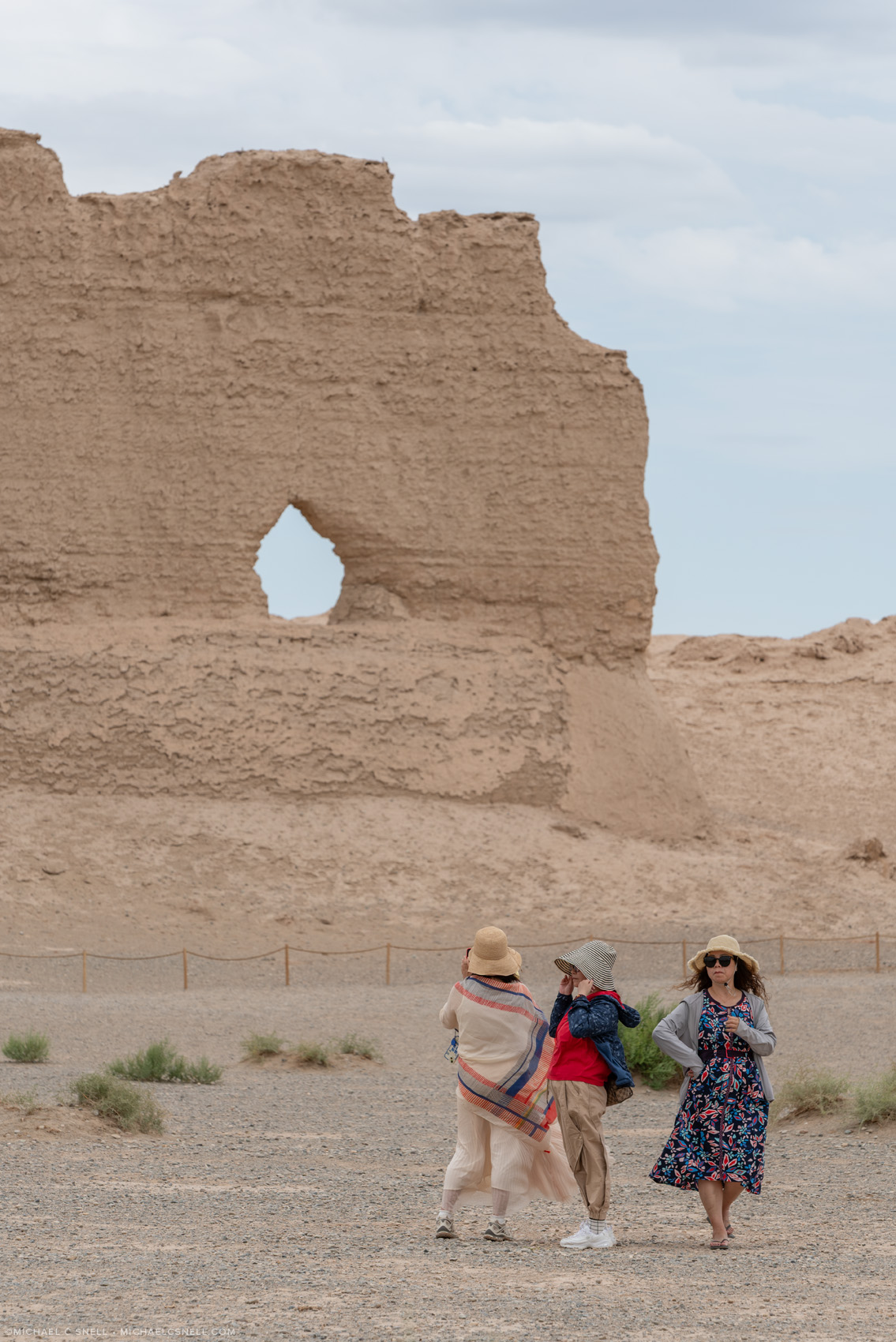
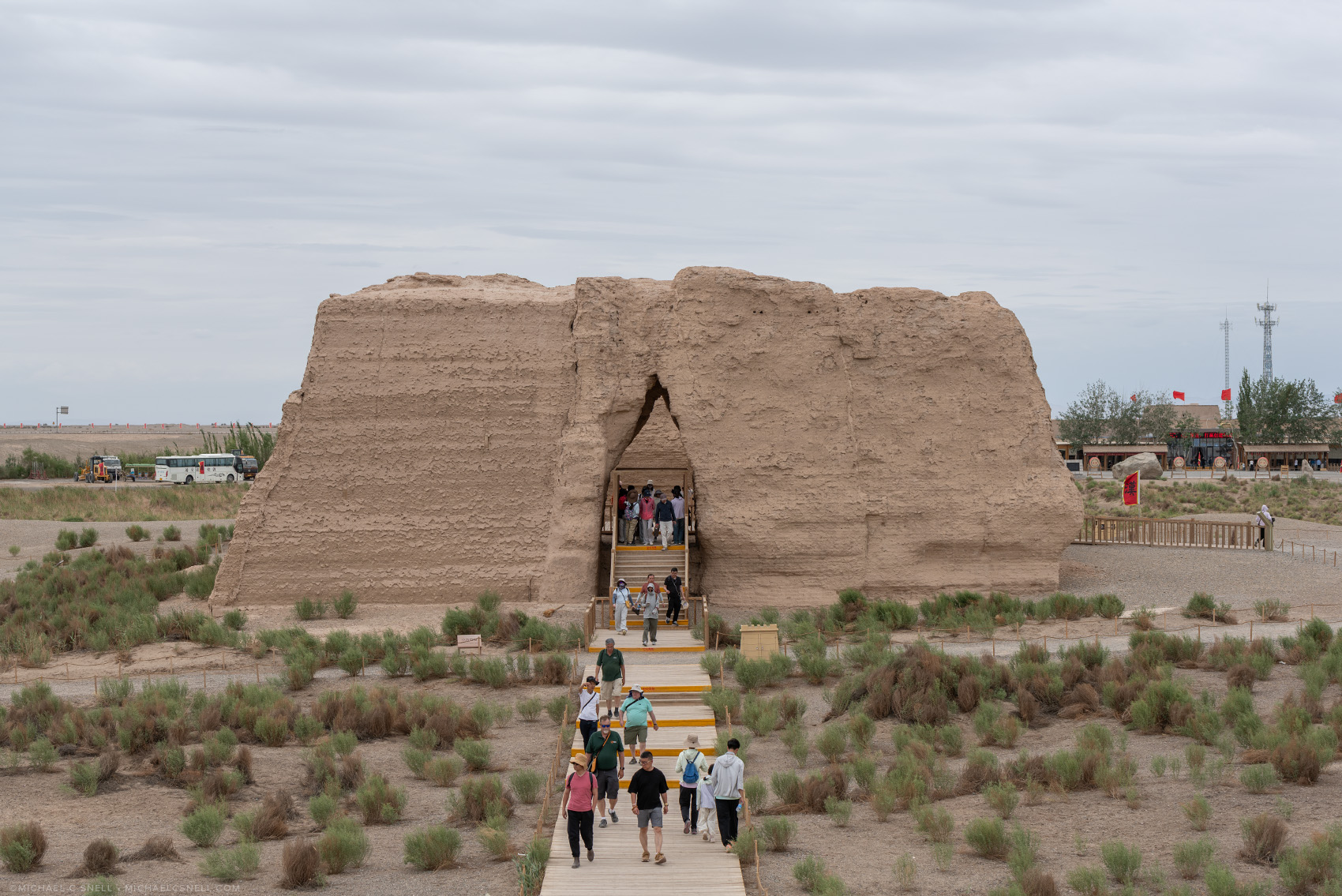
The last stop on this tour was the Small Fangpan Castle (below). Despite the remoteness of this area, it was amazing to see so many tourists. The site was well-well developed and the tourism well-controlled, but it was startling none-the-less to see the level of visitation. It would appear that tourism is alive and well even in the more remote parts of China.