Sad news out of Iceland last week. Extreme coastal erosion has been taking place near Vik and the black sand beach at Reynisfjall, known as Reynisfjara Black Beach, has largely been swept to sea. Of course, change is nothing new to Iceland. The island’s volcanic activity seems to reshape the landscape constantly. The ocean seems to be doing its part as well, and those who have visited Reynisfjara before, may have some difficulty recognizing it in the future.
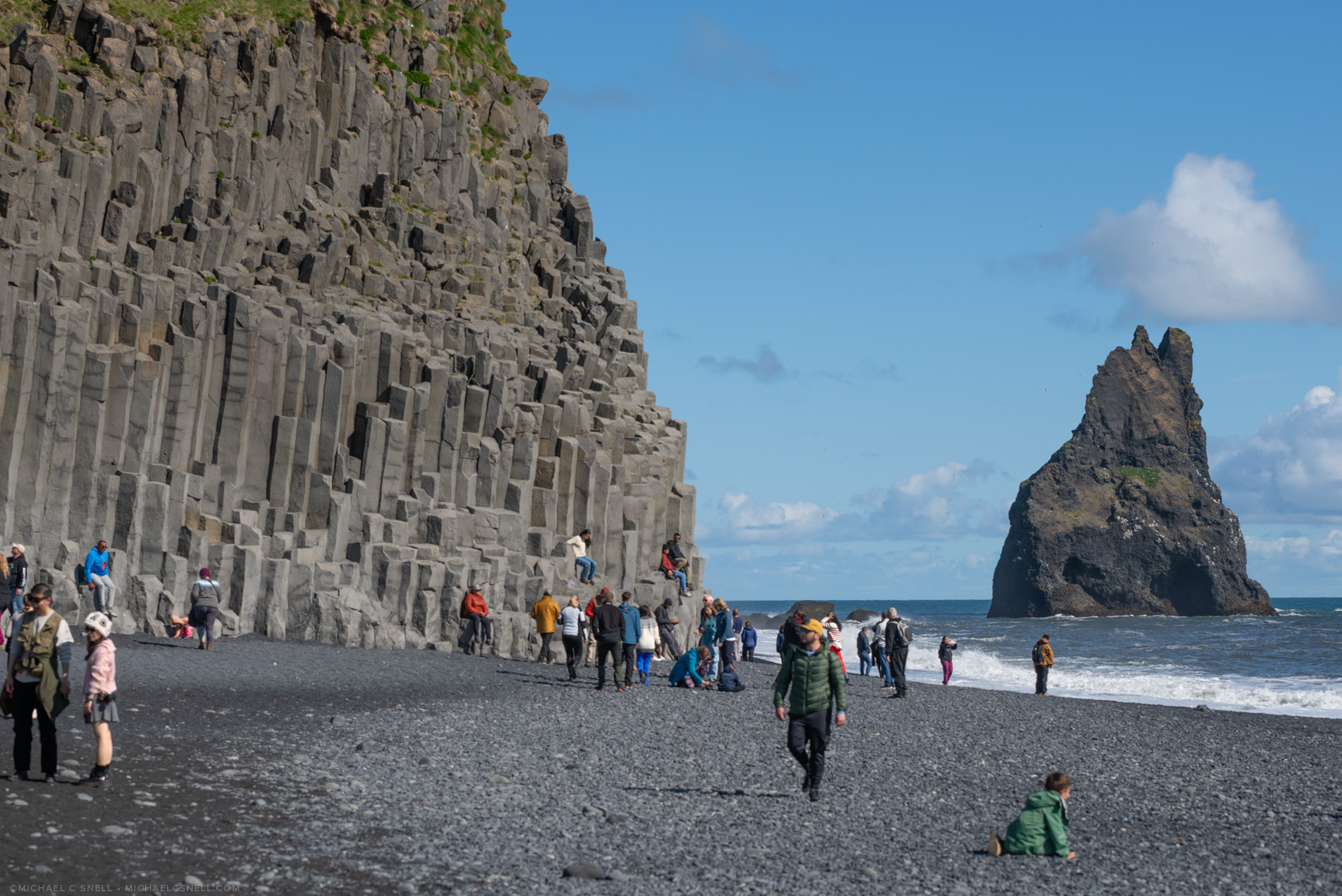
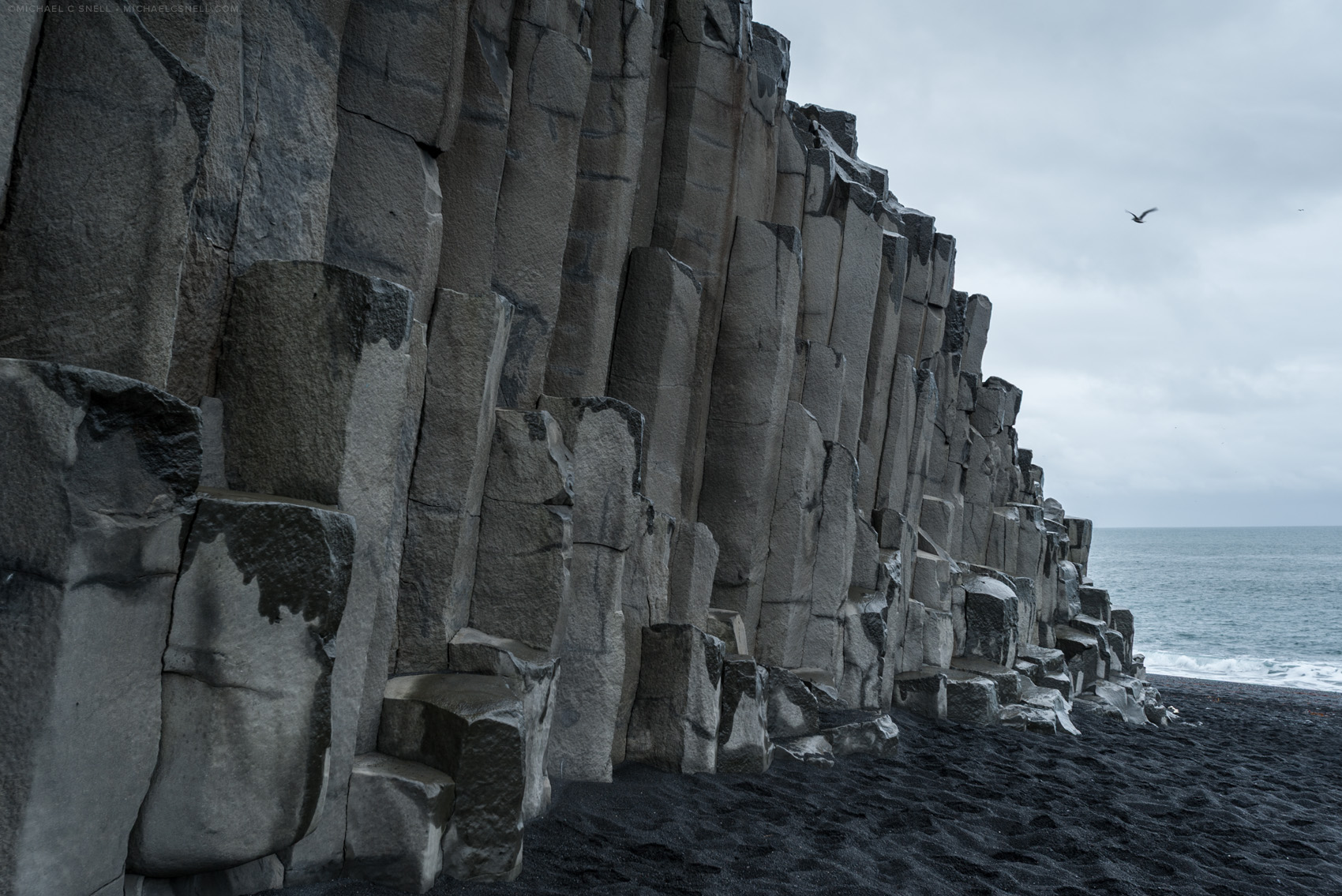
I’ve visited the beach and its iconic basalt columns twice — once in 2013 and again this past May in 2025. The photos here are from those visits. The sunnier weather was the most recent visit, the grayer day was in September of 2013.
I have no images from after the changes to the coast line, but you can find some before and after photos in these two articles:
- The Ocean Destroying The Famous Black Beach in Iceland
- Rescue efforts underway at Reynisfjara Black Beach
While it sounds as though efforts are being made to stabilize the area, it remains to be seen whether visitors will ever be able to walk the beach out and around the basalt columns again. This is Iceland, after all, so all things are possible. It’s a magical island.
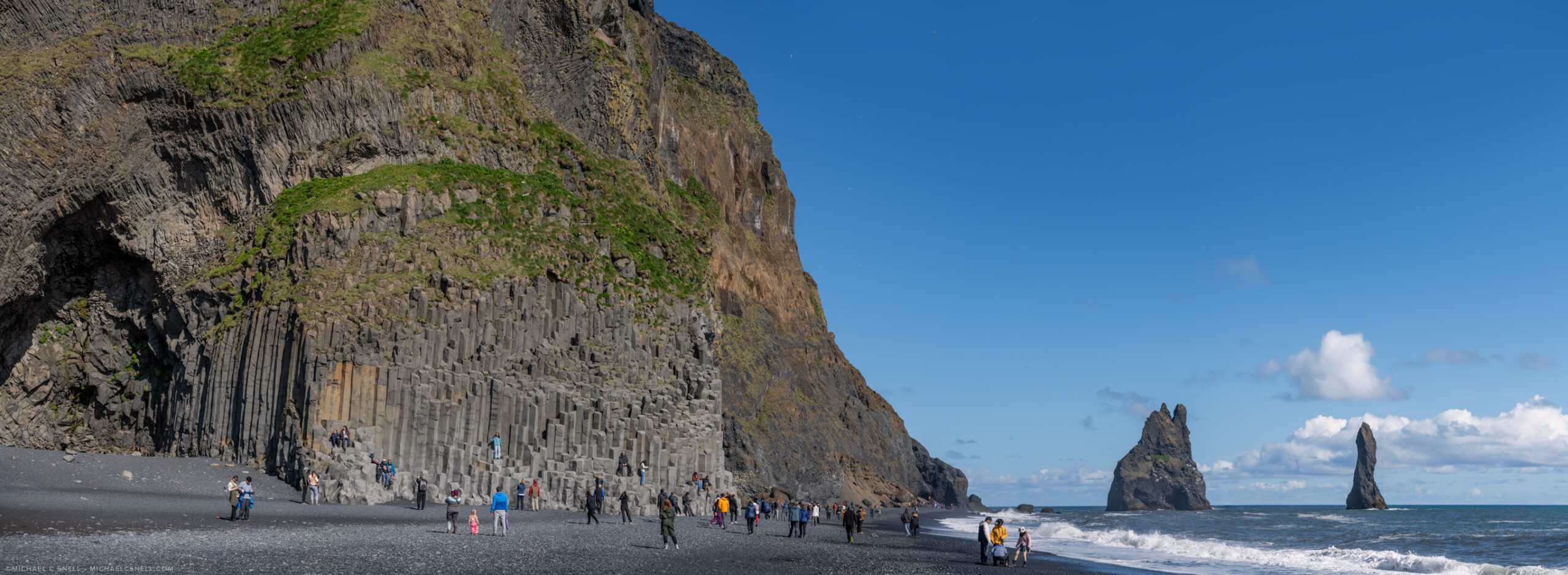
The panoramic image above is made up of 9 frames I shot in May of 2025. From what I understand, all of this beach where you can see people walking out to the basalt columns has been swept away. The basalt columns now drop directly into the North Atlantic.
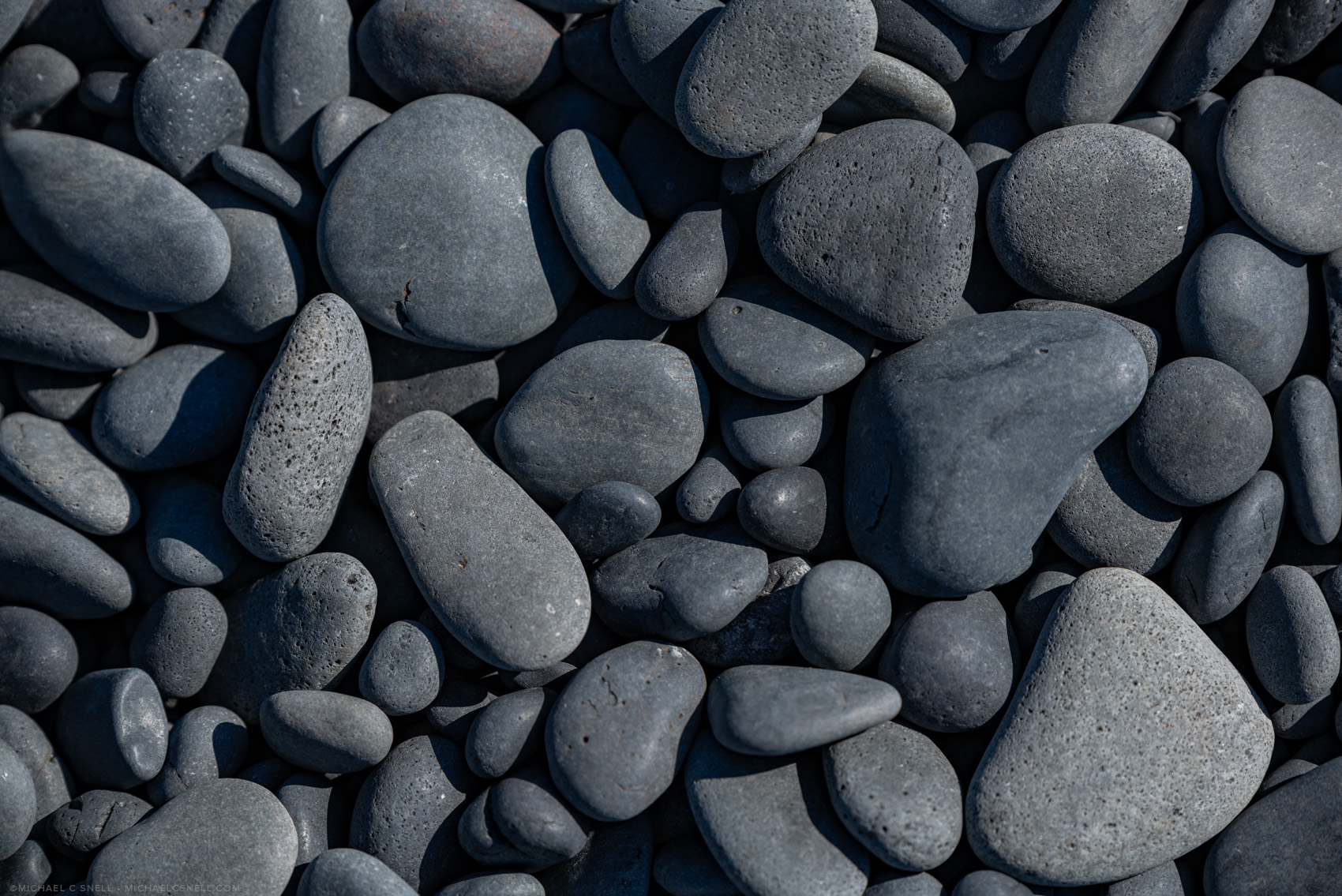
The parking area — which would be to the left just out of frame — is elevated a bit. From it (if memory serves), you stepped down past some large rocks, then there was a zone of the small polished black rocks like in the photo below, and then sand as you neared the ocean. From what I have read, it sounds as if the parking area is safe at this point, but there may be little left now below the large rocks that separated it from the beach.
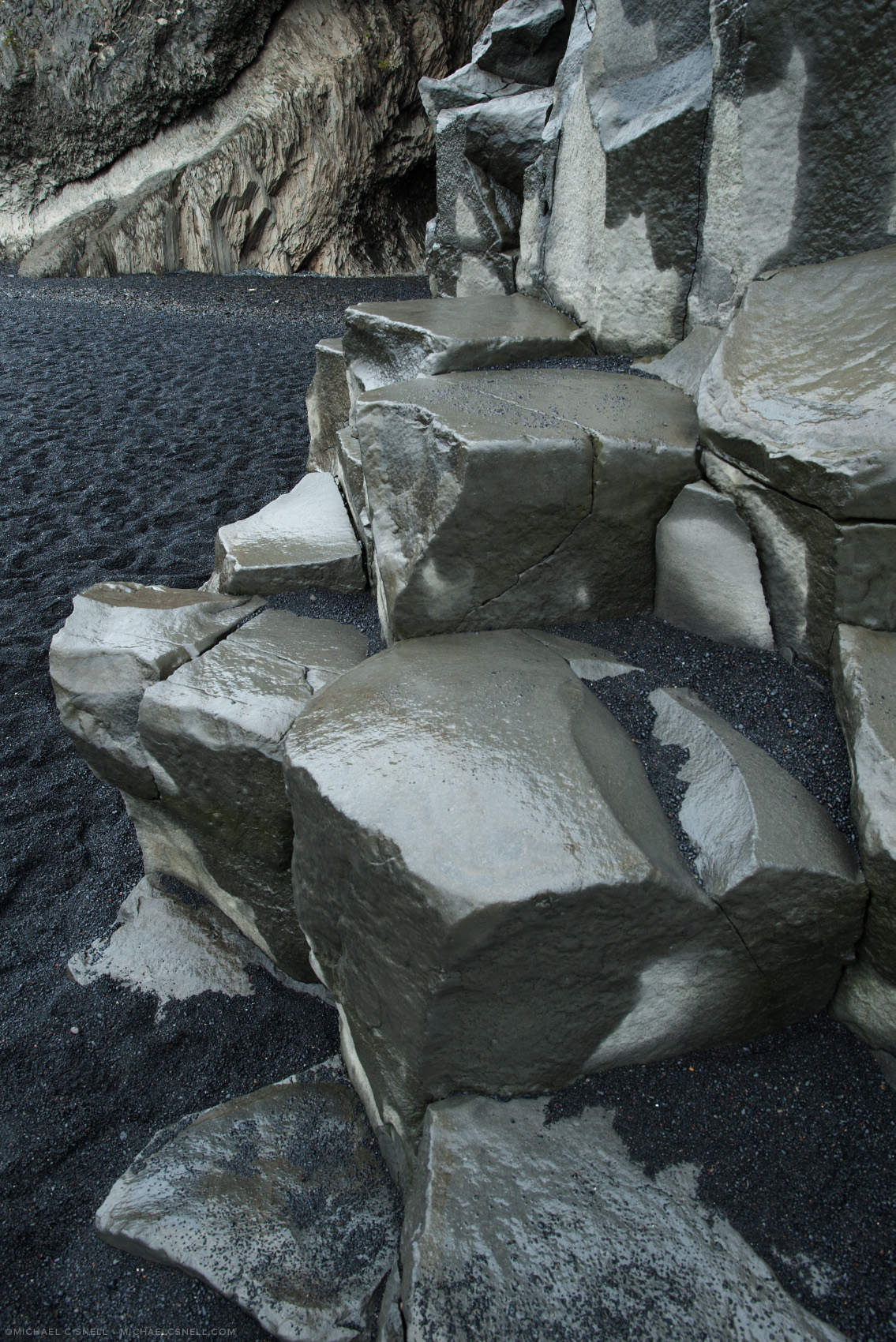
The photos from this point on are from my 2013 trip. As you can see in the vertical image here, the finer sand met up with the basalt columns and visitors could easily walk to them and pose on them for selfies.

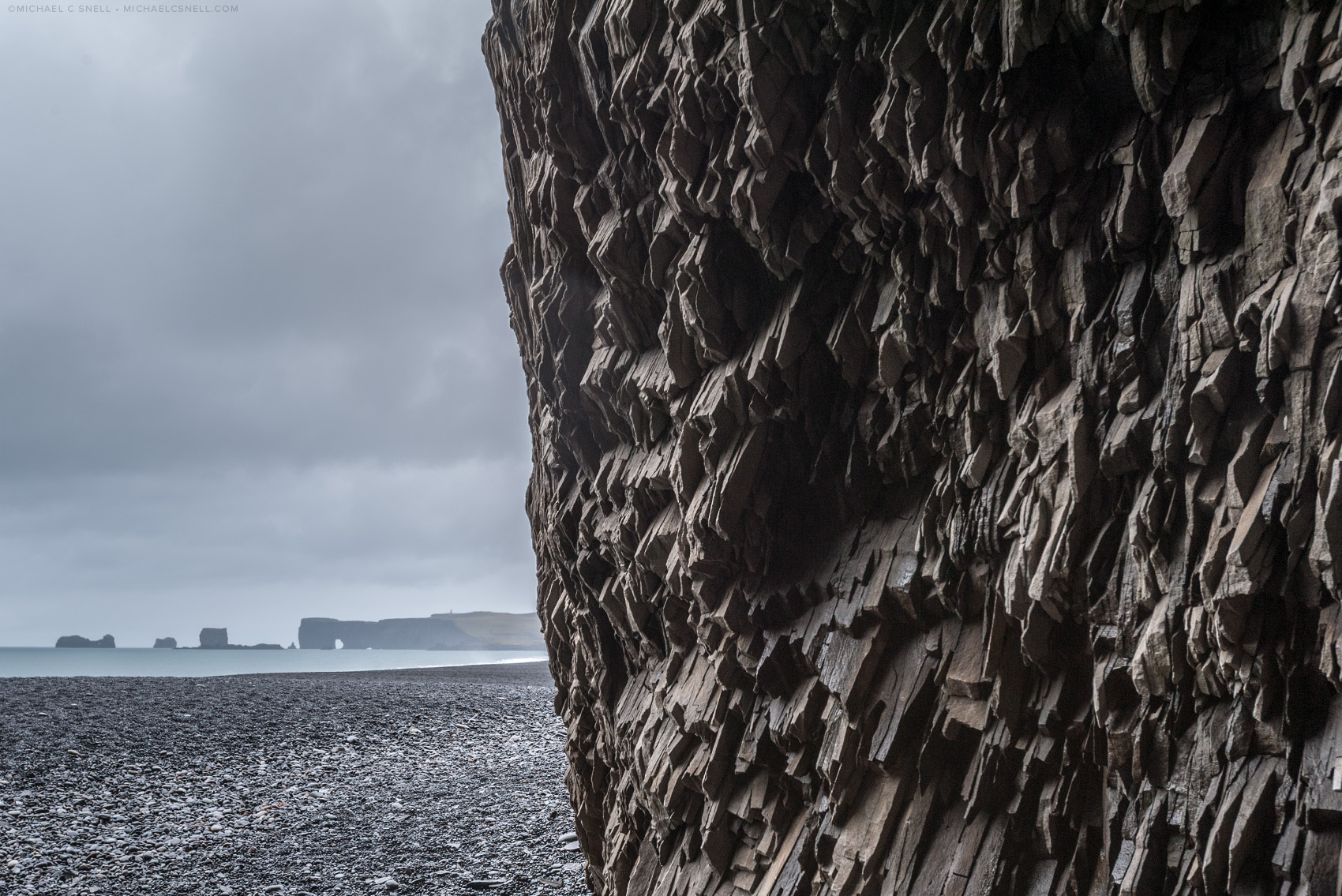
One last shot looking back down the beach toward Dyrhólaey from behind the outcropping of basalt. Unless nature has more surprises in store, this may be a view no longer possible to capture. On foot, anyway.