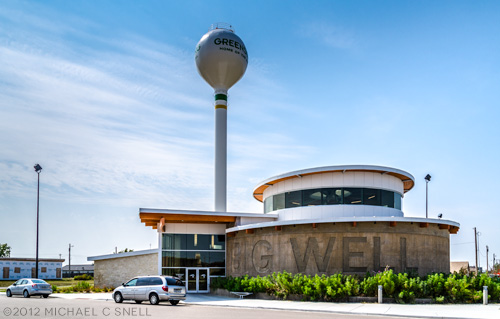
Greensburg, Kansas, was nearly wiped out by a tornado in 2007. Something like 95% of its buildings were destroyed. I used to travel through Greensburg frequently in the 80s and 90s and remember it as a beautiful community with the typical mix of old brick shops downtown and early nineteenth century clapboard houses filling its surrounding neighborhoods. But I remember it most for having what seemed like more than its fair share of shade trees. It was always a truly welcoming place on the prairies of western Kansas. Most people knew it as being home to the World’s Largest Hand Dug Well and, to be honest, most of the images I have in my files from Greensburg are of the staircases leading down to the bottom of that well. I wish now that I would have recorded more of the rest of the town.
It was quite a while after the tornado before I went back to Greensburg and, even then, I just drove through. I didn’t want to just gawk at the destruction and it was a hard thing to come to grips with, seeing a community that you knew for your whole life, now replaced by an open field that you barely recognized.
A recent shoot in Dodge City had me driving through Greensburg on the way to my next stop in Wichita. This time I decided to take a little time to see how the community is rebuilding. Of course the first landmark I looked for was the Big Well, which was always easy to find as it was located just beneath the city water tower. The water tower and the museum that sat behind the well (still seen on the Wikipedia page) were both destroyed but a new water tower has replaced the old metal one and a vastly larger and more modern museum has actually been built over the well this time as seen above. As I was running short on time on this visit, I saved the trip down into the well for next time, but I understand the old zig-zagging stairs have been replaced with a circular system that hugs the outer wall of the stone-lined well. If you’re having trouble imagining a well with room for a staircase, we’re talking about a hole 32 feet in diameter and over 100 feet deep.
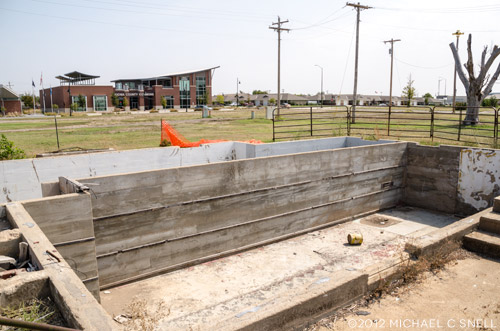
There are still a few damaged trees standing and plenty of sidewalks leading to nowhere, foundations with no homes. But I have to give a great deal of credit to the people of Greensburg and their philosophy about rebuilding. They took a disaster and found an opportunity within it. The townspeople have decided to rebuild better than before, and greener than before. You notice the wind turbines long before you even get to town, then the solar panels. Greensburg now boasts more LEED certified buildings per capita than any city in the world. They have become a testing ground for all kinds of energy-conserving and alternative energy technologies.
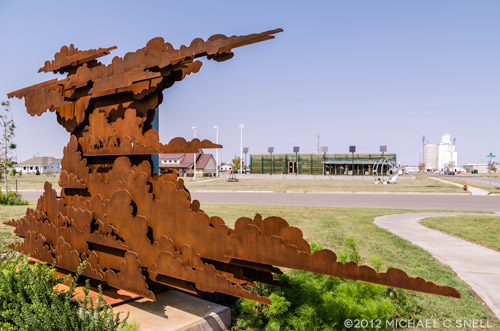
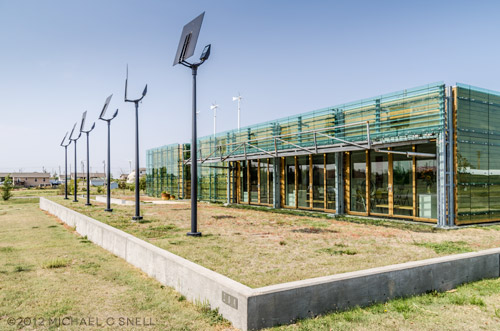
It’s nice to see public art being among the first things to return to Greensburg as well. This glass-skinned building is the 5.4.7 Arts Center, the first building in Kansas to receive a LEED Platinum rating.
For me, it’s still a bit painful to walk the streets of Greensburg. In my mind’s eye I’m still seeing what was. But that’s not fair to the efforts of the people who have put such energy into bringing this community back. They have made great strides and I look forward to many future visits to see how they are progressing. The hopes and dreams of these folks are now plainly visible in the new buildings and the new trees and gardens being planted.