Category Archives: weather

Camino: to the End of the World

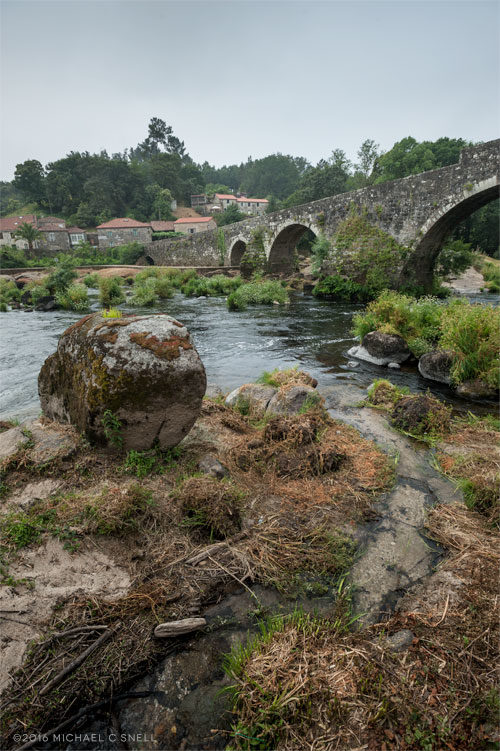
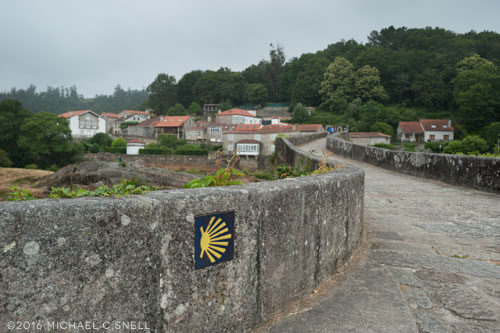
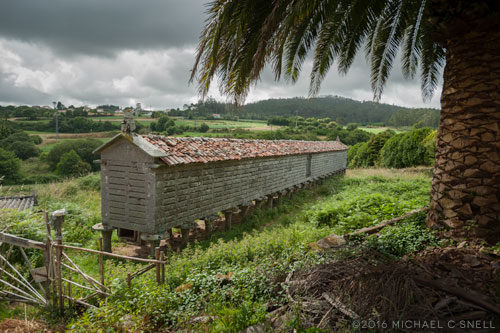
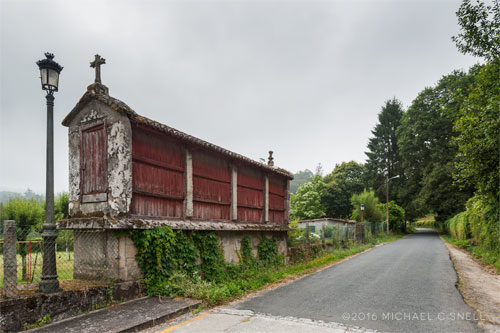
On my last day of exploring the Camino de Santiago as it travels through Galica, Spain, I felt like I really began to see the Galicia that I had imagined: the misty, green country that hugs a rugged Atlantic coastline. And stone hórreos everywhere — those built-for-all-time granaries that I had also longed to see. This one was at one of our first stops of the morning, Ponte Maceira, where there was also an ancient stone arch bridge marked with the scallop shells that show the pilgrims the way.

Another hórreo in the Galician countryside:

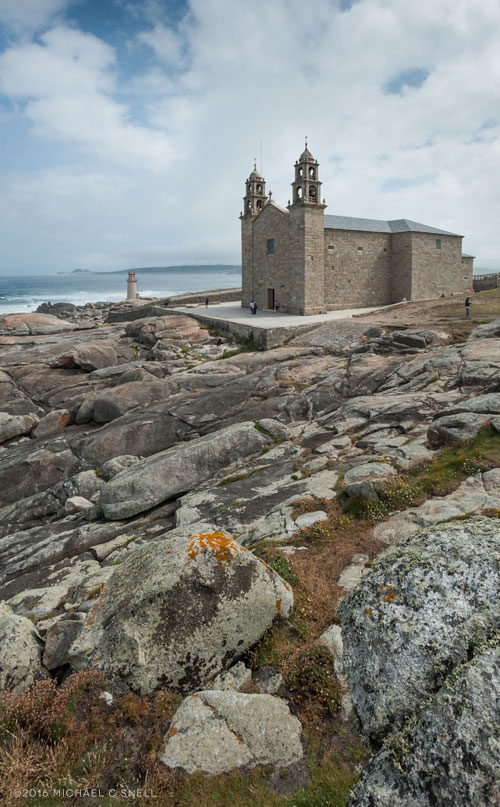
And then we came to the Atlantic. The Nosa Señora da Barca (Our Lady of the Boat) Church in Muxia has to be one of the most spectacularly situated buildings I’ve ever encountered. On days of rough seas I was told that the surf actually crashes through the church’s doors.

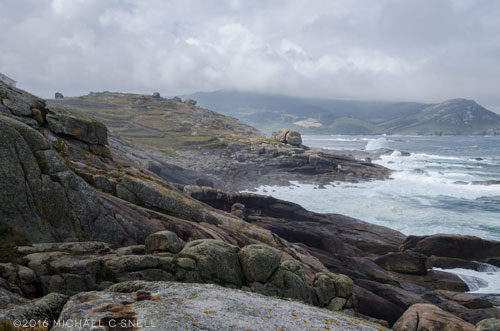
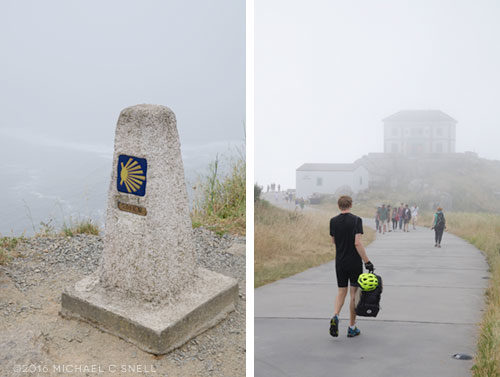
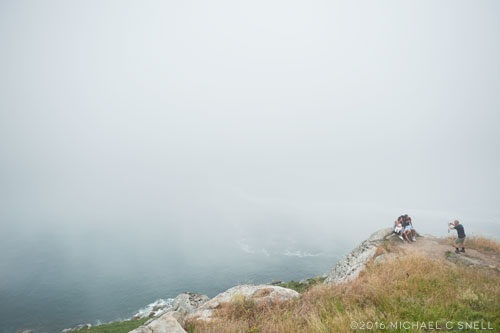
This is my kind of coastline. I know most prefer a sunny beach, but this is the kind of place that I could spend hours. But we had one more stop — Cape Finisterre, “the end of the world,” and the 0-mile mark for those pilgrims that continued on past the cathedral in Santiago de Compostela. You can’t continue further west from here on foot, that’s for certain.

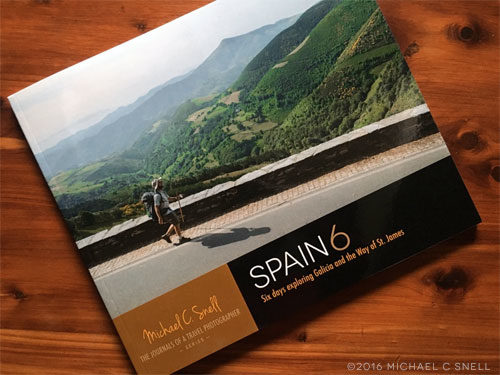
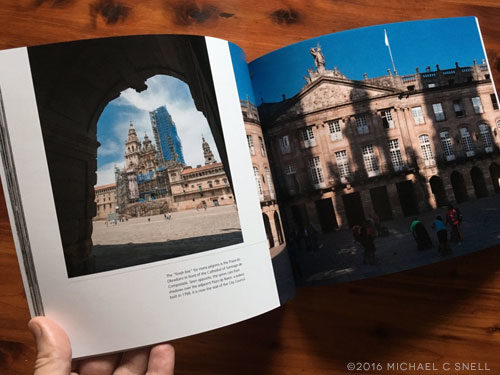
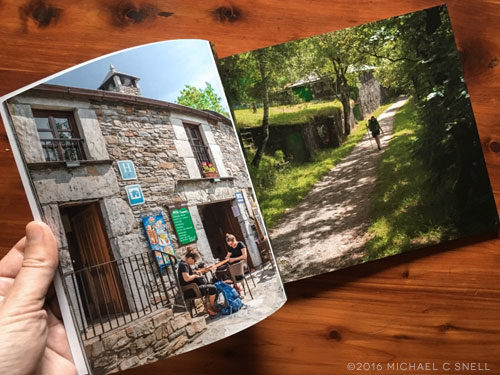
Many of the images that have appeared in my recent posts on the Camino — and many not shown here — appear in my latest addition to the “Journals of a Travel Photographer” book series, “Spain 6: Six days exploring Galica and the Way of St. James.” Here are a few snapshots of the book. You can see a larger preview and order copies over at my Blurb bookstore. I hope you enjoyed the journey!

Back to Chengdu, China

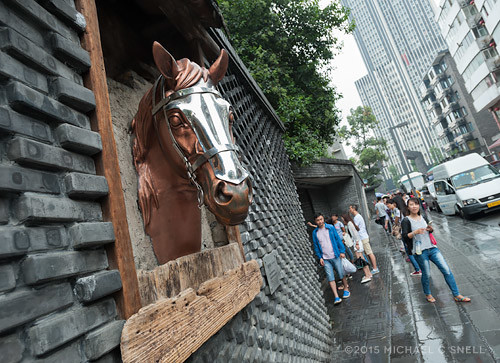
150925chengdu01_sotc

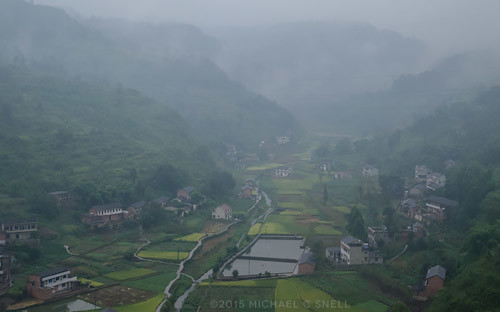
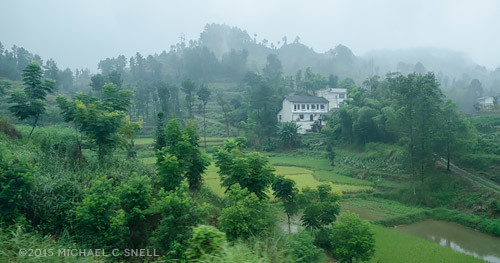
It rained during most of the bus ride from Yibin back to Chengdu, China. The low-hanging clouds made for a beautiful effect as we crossed valley after valley.

150925chengdu02_sotc

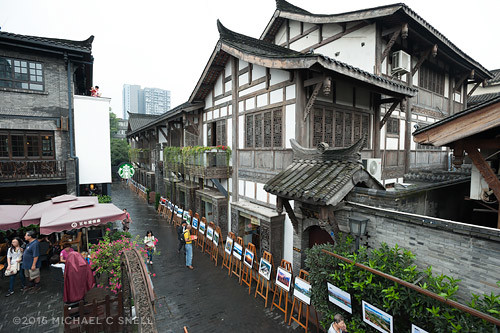
Once back in Chengdu, three of us said goodbye to our bus and the large tourism festival group and joined our local guide for a walk through an area known as the Wide and Narrow Lanes.

150927chengdu01_sotc

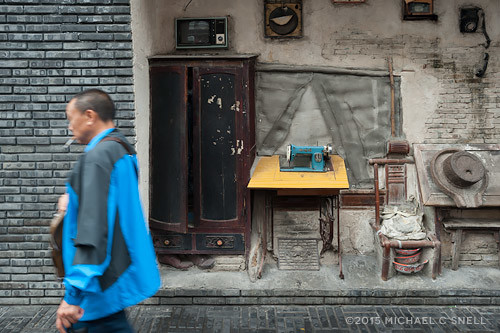
Throughout this area, sculptural vignettes told the story of what had been here in the past.

150927chengdu02_sotc

150927chengdu03_sotc

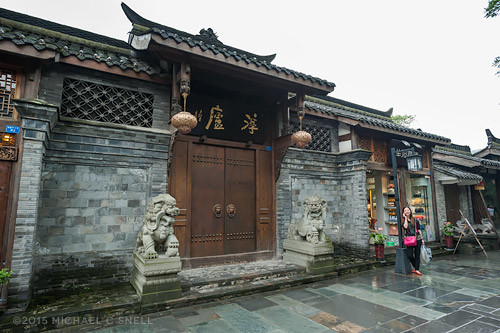
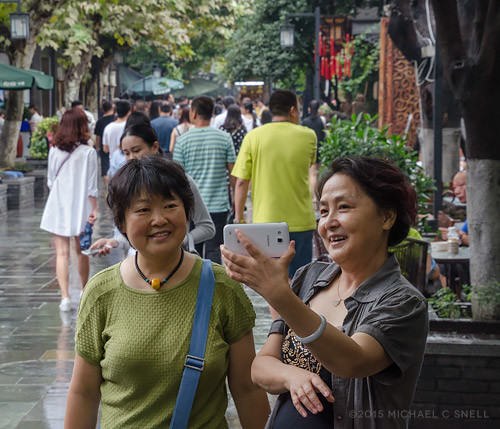
The area reminded me of Jinli Ancient Street, which we had seen on our first day in Chengdu, but it was a little more open, less crowded, and a bit less touristy (although it obviously still catered to tourists).

150927chengdu04_sotc

150927chengdu05_sotc

150927chengdu06_sotc

150927chengdu07_sotc

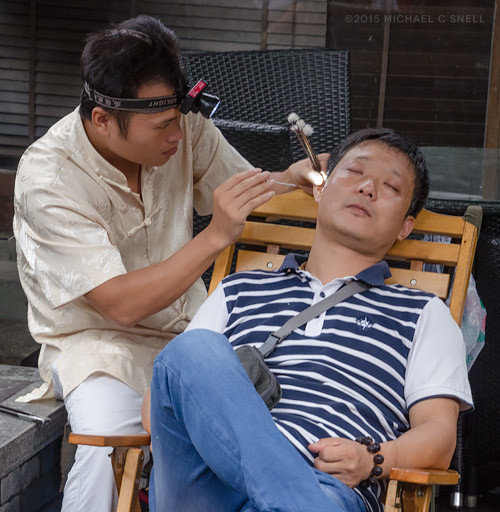
I had heard about these ear-cleaning — or ear massage — stations but this was the first one I’d actually run across. A little disconcerting to have wires and brushes twirled around in your ear perhaps, but the customers looked happy enough.

150927chengdu09_sotc

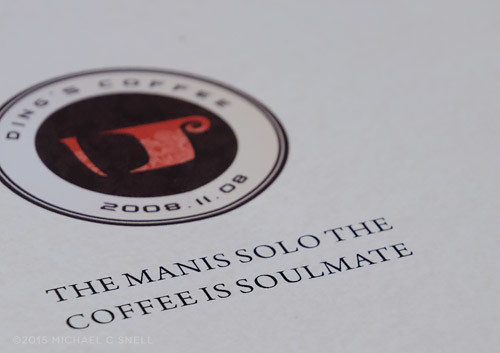
Time for a short refreshment break at Ding’s Coffee, overlooking a street with a photography exhibit on display.

150927chengdu08_sotc

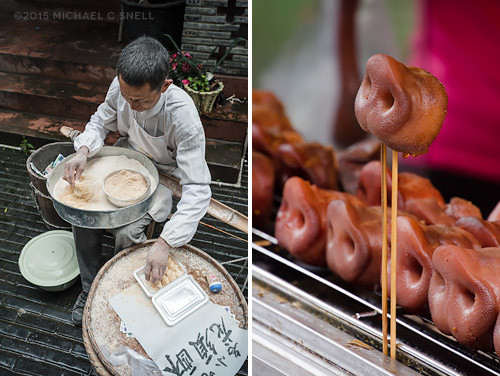
And everywhere you turned, more snacks. Of all varieties.

150927chengdu10_sotc

Bamboo forest

150921bamboo02_sotc

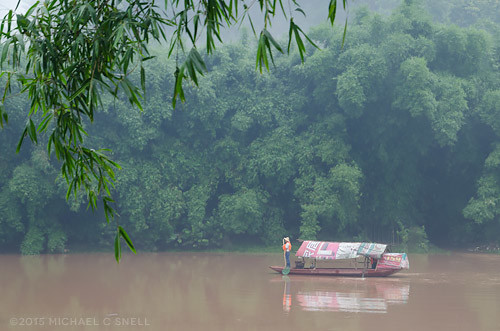
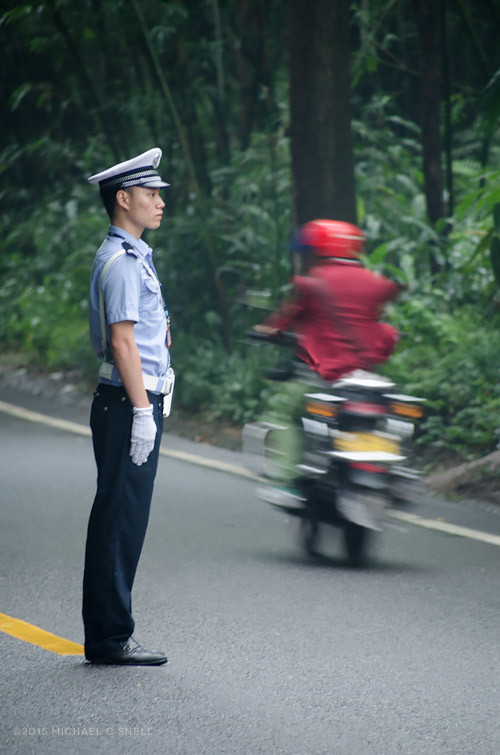
The drive to the bamboo forest in China’s Sichuan Province was another long one. Our bus convoy took one break — dropping us off at a highway rest area — so that they could go refill their gas tanks. It seemed a bit odd that they hadn’t gassed up before picking us all up, but it was a good chance to stretch my legs and get a few photos like the one of the river above and this one of one of our omnipresent traffic police:

150921bamboo01_sotc

I often wondered just how many of these guys were posted for us — or were there maybe just a few that kept scooting ahead of us to be waiting at the next stop?

Eventually we arrived at the bamboo forest (famous as one of the locations used in the film “Crouching Tiger, Hidden Dragon”) but the tour was once again very rushed due to the long drive times. We moved through this first set of trails very quickly. I would have loved to have spent more time and explored further, but this glimpse would have to do for now.

150921bamboo04_sotc

150921bamboo03_sotc

150921bamboo05_sotc

150921bamboo06_sotc

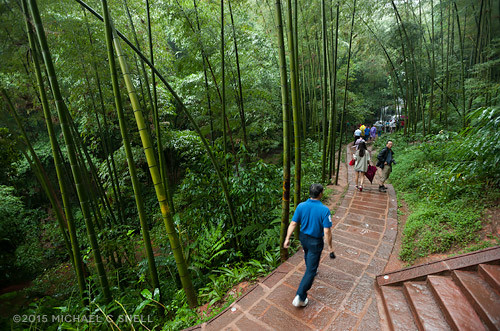
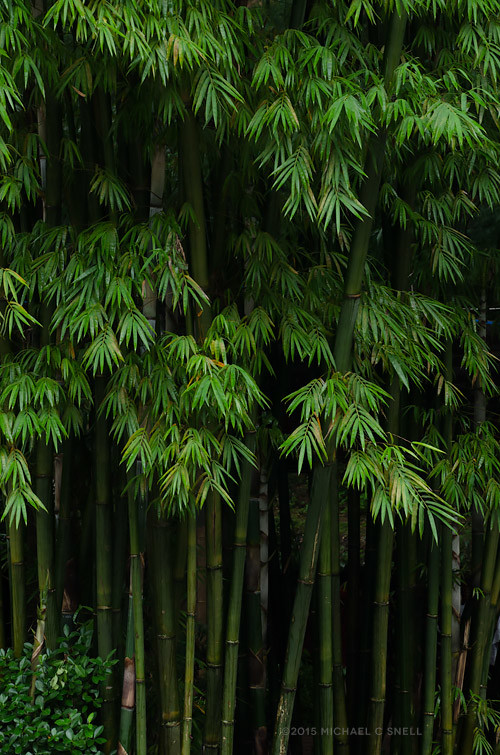
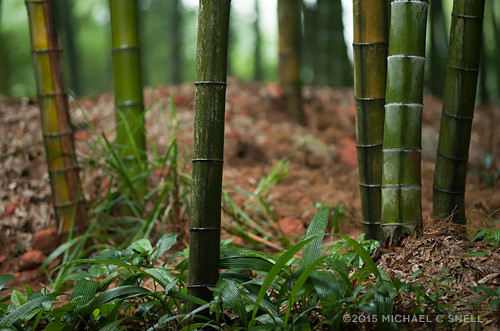
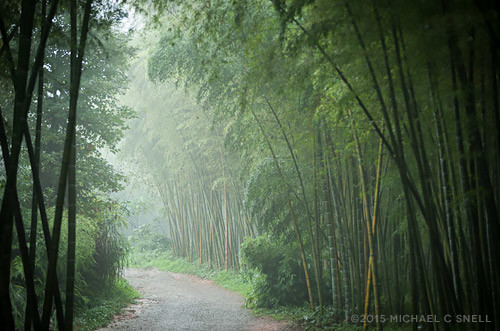
It was beginning to rain a bit harder when we made our second stop, but the bamboo forest just seemed to get more beautiful the wetter it became.

150921bamboo07_sotc

150921bamboo08_sotc

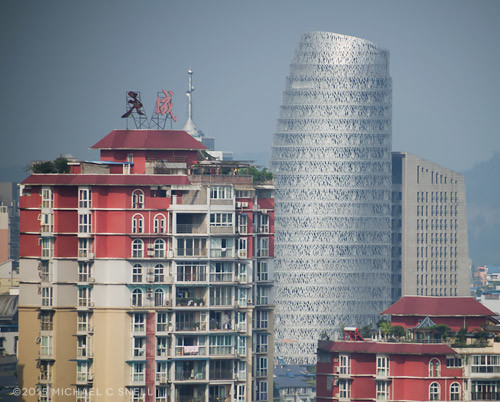
Back on the buses, we made the long drive back to Yibin. I’ll leave you with one more shot from my hotel room window, showing the variety of architecture that filled the skyline:

150923yibin10_sotc

Iceland, Day 4, the East Fjords

141011iceland03_sotc

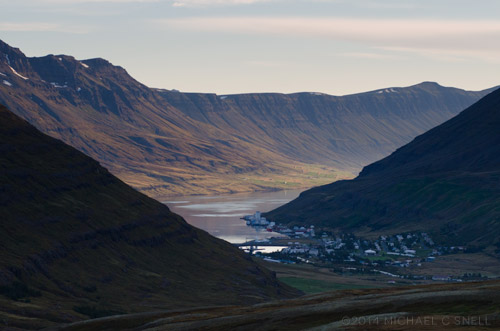
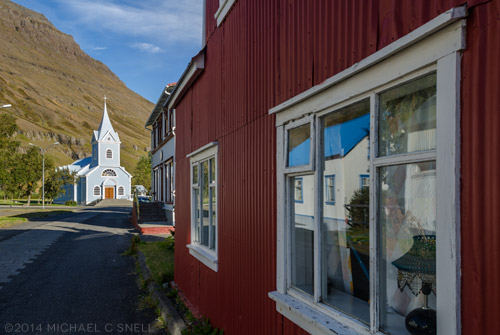
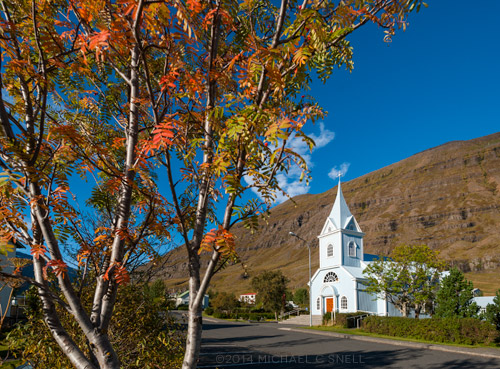
My fourth day in Iceland started off great. I got up early and drove over the high mountain pass to the small coastal town of Seyðisfjörður. This would be the easternmost – and northernmost – point of my trip to Iceland. The early morning drive up and over the ridge was beautiful. The image above is the first view you get of Seyðisfjörður. If you’ve seen the recent remake of The Secret Life of Walter Mitty, the road I was traveling here is the one that Ben Stiller skateboards on.

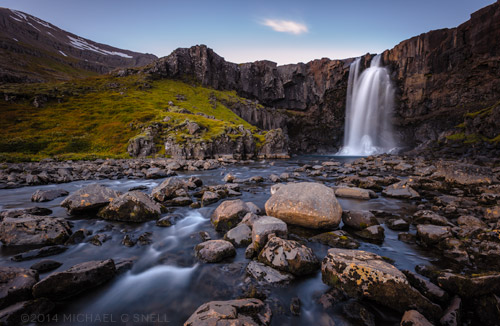
As you drop into the fjord valley, the road parallels a river that drops over a series of waterfalls. Perhaps the largest — that you can see from the road, anyway — is Gufufoss. There’s a small turnout near the falls so I parked the Tiguan and walked to the falls, through a small group of sheep that were far to focussed on grazing to worry about me. The sun had not yet topped the ridge so I began shooting the falls while they were in full shade:

141011iceland01_sotc

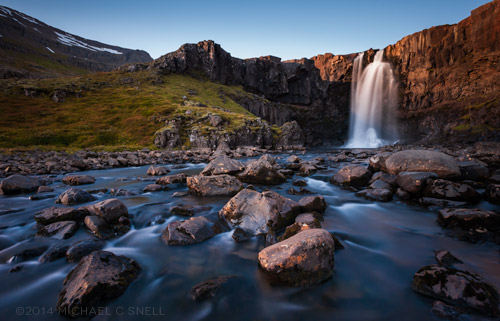
As I repositioned my tripod, the sunlight began to creep down the cliff face and just began to touch the foreground rocks:

141011iceland02_sotc

I’m still not sure which of those two versions I prefer. I could have happily stayed and shot longer, but I had a full day ahead and pressed on, down into the valley.

141011iceland04_sotc

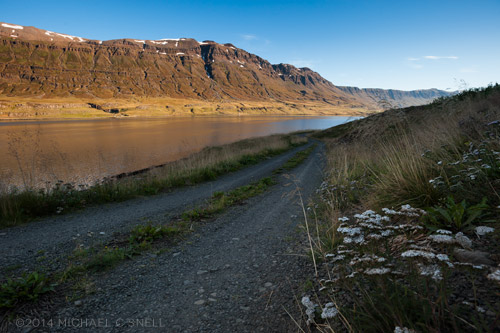
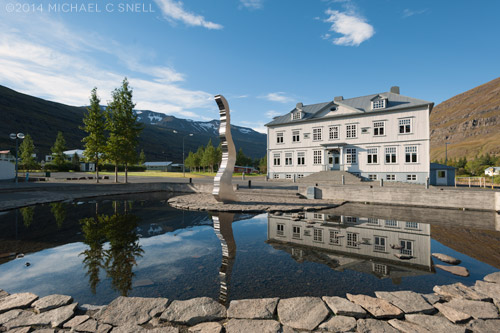
The town was still fully in the shade when I arrived so I drove on through and made a few pictures along the fjord as the sun rose.

141011iceland05_sotc

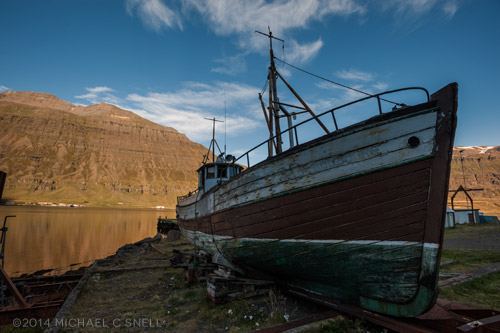
Working my way back into town, I went through a bit of an industrial area and loved this old, weathered boat. The sun was just now reaching down into the town, so I made my way to the small inlet so that I could get some shots of the buildings reflected in the water.

141011iceland06_sotc

141011iceland09_sotc

141011iceland07_sotc

141011iceland08_sotc

141011iceland10_sotc

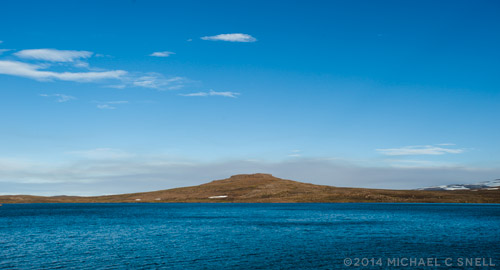
I finished up in town and began driving back west — I was officially on my way back to Reykjavik, but had plenty of stops in mind for along the way. First, I decided to stop and shoot the lake that I’d found at the top of the pass earlier in the morning. In the distance you can see what I’m assuming is more smoke from the volcano erupting not far away:

141011iceland11_sotc

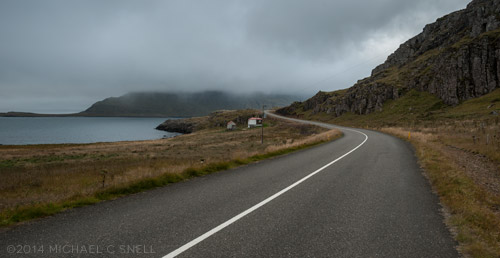
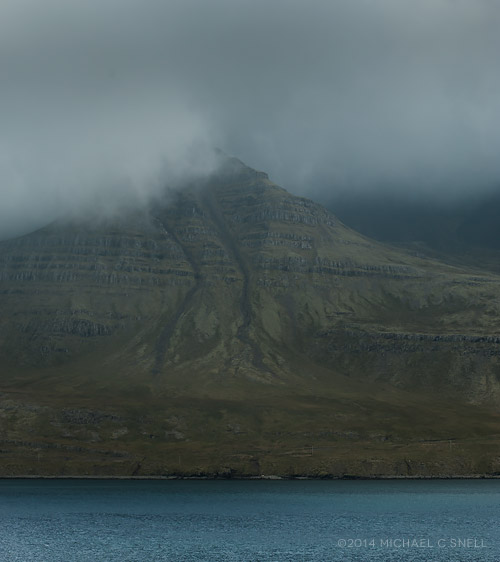
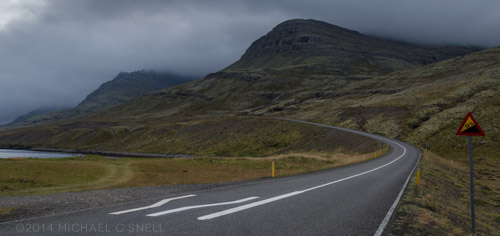
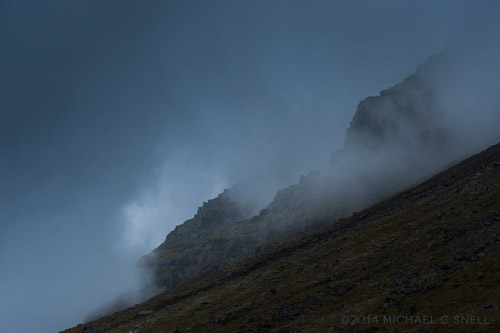
Instead of taking Highway 1 back the way I’d come, I took the smaller highways — 92 and 96 — that stayed closer to the coast. Crossing into the next fjord, however, the clouds began to lower and the weather changed abruptly.

141011iceland12_sotc

141011iceland13_sotc

I find Iceland to be particularly beautiful in these dark, moody conditions and was not disappointed at all about losing the sun. I was beginning to realize that I had not seen many people over the last few days. I doubt I’d spoken more than a sentence or two for at least 48 hours. I don’t mind the solitude, but one of the categories of the photo shootout I was participating in was “people” and I began to wonder if I would ever get a chance to make a portrait.

Stopping along the road to get this photo, my luck changed:

141011iceland14_sotc

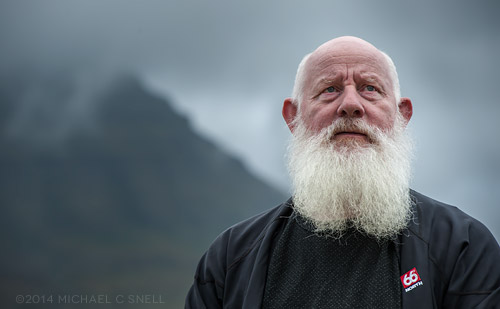
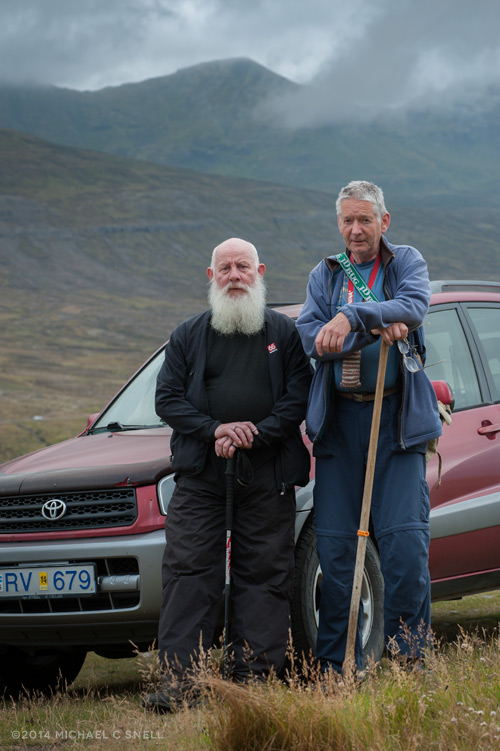
I’ll admit it: I was shooting this one out of the car window when I noticed another car pulling off and parking on the other side of the road. When I saw a man with a snow white beard get out of the car, I realized my portrait subjects had just found me. I trotted across the street and spoke with the bearded man’s friend (who seemed to have better English), telling him about my photo project. They agreed to pose for a photo before setting off on their hike, but the English-speaker’s phone rang and he stepped aside to take the call. While he was occupied, I made a few photos of his bearded friend:

141011iceland15_sotc

The phone call over, I photographed the pair of friends with their hiking gear. This shot was the sole “people” shot I entered, and I was happy to take the gold for it:

140926iceland03_sotc

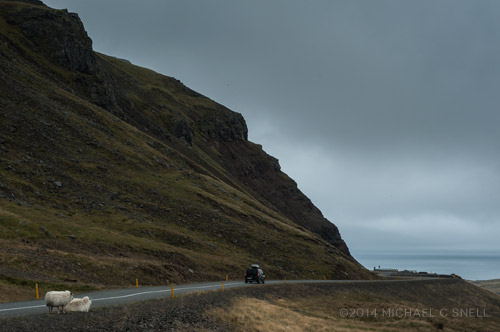
Thanks to my patient subjects for postponing their hike long enough to humor me for these images. Back on the road, the clouds continued to descend and sheep were my only companions once again. They tended to linger along the roadsides, but seemed to have enough sense not to dart out into traffic, thankfully.

141011iceland17_sotc

141011iceland16_sotc

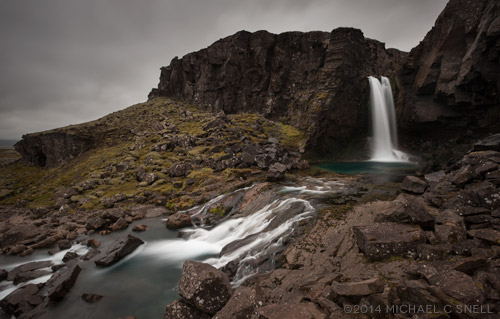
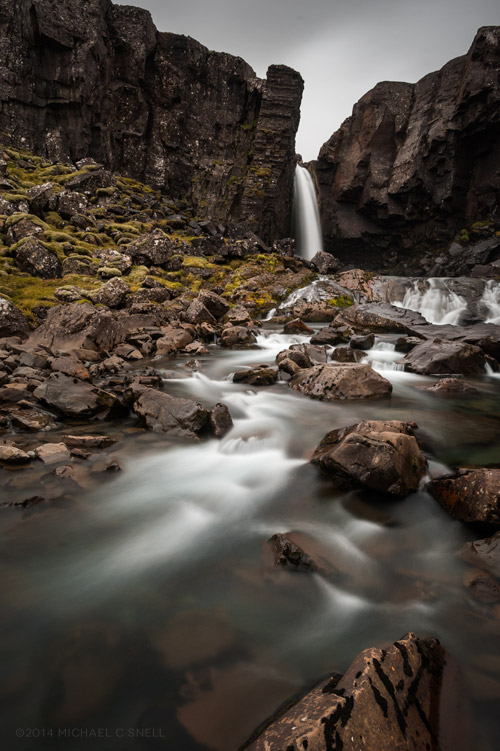
I finally arrived back to intersect with Highway 1 and soon found myself near the falls I’d shot the afternoon before — Foldafoss. Since I had actually been thinking that those falls would have looked nice in gloomier weather, I thought it was worth a shot to go back up my gravel road a bit to see how they looked in the low clouds. I was so glad that I did as the conditions were perfect and I got several shots of the falls that rank among some of my all-time favorites. It began to rain while I was finishing up and the clouds sank ever lower as I drove back west. The conditions worsened to the point that I could only see a few yards and the mountains and ocean views were lost to me for the rest of the day. I rolled into Vik for the night and scrubbed all my photography plans due to the rain and fog. Skaftafell and the other shots I’d saved for the ride back had to be scrubbed as well. The shootout period continued until 5:00 the following afternoon, but I didn’t get another single frame that I felt was worth entering. Hard to feel too bad about it, though, when I finished up day 4 with these shots of Foldafoss before the sky fell:

141011iceland18_sotc

141011iceland19_sotc

Spring is coming

140314snow_sotc

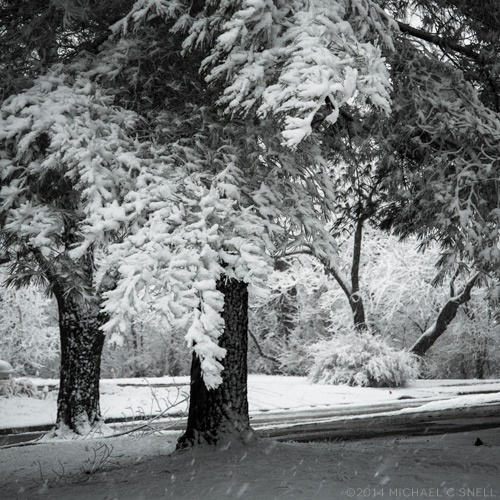
This has seemed like an incredibly long winter. However, as I looked back through my image files this morning to see what photos I’d shot on previous March 14ths, I found this image I took in our neighborhood on March 14, 2010. With high temps predicted today in the mid 60s, this just goes to show that it could be — and has been — worse. Everywhere I look around the yard, bulbs are coming up, the witch hazels are blooming and there are signs of things thawing out. Spring is coming folks. Hang in there.

Vicksburg, Mississippi

120305vicksburg_sotc


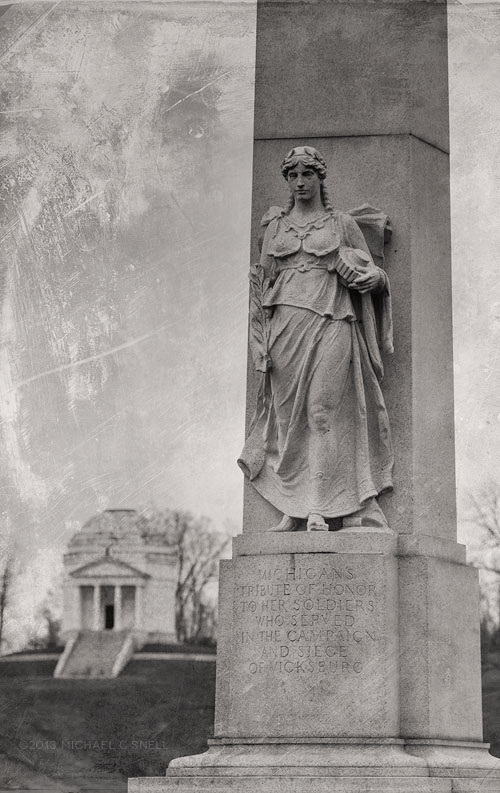
Just a quick note to say that I’m back from a short jaunt to Mississippi. It may give hope to others that live in my part of the country that Spring is only a day’s drive away. While in Jackson, Vicksburg and Natchez, I saw iris, daffodils and forsythia blooming and the tulip trees were actually already past their prime. Spring is on its way, folks. Take heart.

Oh… and the photo is from the Vicksburg National Military Park. More on that and other stops soon.

Greensburg, KS, revisited

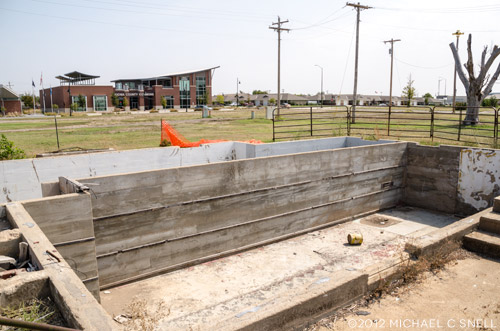
Greensburg, Kansas, was nearly wiped out by a tornado in 2007. Something like 95% of its buildings were destroyed. I used to travel through Greensburg frequently in the 80s and 90s and remember it as a beautiful community with the typical mix of old brick shops downtown and early nineteenth century clapboard houses filling its surrounding neighborhoods. But I remember it most for having what seemed like more than its fair share of shade trees. It was always a truly welcoming place on the prairies of western Kansas. Most people knew it as being home to the World’s Largest Hand Dug Well and, to be honest, most of the images I have in my files from Greensburg are of the staircases leading down to the bottom of that well. I wish now that I would have recorded more of the rest of the town.

It was quite a while after the tornado before I went back to Greensburg and, even then, I just drove through. I didn’t want to just gawk at the destruction and it was a hard thing to come to grips with, seeing a community that you knew for your whole life, now replaced by an open field that you barely recognized.

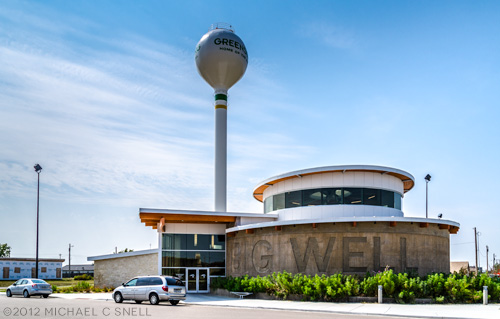
A recent shoot in Dodge City had me driving through Greensburg on the way to my next stop in Wichita. This time I decided to take a little time to see how the community is rebuilding. Of course the first landmark I looked for was the Big Well, which was always easy to find as it was located just beneath the city water tower. The water tower and the museum that sat behind the well (still seen on the Wikipedia page) were both destroyed but a new water tower has replaced the old metal one and a vastly larger and more modern museum has actually been built over the well this time as seen above. As I was running short on time on this visit, I saved the trip down into the well for next time, but I understand the old zig-zagging stairs have been replaced with a circular system that hugs the outer wall of the stone-lined well. If you’re having trouble imagining a well with room for a staircase, we’re talking about a hole 32 feet in diameter and over 100 feet deep.

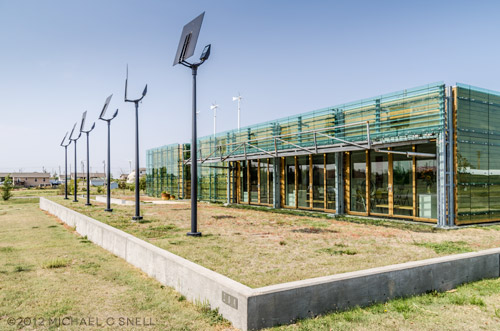
There are still a few damaged trees standing and plenty of sidewalks leading to nowhere, foundations with no homes. But I have to give a great deal of credit to the people of Greensburg and their philosophy about rebuilding. They took a disaster and found an opportunity within it. The townspeople have decided to rebuild better than before, and greener than before. You notice the wind turbines long before you even get to town, then the solar panels. Greensburg now boasts more LEED certified buildings per capita than any city in the world. They have become a testing ground for all kinds of energy-conserving and alternative energy technologies.

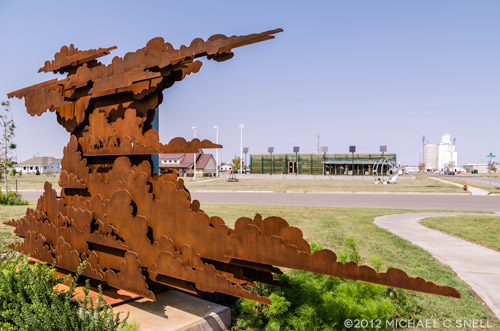
It’s nice to see public art being among the first things to return to Greensburg as well. This glass-skinned building is the 5.4.7 Arts Center, the first building in Kansas to receive a LEED Platinum rating.

For me, it’s still a bit painful to walk the streets of Greensburg. In my mind’s eye I’m still seeing what was. But that’s not fair to the efforts of the people who have put such energy into bringing this community back. They have made great strides and I look forward to many future visits to see how they are progressing. The hopes and dreams of these folks are now plainly visible in the new buildings and the new trees and gardens being planted.

Fountain shoot, behind the scenes

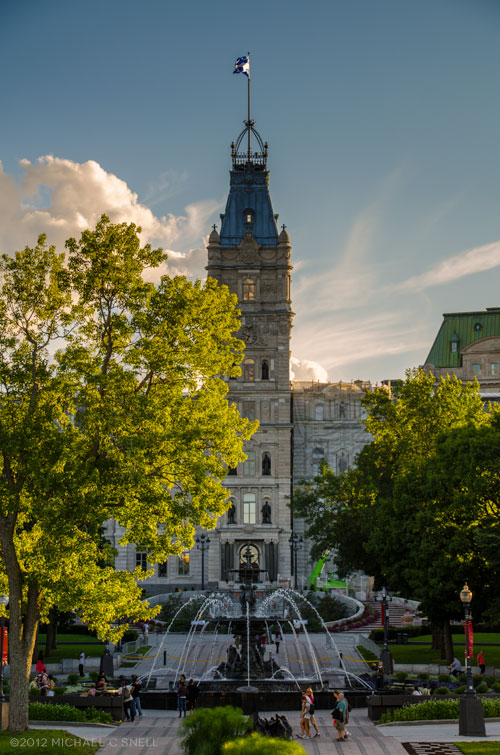
On my last trip to Quebec City in 2007, I never had an opportunity to get a good shot of the Fontaine de Tourny, located in front of the Parliament Building. The fountain was brand new at that time — if you can call something new that was built in France in 1855, put in storage in 1960, and relocated to Quebec in 2007. You can find the whole story here.

Anyway, it’s one of those shots that I felt should be in my files because the fountain has such a great story and it is rapidly becoming yet another landmark of this already beautiful city. So… when I went back to Quebec last month, this fountain was high on my shot list.

I captured the above photo on my next-to-last day in town but it’s not the one I originally had in mind. I really wanted a shot that made the fountain the hero and included the Parliament Building as context. I also wanted to shoot at twilight to get the most impact from the color in the scene.

Early on my first free evening in Quebec I set out with my D700 and a tripod and began scouting out my angle. Things are rarely perfect and this day would be no different. It was cloudy, first of all. Not puffy, dramatic clouds but heavy, overall grey clouds that pretty much made for a dead sky. Grey sky, black fountain, stone building. Not a lot of color so far. Still, you never know what will happen and twilight can be magical in any weather. Secondly, I found that half of the Parliament Building was covered in scaffolding and there was a big, lime-green crane right in front. Scaffolding had been everywhere on this visit — even the most prominent element of the Quebec skyline, the Fairmont Le Chateau Frontenac, was getting a new copper roof. The Parliament Building I could work with, though. It just took a little finesse to hide of the bulk of the scaffolding behind trees and hopefully the green crane would disappear as night fell.

Here’s my initial exposure at 7:29 with the composition pretty much established:
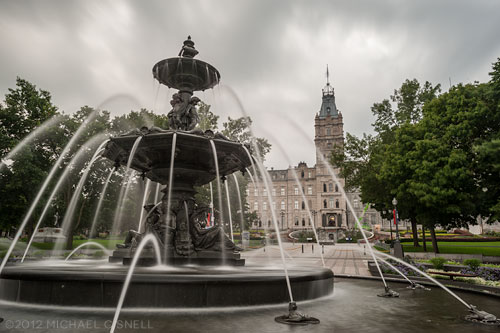
A little grey overall but it was early yet and I knew from experience that even grey skies can go cobalt blue for a few, short minutes at twilight. Patience.

A couple of other details for you photographers: I wanted not only the fountain’s water to blur but also the clouds, which were moving fairly quickly. To achieve this before darkness, I stacked my ND filter and my polarizer to cut down as much light as possible. I stopped down mostly around f/11 or f/16 because I find this lens (my Nikkor 17-35mm)  to be sharper in that range than it is all the way down to f/22. That first shot was 5 seconds at f/16.

Here’s a shot from a bit later in the evening around 7:48 — 30 seconds at f/22 (I accepted the loss of sharpness for more blur on this one):
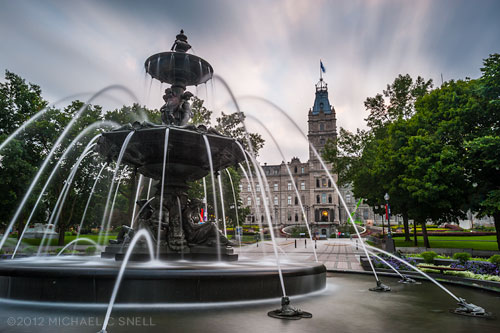
You can start to see the cloud effect in this one. I kept firing a shot off every few minutes, whether it looked like anything had changed or not. I tried some shots with traffic blurring in the background, while on other shots I tried to avoid any cars at all by taking advantage of the nearby traffic signals.

Right around the time of that last shot, this guy shows up:
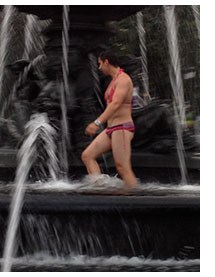
I have no explanation. A group of guys had wandered up with “protest” signs in French, so I had no idea what they said. Then this guy then strips down to his… bikini (mankini?)… and proceeds to strut around in the fountain while all of his buddies video-taped him. Okay, to be honest, I shot some video on my iPhone as well. What are you supposed to do when something like this happens?!? His friends seem thrilled with his performance and were shouting and cheering and egging him on.

Huh. Luckily he didn’t stay around long enough to ruin any of my long exposures during the fleeting prime light.

This is the kind of thing that could easily distract the amateur photographer. But, as a consummate professional (ahem!), I took it all in stride. I shot my little video to share with friends later, and returned my thoughts to the task at hand. There would be time to ponder this moment later. Strange as it may seem, this isn’t the craziest thing I’ve encountered on a shoot.

I’m starting to get a little color in the sky at this point and there are even occasional cloud breaks and patches of blue. Happily most of the breaks occurred right about sunset time, giving some really nice color for just a brief period of time:
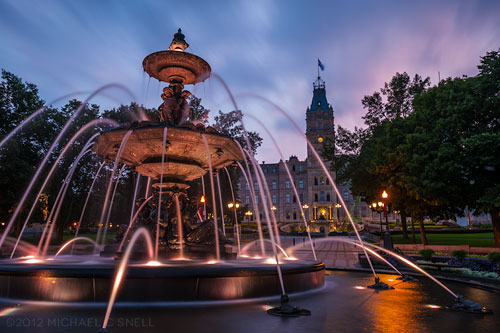
That’s about 8:03, 13 seconds at f/11. The fountain lights were coming on just as the sky was getting nice. I’m liking the balance here. But there’s still more to come. Little by little more lights come on. I notice the floodlights on the front of the parliament building come on extremely green at first but, after they “warm up” a bit, they gradually become a more pleasing tungsten-like color. A good reminder to not pack up too early but to wait and see what happens with time.

During all of this time I played with different apertures and color balances. The latter is mostly just to experiment in-camera. I can easily change the white balance later in Lightroom but it’s interesting to see the changes it makes in such a mixed bag of color temperatures while on location. I tend to like a fluorescent balance on the camera’s screen but I do still tweak it considerably later in Lightroom. Here’s where I was at by 8:24 (30 seconds at f/8):
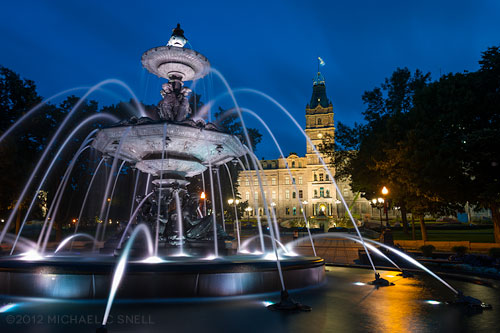
This is closest to the shot that I had pre-imagined, but I now actually like some of the earlier shots better. Even with the cloudy sky, I knew I had a good shot at getting that cobalt blue color after sunset (which contrasts nicely with the warm artificial light on the building), but the earlier pinks and purples in the sky were an unexpected treat.

In the end, that’s about an hour of actual shoot-time but it yielded quite an array of looks. Some of the early, grey shots might make really dramatic black and whites, while I have three or four pretty different twilight looks that might each appeal to different buyers when these get into the stock libraries.

Not bad for an evening’s work.
Ulva Island details, New Zealand

Happy New Year, everyone! I’m wrapping up my New Zealand posts with some details from the Ulva Island hike I wrote about in my last post. Some more New Zealand shots may appear later on, but I think I should shake things up for a little variety around here. I’ve been spending the holidays working on revamping my website and that has also had me exploring the archives, looking for photos to feature. I found some oldies but goodies that I plan on sharing during the next few months, since I don’t have much travel on the schedule for a while. Of course, I’ll also let you know when the new site launches. Stay tuned…

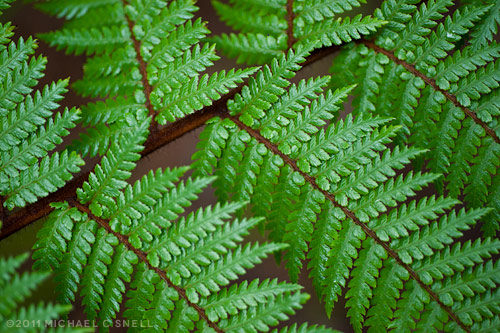
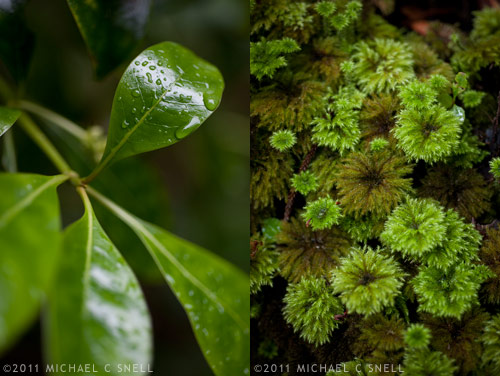
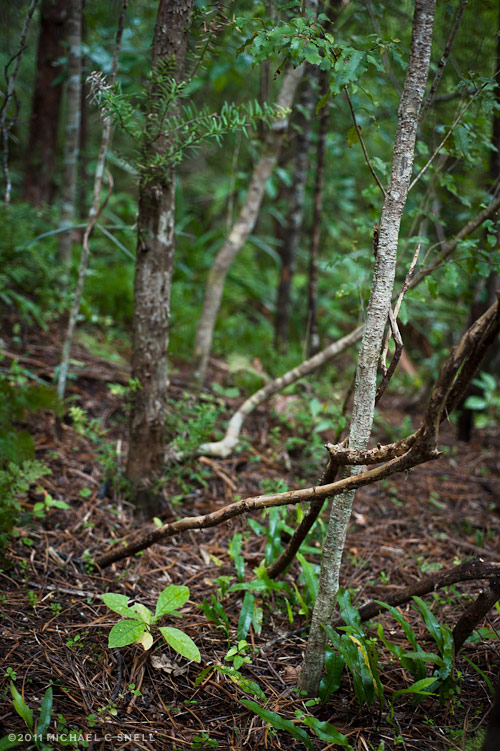
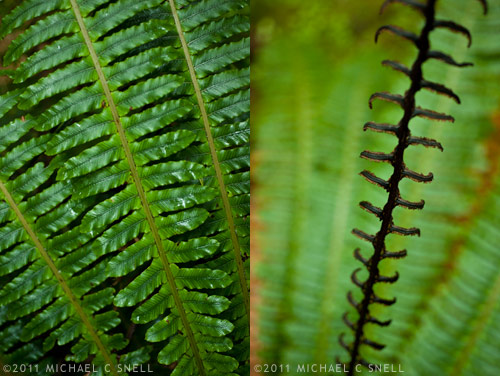
So, back to Ulva Island and the walk in the rain. The light was actually quite beautiful and the colors were lush. I decided to go macro for most of my shots that day to focus on details and textures and to take advantage of the water droplets and sheen caused by the misting rain. I also wanted to take advantage of the shallow depth of field provided by my 60mm f/2.8 to isolate individual plants and leaves from the distracting background branches, etc.


Sometimes I think that a series of tight little shots like this convey more about a place than one wide shot that tries to take it all in at once.

Rainy day strategies

[sponsored post]

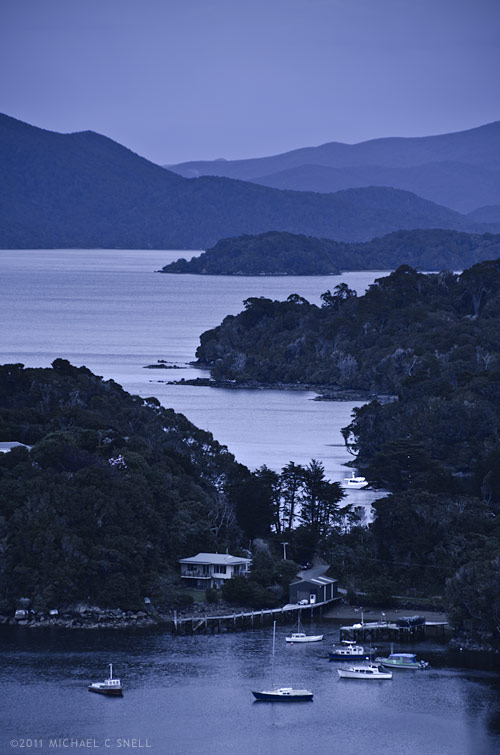
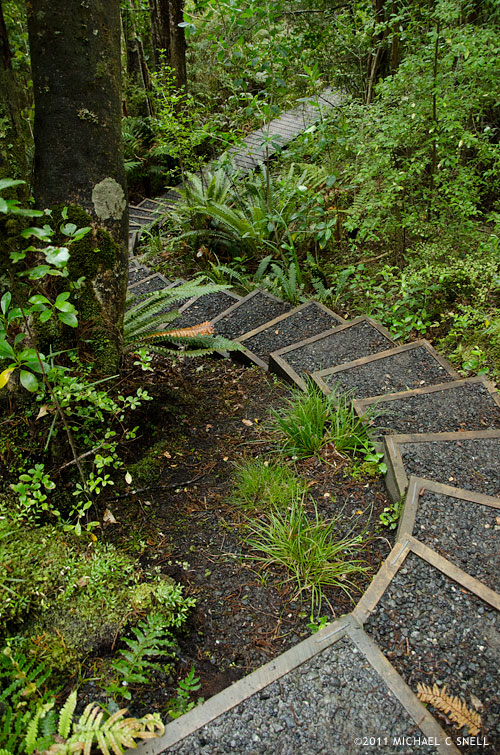
Stewart Island lies off the southern tip of New Zealand’s South Island. In this shot we’re just over the peninsula from the Island’s one town, Halfmoon Bay, and are overlooking Golden Bay, Thule Bay and the Paterson Inlet. Today’s destination is Ulva Island — a small, 670 acre island in Paterson Inlet that is being restored to its original predator-free ecosystem.

It’s also raining, which can make shooting photos during our walking tour challenging. I don’t have any waterproof housings but I do have a jacket and opt for a two body, two lens operation today. I’ll take the Nikon D700 with a 60mm macro lens and the D7000 with the Tamron 18-270. Here’s my thinking:

We’ll largely be in fairly dense rainforest where the reduced contrast of the overcast sky will actually help even out the light. I won’t want to include a lot of sky in any shots since it’s flat grey so I will instead focus on details — macro shots of the plants that we encounter on the walk. It will also allow me to shoot downward for the most part, eliminating the problem of rain getting on the front element of my lens. Neither camera-lens combination is large, so I can keep them both tucked into my partially zipped jacket and retrieve them only when needed. The second body with the 18-270 will be reserved primarily for those times when I encounter something that suddenly requires more than a prime 60. That might be a wide shot where the trail opens out onto a beach, or a telephoto shot of a bird. Birds are a large part of the visitor experience to Ulva Island so I hope to get something along those lines. By taking the 18-270 and a macro, I figure I’m set for nearly anything and I won’t have to deal with changing lenses in the rain.
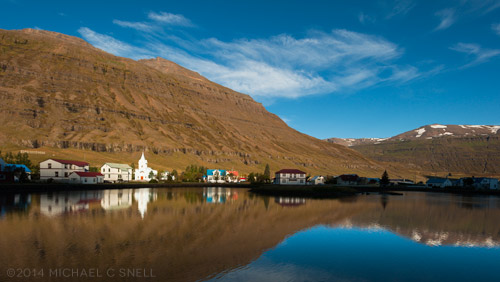
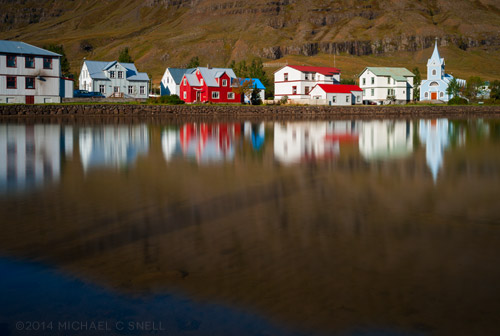
Overall, this plan worked well. Once we made our way off of the beach and into the understory, the rain effect was lessened by the trees overhead, although the occasional drop that would land now was a much larger drop from a leaf than the small, misty raindrops on the beach. The trails wound through ferns and forgotten-looking plants that gave a real sense of what New Zealand must have once been like, before the main islands were largely cleared of trees for cultivation. I’ll show some of the macro shots in the next post but first I’ll show a couple of shots that made me thankful to have had the 270 end of the Tamron 18-270 zoom.

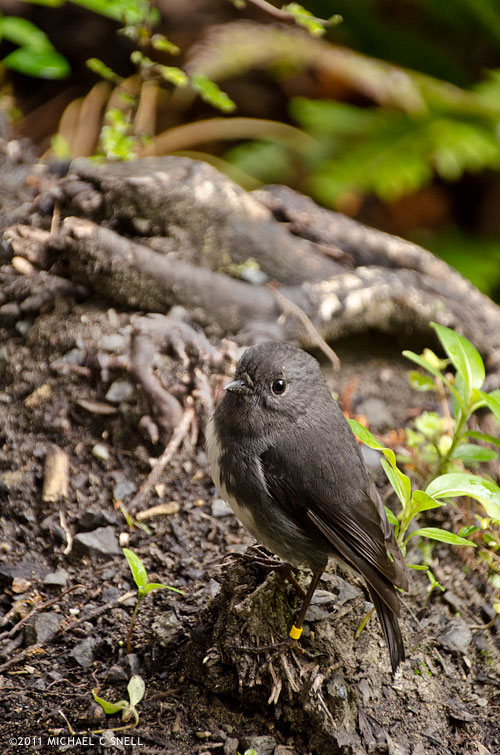
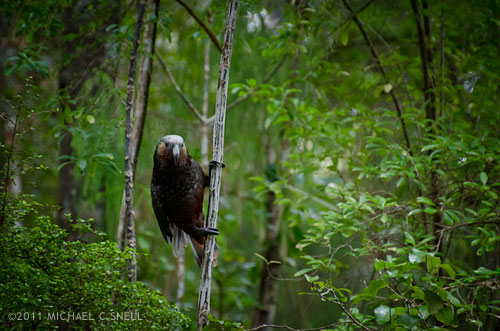
This tiny bird is a Toutouwai, or Stewart Island Robin. On the much larger end of the scale is this South Island KaKa:

A member of the parrot family, Kakas are about 18″ long and weigh a pound on average. That’s a pretty sizable bird. The Kaka didn’t come nearly as close as the Robin. There was another group a few yards ahead of us that he was curious about but the addition of our group coming up behind eventually proved too much and he took off. I was happy to get the images I did with the 18-270, but can only imagine the shots that a person could get with a little more time and patience on this island. For the most part, the birds are not that suspicious of people and will come fairly near. The haven’t really learned fear.

In the next post, I’ll share a few of the detail shots I took on this hike with the macro. Given the weather and limited time, I think the two lenses really allowed me to cover a lot of ground photographically speaking.

I should also mention one other foul-weather tip — the landscape at the top of this post (also shot with the Tamron 18-270) was fairly grey and colorless due to the overcast skies and impending rain. Once I brought it into Lightroom, I opted to alter the white balance to give the scene a cooler, blue cast. The result resembles the light you might get just before dawn or after sunset, even though it was shot near mid-day. Filters can also be used on-camera for this effect but, anymore, I prefer to leave my options open for playing with different color temperatures at the point of post-processing instead. By shooting in RAW, I have the ability to make several versions in different tones without any damage to the original image. One of the great benefits of today’s digital photography tools.