Category Archives: lenses

Birding in Extremadura, Spain

Spain is a great place for anyone with an interest in birds and Extremadura’s birdwatching fair, FIO, will be held from February 24 through 26 this year. I was fortunate enough to get to attend the 2016 event last March and I had a great time. While I’m no bird expert, I do enjoy photographing a wide range of subjects — birds included — and it’s always great to hang around with a bunch of people who are passionate about something. Plus, spending a great deal of time in the Extremaduran countryside ain’t bad either. For those unfamiliar, Extremadura is a beautifully wild region of Spain lying west of Madrid and east of Portugal.

We started our bird-watching experience at the Castillo de Monfrague in Monfrague National Park, which offers panoramic views and a great platform for watching the large raptors that inhabit the area.
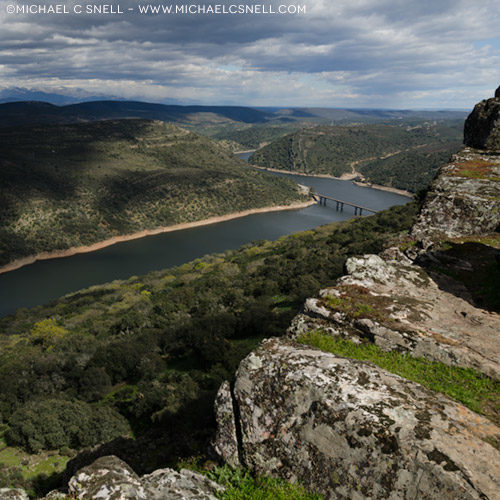
170103birding01_sotc

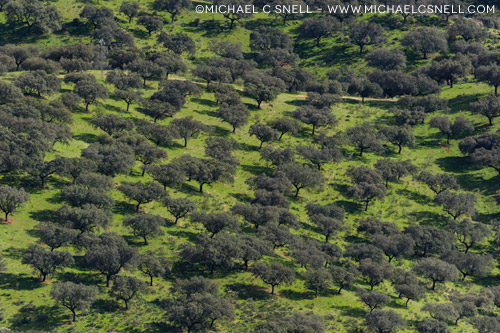
Much of the surrounding landscape is what is called “dehesa,” a kind of pastureland with widely dispersed trees — typically oak. The overhead view provided by the Castillo’s high perch helps illustrate what it looks like:
170103birding02_sotc

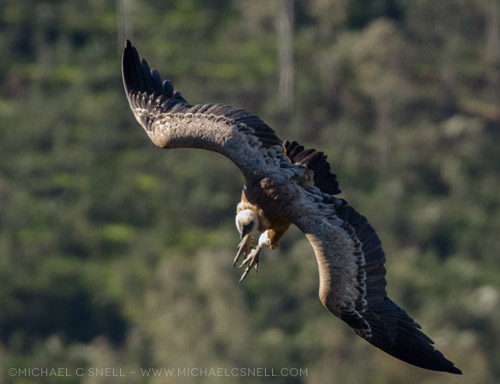
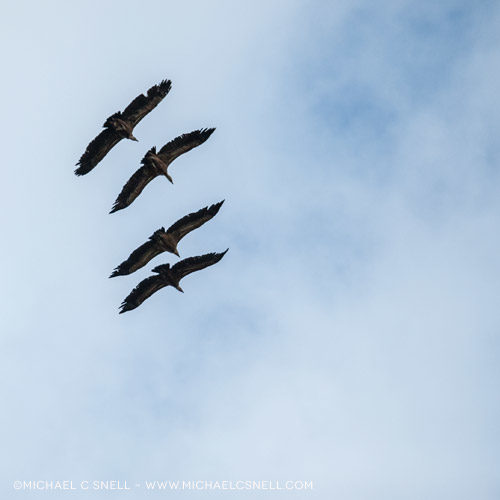
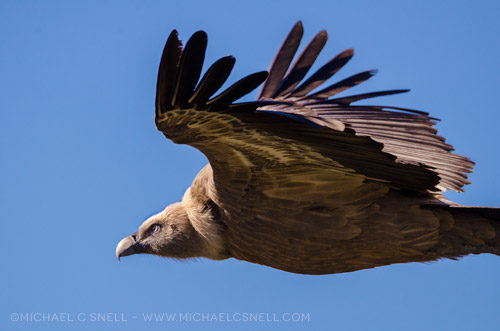
As the air begins to warm in the morning, various large raptors — including Griffon Vultures — begin riding the thermals. Again, the castle provides a perfect viewing platform as they spiral upward and overhead. I had the opportunity to photograph them from below, from eye-level, and from above as they would swoop back down to their nests in the cliffs below.
170103birding03_sotc

170103birding04_sotc

170103birding05_sotc

As large and close as these birds were, I was still happy to be testing out the then-new Tamron 150-600mm lens. A second generation has since been released, but I found little to fault with my original version and I especially appreciated the Vibration Control that allowed me to hand-hold all of these shots.

Down in the valley, we also spotted Black Storks. I can’t think of many creatures I’ve seen that look more prehistoric than these colorful birds.
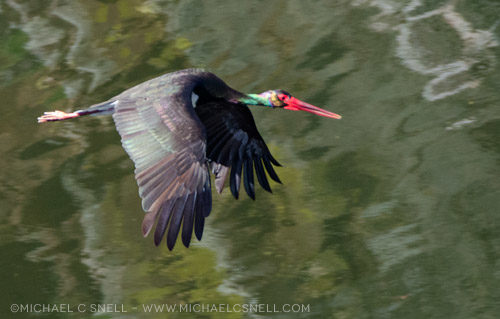
170103birding06_sotc

And, of course, we would see plenty of White Storks as well. These inhabit nests found on many of the rooftops and chimneys in Extremadura and are hard to miss due to the clattering sound they make with their bills.
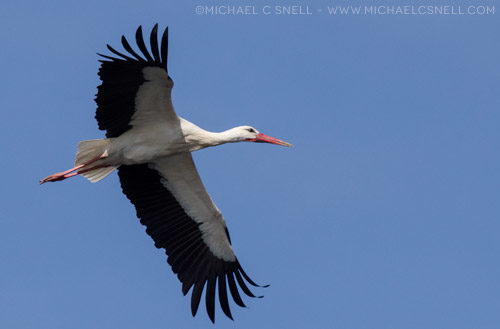
170103birding12_sotc

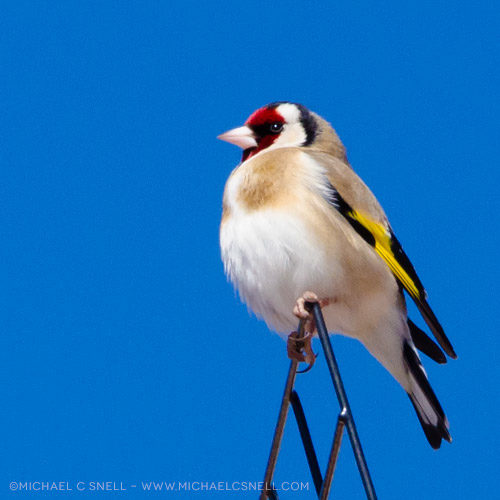
Not all of the birds were large. There were also plenty of smaller varieties, too. Below are a Thekla Lark, a pair of Crag Martins, and a European Goldfinch. I hope I have these names right — if not, it’s no reflection on my very knowledgable guides but my own inability to retain information!:
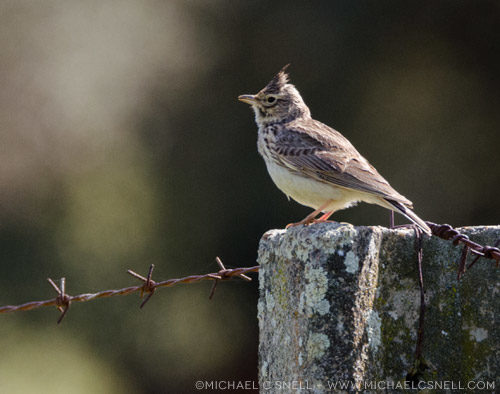
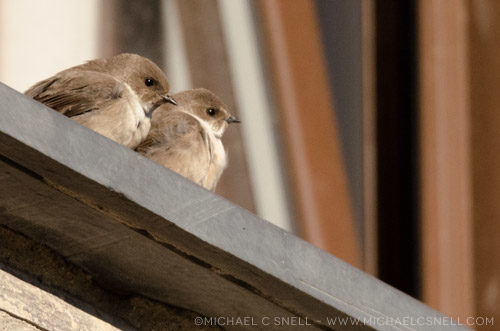
170103birding10_sotc

170103birding07_sotc

170103birding08_sotc

To be honest, the smaller birds were much harder to capture at the pace at which we were traveling. Their movements were much swifter and it is really best to wait out in a spot and let them come perch near you. Still, we managed to log quite a few different species as we roamed the countryside.
170103birding13_sotc

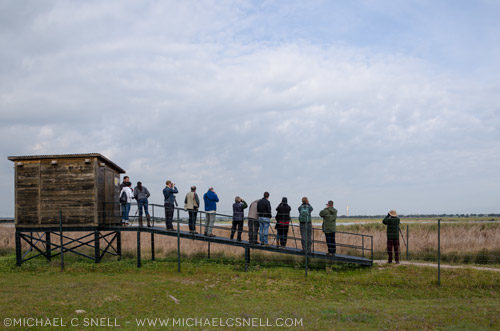
That’s a few of our gang of birders, photographers, and birding tour operators on the lookout for the next bird-of-interest. I truly enjoyed hanging out with these folks and learning more about the birding opportunities in Extremadura. The fair (FIO) comprises a sort of “tent village” with stands that feature information about birding in the area, gear for birders and even birding-related arts and crafts. There was a very impressive show of bird photography as well. It’s a great event for those with such an interest.

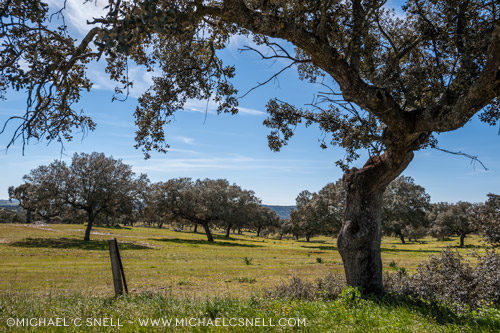
I’ll never see the landscape of Extremadura in the same way again, now that I know that it is home to so many diverse species of birds. I now notice that the sky is seldom empty in this part of Spain and my eyes will continue to glance upward to see who is overhead. I’ll leave you with one more landscape shot of the region we were exploring, and I’ll follow with a post about some of the villages we encountered along the way.
170103birding11_sotc

California State Capitol

150212sac_sotc

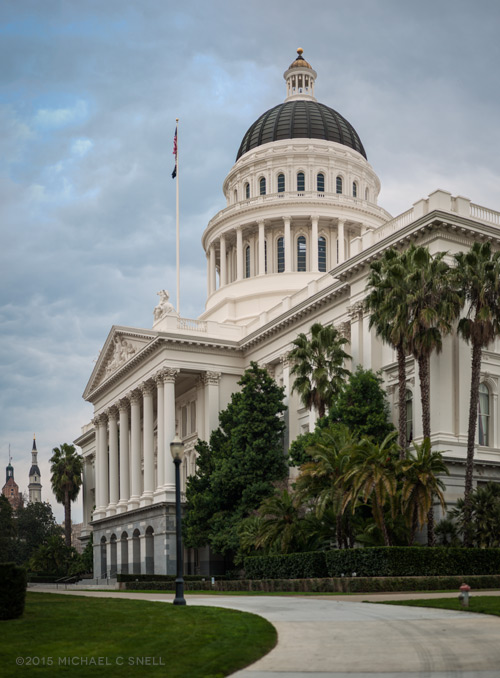
I’m just getting settled back in from a trip to Sacramento, California, where I attended a board meeting of the Society of American Travel Writers (SATW). In between rain showers and meetings, I did manage to get out and shoot a little. This shot came from a short afternoon outing where I just walked the few blocks around my hotel, limiting myself to just my 85mm Rokinon lens. It was threatening rain, I wanted to travel light, and I sometimes enjoy that limitation of one focal length to force myself to see a bit differently.

But for this shot, I really needed a wide angle. The capitol grounds are filled with trees so there was no “zooming with my feet” for this one. If I stepped back further, my view became obstructed. Instead, I shot a grid of about eight or nine images and stitched them all together later in Photoshop. A nice side benefit is that it resulted in a really large file, should anyone ever want to order a reeeeeeeally large print.

The Giants and the Bigheads of San Fermin

140901sanfermin01_sotc

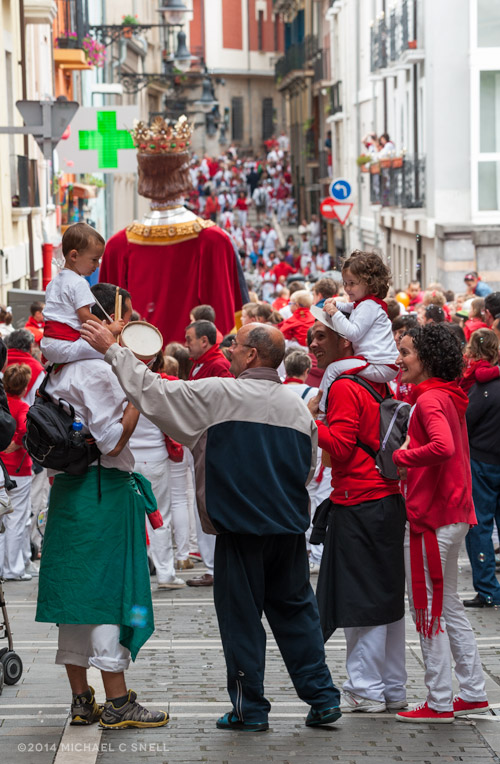
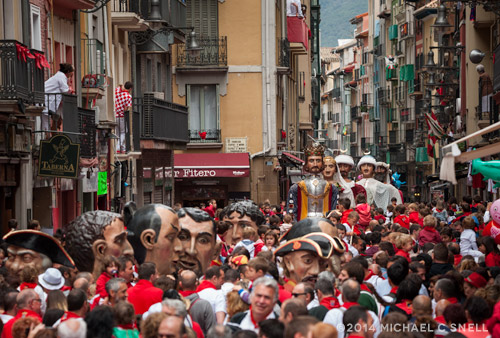
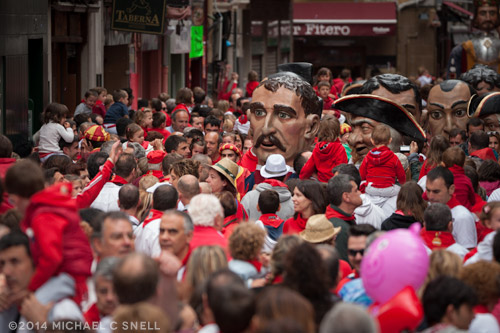
I mentioned in an earlier post how the Festival of San Fermin in Pamplona, Spain, is so much more than just the running of the bulls. One of my favorite parts of the festival is the visually stunning and family-friendly Comparsa of the Giants and Bigheads. The current Giant and Bighead characters date from around 1860, replacing older versions that had fallen into disrepair. Wherever they go, a crowd gathers. I saw them briefly on my first day in Pamplona, but the crowds were so tight it was difficult to find a position for good photographs. On my second day, I was lucky enough to run into them again during some free time and I managed much better.

140901sanfermin02_sotc

Coming upon the parade from behind, I could see where they would be going — which appeared to be a different route than they had taken the day before. This time they were heading down Estafeta Street — the same street I had scouted for my long telephoto shot of the running of the bulls. After getting a few shots of families enjoying the festivities from my initial vantage point, I set off to walk around a few blocks and be ready as the procession approached me closer to the bullfighting arena.

140901sanfermin03_sotc

And they arrived — coming right down Estafeta following the same path that the bulls do each morning. The shot below shows the full procession with the Bigheads in the lead and the Giants following behind. The Bigheads interact with the people in the crowd as the Giants twirl and dance.

140901sanfermin05_sotc

140901sanfermin04_sotc

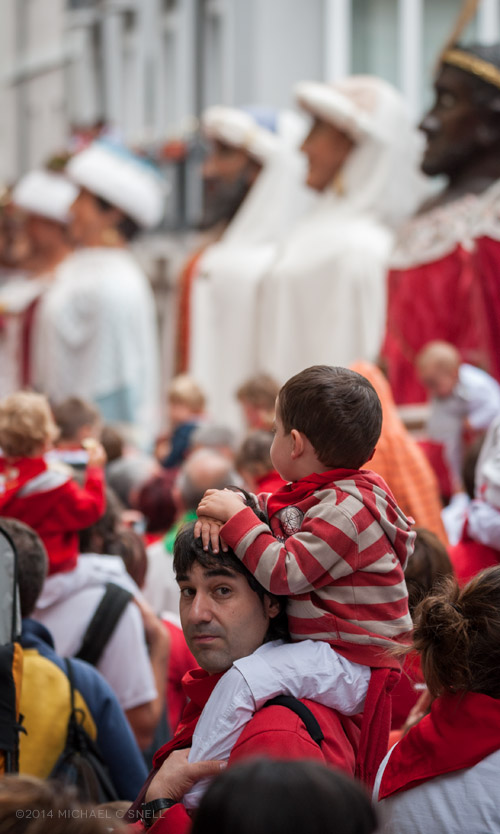
This last shot is the one I was really looking for and hoping to get. I love the compression from the long lens (this was my Tamron 150-600mm zoom, set to 450mm) and the way the shallow depth-of-field isolated the Giants by softly blurring the balconies in the background. As you can see by the myriad children in all of these photos, this really is a family event and the kids love it. Hey, I loved it!

140901sanfermin06_sotc

The Alhambra, Day 2

140614charles01_sotc

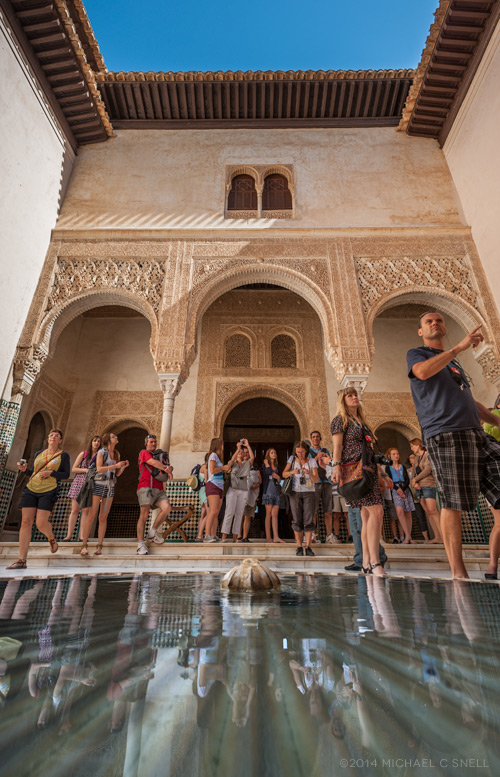
It’s always great to get a second chance to photograph a place. The first visit is about discovery and it’s sometimes overwhelming as you try and take everything in. The return visit is often more about details or things you just didn’t see the first time. Different light conditions and weather can also dramatically change how a place looks and feels.

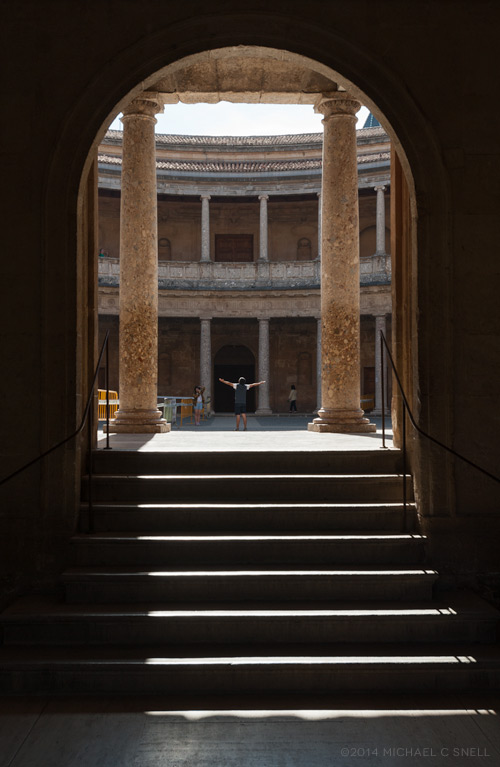
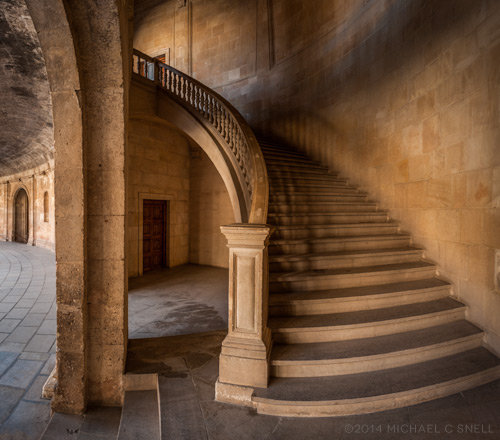
My second day in Granada, Spain, began with a return visit to the Alhambra. This time the first stop was the Palace of Charles V — a building I had bypassed entirely on my first visit. The main space is circular and ringed by a colonnade. Around the periphery are smaller rooms like this one with the staircase (This is actually three photos stitched together in Photoshop):

140614charles02_sotc

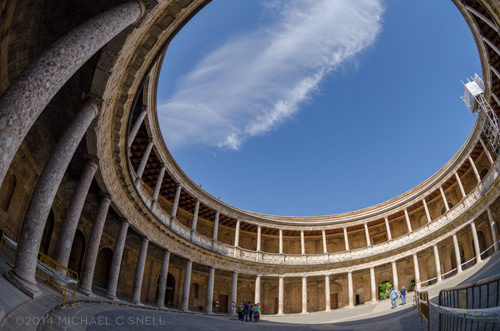
It was hard to get the main courtyard all in-frame and to show it full circle. I went to my rarely used fisheye for this shot and actually like the distortion it creates. I had used this lens in a circular Art Deco church in Tulsa in April, and realized that the distortion is less confusing in round spaces. One of those little tidbits I’ll file away for future shoots. You never know when you’ll find yourself in a round room, right?

140614charles03_sotc

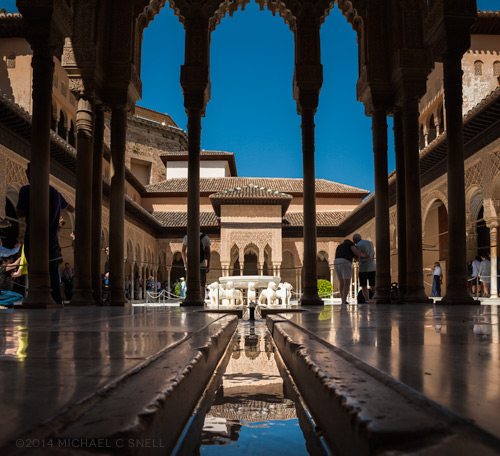
After the Palace of Charles V we followed much the same path on this visit as I had taken on Day 1. Here are just a few more shots of things I saw differently this second time around:

140614alhambra01_sotc

140614alhambra02_sotc

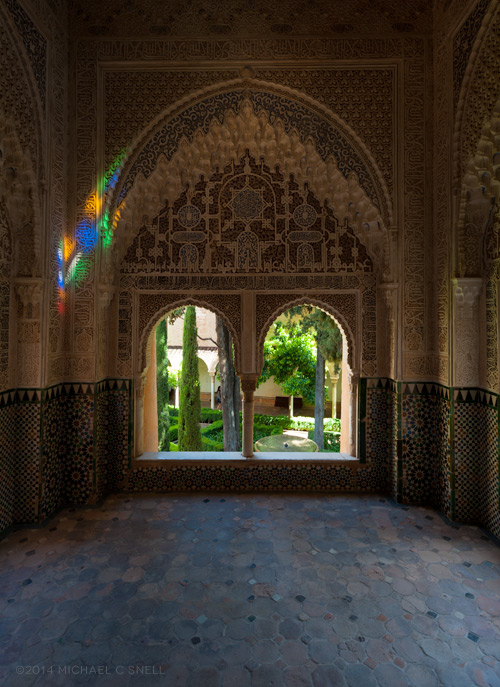
This next photo really shows the advantage of visiting at different times of day. I had photographed this room the afternoon before but the light was not coming through the stained glass as it did this following morning. The patches of colored light on the wall add an altogether different feel to the image and tells more of the story of what’s going on outside of the frame.

140614alhambra03_sotc

More Granada to come…

New book and other announcements

Spain_Extremadura_cover

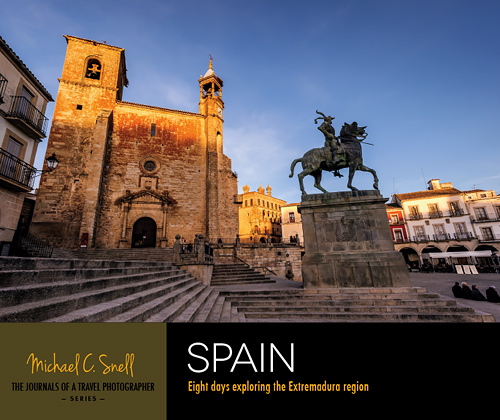
The latest book in my “Journals of a Travel Photographer” series is now available in the Blurb bookstore. Here’s a direct link, or you can visit the store page on my own website for links to this and other books in the series. The Spain book features images from an 8-day trip I made to the Extremadura region of Spain last year. It was my first trip to Spain and I immediately fell in love with the historic cities and Roman ruins found throughout the region. Check out the preview on the Blurb site for more. A Spanish-language version may be following soon.

The Extremadura book has actually been out for a couple of weeks, but I have been late in announcing it here on the blog due to a second trip I just made to Spain — this time to the province of Granada. I also plan on releasing a “Journal” book about this trip in a few months. Several blog posts will feature highlights over the coming days and weeks, as well. For a bit of a preview, however, you can check out my interview that was published in the Tamron e-newsletter last week:

tamron_enews_granada

The story features a few of the photos I made on the Granada trip using the Tamron 18-270mm VC PZD lens. I have also recently received their SP 150-600MM F/5-6.3 Di VC USD for testing — stay tuned for some future posts featuring images from that lens.

So there’s plenty on the way in the coming weeks. I just wanted to make sure I got this plug in for the Extremadura book before inundating you all with images from my more recent Granada trip.

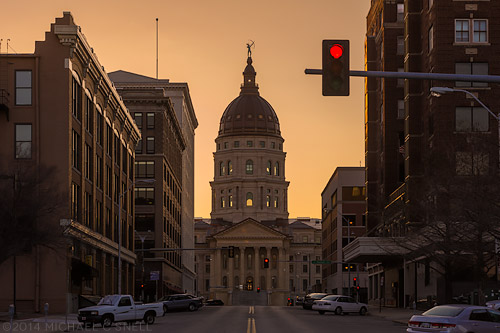
Kansas State Capitol

140415capitol04_sotc

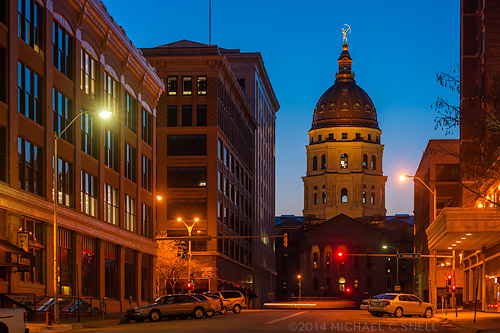
For five years I had an office just around the corner from the State Capitol in Topeka, Kansas. At the time we signed the lease on the place in 2003, I thought it would make for a great opportunity for me to build my library of Capitol photos. After all, I’d walk to work every day so I’d pass the building several times a week in all sorts of weather. What I didn’t realize was that the Capitol was about to undergo a long, long renovation. A renovation that would have it covered in scaffolding for the bulk of the time I officed downtown. When we moved to Lawrence six years ago, it was still impossible to get a clean shot of the most iconic building in Kansas. Only a few weeks ago did the work finish and the scaffolding and cranes came down. In the end, the copper on the dome had been replaced so the green patina is no more and the dome now has the dull sheen of a new-ish penny.
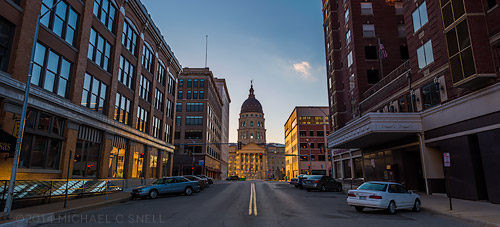
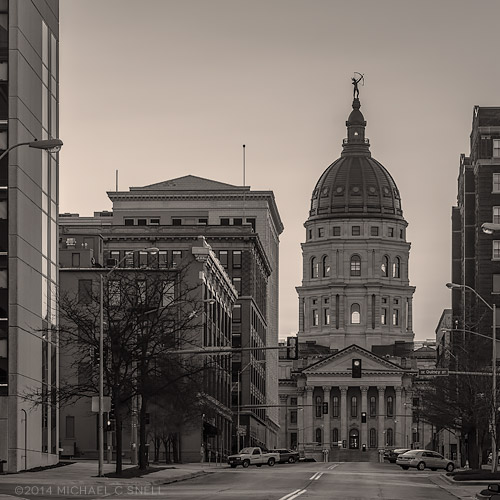
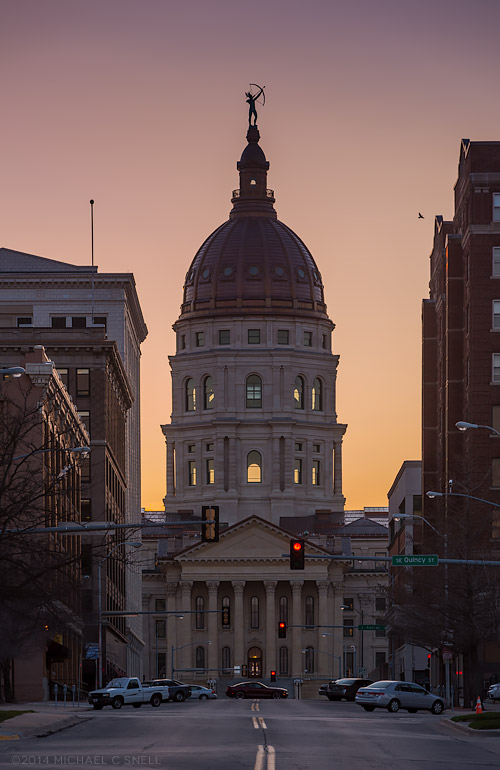
I photographed the interior a couple of weeks ago but with Spring finally arriving, I decided it was time to get back to updating my exterior photo files. Any photos of this building made prior to 2014 are now dated due to the new dome, so I’ll be continuing to revisit the Capitol many times in the coming year(s). Last night I got started by setting up shop on 9th Street — probably the best view of the Capitol if you want to see it in context to downtown. Until about 10 years ago, this was the one downtown intersection that still had historic buildings on all four corners. The northwest corner (in the distant right in this view) has since been redeveloped with a retail/parking structure, but this angle still remains one of the most “historic” views.

Here are a few more images made while waiting for the sun to set last night and experimenting with some different post-processing effects. All are from more or less the same position but shot with lenses of different focal lengths, each giving more or less prominence to the Capitol in relation to the other downtown buildings.

140415capitol02_sotc

140415capitol01_sotc

140415capitol03_sotc

140415capitol05_sotc

More shallow depth of field

130810printer_sotc

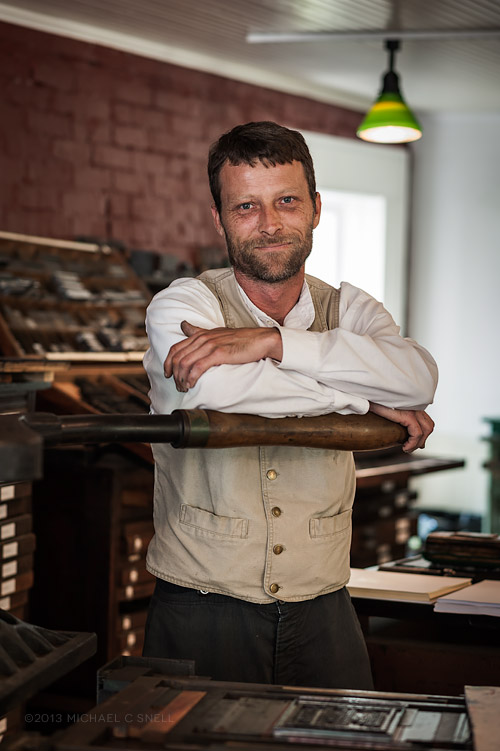
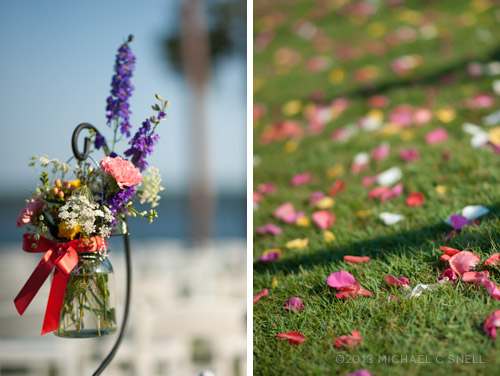
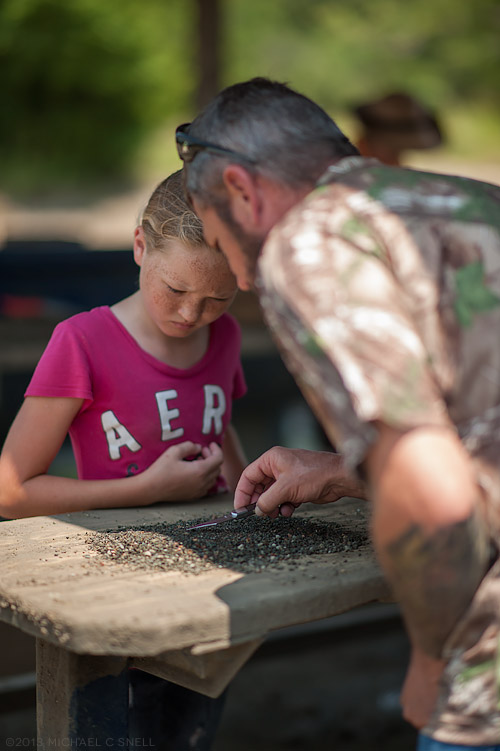
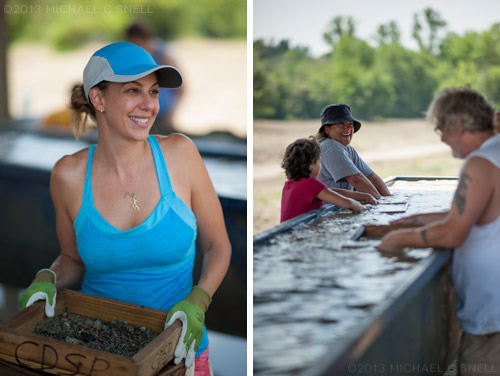
Here are a few more shots taken in Arkansas with my 85mm 1.4. Having a manual focus lens again has been interesting. I used to love manual focus and only grudgingly adopted autofocus when I upgraded film bodies years ago to get other features. I’m enjoying a return to that slower, more thoughtful way of shooting but I am finding that changes in my own eyesight and in camera viewfinders have added some additional challenge. Not to mention that at f/1.4 you get very little wiggle room. That plane of focus can be wafer thin.

The big viewfinder on my D700 is pretty manual-focus friendly but I do miss my old split-view finders. I’ve looked at options online for getting a replacement focusing screen, but I’ve seen enough comments from people who have experienced exposure issues that I’m not sure it’s worth it to me. Instead, I think I’ll just continue to practice, practice, practice. I also think I’ll try and rely more on my eye and less on the focus-confirmation dot in the viewfinder that tells you when you’re sharp. I’m not so sure that it isn’t “drifting” a bit depending on my subject distance. It must be the camera – it couldn’t be me, right?

130810wedding_sotc

Above: I happened on this beautiful lakeside wedding location, just after the ceremony had finished. Below: a few shots of people hunting for diamonds at Crater of Diamonds State Park.

130810diamond2_sotc 130810diamond1_sotc

Simplifying the frame: Clinton birthplace home NHS

130804clinton3_sotc

On a recent visit to the President William Jefferson Clinton Birthplace Home National Historic Site in Hope, Arkansas, I decided to take a different approach to my photography. It’s easy to develop habits and a common one is to see “interior” and immediately think “wide angle.” After all, I carry that wide angle for just that reason — if I’m in a tight space, I can still get it all in the frame — right?

Here’s a typical shot from starting with that mindset:

130804clinton1_sotc

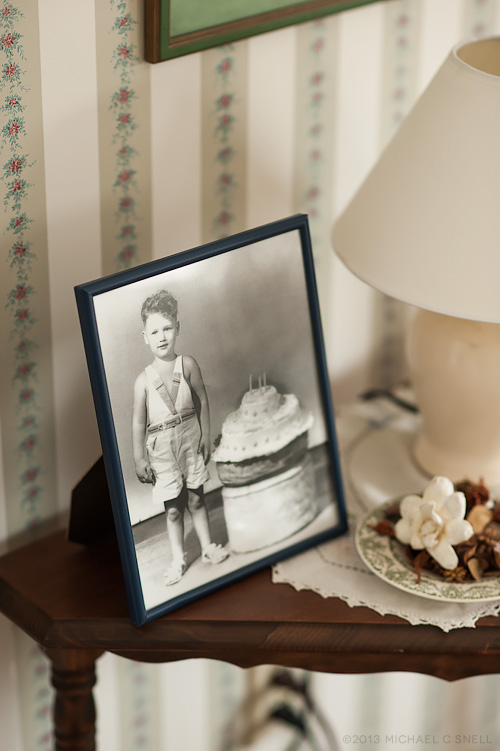
But the more I thought about it in this case, the more I realized that the architecture isn’t the point. The real spirit of the place was in the details: the childhood photos, the everyday items, the memories. After I had all of the wide shots I needed, I popped on my new Rokinon 85mm 1.4 and took a fresh look at things. The image at the top of the post and the three that follow were all made with the 85mm.

That short telephoto view changed how I saw things. It forced me to simplify. What was a chaotic mixture of patterns through the 17mm was now reduced and dreamy — thanks to the shallow depth of field. The images felt more like I felt, when touring the house. I’ve toured a lot of presidential museums and boyhood homes but this one was more personal for me, probably due to the fact that it resembled my own boyhood home so much. It was very nostalgic for me and I think that came through in the images. I’ll definitely not disregard a short telephoto when shooting interiors from now on.

130804clinton4_sotc

130804clinton2_sotc

Testing a new lens

130603lenstest7_sotc

Gear is a funny thing. You can become obsessed with it — always wanting the newest, the fastest, the most megapixels — but it’s a trap. At least I feel that it can be a distraction from paying attention to the things that really matter: composition, mood, light, message.

I don’t buy new gear all that often and I try and really think through and make purchases that will last. I’ve had a solid stable of bodies and lenses for a while now and have the whole range of focal lengths covered from 17mm to over 400mm (if you consider the 1.5x of my crop-sensor D7000).

So what more could I want or need?

I’ve thought about this a lot lately and have decided that what I’m looking for now are not necessarily the tools that test out as having the “best quality,” but rather tools that have a “unique quality.” It’s a fine distinction, but what I’m looking for are a few lenses, in particular, that have a uniqueness about them. They deliver something special. They may not be the most expensive, rugged or sharpest, but they will bring a capability to my kit that I didn’t have before.

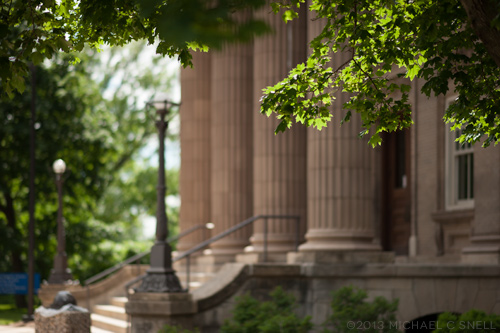
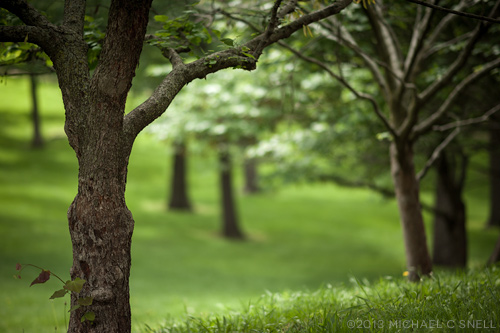
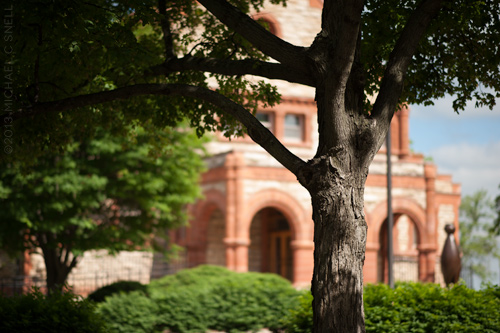
My most recent addition arrived on Saturday: a Rokinon 85mm f/1.4. I took it out for a quick walk around the KU campus yesterday to see what it could do. I was drawn to this lens for the shallow depth of field and creamy bokeh (out of focus areas). It’s manual focus as well, which slows me down and makes me more thoughtful. So far, I’m not disappointed. See what you think of these initial test shots:

130603lenstest6_sotc

130603lenstest1_sotc

130603lenstest5_sotc

130603lenstest4_sotc

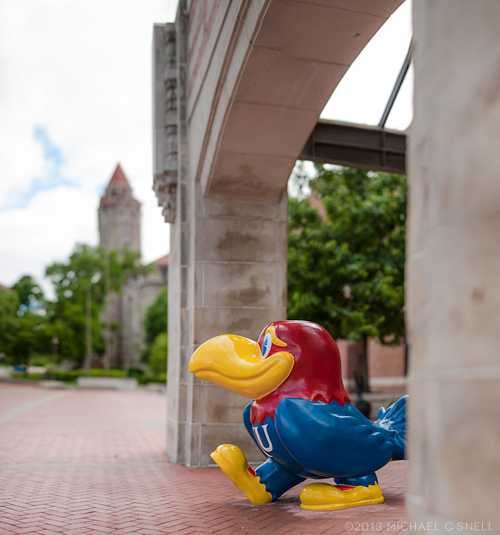
The Jayhawk shot above is actually stitched from 18 images in a pano-grid method I’ve written about before. It lends the shallow depth of field to a wider angle of view.

130603lenstest2_sotc

These last two shots are of mounts on display in the Natural History Museum — they’re not wildlife shots. I was just looking for some tighter settings to try the close focus and shallow depth of field:

130603lenstest3_sotc

130603lenstest8_sotc

So far, I’m impressed and happy with my purchase — and anxious to get this lens out in the field for some real travel work.

Fort Scott Candlelight Tour

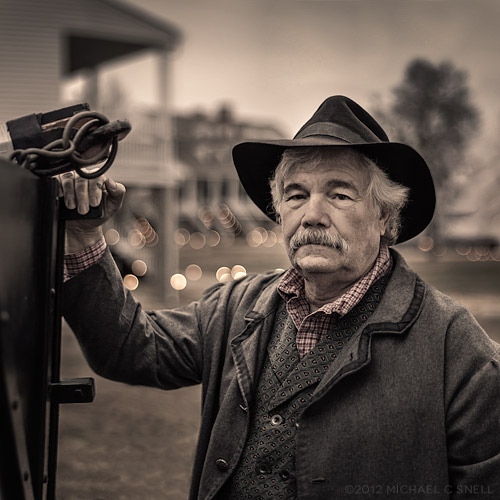
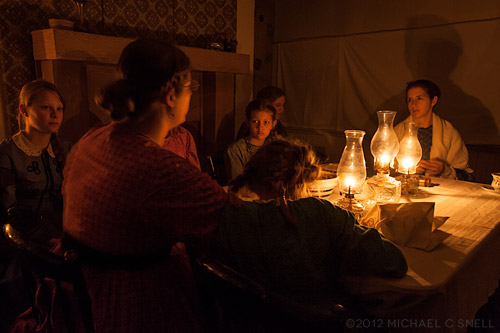
I paid a quick visit to the Fort Scott National Historic Site in Fort Scott, Kansas, last night to photograph their annual candlelight tour. The shot above is something I’ve been playing with lately — creating shallow depth of field images by stitching together multiple frames from a fast normal, to short-telephoto, lens. This one is 13 frames shot on a 50mm lens at f/1.8 and stitched together using Photoshop CS6. It’s an interesting look and reminds me a bit of the old large-format images that might have been made in the late nineteenth century. It seemed appropriate for an evening devoted to recreating the year 1862 on a frontier fort in what had then just become the state of Kansas.

More (single frame) images from last night: