Category Archives: night

Iceland, Day 1 in Reykjavik

140930reyk03_sotc

I’ll do a little day-by-day of my SATW Photo Shootout experience over the next few posts. In this report, I’ll show a few images from my first day in Reykjavik.

I’ll admit, I was off my game. My luggage didn’t arrive and, while I had everything really critical with me in my carryon, I didn’t have my tripod which I’d planned on using for some long exposures both at sunset and sunrise. Suck it up and adapt, right? That’s what I tried to do, although my first day of any trip is seldom my most productive. You need to make a start, though, and get those creative juices flowing.

I had arrived early that morning and would be staying at the Icelandair Marina Hotel in Reykjavik that first night. We’d each get a rental car the following morning, to begin exploring the country on our own. So, really, this was kind of a warm-up day without too much expectation. The Photo Shootout participants met mid-day and we were given the rules and cut loose to start shooting.

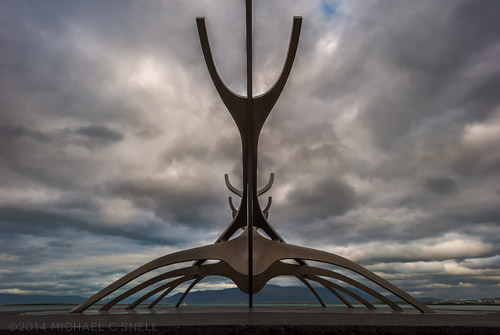
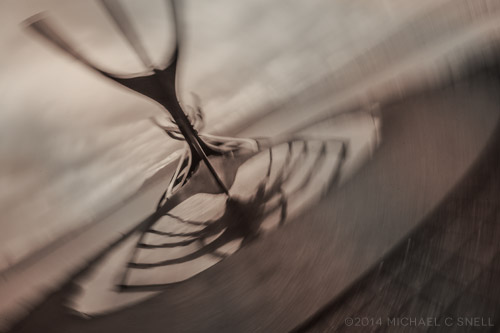
I knew I wanted to get some images of Reykjavik’s iconic Solfar sculpture, even though I doubted I’d enter any in the competition because it has been shot so many times and in so many ways. I didn’t imagine I’d get anything “new” but I wanted to shoot it for my files nonetheless. Here are a couple that I ended up liking. One fairly straightforward and one more abstract, made by spinning the camera during the exposure:

140930reyk01_sotc

140930reyk02_sotc

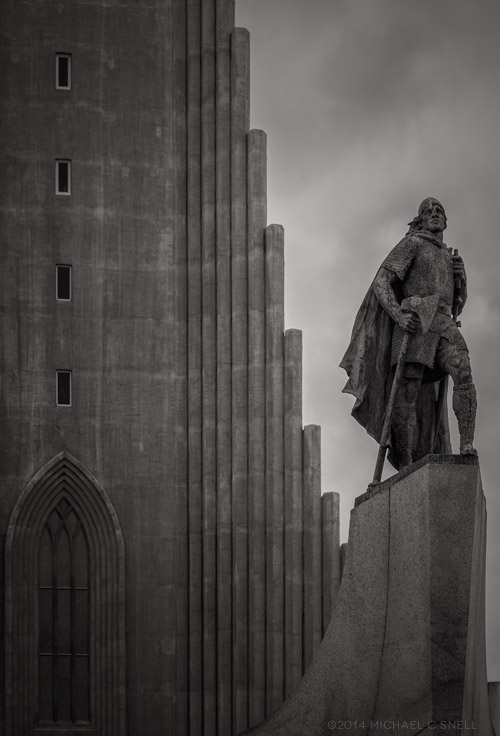
Next stop was the famous church, the Hallgrímskirkja, and the statue of Leif Erickson:

140930reyk04_sotc

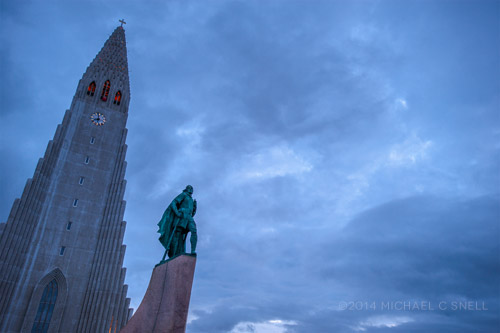
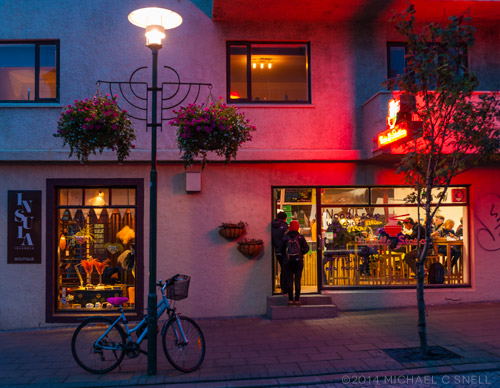
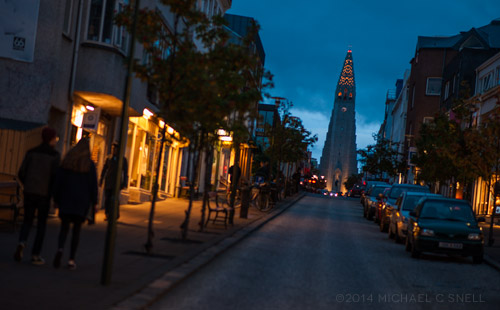
Nearer sunset, I returned to the church hoping to get some color in the sky but it turned out to be fairly grey. Still, there were some nice shots to be made as the lights were beginning to come on around downtown.

140930reyk05_sotc

140930reyk06_sotc

140930reyk07_sotc

In the end, none of my Day 1 shots made it into my 15 shot Shootout portfolio, but I hadn’t really expected they would. The following morning I’d get my car and drive back to the airport to (hopefully) pick up my lost luggage, and begin the “real” part of the Shootout. I was looking forward to seeing some new country — and to seeing my luggage again.

Almuñécar, Spain, on the Tropical Coast

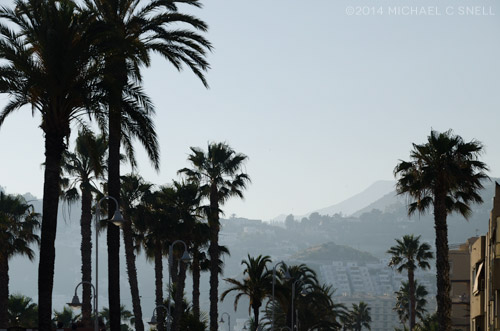
140630almunecar01_sotc

Almunecar, Spain, sits on the Mediteranean Sea, fringed with palm trees. At first glance, it seemed the kind of place I could have spent a lot of time. Happily. We’d had a busy day along the Tropical Coast, however, and we were running a bit late. Sunset was not far off when we arrived in town. I had mapped out a couple of promising looking spots on the beach to photograph the last light and I was rushing to get checked in to the Hotel Suite Albayzin del Mar. The hotel is a spectacularly mirrored palace with sprawling gardens. When I was given my room key, it came with an elevator number, a floor number and the room number. It seems that each elevator only served about four rooms per floor and there weren’t connecting hallways beyond that. When I arrived at my room, I realized the elevator was not the only thing special about this hotel.

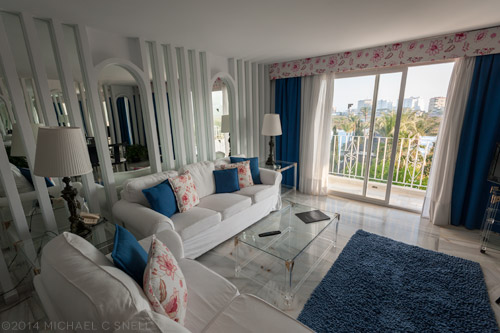
140630almunecar02_sotc

The rooms — no, suites — were enormous. This is just the living room half of my main room with a full dining area to the right, out of frame. I opened one door, expecting to find the bathroom and realized it was a full kitchen, with an extension that served as a laundry room. Another door led to a hallway opening onto a bath and two bedrooms. All along the sea-side of the room was a balcony. I dropped by bags and rushed out to assess the situation regarding the remaining light.

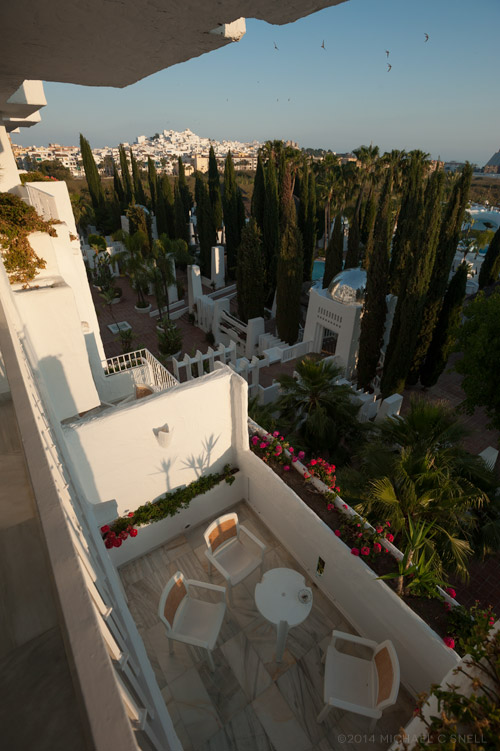
140630almunecar03_sotc

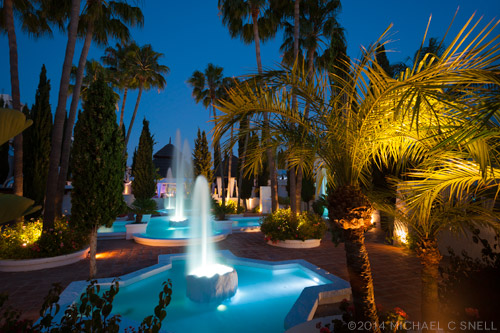
Out on the balcony, the view to the old town was stunning, as were the pools, fountains and gardens of the hotel property.

140630almunecar04_sotc

Looking west, I could see that the sun was already dipping behind a hill, so my time with any remaining sunlight was very limited. I decided to ditch my plans to head for the beach, and I made an executive decision to make what photos I could from the balcony and other parts of the hotel property.

140630almunecar05_sotc

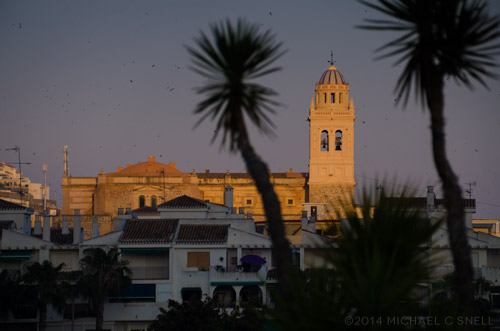
As it turned out, I didn’t feel overly limited in subject matter. I loved this view through the trees of the old church catching the last rays of the sun. That was made from a raised area above and behind the pool seen below.

140630almunecar06_sotc

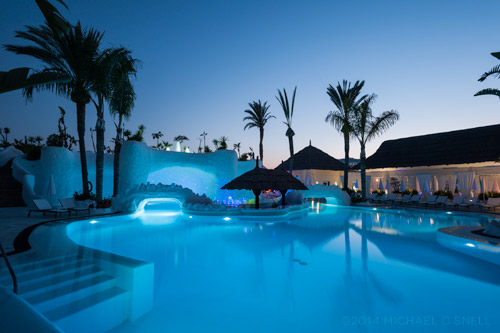
The pools themselves were amazing. This one had a sunken bar in the middle and a grotto filled with twinkling lights.

140630almunecar07_sotc

I dashed around the property taking time-exposures on the tripod until the light failed and my battery was dead. It wasn’t the evening that I had expected, but it was a productive one and I had enjoyed myself immensely.

140630almunecar08_sotc

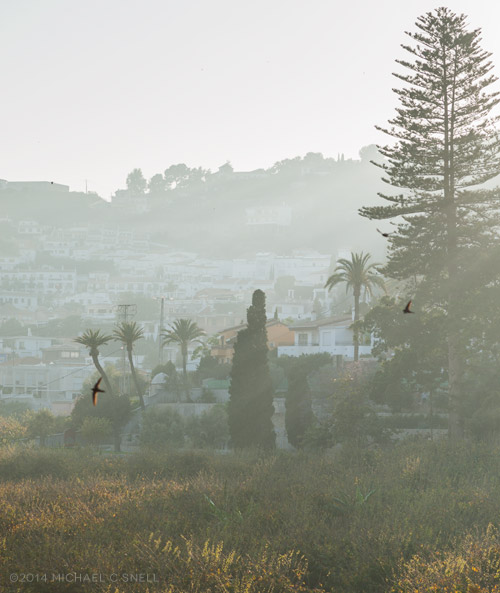
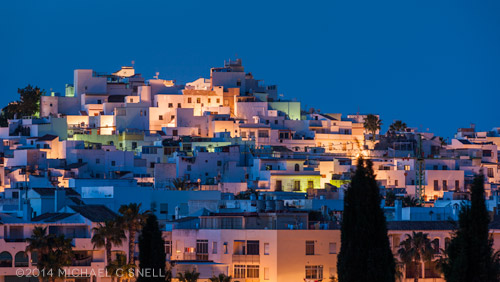
The next morning I was up before sunrise and caught some more beautiful views of the old city to the east of the hotel. Not long after, I was back in the van and headed to the next town.

Kansas State Capitol

140415capitol04_sotc

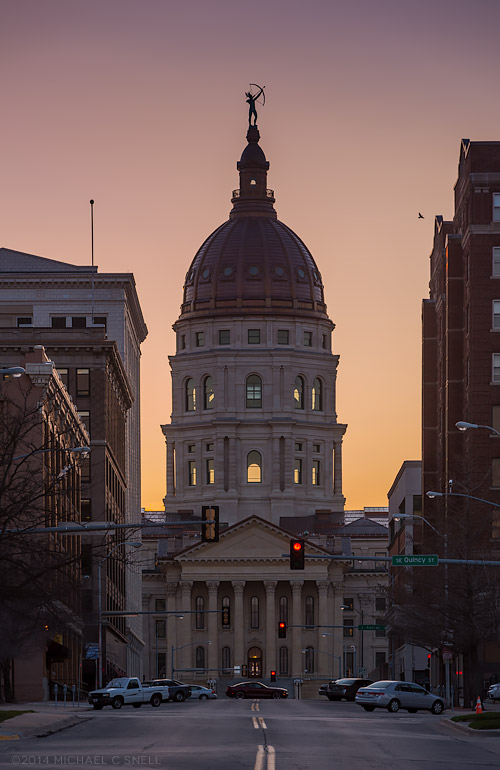
For five years I had an office just around the corner from the State Capitol in Topeka, Kansas. At the time we signed the lease on the place in 2003, I thought it would make for a great opportunity for me to build my library of Capitol photos. After all, I’d walk to work every day so I’d pass the building several times a week in all sorts of weather. What I didn’t realize was that the Capitol was about to undergo a long, long renovation. A renovation that would have it covered in scaffolding for the bulk of the time I officed downtown. When we moved to Lawrence six years ago, it was still impossible to get a clean shot of the most iconic building in Kansas. Only a few weeks ago did the work finish and the scaffolding and cranes came down. In the end, the copper on the dome had been replaced so the green patina is no more and the dome now has the dull sheen of a new-ish penny.

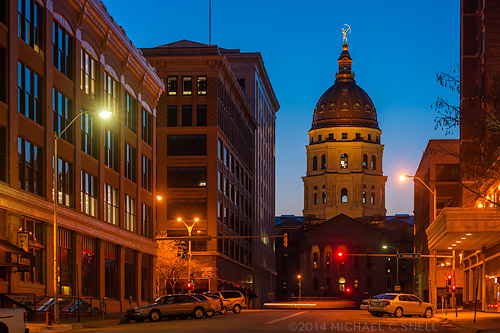
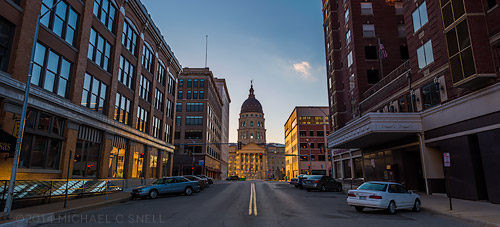
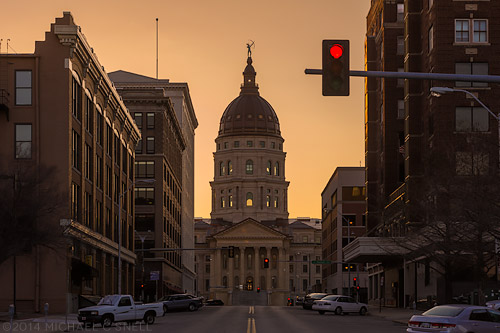
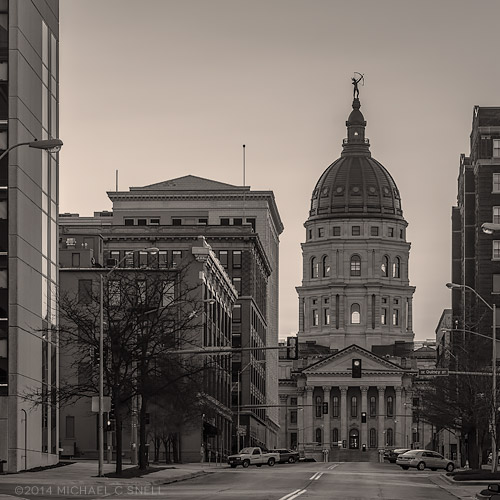
I photographed the interior a couple of weeks ago but with Spring finally arriving, I decided it was time to get back to updating my exterior photo files. Any photos of this building made prior to 2014 are now dated due to the new dome, so I’ll be continuing to revisit the Capitol many times in the coming year(s). Last night I got started by setting up shop on 9th Street — probably the best view of the Capitol if you want to see it in context to downtown. Until about 10 years ago, this was the one downtown intersection that still had historic buildings on all four corners. The northwest corner (in the distant right in this view) has since been redeveloped with a retail/parking structure, but this angle still remains one of the most “historic” views.

Here are a few more images made while waiting for the sun to set last night and experimenting with some different post-processing effects. All are from more or less the same position but shot with lenses of different focal lengths, each giving more or less prominence to the Capitol in relation to the other downtown buildings.

140415capitol02_sotc

140415capitol01_sotc

140415capitol03_sotc

140415capitol05_sotc

Flames in the Flint Hills

140407fire01_sotc

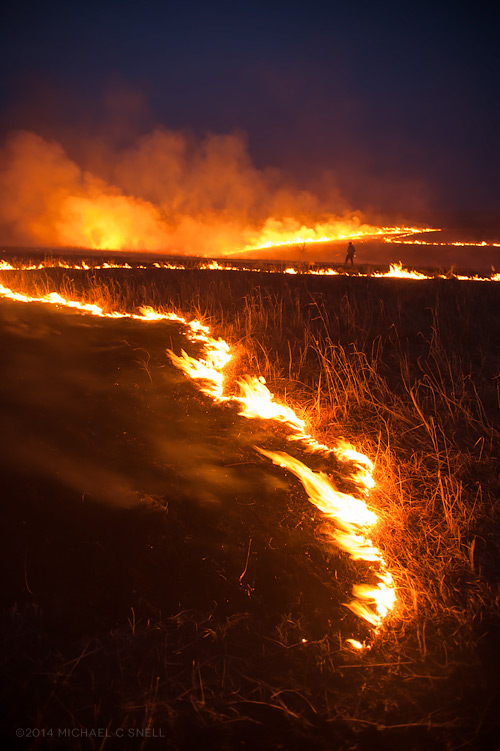
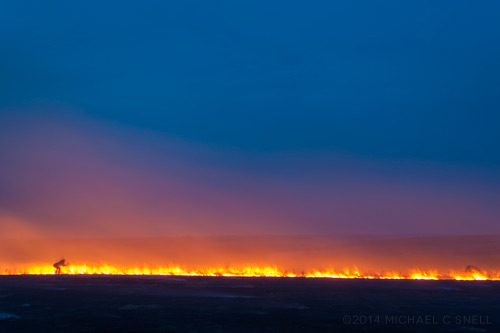
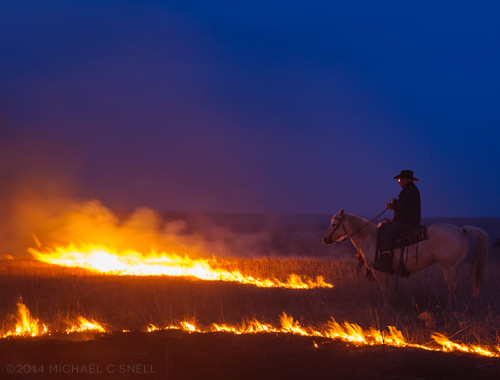
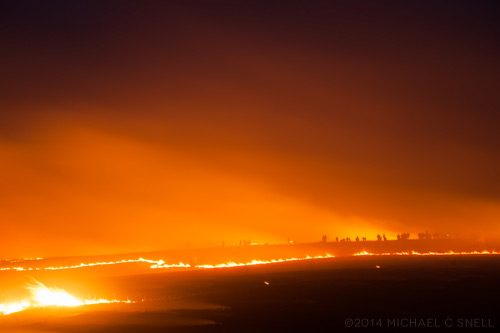
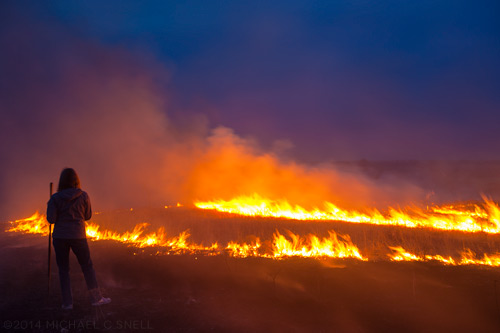
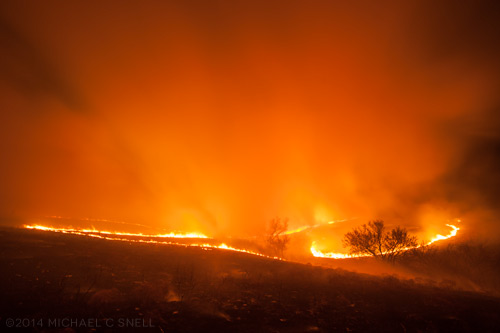
Flying W Ranch near Clements, KS, puts on a great show with their Flames in the Flint Hills. Ranchers in this part of Kansas burn their grass in the early Spring to encourage new growth and Josh and Gwen Hoy make an event out of it. Typically a sold-out event, at that. For those of us that live around the Flint Hills, the smell of burning grass is a sure sign of Spring. It’s not uncommon to see fires in the distance from the highway, but to be on foot right in the midst of the burn at twilight… well… that’s something special.

Here are a few of my favorite shots from Flames in the Flint Hills last Saturday night:

140407fire03

140407fire06

140407fire04

140407fire02

140407fire05

Caparra in the dying light

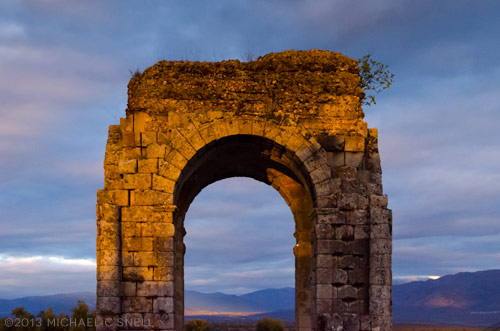
131206caparra1_sotc

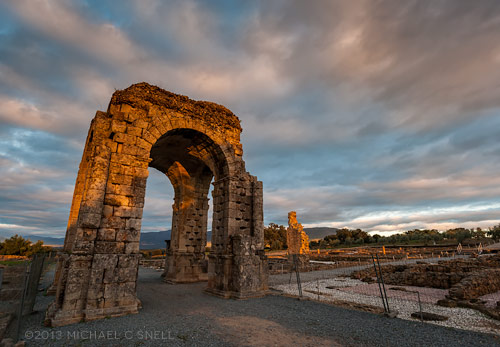
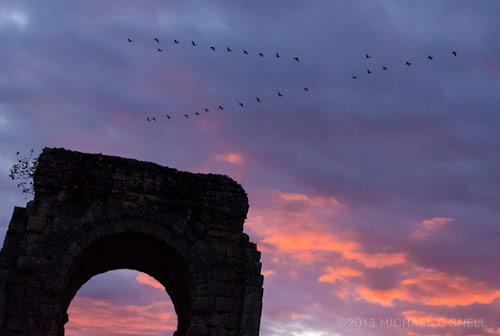
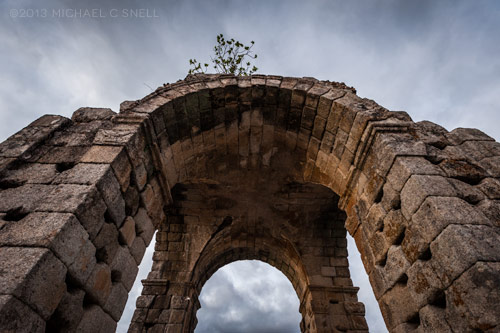
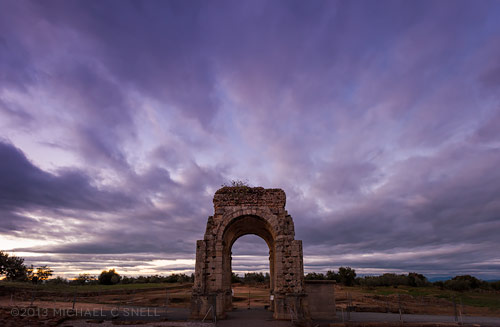
As I was researching the Extremadura region before leaving for Spain, I was surprised to keep running across mentions of Roman ruins. Obviously, the Empire was huge at one time and there are ruins scattered all over Europe and points beyond but we tend to only hear about a handful. The first we visited on this trip was the site of the Roman city of Caparra. Most notable of what remains is this 1st-century, 4-way arch, built at the intersection of two prominent Roman roads on the Via de la Plata (Silver Way).

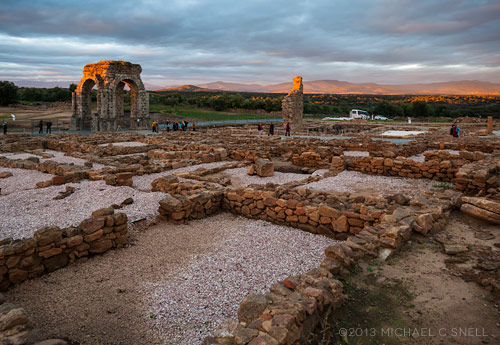
131206caparra2_sotc

We arrived at the Caparra ruins just as the sun was setting and for the next 30 minutes, I scrambled to make the most of the fading light and ever-changing sky.

131206caparra3_sotc

131206caparra4_sotc

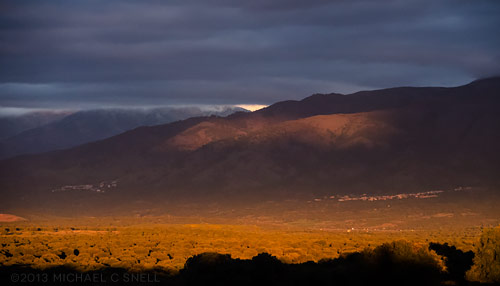
The surrounding countryside was equally stunning as the sun slipped below the low hanging clouds, painting the distant hills in gold.

131206caparra5_sotc

131206caparra6_sotc

Migrating cranes, right on cue.

131206caparra7_sotc

131206caparra8_sotc

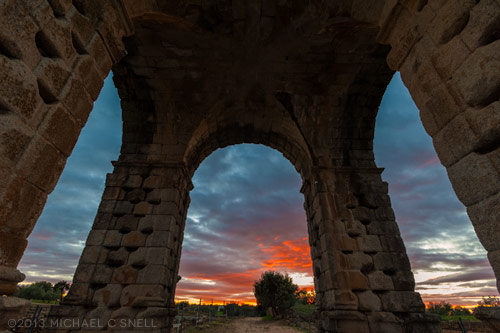
One of my final shots after the sun had set but while there was still some purple twilight remaining. Next, we were off to Plasencia with another stunning Parador and an interesting 2-in-1 cathedral. More on that in my next post.

The good life, in Spain

131121jarandilla7_sotc

I often ask myself, “what did I do to deserve this?” Not because I think I’m being punished for something undeservedly. Quite the opposite. More like – what have I done to deserve these amazing opportunities that come my way? I think this most often when traveling. Say what you will about the discomfort of today’s air travel – it’s still amazing that you can be anywhere in the world in just a few hours. We’re spoiled by an abundance of opportunity and I’m especially spoiled.

This hit me hard earlier this month as I joined a small group of journalists invited to explore the Extremadura region of Spain. I lived darned well there for eight days. Among the highlights were our nightly lodgings in six of Spain’s paradores. Started in 1928, paradors are a chain of state-run hotels that are located in historic buildings: castles, palaces, convents, etc. I found them amazing. I want to visit all 94 of them. Check them out for yourself here: http://www.parador.es

That photo above is the view that greeted me after landing in Madrid and making the 3-hour drive to Jarandilla de la Vera. First days on international trips are tough. I fight the temptation to take an afternoon nap as I find that the sooner I get back on a “daylight clock” (stay awake when it’s light, sleep only when it’s dark), the better off I am and the more quickly I adjust to the time difference.  On this day, we arrived a little after 1:00 pm and I immediately set out to explore and shoot photos. I’ll share more of those images in a later post but, for now, I’ll focus on the parador itself.

131121jarandilla1_sotc

131121jarandilla2_sotc

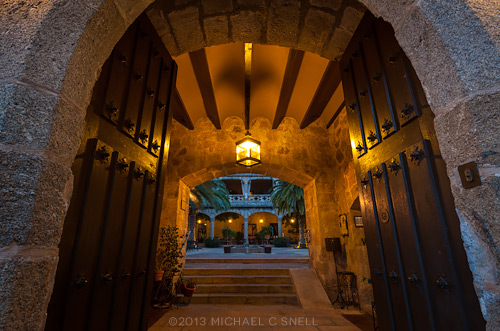
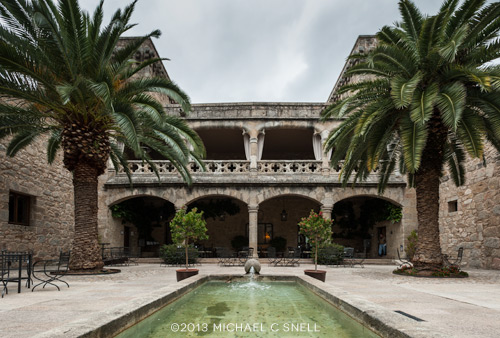
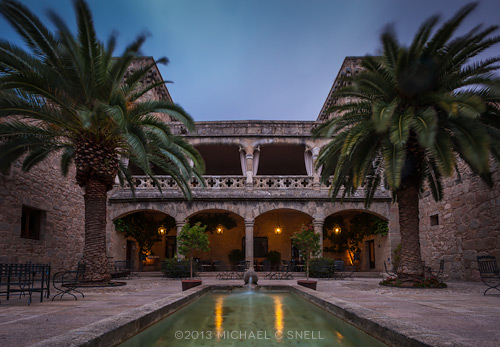
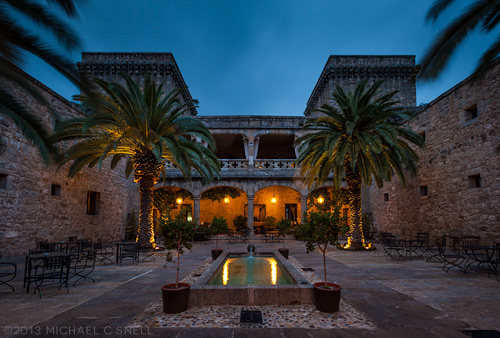
Set in a 15th century palace-castle, the Parador de Jarandilla de la Vera is an imposing structure. The courtyard was what especially caught my eye, though, and I decided to make it my primary subject during those magical moments that occur right around sunset. The day was a bit blustery and it was threatening rain by the time the sun was setting. This is the courtyard as I saw it upon arrival just before 2:00 pm:

131121jarandilla3_sotc

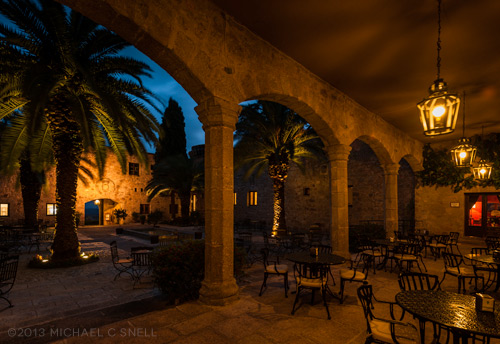
I wanted to take advantage of that brief time in the evening when the sky goes cobalt blue and contrasts so well with incandescent lighting. There were lights tucked all around the courtyard so I was hopeful that the lighting would enhance the scene come twilight.

131121jarandilla5_sotc

Just after 6:00 pm, things started to happen. Even a cloudy sky will give you a blue effect just after sunset and that’s what I was counting on here. I also made a point of using my tripod and a neutral density filter to extend the exposures and give some softness to the moving clouds and central fountain. By 6:30, things were just as I’d hoped:

131121jarandilla4_sotc

As it began to mist more heavily, I moved around to points of shelter to keep the rain off my lens and kept shooting:

131121jarandilla6_sotc

For a first day of a trip, after an overnight flight, I’d had a pretty good day. I often feel like day one is a practice day – good only for getting ones bearings and getting in the groove of shooting in a new place. This trip seemed to come together more quickly for me and I’m happy with what I managed to make of my half-day in Jarandilla de la Vera. Which is good, because we’d be off after breakfast the next morning for more adventures in other parts of Extremadura.

Fort Scott Candlelight Tour

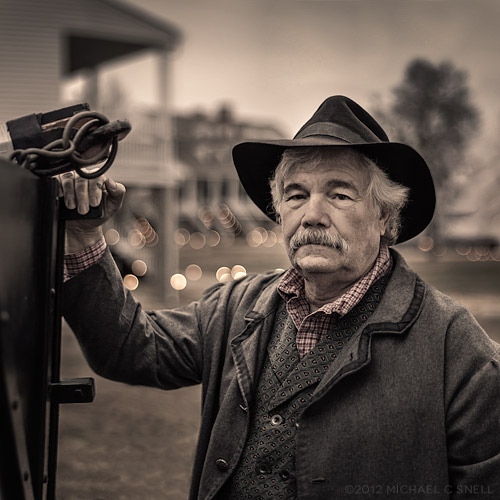
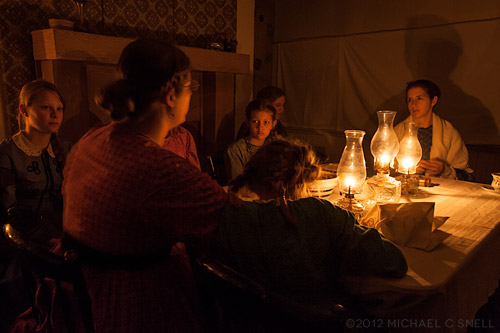
I paid a quick visit to the Fort Scott National Historic Site in Fort Scott, Kansas, last night to photograph their annual candlelight tour. The shot above is something I’ve been playing with lately — creating shallow depth of field images by stitching together multiple frames from a fast normal, to short-telephoto, lens. This one is 13 frames shot on a 50mm lens at f/1.8 and stitched together using Photoshop CS6. It’s an interesting look and reminds me a bit of the old large-format images that might have been made in the late nineteenth century. It seemed appropriate for an evening devoted to recreating the year 1862 on a frontier fort in what had then just become the state of Kansas.

More (single frame) images from last night:

Shooting stars

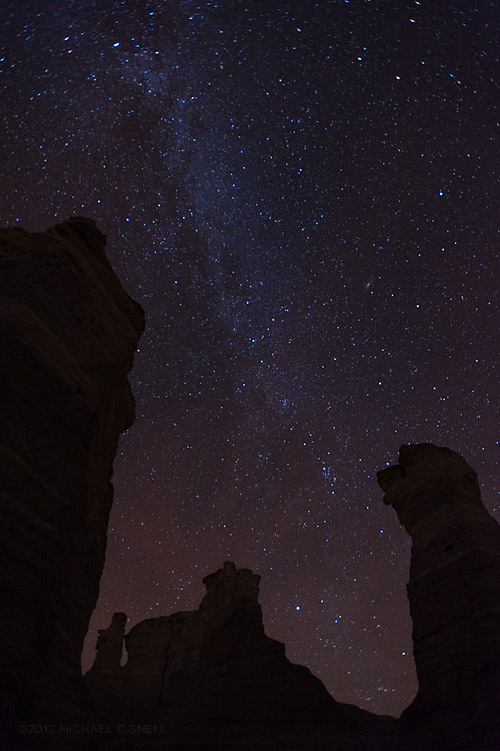
In yesterday’s post I promised to provide some insights into last Wednesday’s night shoot at Monument Rocks in Western Kansas. It’s a different animal, shooting in near total darkness, and takes some getting used to. I learned a lot last week and I look forward to my next opportunity to improve my process.

None of the images in this post have had huge adjustments made in post-processing. White balance was probably the biggest challenge — especially when getting into mixed light sources — but I’ve decided not to get into localized color changes and instead go with how the camera recorded the images.

But first things first: if you’re not familiar with Monument Rocks, it’s an area of the high plains of Western Kansas that used to be the bottom of a vast ocean millions of years ago. Eons of erosion have left behind spires of chalk that stand up to 70 feet above the mostly flat surrounding landscape. According to Wikipedia, this was the first region to be designated a National Natural Landmark by the US Department of the Interior.

But why try to describe it when you have photos? Here’s what it looked like just after sunset last Wednesday:
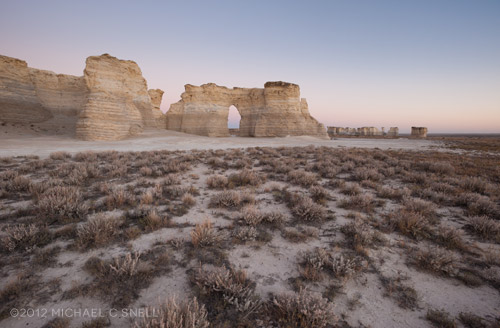
The rocks are also remote enough that there wasn’t a lot of light noise from nearby towns to cause problems with our attempts at night photography. I think the nearest town is at least 20 miles away. We could see a few lights from surrounding farms and ranches, but they didn’t cause huge problems. The stars where clearly visible in the millions, but I do think that the color shifts that I observed in some of the shots may have come from artificial light bouncing around in dust that was being carried in the slight breeze. It was a far calmer night than I had ever experienced at Monument Rocks, but it has been an extremely dry year and the dust was very fine and easily made airborne.

After the sun went down, it didn’t take long for stars to appear and be bright enough to photograph. In this shot, there is still a fair amount of ambient light in the sky and the rocks are still being lit slightly by the dying light of the sunset:
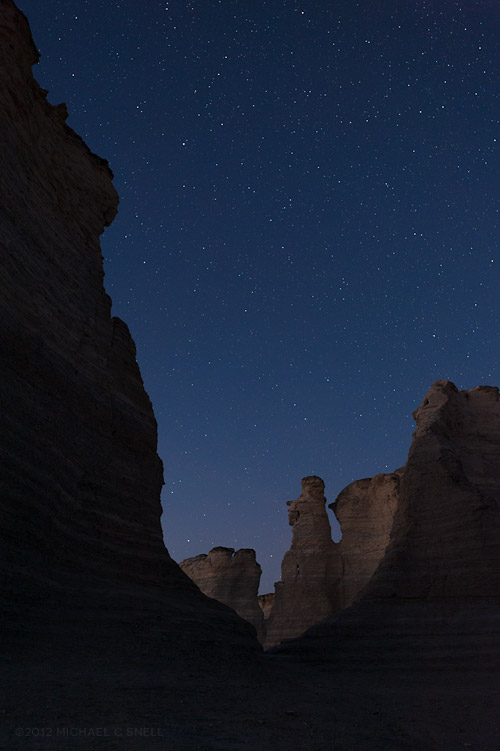
To the eye, it was fairly close to total darkness at this point but the camera could still draw quite a bit of light from the scene. I tried to keep all exposures shorter than 20 seconds, or 30 at the most, in order to keep the stars from streaking due to the earth’s rotation. Focusing was a bit of a trick since many modern auto-focus lenses don’t behave quite like old manual lenses did. On the old lenses, you could often just rack them all the way to infinity and you’d be fine, but with some earlier testing on my 17-35mm Nikkor that I used for these shots, I noticed that I had to pull it back a bit to get things sharp when focussing manually. I’d made a note of where the focus point needed to be on the lens markings and just used that once it was too dark to visually attain focus anymore.

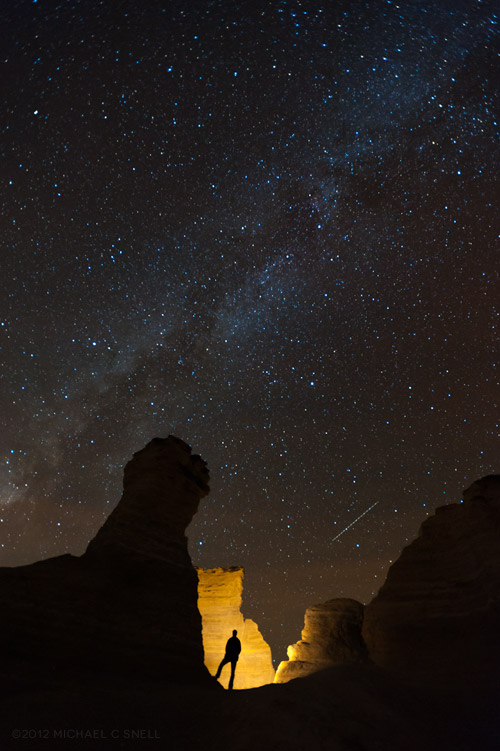
As it got darker still, I started experimenting with adding some light painting. This was done with a variety of sources but the two I found that worked best were 1.) a small, hand-held flood that I picked up at a hardware store for less than $20 and 2.) an even smaller Maglite that I tend to keep in my camera bag to help me locate things in the dark on night shoots such as this. It was this small Maglite that was used in the shot at the top of this post. One of my fellow photographers stood in to give some scale to the scene and also used my Maglite to “paint” the distant rock during the exposure. The hardware store floodlight was used on the following shot:
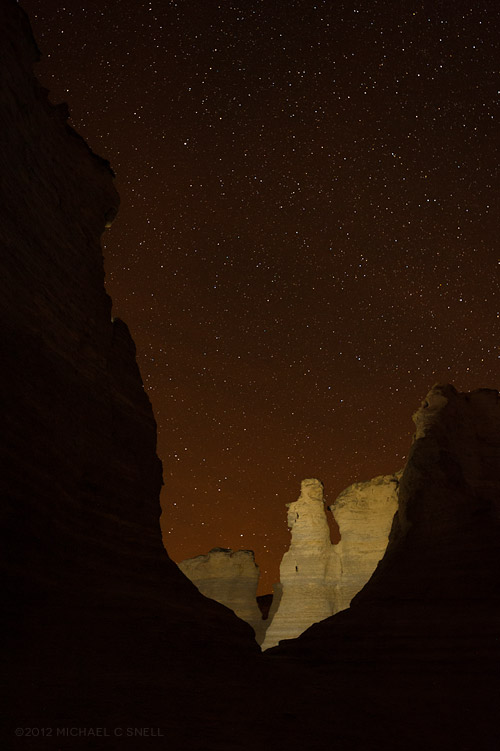
The light was far too bright when pointed directly at the rocks so I used the silhouetted rock in the foreground as a giant bounce card. I walked around the foreground rock and set the floodlight on the ground, propped but by a small rock, so that it pointed away from the rock I wanted lit. The beam hit the back of the rock that you see in silhouette here, and the light bounced back to illuminate the more distant spires. The redness of the sky is what I believe is coming from some light from surrounding towns and farms refracting in some airborne dust. My best guess anyway.

I found that when shooting with a 17mm lens (on a full-frame D700), 20 seconds was indeed about the limit of what an exposure could be before stars began to streak. Twenty seconds or less kept them more or less as pinpoints. To achieve this, I generally shot wide open at 2.8 and used ISOs to control the exposure. By the darkest point in the night I was shooting at ISO 1600. I was surprised to not have to go higher, but relieved that I didn’t need to deal with more noise from even higher ISOs. As it was, these shots required very little noise reduction in Lightroom.

The following night we shot more night skies, including one 15 minute star trail exposure. I’ll share some of those images in later posts.
Billions of stars

I’ve been out shooting in Western Kansas with the Gizmo guys the last few days and we took advantage of a cool, clear night at Monument Rocks to try some night photography of the Milky Way. I’m just getting started on the post-processing and haven’t quite settled on what feels like the right white balance, but I thought I’d go ahead and share this one with you now. It’s amazing how much you can capture digitally in such dim light. I’ll share more later, with details on exposure, some light painting experiments, etc.

Wichita’s Keeper of the Plains

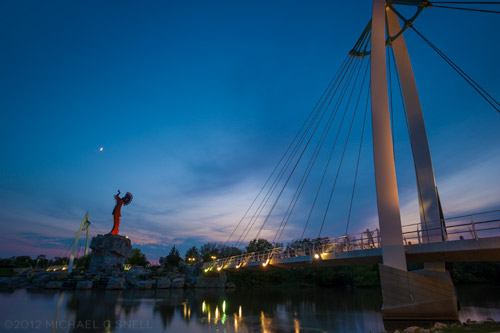
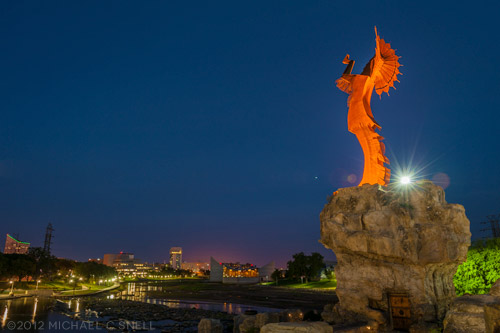
I had a free evening in Wichita last week in between two assignments and decided to update some of my stock photography of that city. I’ve had twilight skyline shots that have done well over the years, especially one where the lights were reflected in the Arkansas River as it cuts through downtown. My initial thought was to update this shot in particular, but the great drought of 2012 caused me to change those plans slightly.

Wichita’s downtown has changed in recent years so I knew I’d need to change my angle of view from my old shooting location to a new one that would include more of the recent landmarks. Using Google Maps, I located downtown and the Exploration Place — which is built out into the river and has a very identifiable shape — and tracked back along a line that would allow me to get both in a shot with the river as a nice foreground. As it happened, it looked like another landmark would make an ideal foreground: The Keeper of the Plains by by Kiowa-Comanche artist Blackbear Bosin. First erected in 1974, it was raised onto a new stone outcropping at the confluence of the Arkansas and Little Arkansas Rivers in 2006. A pair of footbridges echo the sculpture’s shape and provide access to pedestrians and bikes.
Upon my arrival, it was clear that there was not enough water in the Arkansas to make my initially envisioned shot happen. Here’s the best I could do:

Tough to see at this size, but the river is so low that only about a quarter of the skyline is reflected as compared to what normally would be. Luckily there is a bit of a dam on the Little Arkansas at this point so I was able to salvage a shot by crossing on over to the north bank and shooting back at the sculpture and foot bridges as seen in the shot at the top of this post. I got several variations from this point with varying degrees of sunset and twilight and am happy with what I came away with. I’ll just need to keep this spot on my to-do list for next year when the water will hopefully be higher again.