Category Archives: technique

2015 Sichuan International Cultural Tourism Festival

150923yibin01_sotc

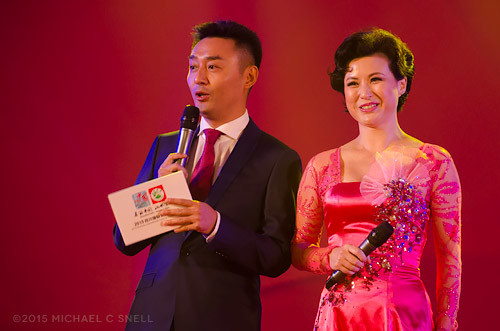
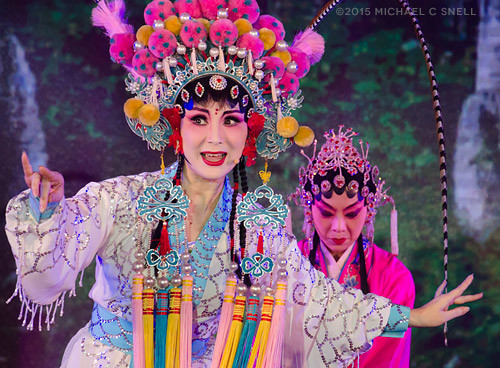
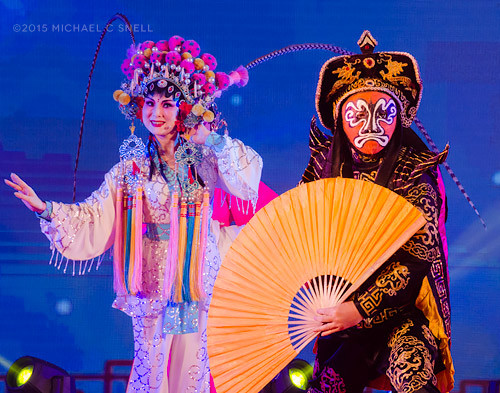
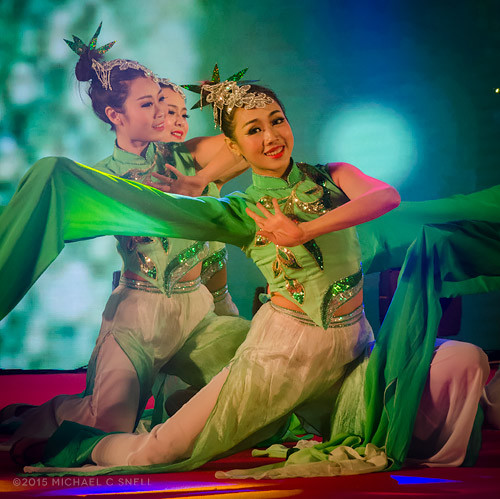
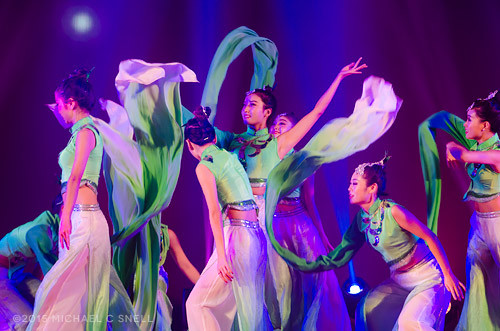
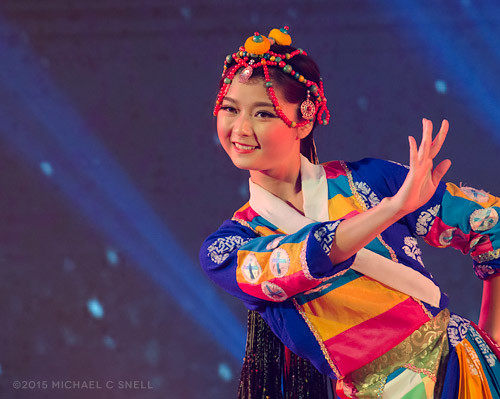
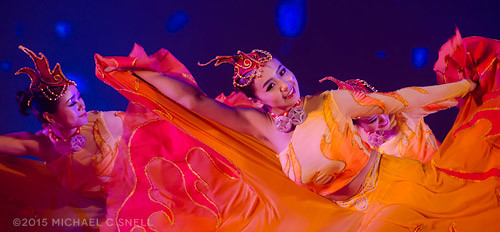
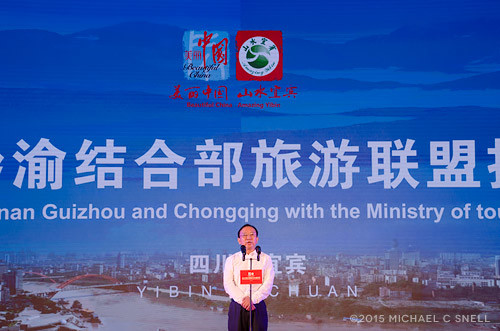
The day following our bamboo forest adventure was the actual opening ceremony of the 2015 Sichuan International Cultural Tourism Festival in Yibin, China. That meant less touring and more — what else? — live performances. Here are a few photos from the event.

Photographing it was a bit of a challenge since the backdrop was one of the largest flat panel video displays that I have ever seen. At times the pixel grid would line up with my sensor grid and I’d get some crazy moire patterns. Even more issues would appear when I’d preview images on my camera’s screen, because I then added another pixel grid into the equation. In the end, I experimented with shutter speeds and shallow depth of field to try and de-emphasize the backdrop as much as possible.

This would actually be my last day as a part of the official tourism festival but I would stay on a couple more days to see some other parts of Sichuan Province. I’ll cover those explorations in the coming posts.

150923yibin02_sotc

150923yibin03_sotc

150923yibin04_sotc

150923yibin05_sotc

150923yibin06_sotc

150923yibin07_sotc

150923yibin09_sotc

California State Capitol

150212sac_sotc

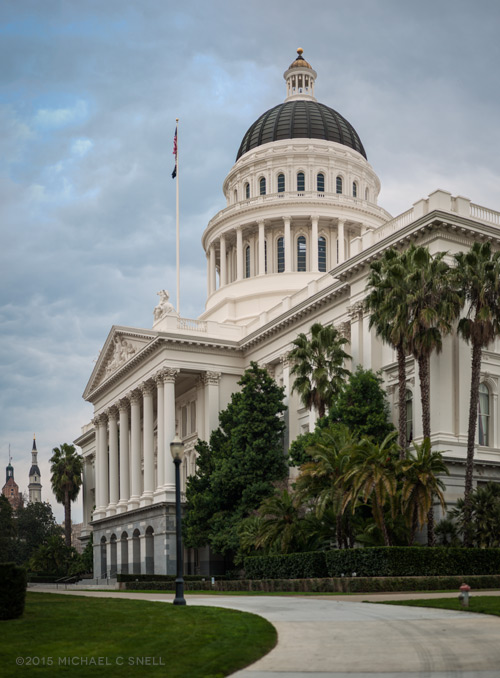
I’m just getting settled back in from a trip to Sacramento, California, where I attended a board meeting of the Society of American Travel Writers (SATW). In between rain showers and meetings, I did manage to get out and shoot a little. This shot came from a short afternoon outing where I just walked the few blocks around my hotel, limiting myself to just my 85mm Rokinon lens. It was threatening rain, I wanted to travel light, and I sometimes enjoy that limitation of one focal length to force myself to see a bit differently.

But for this shot, I really needed a wide angle. The capitol grounds are filled with trees so there was no “zooming with my feet” for this one. If I stepped back further, my view became obstructed. Instead, I shot a grid of about eight or nine images and stitched them all together later in Photoshop. A nice side benefit is that it resulted in a really large file, should anyone ever want to order a reeeeeeeally large print.

Iceland, Day 2, hitting the road

141002iceland01_sotc

Long post — make yourself comfortable…

My second day in Iceland began on a much better note. It was still a bit grey and dreary as I was given my rental car in Reykjavik, but I headed back to the airport in Keflavik with sunshine in my heart in the hopes of seeing my luggage again. And I did. While I had flown to Iceland via Minneapolis, my bag seems to have spent a night in New York. I hope it enjoyed itself and stayed out of trouble. Regardless, I was happy to have him back and I tossed him in the Tiguan and headed east. I was about an hour and a half to two hours behind schedule due to the airport stop, but it could have been much worse.

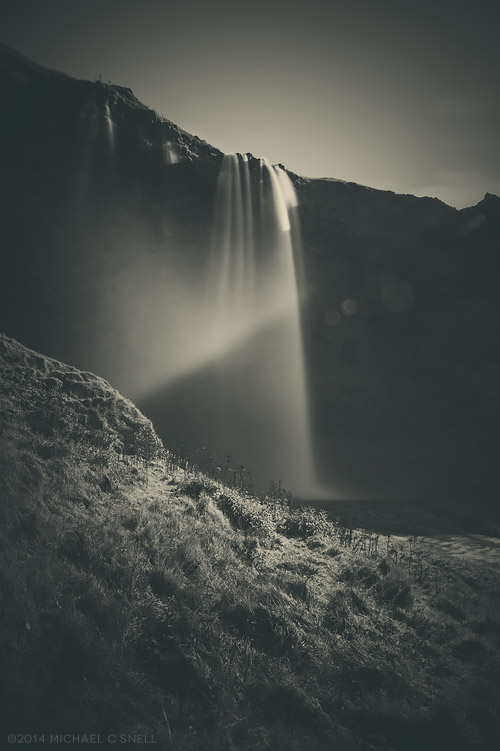
I put some miles in before stopping at all, but the sky was beginning to break as I approached the waterfall named Seljalandsfoss, and I decided to make my first photo of the day. The shot above is from this stop. I used a heavy neutral density filter to get a slow enough shutter speed to achieve that misty quality on the falls.

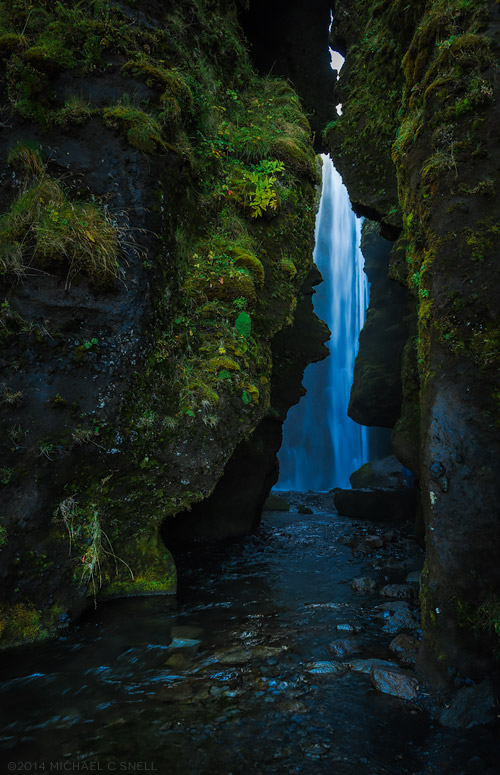
From my research, I knew there was another fall I wanted to shoot down the trail from Seljalandsfoss. Gljufurarfoss is similar in scale, but falls into a sort of canyon/cave and is accessed through a narrow opening in the cliff face. Here’s one shot of it, and another was one of my winning Shootout images featured in a previous post:
141002iceland02_sotc

I couldn’t get the long exposures I’d wanted here because the mist was blowing out through the crevice so strongly that I couldn’t keep my lens clear long enough. I made several exposures hand-held from the opening and from inside the cave, then headed back toward the car, grabbing a few more shots of Seljalandsfoss along the way.
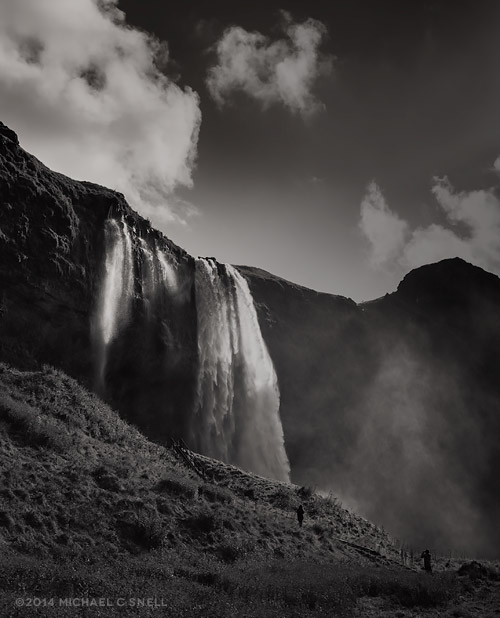
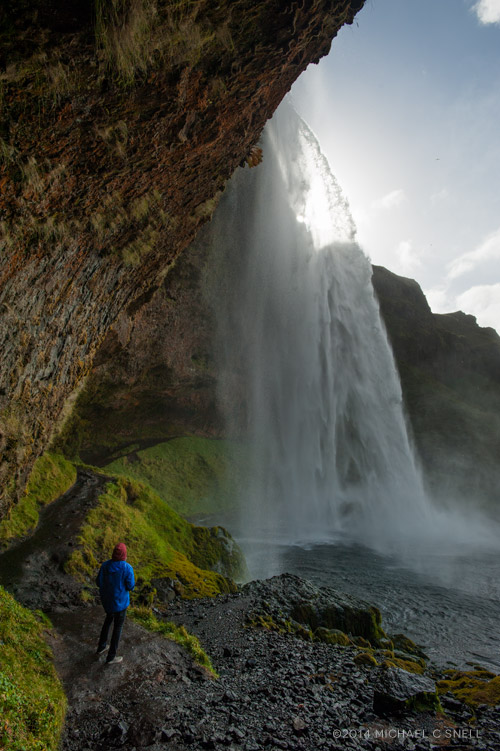
141002iceland03_sotc

141002iceland04_sotc

Back on the road, the light was getting better and better as beams of sunlight were breaking through gaps in the cloud cover.
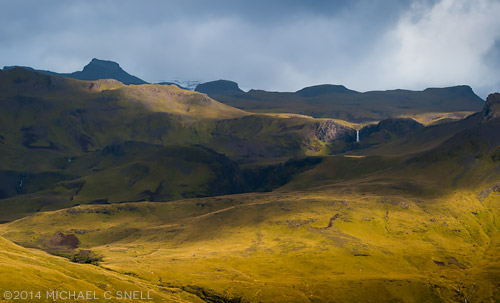
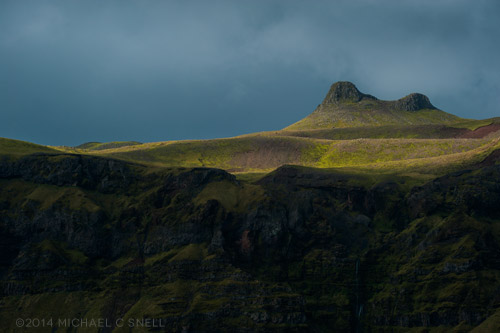
141002iceland08_sotc

141002iceland07_sotc

141002iceland05_sotc

141002iceland06_sotc

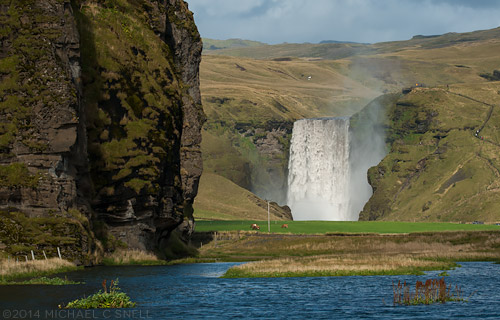
I arrived at one of the south coast’s most famous waterfalls, Skogafoss, but decided to only grab a quick snap from a distance. The wind was very strong and I could see the mist was blowing directly up into the overlook where I’d hoped to get a few shots. Given my recent experience with trying to shoot into spray, I decided to push on. After all, I’d have another chance to stop at Skogafoss on my way back in two days. At least that’s what I thought.
141002iceland09_sotc

141002iceland10_sotc

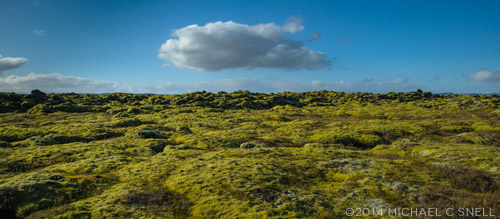
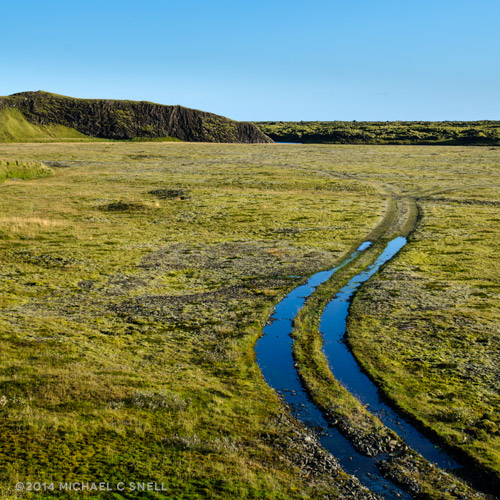
My drive next took me through an extensive lava field, covered in green moss. I stopped a time or two to grab a photo, but kept moving so that I could arrive at Fjaðrárgljúfur Canyon before I lost the sun. The road I took to get there wasn’t quite as primitive as this one, but I definitely got my first taste of leaving the asphalt:
141002iceland11_sotc

The canyon certainly didn’t disappoint, and it did give me another of my Shootout-winning images (see it in this previous post).
141002iceland16_sotc

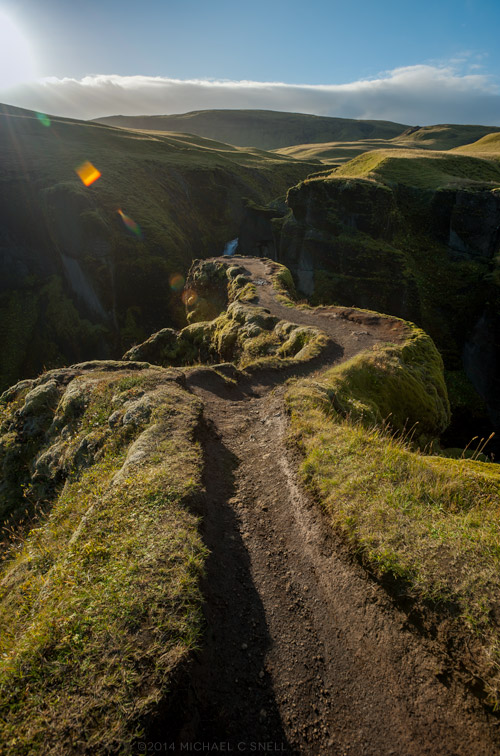
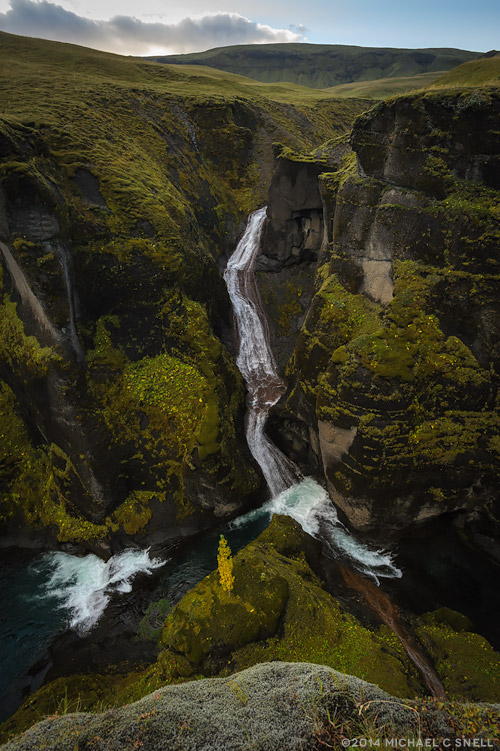
It was not a place for the faint of heart. Paths like the one above would take you out on narrow fins of earth with dizzying drops on all sides to the river far below. Here’s the view down from the end of the path in the last image:
141002iceland17_sotc

141002iceland13_sotc

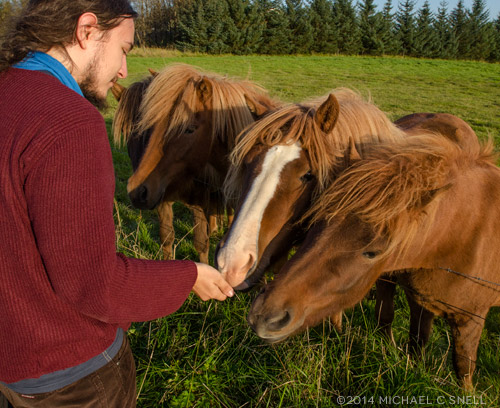
One more quick stop for Icelandic horses, and I made it to my hotel for the night in Kirkjubæjarklaustur.
141002iceland15_sotc

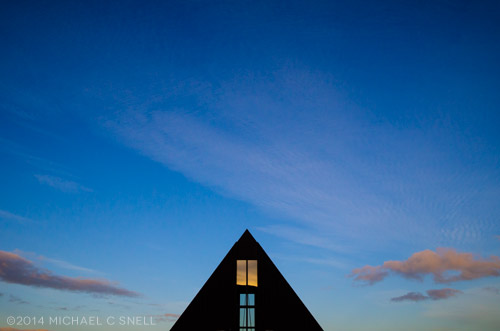
The sun had set but the sky continued to be nice for quite some time, so I took advantage and walked around the small town, finding this shot of a church just a short distance up the road:
141002iceland14_sotc

The hotel asked if I would like a wake-up call should the northern lights make an appearance. Sure, I said, and just half an hour or so after getting into my room, I received my call. I gathered camera and tripod and headed back outside, only to find the show was already over. I made a few long exposures to humor myself — and could see some remaining aurora in the resulting images — but didn’t get anything I will bother to share with you here. I can say that I have seen the northern lights, but you’ll just have to take my word for it.
Balcony views

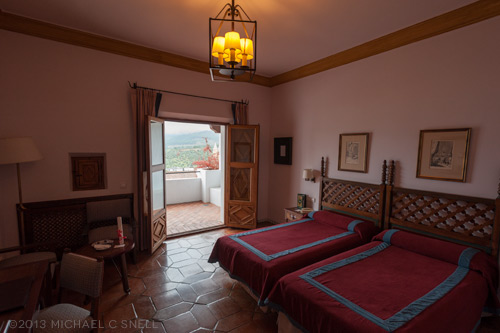
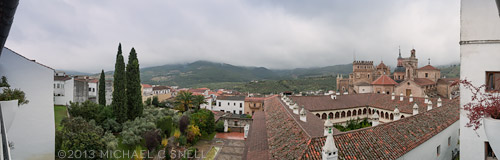
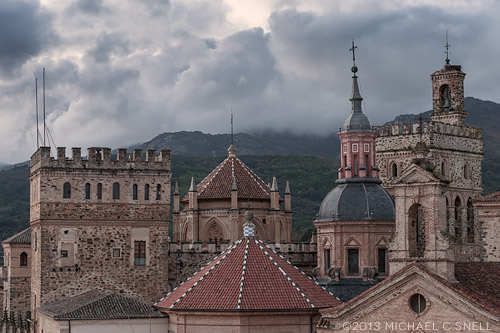
I thought I’d follow up on my last post with a few shots from my room at the Parador de Guadalupe. As I mentioned before, we stayed in Paradores most of our nights in Spain and they never disappointed. Each is unique architecturally, food/service was excellent, and you just couldn’t beat their locations. However, of all of them I encountered, I think I was most taken with the balcony view from my room in Guadalupe. I had very little time to spend in the room, but both sunset and sunrise found me out on the balcony, photographing that view. Sometimes you have to really work hard to find the right location — the perfect angle — and sometimes it’s just handed to you.

Here is a view of my room and a stitched panorama of the overall view from my balcony:

131226guad20_sotc

131226guad13_sotc

These were taken just after checking in and before taking a tour of the monastery, seen in the right of the panoramic image. By the time I got back to the room, the clouds were more defined and the sun was beginning to set, so out I went on my balcony:

131226guad05_sotc

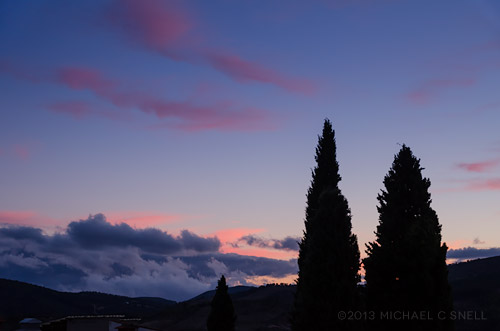
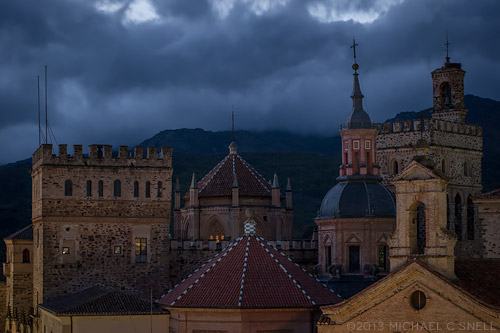
I settled on this view (above) with my full-frame Nikon D700 and locked it down on the tripod to get a series of shots as the light changed. I was hoping that, at some point, some exterior lighting might come on to contrast with the cobalt blue skies that I expected just after sunset. The sun was actually going down to the left of this scene so, while my one camera body was occupied with the monastery, I shot variations of the sunset itself with my D7000:
131226guad12_sotc

The D7000 shots were hand-held so I had to increase my ISO to achieve a faster shutter speed. I knew that would result in more noise, but I was less concerned about that in these shots than in my primary images that I was shooting with the D700.
131226guad10_sotc

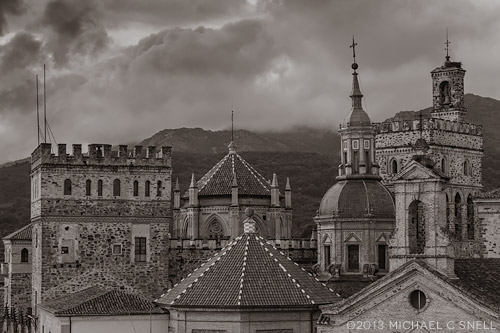
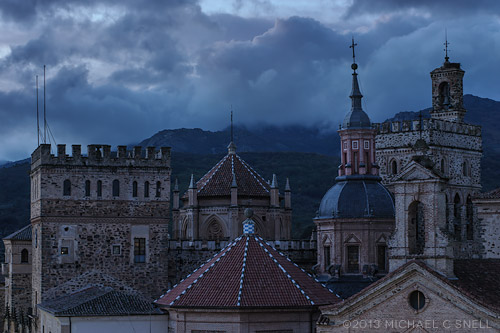
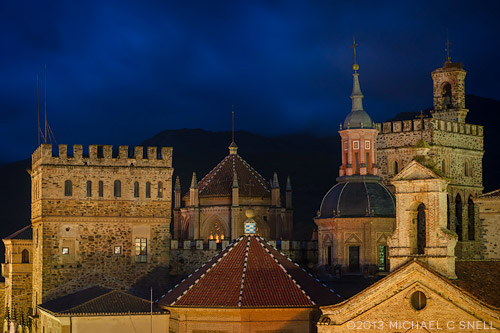
The coloration was less interesting at first, but the clouds were fairly dramatic. Converting some of these early shots to black and white (using Lightroom 5 and/or Photoshop CC) was a nice solution. The next series of images shows the gradual darkening of the sky and the subtle warm colors that began to emerge from the street lights that were bouncing back to illuminate the towers.

131226guad06_sotc

131226guad07_sotc

131226guad08_sotc

While there never were any floodlights or other exterior illumination on the monastery, the bounced street lights were enough to add quite a bit of warmth as the evening got darker. The shot above was taken well after dark and the intensity of the colors shown here was not visible to the eye. Only the long exposure was able to draw it out, softening the sky at the same time by the blur of the moving clouds. I was using 30-second exposures at this point.

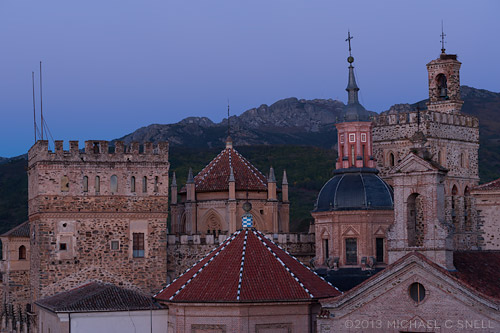
The next morning I resumed my position for sunrise and caught a few pre-dawn images with a beautifully clear sky:

131226guad09_sotc

131226guad11_sotc

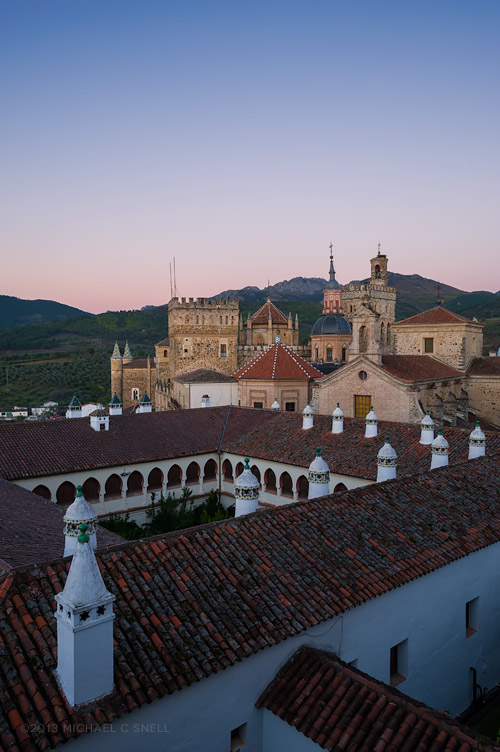
One last shot of the monastery just before sunrise with the main courtyard of the Parador seen in the foreground. Once the sun broke over the mountains, the light was actually a little too harsh for my taste and several of the towers were casting harsh shadows on one another. It was time to pack up the gear anyway before grabbing a quick breakfast and heading off to our next stop: Merida, Spain.

You can learn more about the Parador de Guadalupe on their website, which I notice has been redesigned just in the last couple of weeks. Lots of good info there if you’re planning a visit in Spain.

Sports shooter for a day

130907rugby08_stoc

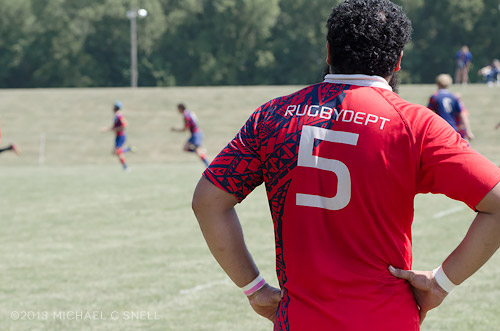
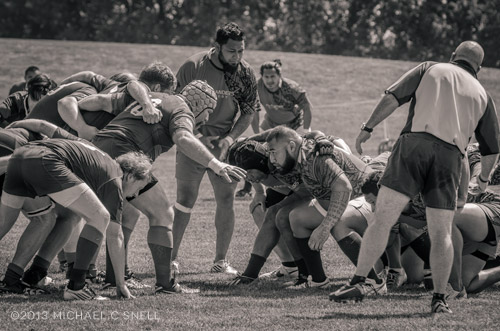
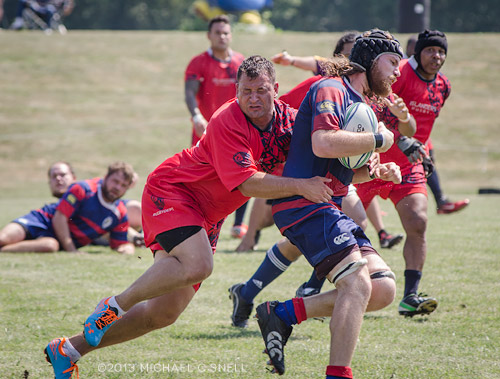
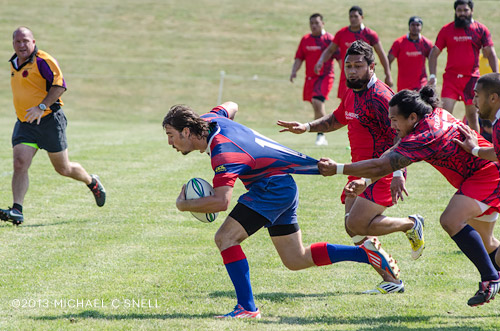
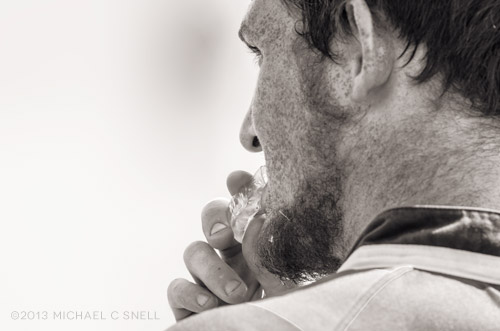
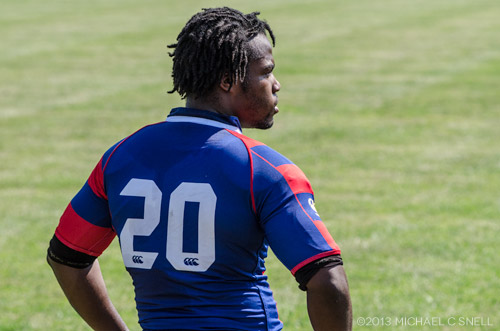
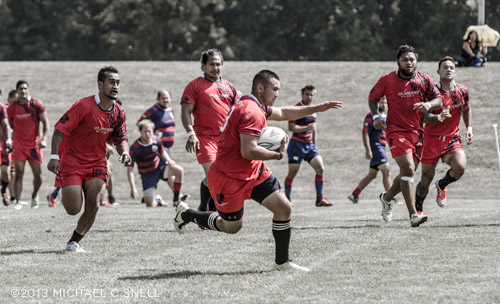
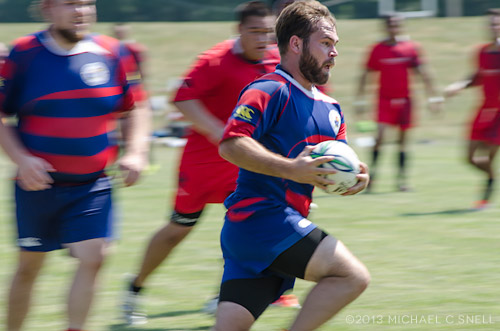
I’ve never been into sports. Probably because I can’t play any. But for some reason, I’ve really started to enjoy rugby. Today we attended our first local match and I decided to play sports photographer for a day — something else I have never done, but it seemed like a good opportunity to play with some of my Nikon’s focus-tracking features that I’ve seldom used but probably should more.

The Jayhawks were playing the KC Islanders. For the sake of the Jayhawks, I’ll just say that the score wasn’t important. It was a hard-fought game and I thoroughly enjoyed myself! The Nikon performed beautifully. I tend to not trust automation enough sometimes and I always think I can focus more accurately myself but, in a case such as this, the 3D auto-tracking, continuous servo focusing of my D7000 was a huge help. Every now and then it would pop to a player that I didn’t intend but that was rare and my keeper ration was much higher than it would have been if I had relied on my own focusing skills.

All-in-all, a great – if not brutally hot – day!

130907rugby06_sotc

130907rugby07_sotc

130907rugby02_sotc

130907rugby04_sotc

130907rugby01_sotc

130907rugby03_sotc

130907rugby05_sotc

More shallow depth of field

130810printer_sotc

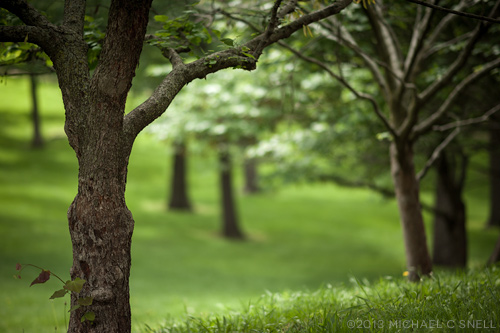
Here are a few more shots taken in Arkansas with my 85mm 1.4. Having a manual focus lens again has been interesting. I used to love manual focus and only grudgingly adopted autofocus when I upgraded film bodies years ago to get other features. I’m enjoying a return to that slower, more thoughtful way of shooting but I am finding that changes in my own eyesight and in camera viewfinders have added some additional challenge. Not to mention that at f/1.4 you get very little wiggle room. That plane of focus can be wafer thin.

The big viewfinder on my D700 is pretty manual-focus friendly but I do miss my old split-view finders. I’ve looked at options online for getting a replacement focusing screen, but I’ve seen enough comments from people who have experienced exposure issues that I’m not sure it’s worth it to me. Instead, I think I’ll just continue to practice, practice, practice. I also think I’ll try and rely more on my eye and less on the focus-confirmation dot in the viewfinder that tells you when you’re sharp. I’m not so sure that it isn’t “drifting” a bit depending on my subject distance. It must be the camera – it couldn’t be me, right?

130810wedding_sotc

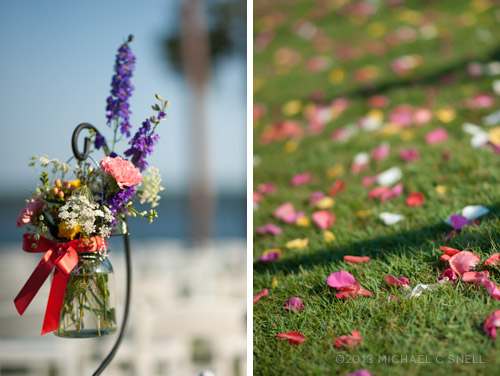
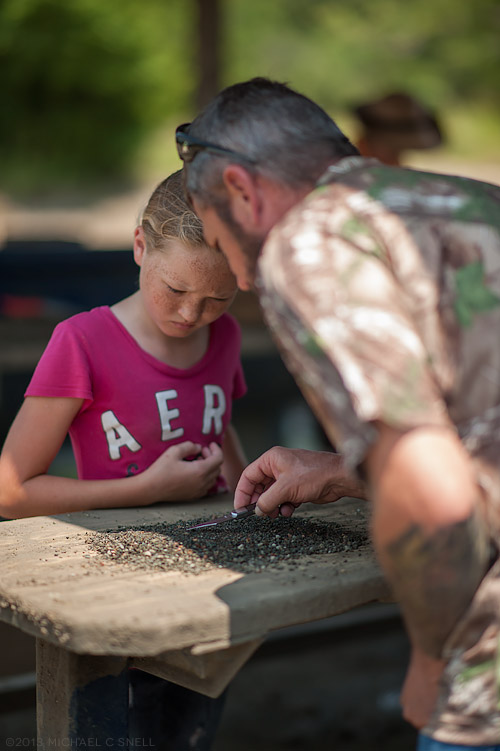
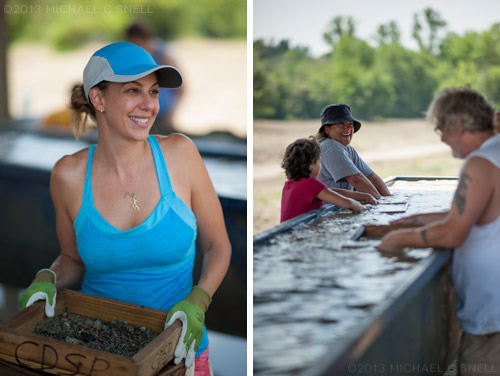
Above: I happened on this beautiful lakeside wedding location, just after the ceremony had finished. Below: a few shots of people hunting for diamonds at Crater of Diamonds State Park.

130810diamond2_sotc 130810diamond1_sotc

Simplifying the frame: Clinton birthplace home NHS

130804clinton3_sotc

On a recent visit to the President William Jefferson Clinton Birthplace Home National Historic Site in Hope, Arkansas, I decided to take a different approach to my photography. It’s easy to develop habits and a common one is to see “interior” and immediately think “wide angle.” After all, I carry that wide angle for just that reason — if I’m in a tight space, I can still get it all in the frame — right?

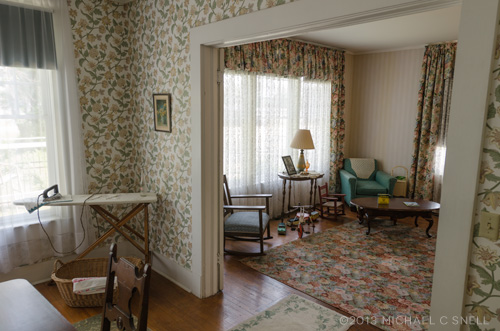
Here’s a typical shot from starting with that mindset:

130804clinton1_sotc

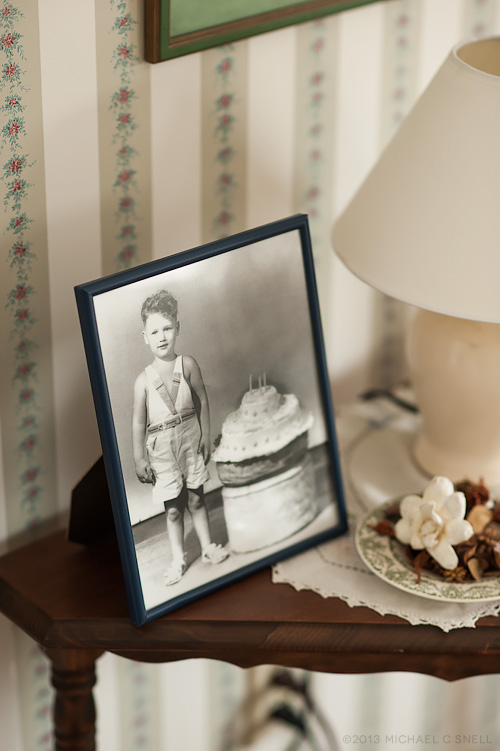
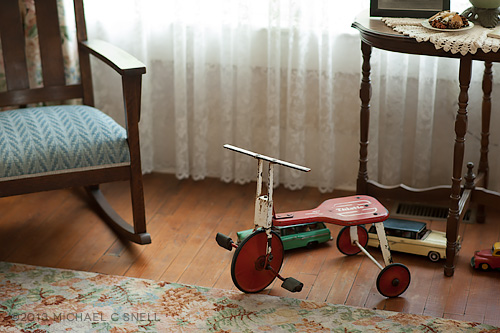
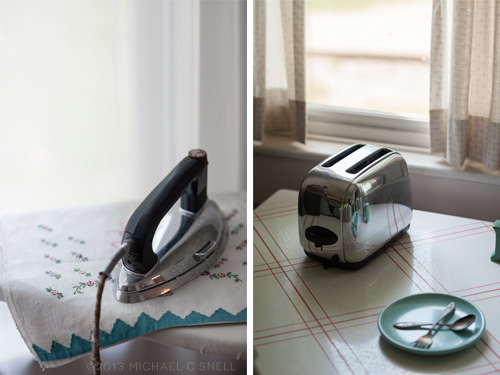
But the more I thought about it in this case, the more I realized that the architecture isn’t the point. The real spirit of the place was in the details: the childhood photos, the everyday items, the memories. After I had all of the wide shots I needed, I popped on my new Rokinon 85mm 1.4 and took a fresh look at things. The image at the top of the post and the three that follow were all made with the 85mm.

That short telephoto view changed how I saw things. It forced me to simplify. What was a chaotic mixture of patterns through the 17mm was now reduced and dreamy — thanks to the shallow depth of field. The images felt more like I felt, when touring the house. I’ve toured a lot of presidential museums and boyhood homes but this one was more personal for me, probably due to the fact that it resembled my own boyhood home so much. It was very nostalgic for me and I think that came through in the images. I’ll definitely not disregard a short telephoto when shooting interiors from now on.

130804clinton4_sotc

130804clinton2_sotc

Testing a new lens

130603lenstest7_sotc

Gear is a funny thing. You can become obsessed with it — always wanting the newest, the fastest, the most megapixels — but it’s a trap. At least I feel that it can be a distraction from paying attention to the things that really matter: composition, mood, light, message.

I don’t buy new gear all that often and I try and really think through and make purchases that will last. I’ve had a solid stable of bodies and lenses for a while now and have the whole range of focal lengths covered from 17mm to over 400mm (if you consider the 1.5x of my crop-sensor D7000).

So what more could I want or need?

I’ve thought about this a lot lately and have decided that what I’m looking for now are not necessarily the tools that test out as having the “best quality,” but rather tools that have a “unique quality.” It’s a fine distinction, but what I’m looking for are a few lenses, in particular, that have a uniqueness about them. They deliver something special. They may not be the most expensive, rugged or sharpest, but they will bring a capability to my kit that I didn’t have before.

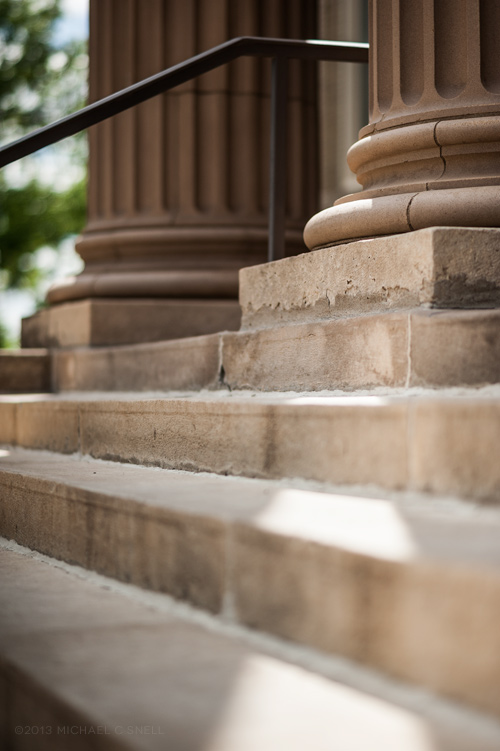
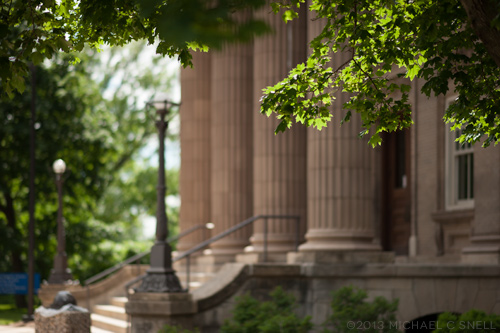
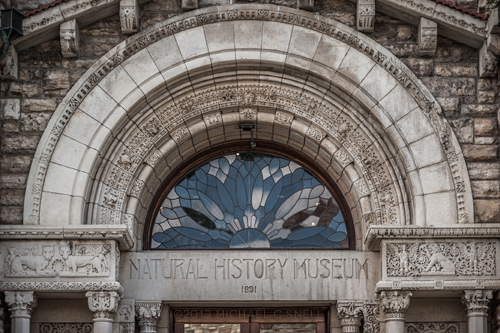
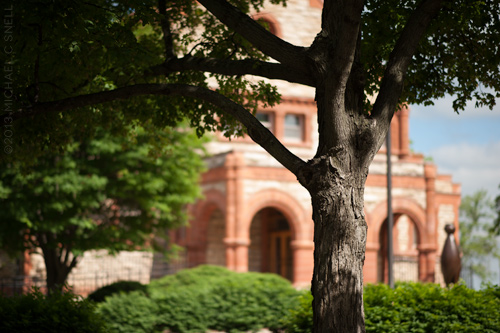
My most recent addition arrived on Saturday: a Rokinon 85mm f/1.4. I took it out for a quick walk around the KU campus yesterday to see what it could do. I was drawn to this lens for the shallow depth of field and creamy bokeh (out of focus areas). It’s manual focus as well, which slows me down and makes me more thoughtful. So far, I’m not disappointed. See what you think of these initial test shots:

130603lenstest6_sotc

130603lenstest1_sotc

130603lenstest5_sotc

130603lenstest4_sotc

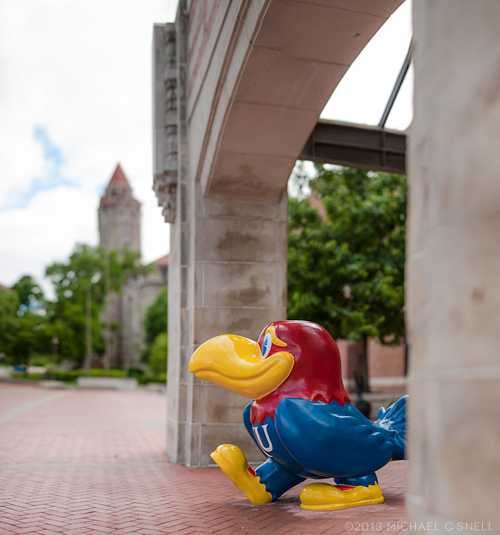
The Jayhawk shot above is actually stitched from 18 images in a pano-grid method I’ve written about before. It lends the shallow depth of field to a wider angle of view.

130603lenstest2_sotc

These last two shots are of mounts on display in the Natural History Museum — they’re not wildlife shots. I was just looking for some tighter settings to try the close focus and shallow depth of field:

130603lenstest3_sotc

130603lenstest8_sotc

So far, I’m impressed and happy with my purchase — and anxious to get this lens out in the field for some real travel work.

Spa shoot in HDR

130424spa_sotc

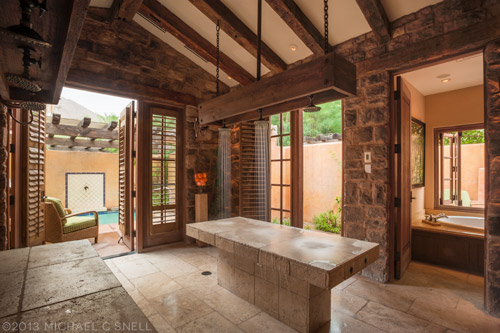
I’m not usually a big HDR guy. The first few of those over-the-top shots I saw with hyper-dramatic clouds and impossible shadow detail were interesting, but I quickly tired of the look. But that’s not to say that all HDR is inappropriate. There are times that I find it incredibly useful, as in this shot of the Alvadora Spa at the Royal Palms in Phoenix, AZ.

The room was soothingly dim but it was quite bright outside. The client wanted to show both the interior and exterior spaces in the same shot — something that might have been a challenge back in the days of shooting transparency. Then, I probably would have waited for dusk, when it would get darker outside and I could achieve a better balance between the brightness of the interior and exterior spaces. Another alternative might have been to light the interior space to bring it closer to the exterior, but I was also interested in keeping a slow shutter speed so that the water falling on the table would be nice and silky looking.

With digital and HDR capabilities now, it really wasn’t difficult to achieve this shot, even given the massive contrast in the scene. I mounted my D700 with a 17-35mm f/2.8 zoom on a tripod and added a neutral density filter to cut even more light and get a longer exposure for the water. I then shot 5 bracketed shots, each 1 stop apart so that I had images exposed at -2, -1, 0, +1, and +2 stops with the middle shot being correctly exposed. The most underexposed image held detail in the bright sky and distant mountain, but the interior was extremely dark. The most overexposed shot held detail in every corner of the dark interior but had blown out portions of the exterior. Not to worry, though. This is where the HDR comes in.

With the images imported into Lightroom, I selected all 5 and opened them using the “merge to HDR Pro in Photoshop” option under the “Photo>Edit In” menu. Photoshop now did all the heavy lifting, opening all 5 images and combining them into one high-dynamic-range image that I was able to save back out as a 32bit tiff. It doesn’t look that great in Photoshop at this point, but not to worry. When that tiff was opened in Lightroom it looked and acted like any other RAW file, except that the shadow and highlight recovery sliders had much, much more information to work with and, with a few quick adjustments, I had the image you see above. Detail in the darkest shadow as well as information in the bright sky above that far mountain. By being careful not to push the contrast and clarity too far, I think I was able to avoid that unnatural look that so many think is the only purpose of HDR.

And, to rebel against the cold rainy supposedly Spring day outside my window today, I’ll leave you with a few more shots of what was a much warmer day spent at the Royal Palms in Phoenix, just a couple of weeks ago…

130424spadetails_sotc

130424spaarch_sotc

Mexican Rodeo at Rancho Ochoa

130418halo_sotc

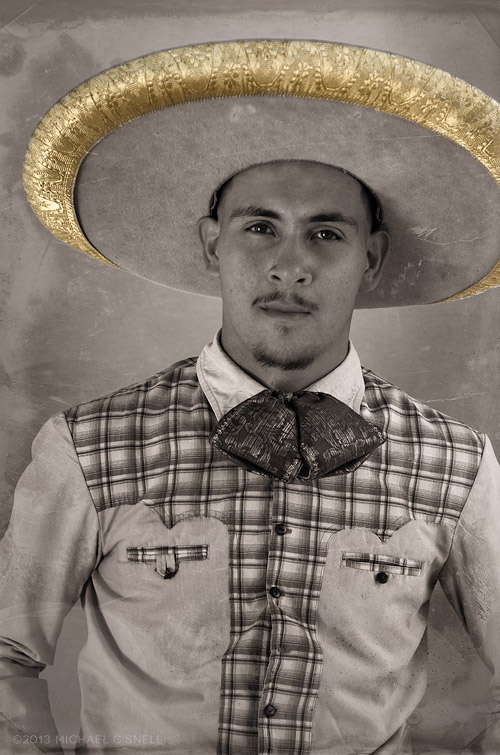
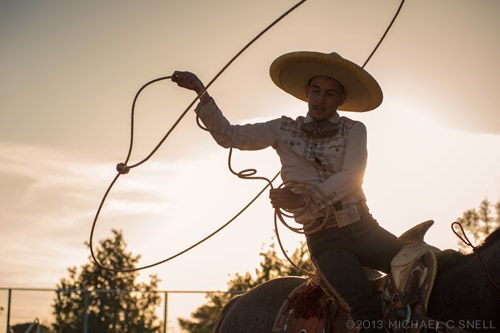
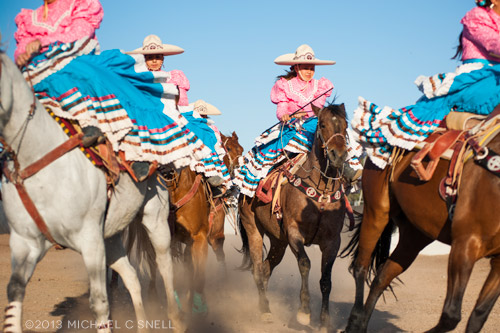
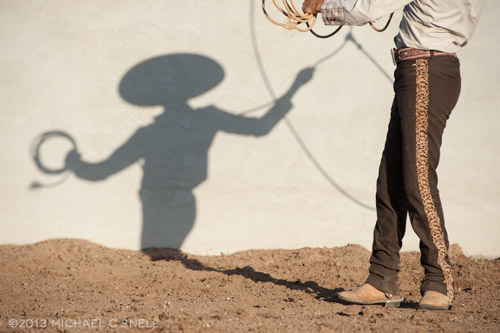
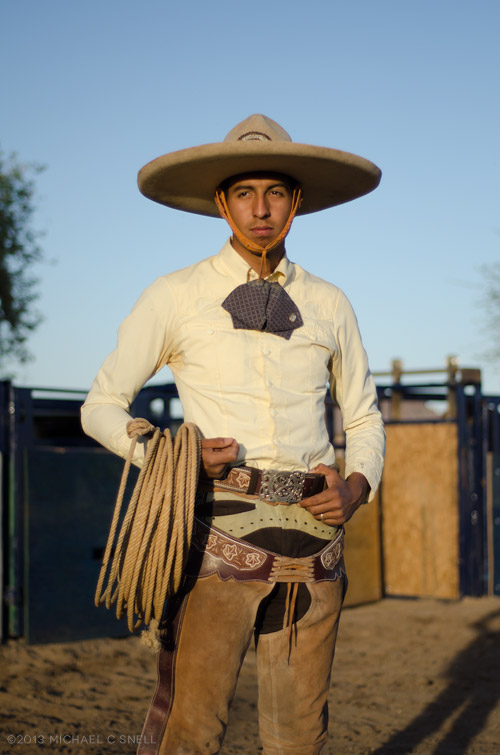
The folks at the family-owned Rancho Ochoa rodeo arena in West Phoenix were kind enough to allow myself and a few others to photograph them as they prepared for their upcoming competitions. Special thanks also to Jill Richards for providing the backdrop and light modifiers that made for some fun, impromptu portrait sessions with the individual charros and charras. I loved the gold rim on the hat in the shot above and decided to try doing a little black and white toning to the rest of the image, finishing it with an aged film texture.

Here are a few others from that evening:

130418roping_sotc

130418riders_sotc

130418shadow_sotc

130418cowboy_sotc