Category Archives: wildlife

Birding in Extremadura, Spain

Spain is a great place for anyone with an interest in birds and Extremadura’s birdwatching fair, FIO, will be held from February 24 through 26 this year. I was fortunate enough to get to attend the 2016 event last March and I had a great time. While I’m no bird expert, I do enjoy photographing a wide range of subjects — birds included — and it’s always great to hang around with a bunch of people who are passionate about something. Plus, spending a great deal of time in the Extremaduran countryside ain’t bad either. For those unfamiliar, Extremadura is a beautifully wild region of Spain lying west of Madrid and east of Portugal.

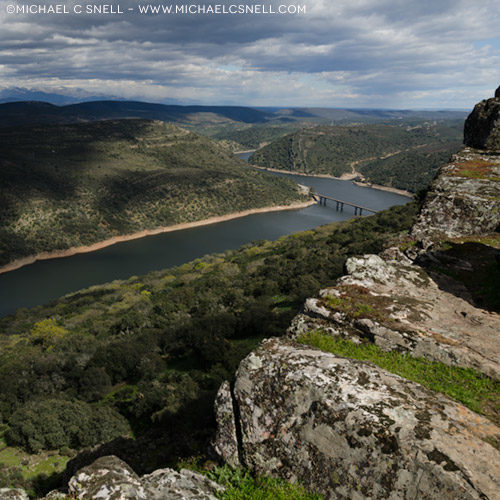
We started our bird-watching experience at the Castillo de Monfrague in Monfrague National Park, which offers panoramic views and a great platform for watching the large raptors that inhabit the area.
170103birding01_sotc

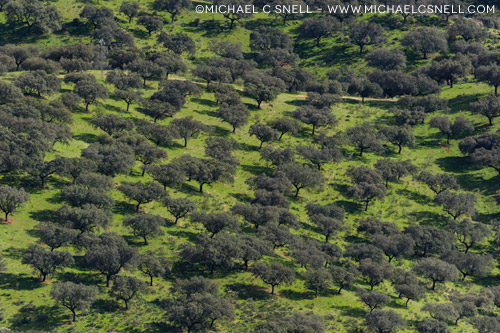
Much of the surrounding landscape is what is called “dehesa,” a kind of pastureland with widely dispersed trees — typically oak. The overhead view provided by the Castillo’s high perch helps illustrate what it looks like:
170103birding02_sotc

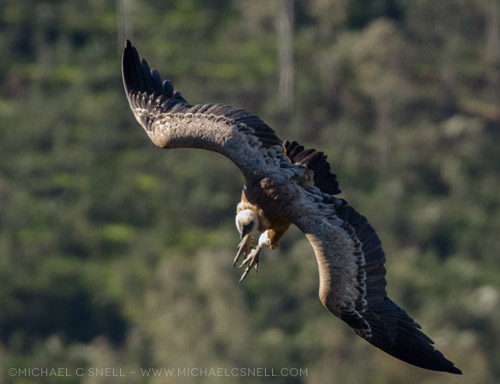
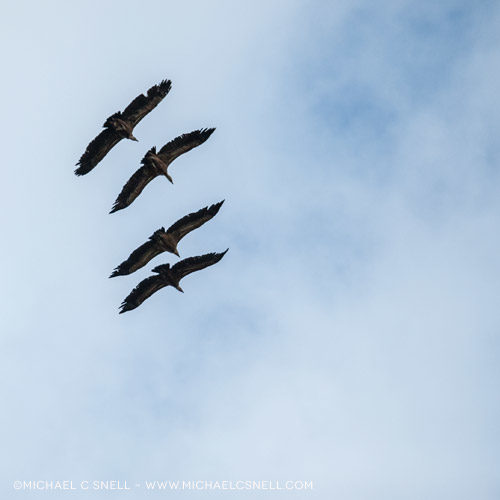
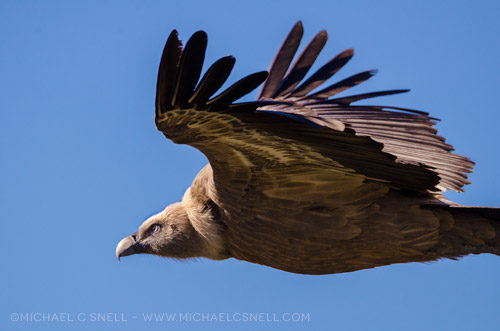
As the air begins to warm in the morning, various large raptors — including Griffon Vultures — begin riding the thermals. Again, the castle provides a perfect viewing platform as they spiral upward and overhead. I had the opportunity to photograph them from below, from eye-level, and from above as they would swoop back down to their nests in the cliffs below.
170103birding03_sotc

170103birding04_sotc

170103birding05_sotc

As large and close as these birds were, I was still happy to be testing out the then-new Tamron 150-600mm lens. A second generation has since been released, but I found little to fault with my original version and I especially appreciated the Vibration Control that allowed me to hand-hold all of these shots.

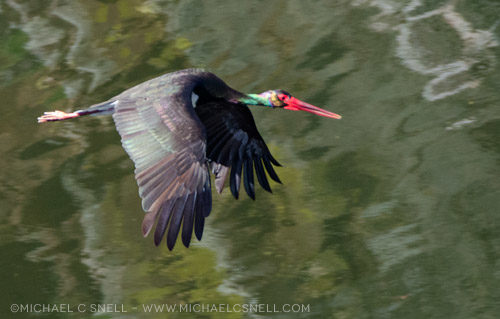
Down in the valley, we also spotted Black Storks. I can’t think of many creatures I’ve seen that look more prehistoric than these colorful birds.
170103birding06_sotc

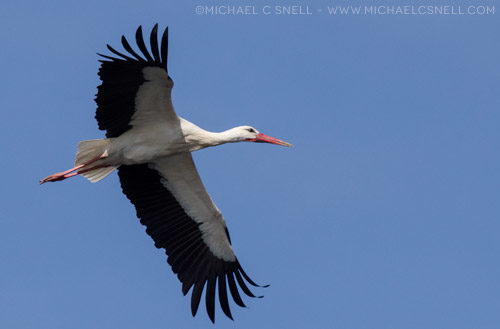
And, of course, we would see plenty of White Storks as well. These inhabit nests found on many of the rooftops and chimneys in Extremadura and are hard to miss due to the clattering sound they make with their bills.
170103birding12_sotc

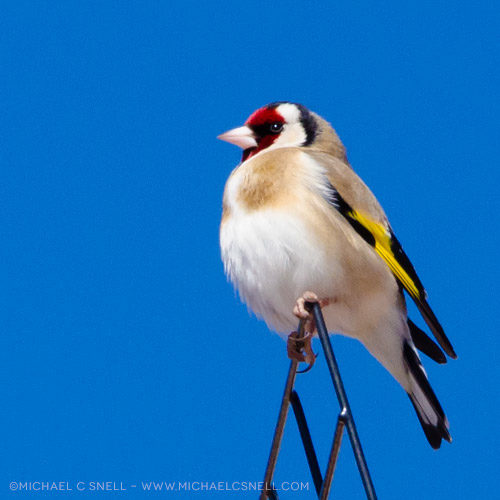
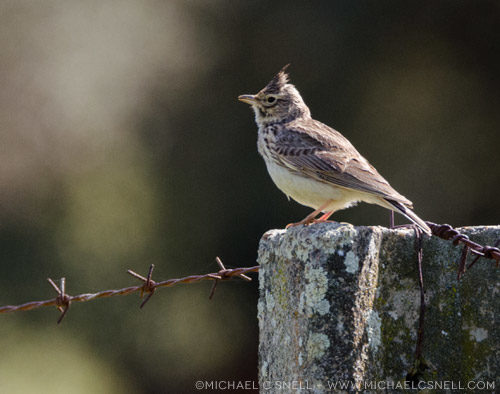
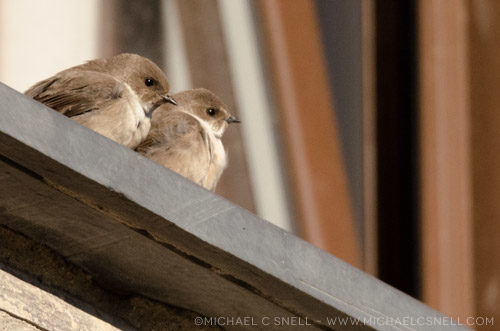
Not all of the birds were large. There were also plenty of smaller varieties, too. Below are a Thekla Lark, a pair of Crag Martins, and a European Goldfinch. I hope I have these names right — if not, it’s no reflection on my very knowledgable guides but my own inability to retain information!:
170103birding10_sotc

170103birding07_sotc

170103birding08_sotc

To be honest, the smaller birds were much harder to capture at the pace at which we were traveling. Their movements were much swifter and it is really best to wait out in a spot and let them come perch near you. Still, we managed to log quite a few different species as we roamed the countryside.
170103birding13_sotc

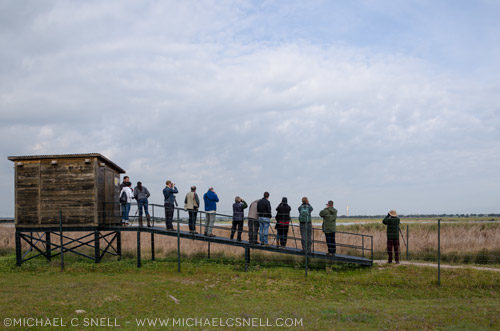
That’s a few of our gang of birders, photographers, and birding tour operators on the lookout for the next bird-of-interest. I truly enjoyed hanging out with these folks and learning more about the birding opportunities in Extremadura. The fair (FIO) comprises a sort of “tent village” with stands that feature information about birding in the area, gear for birders and even birding-related arts and crafts. There was a very impressive show of bird photography as well. It’s a great event for those with such an interest.

I’ll never see the landscape of Extremadura in the same way again, now that I know that it is home to so many diverse species of birds. I now notice that the sky is seldom empty in this part of Spain and my eyes will continue to glance upward to see who is overhead. I’ll leave you with one more landscape shot of the region we were exploring, and I’ll follow with a post about some of the villages we encountered along the way.
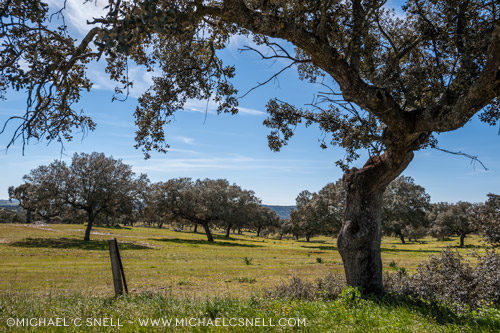
170103birding11_sotc

All in a day’s work

150625heron_sotc

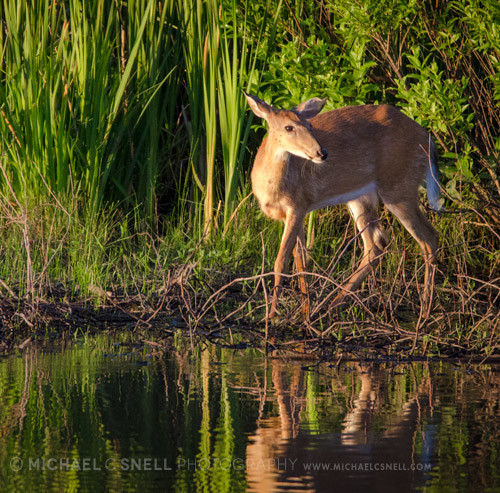
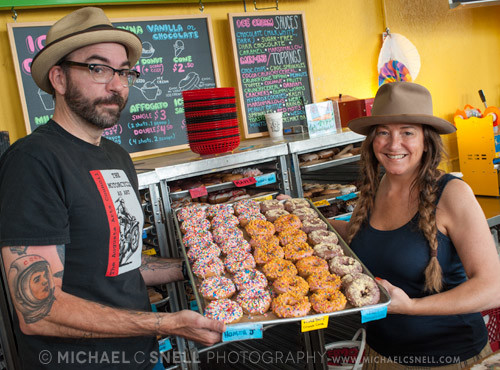
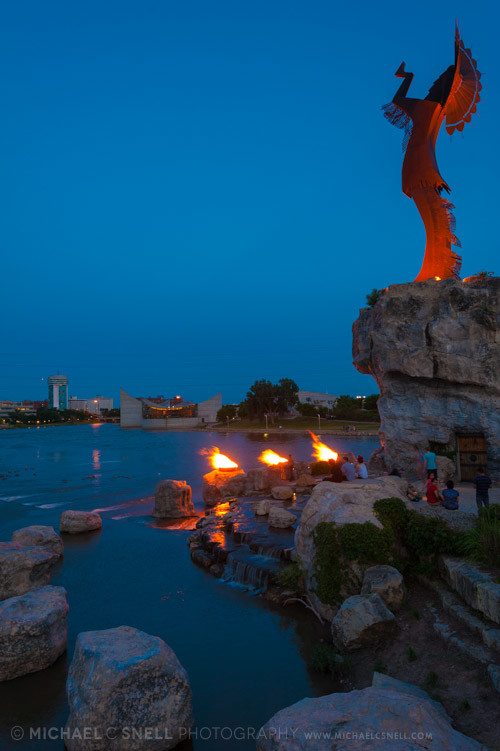
There’s not too much to tie these images together other than that they were all shot on the same day in Wichita, Kansas. Started off the morning with a little wildlife outing, managed to find myself in the awesome Donut Whole and finished things off seeing the flames lit at the Keeper of the Plains. There was much more in between, but it was really kind of a typical day in the life of a travel photographer. Never time to get bored.

150625deer_sotc

150625donut_sotc

150725keeper_sotc

17-year cicadas

150601cicada_sotc

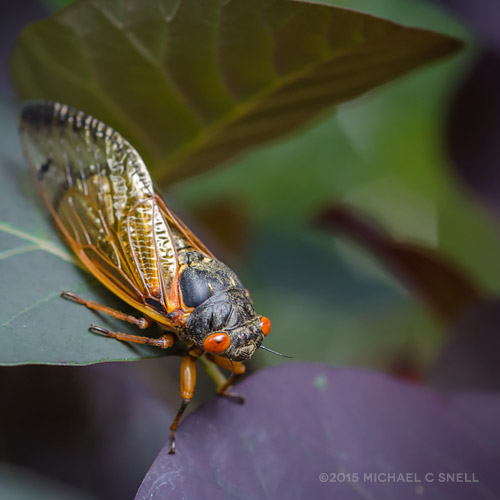
Lots keeping me busy these days — most of which is either not-very-interesting visually, or I’m not able to share until publication. Busy, nonetheless. And occasionally distracted enough by the “song” of these little buggers that only come by once every 17 years to get out and try and make a picture of one.

Wild Horses of the Salt River

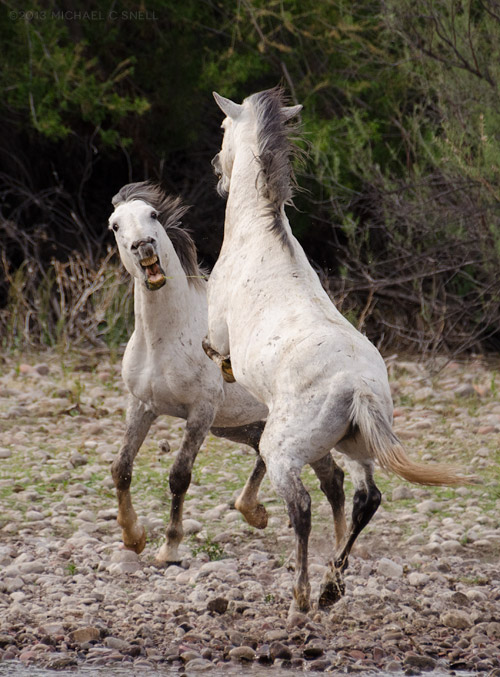
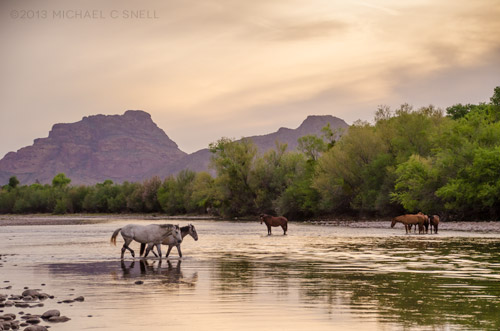
130423horses_sotc

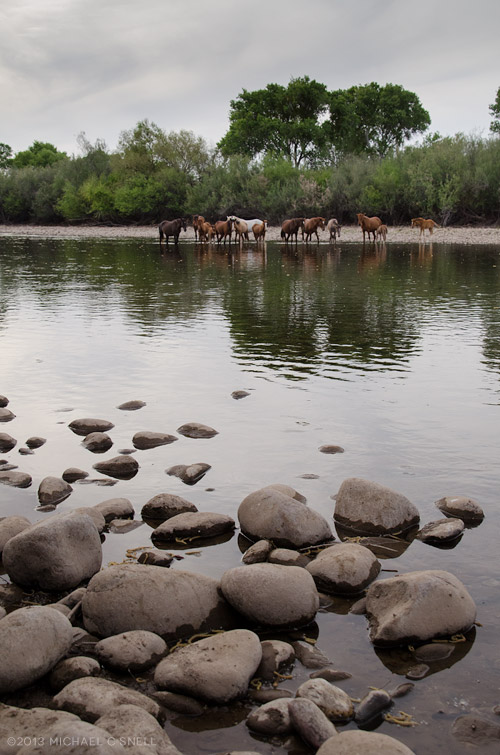
After a short hike to this rocky river bank along the Salt River near Phoenix, we saw nothing. No wild horses. Our guide assured us that they were usually there. “They’ll come,” she said. A few minutes later there was a faint sound from across the river and a hint of movement through the trees.

“I told you they’d come.”

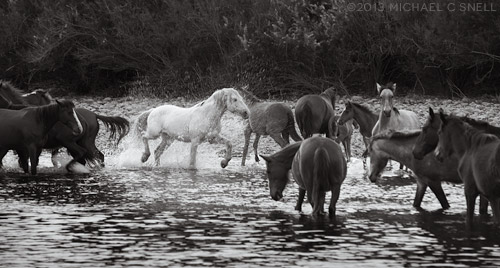
And for the next two hours we were thoroughly entertained and entranced by these amazing wild animals, living freely here not far from one of the largest cities in the United States.

130423bwhorses_sotc

130423wildhorses_sotc

130423horsesriver_sotc

Season Jumping in Phoenix

130417phoenixbird_sotc

Two weeks ago, I left a cold, pre-Spring Kansas for a few days of Spring-Summer-ish Arizona. While there, I picked up an assignment that would have me hopping back on a plane just a few hours after returning home, and flying to North Dakota for three days. While it was still decidedly wintery in ND, Arizona was a welcome hint of the Spring that will hopefully one day arrive back home in Kansas (it’s a month or more late this year by my reckoning). It’s odd, jumping seasons like this. But I wouldn’t have traded that week in sunny Phoenix. Great temps, great people and fantastic locations to shoot. I’ll share a few more images over the coming week, before I have to hop my next plane.

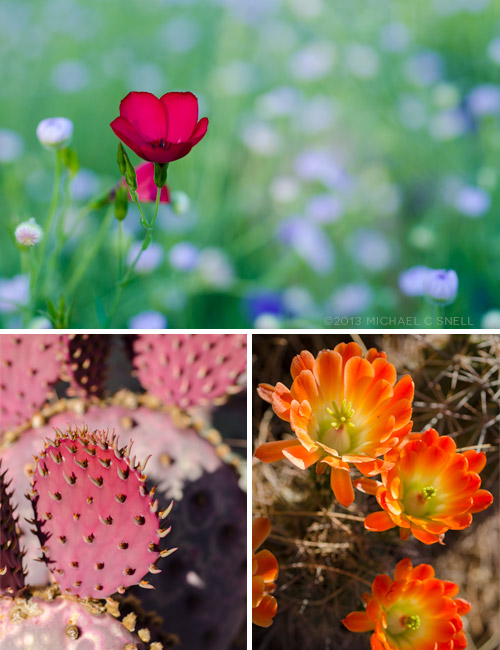
First stop in Phoenix was the Desert Botanical Garden, where the blooms were out and it was almost possible to forget Winter ever existed:1304217phoenixflowers_sotc

While I took plenty of wide shots of the gardens as well, it was the details and textures that caught my eye the most. My 60mm macro lens got a real work out on this particular morning.

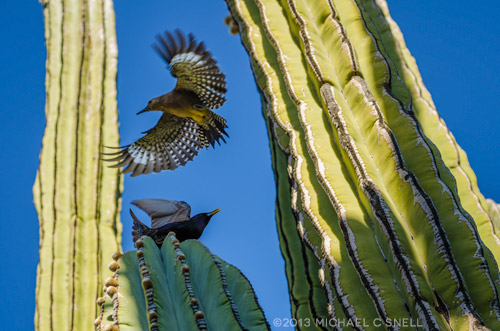
And, at the top of this post, a lucky shot I caught as a Flicker and another bird fought over who would be nesting in this particular cactus. Speculation on my part, but they did seem to be in disagreement over something. I was just happy to grab the photo. Sometimes you just have to be in the right place at the right time.

more from the rodeo

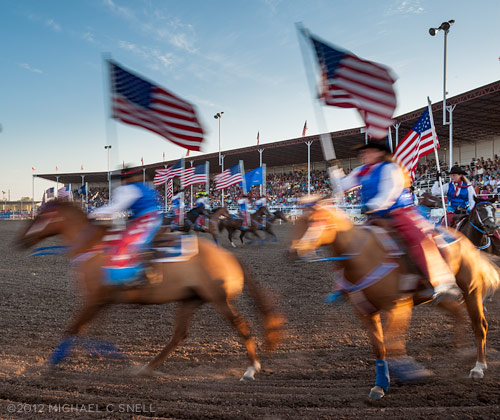
I’m sharing a few more shots from last saturday’s rodeo in Phillipsburg, Kansas. As the biggest rodeo in the state, it’s quiet a show and the grand opening alone is worth the price of admission. I got there early and tried to scope out a good vantage point and settled on this area at one end of the arena where I could shoot through a livestock gate and get views of both the chute and the stands with a nice long throw down to where these riders with their American flags would make their entrance.

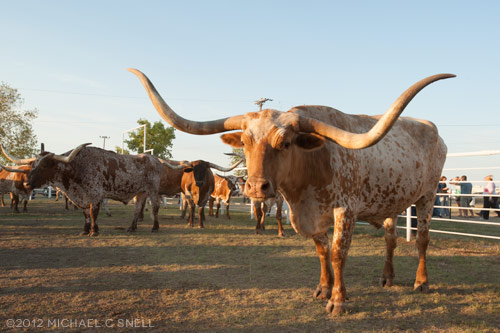
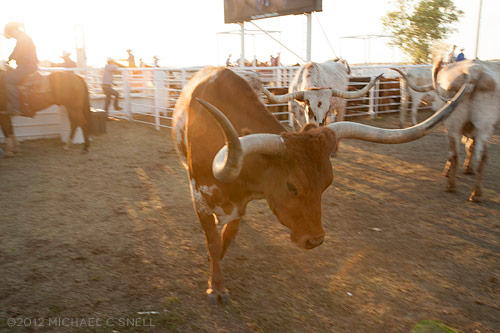
I’d been shooting the beginnings of the grand opening when I turned around and realized I was no longer alone in my little shooting space. In fact, the spot I had chosen was the pen where a few dozen of these longhorn cattle were being prepared for their entrance during a later portion of the grand opening:

Happily, they seemed willing to share the area with me although they did seem to be extremely curious about my cameras. I was carrying two bodies and, as I would shoot with one, the braver of the longhorns would come up to give the other Nikon a good sniff. There was plenty of drooling going on as well (on their part, mostly) but I managed to get through the evening without it finding its way onto my gear.

It did end up being a very versatile location from which to shoot. One that I would be eager to make use of next time I find myself at the rodeo. Even if I do have to share it with these fellows again.

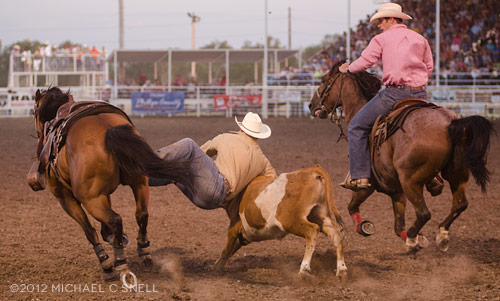
A few more from Saturday:

Rainy day strategies

[sponsored post]

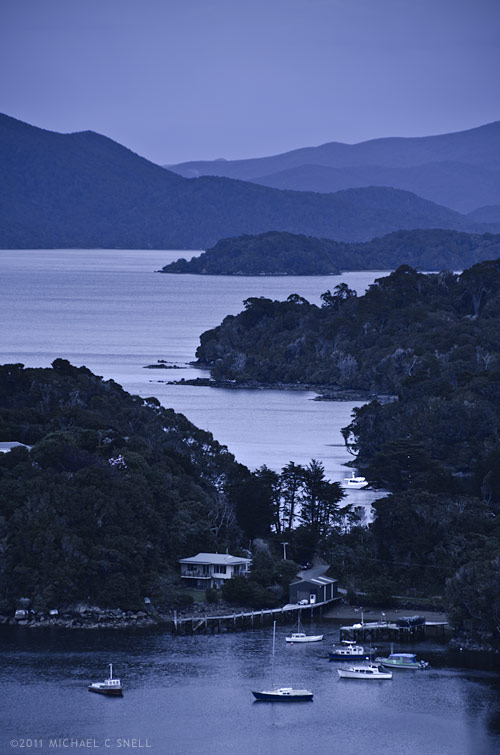
Stewart Island lies off the southern tip of New Zealand’s South Island. In this shot we’re just over the peninsula from the Island’s one town, Halfmoon Bay, and are overlooking Golden Bay, Thule Bay and the Paterson Inlet. Today’s destination is Ulva Island — a small, 670 acre island in Paterson Inlet that is being restored to its original predator-free ecosystem.

It’s also raining, which can make shooting photos during our walking tour challenging. I don’t have any waterproof housings but I do have a jacket and opt for a two body, two lens operation today. I’ll take the Nikon D700 with a 60mm macro lens and the D7000 with the Tamron 18-270. Here’s my thinking:

We’ll largely be in fairly dense rainforest where the reduced contrast of the overcast sky will actually help even out the light. I won’t want to include a lot of sky in any shots since it’s flat grey so I will instead focus on details — macro shots of the plants that we encounter on the walk. It will also allow me to shoot downward for the most part, eliminating the problem of rain getting on the front element of my lens. Neither camera-lens combination is large, so I can keep them both tucked into my partially zipped jacket and retrieve them only when needed. The second body with the 18-270 will be reserved primarily for those times when I encounter something that suddenly requires more than a prime 60. That might be a wide shot where the trail opens out onto a beach, or a telephoto shot of a bird. Birds are a large part of the visitor experience to Ulva Island so I hope to get something along those lines. By taking the 18-270 and a macro, I figure I’m set for nearly anything and I won’t have to deal with changing lenses in the rain.

Overall, this plan worked well. Once we made our way off of the beach and into the understory, the rain effect was lessened by the trees overhead, although the occasional drop that would land now was a much larger drop from a leaf than the small, misty raindrops on the beach. The trails wound through ferns and forgotten-looking plants that gave a real sense of what New Zealand must have once been like, before the main islands were largely cleared of trees for cultivation. I’ll show some of the macro shots in the next post but first I’ll show a couple of shots that made me thankful to have had the 270 end of the Tamron 18-270 zoom.

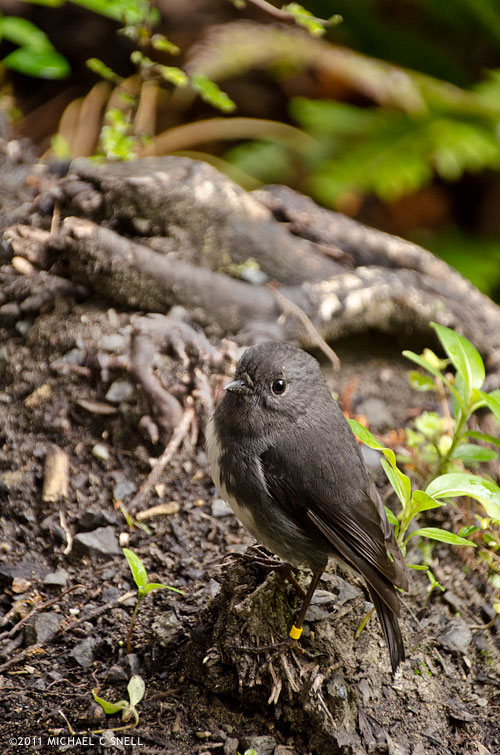
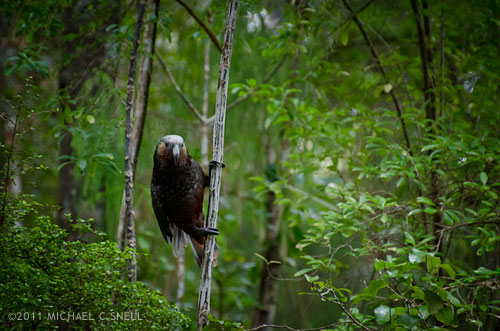
This tiny bird is a Toutouwai, or Stewart Island Robin. On the much larger end of the scale is this South Island KaKa:

A member of the parrot family, Kakas are about 18″ long and weigh a pound on average. That’s a pretty sizable bird. The Kaka didn’t come nearly as close as the Robin. There was another group a few yards ahead of us that he was curious about but the addition of our group coming up behind eventually proved too much and he took off. I was happy to get the images I did with the 18-270, but can only imagine the shots that a person could get with a little more time and patience on this island. For the most part, the birds are not that suspicious of people and will come fairly near. The haven’t really learned fear.

In the next post, I’ll share a few of the detail shots I took on this hike with the macro. Given the weather and limited time, I think the two lenses really allowed me to cover a lot of ground photographically speaking.

I should also mention one other foul-weather tip — the landscape at the top of this post (also shot with the Tamron 18-270) was fairly grey and colorless due to the overcast skies and impending rain. Once I brought it into Lightroom, I opted to alter the white balance to give the scene a cooler, blue cast. The result resembles the light you might get just before dawn or after sunset, even though it was shot near mid-day. Filters can also be used on-camera for this effect but, anymore, I prefer to leave my options open for playing with different color temperatures at the point of post-processing instead. By shooting in RAW, I have the ability to make several versions in different tones without any damage to the original image. One of the great benefits of today’s digital photography tools.

Yellow-Eyed Penguin encounter

[sponsored post]

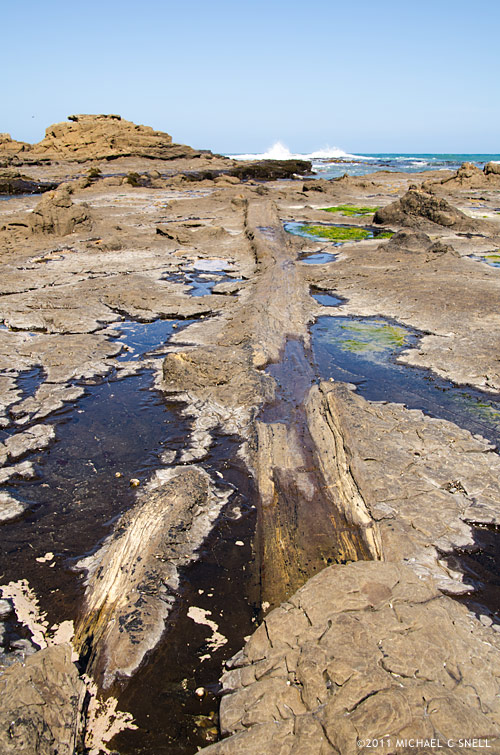
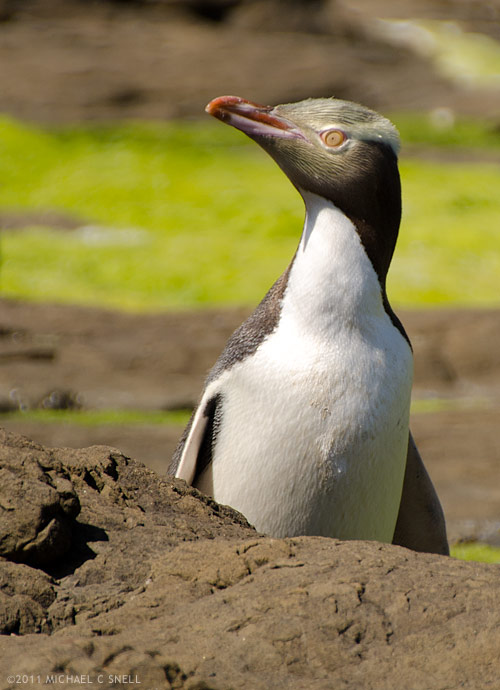
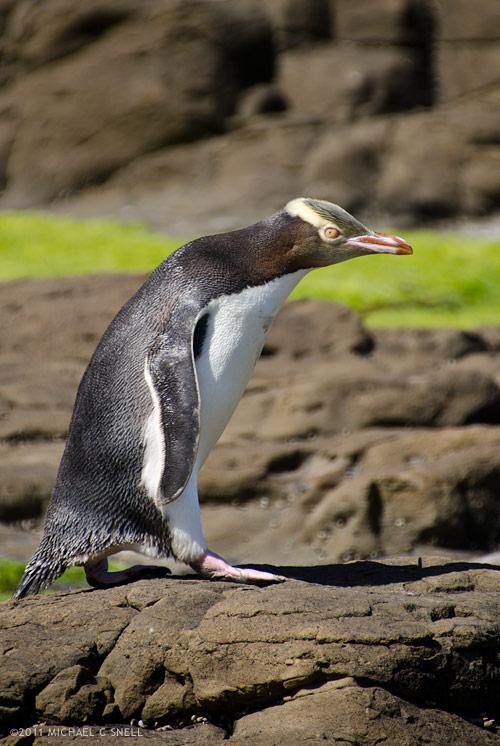
It all started when we visited the fossilized forest at Curio Bay on New Zealand’s southeastern coast. In the photo above, you can see one of the ancient, petrified trees that are visible in the rock at low tide. We were told that the endangered Yellow-Eyed Penguins are frequently spotted in the area but that they are usually only making their way between the ocean and their nesting areas at sunrise and sunset. As we were there near mid-day, it was doubtful we would see any. If we did, however, signs instructed visitors to keep at least two car-lengths away to make sure the penguins could go about their business undisturbed.

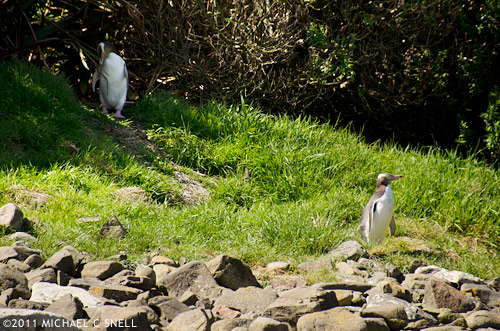
Wanting to get clear of the bulk of the tourists at the site, I picked up my pace and headed for the far end of the rocky beach where I found some great examples of the petrified logs and stumps and began photographing them. A few moments later, a sound caught my attention and I looked up to see two Yellow-Eyed Penguins emerging from the underbrush at the top of the beach.

One was more bashful and stayed in the shade but, as I continued to photograph them, the other made his way cautiously onto the beach. I picked a location where it looked like he would cross my path, but where he wouldn’t come so close that I would disturb him. Once again — as had happened on several occasions on this trip — I was happy to have brought along my Tamron 18-270mm zoom lens. I hadn’t been expecting to be photographing wildlife at this location and had nearly come to the beach with only a 17-35. Luckily I’d decided otherwise and now the 270mm end of the Tamron was just what I needed.

I wasn’t too aware of what was going on behind me until the penguin had gone and I turned around to leave. It was then that I noticed that a large group of people had assembled behind me and had been photographing the penguins as well. One was a fellow photographer from my group who had, unfortunately, come to the beach with only a 60mm prime lens. He’d made do and gotten some nice shots but he certainly didn’t have as many options available to him as I had.

Here are a couple of shots — first, just as the penguin re-emerged after walking behind a large rock:

That shot’s cropped a bit, but it’s sharp enough to handle it. I mainly cropped it to get rid of some distracting gull poo in the foreground. Proof that you can’t control everything in the scene. The next shot is closer to full frame but is also cropped a small amount just to get rid of some visual noise around the edge of the frame and also to show the penguin a bit better at the small size required by this blog template:

I don’t generally like to crop photos after they are shot. Coming from a background of shooting transparency, I learned to crop in-camera. It was a necessity. I’m only recently embracing the ability to crop and re-frame images in Lightroom or Photoshop. Files captured by modern DSLRs are now large enough that there is some lee-way. You can crop an image down a bit and still have a reasonably large file that will be viable as a stock image. I continue prefer to “get it right” in-camera whenever possible, but it has become a welcome byproduct of digital photography that I can now tweak an image’s crop later to make it stronger. Especially in situations like this where time was limited and I wasn’t able to reposition myself or to get closer just to eliminate some distracting element in the foreground or background.

New Zealand’s Otago Peninsula

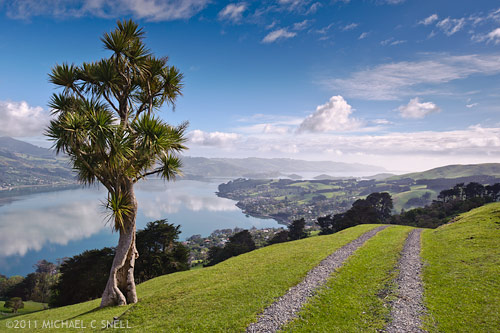
Add the Otago Peninsula to my list of favorite spots on earth. I made this image during a quick photo-stop on Highcliff Road. Actually, I think there would have been a mutiny had the driver not stopped. The scenery had been spectacular for several miles and the crowd of writers and photographers in the van was becoming vocal. Happily, one of the narrow, winding road’s very few turnouts appeared and we were allowed to pile out and make nuisances of ourselves for ten minutes or so. There’s something comfortably familiar and at the same time a bit other-worldly about New Zealand’s landscapes. It’s easy to understand why the Lord of the Rings movies were filmed here. How pleasant is this view? And yet, is that one crazy tree or what?

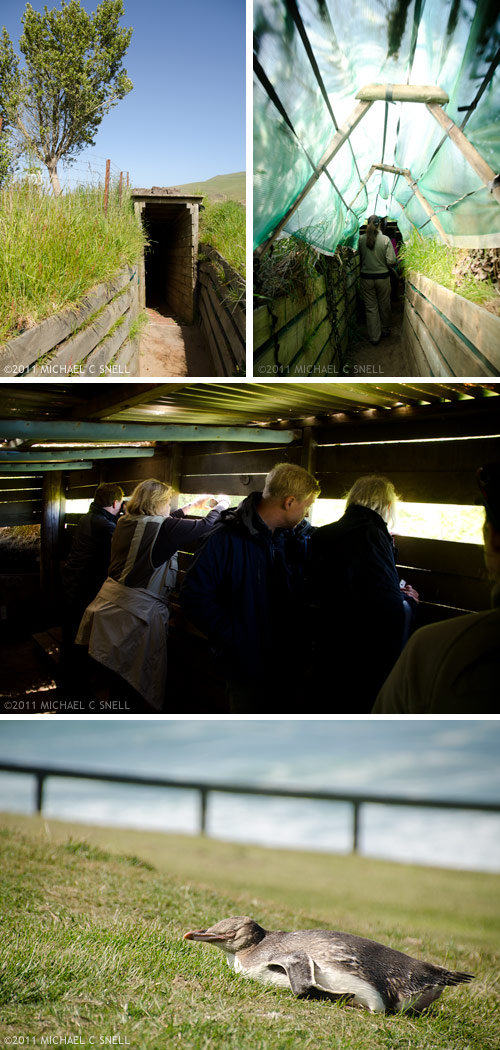
One of the stops for the day was Penguin Place, home of the Yellow-Eyed Penguin Conservation Preserve. According to their website, “Yellow Eyed Penguins are the world’s most endangered penguin, and live only in south east areas of New Zealand waters.” Penguin Place provides a safe breeding area for the penguins, which have struggled to survive since man arrived and introduced predators to New Zealand. Visitors can walk through a complex, maze-like series of covered trenches in order to reach viewing blinds where the penguins can be observed and photographed.

While I did see several penguins from the blinds, the best sighting I had on this day was of the penguin in that last photo. He was just off of the path, sunning himself on a grassy hillside. Our guide told us he was around one year old, and didn’t have the typical markings of an adult Yellow-Eyed Penguin yet. Still, he was a very cooperative model. And little did I know that I would have another penguin encounter the following day…

Stay tuned for the next post.

Operation Albatross

[sponsored post]

The next posts will explore the Otago Peninsula on New Zealand’s South Island. Dunedin is located where the peninsula joins the mainland and at the far tip of the peninsula is the Royal Albatross Centre, where I was to play wildlife photographer for the afternoon and try and get at least one decent shot of a Royal Albatross. I say “play” at being a wildlife photographer because I have the utmost respect for photographers who specialize in this field and I know that my infrequent dabbles of an hour or two don’t even come close to the kind of commitment, stamina and determination that it actually takes to get a really beautiful wildlife shot.

The Royal Albatross is listed as an endangered species and Taiaroa Head, where the Royal Albatross Centre is located, is the only mainland breeding colony near human occupation. These are large birds with wingspans reaching 10 feet. They live mainly at sea, coming to land pretty much just to lay eggs and raise their young. If I remember correctly, I believe our guide said that they don’t visit land at all for the first five years of life.

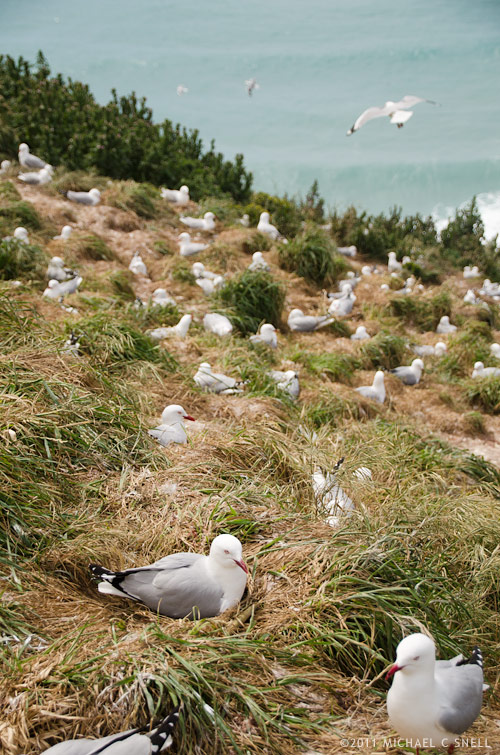
The image above is not of an albatross colony, but of a group of Red Billed Gulls. These birds covered the hillside as we approached the Royal Albatross Centre and gave hope that our search for an albatross might be an easy one. Not that easy, we would come to learn. The Centre is a fantastic place for learning about the albatross and other regional wildlife, but as is usually the case with wildlife, some days are always better than others for viewing wild birds in their natural habitat. A good hike up a steep slope to a viewing area that had been made from a WWII bunker led to this view of our first albatross through some very scratched plexiglass:

Yeah.

That white shape on the left is a nesting albatross. The birds were just returning for the beginning of their nesting season but they were still few and far between. This was the only one we could spot and it was pretty clear that this was not going to be the way I was going to get my albatross shot today. Luckily there was a part two to this excursion and we next made our way to the Monarch and out into the Pacific.

I’ve been on a few boats like this for various whale-watching trips, etc., and I’ve learned a couple of things about shooting from them. One, take the longest glass you have because you’ll never be as close as you want (although the optimist in me tells me to keep a second body around my neck with a wide angle just in case we have a freak encounter and a whale pops up right next to the boat). Birds only enhance the requirement for long glass as I learned one long winter’s night in a blind on the Platte River in central Nebraska — but that’s another story. Lesson two, be prepared for a bumpy ride.

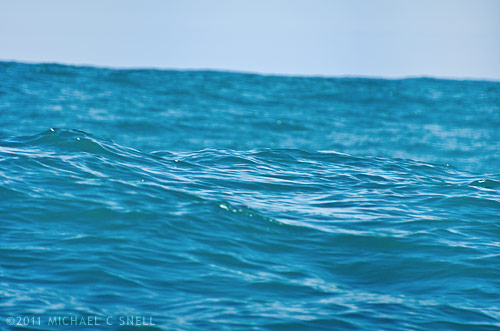
And today’s ride was a bit bumpy. Or maybe “rocky” and “roll-y” is a more apt description. Once out on the big water, our little boat was riding 9 foot swells like a Coney Island roller coaster. I tried to capture these swells in a photo, with limited success:

You can kind of see the sharp foreground swell with another, more distant, swell out-of-focus in the distance but you really can’t decipher it without some sense of scale. Oh well, trying to photograph that occupied my time until the albatross was spotted.

There had been a couple of sightings earlier that were more distant and it seemed that the birds were always moving away from us but, this time, I heard the captain say that there was an albatross on my side of the boat and he was coming toward us.

I had positioned myself in a narrow walkway on the side of the boat where I could push my lower back against a wall and have a foot out forward against the rail to give me some stability with my hands free. “Some” stability. Remember that we’re diving over swell after swell and anything put on a flat surface wouldn’t stay put for a second. I had also tried to reduce my top-heaviness by not bringing the full backpack. I’m primarily relying on my Nikon D7000 and the Tamron 18-270mm zoom. At the 270 end, it’s the largest glass I carry — the next closest being my Nikkor 80-200. With the smaller sensor of the D7000, the Tamron is the approximate equivalent of a 400mm lens. A true bird photographer would probably consider this to be just barely enough but it was all I had and I was making the most of it. I also appreciated the Tamron’s compactness and low weight. Hand-holding a fast, 400mm prime lens with all the weight that a fast lens brings would have been a challenge. The Tamron isn’t as fast as my 2.8 Nikkor, but I made up for this by increasing my ISO to 800 to get some of the shutter speed back that I was losing to a slower lens. At ISO 800, I was able to get a shutter speed of 1/2500th of a second at f/6.3. And that did the trick. It gave me a fast enough shutter to overcome the rocking of the boat and — maybe I forgot to mention this — the potential 75mph speed that the bird can achieve.

The Albatross appeared over a swell and, as predicted, headed toward us and slowly arced his path across the back of the boat. As it approached, I fired off several shots — trying to regain auto-focus a couple of times throughout the burst, just to make sure I’d get something sharp. This was another lesson I’d learned on a whale-watching excursion when a fluke appeared, beautifully backlit, and my autofocus slipped off and grabbed the background as the boat rocked and I ended up with a bunch of useless images of a fuzzy whale tail with a tack-sharp cliff in the background. Lesson learned.

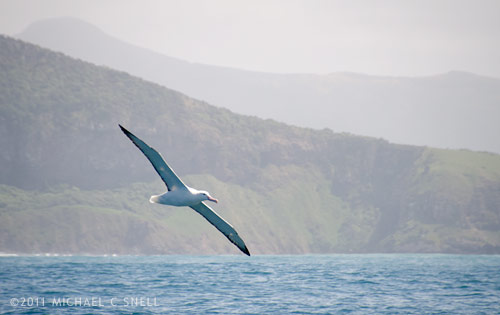
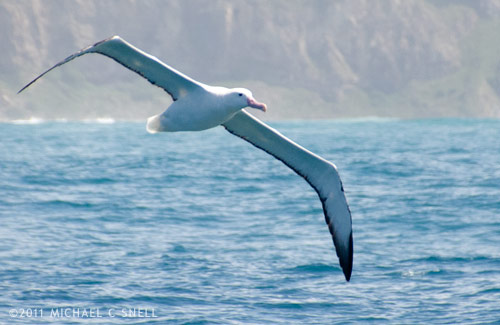
This time I tried to concentrate on following the bird’s path and fire-fire-fire, re-check focus, fire-fire-fire, re-check focus, fire-fire-fire… and then… that was it. We had a couple more albatross sightings but none quite that close. Thanks to the Tamron 18-270, this albatross had been close enough that I got a few shots like these — the first only lightly cropped to straighten the horizon and the second cropped a bit more:

I’m not typically selling to a wildlife market. For my purposes, I just really want to have images in the file that help tell the story of a place. These albatross shots show the bird and a bit of the environment. That works. If someone needs a shot of a nest, eggs hatching, etc., I’m glad to leave that sale to the wildlife guys that have the patience to get those shots. It takes a lot of work on their part and I know I’m not going to compete with their images with what I get on a 2-hour boat trip. Still, I’m happy to have gotten the shots that I did and it was a great day to be out on the water enjoying this beautiful place. The Otago Peninsula is absolutely magnificent and I could have easily spent weeks there. Unfortunately, I only had a couple of days this time. I’ll show you more of those two days in the coming posts — as well as another spot where the Tamron saved me on a wildlife surprise.