Category Archives: camino

Camino: to the End of the World

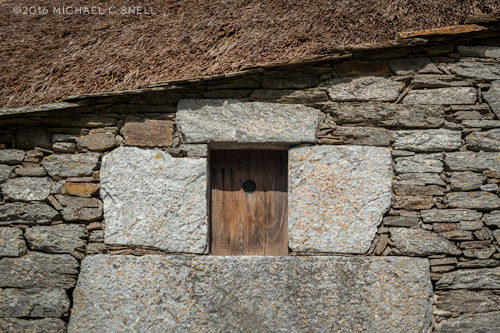
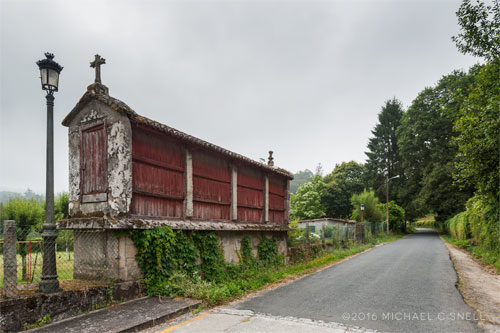
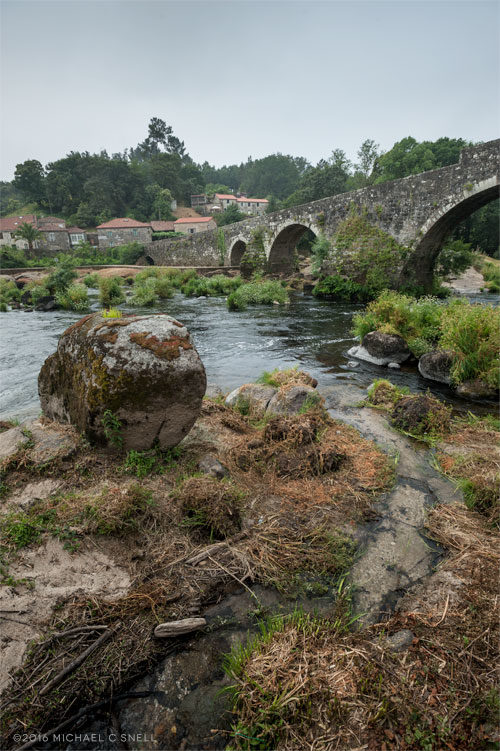
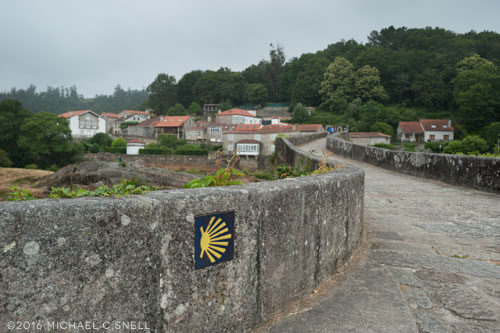
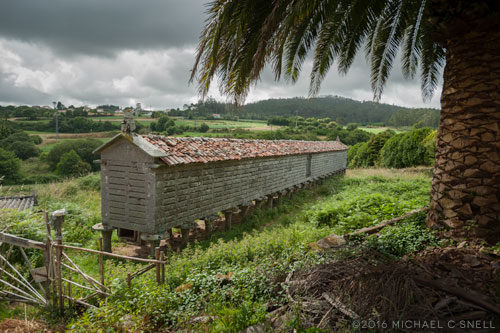
On my last day of exploring the Camino de Santiago as it travels through Galica, Spain, I felt like I really began to see the Galicia that I had imagined: the misty, green country that hugs a rugged Atlantic coastline. And stone hórreos everywhere — those built-for-all-time granaries that I had also longed to see. This one was at one of our first stops of the morning, Ponte Maceira, where there was also an ancient stone arch bridge marked with the scallop shells that show the pilgrims the way.
Another hórreo in the Galician countryside:
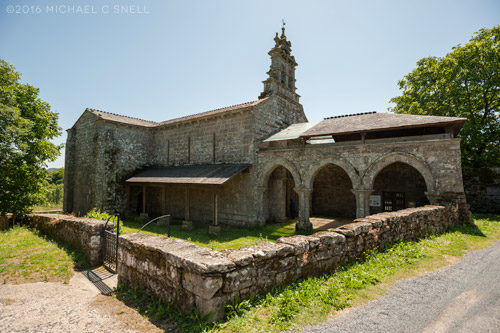
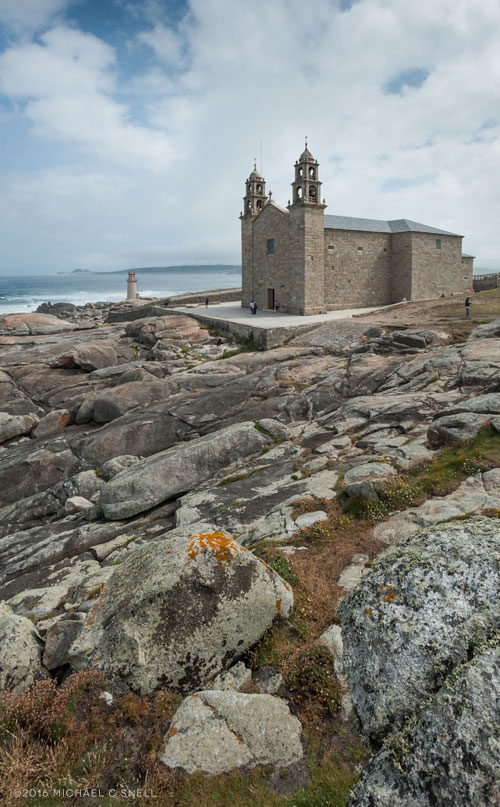
And then we came to the Atlantic. The Nosa Señora da Barca (Our Lady of the Boat) Church in Muxia has to be one of the most spectacularly situated buildings I’ve ever encountered. On days of rough seas I was told that the surf actually crashes through the church’s doors.
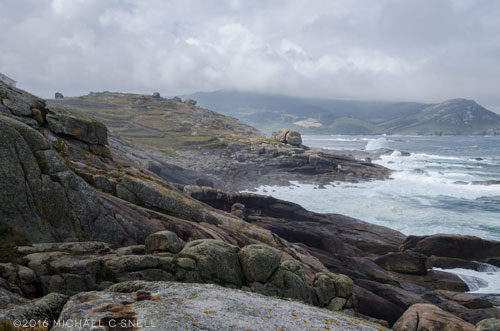
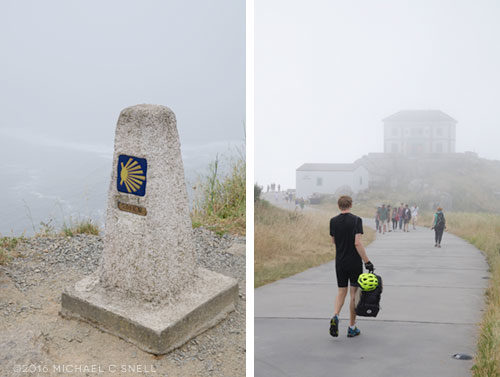
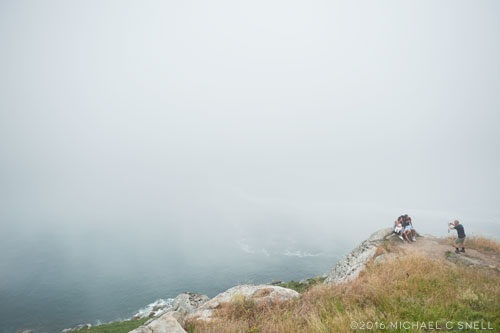
This is my kind of coastline. I know most prefer a sunny beach, but this is the kind of place that I could spend hours. But we had one more stop — Cape Finisterre, “the end of the world,” and the 0-mile mark for those pilgrims that continued on past the cathedral in Santiago de Compostela. You can’t continue further west from here on foot, that’s for certain.
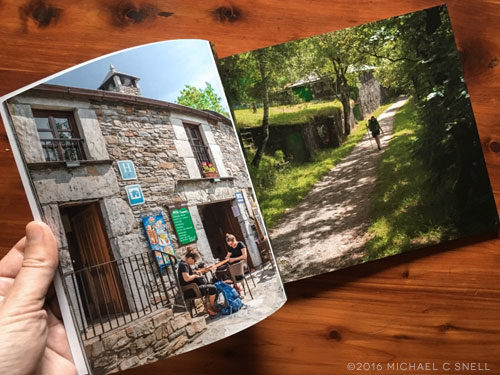
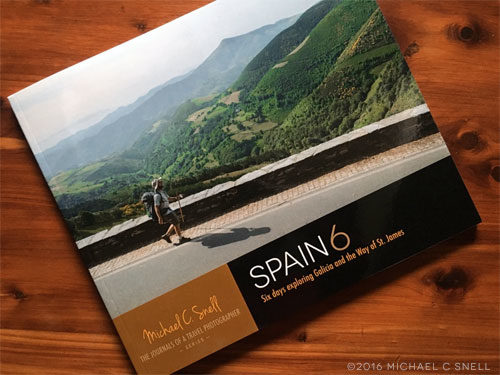
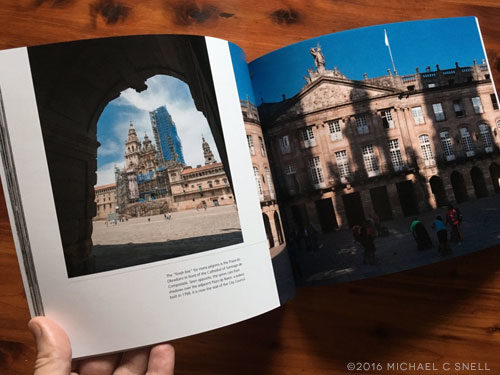
Many of the images that have appeared in my recent posts on the Camino — and many not shown here — appear in my latest addition to the “Journals of a Travel Photographer” book series, “Spain 6: Six days exploring Galica and the Way of St. James.” Here are a few snapshots of the book. You can see a larger preview and order copies over at my Blurb bookstore. I hope you enjoyed the journey!
Camino de Santiago: the Portuguese Route

Not all pilgrims walking the Camino de Santiago (or St. James’ Way) are coming from France, there are several routes including one that works its way north from Portugal. Situated on the Minho River, Tui is the first town encountered upon entering Spain and the fortress-like Cathedral of St. Mary makes quite the first impression.

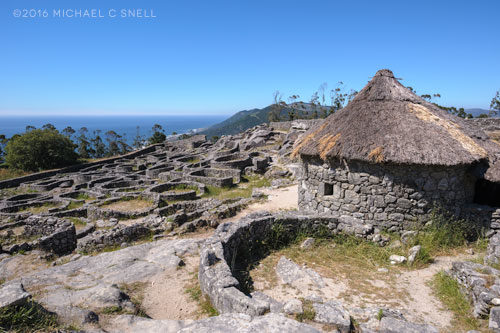
Where the Minho meets the Atlantic, there are ruins of an ancient Celtic Castro — a fortified settlement dating back to the 6th century BC.

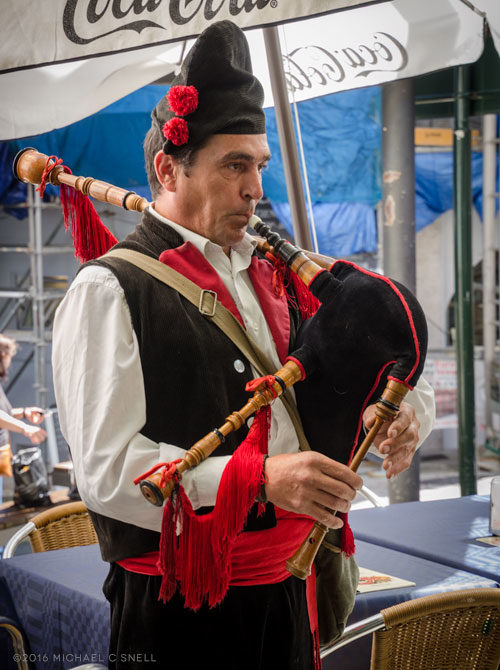
Evidence of the Celtic influence is still seen. Here a man plays Gaita galega, or Galician bagpipes in Vigo:

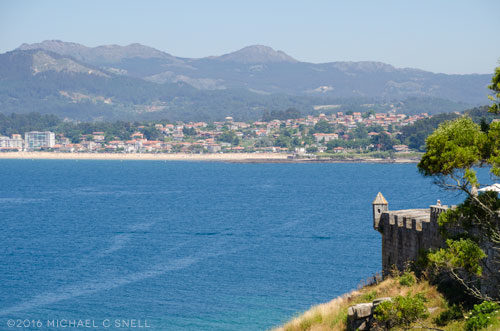
Further up the Atlantic coast at Baiona, there is a Parador with some stunning views:

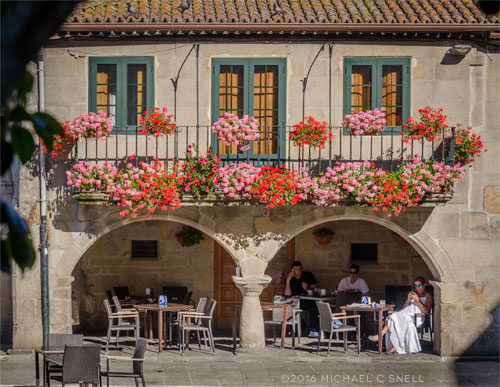
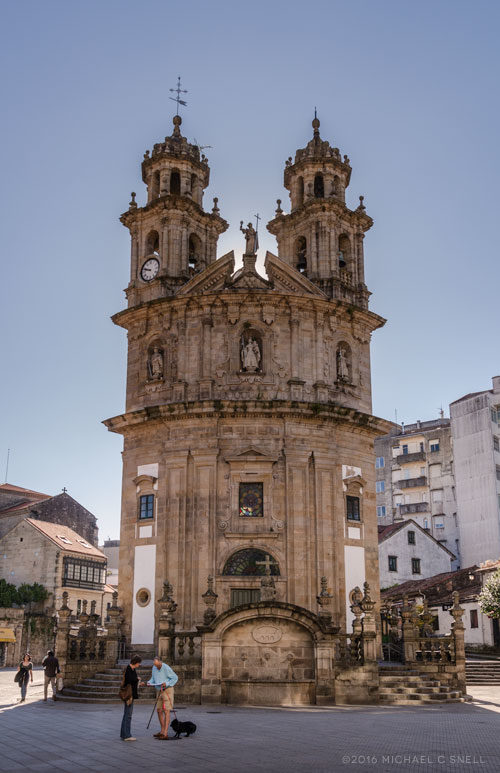
But coming back to the Camino, one of the highlights for me was the flower-filled town of Pontevedra and the Chapel of the Pilgrims, built in 1778.

More on the route from Santiago de Compostela to Cape Finisterre in the next post.

The Camino de Santiago: the Finish Line

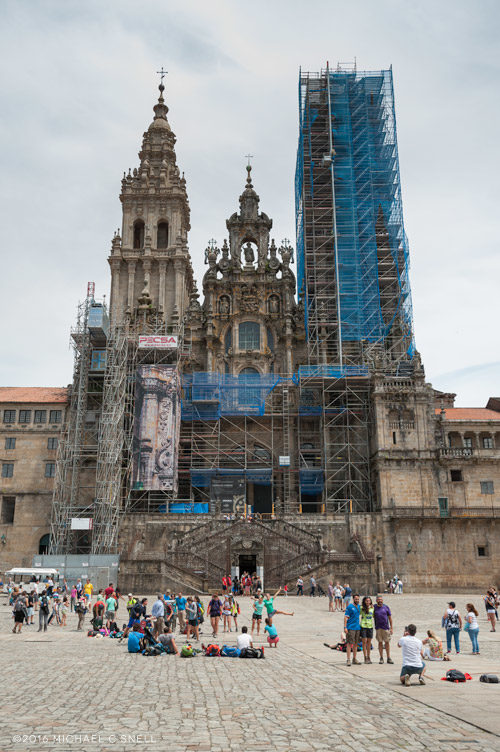
In my last few posts, I’ve been exploring the French Way – one of the pilgrimage routes of the Camino de Santiago – through Galicia. Now it’s time to take a look at where all those pilgrims have been headed: the Cathedral of Santiago de Compostela.

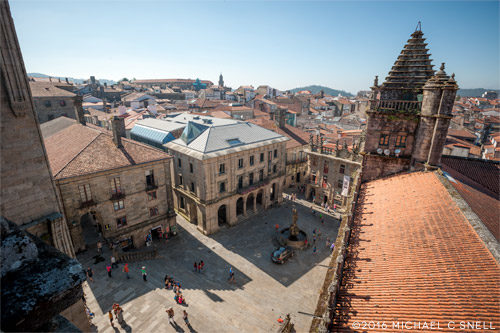
While some pilgrims continue on to Finisterre, the “end of the world,” this plaza is essentially mile 0 for the trek to see to the shrine of the apostle St. James. Many pause for photos in front of the Cathedral spires, others lie on their backs on the cobblestones and reflect on their journey.

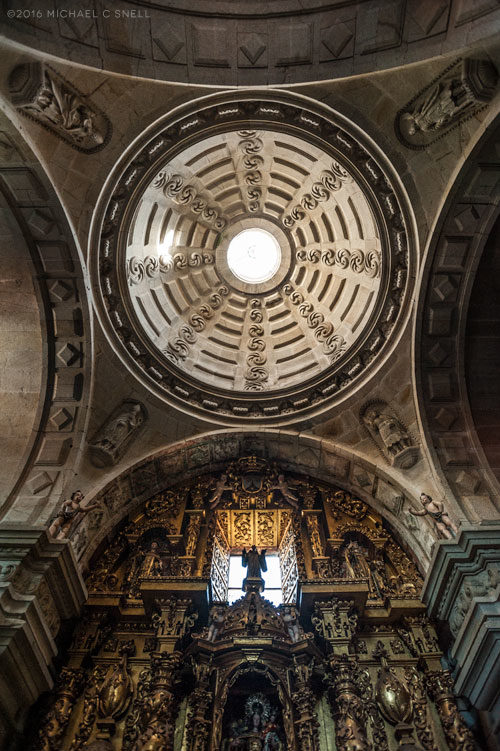
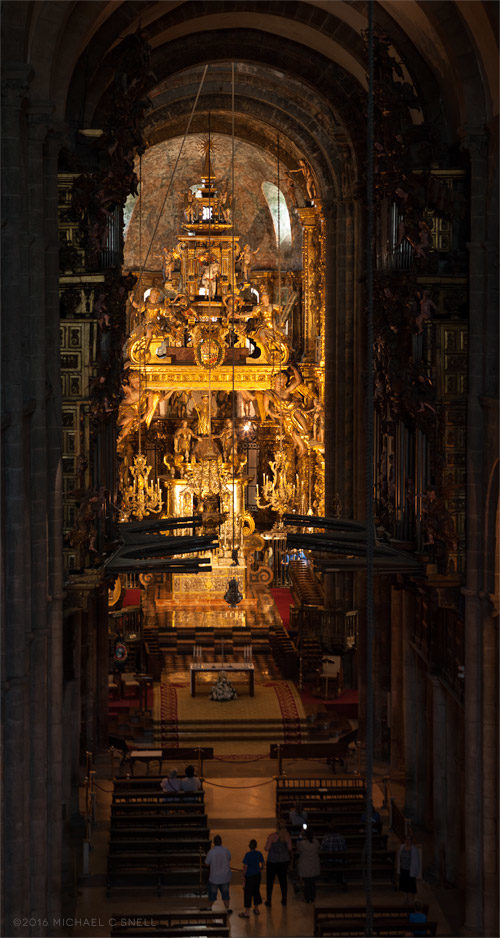
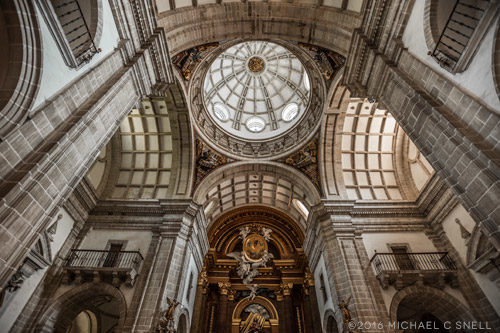
It’s a stunning cathedral on the inside and it is said to be the largest Romanesque church in Spain and one of the largest in Europe.

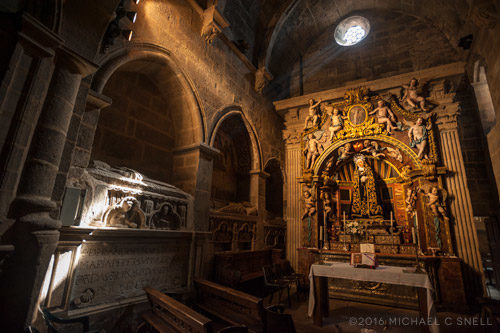
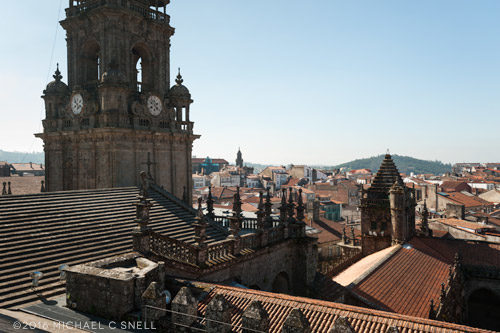
There are plenty of side chapels to explore and tours are even given to the roof, where you can take in some amazing views of the surrounding town.

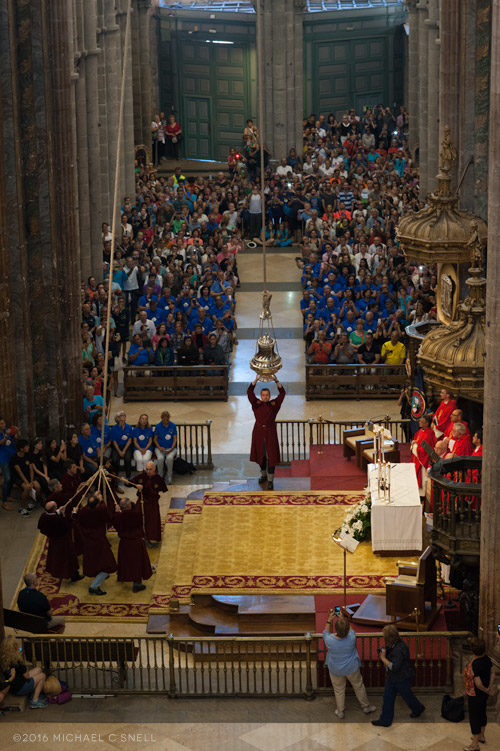
My tour of the cathedral ended with an opportunity to see the swinging of the Botafumeiro – a large incense burner made in 1851. A description of this on Wikipedia states, “eight red-robed tiraboleiros pull the ropes and bring it into a swinging motion almost to the roof of the transept, reaching speeds of 80 km/h.” It’s an incredible sight to see, for certain.

In the next posts, I’ll share some photos from another Camino route in Galicia – the one beginning in Portugal – and the route on west to Cape Finisterre.

The Camino, last stops on the French Way

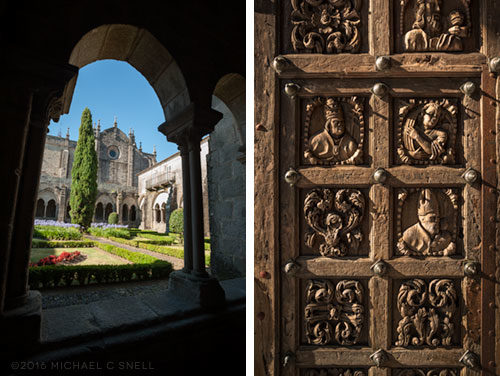
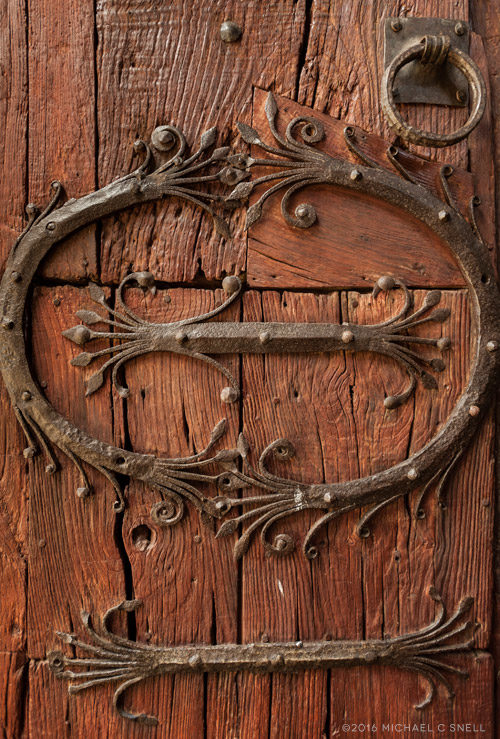
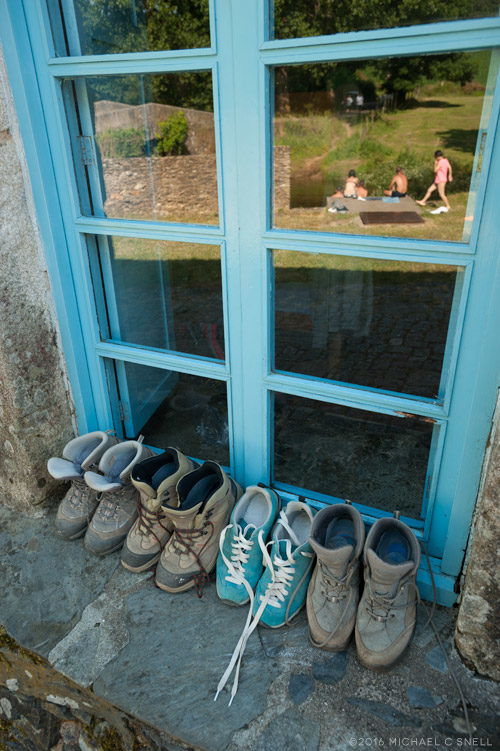
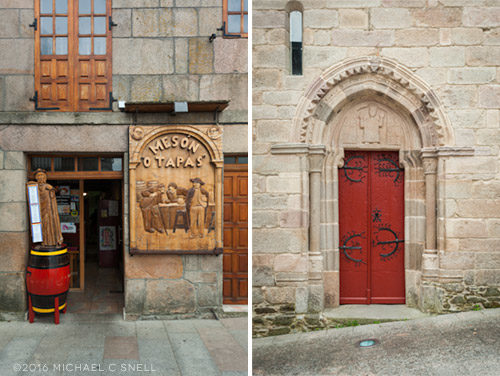
This rustic door welcomed us to another important and impressive site along the French Way in Galicia, Spain: the Church of Vilar de Donas, built in the 12th century.

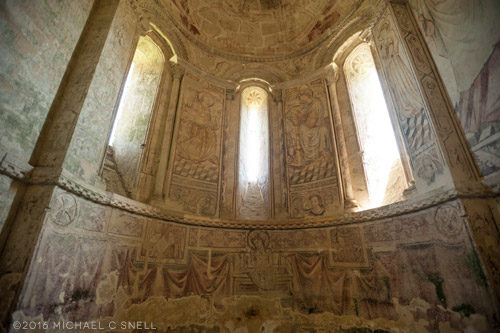
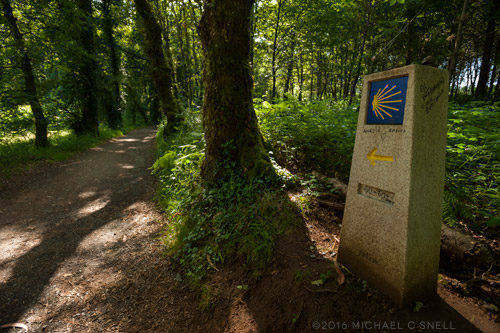
Inside, gothic frescos showed the passage of time. It was a cool respite from a day that was rapidly growing warmer, but we were soon out on the Camino again, following yellow arrows and shell markers on our way toward Santiago de Compostela.

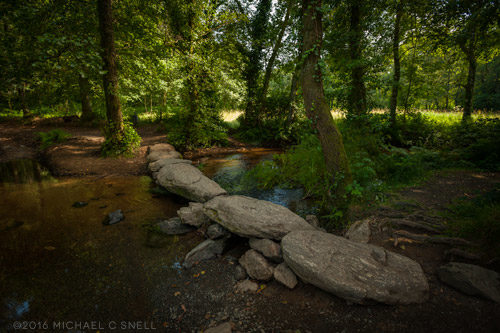
This simple stone bridge was a great surprise. I had walked such a short section of the Camino that I can only imagine what other similar surprises it holds.

Arriving at the Albergue de Ribadiso da Baixo, we had a chance to see how the pilgrims cooled off on such a warm day. This swimming hole was adjacent to affordable lodging and restaurants for the weary travelers who were nearing their final destination.

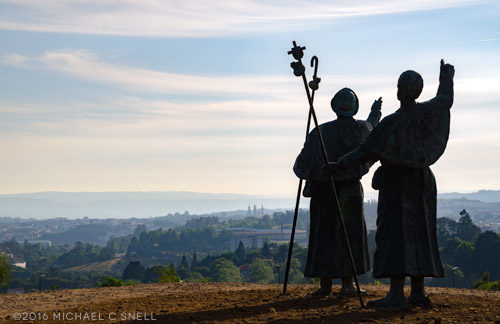
Monte do Gozo, the Hill of Joy, is the spot where pilgrims on the French Way get their first view of the Cathedral of Santiago de Compostela. This statue commemorates that moment and you can see the three spires of the Cathedral just to the left of the figures. In the next post, we’ll explore the Cathedral itself and see what awaits the pilgrims at the end of this epic journey.

The Camino, part 2

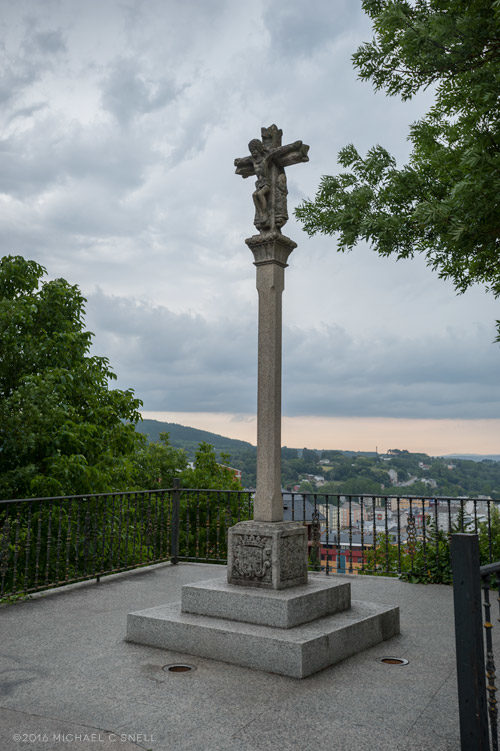
After exploring Samos, it was on to Sarria, Spain, as I followed the route of the Camino de Santiago as it crosses Galicia. Above is the cruceiro, or stone cross, in Sarria — one of many that mark the route to Santiago de Compostela.

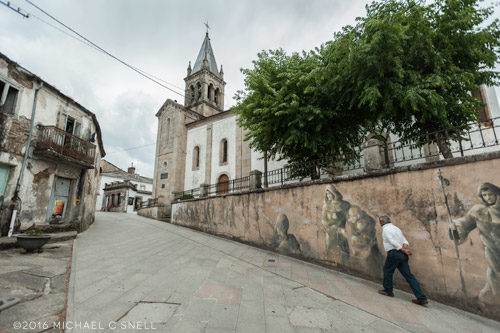
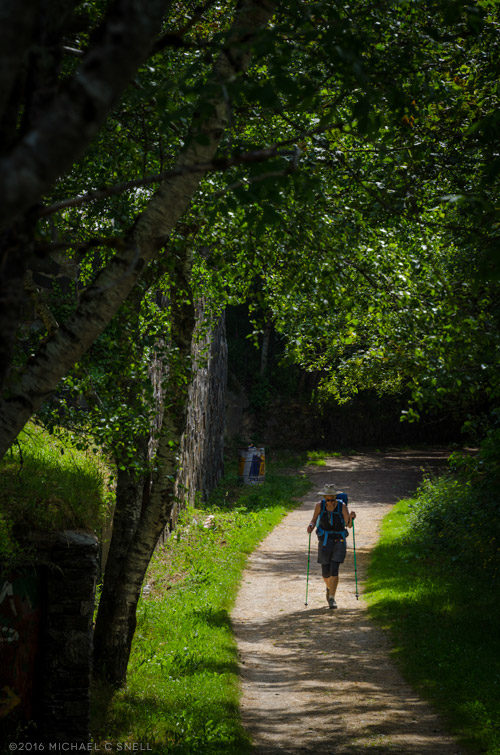
It was lightly raining when I arrived in Sarria, but I still took advantage of the opportunity to walk the Camino for a short distance to get a better feel for the route at a human scale.

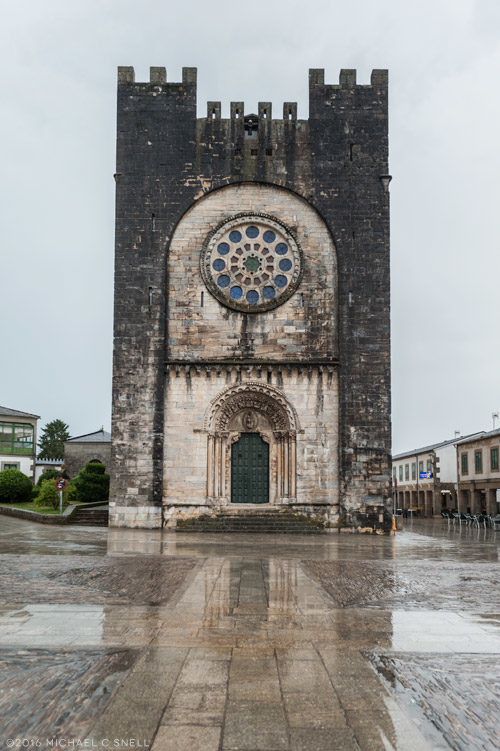
The rain was coming down a bit harder as we arrived at the next stop, the Church of San Xoán (or Saint John) in Portomarín. This fortress-like church was moved piece by piece to higher ground when the Belesar reservoir was built in the 1960s so that it wouldn’t be lost when the waters rose.

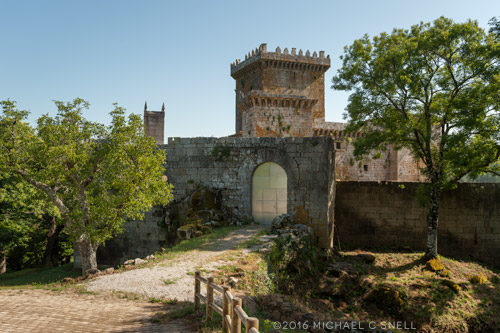
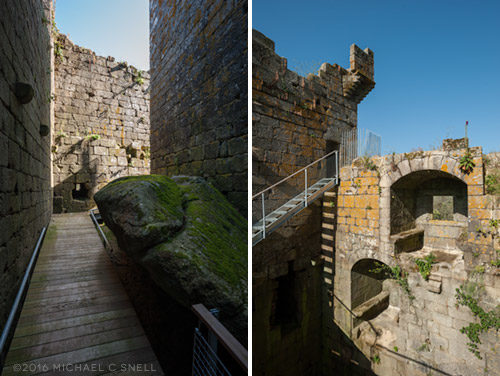
The following morning we continued along the route, making our first stop at the 14th century Pambre Castle, one of the best preserved medieval fortresses in Galicia. It is currently being restored.

In the next post, we’ll explore the last stretch of the French Way and visit the Cathedral of Santiago de Compostela.

The Camino – the French Way

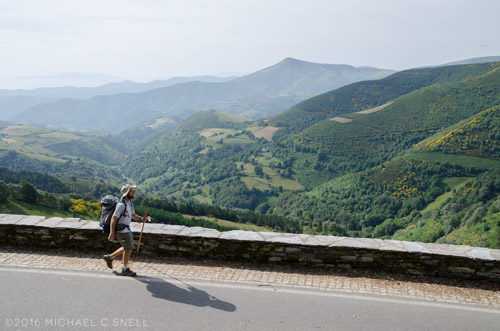
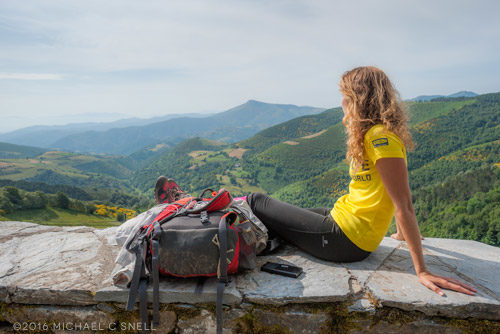
My first full day in Spain’s Galicia region began where pilgrims first enter Galicia when taking the French Way route of the Camino de Santiago. If they started on the French side of the Pyrenees mountains, they have already walked (or biked, or ridden horseback) hundreds of miles. The view from the entry point at O Cebreiro is quite a reward:

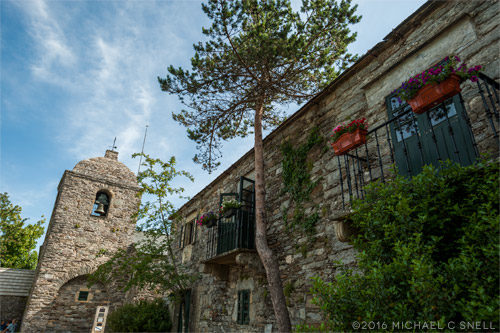
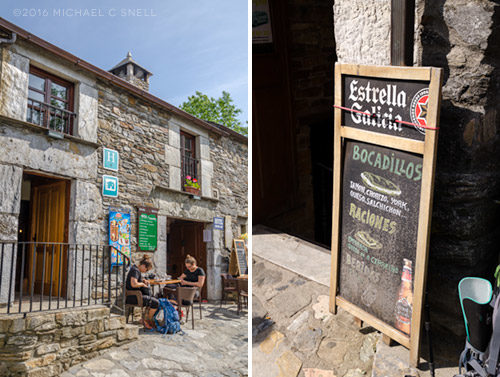
The small village is home to the Church of Santa María la Real (above) and provides services for pilgrims to rest, grab a sandwich, spend the night, and just enjoy the welcoming view of this green corner of Spain.

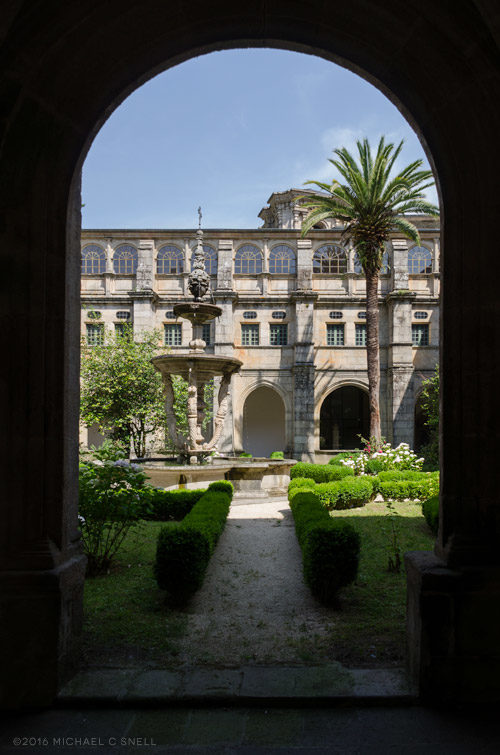
Next stop for me was the Monastery of St Julian of Samos. The building burned in 1558 and again in 1951 but was rebuilt both times and remains an active Benedictine monastery.

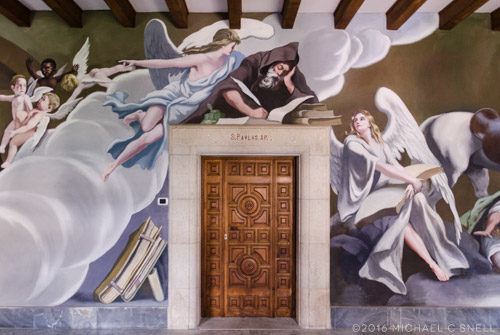
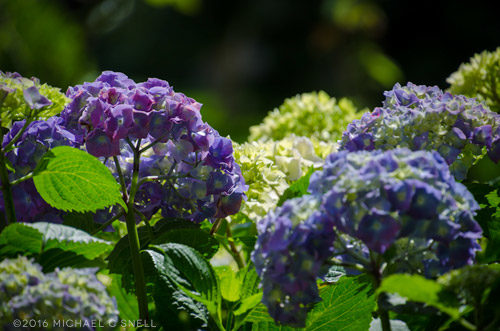
The hallways are covered in murals painted in a variety of styles and the gardens, at the time of my visit in July, were filled with blooming hydrangeas.

In the next posts, we’ll visit the town of Sarria and several other important sites the road toward Santiago de Compostela.