Category Archives: tourism

Mar Menor, the “minor sea” of southeastern Spain

141111marmenor01_sotc

It is said that Esther Williams called Spain’s Mar Menor “the largest swimming pool in the world.” In fact, it’s a large body of shallow, warm water separated from the Mediterranean by a narrow strip of sand called La Manga. La Manga is just wide enough in places to allow for a road and beachfront properties on either side. If you’re the kind of person that likes the idea of seeing the sun rise over water out one window, and later watching it set — over water — out another, then this is the place for you.

141111marmenor02_sotc

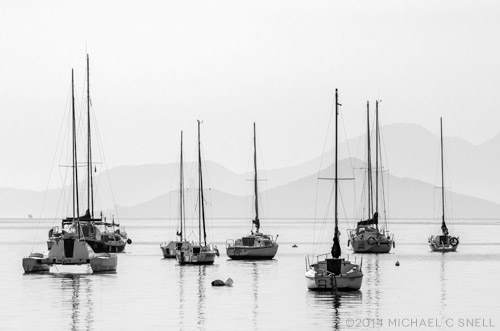
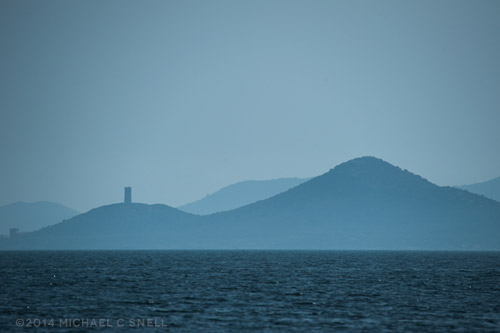
Visiting in October, La Mota beach at San Pedro del Pinatar was not overly crowded although I’m guessing that may not be the case at other times of the year. With a marina and mountains in the distance, Mar Menor provides a calm setting for a day in the sun. There are also docks at the adjacent salt marshes (just down the promenade, past the windmill and opposite the beach) where you can cover yourself in the “medicinal muds”, which are said to assist in everything from skin problems to arthritis.

141111marmenor04_sotc

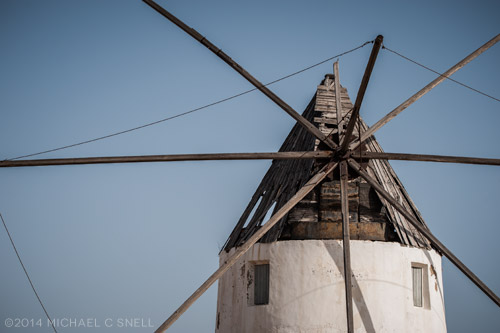
Ezequiela’s windmill lends a decidedly Spanish accent to the La Mota beach area of San Pedro del Pinatar.

141111marmenor03_sotc

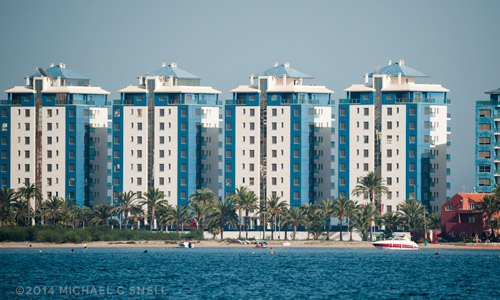
Taking the ferry across Mar Menor to La Manga gives you an idea of the scale of this body of water, and offers a seaside view of many of the resort towers that line the shores.

141111marmenor05_sotc

141111marmenor06_sotc

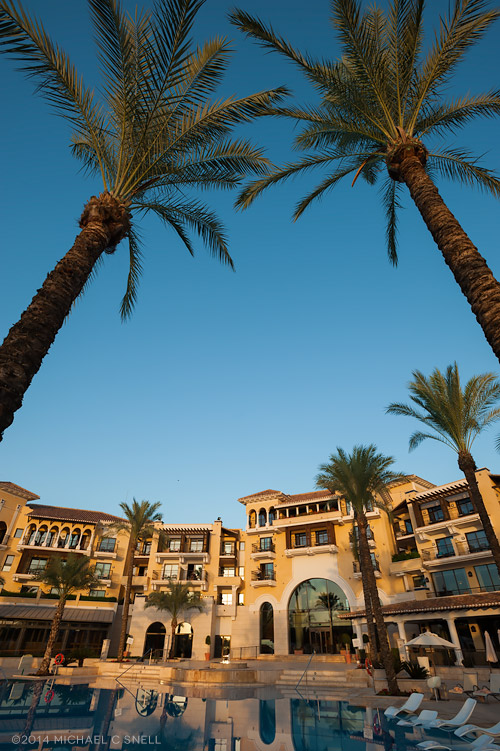
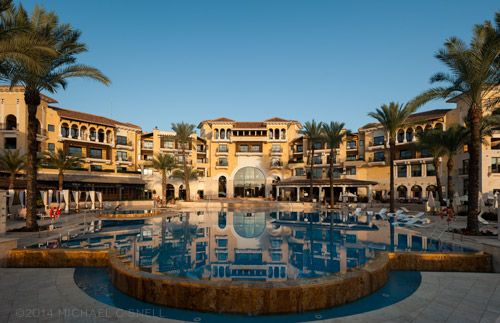
My home for the night would be the nearby Intercontinental Mar Menor Golf Resort & Spa, which could be a destination in and of itself.

141111marmenor08_sotc

141111marmenor07_sotc

141111marmenor09_sotc

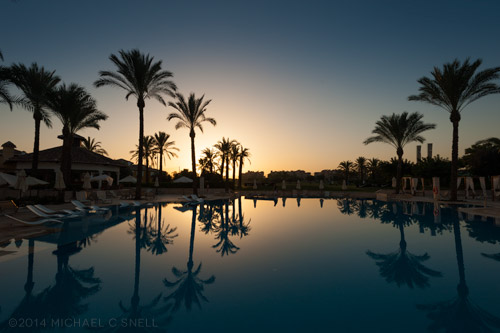
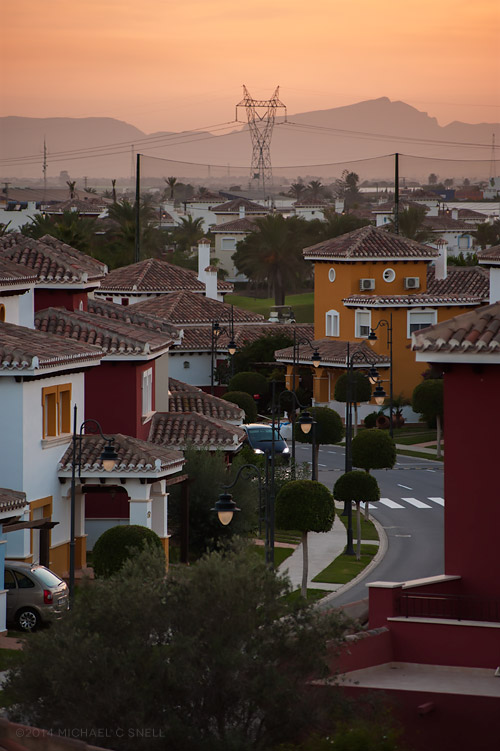
My room overlooked the pool to the right, and the beautifully designed housing development that surrounds the resort, to the left (below). I photographed the sunset, had yet another phenomenal Spanish meal, and went to bed looking forward to another day of exploring the region of Murcia in the morning.

141111marmenor10_sotc

Pamplona, Spain

140816pamplona06_sotc

In my last post, I wrote about the running of the bulls during the San Fermin Festival in Pamplona, Spain. There is so much more to San Fermin, so much more to Pamplona, that I want to devote a few more posts to the city and the festival — beyond the running of the bulls. Don’t get me wrong — the encierro was a spectacular and exciting event to witness. But there was so much more to love about Pamplona during festival time.

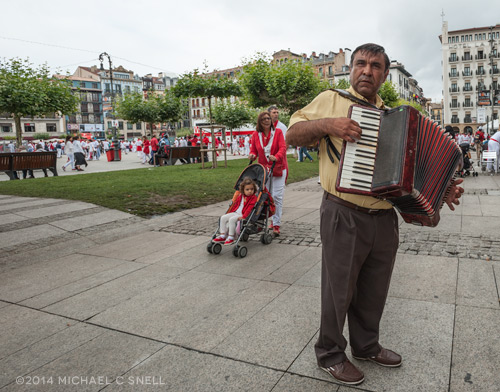
Here, an accordion player serenades diners in the sidewalk cafes lining the Plaza del Castillo:

140816pamplona05_sotc

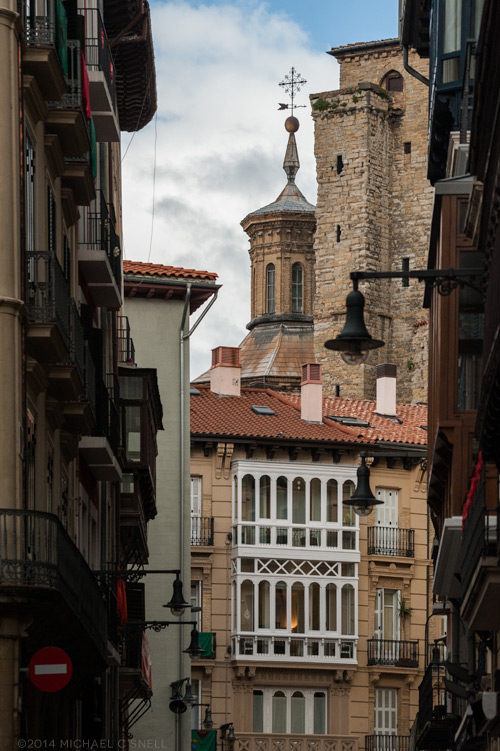
In this post, I’ll introduce the city of Pamplona itself and I’ll get into other aspects of San Fermin in the following posts. Pamplona is a beautiful city with a wonderful old sector that rose tall over the years — often to six or seven stories. The need to grow upward came from this being a walled city that, for a long period, did not expand outside those walls. The narrow streets are shaded even throughout the hottest parts of the day and there is a sort of natural air conditioning that occurs. This, I’ve been told, because the week I spent there was unseasonably cool anyway, with highs only in the lower 80s F.

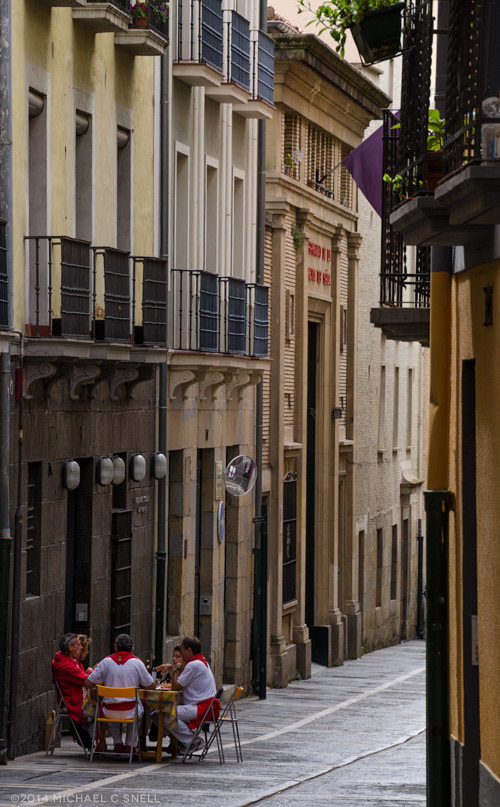
During quieter parts of the Festival, some locals have family meals in the streets, using the narrow spaces as extensions of their own dining rooms:

140816pamplona02_sotc

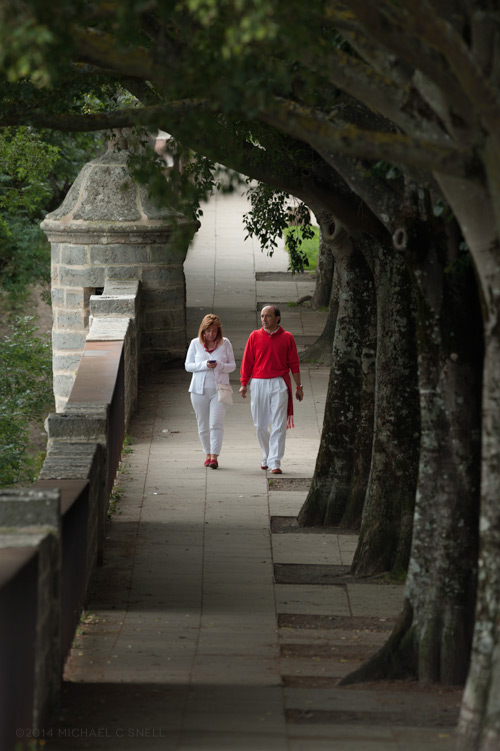
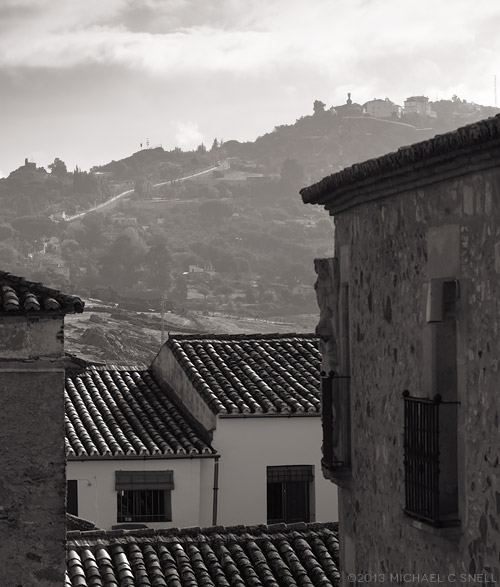
Back to the city walls — they still remain and there are beautiful wall walks in many areas that offer stunning views of the hills beyond the newer parts of the city.

140816pamplona07_sotc

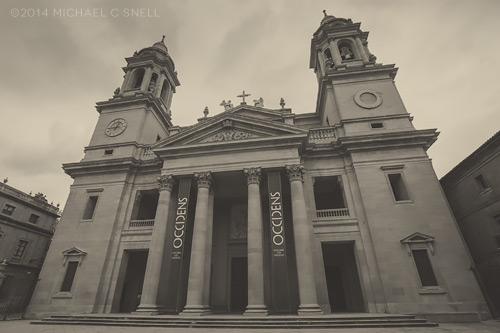
Another great stop is the 15th century Cathedral of Royal Saint Mary:

140816pamplona03_sotc

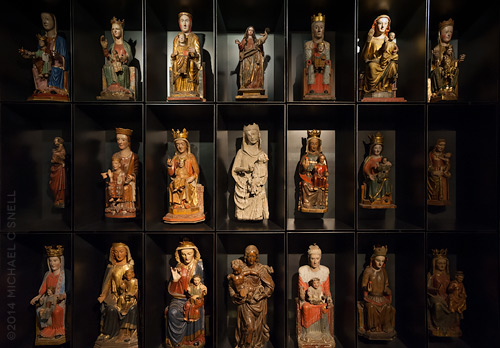
This cathedral is actually available for events with an incredible variety of interior spaces. It also houses the OCCIDENS exposition, an unconventional museum of western civilization. Each gallery is uniquely designed and as engaging as the objects displayed within.

140816pamplona04_sotc

Pamplona would be a wonderful spot to visit even outside of the San Fermin Festival with surprises and wonders around every corner. The narrow, winding, sometimes hilly streets conceal and reveal with each step.

140816pamplona01_sotc

140816pamplona08_sotc

The running of the bulls, Pamplona, Spain

140815bulls07_sotc

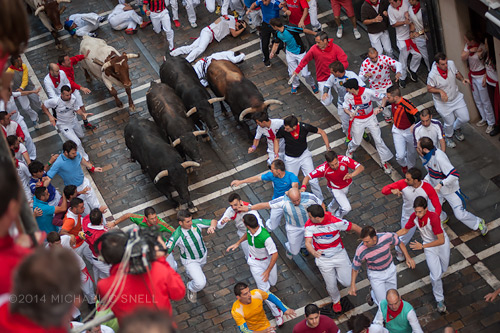
I have photographed bovines in abundance this summer, but the pinnacle may have come in early July when I went to Pamplona, Spain, for the San Fermin Festival and the running of the bulls. The  spectacle of people running through these crowded streets alongside bulls that are being driven toward the bullring was made famous by Earnest Hemingway in his 1925 novel, “The Sun also Rises.” I read the book on the way to Pamplona and I have to say, I thought it was more about drinking and fishing than bulls, but I’m no literary scholar. The fact remains, because of Hemingway, everyone is now familiar with the running of the bulls in Pamplona. Which is a real shame, because I found other aspects of the San Fermin Festival to be at least, if not more, entertaining.

That said, when in Pamplona during San Fermin, you’ve got to see the running of the bulls, known locally as the encierro. And it is worth it. I was able to go three days in a row (the encierro is at 8 a.m. every morning from July 7-14) and would have happily gone again. As a photographer, it’s a difficult event to shoot in one try. The entire run takes just a few minutes and you can’t see the entire course from any one vantage  point so the action literally passes by you in seconds.

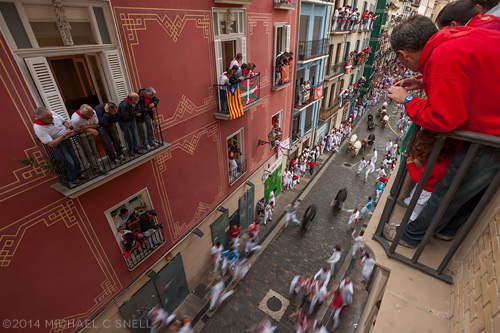
For my first encierro, I had a spot on a balcony of the City Hall. It was near the beginning of the run, as the bulls are coming up a hill and entering a public square to make a sharp left. Here was my view from that vantage point:
140815bulls01_sotc

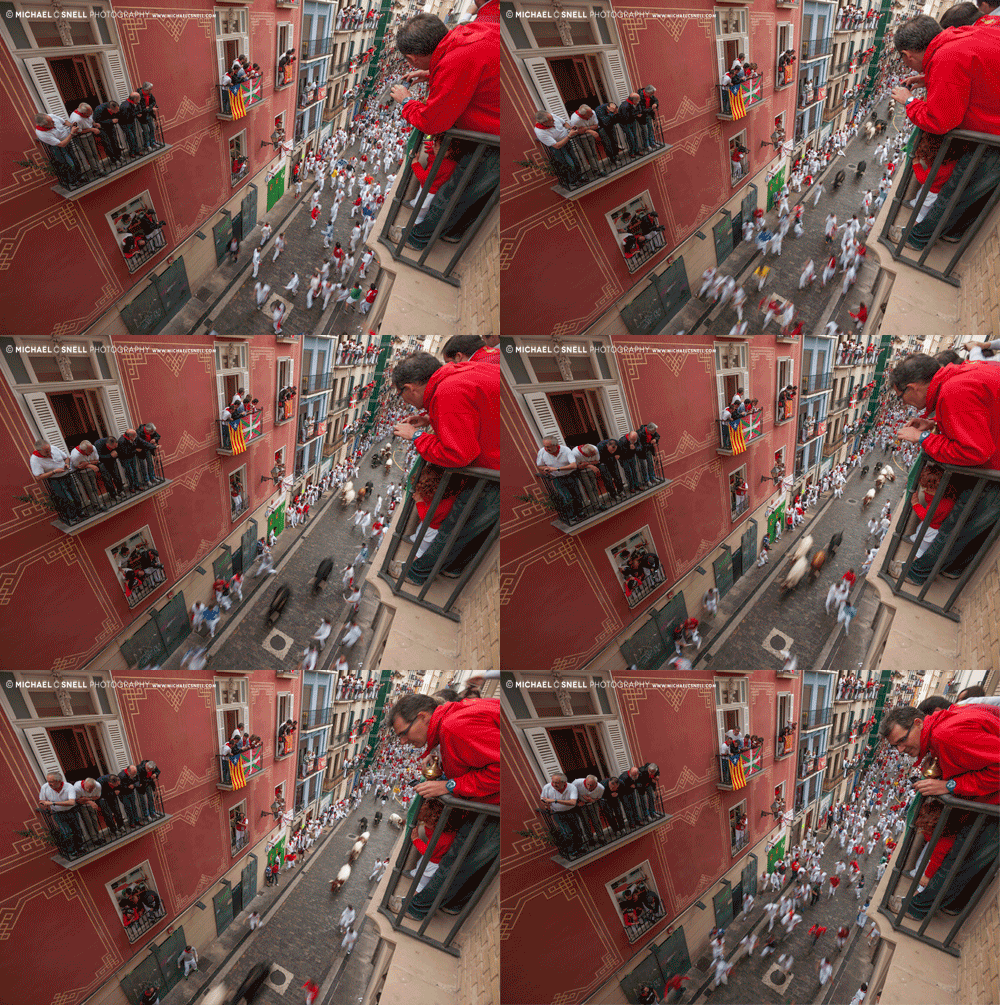
Better yet, here’s a looping animation of several frames I fired off on that first day:
140815bullanim_sotc

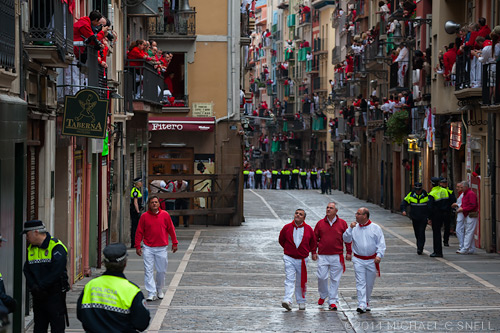
That was a great start, but I was really looking forward to my second day, when I had a pass to be in the barricade at street level. This is a narrow space between the temporary fence that holds the general public back and the fence that separates you from the route itself. The only people allowed in this gap are credentialed journalists, police and emergency medical personnel. But, you can’t just stand in there. To photograph the event, you need to be straddling the fence itself so that you leave the space below the bottom rail open. That way if (when) runners fall, they can roll to safety without your feet being in the way.

Here’s a shot from that vantage point as the route was getting one final inspection:
140815bulls04_sotc

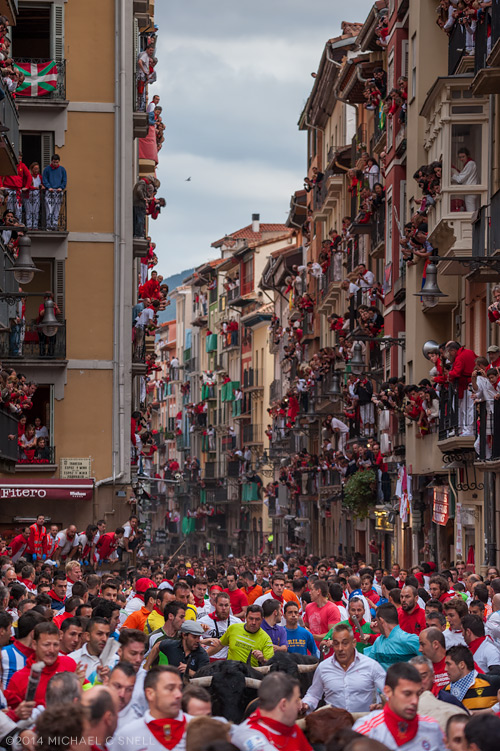
A few moments later, the runners — and bulls — arrived:
140815bulls02_sotc

I love the telephoto compression that came from using my Tamron 150-600mm zoom here, but the runner’s bodies nearly obscure the bulls altogether. If was difficult to even tell if the bulls were in the frame through the viewfinder so I just continued to shoot and hoped for the best. Upon later inspection of the images, this one was among my favorite.

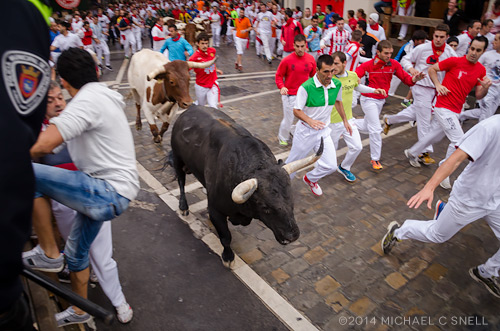
Once the bulls were too close for the telephoto, I had one last — quick — opportunity to grab a few wide-angle shots as they passed:
140815bulls03_sotc

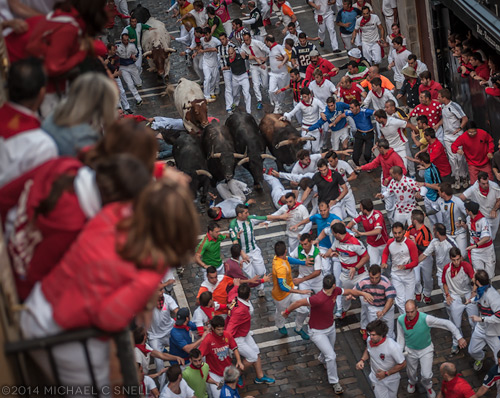
My third day and third encierro found me back on a balcony, this time one floor higher and on the street that makes for the longest straightaway during the run: Calle Estafeta:
140815bulls06_sotc

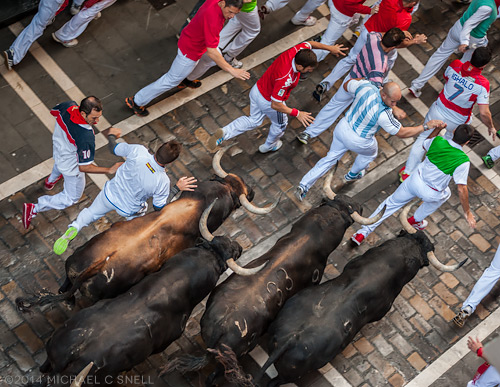
This view allowed me a little more time as you could track the bulls approaching and passing by. It also appeared to be a fairly chaotic spot on this particular day, with lots of runners falling, but no serious injuries. One last shot from the balcony as the bulls pass by:
140815bulls08_sotc

I have a new found respect for the photographers that get those great shots that you see of this event. It’s certainly a skill that must be honed with experience in order to know where best to be and how best to handle each location. I enjoyed myself thoroughly, though, and would have gladly gone back for a fourth day.

In the following posts, I’ll feature more of the events that make up Pamplona’s San Fermin Festival. As I mentioned before, there was so much more than just the bulls. Stay tuned and I’ll show you what I mean.
Dodge City Days

140806dodge04_sotc

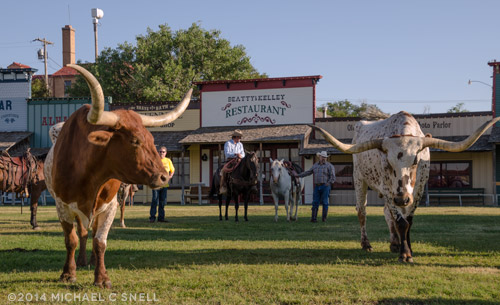
I had a great time covering Dodge City Days last weekend. The town of Dodge City, Kansas has a great history as a prominent old west cowtown and the setting for many an old west tale — some true, some not. I spent a fair amount of time here as a kid so it was great to return. I’ve actually done quite a bit of work in the area over the past few years but this time was more nostalgic as many of the Dodge City Days events were things I did here as a kid. Here are a few, random shots from this year’s Dodge City Days events:
140806dodge01_sotc

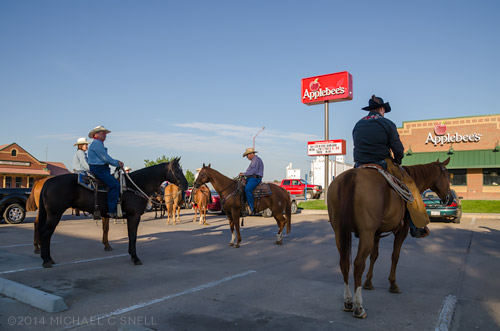
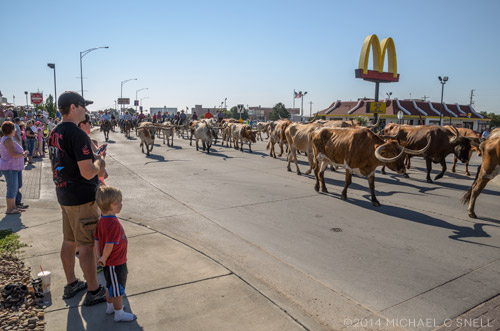
While not part of an actual “event,” this was the scene as riders were waiting to begin the world-record-attempting longhorn cattle drive down Wyatt Earp Boulevard. I loved the way the horses appeared to be “parked” at Applebees. Only in Dodge.

140806dodge06_sotc

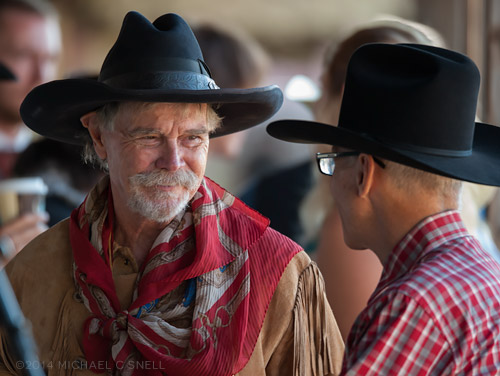
Actors from the old television series “Gunsmoke” and “The Rifleman” were on hand to help celebrate Dodge City Days this year.

140806dodge07_sotc

140806dodge08_sotc

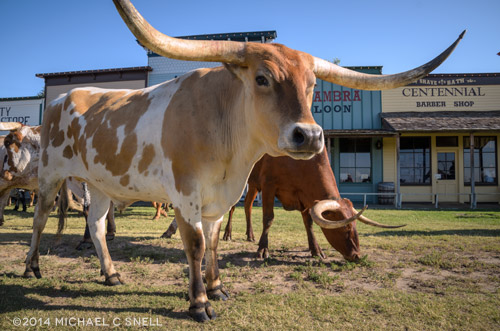
A tough route for the longhorns, as the cattle drive moved them past several fast-food burger places.

140806dodge10_sotc

140806dodge09_sotc

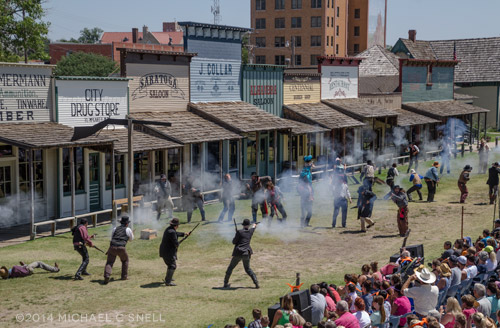
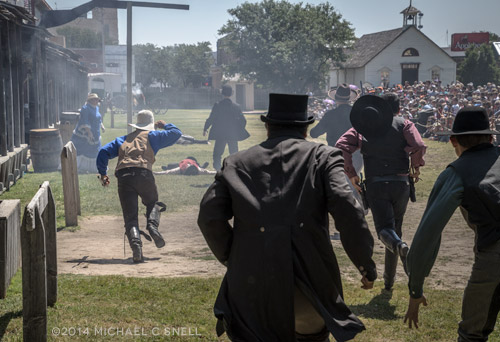
With the cattle moved off of Front Street, it’s just a matter of time before there’s trouble. Daily gunfights are re-enacted here for tourists. These during Dodge City Days were well-attended by both gunfighters and visitors.

140806rodeo04_sotc

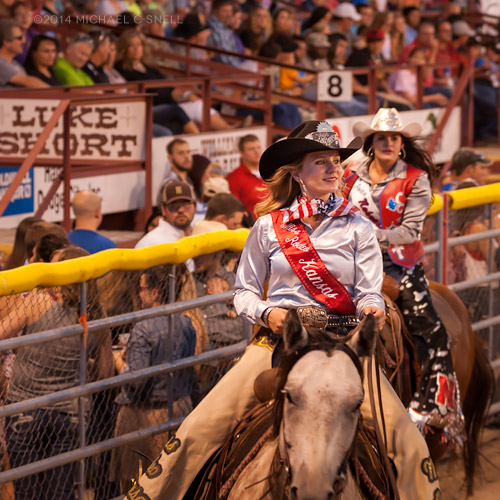
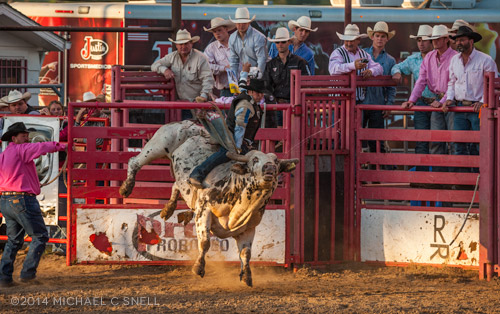
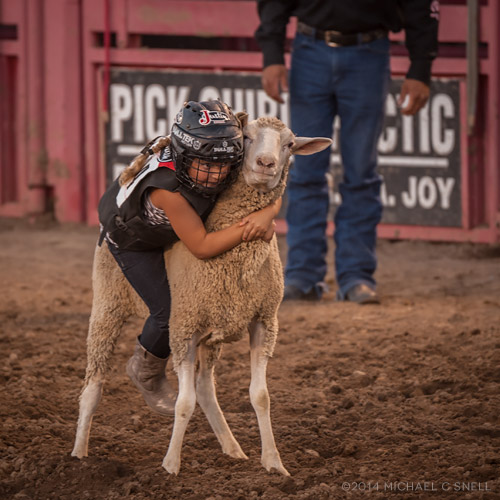
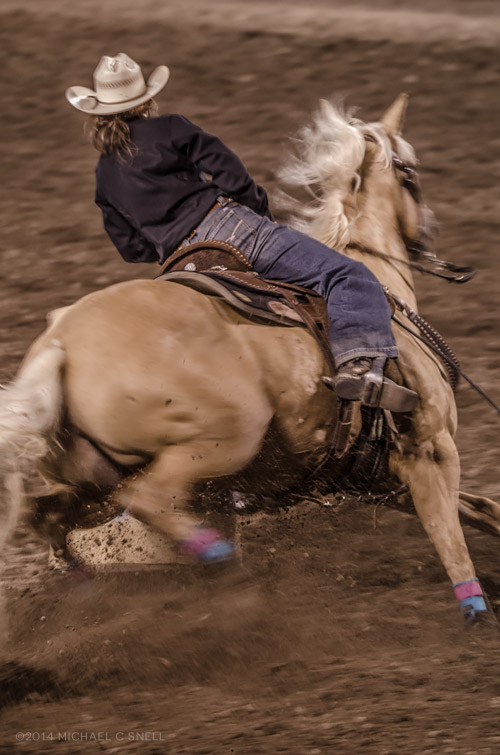
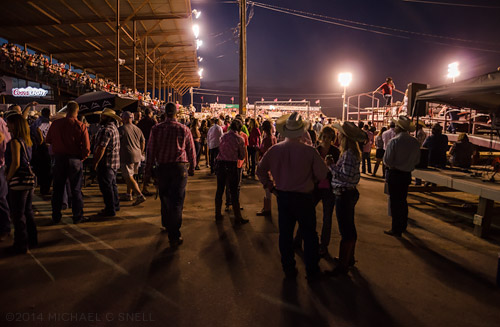
I ended both Friday and Saturday evenings at the Dodge City Round-Up Rodeo. I love shooting these events. The weather was great, and there was tons of action.

140806rodeo03_sotc

140806rodeo02_sotc

140806rodeo05_sotc

140806rodeo01_sotc

Almuñécar, Spain, on the Tropical Coast

140630almunecar01_sotc

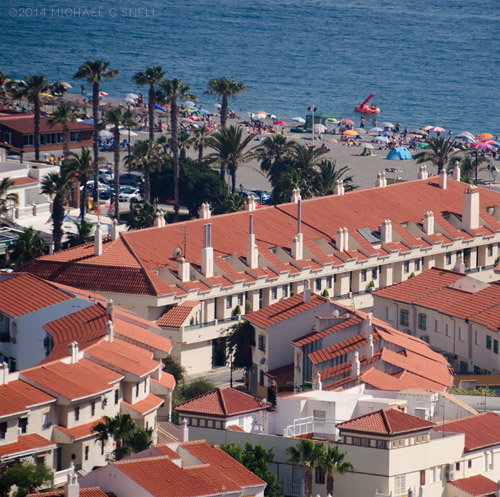
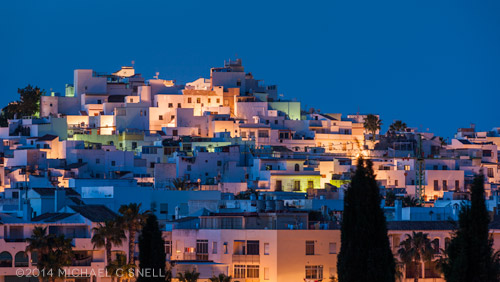
Almunecar, Spain, sits on the Mediteranean Sea, fringed with palm trees. At first glance, it seemed the kind of place I could have spent a lot of time. Happily. We’d had a busy day along the Tropical Coast, however, and we were running a bit late. Sunset was not far off when we arrived in town. I had mapped out a couple of promising looking spots on the beach to photograph the last light and I was rushing to get checked in to the Hotel Suite Albayzin del Mar. The hotel is a spectacularly mirrored palace with sprawling gardens. When I was given my room key, it came with an elevator number, a floor number and the room number. It seems that each elevator only served about four rooms per floor and there weren’t connecting hallways beyond that. When I arrived at my room, I realized the elevator was not the only thing special about this hotel.

140630almunecar02_sotc

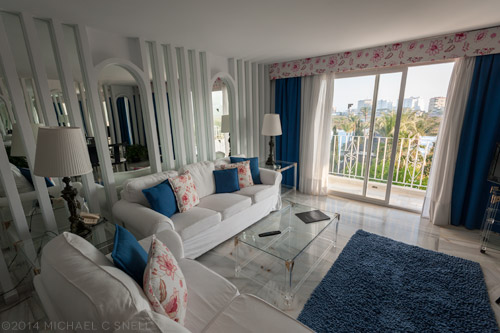
The rooms — no, suites — were enormous. This is just the living room half of my main room with a full dining area to the right, out of frame. I opened one door, expecting to find the bathroom and realized it was a full kitchen, with an extension that served as a laundry room. Another door led to a hallway opening onto a bath and two bedrooms. All along the sea-side of the room was a balcony. I dropped by bags and rushed out to assess the situation regarding the remaining light.

140630almunecar03_sotc

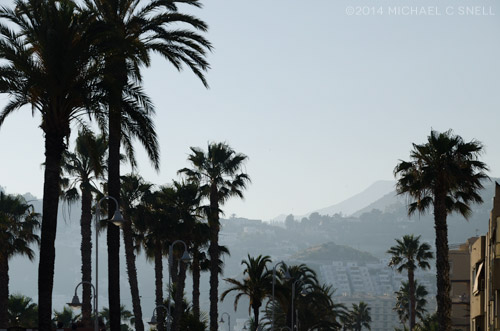
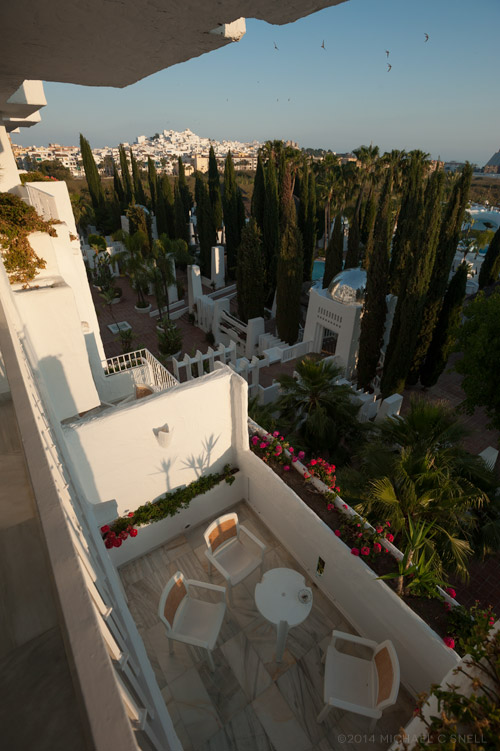
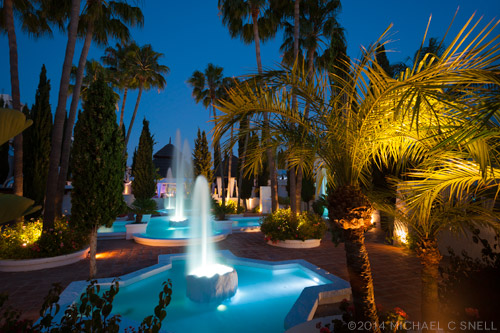
Out on the balcony, the view to the old town was stunning, as were the pools, fountains and gardens of the hotel property.

140630almunecar04_sotc

Looking west, I could see that the sun was already dipping behind a hill, so my time with any remaining sunlight was very limited. I decided to ditch my plans to head for the beach, and I made an executive decision to make what photos I could from the balcony and other parts of the hotel property.

140630almunecar05_sotc

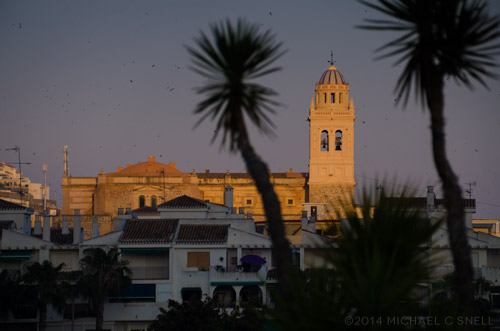
As it turned out, I didn’t feel overly limited in subject matter. I loved this view through the trees of the old church catching the last rays of the sun. That was made from a raised area above and behind the pool seen below.

140630almunecar06_sotc

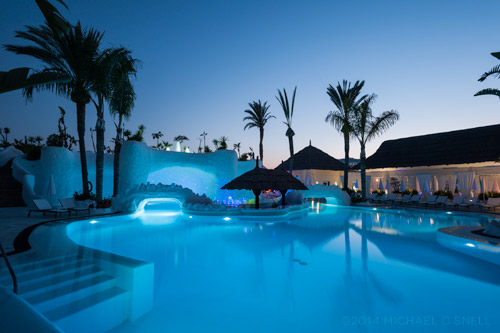
The pools themselves were amazing. This one had a sunken bar in the middle and a grotto filled with twinkling lights.

140630almunecar07_sotc

I dashed around the property taking time-exposures on the tripod until the light failed and my battery was dead. It wasn’t the evening that I had expected, but it was a productive one and I had enjoyed myself immensely.

140630almunecar08_sotc

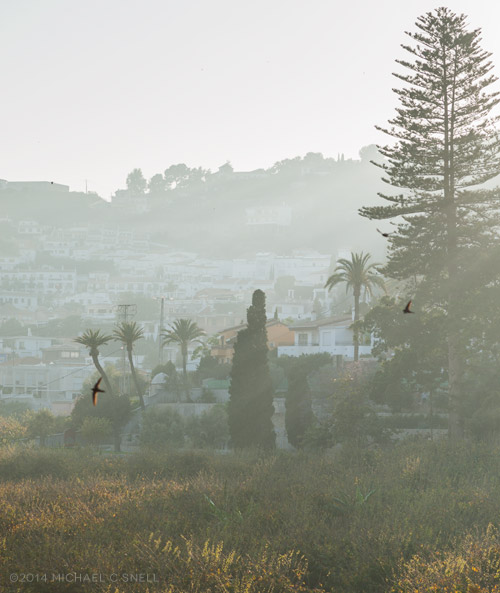
The next morning I was up before sunrise and caught some more beautiful views of the old city to the east of the hotel. Not long after, I was back in the van and headed to the next town.

Spain’s Tropical Coast

140627rum_sotc

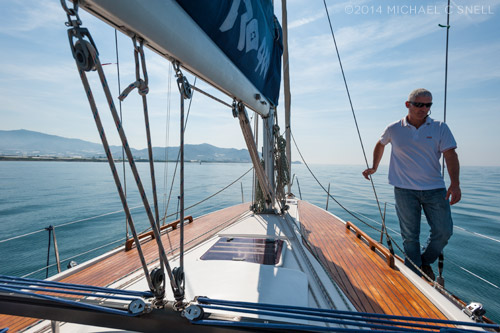
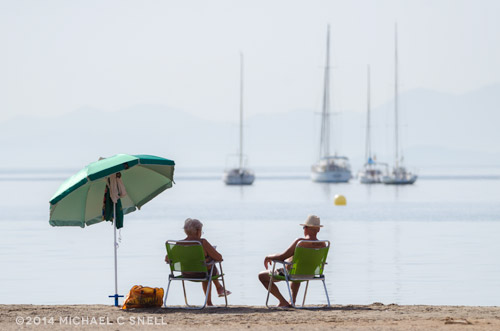
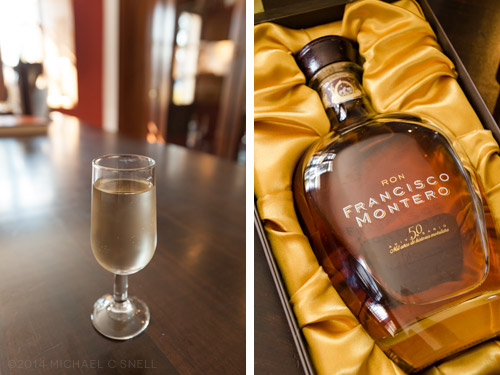
This may be difficult for some of you to read, but I’m not looking for sympathy. The truth is that my career path sometimes requires me to start the day with a rum tasting in the south of Spain and then spend the remainder of the morning on a sailboat in the Mediterranean before having a banquet of fresh seafood on the beach. It’s an uncomfortable truth. I could have been an accountant, but this job needed to be done and I felt I could handle it. I’m not complaining.

140627boat02_sotc

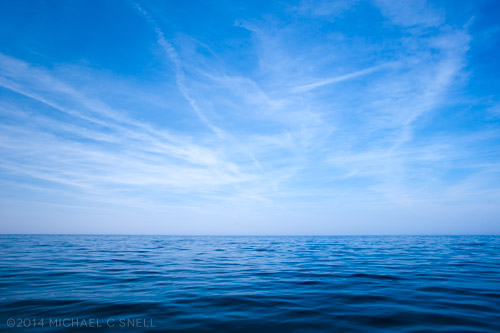
The blue Mediterranean off the coast near Motril, Spain.

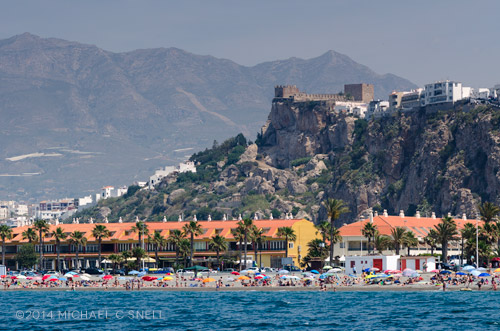
140627boat01_sotc

140627boat04_sotc

Sailing past Salobreña, with its 10th-century Moorish castle rising up behind a beautiful beach where we were soon to have lunch overlooking the sea.

140627coast01_sotc

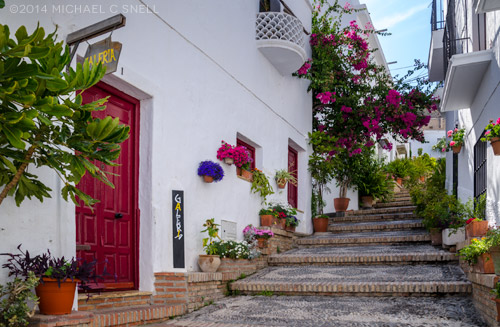
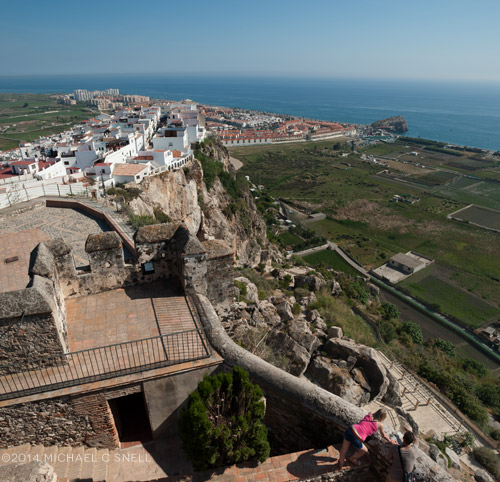
After lunch, it was a trek up the winding streets and steps of Salobreña’s old town to reverse our view and see the Mediterranean from the Moorish castle.

140627coast04_sotc

140627coast05_sotc

140627coast03_sotc

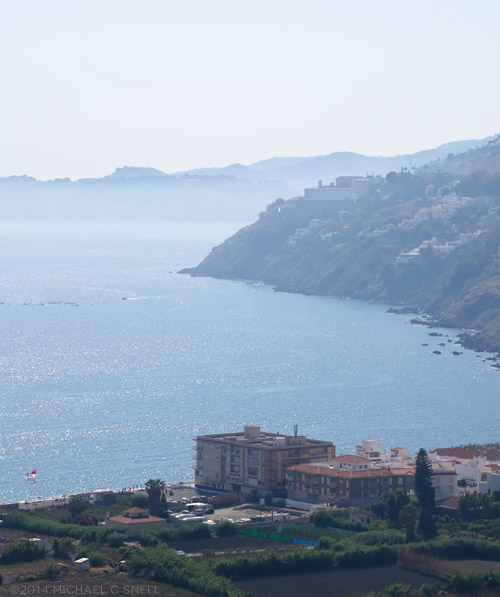
Looking further west down the coast toward Almuñecar, our stop for the night and the subject of my next post.

Roman ruins, Merida, Spain

140109merida01_sotc

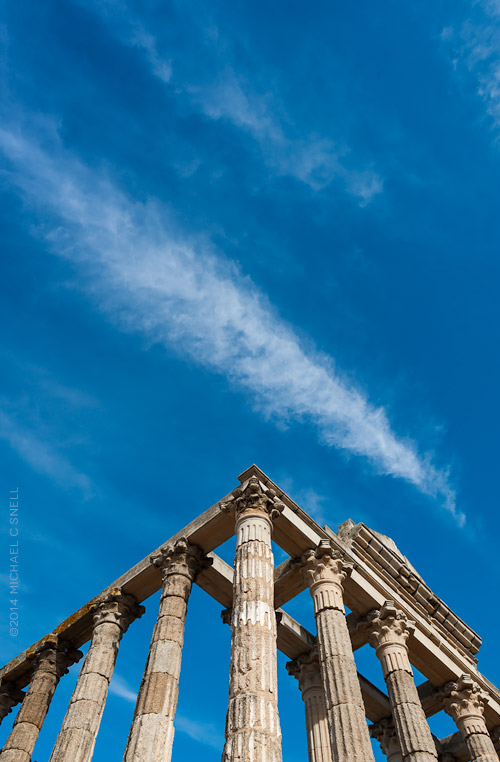
The Temple of Diana, just one of the many Roman ruins scattered about Merida, Spain. Founded in 25 BC as “Emerita Augusta,” this is an old city with layers and layers of history. Here are just a few examples, all in easy walking distance of the city center.

140109merida07_sotc

The Arcade of the Forum.

140109merida02_sotc

140109merida03_sotc

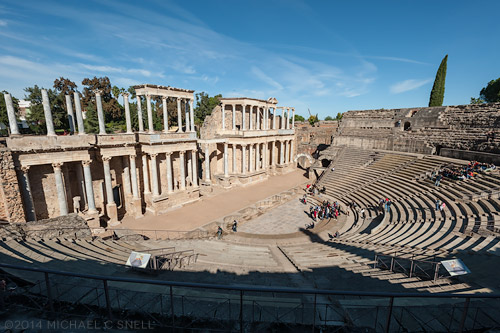
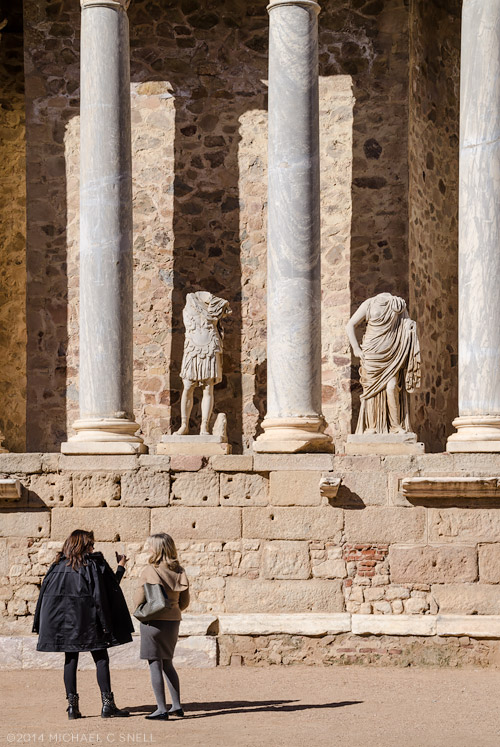
The Roman Theater in Merida. I liked the contrast of the human and marble figures in the second shot.

140109merida04_sotc

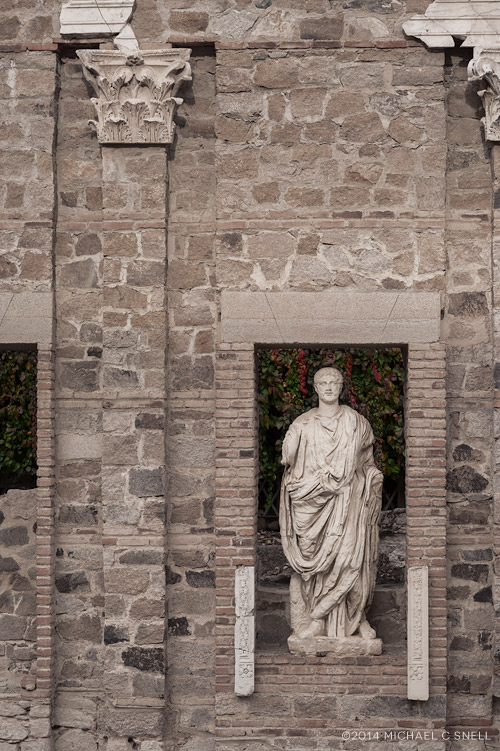
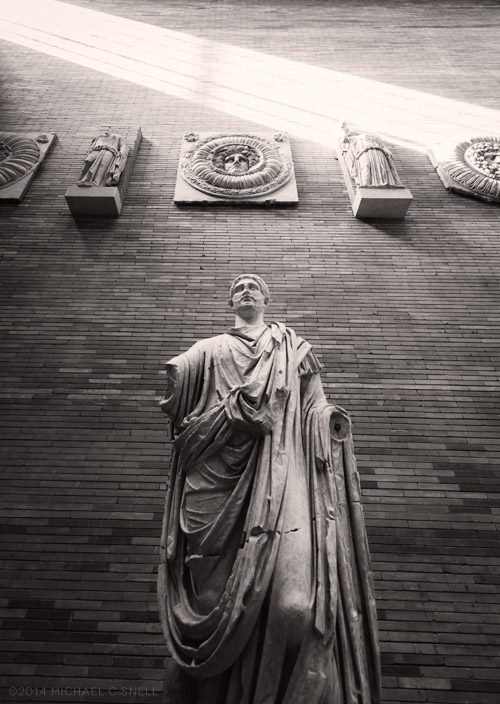
Statuary inside the Museum of Roman Art, just across from the Roman Theater. The architecture of the museum is nearly as interesting as the building’s contents.

140109merida05_sotc

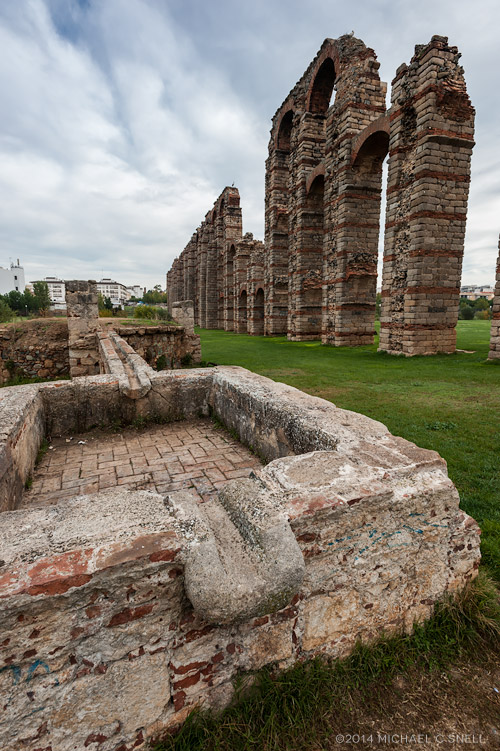
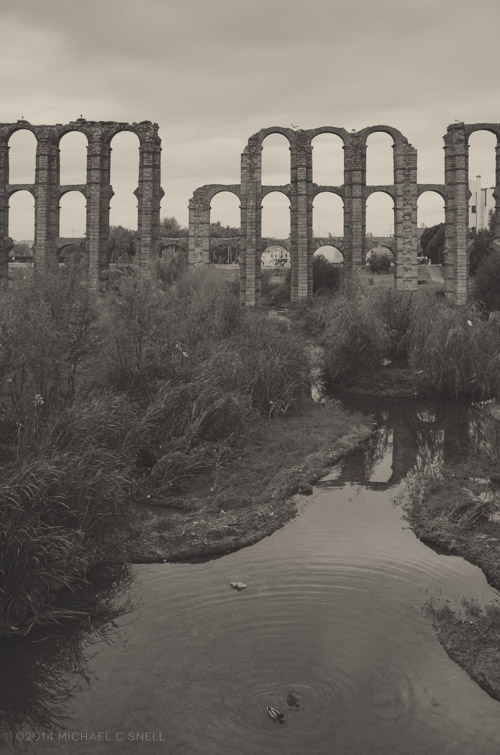
And, finally, two shots of the Miraculous Aqueduct — one of three in Merida. The quantity and scale of the ruins in Merida are stunning. There is plenty else to see in the city (I’ll share more images in my next post), but the Roman sites are easily reason enough for a visit. Learn more here.

140109merida06_sotc

Cáceres, Spain

131218caceres10_sotc

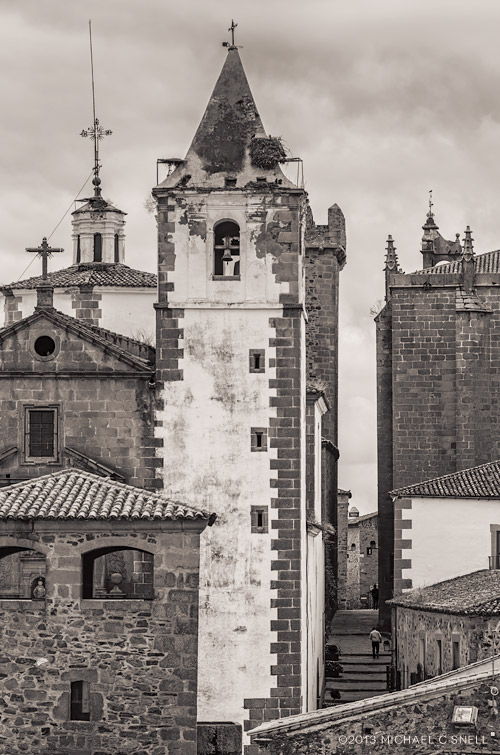
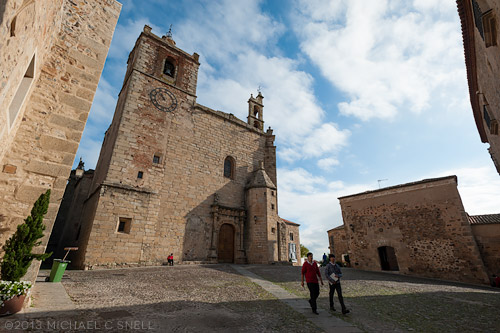
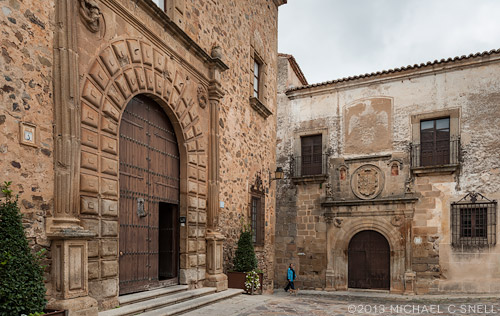
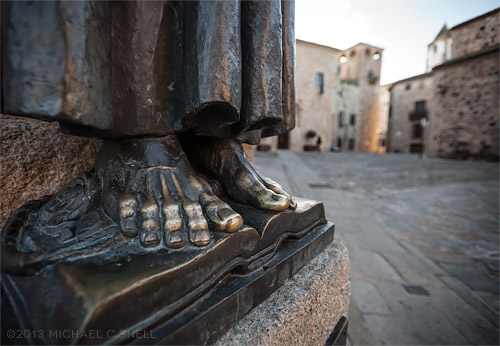
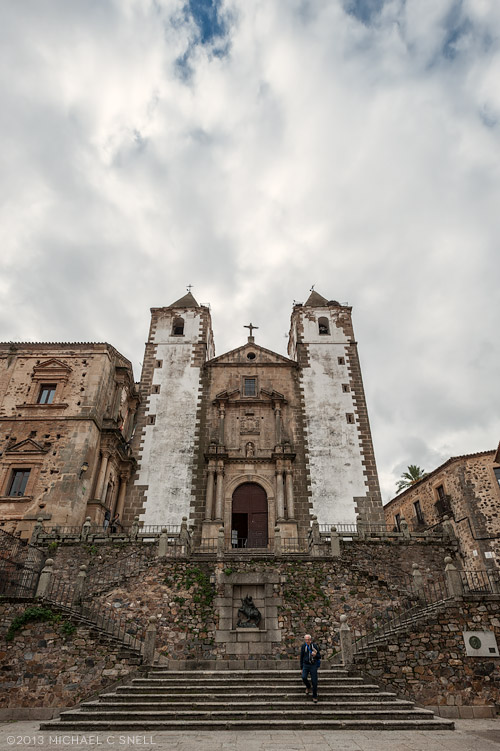
We spent two nights in Caceres, Spain – the only time on the trip that we would have more than one night in one place. Even so, having a full day in this city was not enough. The old, walled portion of the city alone (a UNESCO World Heritage Site) is worthy of several days of exploration.

131218caceres13_sotc

131218caceres14_sotc

131218caceres02_sotc

131218caceres03_sotc

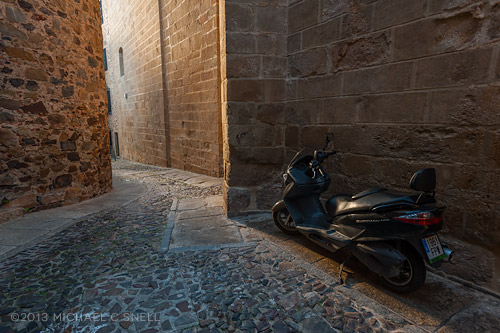
We arrived after dark so a pre-breakfast walk on my own was my first real chance to see this ancient city. I took a map with me, but enjoyed just wandering and getting lost a little, too.

131218caceres04_sotc

131218caceres05_sotc

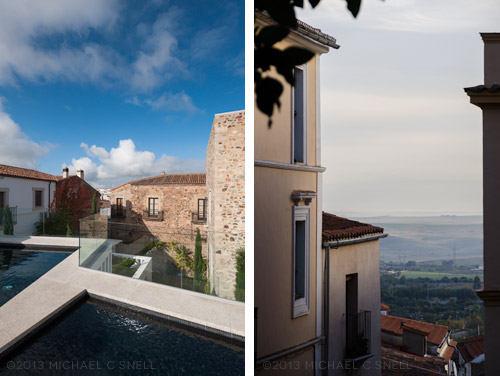
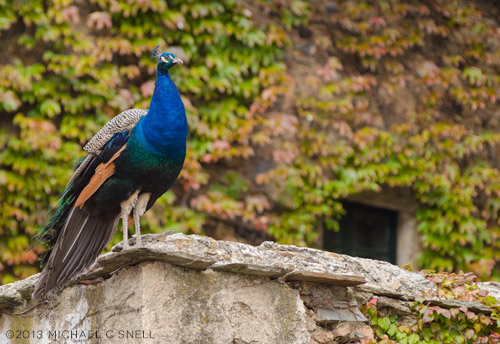
A quick tour of the Atrio Hotel and Restaurant revealed the dual roof-top pools (above left). And the peacock that seemed to live next door (below).

131218caceres06_sotc

131218caceres07_sotc

131218caceres08_sotc

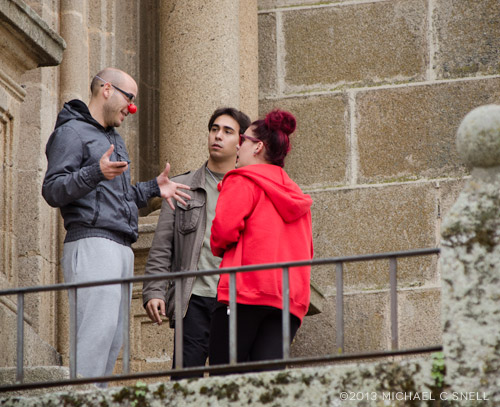
Some things, I have no explanation for (above).

131218caceres09_sotc

131218caceres15_sotc

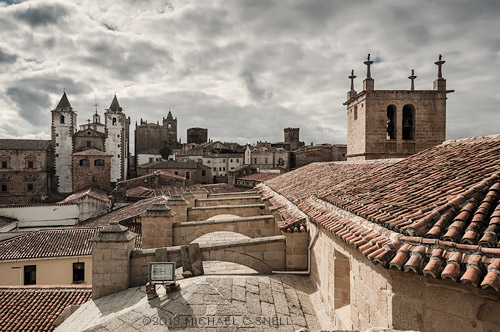
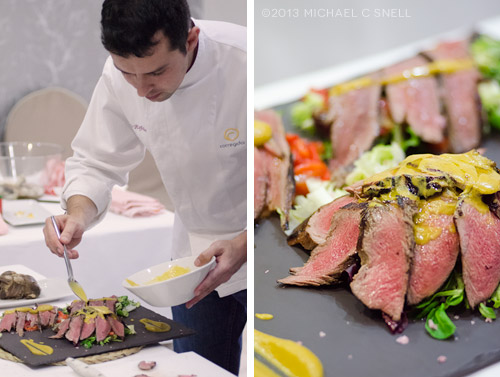
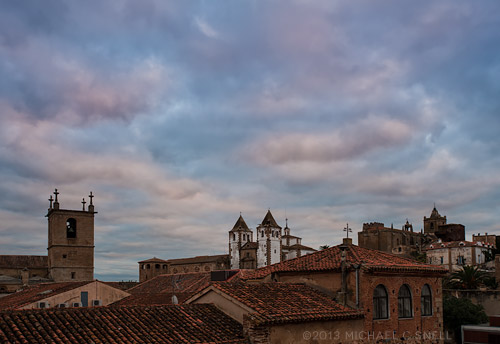
In the afternoon, we had a cooking demonstration at the Restaurante El Corregidor. Next time you fix wild boar at home, it should look something like this (above). Then, a few free moments to find a spot to try and catch the last light on the towers of Caceres:

131218caceres11_sotc

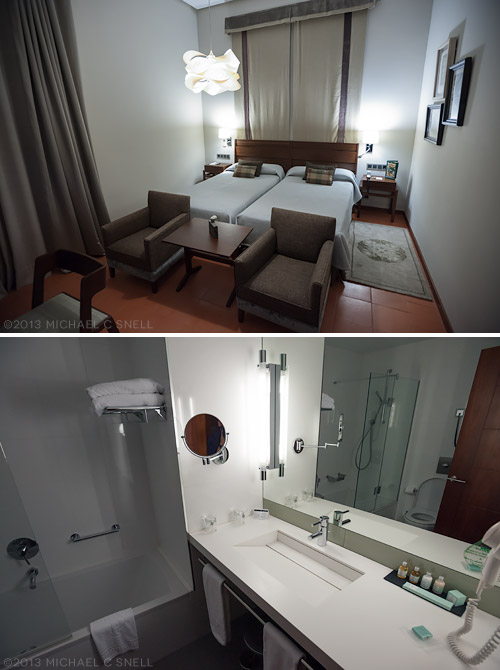
The Parador in Caceres was another stunner. This one built inside a Renaissance Palace. Here are a couple of quick shots from my room, so that you know I wasn’t suffering too much:

131218caceres12_sotc

I could have stayed much longer in this city, but there was more of Extremadura to see…

Plasencia, Spain

131208plasencia3_sotc

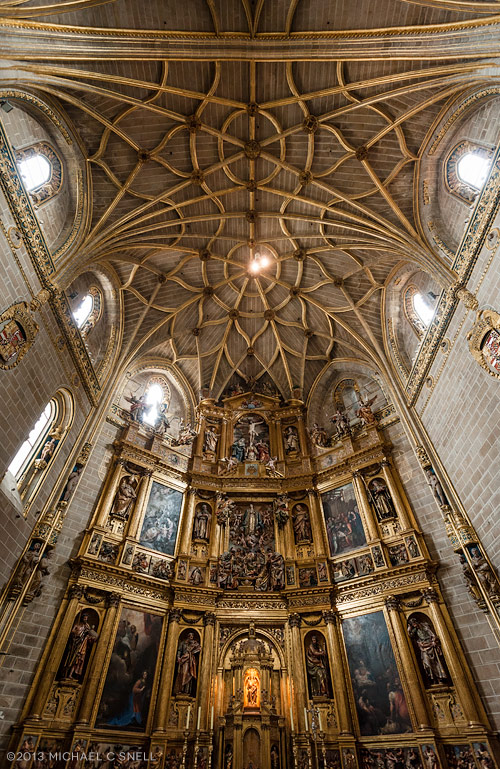
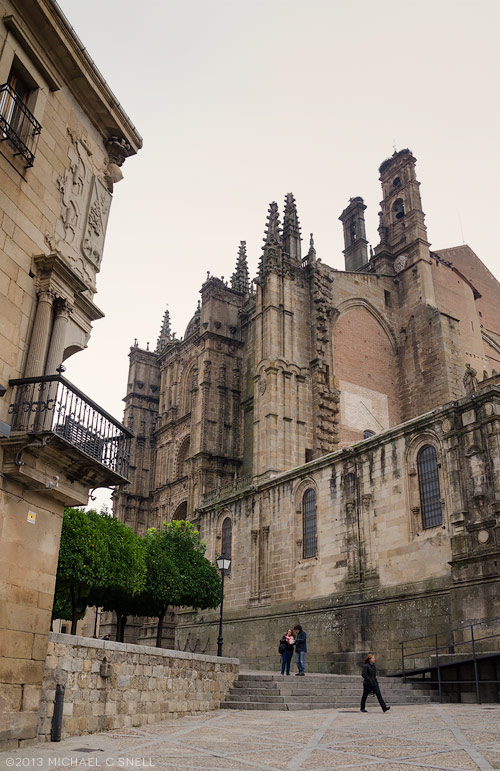
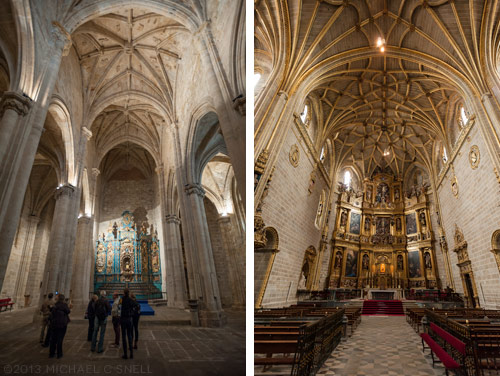
The Cathedral of Plasencia has to be one of the most interesting cathedrals I’ve encountered in my travels – and I’ve seen a fair number of them. What makes this one unique, is that it was originally constructed in the Romanesque style in the 13th century. Then,  in  the 15th century, a new construction was begun over the top of the old, replacing the original structure as the new one marched across it. Work halted in the 18th century with work only partially complete leaving two distinct interiors in one building.

131208plasencia1_sotc

Think of it as a 15th century whale slowly swallowing a 13th century fish, and time freezing mid-way through the process. In the photo above, the old structure is the lower portion on the right and the “new” section towers behind it with its unfinished back wall showing there the large arches are bricked in. Think of that as the mouth of the whale.

131208plasencia2_sotc

Inside you end up with two half-sanctuaries. The one on the left is the older of the two that would have been demolished had the construction continued. If you could see through the wall where the blue altar piece is, you’d see the new sanctuary that is pictured on the right.

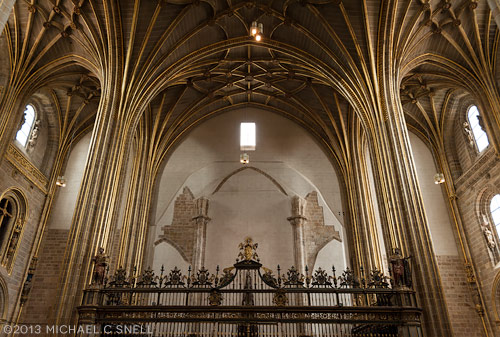
131208plasencia4_sotc

This is the back wall of the new sanctuary, and you can see the ghost of the old sanctuary fading through with its narrower colonnade and lower arch. This really shows the scale of the new cathedral compared to the old. Had the work on the new cathedral been completed, I think the building would tell much less of a story but, as it is, it’s a treasure for people interested in architectural history (as I am) because you can see two time periods and styles simultaneously. More than that, you can see the actual construction techniques where the the new construction stopped and pieces of the old cathedral can be seen being used as fill within the unfinished walls of the expansion. Definitely worth seeing.

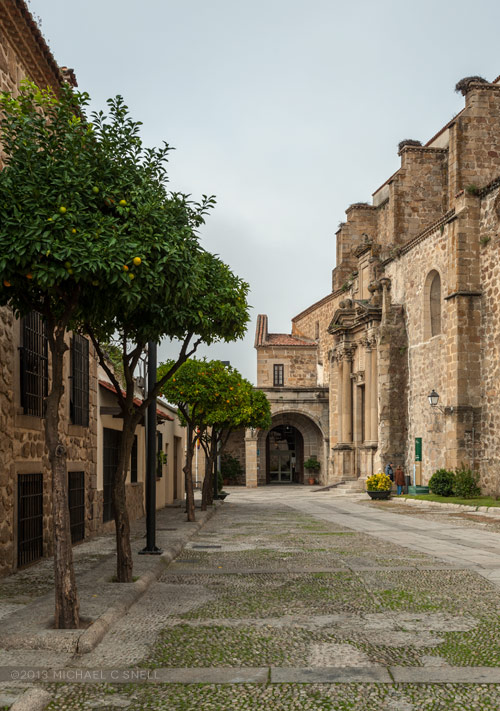
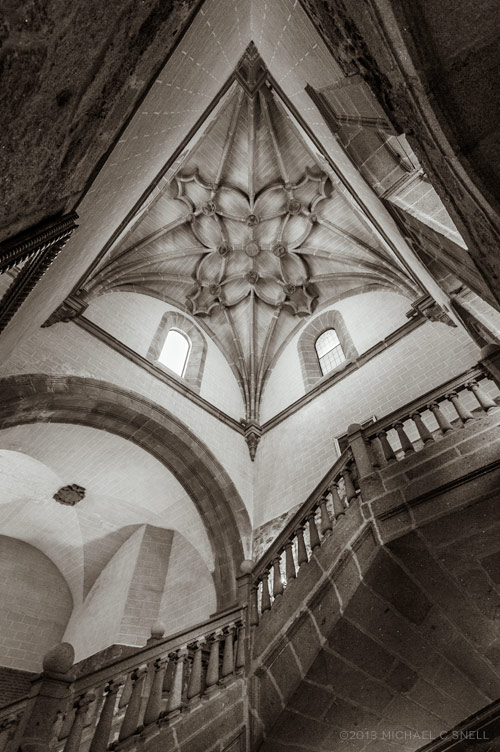
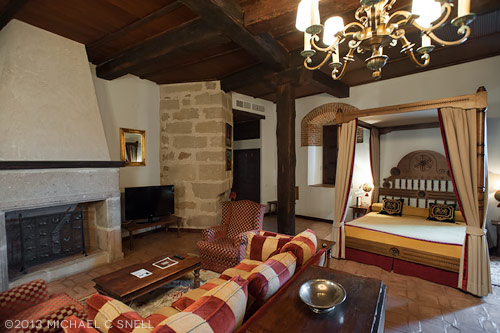
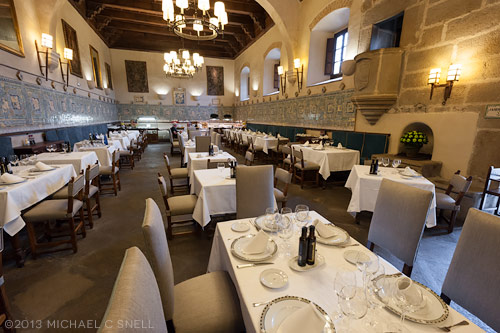
Also worth seeing – and experiencing – was our Parador for the night which was located just a short walk from the cathedral in former convent of Sto. Domingo, built in the 15th – 17th centuries. Here are a few photos of it, starting with the entrance:

131207plasencia1_sotc

131207plasencia4_sotc

131207plasencia6_sotc

131207plasencia7_sotc

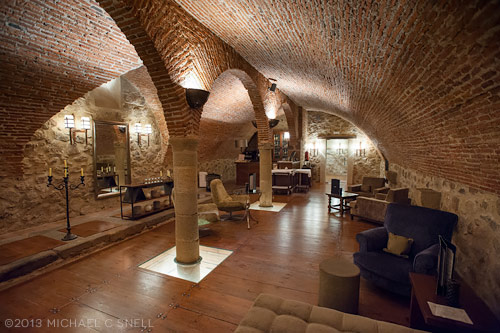
My only regret is that I was unaware of this bar in the cellars until the morning we were checking out. What a great spot to spend an evening:

131207plasencia8_sotc

If you’d like more information about Spain’s Paradores, visit their website here: http://www.parador.es

The good life, in Spain

131121jarandilla7_sotc

I often ask myself, “what did I do to deserve this?” Not because I think I’m being punished for something undeservedly. Quite the opposite. More like – what have I done to deserve these amazing opportunities that come my way? I think this most often when traveling. Say what you will about the discomfort of today’s air travel – it’s still amazing that you can be anywhere in the world in just a few hours. We’re spoiled by an abundance of opportunity and I’m especially spoiled.

This hit me hard earlier this month as I joined a small group of journalists invited to explore the Extremadura region of Spain. I lived darned well there for eight days. Among the highlights were our nightly lodgings in six of Spain’s paradores. Started in 1928, paradors are a chain of state-run hotels that are located in historic buildings: castles, palaces, convents, etc. I found them amazing. I want to visit all 94 of them. Check them out for yourself here: http://www.parador.es

That photo above is the view that greeted me after landing in Madrid and making the 3-hour drive to Jarandilla de la Vera. First days on international trips are tough. I fight the temptation to take an afternoon nap as I find that the sooner I get back on a “daylight clock” (stay awake when it’s light, sleep only when it’s dark), the better off I am and the more quickly I adjust to the time difference.  On this day, we arrived a little after 1:00 pm and I immediately set out to explore and shoot photos. I’ll share more of those images in a later post but, for now, I’ll focus on the parador itself.

131121jarandilla1_sotc

131121jarandilla2_sotc

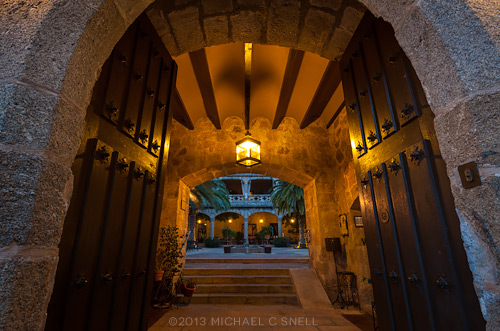
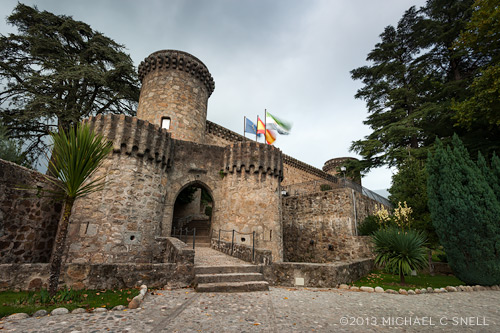
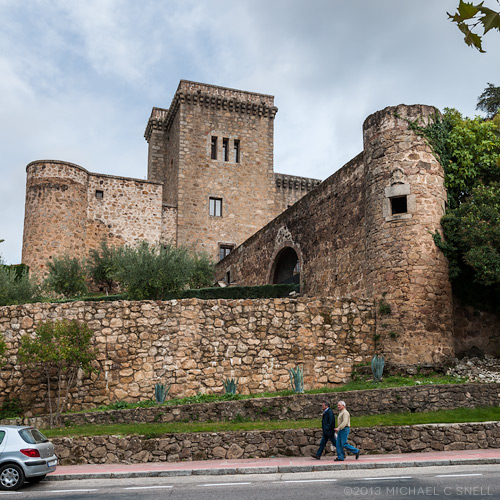
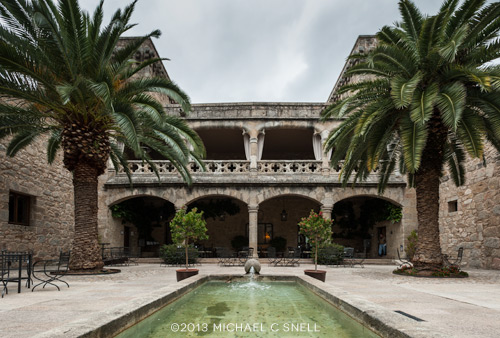
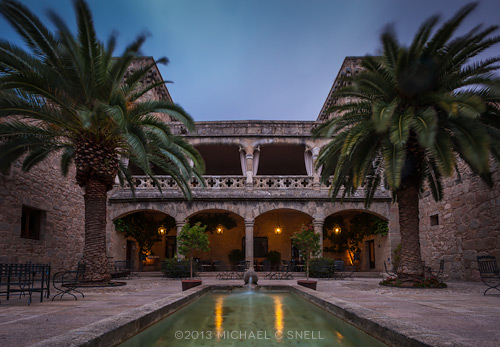
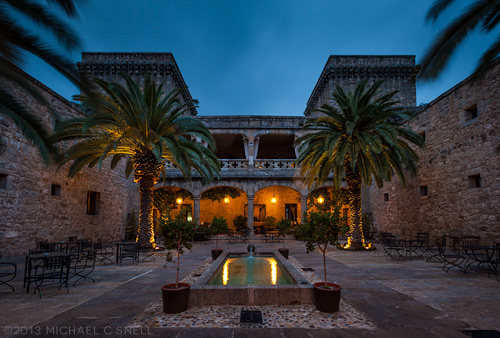
Set in a 15th century palace-castle, the Parador de Jarandilla de la Vera is an imposing structure. The courtyard was what especially caught my eye, though, and I decided to make it my primary subject during those magical moments that occur right around sunset. The day was a bit blustery and it was threatening rain by the time the sun was setting. This is the courtyard as I saw it upon arrival just before 2:00 pm:

131121jarandilla3_sotc

I wanted to take advantage of that brief time in the evening when the sky goes cobalt blue and contrasts so well with incandescent lighting. There were lights tucked all around the courtyard so I was hopeful that the lighting would enhance the scene come twilight.

131121jarandilla5_sotc

Just after 6:00 pm, things started to happen. Even a cloudy sky will give you a blue effect just after sunset and that’s what I was counting on here. I also made a point of using my tripod and a neutral density filter to extend the exposures and give some softness to the moving clouds and central fountain. By 6:30, things were just as I’d hoped:

131121jarandilla4_sotc

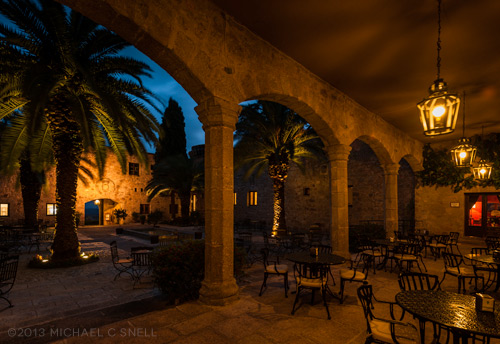
As it began to mist more heavily, I moved around to points of shelter to keep the rain off my lens and kept shooting:

131121jarandilla6_sotc

For a first day of a trip, after an overnight flight, I’d had a pretty good day. I often feel like day one is a practice day – good only for getting ones bearings and getting in the groove of shooting in a new place. This trip seemed to come together more quickly for me and I’m happy with what I managed to make of my half-day in Jarandilla de la Vera. Which is good, because we’d be off after breakfast the next morning for more adventures in other parts of Extremadura.