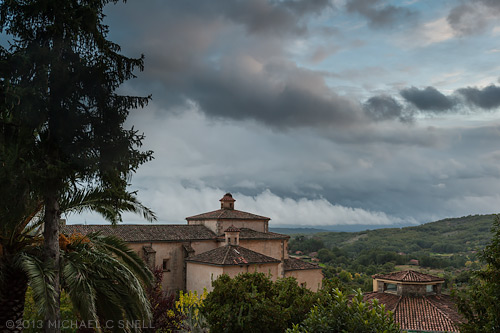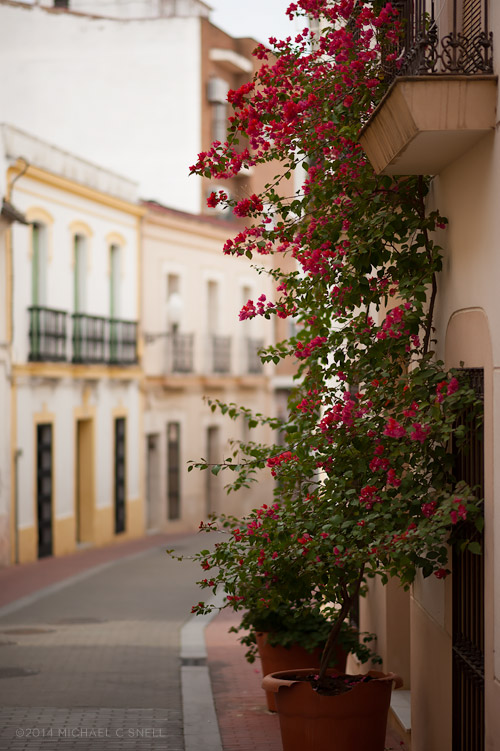
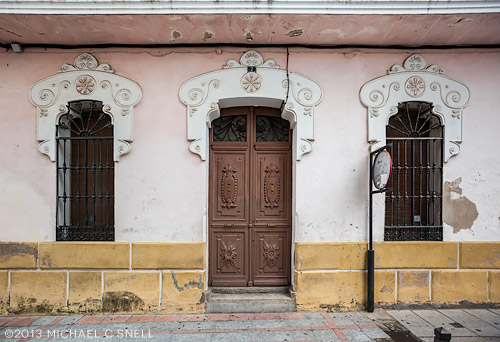
I showed some of the Roman ruins in my last post, but there’s much more to Merida, Spain — including some very walkable streets. Here are a few shots that I found during a couple of free hours I had to explore the city:
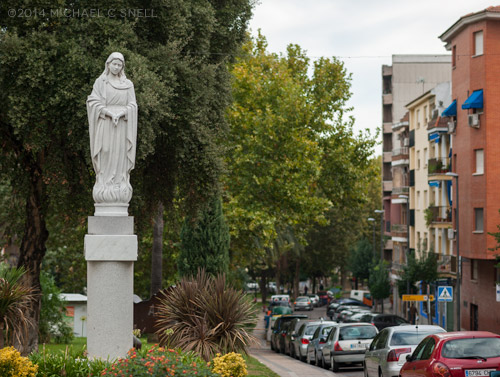
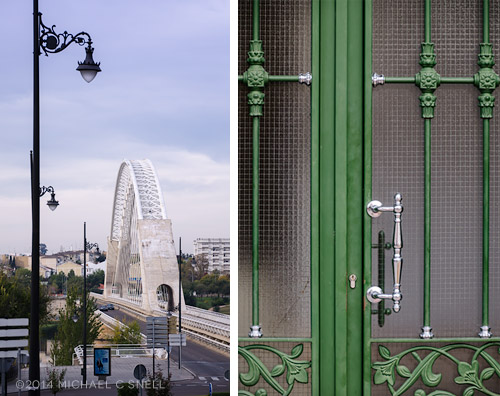
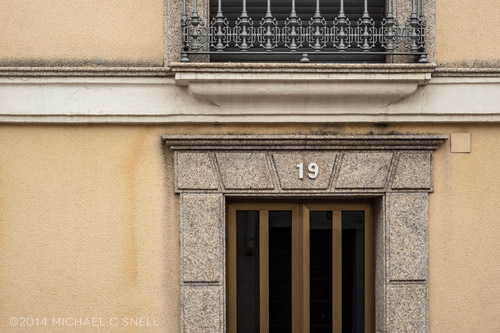
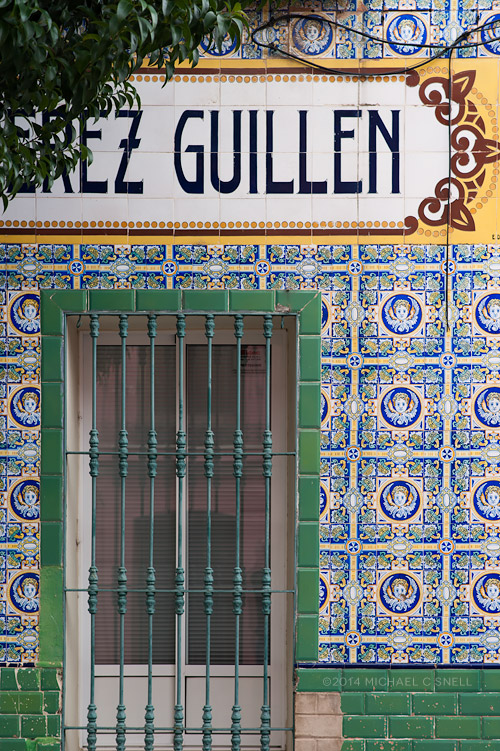
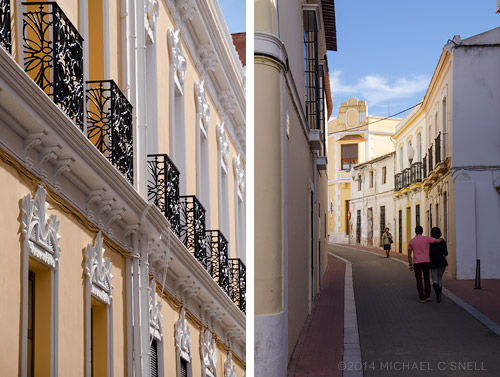
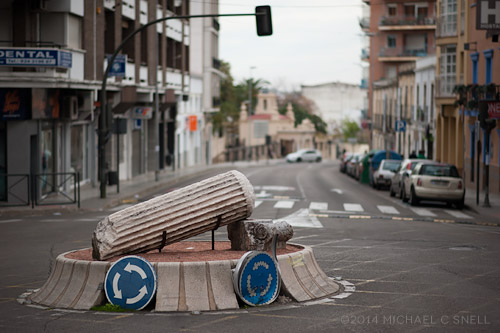
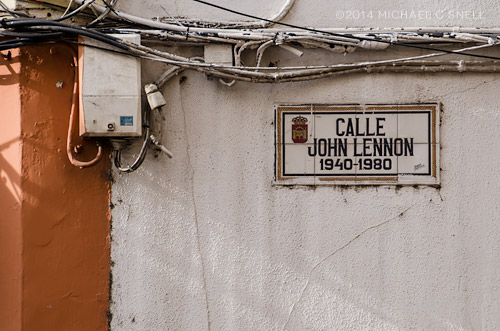
I showed some of the Roman ruins in my last post, but there’s much more to Merida, Spain — including some very walkable streets. Here are a few shots that I found during a couple of free hours I had to explore the city:
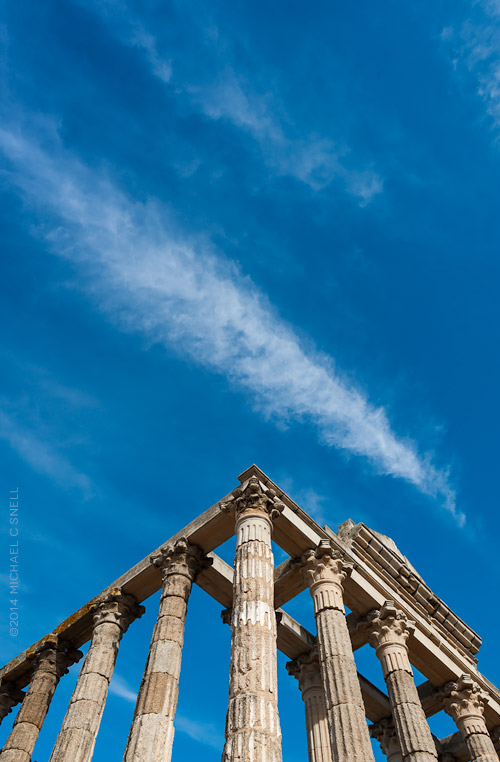
The Temple of Diana, just one of the many Roman ruins scattered about Merida, Spain. Founded in 25 BC as “Emerita Augusta,” this is an old city with layers and layers of history. Here are just a few examples, all in easy walking distance of the city center.
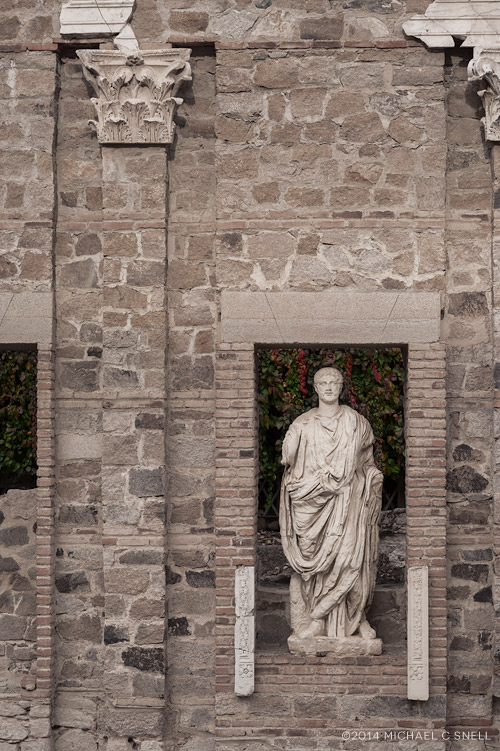
The Arcade of the Forum.
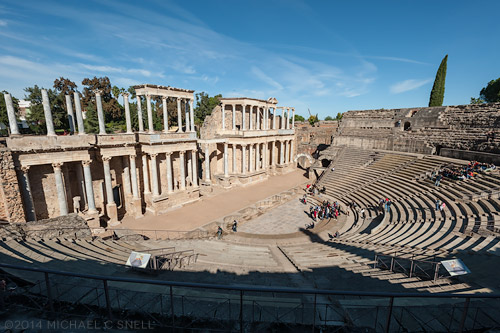
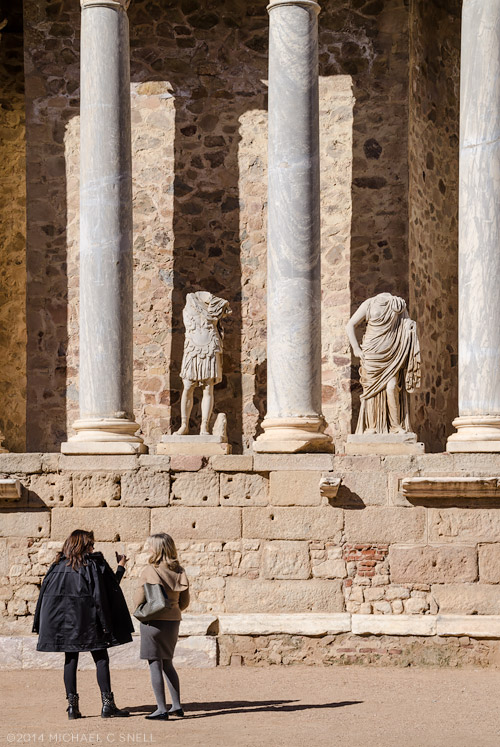
The Roman Theater in Merida. I liked the contrast of the human and marble figures in the second shot.
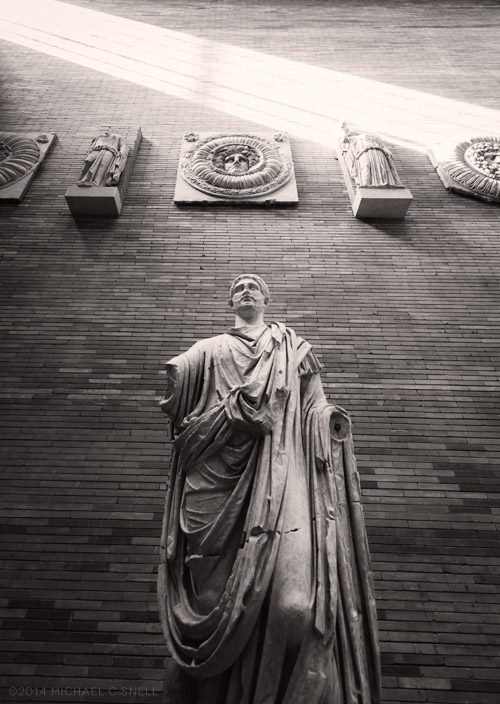
Statuary inside the Museum of Roman Art, just across from the Roman Theater. The architecture of the museum is nearly as interesting as the building’s contents.
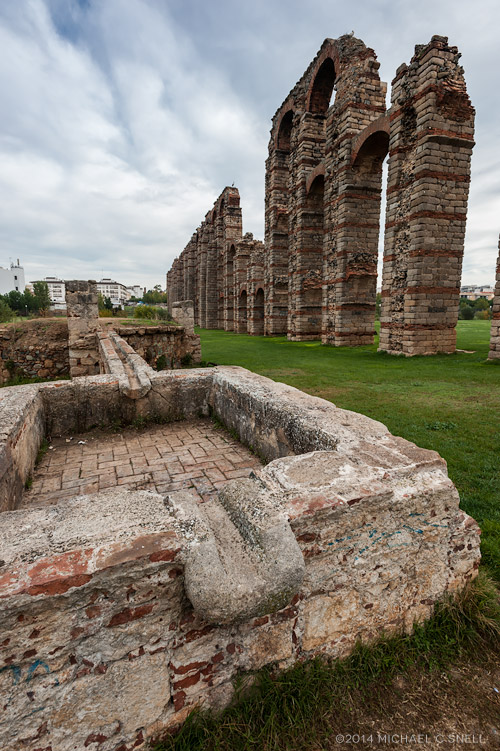
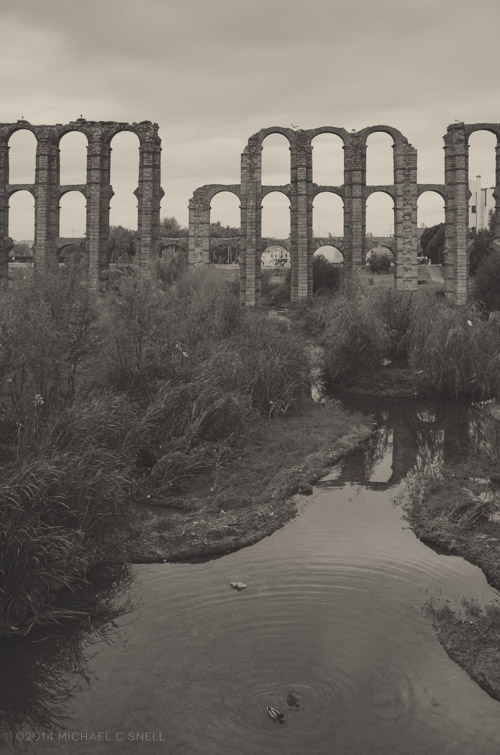
And, finally, two shots of the Miraculous Aqueduct — one of three in Merida. The quantity and scale of the ruins in Merida are stunning. There is plenty else to see in the city (I’ll share more images in my next post), but the Roman sites are easily reason enough for a visit. Learn more here.
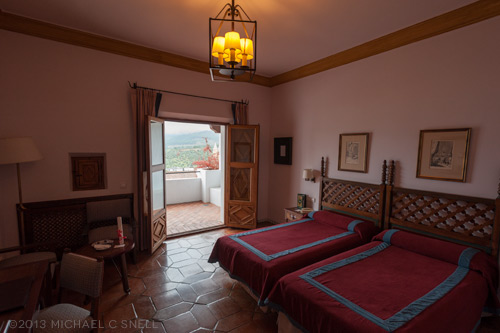
I thought I’d follow up on my last post with a few shots from my room at the Parador de Guadalupe. As I mentioned before, we stayed in Paradores most of our nights in Spain and they never disappointed. Each is unique architecturally, food/service was excellent, and you just couldn’t beat their locations. However, of all of them I encountered, I think I was most taken with the balcony view from my room in Guadalupe. I had very little time to spend in the room, but both sunset and sunrise found me out on the balcony, photographing that view. Sometimes you have to really work hard to find the right location — the perfect angle — and sometimes it’s just handed to you.
Here is a view of my room and a stitched panorama of the overall view from my balcony:
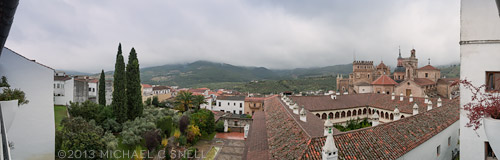
These were taken just after checking in and before taking a tour of the monastery, seen in the right of the panoramic image. By the time I got back to the room, the clouds were more defined and the sun was beginning to set, so out I went on my balcony:
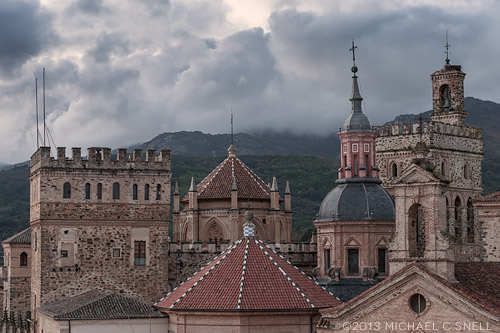
I settled on this view (above) with my full-frame Nikon D700 and locked it down on the tripod to get a series of shots as the light changed. I was hoping that, at some point, some exterior lighting might come on to contrast with the cobalt blue skies that I expected just after sunset. The sun was actually going down to the left of this scene so, while my one camera body was occupied with the monastery, I shot variations of the sunset itself with my D7000:
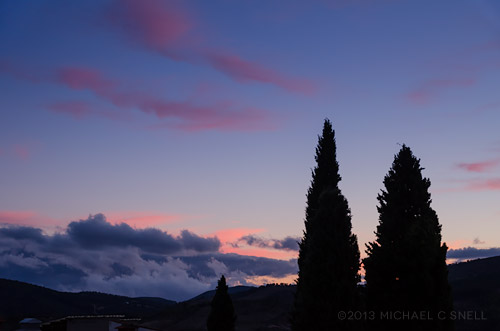
The D7000 shots were hand-held so I had to increase my ISO to achieve a faster shutter speed. I knew that would result in more noise, but I was less concerned about that in these shots than in my primary images that I was shooting with the D700.
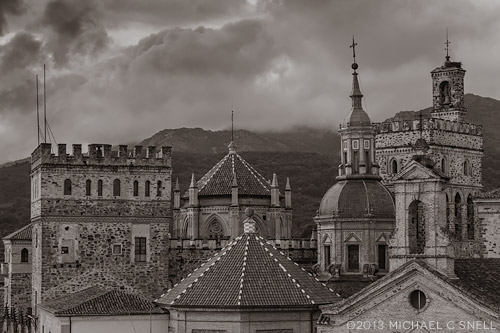
The coloration was less interesting at first, but the clouds were fairly dramatic. Converting some of these early shots to black and white (using Lightroom 5 and/or Photoshop CC) was a nice solution. The next series of images shows the gradual darkening of the sky and the subtle warm colors that began to emerge from the street lights that were bouncing back to illuminate the towers.
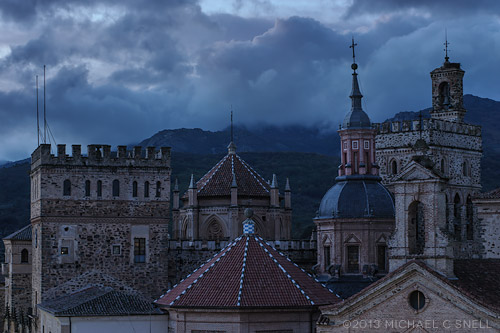
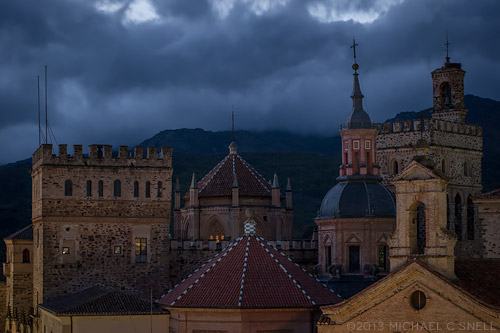
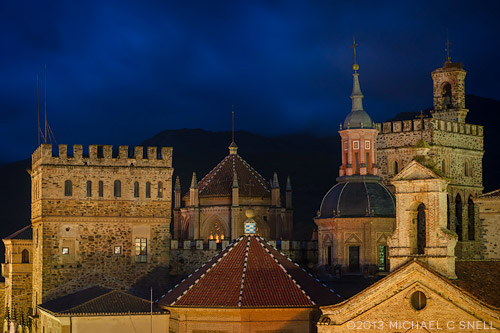
While there never were any floodlights or other exterior illumination on the monastery, the bounced street lights were enough to add quite a bit of warmth as the evening got darker. The shot above was taken well after dark and the intensity of the colors shown here was not visible to the eye. Only the long exposure was able to draw it out, softening the sky at the same time by the blur of the moving clouds. I was using 30-second exposures at this point.
The next morning I resumed my position for sunrise and caught a few pre-dawn images with a beautifully clear sky:
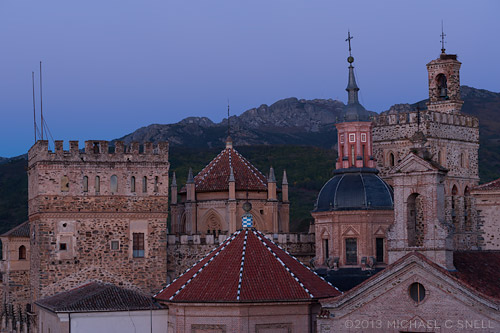
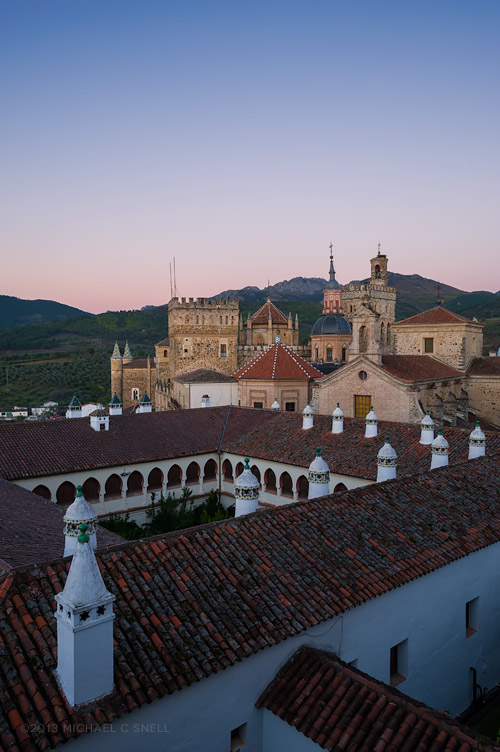
One last shot of the monastery just before sunrise with the main courtyard of the Parador seen in the foreground. Once the sun broke over the mountains, the light was actually a little too harsh for my taste and several of the towers were casting harsh shadows on one another. It was time to pack up the gear anyway before grabbing a quick breakfast and heading off to our next stop: Merida, Spain.
You can learn more about the Parador de Guadalupe on their website, which I notice has been redesigned just in the last couple of weeks. Lots of good info there if you’re planning a visit in Spain.
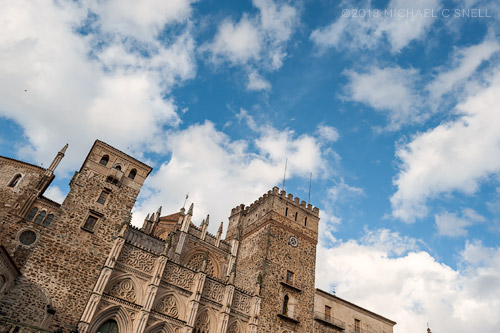
As we continued our circuit through the Extremadura region of Spain, our next stop was Guadalupe. The centerpiece of this town is the Royal Monastery of Santa Maria de Guadalupe, originating in the 13th century and associated with Columbus’ first voyage to the New World in the late 15th century. The monastery’s architecture evolved over that time and on into the 17th and 18th centuries. From the exterior (which you’ll see more of in the next post) the result is a crazy combination of towers and spires in all shapes and sizes. The interior spaces are equally exuberant and even more detailed:
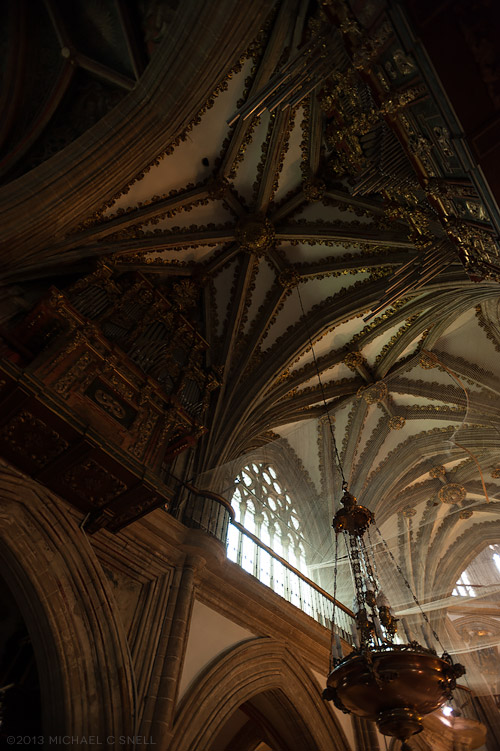
The main church is dark, but exceedingly grand. Exploring further, styles change to brighter and more elaborate decoration:
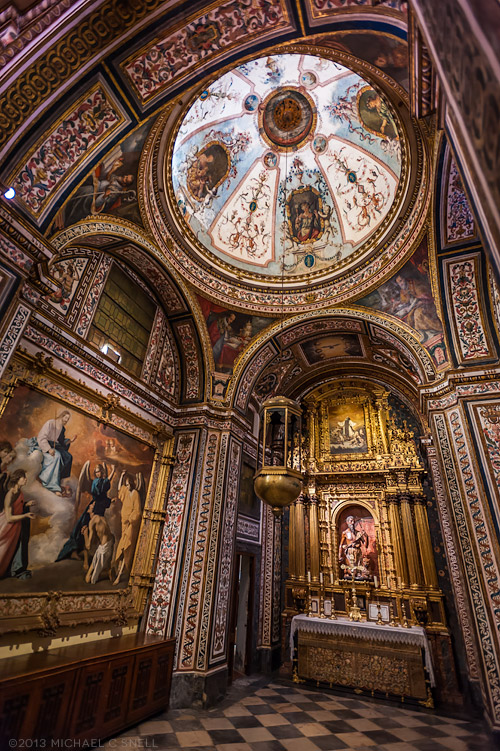
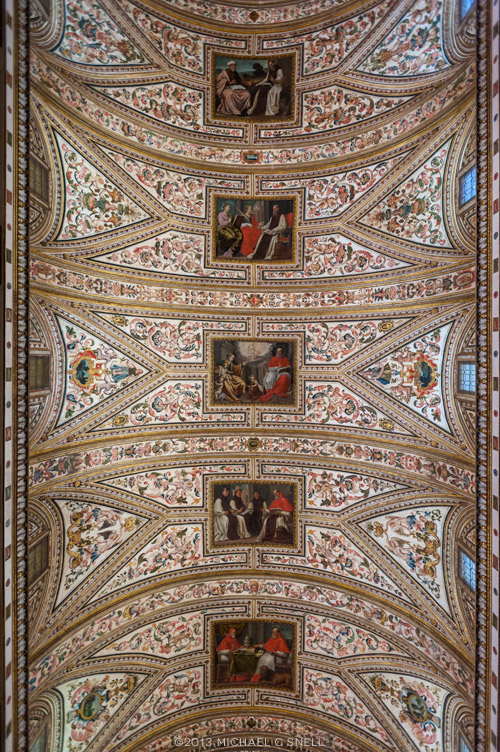
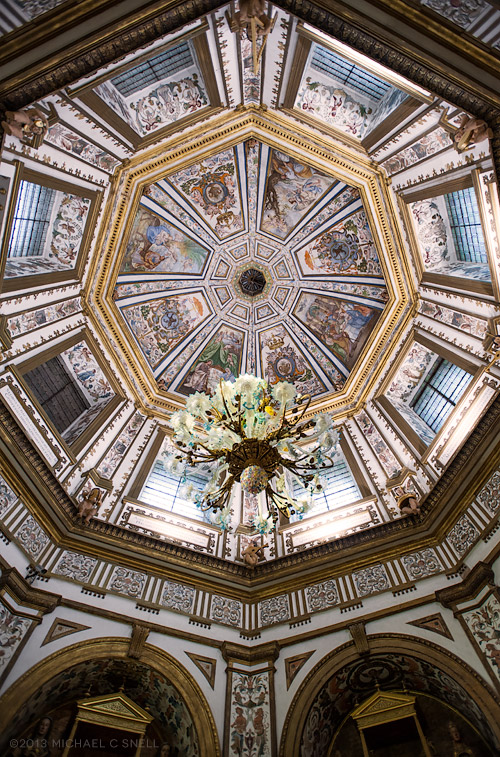
The Monastery buildings also house museums for textiles, paintings, sculpture and more:
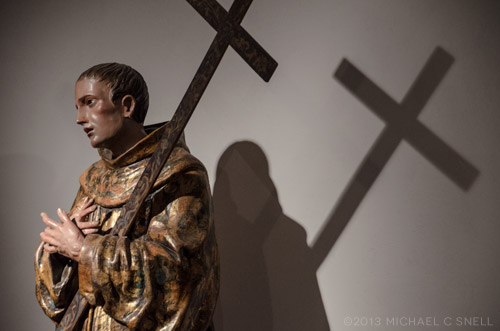
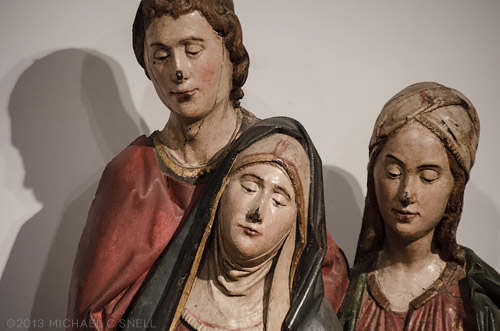
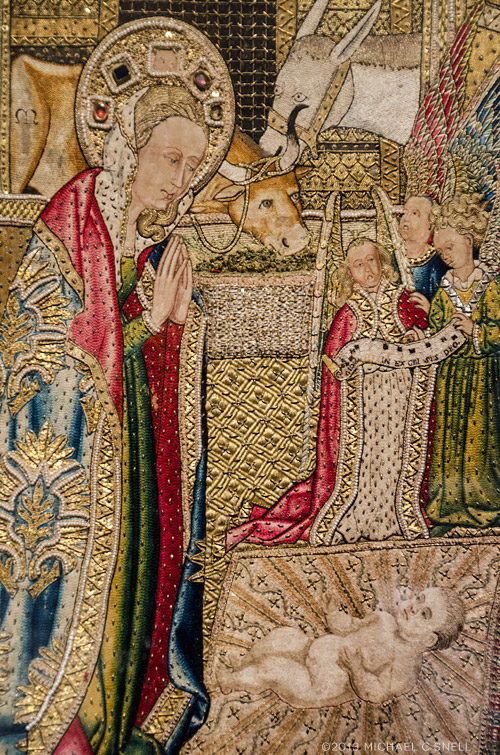
We left the Monastery just as the sun was setting and crossed the street to our Paradore. The views of the Monastery from the Paradore were stunning and I spent the rest of the evening, and well into the night, photographing the towers from my balcony. I’ll share some of those images in my next post.
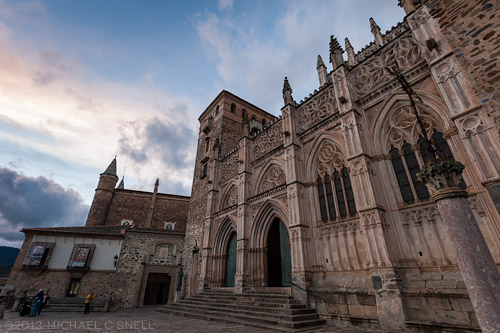
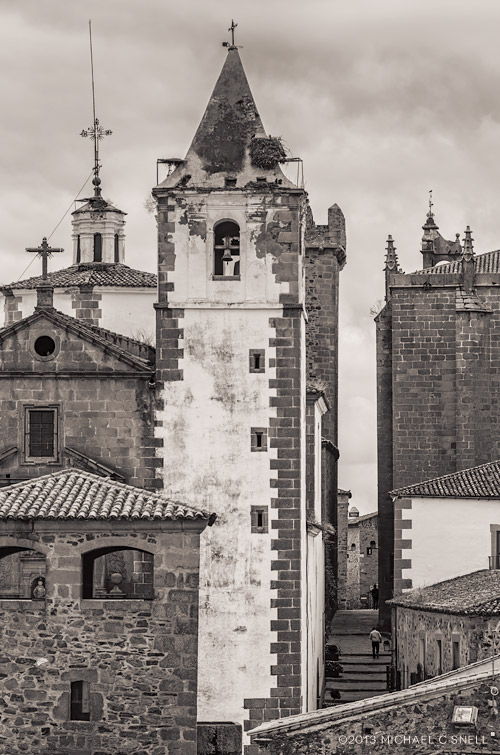
We spent two nights in Caceres, Spain – the only time on the trip that we would have more than one night in one place. Even so, having a full day in this city was not enough. The old, walled portion of the city alone (a UNESCO World Heritage Site) is worthy of several days of exploration.
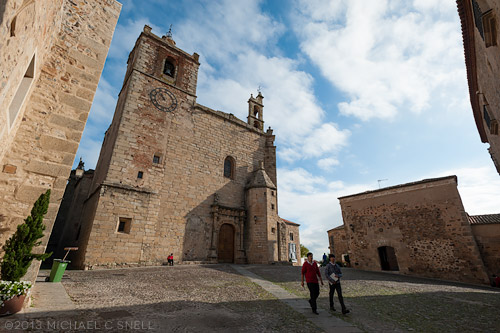
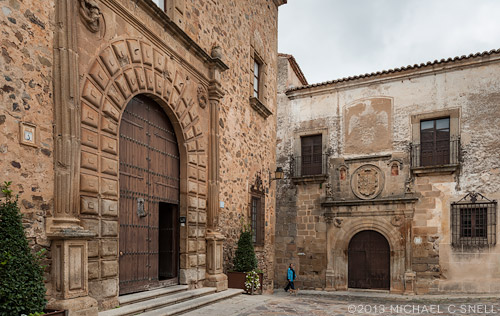
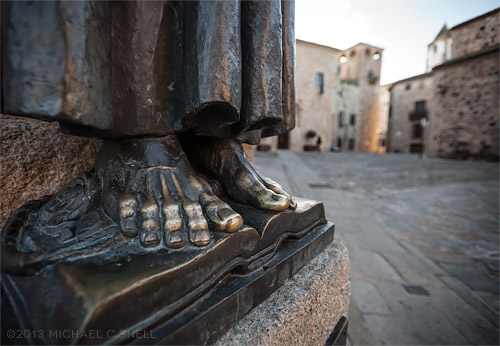
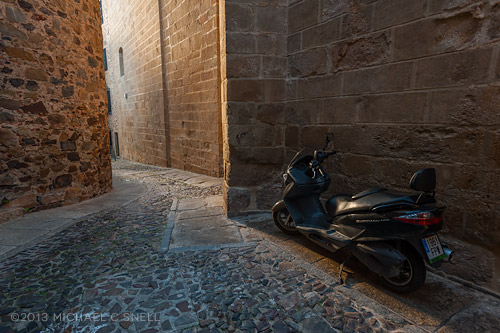
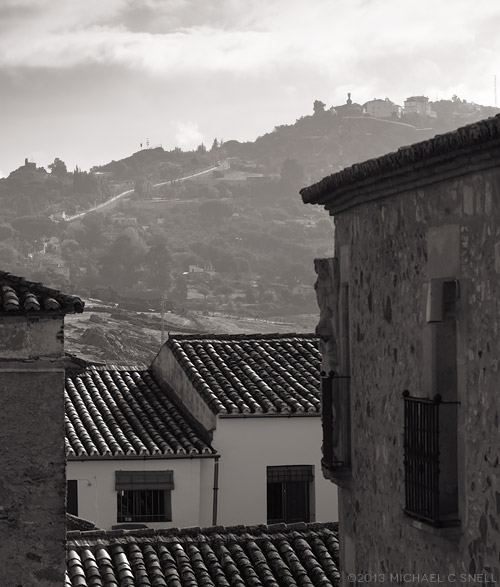
We arrived after dark so a pre-breakfast walk on my own was my first real chance to see this ancient city. I took a map with me, but enjoyed just wandering and getting lost a little, too.
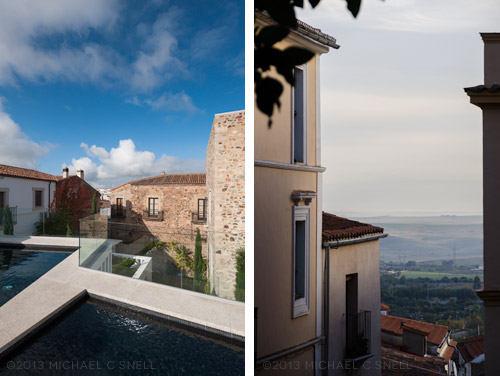
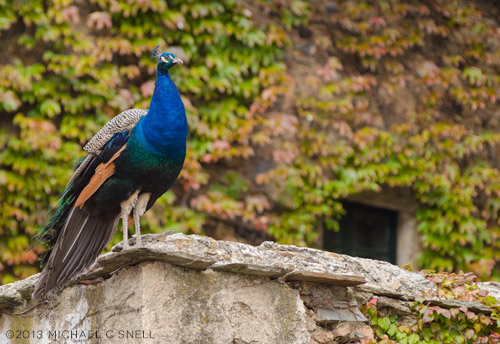
A quick tour of the Atrio Hotel and Restaurant revealed the dual roof-top pools (above left). And the peacock that seemed to live next door (below).
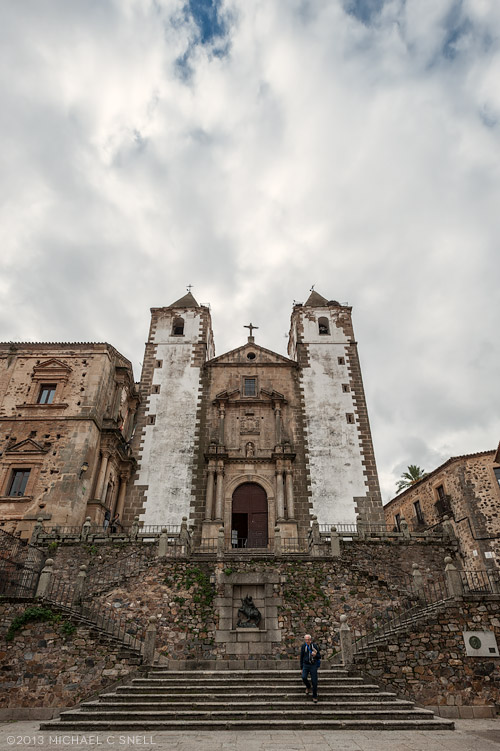
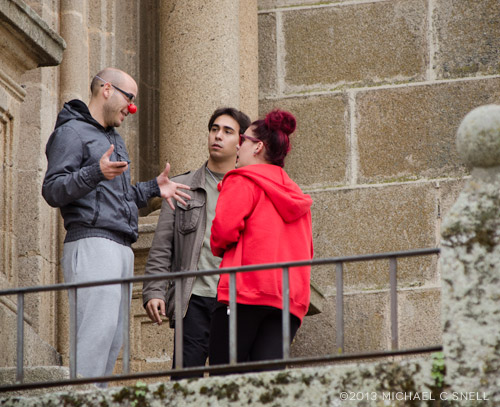
Some things, I have no explanation for (above).
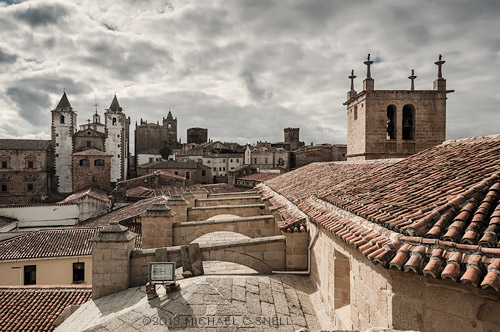
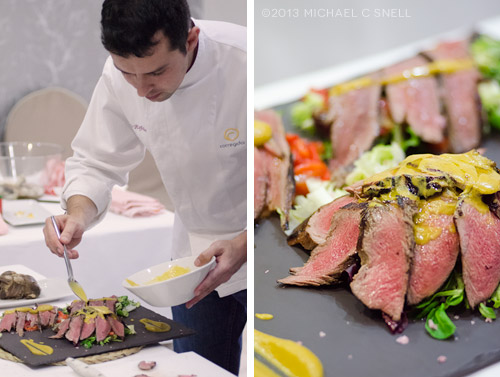
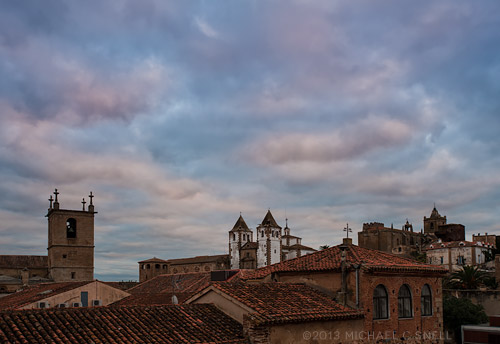
In the afternoon, we had a cooking demonstration at the Restaurante El Corregidor. Next time you fix wild boar at home, it should look something like this (above). Then, a few free moments to find a spot to try and catch the last light on the towers of Caceres:
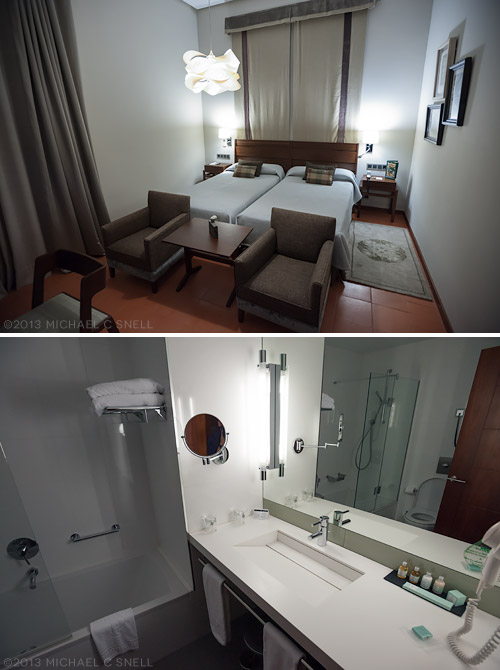
The Parador in Caceres was another stunner. This one built inside a Renaissance Palace. Here are a couple of quick shots from my room, so that you know I wasn’t suffering too much:
I could have stayed much longer in this city, but there was more of Extremadura to see…
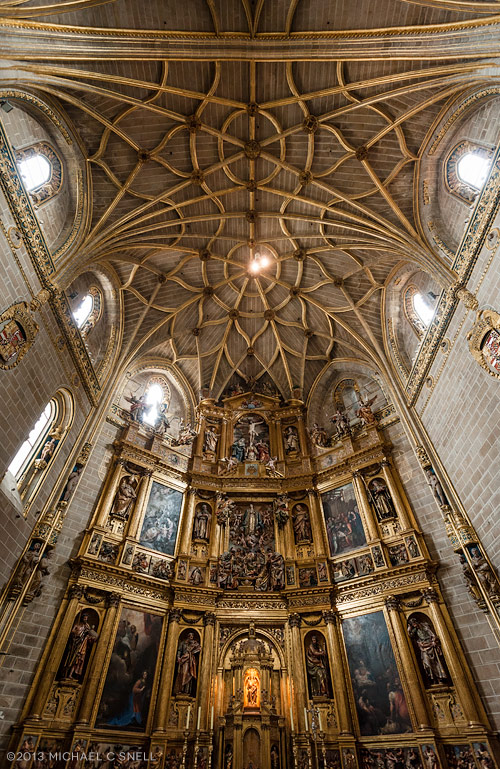
The Cathedral of Plasencia has to be one of the most interesting cathedrals I’ve encountered in my travels – and I’ve seen a fair number of them. What makes this one unique, is that it was originally constructed in the Romanesque style in the 13th century. Then, in the 15th century, a new construction was begun over the top of the old, replacing the original structure as the new one marched across it. Work halted in the 18th century with work only partially complete leaving two distinct interiors in one building.
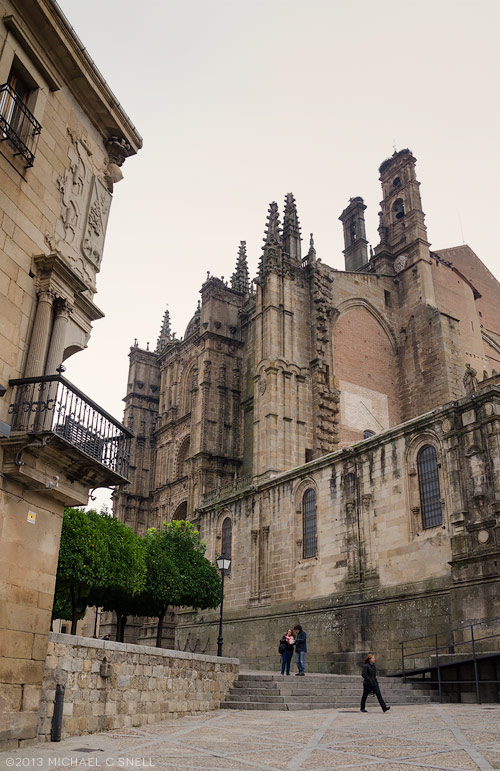
Think of it as a 15th century whale slowly swallowing a 13th century fish, and time freezing mid-way through the process. In the photo above, the old structure is the lower portion on the right and the “new” section towers behind it with its unfinished back wall showing there the large arches are bricked in. Think of that as the mouth of the whale.
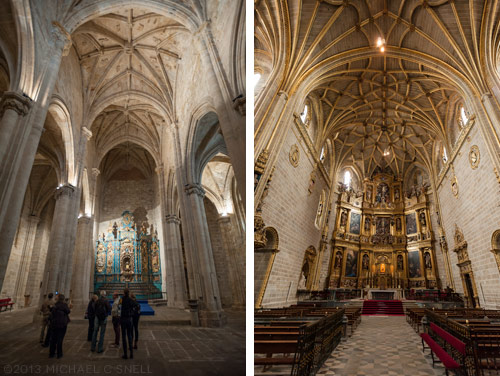
Inside you end up with two half-sanctuaries. The one on the left is the older of the two that would have been demolished had the construction continued. If you could see through the wall where the blue altar piece is, you’d see the new sanctuary that is pictured on the right.
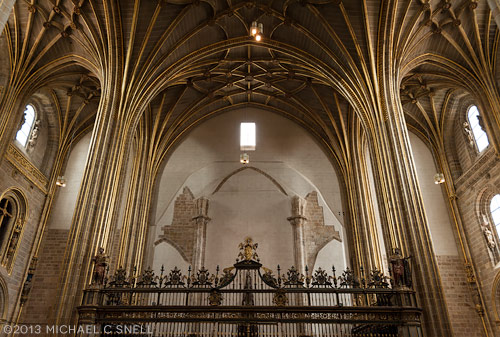
This is the back wall of the new sanctuary, and you can see the ghost of the old sanctuary fading through with its narrower colonnade and lower arch. This really shows the scale of the new cathedral compared to the old. Had the work on the new cathedral been completed, I think the building would tell much less of a story but, as it is, it’s a treasure for people interested in architectural history (as I am) because you can see two time periods and styles simultaneously. More than that, you can see the actual construction techniques where the the new construction stopped and pieces of the old cathedral can be seen being used as fill within the unfinished walls of the expansion. Definitely worth seeing.
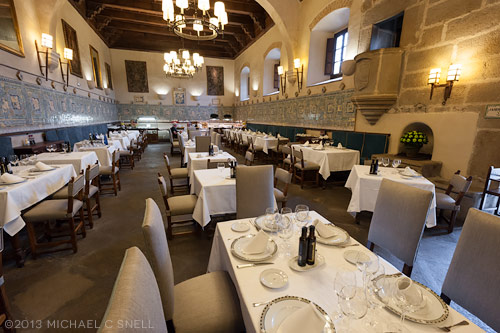
Also worth seeing – and experiencing – was our Parador for the night which was located just a short walk from the cathedral in former convent of Sto. Domingo, built in the 15th – 17th centuries. Here are a few photos of it, starting with the entrance:
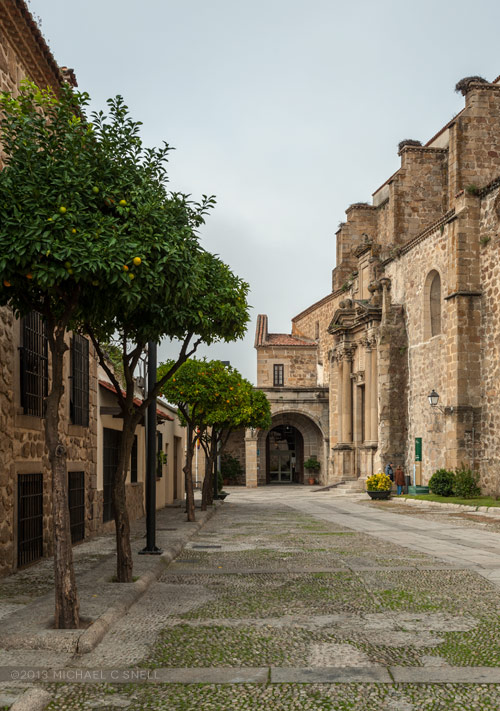
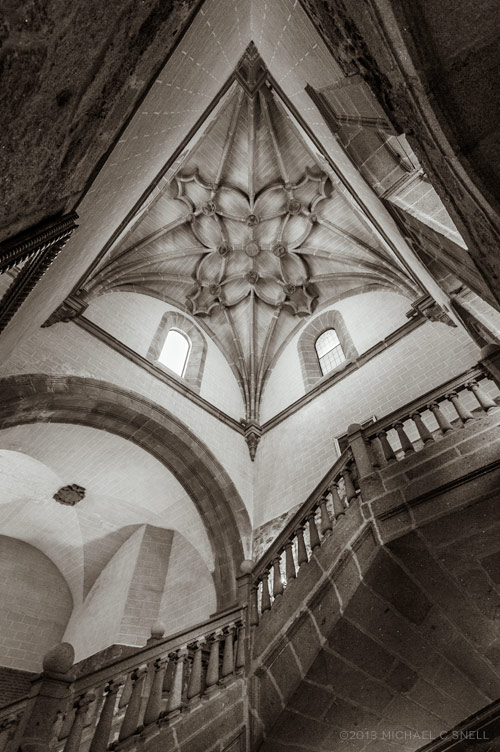
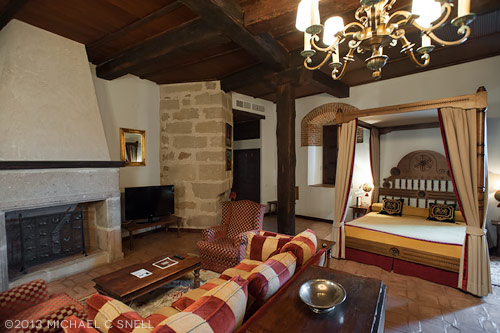
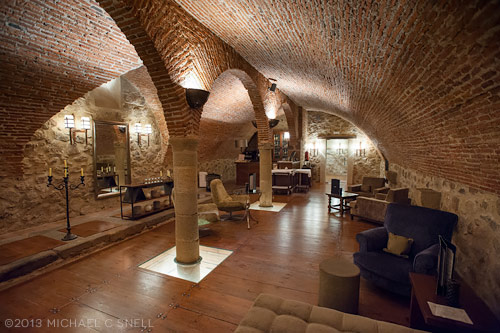
My only regret is that I was unaware of this bar in the cellars until the morning we were checking out. What a great spot to spend an evening:
If you’d like more information about Spain’s Paradores, visit their website here: http://www.parador.es
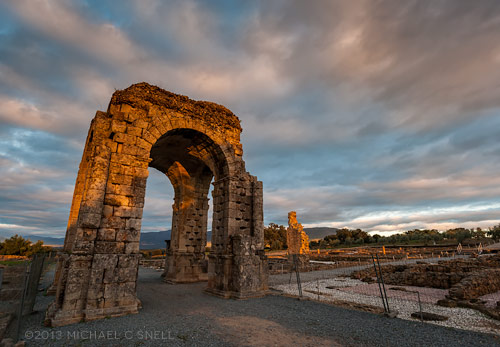
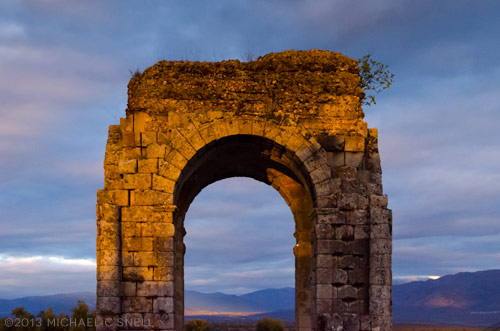
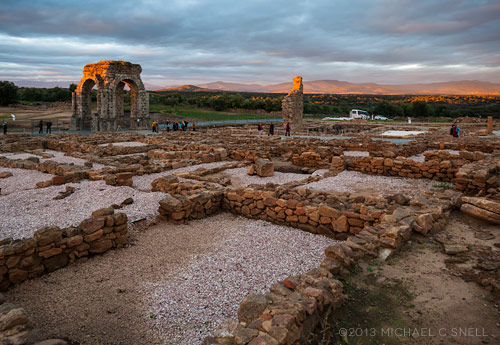
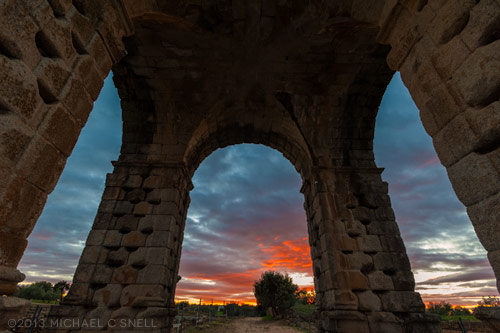
As I was researching the Extremadura region before leaving for Spain, I was surprised to keep running across mentions of Roman ruins. Obviously, the Empire was huge at one time and there are ruins scattered all over Europe and points beyond but we tend to only hear about a handful. The first we visited on this trip was the site of the Roman city of Caparra. Most notable of what remains is this 1st-century, 4-way arch, built at the intersection of two prominent Roman roads on the Via de la Plata (Silver Way).
We arrived at the Caparra ruins just as the sun was setting and for the next 30 minutes, I scrambled to make the most of the fading light and ever-changing sky.
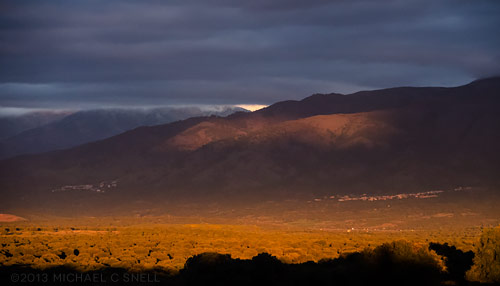
The surrounding countryside was equally stunning as the sun slipped below the low hanging clouds, painting the distant hills in gold.
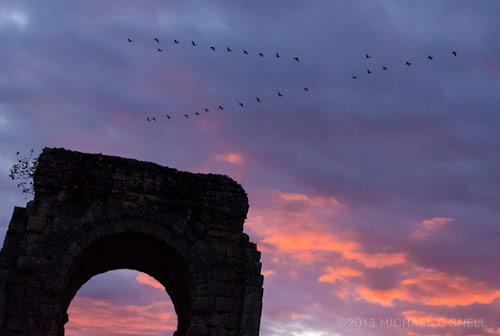
Migrating cranes, right on cue.
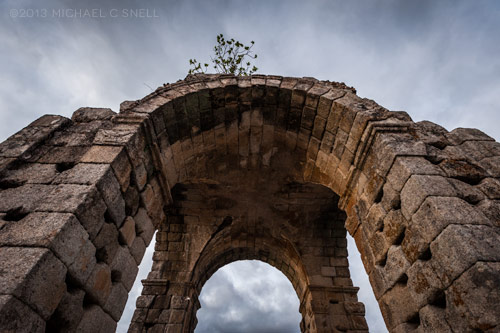
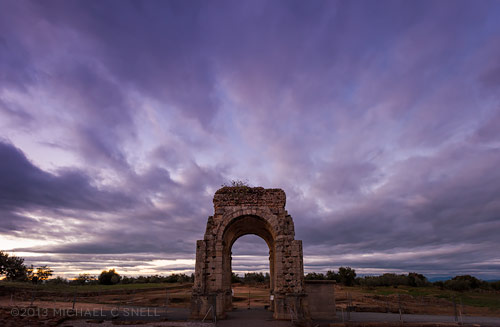
One of my final shots after the sun had set but while there was still some purple twilight remaining. Next, we were off to Plasencia with another stunning Parador and an interesting 2-in-1 cathedral. More on that in my next post.
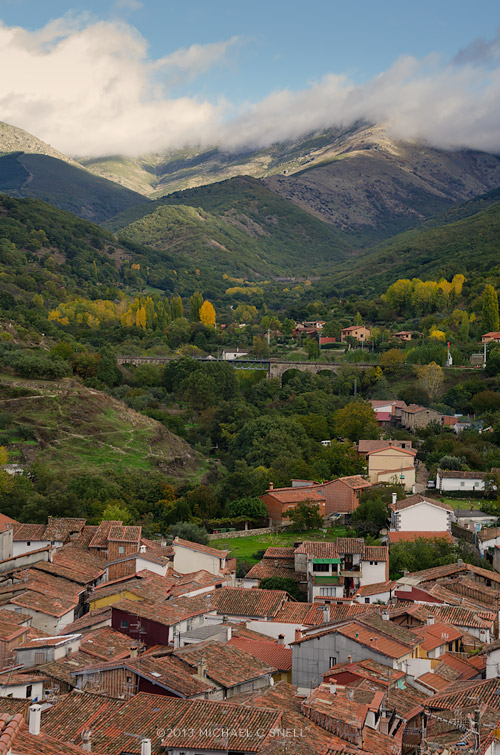
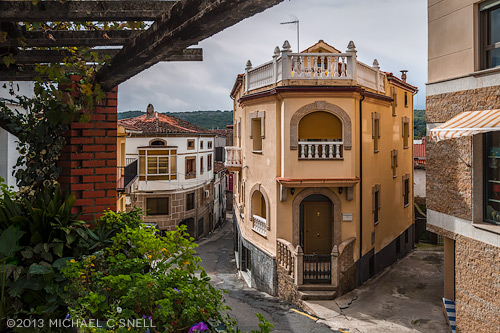
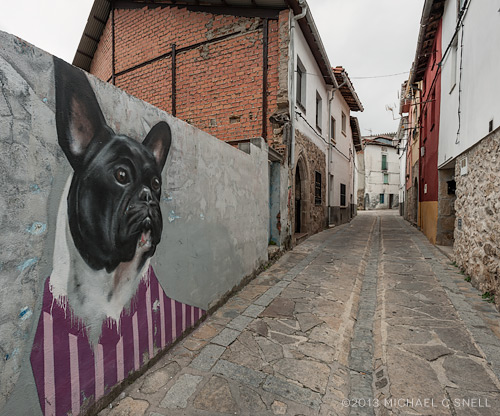
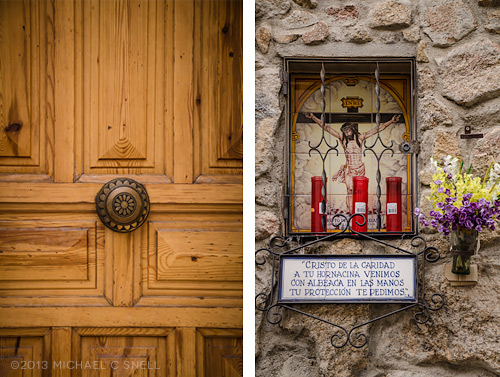
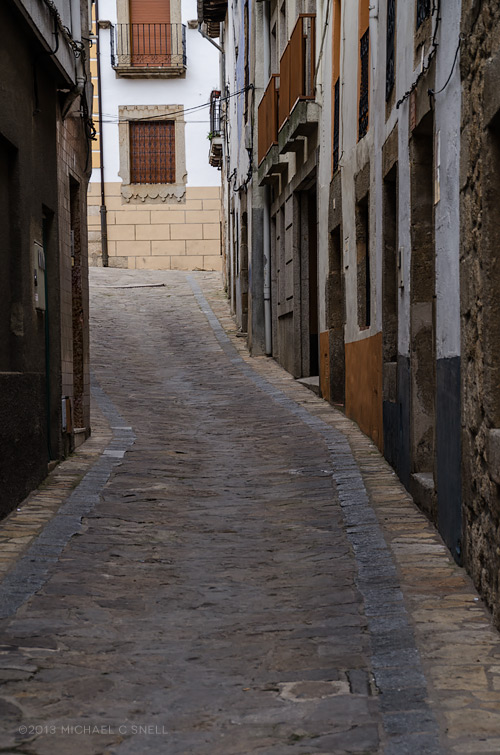
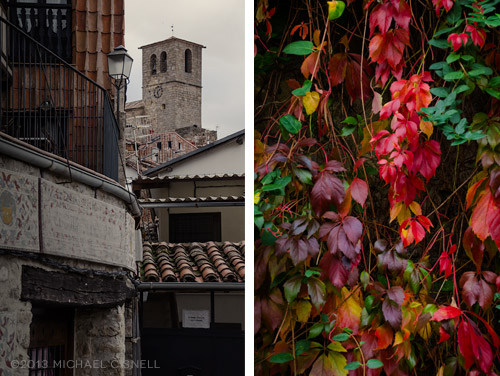
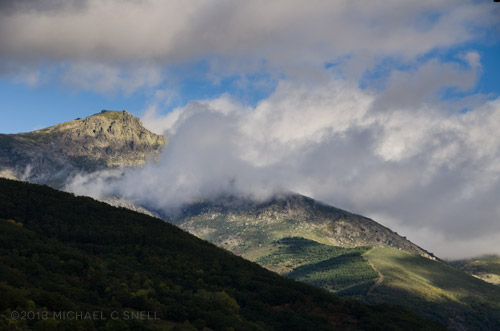
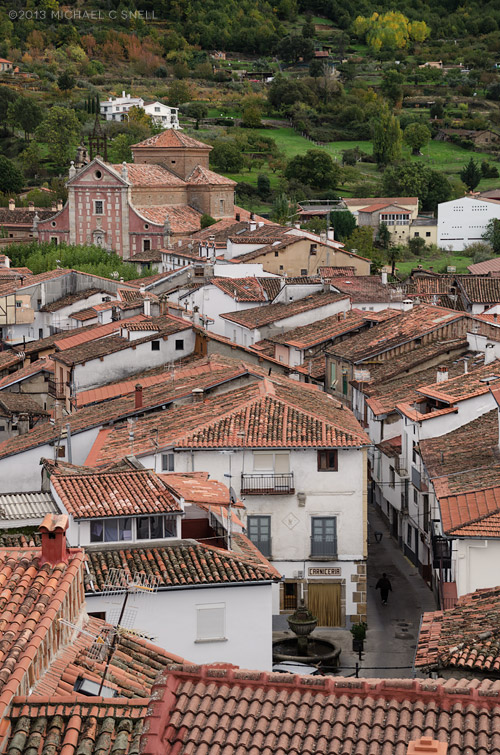
A few images from Hervas, Spain, in the Extremadura region. A great little tile-roofed town for aimless wandering. One of my favorite things.
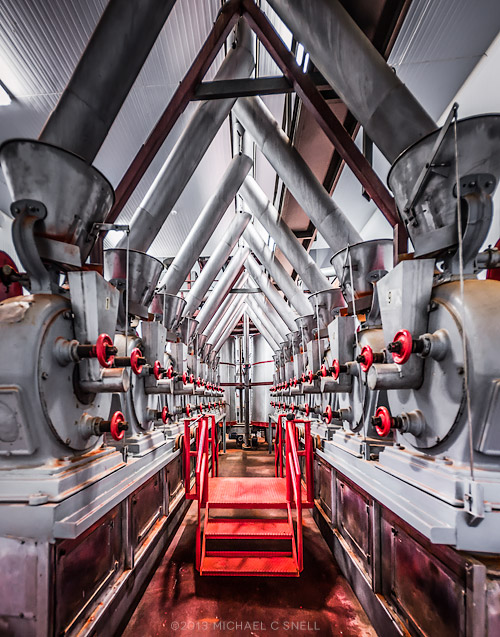
Continuing on with documenting my recent trip to the Extramadura region of Spain, day two began with a trip to Jaraiz de la Vera to learn about smoked paprika. We heard about the cultivation and smoking of the peppers at the Paprika Museum, then visited this production facility to see how the dried peppers were milled and packaged. The row of milling machines above looked almost cathedral-like to me, which seems appropriate given how revered paprika is in these parts.
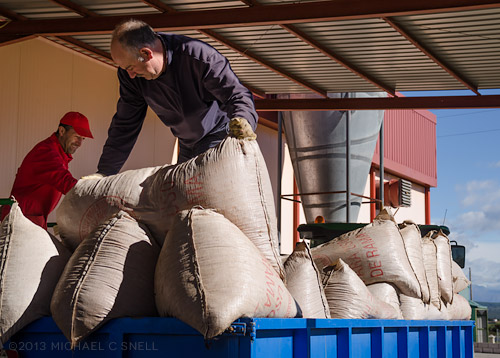
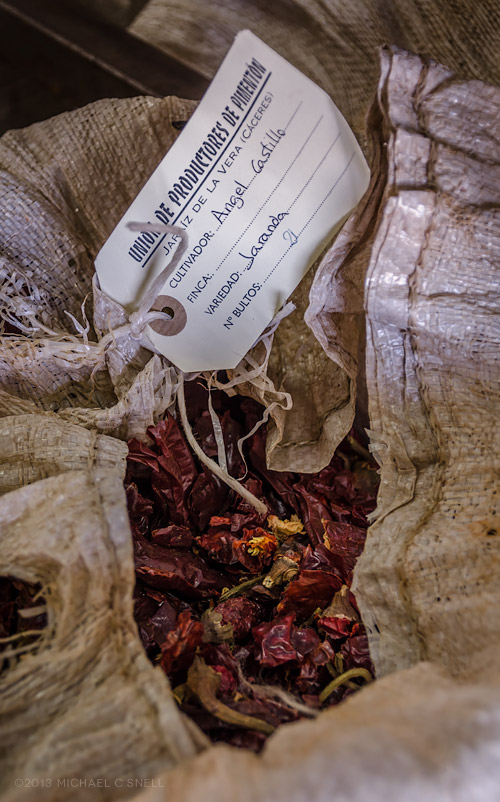
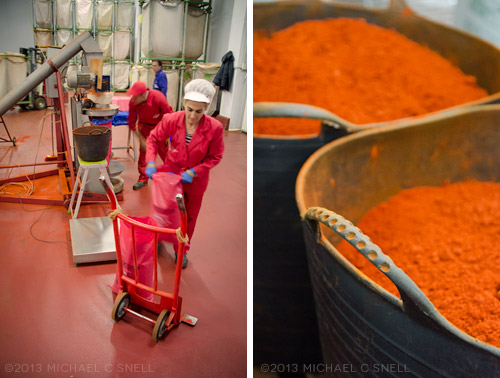
The aroma in the plant was amazing. I wish I had a way to share that with you. Sometimes when an appetizing smell is in a really high concentration like this, it becomes unpleasant, but I found no such problem here. I left feeling really hungry — which was good because our next stop was Hervas for a lunch of venison with double deserts: chestnut pie and… something chocolatey:
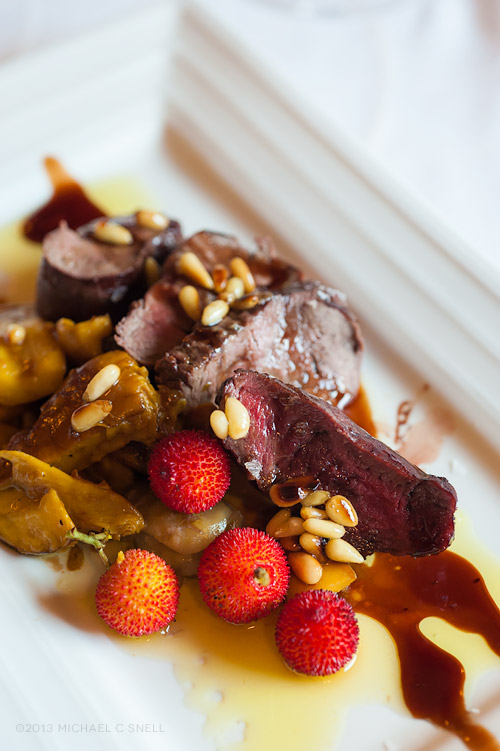
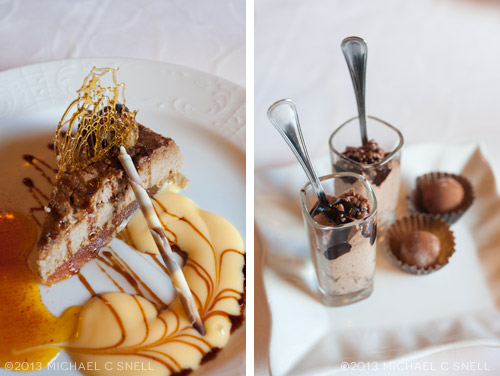
More on the town of Hervas in the next post…
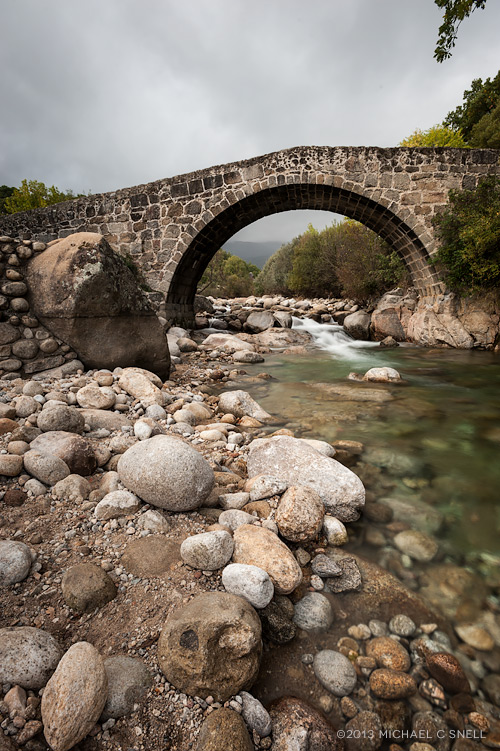
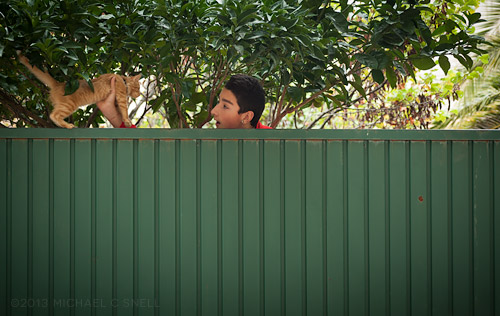
With a free afternoon on my first day in Jarandilla de la Vera, Spain, I grabbed a couple of cameras and headed out to explore the town. I had done a little research before I’d left home and had run across some images an old stone bridge. It was the one thing that I filed away in my mind to be sure and look for during my few hours in this town so I asked directions from the hotel desk before setting out. It wasn’t far, but the winding streets made finding it a bit more challenging than a similar trip might have been back home where most towns are laid out on a nice, orderly grid. I found the bridge – as seen above – but as is usually the case, the journey revealed much more along the way. Here are a few shots from Jarandilla de la Vera from that afternoon’s walk: