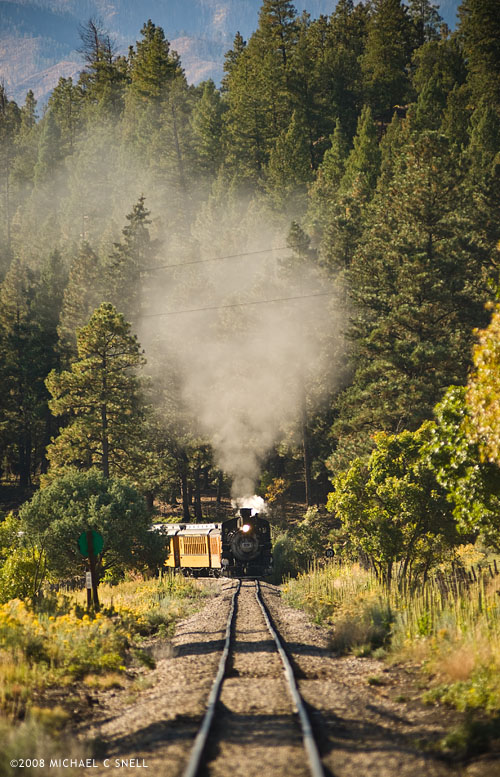
Last year I rode the Durango & Silverton train with my Photodude’s buddies. It was a great trip and we got lots of shots from the open-air cars of the front of the train as it snaked around bends in the Animas River canyon. Yesterday, I got to shoot the train again but not as a rider.
I met the train at the station as the locomotive was being positioned. It was a cool morning and the steam was belching into the sky backlit by the early morning sun. I shot until the train pulled out and then hopped in the car to race ahead to a spot I had remembered from last year’s ride where the train would pass a lake surrounded by pastures of horses. Mapquest was a huge help in finding places where the roads and tracks would intersect. I don’t think I would have ever found the spot without it.
It was fun to get another chance to photograph this great train. I understand they have some special excursions for photographers where they will actually stop the train and allow you to photograph it as it steams past, then it comes back to pick you up again. Maybe I’ll get a chance to do that some day.
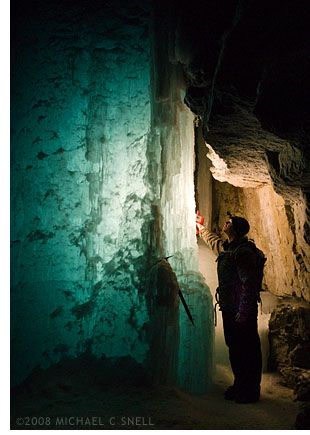 I had a great experience last night on the Maligne Canyon ice hike in Canada’s Jasper National Park. This is a trip you must make with a guide. Boots and ice spikes are provided — a necessity for the second half of the hike when you are literally walking on the frozen and sometimes slushy river. It’s a pretty good trek from the parking area to the ice falls and fairly disorienting in the dark with only an LED headlamp to show you the way. There are a few overlooks at the top of the falls that are accessible during the day on your own but the fun of the night trip begins when the guide leads you off of the path and down into the canyon. It’s similar to exploring a cave except you can see the stars between the high canyon walls and many of the formations are ice instead of stone. This is not a trip that can be made in the summer as the river prevents all access.
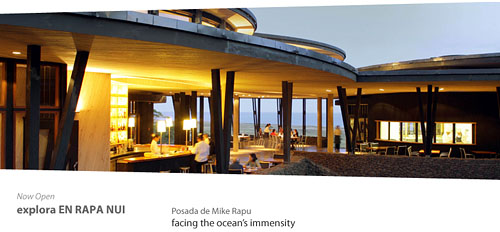
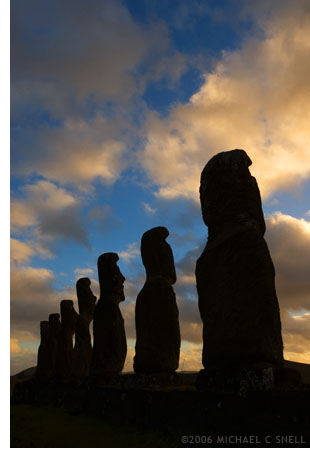 When I visited Easter Island, or Rapa Nui, a little over a year ago it was stunningly isolated. Just a few thousand people lived on the island, mostly in the one small town of Hanga Roa. Groceries were purchased in a small garage-like building on a brick street and there were only a handful of small hotels for tourists. Nothing glamorous — fairly basic lodging.