Category Archives: from the files

On this day in 2011

110118331_sotc

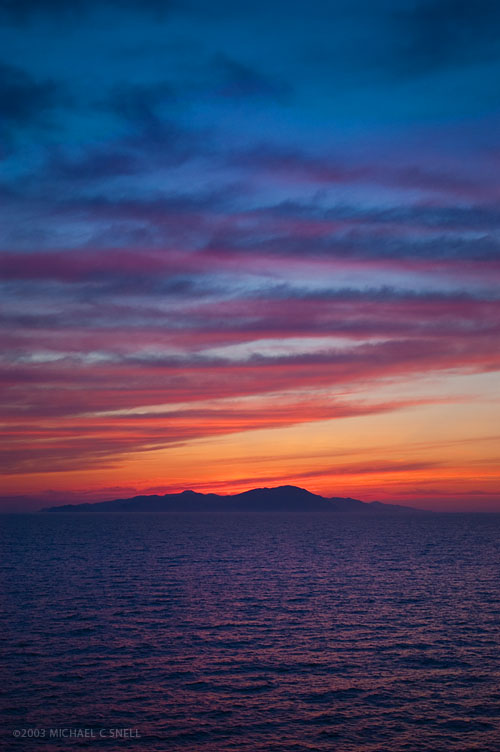
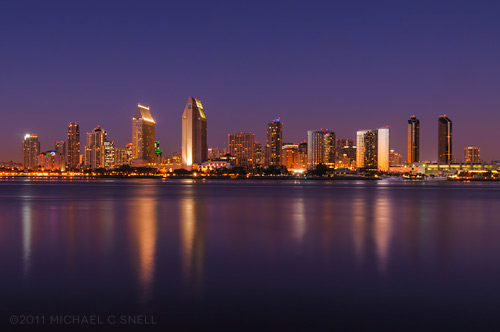
Every now and again I get curious about where I’ve been on this day one, two, ten years ago. Thanks to Lightroom and digital metadata it’s now easy to figure out where I was — at least it is if I managed to take a photo on that day. Four years ago today, I was in San Diego and made this image at sunset. Wouldn’t mind being back there right now.

Lightroom tidbits

100901chilecolor1_sotc

I’ve been giving Lightroom 3 (now 3.2) a real workout for the last few weeks. I’ve been importing my back catalog in massive chunks and making a quick pass at adjusting the original RAW files rather than importing the images that I had already tweaked previously in Adobe Camera Raw. This is a pretty big-stroke process right now — I’ll come back later and expand keywords and tweak the highly ranked shots — but it’s been a really interesting process to see the images improve. I’d like to think that the improvement is due to my own advancing skills in RAW processing, but the fact is that much of it is really due to improvements to the software over the years. Better processing algorithms and better controls.

I’ve been importing my 2006 images from Chile most recently and have noticed a couple of major advancements. One is Lightroom’s much improved ability to get rid of noise in high-ISO shots. Images that have never seen the light of day will now be going into my stock files because the noise that would never have passed Quality Control is now all but gone. Amazing. I’ll share some examples in the coming posts.

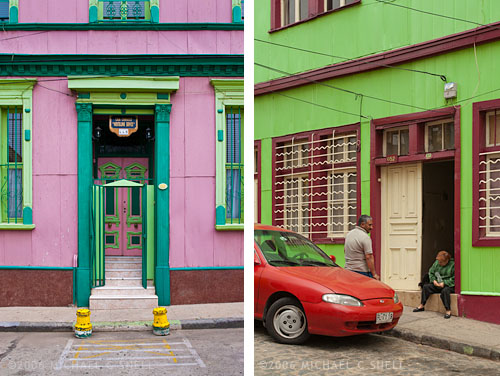
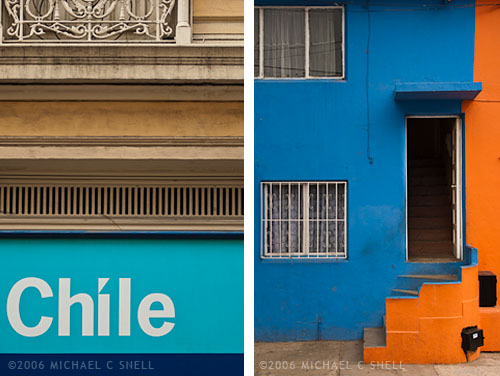
The most noticeable change in the images from Chile, though — especially Valparaiso — is how much more control I have over color now. Valparaiso is a city that is all about color. Colors you never thought you would see together, you’ll see in abundance in Valparaiso. Capturing some of these colors on film would have been frustrating. Sure, Velvia would have made that row of multi-colored row houses really pop. But then you’d round the corner to find a weathered, grey facade with the most subtle hues and you’d be cursing yourself for having 20 more exposures of that super-saturated film in your camera. One of my most favorite things about digital is just that — you can make decisions on a shot-by-shot basis and not be stuck with a film decision you made 10 exposures ago. Did you pop in a roll of ISO 800 film to shoot that dark church interior? Too bad now that you’re out in full sun and all kinds of contrast. No, being able to adjust ISOs and saturation levels for each individual image is a game-changer.

100901chilecolor2_sotc

And that flexibility doesn’t stop with in-camera controls. Lightroom (as well as all other image processors, really) lets you tweak color and contrast in ways that film selection alone never even came close to. The Vibrance slider in the Presence panel has become one of my favorite tools. More subtle than the Saturation slider, it affects the blues and greens more than already-saturated reds and yellows. Very nice. And the sliders for adjusting the hue, brightness and saturation levels of individual colors take that control to another level.

One other set of controls that I find myself using more and more often is the new perspective correction panel — actually the “transform” controls in the lens correction panel. While I still prefer the “distort” controls in Photoshop, it is nice having some of this ability in Lightroom. The controls take some getting used to but they are a welcome addition.

I’ll go into more detail on each of these and other Lightroom features in future posts and show some examples.

Breathing new life

100723bridgepan_sotc

With my recent investment in new hardware and software updates, I’m finally making a real time-investment in putting together my master Lightroom catalog. When I first went digital (after dabbling for a while, I made the serious switch in 2003), I archived all of my RAW files to DVD. Everything that wasn’t ridiculously hopeless got archived. Then I made my tweaks to the best shots and archived those, provided them to stock agencies, etc. My file names are chronological so the only real way of finding things was by searching by the date of the shoot. That, and I had a crude Extensis Portfolio database that provided thumbnails of all of my images and their pathnames, which showed which DVD they were stored on.

That was my system until a year or two ago when I began to migrate to using Adobe Lightroom as my main image cataloging system. I believe it was my trip to China in late 2008 when I began processing everything through Lightroom instead of Bridge and ACR. Everything from that point forward was in Lightroom, but everything prior was still in my old non-system.

Now, as I have downtime between shoots, I’m making the effort to add my digital files from 2003-2008 to my master catalog in Lightroom. After that is done, I’ll need to address my scans from transparencies that predate 2003, but that’s another kettle of fish.

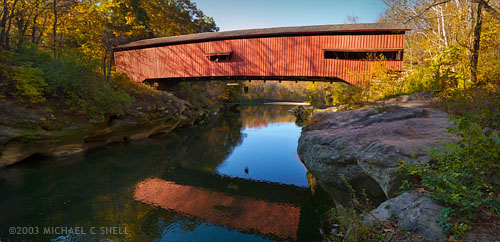
The beauty of re-processing some of these older images is that they can often be improved by the advances made in RAW processing software in the intervening years. The shot at the top of this post is one example. Shot in the fall of 2003 while working on a story about Indiana’s covered bridges, this was originally three vertical shots. The plan was to use them to make a panorama in Photoshop, but it was a time-consuming task at the time.

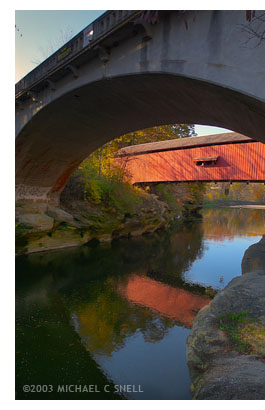
100723bridge_sotcHere was the situation: This particular covered bridge was located right next to a newer, concrete bridge that replaced it. They were so close together that I couldn’t get the whole bridge in frame with my 17mm lens because there was no room to back up. This photo of the two bridges gives you some idea of the setting.

So, I did what I could do. I backed up under the concrete bridge until it was just out of view. Then I fired off three vertical shots from left to right, making sure I had plenty of overlap along their common edges. I planned at the time to eventually stitch these three photos into a panorama, but I knew it would take some time to correct the wide angle distortion, mask the overlapping edges and tweak the sky and water to get a seamless blend. I set them aside for later.

“Later” came when I imported this shoot into my new Lightroom catalog last week. Seven years have passed and now stitching a panorama is automated. In Lightroom, you can select the three images and go under the Photo menu to Edit In > Merge to Panorama in Photoshop. The software takes it from there and you end up with a seamlessly blended, distortion corrected panorama in no time. Now I have one more covered bridge shot in my library.

Many other tools have been improved in the last seven years and I’ll share some other salvaged photos as I move through the files. It seems like Adobe’s image editing suite has arrived to a point where I can be comfortable making this kind of a huge time commitment to cataloging my images now, without having much worry that I’ll regret taking this path a year or two down the road. Sure, I expect things to continue to improve, but the overall system now feels mature enough to move ahead with confidence that time isn’t being wasted. That’s a good feeling.

Next up: a couple of small things that aren’t completely obvious in Lightroom that make life much easier…

Decade in review: 2009

100125cairo_sotc

Winding up my review of the the past decade…

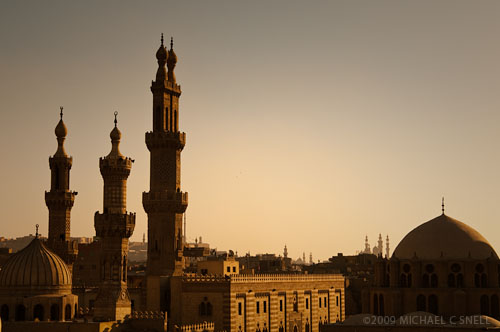
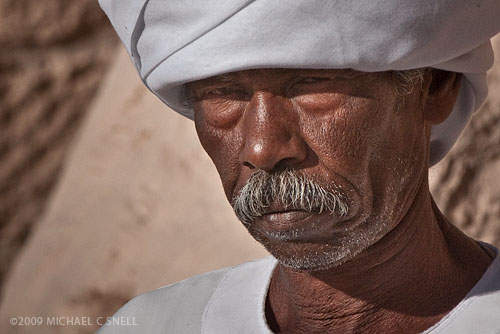
My first trip of 2009 was to Egypt — a few days in Cairo, a flight to Abu Simbel and then a Nile cruise from Aswan to Luxor. Egypt is one of those places I had wanted to go to since childhood. I was a kid when they were moving the temples at Abu Simbel to get them above the rising waters of the Aswan dam. The King Tut treasures always seemed to be in the news as well. I remember making drawings of that golden mask over and over again.

Sometimes places live up to our childhood imagination and sometimes they don’t. Cairo was a lot to take in at first. Big and bustling. The pyramids were astounding but hard to really experience amidst all the tourists and people selling everything from postcards to camel rides. Access to the Sphinx was very limited, allowing only a few angles for photography. If I were visiting as a tourist, I’m sure I would have had a very different experience but, as a photographer, I found it difficult.

Abu Simbel, Egypt, Africa

Once I was out of the city, the Egypt of my childhood imagination reappeared. Crowds were fewer or gone altogether and the monumental temples and sculptures were more accessible. It was easier to lose yourself in the place. If I were to give anyone planning a trip to Egypt some advice, I’d say to check Cairo and the pyramids out, but be sure to visit some sites further afield. For me, that’s where the magic was. Again, I’ve posted on this Egypt trip before so enter “Egypt” in the search at the top right for more.

Aswan, Egypt, Africa

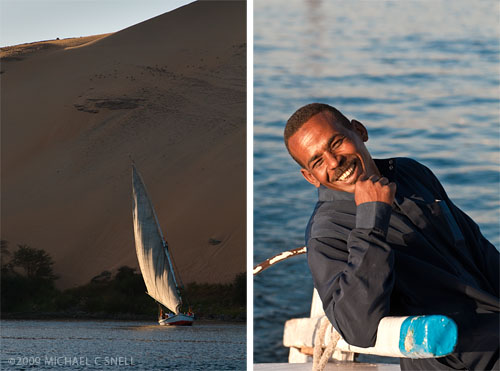
I had a couple of opportunities to get out on the Nile in felucca boats. But it was the temple architecture that really caught hold of me.

100125temple_sotc

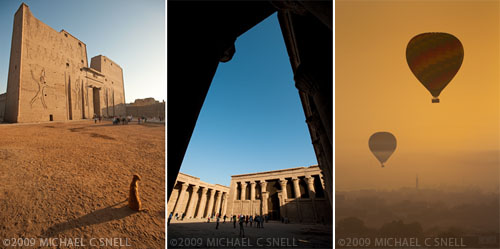
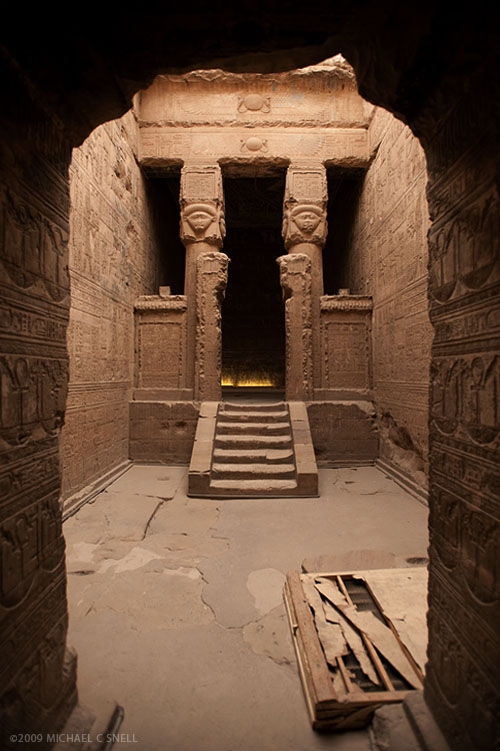
Oh, and that hot air balloon ride was a highlight, too. That was near the Valley of the Kings across the Nile from Luxor. Walking down into the tombs in the Valley of the Kings and seeing the wall paintings still bright with their original color was something else. That was definitely another crowded spot, though. We were granted special permission for interior photography, then it was quickly taken away when tourists saw us and starting snapping away themselves. But temples like the one below in Dendarra were almost deserted. You could walk around and feel like you were discovering it for yourself (although someone had come along before you to install some fluorescent lighting).

100125interior_sotc

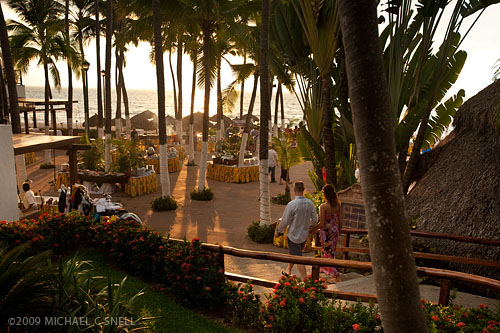
I must have been making up for the cold weather of Banff the year before but 2009 was mostly hot destinations. My last international trip of ’09 was to Mexico — Puerto Vallarta and Guadalajara.

100125dreams_sotc

I’m not a hot weather guy and it was HOT. Beautiful and hot, but hot. Steamy, too. I would walk out of my hotel room and find a chair where I could sit for the 15 or 20 minutes that it would take for my lenses to clear up.

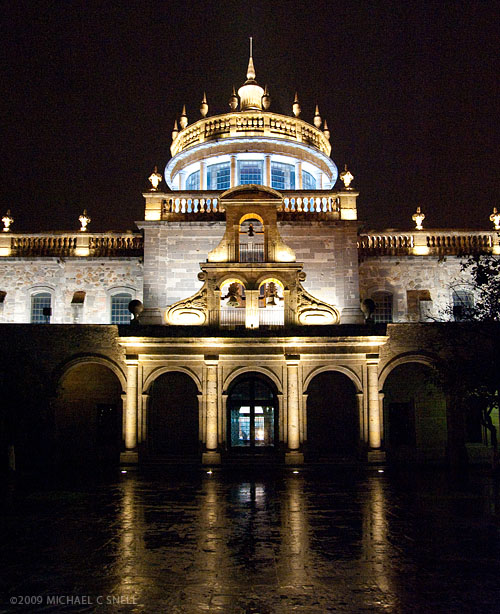
100125night_sotc
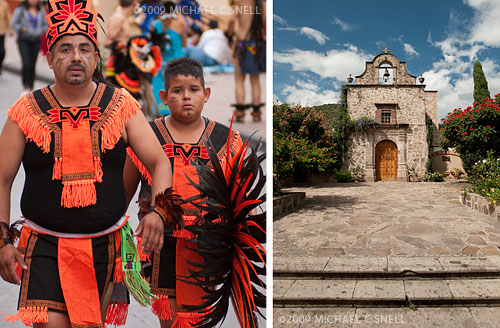
100125dancers_sotc

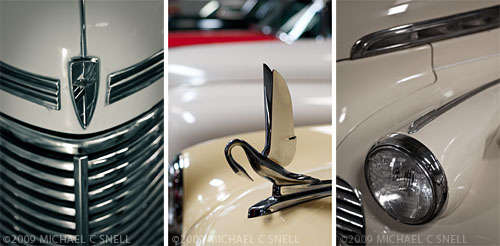
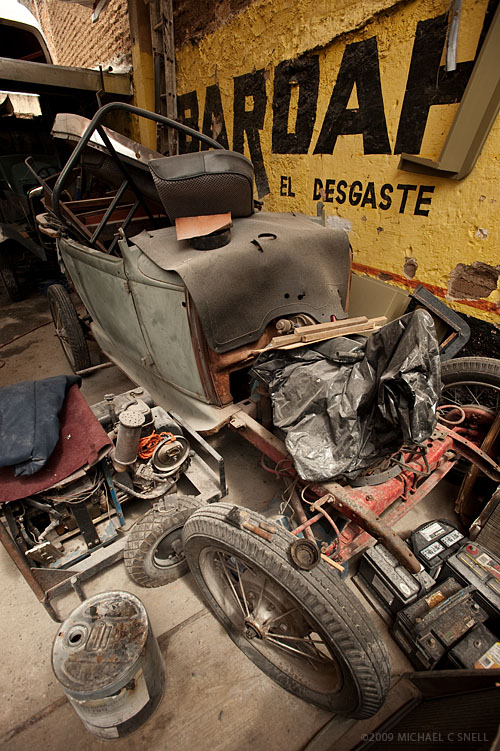
On my last day in Guadalajara, a friend had asked me if I would like to accompany her to some restoration shops run by the local car club members. Shiny objects are always of interest and vintage shiny object especially so. To make things even better, one of the car club guys picked us up in a restored 1941 Packard convertible. We were rollin’ Guadalajara in style.

100125cars_sotc

But you know the grungy parts of the shops were my favorite:

100125carshop_sotc

Thanks for tagging along as I’ve meandered the backroads of my last 10 years as a travel photographer. It’s been fun for me. I’ve learned a lot by looking at where I was in 2000 and where I am now. In some ways I feel I’ve improved. There are also some things that I think I used to do better. In the early years I was much more in control over where I went and what I shot. As I started making a conscious effort to build my international stock, I started looking for opportunities to travel affordably and then worked out a plan from there. I needed to shoot a little of everything so I would go anywhere. Now I’m beginning to feel like I’ve covered a lot of bases. I have stock from North and South America, Europe, Asia and Africa. I’ve begun working with more agencies so that I can focus more on shooting and less on marketing and sales. When I sold directly, I had to be more focused and niche oriented. Now I can put just a few images of a place with an agency and they will still be found by buyers. I don’t have to be “the Egypt guy” to sell an Egypt photo.

I’m now reaching the point where I feel I would benefit from becoming more focused again. I want to start planning trips that are of particular interest to me rather than taking whatever comes along and seeing what I can make of it. I want to develop some themes and explore them more deeply. It’s a little bit about slowing down, but it’s also about being more productive. It will be a steady transition — I already have multiple international trips lined up for the next two years — but it’s something I want to start working toward.

One more thing I’ve learned from researching these last 10 posts is that I want to look back at every year and wonder how I managed to get so much done. I don’t want to look back at a year of my life and wonder what I did with it. We don’t get many years and we need to make each one count.

Decade in review: 2008

100123ice_sotc

Continuing my review of the the past decade…

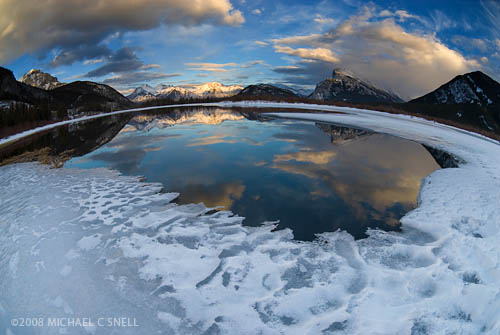
More adventures in Canada in early 2008. This time it was a winter trip to Banff and Jasper in the Canadian Rockies. I had visited this area briefly in 2000 on my way to Vancouver. It had been in the spring of that year and a completely different experience. This is grand country but I think it shows itself best in the winter. Still, I’d like to go back in the summer to see the green waters of Lake Louise.

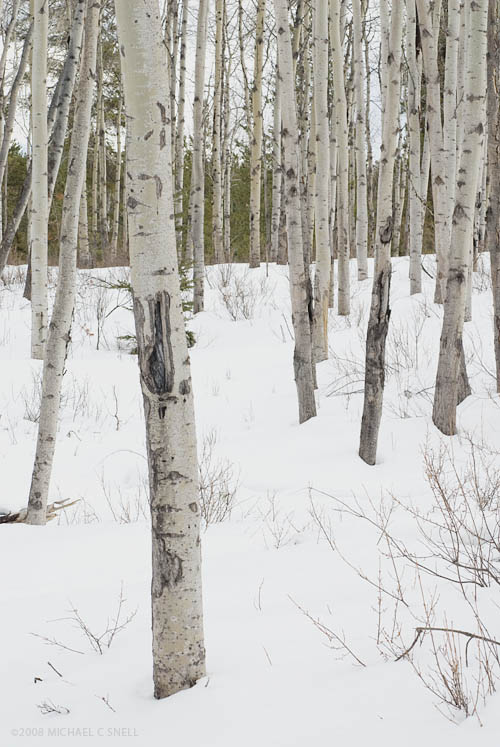
100123birch_sotc

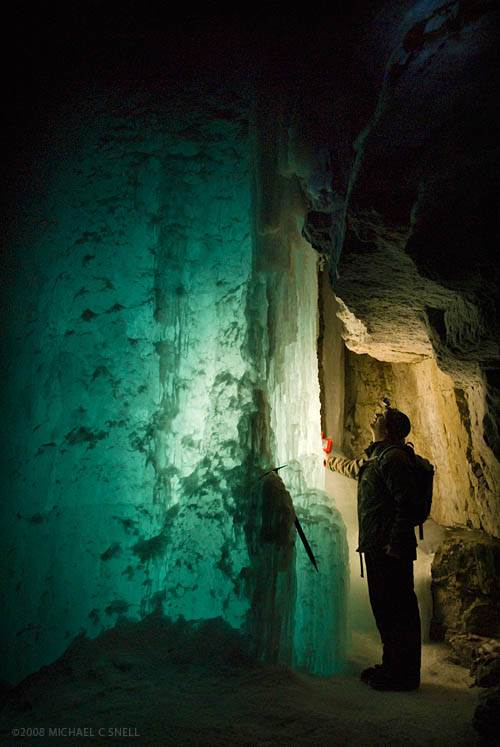
Snowshoeing, cross-country skiing, hiking on frozen lakes — I added a whole repertoire of ways I’ve traveled to get a shot. Perhaps my favorite part of this trip was a moonlit hike up the Maligne Canyon. You strap some steel spikes onto the soles of your boots and start walking up a frozen river at night while the canyon walls climb around you and stars shine in the narrow streak of sky above. At frozen waterfalls, your guide can shine his powerful flashlight behind the ice to illuminate the intense blue and green colors. Slippery, cold and dark… but a great experience.

100123icefall_sotc

2008 was another extremely busy year in terms of domestic travel. Michigan, Kentucky, Arkansas, Colorado, New Mexico and more. All while buying a new house and moving. It was a crazy year. I remember spending election night in a cabin in the woods in Arkansas and going down the mountain to check email at the nearest wifi hotspot. I had received a last-minute invitation to go to China in less than two weeks. I needed to send my passport in for my visa and luckily I had it with me. The next day was filled with driving back and forth across Arkansas visiting various Post Offices in different towns trying to find where I could get additional passport photos taken and get my package over-nighted to Chicago. No one Post Office seemed to be able to do both of these things but by splitting the chore between two (I believe in Harrison and Fayetteville), it got done. Ten days later, I was in Shanghai.

100123dance_sotc

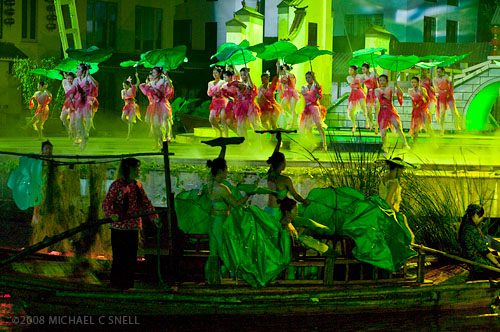
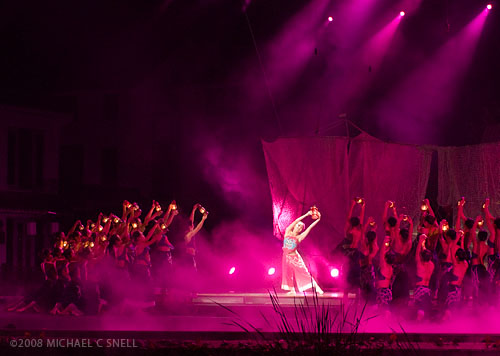
I’ve posted about the China trip on this blog before — you can enter “China” into the search box at top-right to find more. The trip started in Shanghai and then went up the Yangtze to several water towns with historic districts built on canals. The colors were phenomenal.

100123green_sotc
100123pink_sotc

Those last two shots were from an open-air performance in Zhouzhuang. It was spectacular.

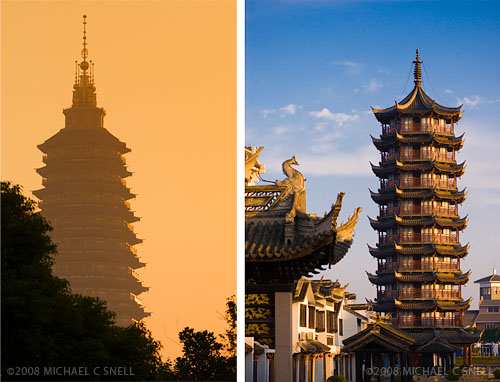
The architecture was also fun to shoot. Pagodas were everywhere, including the world’s tallest in Changzhou that had opened just a year before. Over 500 feet tall, it appears through the glow of the morning sun in this shot on the left:

100123pagoda_sotc

The pagoda on the right is from Zhouzhuang. I hope to return to China again soon. It’s a big country and there are so many more things I want to see. But that’s the way it is with the whole world, isn’t it? So many things to see, so little time. I’ll continue to do my best to see and photograph as much of it as possible, for as long as possible.

Decade in review: 2007

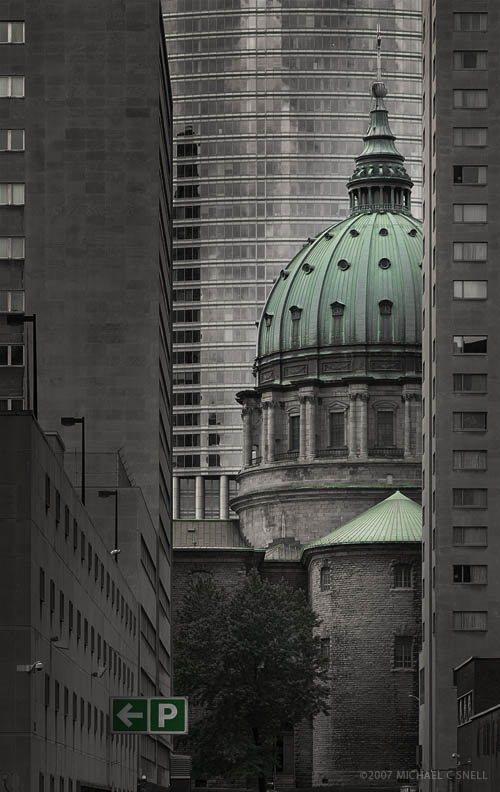
100122montreal_sotc

Continuing my review of the the past decade…

In addition to a plethora of US trips, 2007 had me returning to Canada once again. Canada has always been a favorite destination of mine. The weather suits me, the people are great, and the country offers such a wide variety of locations to photograph.

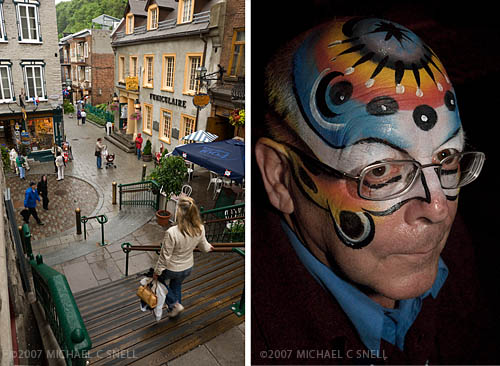
I had whet my appetite on Eastern Canada in 2004 when we drove across the Gaspe peninsula and down (er… up?) the St. Lawrence. In 2007 I had a chance to do a similar trip again — but this time in reverse and largely by train. I started in Montreal. I had only spent a few hours here in 2004 so I enjoyed having an opportunity to dig a little deeper. It’s a great city and one that Sally’s family has historic ties to so I’m sure I’ll be back again.

100122quebec_sotc

From Montreal, I took the train to Quebec City and enjoyed a stay in the famous Fairmont Le Chateau Frontenac — without a doubt the most recognizable building on the Quebec skyline with its green copper mansard roofs. I spent most of my time wandering the old town. The weather was damp but it did nothing to detract from the beauty of the place.

A few days later it was back on the train, following the St. Lawrence toward the Atlantic. Around Mont-Joli, the train crossed the Gaspe peninsula through the same valley I had driven three years before. Much of the journey had been at night but dawn broke as we approached Chaleur Bay and I was able to enjoy the view from the large window in my tiny room as we followed the coastline to the tip of the peninsula at Gaspe.

100122gaspe_sotc

I took a whale watching boat out one morning and got to see the fluke of a humpback rise from the water as she dove away from our boat with her baby at her side. I made a rookie mistake while trying to steady myself on the violently rocking boat to get a shot and the autofocus caught the coastline behind the whale instead of the whale itself. You’ll just have to trust me that it was a spectacular sight.

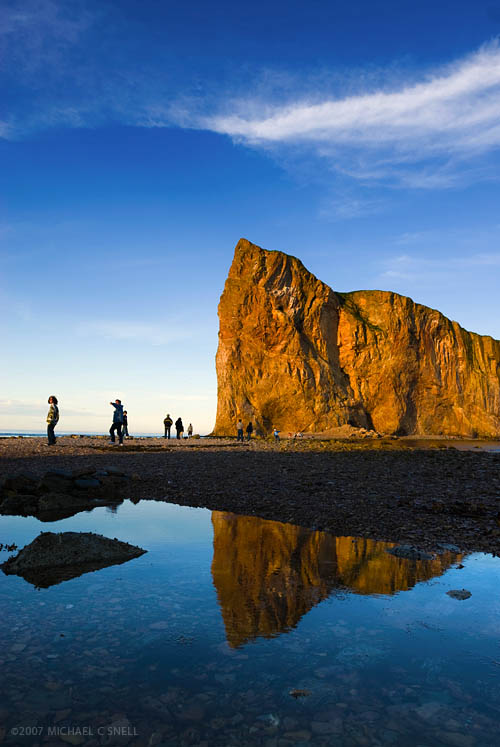
Perce Rock is another landmark that I thoroughly enjoyed shooting on this trip. Maybe it’s because I’m a Kansan, but put a big huge rock in front of me with some nice light and I am one happy camper. I spend a great evening exploring the endless variety of ways to shoot this hunk of geology until the light was gone and I celebrated with one of the better bowls of seafood chowder that I’ve had in my life.

100122perce_sotc

Decade in review: 2006

100117dance_sotc

Continuing my review of the the past decade…

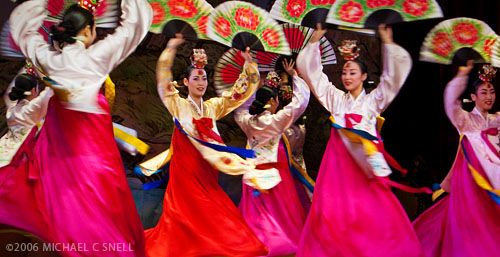
2006 kicked off with a trip to South Korea. Traveling with a group of American journalists, we caught the attention of school kids everywhere we went. They would rush over and want to practice their english on us. The reception was warm and welcoming. Anyone in our group with blonde hair and blue eyes was especially popular. We had our own paparazzi, too. Korean journalists following the American journalists everywhere. One night we saw an on-the-street interview with a member of our group on the nightly news, dubbed in Korean. Americans seemed to be truly loved in South Korea. It was a feeling that I hadn’t experienced abroad so strongly for several years.

100117seoulmkt_sotc

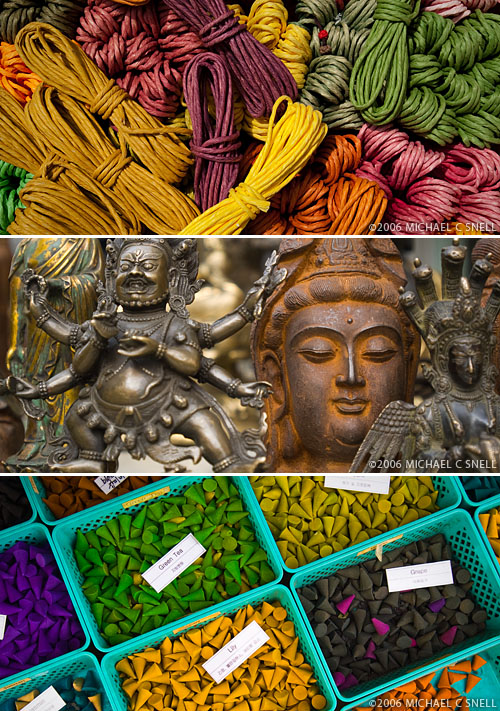
The street markets in Korea were a favorite of mine. Always colorful and always full of the smells of street food. Some of that yellow twine in the top photo has been wrapped around the handle of my suitcase ever since this trip. It makes for an easy way to identify my bag on the airport carousel — even though it’s showing the wear of many thousands of miles of transport.

One of the more memorable events from this trip was an overnight visit to a buddhist temple. We dined with the monks, took tea, made paper lotus lanterns and were schooled in buddhist philosophy. I’ve written about the dining experience on this blog before so I won’t go into it again here. Suffice it to say that I’ll remember that night for a long, long time.

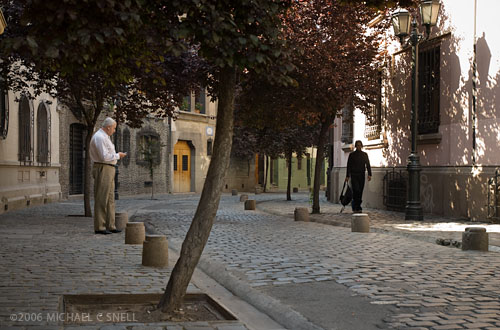
There were several US trips in 2006 as well, including a post-Katrina visit to New Orleans. Then, in the Fall, I got to experience Spring again by crossing the equator and visiting Chile. Here’s a shot from a great old neighborhood in Santiago:

100117santiago

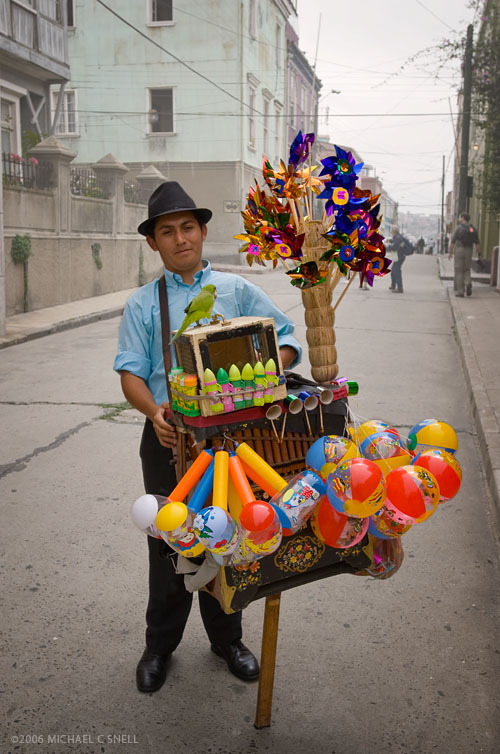
I spent a day in the port city of Valparaiso as well. It’s a picturesque town that spills down mountainsides in a riot of color. Funiculars take you up many of the hillsides but I generally preferred to walk. After many hundred steps up the side of one mount, I followed the sound of some odd music to find this fellow with his parakeet selling toys from his music box:

100117valparaiso_sotc

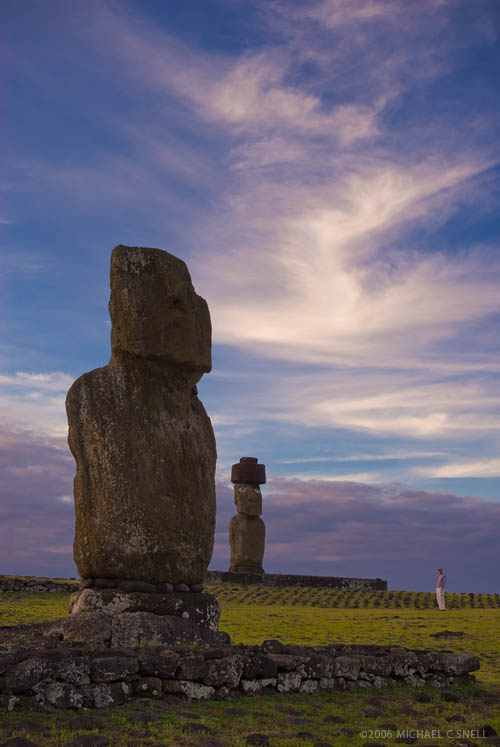
Santiago is one of two places from which you can fly to Easter Island (the other being Tahiti). One of the most remote inhabited places on earth, I had always wanted to visit it to see the stone heads, or Moai. The flight was about 5 hours straight west over the Pacific. There was a little screen in the seatback in front of me where I could watch the image of a tiny plane as it neared the Chilean coast, then headed out into the blue. The screen remained simply blue with that little plane pointed forward until, more than 2000 miles later, we miraculously landed on the tiny island. For four days I explored the nearly treeless landscape that strangely reminded me of the Flint Hills 60 miles west of my home back in Kansas. Except these hills were surrounded by ocean and were inhabited by those mysterious heads.

100117moai_sotc

Decade in review: 2005

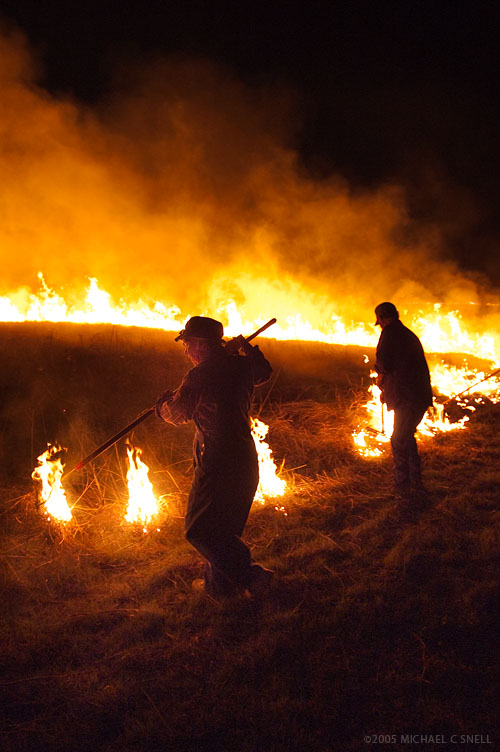
100116fire_sotc

Continuing my review of the the past decade…

2005 was a year of assignments throughout the Midwest for me. I like to take driving trips when it makes sense. I enjoy driving and like to be able to arrive at a place gradually, to know what is between here and there, and to have some sense of distance. When you fly, you get dropped into a new place with no bearings. You don’t have a sense of scale for how far you’ve traveled. You don’t know how the landscape unraveled between here and there. And, for me at least, it’s more difficult to get a feel for directions. If I drove in from the east, then I arrive knowing east from west, north from south. When arriving by air, I need to depend more on maps and make a conscious effort to pay attention to sun angles, etc. Obviously, flying is often necessary, either for speed, efficiency, or to just plain get somewhere that you can’t drive to.
100116band_sotc

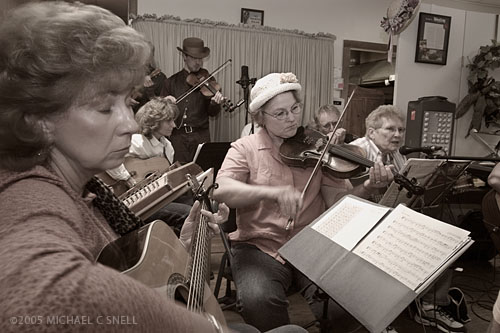
The first two shots in this post are from a prairie burn and related festival that I shot in the spring of 2005. I live near some of the largest remaining sections of tallgrass prairie in North America. Ranchers who graze cattle on this land have learned that a controlled burn in the spring will help new grass grow that will better fatten their livestock. These burns are often done at night while winds are low and it’s an amazing experience when driving across the prairie to see lines of fire in the distance and smell the sweet scent of burning grass.

Other assignments required far more driving than this one did. 2005 seems to have been the Year of the Roundup. In magazine-speak, a roundup is a story that bundles several locations together by theme. You’ve seen them: Best Places to See Fall Color in the Great Lakes, Children’s Museums of the Midwest, Ten Places You Can Still Find a Real Soda Fountain. That sort of thing. For several years we would shoot an annual story on the Best Christmas Shopping in Kansas City, St. Louis, Chicago, Indianapolis and Des Moines.

These are difficult trips to make work financially. A roundup may not pay more than a story on a single destination but, if the publication doesn’t pay expenses, you can see where the costs would add up when you need to visit several cities over several days. I’ve always tried to combine as many assignments or stock opportunities into each trip as possible. I’ll let art directors I work with often know where I’m going to be to see if they have something else in the area that I can tag on or I’ll look for iconic or unusual scenes in the area that I can use in my stock files. It works but it requires a lot of planning and a lot of driving.

I’m located about as close to the center of the US as you can get but in 2004 and 2005 I drove to both coasts in addition to several trips to the Great Lakes region and various other places around the Midwest and Western US. In 2004, we drove to Portland, Maine for an MTWA meeting, took the ferry to Yarmouth, Nova Scotia, drove up across the Gaspe to the St. Lawrence and then back home through Quebec, Montreal and Toronto.
100116mtns_sotc

In 2005 we drove to the west coast for a different reason. We had decided to take a serious look at relocating. We’d lived in the same house for nearly 20 years and had outgrown it when we both began working from home in the late 90s. In 2003 we leased office space downtown to have some more room. It worked for awhile but we realized we were more efficient when we had a home office. We decided to look for some place large enough to accommodate our home and office and we decided that, if we were moving, maybe we should make a big move.

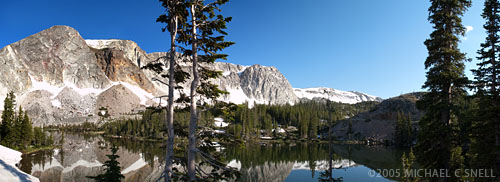
We made a list of things we would want from a new home and a cool, but not cold climate was high on the list. From our travels, we decided that the Pacific Northwest was our best option. We researched towns and put together a driving circuit that would take us through several places that we thought had great potential, mostly along the Oregon and Washington coasts. We threw in some towns in Wyoming and Idaho for the trips out and back as well. The panorama above was taken near our first stop: Laramie, Wyoming.
100116porta_sotc

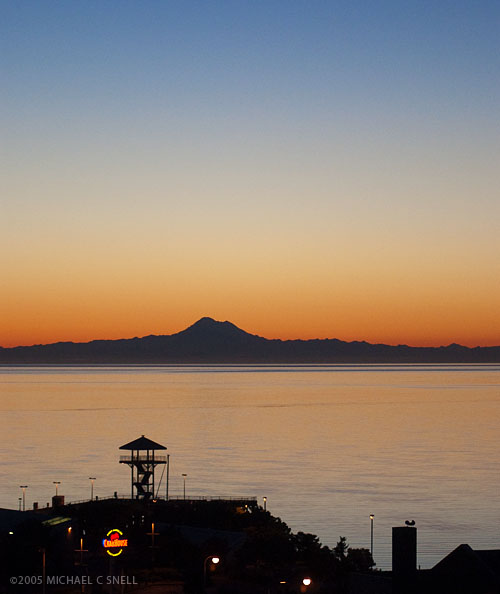
Port Angeles, Washington, was high on our list based on the experiences we’d had there on a previous trip in 1997. What we learned by our second visit to this town — and actually from this entire experiment — was that you need to look at a town completely differently if you are planning on visiting as a tourist or moving there permanently. The things we loved about Port Angeles were quickly overshadowed by things that now seemed unworkable for us in terms of a home. In general, all of the places we looked at had much higher property values than what we currently had in Kansas (this was before the real estate bubble burst but we could see that coming and didn’t want to get caught up in it). We liked the smaller coastal towns but were concerned about being further from international airports and having mountain roads between us and larger cities.

In the end, we decided to move just 30 miles east of our old home to Lawrence, Kansas. It’s a university town so it has a lot of diversity and a vibrant arts community. It’s 30 minutes closer to our international airport in Kansas City. And it’s incredibly affordable compared to the west coast. You can get a 3000 sq. ft. house here for what a double-wide might cost you on the west coast. It has worked out great for us and we’re very happy with our choice.
Decade in review: 2004

100114alps_sotc

Continuing my review of the the past decade…

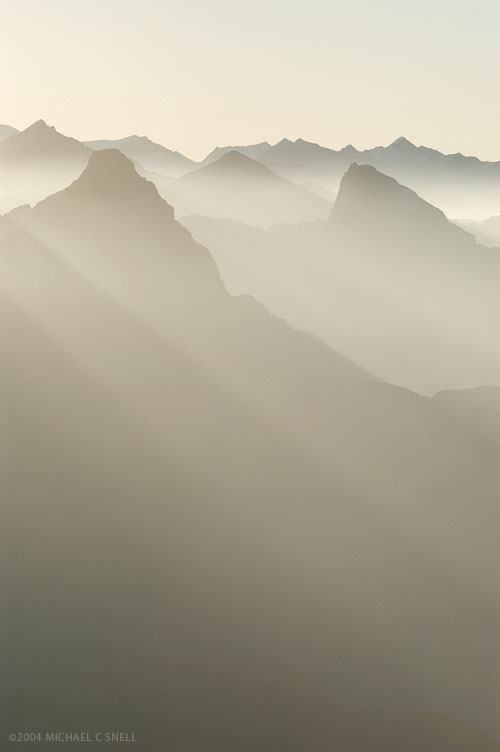
I attended my first SATW Annual Convention in 2004 in St. Moritz, Switzerland. It was an absolutely amazing trip. A highlight during the convention was a sunrise shoot from the peak of Mt. Pers in the Bernina Alps. A small group of us took the cable car up to the ski area at Diavolezza the evening before. There were some dormitories there where we spent the night, rising well before dawn to hike the rest of the way to the peak. With only LED headlamps to see by, we followed our guide up a steep, narrow and rocky trail. It was almost total blackness. I regretted taking my full pack with me immediately.

We arrived at the summit just as the horizon began to glow. I shot like a maniac for what seemed like only minutes but was probably more like an hour and a half. The shot above is one of the later images when the sun had risen and was beginning to send beams down through the fog in the valleys.

When it was time to head back to the lift, I finally noticed the trail we had come up on. It was a treacherously thin line snaking down an incredibly steep incline of sharp, loose rock with a sheer drop to one side. I was glad I hadn’t been able to see where I had been going on the way up. Once back at the cable car deck, there was another surprise — it had broken down. After some phone calls the decision was made that a rescue helicopter would be sent up for us. A great morning just got better!

When the helicopter arrived, we were divided into groups of three for our trips down the mountain. On my flight I got the distinct impression that the young pilot was trying to frighten the “tourists” by buzzing low over the mountain tops and descending quickly at a dizzying angle to the valleys below. I absolutely loved it.

100114lucern_sotc

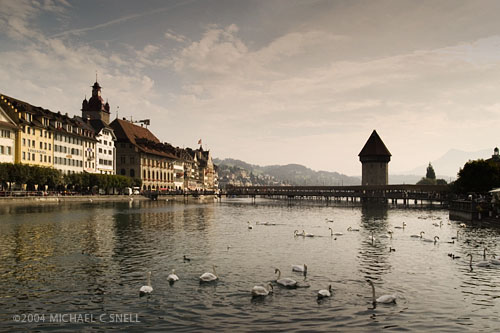
After the convention, I spent a few days in Lucerne before continuing south into the Ticino. I stayed at the Art Deco Hotel Montana within walking distance of the old town and its famous covered bridges. The hotel had its own funicular that would take you up the steep hillside from the lake and right to the lobby. My room had a balcony overlooking the old town — basically the reverse of the scene you see here as the hotel is on the near hillside in the center of this photo.

I had an unlimited rail pass for 10 days and made use of it to cross the Alps and spend one last week in the Ticino — the southern, Italian-speaking part of Switzerland. This area is very different from most people’s idea of Switzerland. The Italian influence is everywhere and the climate is more tropical.

I remember having difficulty in planning for this trip in choosing between staying in Lugano or Locarno. Both are in the same region and I was really looking for a town that would be walkable and very distinctive. My thought process was that I had shot many of the iconic Swiss scenes in Zurich, St. Moritz and Lucerne — I wanted this last week to focus on a side of Switzerland that would be entirely different and visually unique. I also felt that the Ticino was less well-covered in the stock world so images might have more value.

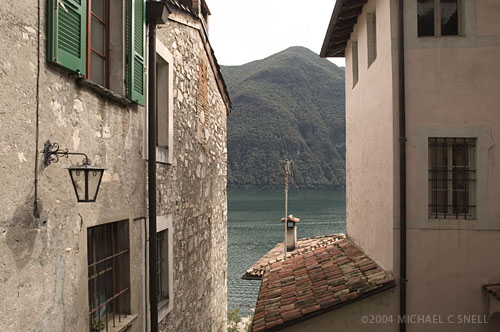
In the end I chose Lugano and just made a day trip to Locarno. I feel that Lugano was definitely the right decision and had the picturesque setting that I had hoped for. On the shore of Lake Lugano and surrounded by mountains, my rail pass also gave me free access to excursion boats to more remote towns like Morcote and Ghandria (seen here).

100114ghandria_sotc

It was a great trip and I came away with a lot of images for the stock files. The only downside was a cold or sinus infection that I came down with while in Lucerne. Upon arrival in Lugano I visited a small pharmacy in amidst the butchers and grocers of the local market. I pantomimed my symptoms to the non-English-speaking pharmacist and was given something called “Retard”. To this day I’m not sure what it was but I felt nearly perfect within hours.

Decade in review: 2003

100108agean_sotc

Continuing my review of the the past decade…

2003 marked the year that I moved solidly to digital. I still had my F100 and shot film on assignment for publications that hadn’t themselves transitioned to digital yet, but for my stock work — and especially international travel — I was 100% digital.

The images in this post come from a trip to Greece and Turkey in May and June of 2003. I had a Nikon D100 and traveled with a Mindstor portable storage device and a 12″ Powerbook for back-up. I remember it was startling how easy it was to pass my entire camera bag and laptop through the airport x-ray equipment without a worry of images being fogged. I was done flying with film and I’ve never looked back.

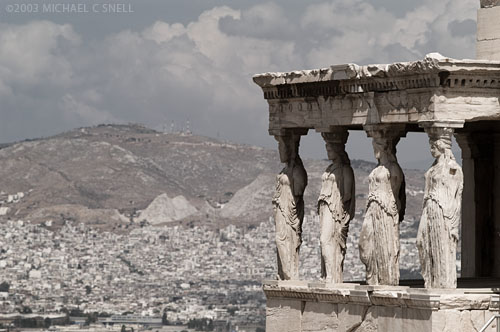
100108acropolis_sotc

I loved Greece and only wish I’d had more time there. With just a few days in Athens and Delphi, then a short cruise to the islands of Crete, Patmos, Rhodes, Mykonos, Santorini, and a quick stop at Ephesus in Turkey, it was a lot packed into a short time and there was never time to wait for good light. I took what I could get and considered it to be a great scouting opportunity. One day I’ll go back and spend a few days each in one or two places but I now have a much better idea of where I’d like to spend that time.

Of the Greek islands, I think the Cyclades were my favorite. Mykonos and Santorini belonged to this group of rough and rocky islands and I found them to be endlessly photogenic with their whitewashed jumbles of blocky houses and shops.

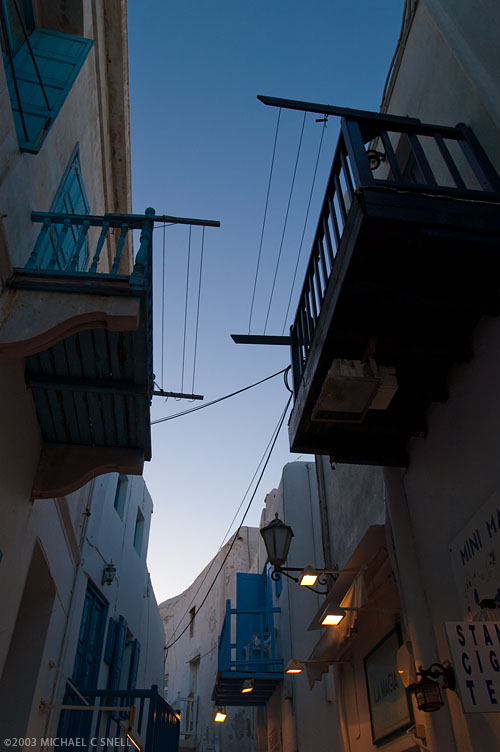
100108balconies_sotc
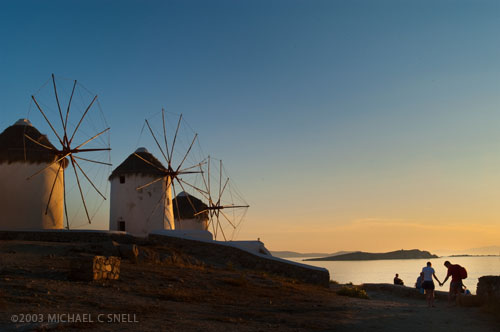
100108mykonos_sotc

These two are from Mykonos. My research had told me that there were a row of windmills on the far side of town from the docks so I made my way immediately in that direction to catch sunset. There’s no direct route to anywhere on Mykonos but wandering the narrow streets was half the fun. The shot looking up through the balconies was taken on the walk back to the boat.

One other lesson learned on this trip: it was during this time that Athens was gearing up for the Olympics and that meant that everything was under construction or renovation. Probably not the best time to visit a place for stock photography. There was scaffolding everywhere. The construction also meant that many images would be dated almost immediately. Still, there’s so much to see in Athens that I wasn’t short of things to photograph. The highway construction that was going on between the city and the airport did make for some nervous moments before catching the flight home, though.