Category Archives: Chile

Lightroom 3: noise reduction

100911candles_sotc

In 2006 I was in Santiago Chile shooting with my new-ish Nikon D200 and I found myself in the dark interior of a 400 year old church. It seemed like the ideal time to play around with the improved high-ISO capabilities of that camera. Back in the film days, I used to shoot with Fuji Velvia that I rated at ISO 40 nearly all the time. I did everything I could to avoid film grain and stepping up to an ISO 100 film was almost extreme for me. As I recall, my D100’s lowest ISO was 200 and it seemed really extravagant at the time to have all that headroom. I rarely moved off of 200, though, as the noise would creep in at 400 and especially noticeably by 800. The D200 had a lower minimum ISO of 100 and felt more in my comfort zone but there were tantalizing reports that it even gave good results at ISOs of 1600 and higher. Each successive body I’ve owned has improved even further but I still tend to stay at minimum ISOs as much as possible. Old habits I suppose, but I just don’t like the look of digital noise at higher ISOs and I like my RAW files to start out as clean as possible.

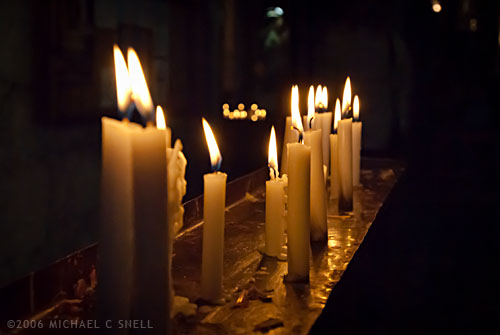
But back to that church — I didn’t have a tripod with me so I decided to experiment with higher ISOs to at least be able to capture something in that dark, candlelit interior. This shot of the candles themselves was taken at ISO 1600. It was a decent image when I processed it at the time, but there was some noise. I didn’t think much more about it until I was importing my Chile shoot into Lightroom 3 over the last couple of weeks and I decided to give the new noise reduction controls a test.

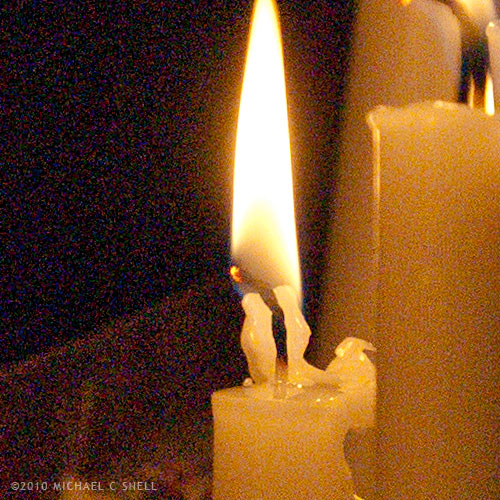
Here’s a crop at 100% of the image with noise reduction off:
100911noise_off_sotc

And, to keep these side-by-side in the post, here’s a crop with it on (I’ll explain more after the image):
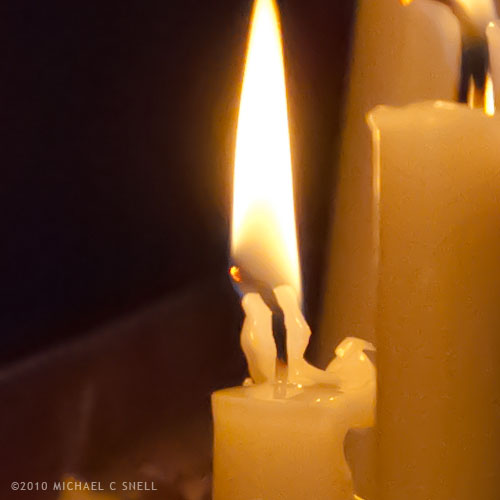
100911noise_on_sotc

I’ll be the first to admit that this is not a true, scientific test. To be honest, I could have had a better result than that first crop four years ago if I had applied the noise reduction tools that were available at the time. What’s more, I’ve actually increased the noise issue a bit due to some exposure compensations that I’ve made in Lightroom. The idea here is just to show how much noise was in the RAW file, and how much Lightroom 3 was able to remove.

I’ve also really cranked up the noise reduction in Lightroom on the second shot. It’s more heavy-handed that I would typically use but, again, I wanted to kick the tires and see what she’d do. Luminance is maxed out at 100 in that second crop.

Is it perfect? No. There’s a bit of a painterly quality to the gradations, but it’s pretty amazing. You could continue to tweak the settings and maybe even add just a touch of LR3’s new Film Grain to disguise some of those gradation artifacts but, as a quick-and-dirty test, I’m impressed by the possibilities. I’m sure I’ll still stay in the low end of the ISO range 95% of the time, but I certainly won’t let dark conditions prevent me from shooting anymore. It’s comforting to know that even if the results aren’t great now, in four years your tools may improve to the point where you can salvage those images.

And if you’re wondering why I would add film grain after trying so hard to disguise high-ISO noise, it does seem counterproductive but it’s a technique I’ve used for years to disguise areas of retouching. Sometimes you’ll need to add a gradation to a sky or something of that nature and the retouched area looks smoother and more noiseless than the rest of the image, calling attention to your efforts. Adding a little noise or grain will unify the original image and the retouch and make everything blend. In small doses, that added grain never shows up on output. Maybe that will be the subject of a future post…
Lightroom tidbits

100901chilecolor1_sotc

I’ve been giving Lightroom 3 (now 3.2) a real workout for the last few weeks. I’ve been importing my back catalog in massive chunks and making a quick pass at adjusting the original RAW files rather than importing the images that I had already tweaked previously in Adobe Camera Raw. This is a pretty big-stroke process right now — I’ll come back later and expand keywords and tweak the highly ranked shots — but it’s been a really interesting process to see the images improve. I’d like to think that the improvement is due to my own advancing skills in RAW processing, but the fact is that much of it is really due to improvements to the software over the years. Better processing algorithms and better controls.

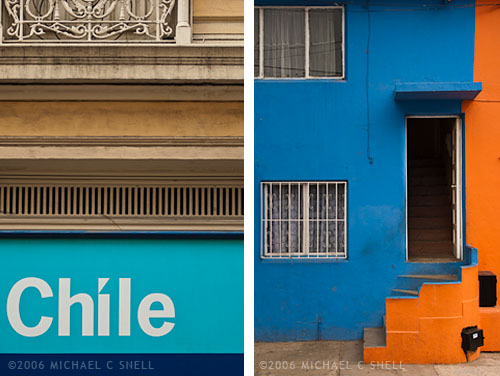
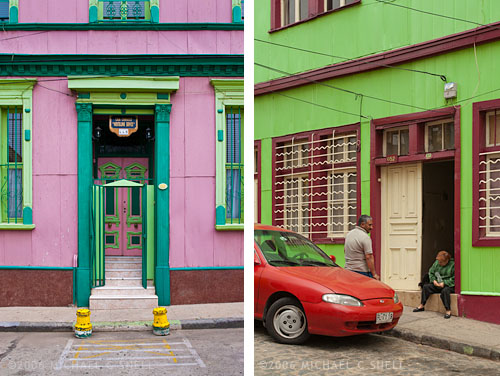
I’ve been importing my 2006 images from Chile most recently and have noticed a couple of major advancements. One is Lightroom’s much improved ability to get rid of noise in high-ISO shots. Images that have never seen the light of day will now be going into my stock files because the noise that would never have passed Quality Control is now all but gone. Amazing. I’ll share some examples in the coming posts.

The most noticeable change in the images from Chile, though — especially Valparaiso — is how much more control I have over color now. Valparaiso is a city that is all about color. Colors you never thought you would see together, you’ll see in abundance in Valparaiso. Capturing some of these colors on film would have been frustrating. Sure, Velvia would have made that row of multi-colored row houses really pop. But then you’d round the corner to find a weathered, grey facade with the most subtle hues and you’d be cursing yourself for having 20 more exposures of that super-saturated film in your camera. One of my most favorite things about digital is just that — you can make decisions on a shot-by-shot basis and not be stuck with a film decision you made 10 exposures ago. Did you pop in a roll of ISO 800 film to shoot that dark church interior? Too bad now that you’re out in full sun and all kinds of contrast. No, being able to adjust ISOs and saturation levels for each individual image is a game-changer.

100901chilecolor2_sotc

And that flexibility doesn’t stop with in-camera controls. Lightroom (as well as all other image processors, really) lets you tweak color and contrast in ways that film selection alone never even came close to. The Vibrance slider in the Presence panel has become one of my favorite tools. More subtle than the Saturation slider, it affects the blues and greens more than already-saturated reds and yellows. Very nice. And the sliders for adjusting the hue, brightness and saturation levels of individual colors take that control to another level.

One other set of controls that I find myself using more and more often is the new perspective correction panel — actually the “transform” controls in the lens correction panel. While I still prefer the “distort” controls in Photoshop, it is nice having some of this ability in Lightroom. The controls take some getting used to but they are a welcome addition.

I’ll go into more detail on each of these and other Lightroom features in future posts and show some examples.

Chile, but getting warmer

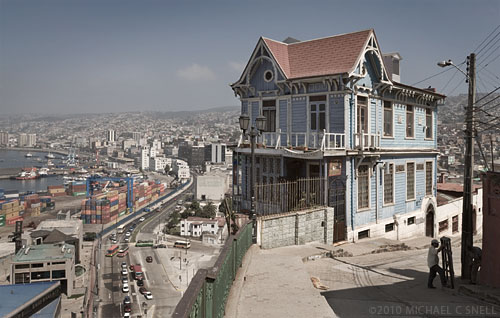
100306valparaiso_sotc

Sorry. Bad pun. I’m posting a couple of photos from Chile today since there’s been so much in the news since the earthquake last week. The shot above is from Valparaiso, on the coast west of Santiago. It and the following shot are from a trip I took to Chile a couple of years ago. If you want to see coverage post-earthquake, check out The Boston Globe’s Big Picture here and here. The following shot is of a more modern side of Chile in the bustling capital city of Santiago.

100306santiago_sotc

Chile has also lately been appearing on television in the Amazing Race 16. This show is a guilty pleasure of mine as I love to see the contestants panic when thrown into the various situations that so often come with travel. I had to laugh when the cowboys changed their money for “Brazilian” when they heard they would be flying to Santiago. Obviously, that didn’t work out so well for them upon arrival in Chile, but they’ve been doing much better ever since.

Valparaiso was also the scene of a challenge when team members had to “wire walk” across a deep valley in that very hilly city. I knew exactly where this challenge took place and can say that I would not have wanted to participate myself. In fact, there are few of the challenges that I would want to participate in but I would love to be on the crew of this show and travel to all of the exotic destinations. Maybe be the camera guy that travels with the host, Phil. I imagine they get to stay and eat in the nicer places.

If you haven’t seen the show, check it out this Sunday. I think the cowboys might take the million dollars this year.

Oh, and back to my pun… it IS getting warmer. Finally! The last couple of days it has reached the 60s after three months of deep freeze temps and repeated ice and snow storms. There’s still ice in some areas of our yard but it shouldn’t last long now. I’ll be leaving in a week for even warmer temperatures but more on that later.

One man’s trash…

flea market

flea market

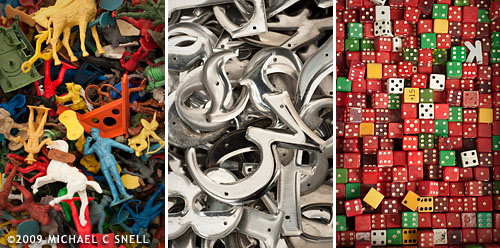
I’ve intended to shoot the White Cloud Flea Market in the tiny riverside town of White Cloud, Kansas for decades but it’s held only two weekends a year and in seasons where I’m usually on the road. I finally made it this year and have to say that it’s an experience. Sort of a Woodstock for junk dealers. I loved it.

All of the above shots came from the tent of my favorite dealer who was actually at the overflow flea market in the small town of Sparks. Yes, there’s so much stuff that one tiny town and its surrounding farmland can’t seem to hold it all. In fact, I think there were more dealers in Sparks and more of a community atmosphere. This particular tent proved my earlier theory that anything is cool when gathered in large quantities (the exception to this rule is food, which can become downright disgusting when seen in quantities larger than a plate). Bin after bin of toys, toy parts, house numbers, gears, etc. were a visual treasure trove for me. We bought some things, too, including an excruciatingly brightly colored ’70s-era Japanese pachinko game that will soon have a very special place in the new house.

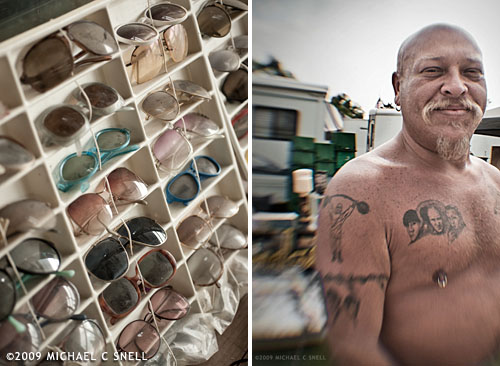
The rack of vintage sunglasses below is from the White Cloud market but the tattooed gentleman was a vendor at the Sparks market. A great guy who spotted me photographing a John Belushi figurine and wanted me to see his Blues Brothers tattoo. All-in-all a great day.

flea market

Forces of progress

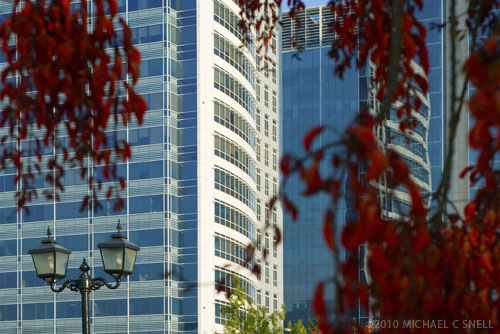
Shanghai financial district

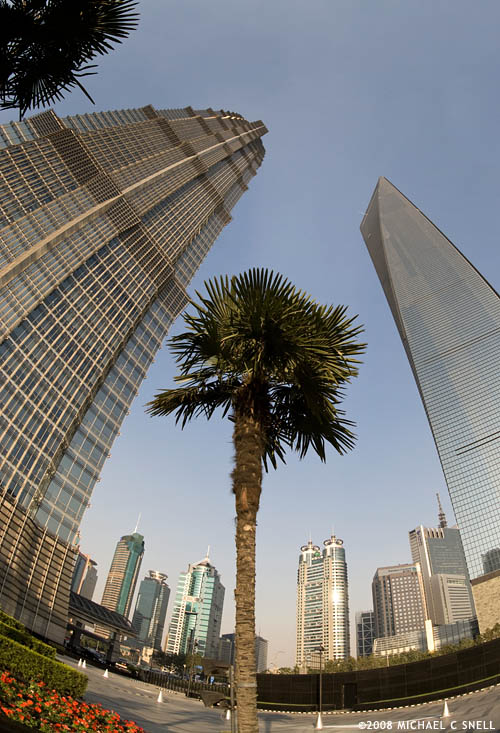
I still have a few more photos from China that I want to share before my next trip begins on the 1st of February. This is a shot of two of the tallest buildings in China — part of Shanghai’s Pudong new development area. This area has sprung up from nothing in the last two decades and is now a symbol of both Shanghai and a changing China. Such a symbol that my main goal for this trip was to get a good, iconic skyline shot from across the river with the futuristic Pearl Tower and these other giant skyscrapers. More on that effort in the days to come but I’ll use this shot to talk about the shelf-life of Shanghai skyline photos.

In the guidebook I purchased just prior to my trip (published in 2005) photos of this area showed only the 88-story Jin Mao on the left. It was then the tallest building in China. The building on the right has since popped up — taller — and is now the tallest building in China. Great time to get some new, updated skyline shots, right? Surely that guidebook publisher is looking for new images when they go to reprint. But wait. Construction is already underway just blocks away for another new building that will eclipse both of these towers. Looks like my shots will be stale in a few months time, too.

Just as well. Even though it looks like a beautiful day in this shot, haze made getting a distant skyline shot difficult during my two days in Shanghai. I’ll post a few shots that I did manage to get during that time over the next couple of weeks but that twilight shot of sparkling towers reflected in the river just never came together for me. Flexibility is the name of the game, though. There’s always something to shoot.

Progress has also been affecting my life in other ways lately. I’ve recently updated all of my Adobe software to the CS4 versions. That would include Photoshop, InDesign, Dreamweaver, Flash, Fireworks, Lightroom, Contribute… you get the picture. It’s always a little unnerving to update so much software all at one time — especially software that you depend on daily for your livelihood — and there have been a few hiccups but nothing insurmountable. It’s just that darned learning curve again.

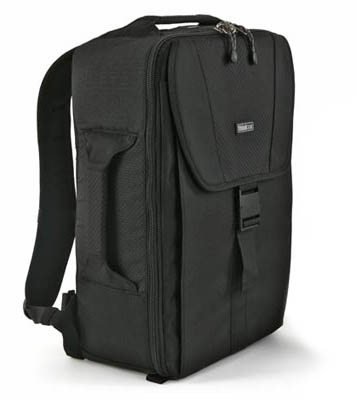
Don’t get me wrong — I love to learn new things and I thrive on change — but there’s just a whole lot at once right now. Beyond the software, I’m still sorting out my new travel kit and the new D700 and D300 bodies. I finally decided it was time for a new bag, so I ordered a Think Tank Photo Airport Ultralight.

think tank bagThis bag weighs in at just over 2 pounds when empty so it adds very little to the carrying weight which is a major concern of mine, especially when getting through airports. The dimensions look good for the overhead bin and it has a very sleek outer surface that should avoid snagging as it gets stuffed in. I’ll typically still pack a small bag in my checked luggage that I can use on the street. Backpacks are great for getting all of your gear to a location, but they’re not so convenient when you’re trying to get to a lens fast on a busy Shanghai street. So far, I’m very impressed with this as a travel bag and look forward to putting it and all the other new stuff through their paces next month.
Seventeen days and counting until my 2009 travel year begins. I’d better start going through that 400+ page D700 manual.

Happy New Year!

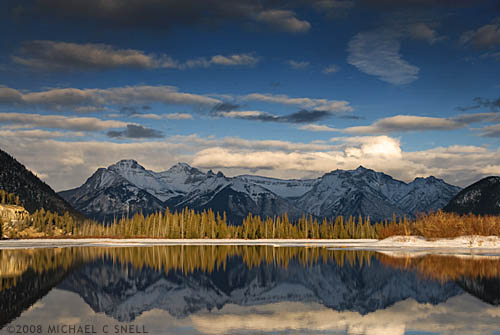
Here it is, 2009. Where did the time go? 2008 was an amazing year for me, filled with plenty of travel — even though we swore we would cut back so that we could buy a new house. While we did buy a house, move, and sell the old one, we didn’t do a very good job of cutting back on the travel which made for a very busy, very hectic year. I even started traveling earlier than normal with a February trip to Banff:

Banff, Alberta, Canada

Hard to believe that was less than a year ago. That trip set a great tone for 2008. Truly an amazing destination. This year will begin with another amazing place and I’m starting 2009’s travel even earlier. The first week of February will find me in Egypt. The rest of the year is a mystery at this point but with a start like that I’m sure it will be a wild ride.

The past month has had me furiously processing the images from 2008. I normally don’t like to be more than one trip behind but I didn’t even come close this year. I’m now in shouting distance of being caught up and may be finished by the end of the weekend. I want to feed all of my stock outlets before I start the 2009 travel so I need to keep moving. The China trip has been fully processed and is already in the hands of one stock agency. Once I see what they accept, I’ll place the rest elsewhere. I’ll show more here over the next couple of weeks as well.

Enjoy the new year everyone! I hope it brings success, health and happiness to you all.

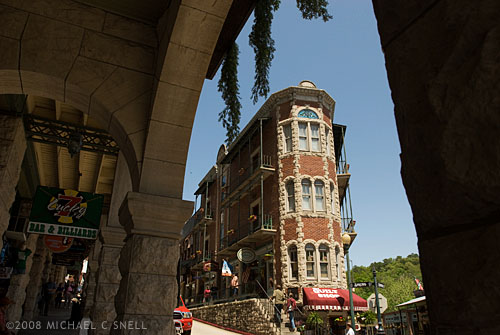
Eureka Springs, Arkansas

Eureka Springs, AR

Since getting back from Texas earlier this week, I’ve been trying to get caught up from my backlog of post-processing. I usually try to be no more than one trip behind (finish processing one trip before leaving on another) but with the move this summer, I’ve fallen uncomfortably behind. Thus I have just finished going through my Arkansas shoot from May, including this shot from Eureka Springs. If you’ve never been, this is a crazy neat little town. I’ll be happily revisiting it in November so you can expect to see moreHopefully I’ll have that trip — and all my 2008 travels — processed before New Years. It’s good to have goals.

Back to business

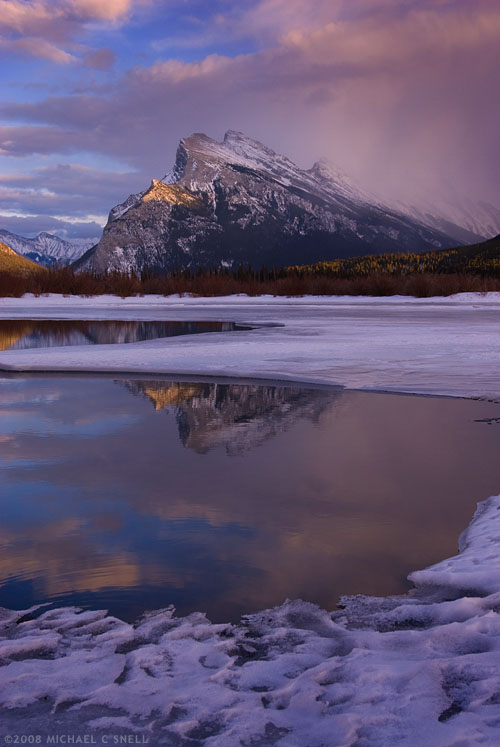
Banff, Alberta, Canada

With the move more or less behind us it’s time to get back to business. Today that meant catching up on some stock submissions that had been accumulating in my outbox. This shot of Vermillion Lakes near Banff, Canada, among many others will soon be available for licensing through Robert Harding World Imagery. I’m still backlogged in my post-processing but it feels good to be moving forward. I have two weeks before my travel schedule picks up again. We’ll see how much progress I can make before then.