Category Archives: architecture

Iceland, Day 3, continuing eastward

141003iceland02_sotc

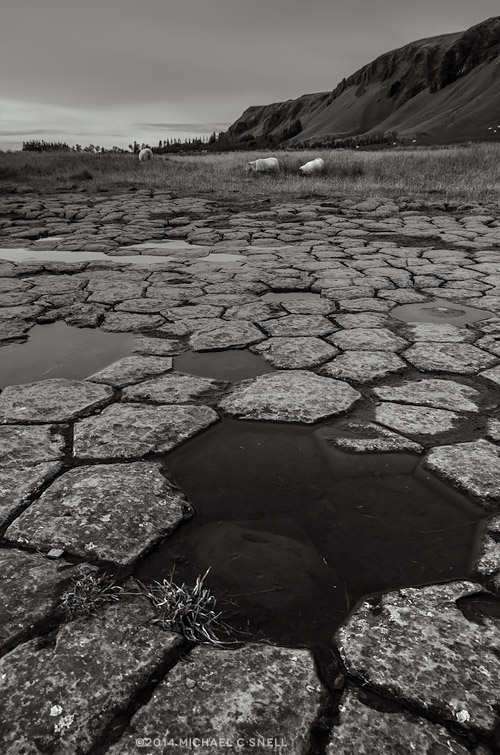
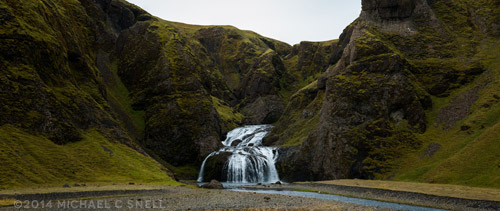
My third day in Iceland was going to require a lot of driving but I made a couple of quick stops not far from my hotel in Kirkjubæjarklaustur before hitting the road. First up was Kirkjugólf, or “church floor” (above). A natural feature of basalt columns that resembled a tiled floor. Nearby was the waterfall, Stjornarfoss:
141003iceland03_sotc

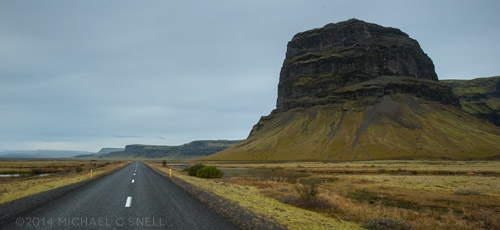
I was still trying to make up time for the day before when I’d had to return to the international airport to retrieve my “lost” luggage. I’d hoped to have gotten to another waterfall, Svartifoss, on day two and then photographed the mountain Lómagnúpur at sunset on my way back to the hotel. I’d had to cut my day short, however, so I finally passed Lómagnúpur early on the morning of day three:
141003iceland04_sotc

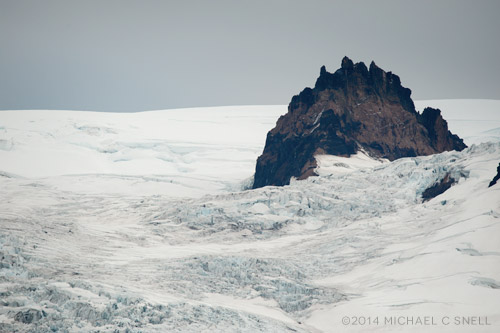
I stopped at the trailhead for Svartifoss but the shorter trail appeared to be closed and I didn’t have time to take the longer route. It became another thing for my “on the way back” list and I kept moving eastward, occasionally distracted by the glaciers which were now beginning to appear to the north:
141003iceland05_sotc

141003iceland06_sotc

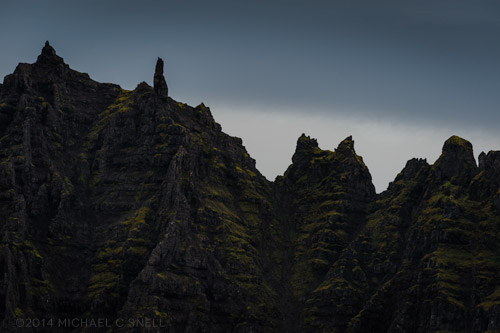
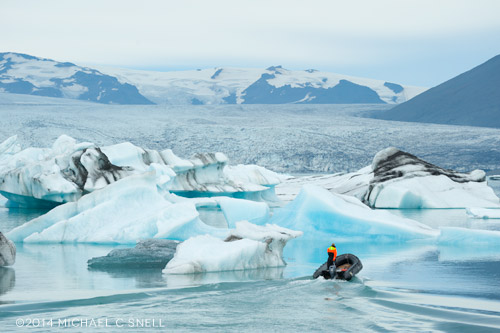
It’s really amazing the amount of diverse landscapes that you can encounter in a few hours driving along Iceland’s south coast. There’s generally a flat plain along the shore that makes for easy, level driving but, just to the north of the road, the land often abruptly rises up in a fantastic array of crazy mountains. Then, after crossing another vast field of black sand and rock, you suddenly arrive at Jökulsárlón — the iceberg lagoon:
141003iceland07_sotc

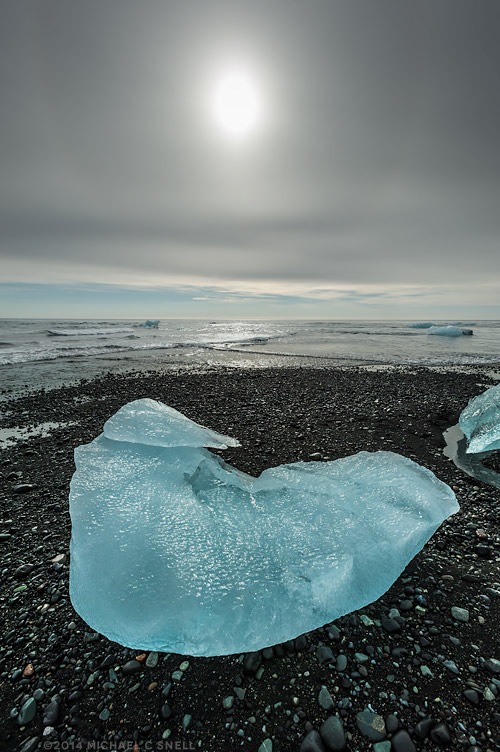
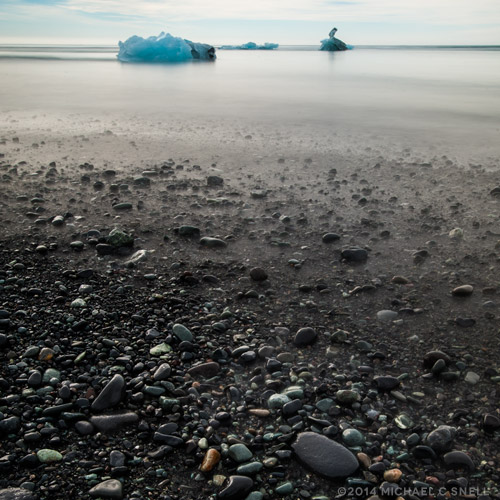
Here, large chunks of glacier calve off into a bay and are trapped until they melt enough to drift out to sea. On the ocean side of the road, remnants of the ice dot the black beach waiting for the tide to return and take them out into the Atlantic.
141003iceland08_sotc

141003iceland09_sotc

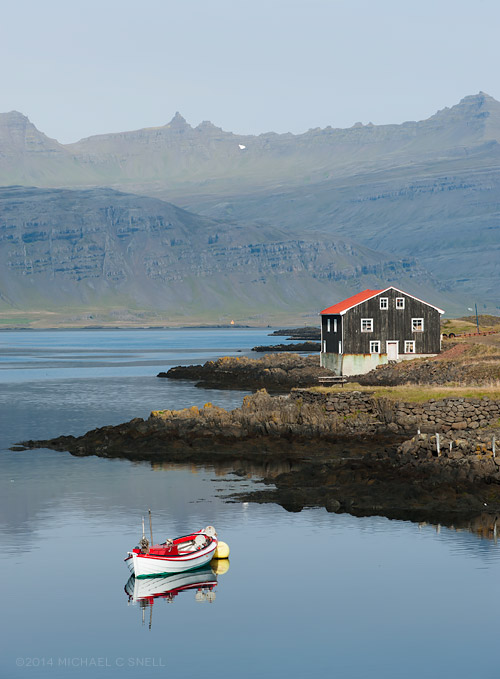
Back on the ring road, I continued east and eventually found myself in Iceland’s East Fjords:
141003iceland10_sotc

I stopped for a late lunch (mushroom soup) in the village of Djúpivogur. I ate at an outside table, overlooking this quiet bay. The weather was absolutely perfect. Pleasantly cool, sunny and very little wind.
141003iceland11_sotc

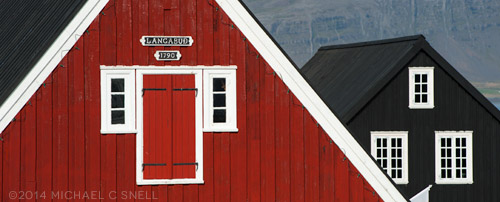
I also had my first experience buying gas just outside Djúpivogur. Opportunities had been few and far between, the farther east I went, and I didn’t want to get caught with an empty tank on some lonesome stretch of road. I found a station on the outskirts of the village that was unmanned on the weekend, its doors locked, but the pumps appeared to be self-service. I remembered (luckily) that my Tiguan required diesel, and set about trying to decipher the instructions on the pump. I inserted my card and was prompted for a PIN, which I never have to use in the States. I made my best guess, hoping that — if I was wrong — it wouldn’t keep my card and run it through a shredder inside the pump. Luckily, I managed to guess right, but was then prompted to enter the amount I wanted to spend on gas. Hmmm… Diesel… in liters… in krona… who knows? I made another guess — which was woefully inadequate — but in a second attempt at the whole process, managed to end up with a full tank once again.

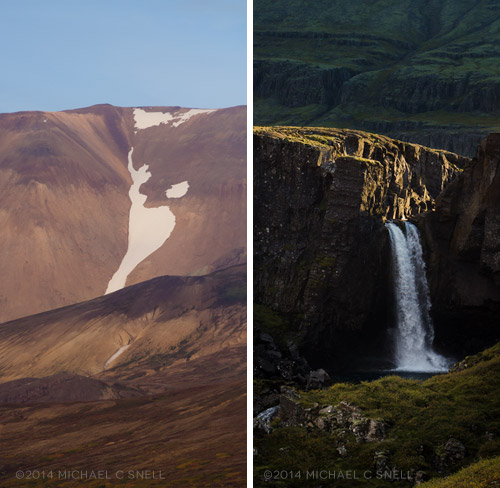
As I continued on, I left the Highway 1 and took a gravel road to a waterfall — Foldafoss — that I’d found during my online research. It was a fantastic setting, with the sun setting and backlighting only a bit of the canyon wall above the falls (see at right, below):
141003iceland12_sotc

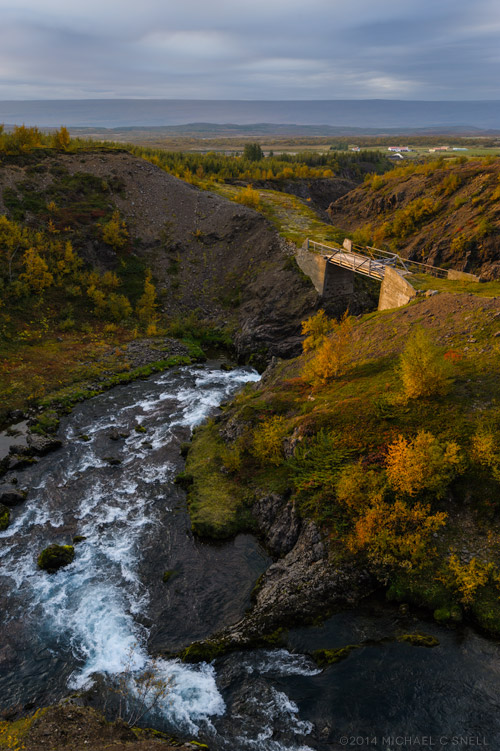
I made a few photos here and then decided to continue on up the gravel road to shortcut my path to that night’s hotel in Fljótsdalshérað. The gravel road was well-maintained but became extremely steep with sharp switchbacks as it climbed its way up the mountains. I rejoined Highway 1 once on the ridge and the rest of the drive was fairly uneventful, although it passed through some beautiful country. Occasionally, I’d catch glimpses of the bridges left over from previous versions of the ring road:
141003iceland14_sotc

141003iceland13_sotc

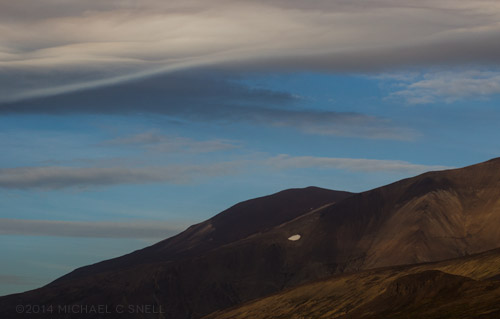
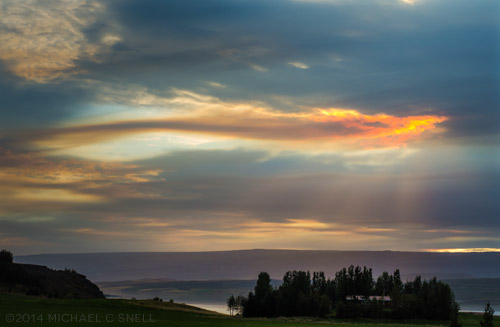
For the first time on this trip, I was beginning to see signs of the volcanic activity taking place in Holuhraun. The eruption had begun even before I had arrived and there was some question of whether it might progress to the point that it would disrupt air traffic like the eruption in Iceland in 2010. So far it was fairly well behaved, although the hotel lobbies in the eastern part of Iceland had large signs giving volcano updates. Air quality was getting poor in some areas but the wind direction had so far kept the smoke and vapors well away from the area I had been traveling in. Now that I was circling back on the east side of the volcano, however, the sky began to show signs of volcanic particles. The sunset was one of the odder I’ve ever seen, at times taking on an almost oily quality.
141003iceland15_sotc

I settled in to my hotel and walked across the road to a grocery store, thinking to lay in a supply of snacks for the next few days of driving but, being a saturday, the town seemed to close down after 6:00 and all I could find that was open was a Subway sandwich shop. Not my most glamorous meal while in Iceland, but a welcome one after a long day’s drive through some spectacular scenery.
Iceland, Day 1 in Reykjavik

140930reyk03_sotc

I’ll do a little day-by-day of my SATW Photo Shootout experience over the next few posts. In this report, I’ll show a few images from my first day in Reykjavik.

I’ll admit, I was off my game. My luggage didn’t arrive and, while I had everything really critical with me in my carryon, I didn’t have my tripod which I’d planned on using for some long exposures both at sunset and sunrise. Suck it up and adapt, right? That’s what I tried to do, although my first day of any trip is seldom my most productive. You need to make a start, though, and get those creative juices flowing.

I had arrived early that morning and would be staying at the Icelandair Marina Hotel in Reykjavik that first night. We’d each get a rental car the following morning, to begin exploring the country on our own. So, really, this was kind of a warm-up day without too much expectation. The Photo Shootout participants met mid-day and we were given the rules and cut loose to start shooting.

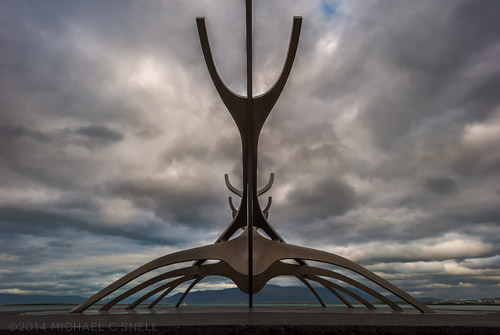
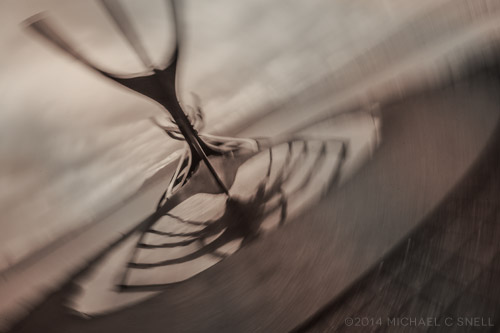
I knew I wanted to get some images of Reykjavik’s iconic Solfar sculpture, even though I doubted I’d enter any in the competition because it has been shot so many times and in so many ways. I didn’t imagine I’d get anything “new” but I wanted to shoot it for my files nonetheless. Here are a couple that I ended up liking. One fairly straightforward and one more abstract, made by spinning the camera during the exposure:

140930reyk01_sotc

140930reyk02_sotc

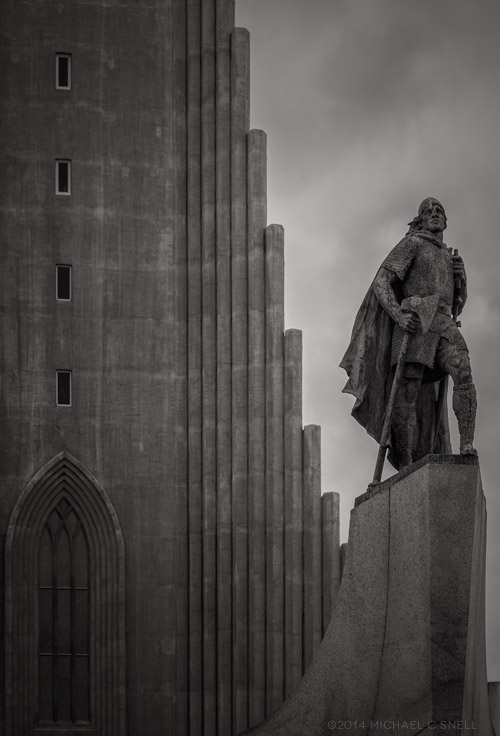
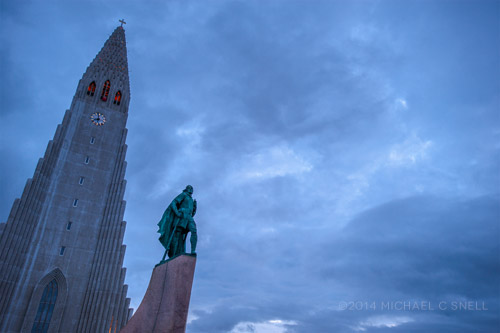
Next stop was the famous church, the Hallgrímskirkja, and the statue of Leif Erickson:

140930reyk04_sotc

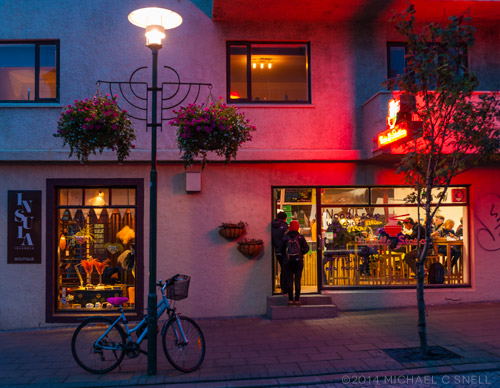
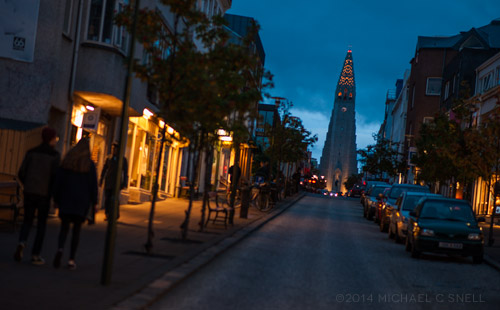
Nearer sunset, I returned to the church hoping to get some color in the sky but it turned out to be fairly grey. Still, there were some nice shots to be made as the lights were beginning to come on around downtown.

140930reyk05_sotc

140930reyk06_sotc

140930reyk07_sotc

In the end, none of my Day 1 shots made it into my 15 shot Shootout portfolio, but I hadn’t really expected they would. The following morning I’d get my car and drive back to the airport to (hopefully) pick up my lost luggage, and begin the “real” part of the Shootout. I was looking forward to seeing some new country — and to seeing my luggage again.

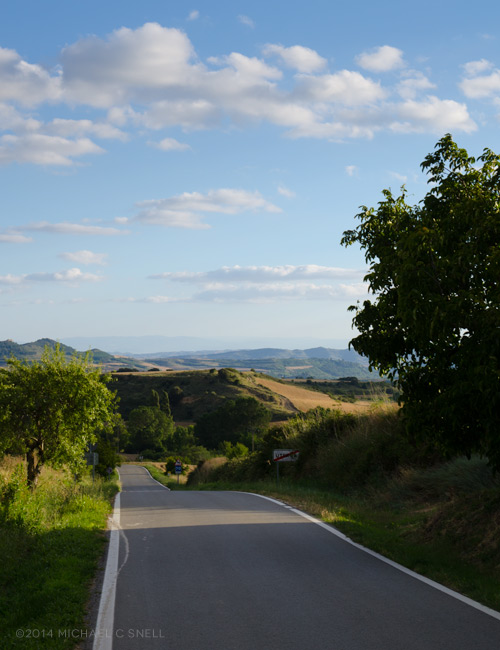
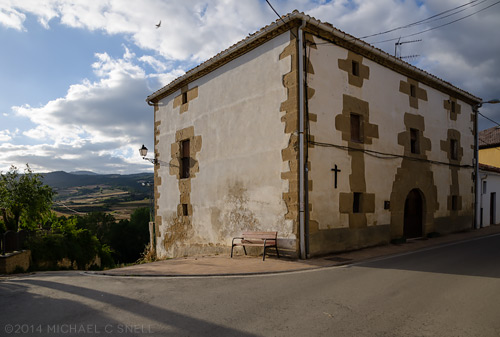
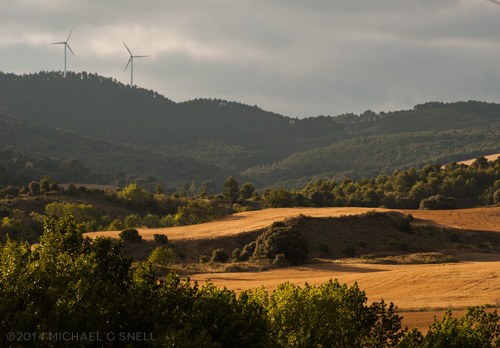
Puente la Reina, Spain, and the countryside

140908spain02_sotc

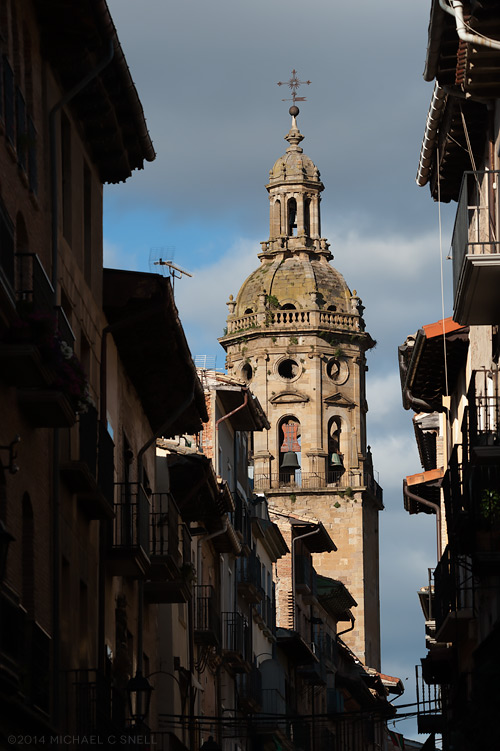
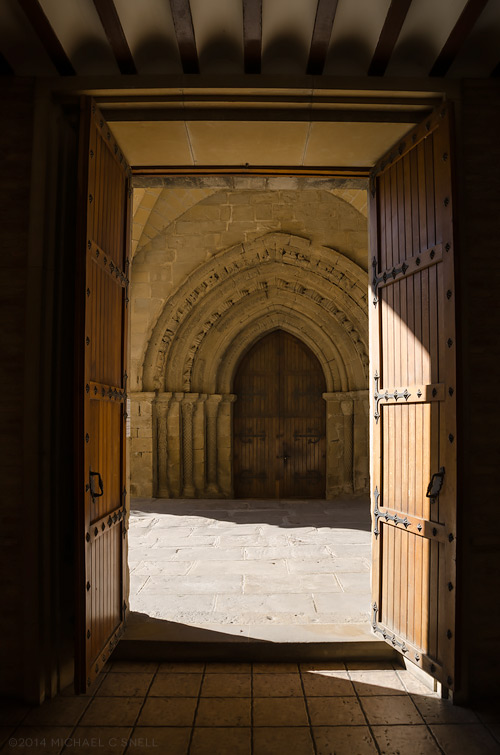
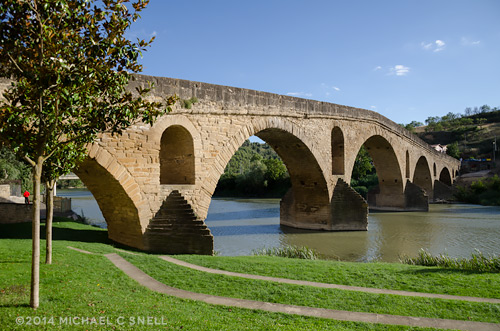
I did escape the crowds of Pamplona’s San Fermin for one afternoon with a short trip out to Puente la Reina, a beautiful town situated on the Rio Arga. The Church of Santiago el Mayor (above), dominates the smaller facades of Calle Mayor. We walked the length of the street to the 12th century bridge for which the town is named, taking in the architectural sights along the way.

140908spain01_sotc

140908spain03_sotc

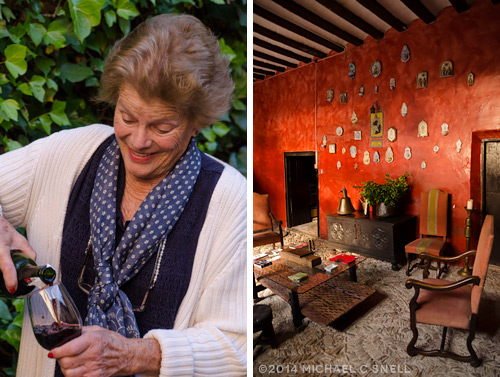
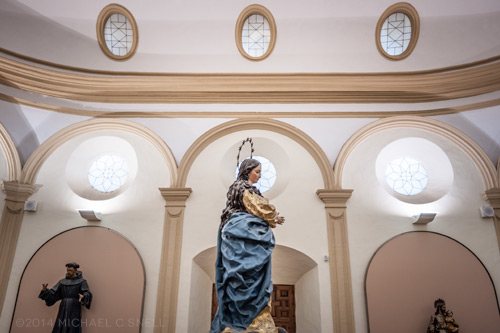
Someone mentioned wine and we suddenly found ourselves getting an impromptu tour of the nearby Palacio de Muruzabal winery. These things happen when in Spain.
140908spain09_sotc

Back on the road, we made our way to Uterga.

140908spain06_sotc

140908spain04_sotc

140908spain05_sotc

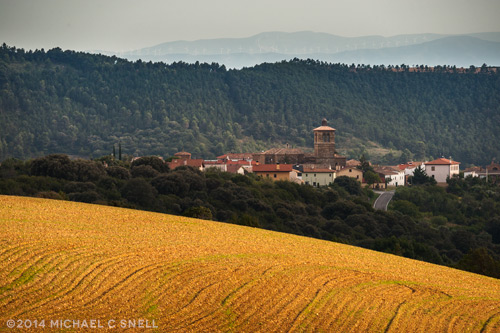
One last look across the fields toward Muruzabal:

140908spain07_sotc

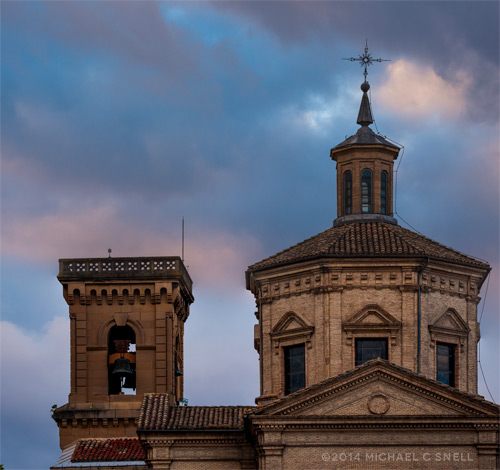
And back to Pamplona just in time for sunset and another fine dinner overlooking the Church of St. Lorenzo:

140908spain08_sotc

The Giants and the Bigheads of San Fermin

140901sanfermin01_sotc

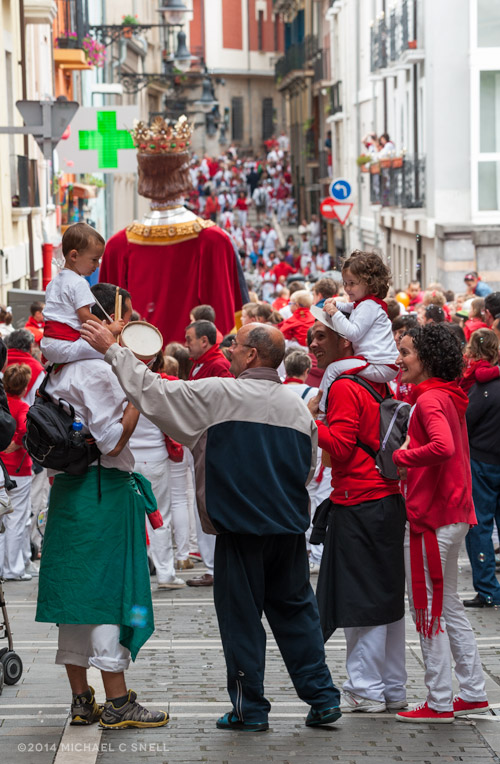
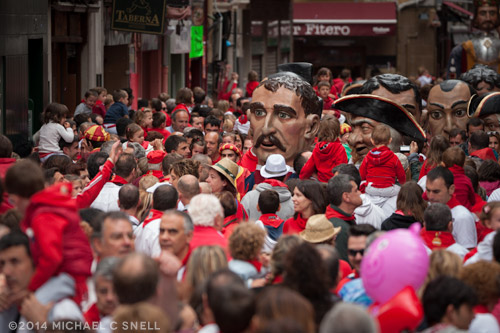
I mentioned in an earlier post how the Festival of San Fermin in Pamplona, Spain, is so much more than just the running of the bulls. One of my favorite parts of the festival is the visually stunning and family-friendly Comparsa of the Giants and Bigheads. The current Giant and Bighead characters date from around 1860, replacing older versions that had fallen into disrepair. Wherever they go, a crowd gathers. I saw them briefly on my first day in Pamplona, but the crowds were so tight it was difficult to find a position for good photographs. On my second day, I was lucky enough to run into them again during some free time and I managed much better.

140901sanfermin02_sotc

Coming upon the parade from behind, I could see where they would be going — which appeared to be a different route than they had taken the day before. This time they were heading down Estafeta Street — the same street I had scouted for my long telephoto shot of the running of the bulls. After getting a few shots of families enjoying the festivities from my initial vantage point, I set off to walk around a few blocks and be ready as the procession approached me closer to the bullfighting arena.

140901sanfermin03_sotc

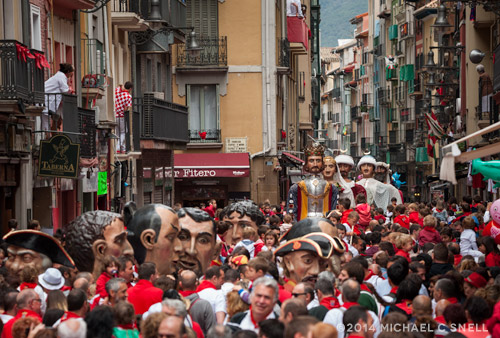
And they arrived — coming right down Estafeta following the same path that the bulls do each morning. The shot below shows the full procession with the Bigheads in the lead and the Giants following behind. The Bigheads interact with the people in the crowd as the Giants twirl and dance.

140901sanfermin05_sotc

140901sanfermin04_sotc

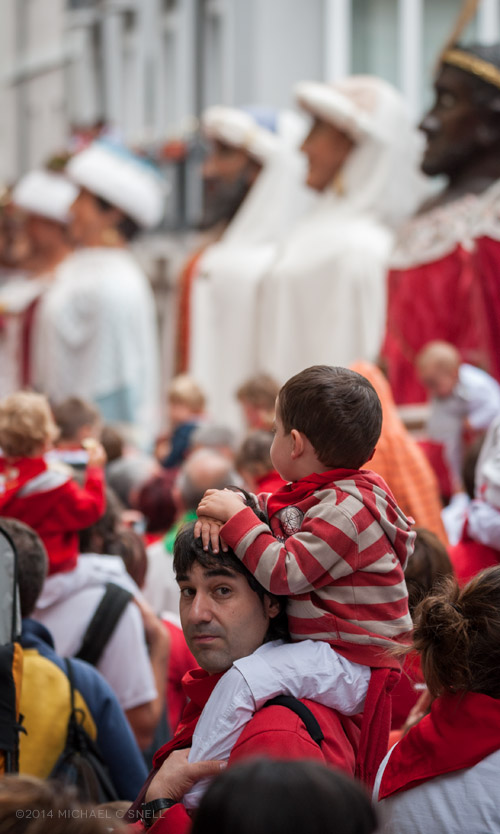
This last shot is the one I was really looking for and hoping to get. I love the compression from the long lens (this was my Tamron 150-600mm zoom, set to 450mm) and the way the shallow depth-of-field isolated the Giants by softly blurring the balconies in the background. As you can see by the myriad children in all of these photos, this really is a family event and the kids love it. Hey, I loved it!

140901sanfermin06_sotc

Pamplona, Spain

140816pamplona06_sotc

In my last post, I wrote about the running of the bulls during the San Fermin Festival in Pamplona, Spain. There is so much more to San Fermin, so much more to Pamplona, that I want to devote a few more posts to the city and the festival — beyond the running of the bulls. Don’t get me wrong — the encierro was a spectacular and exciting event to witness. But there was so much more to love about Pamplona during festival time.

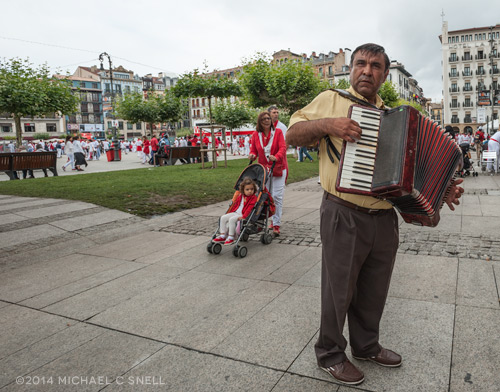
Here, an accordion player serenades diners in the sidewalk cafes lining the Plaza del Castillo:

140816pamplona05_sotc

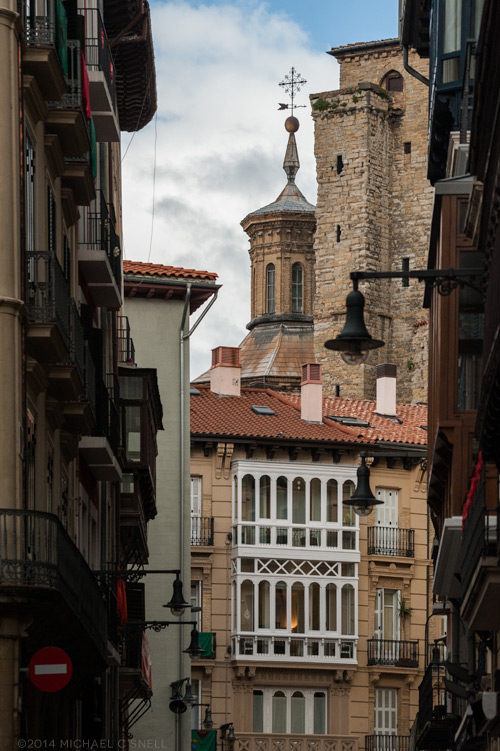
In this post, I’ll introduce the city of Pamplona itself and I’ll get into other aspects of San Fermin in the following posts. Pamplona is a beautiful city with a wonderful old sector that rose tall over the years — often to six or seven stories. The need to grow upward came from this being a walled city that, for a long period, did not expand outside those walls. The narrow streets are shaded even throughout the hottest parts of the day and there is a sort of natural air conditioning that occurs. This, I’ve been told, because the week I spent there was unseasonably cool anyway, with highs only in the lower 80s F.

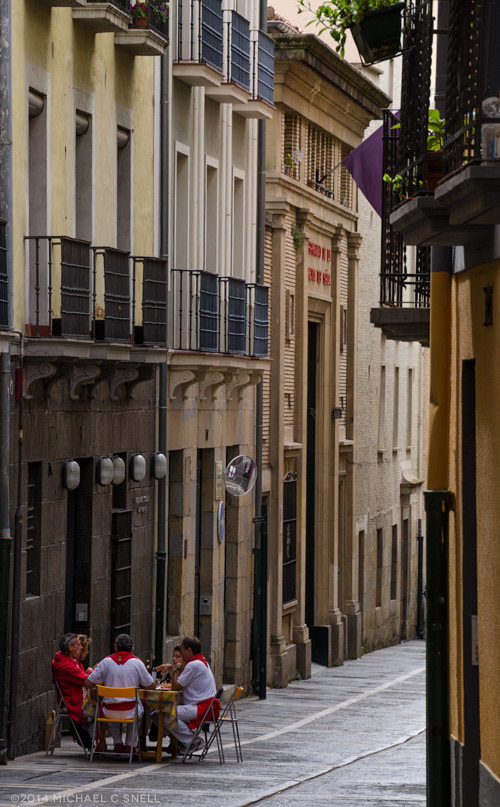
During quieter parts of the Festival, some locals have family meals in the streets, using the narrow spaces as extensions of their own dining rooms:

140816pamplona02_sotc

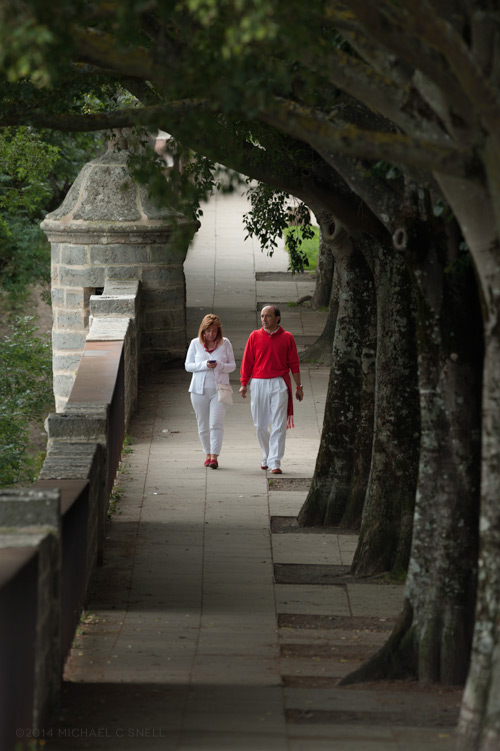
Back to the city walls — they still remain and there are beautiful wall walks in many areas that offer stunning views of the hills beyond the newer parts of the city.

140816pamplona07_sotc

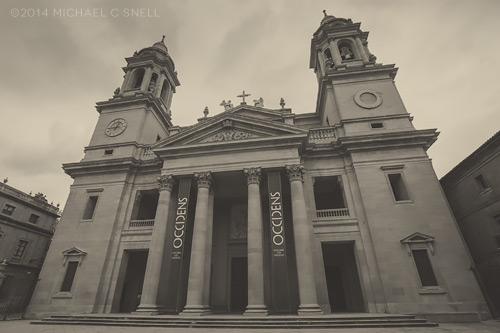
Another great stop is the 15th century Cathedral of Royal Saint Mary:

140816pamplona03_sotc

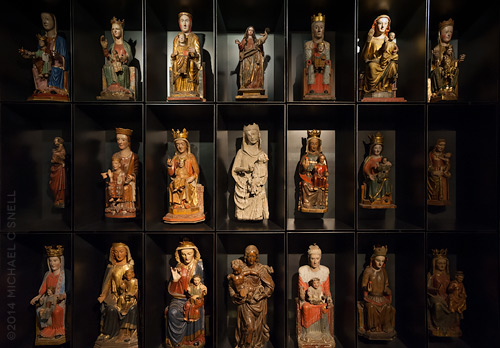
This cathedral is actually available for events with an incredible variety of interior spaces. It also houses the OCCIDENS exposition, an unconventional museum of western civilization. Each gallery is uniquely designed and as engaging as the objects displayed within.

140816pamplona04_sotc

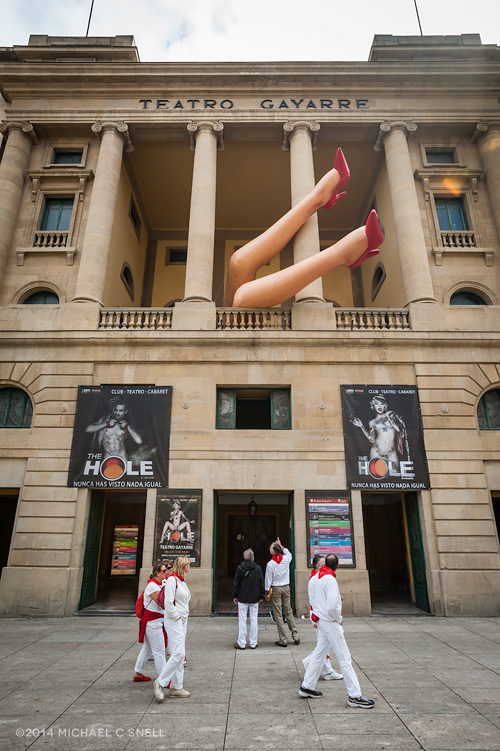
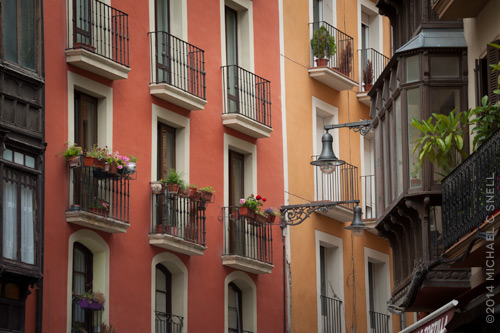
Pamplona would be a wonderful spot to visit even outside of the San Fermin Festival with surprises and wonders around every corner. The narrow, winding, sometimes hilly streets conceal and reveal with each step.

140816pamplona01_sotc

140816pamplona08_sotc

Guadix, Spain – Cave Houses and Cathedrals

140706guadix06_sotc

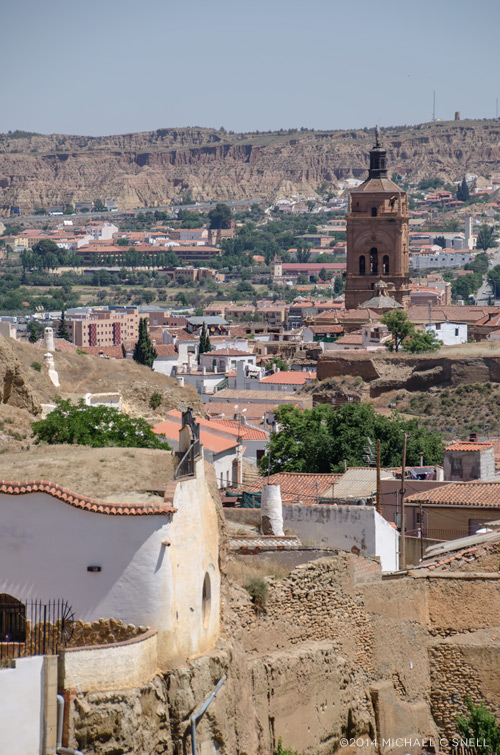
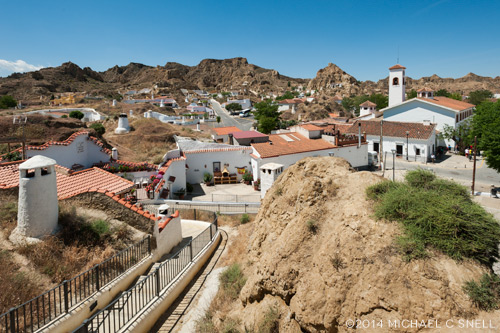
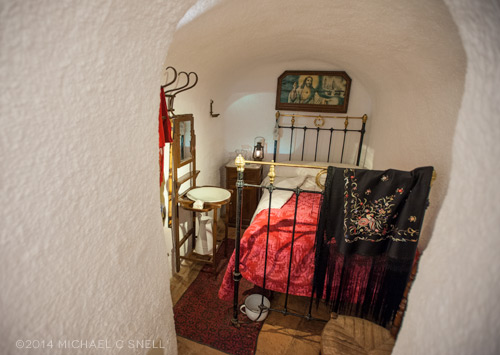
Before heading back to Granada, we had one last stop in Guadix, Spain. There the landscape contrasted dramatically with what I had seen in Almunecar the day before. Around Guadix, it was much more of a desert climate and nearly half of the city’s population lived in cave houses, carved into hillsides.

140706guadix05_sotc

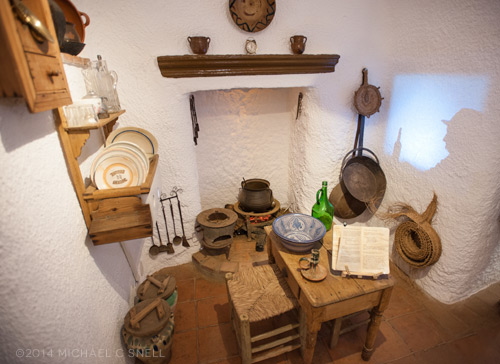
There’s a cave house in Guadix that is open as a museum so that visitors can see what the insides of these dwelling look like. It was a warm day when I visited, but inside the cave house it was very cool and comfortable.

140706guadix02_sotc

140706guadix03_sotc

Projected, moving silhouettes on the walls help to tell the story of the people who live in these houses.

140706guadix11_sotc

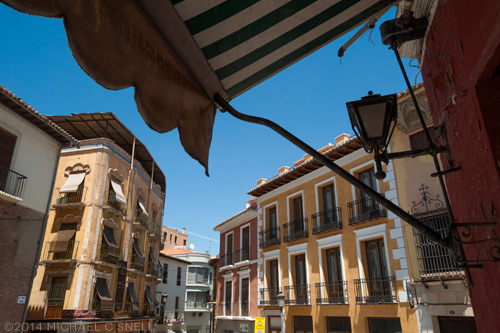
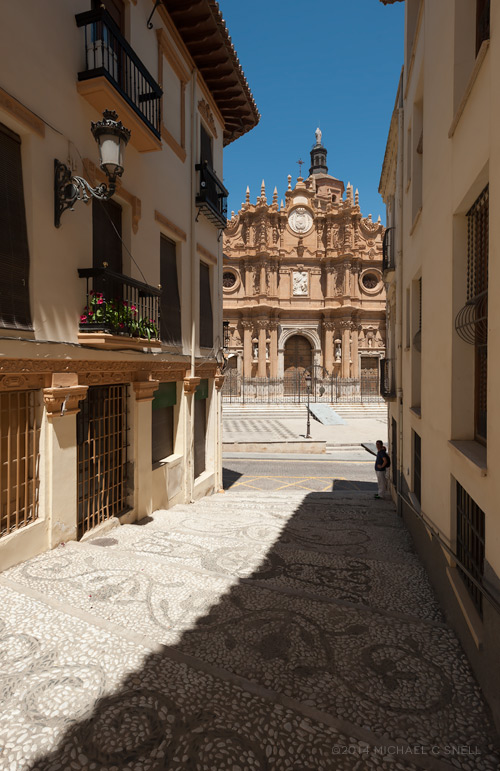
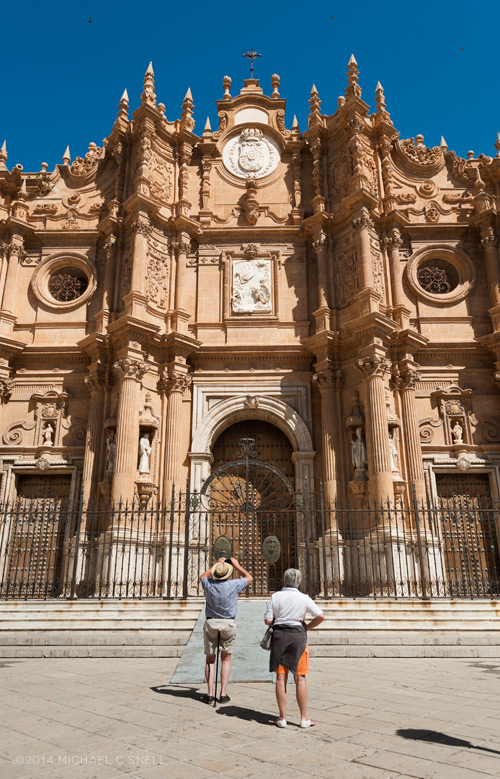
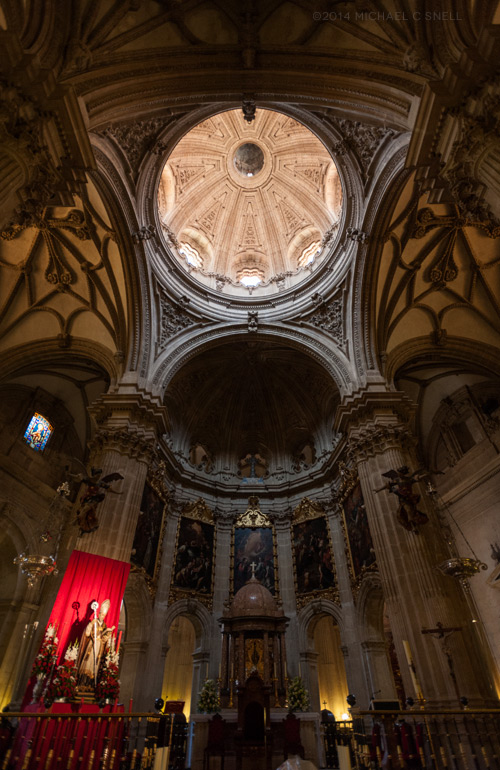
Back in the center of town, the contrasts continue with a beautiful, historic district that sits more typically above ground. Perhaps the highlight of this part of the city is the stunning, baroque-style Cathedral of the Incarnation.

140706guadix07_sotc

140706guadix01_sotc

140706guadix08_sotc

140706guadix09_sotc

140706guadix10_sotc

Almuñécar, Spain, on the Tropical Coast

140630almunecar01_sotc

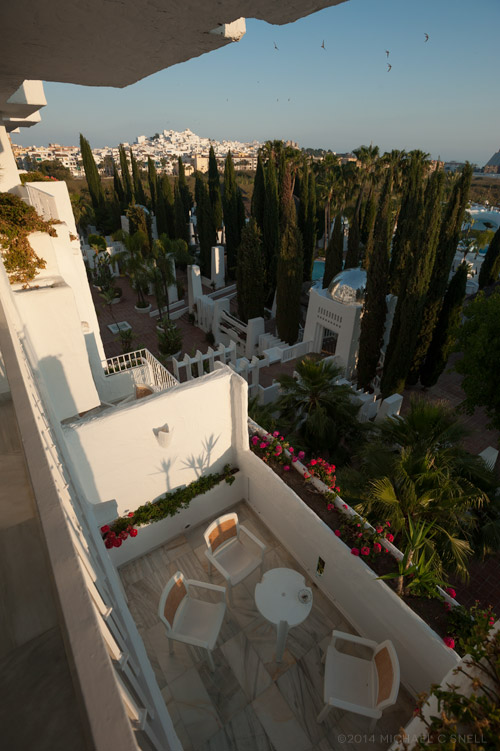
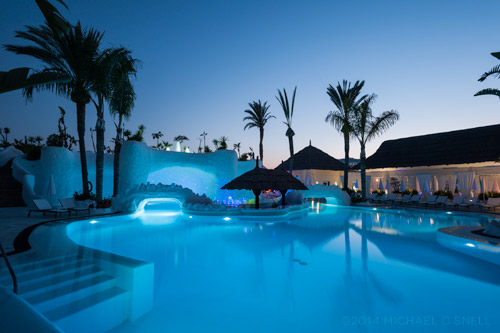
Almunecar, Spain, sits on the Mediteranean Sea, fringed with palm trees. At first glance, it seemed the kind of place I could have spent a lot of time. Happily. We’d had a busy day along the Tropical Coast, however, and we were running a bit late. Sunset was not far off when we arrived in town. I had mapped out a couple of promising looking spots on the beach to photograph the last light and I was rushing to get checked in to the Hotel Suite Albayzin del Mar. The hotel is a spectacularly mirrored palace with sprawling gardens. When I was given my room key, it came with an elevator number, a floor number and the room number. It seems that each elevator only served about four rooms per floor and there weren’t connecting hallways beyond that. When I arrived at my room, I realized the elevator was not the only thing special about this hotel.

140630almunecar02_sotc

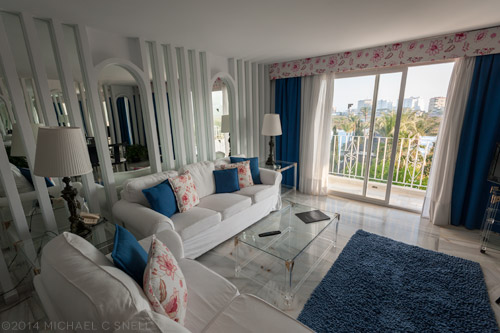
The rooms — no, suites — were enormous. This is just the living room half of my main room with a full dining area to the right, out of frame. I opened one door, expecting to find the bathroom and realized it was a full kitchen, with an extension that served as a laundry room. Another door led to a hallway opening onto a bath and two bedrooms. All along the sea-side of the room was a balcony. I dropped by bags and rushed out to assess the situation regarding the remaining light.

140630almunecar03_sotc

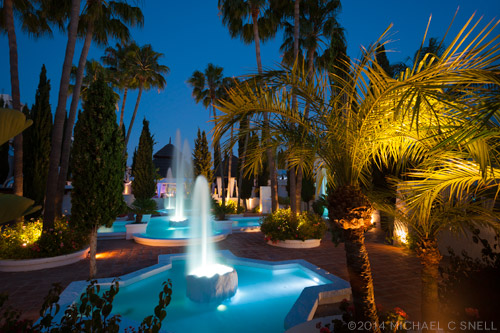
Out on the balcony, the view to the old town was stunning, as were the pools, fountains and gardens of the hotel property.

140630almunecar04_sotc

Looking west, I could see that the sun was already dipping behind a hill, so my time with any remaining sunlight was very limited. I decided to ditch my plans to head for the beach, and I made an executive decision to make what photos I could from the balcony and other parts of the hotel property.

140630almunecar05_sotc

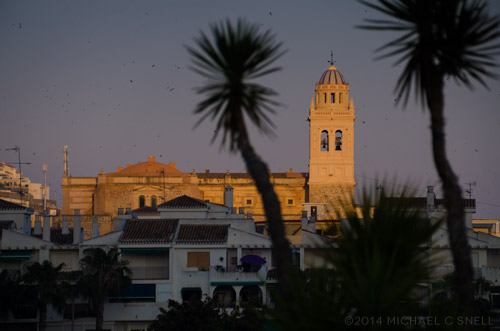
As it turned out, I didn’t feel overly limited in subject matter. I loved this view through the trees of the old church catching the last rays of the sun. That was made from a raised area above and behind the pool seen below.

140630almunecar06_sotc

The pools themselves were amazing. This one had a sunken bar in the middle and a grotto filled with twinkling lights.

140630almunecar07_sotc

I dashed around the property taking time-exposures on the tripod until the light failed and my battery was dead. It wasn’t the evening that I had expected, but it was a productive one and I had enjoyed myself immensely.

140630almunecar08_sotc

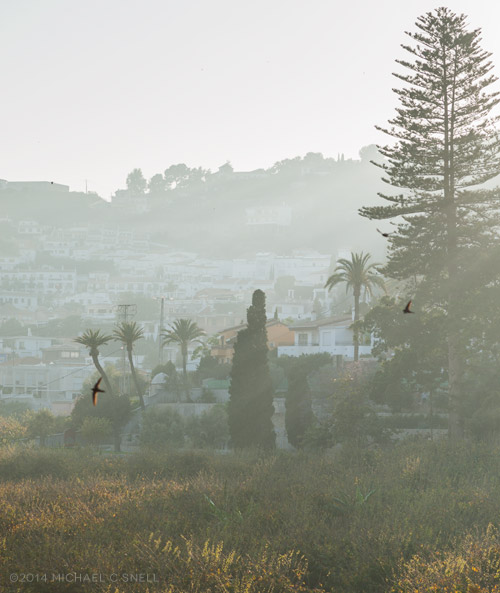
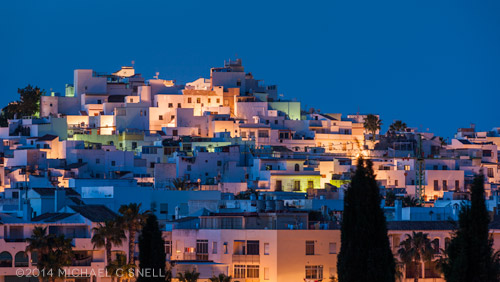
The next morning I was up before sunrise and caught some more beautiful views of the old city to the east of the hotel. Not long after, I was back in the van and headed to the next town.

Granada, Spain

140618granada02_sotc

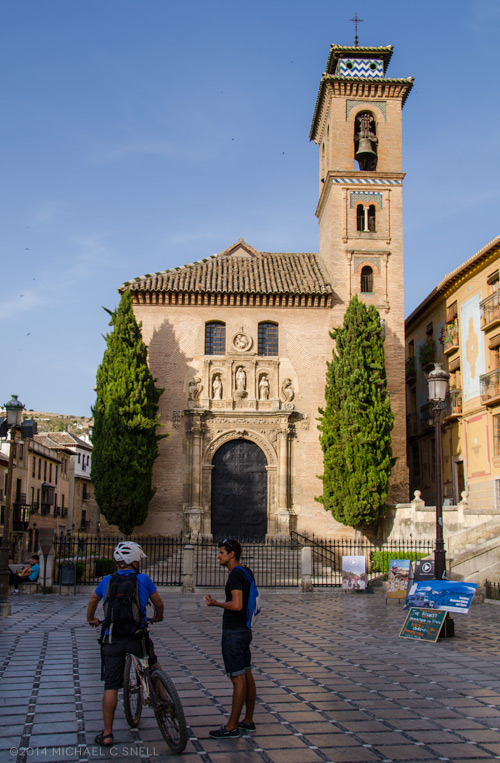
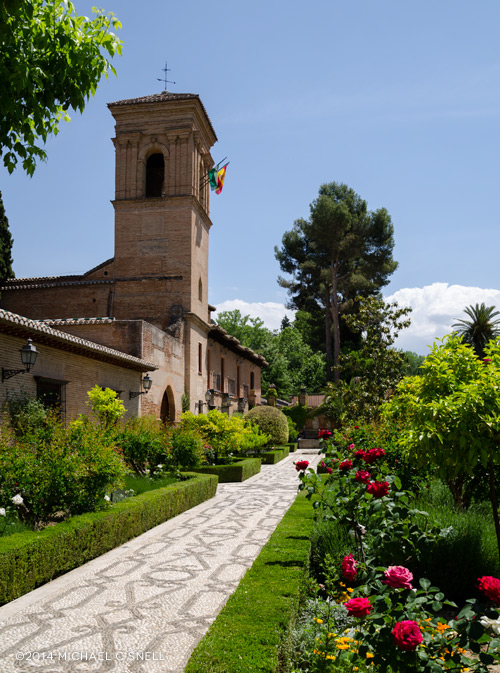
I’ve been going on and on for the last three posts about the Alhambra, but there’s really much more to see in Granada, Spain. In this post, I’ll share a few other random images from various spots around the rest of the old town. Above is the Church of Santa Ana just off of the Plaza Nueva. Next is the Parador de Granada — and amazing place to stay with an unbeatable location right in the midst of the Alhambra:

140618granada08_sotc

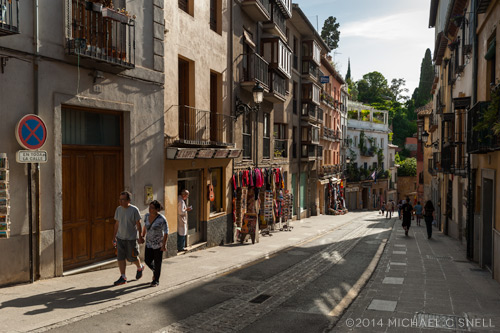
I got to know this next street well. It’s the transition between the pedestrian path down from the Alhambra  and the old town:

140618granada01_sotc

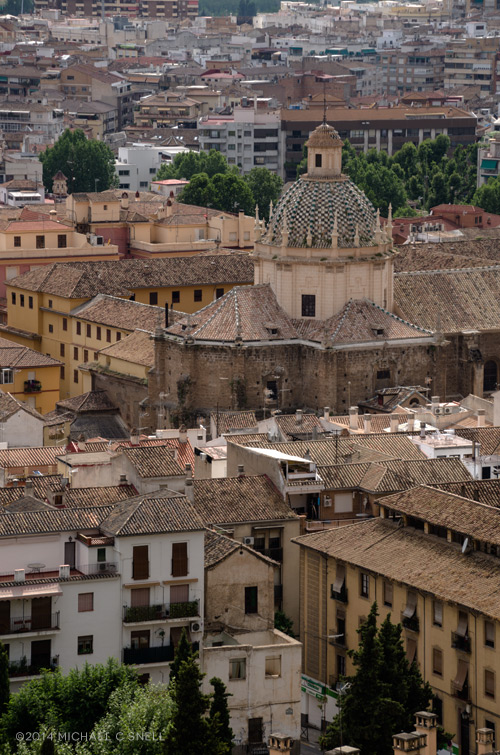
The dome of the Church of Santo Domingo:

140618granada04_sotc

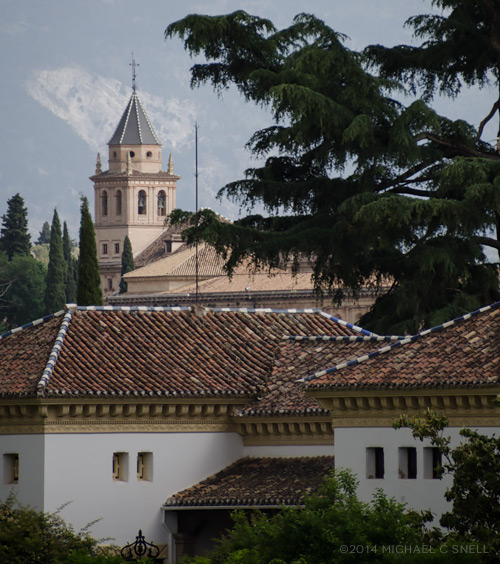
The spire of the Church of Santa Maria de la Encarnacion of the Alhambra:

140618granada05_sotc

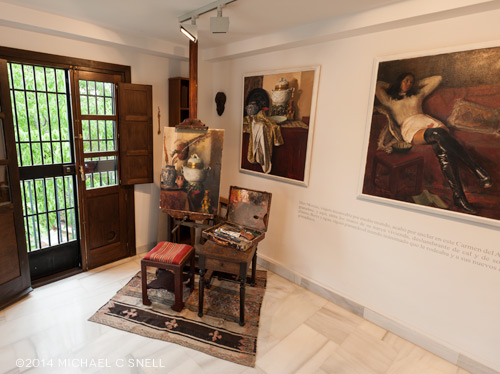
The studio of painter Max Moreau, now a museum:

140618granada06_sotc

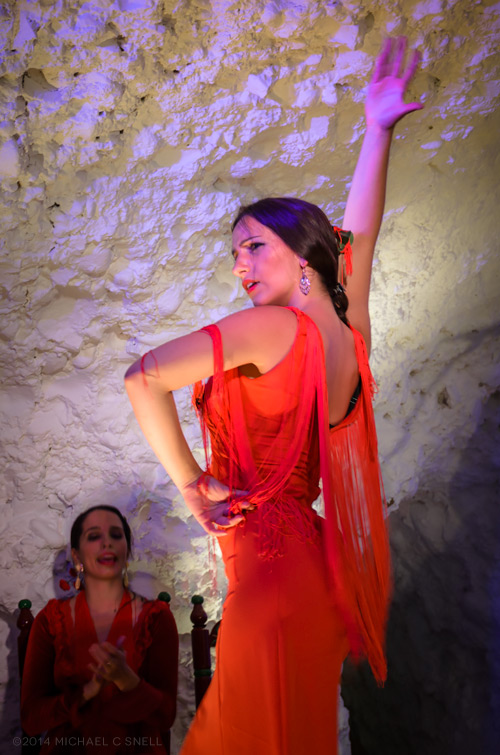
And no trip to Granada would be complete without a night of flamenco. This photo was taken at El Templo del Flamenco:

140618granada07_sotc

Alhambra exteriors

140617alhambra_sotc

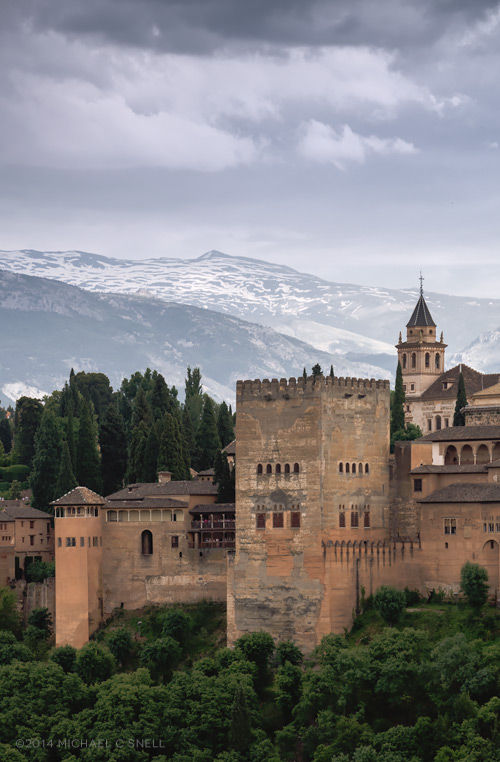
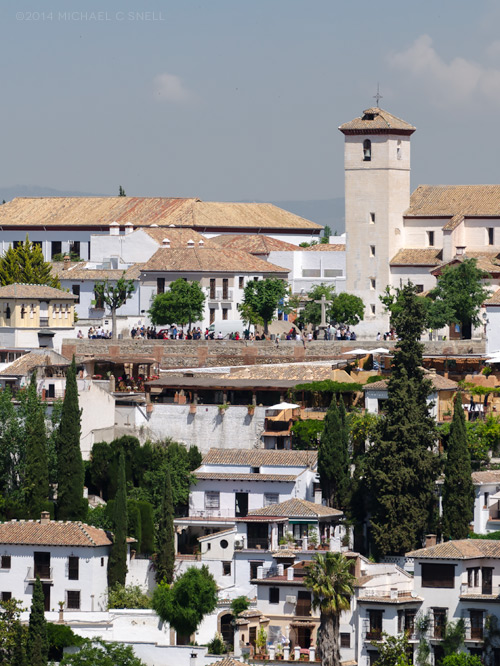
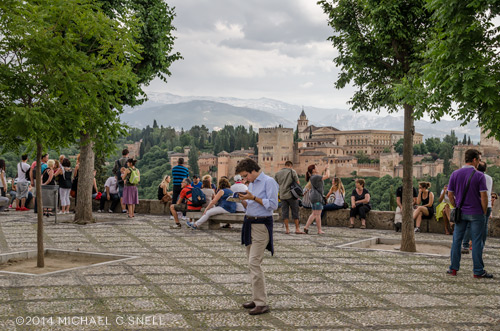
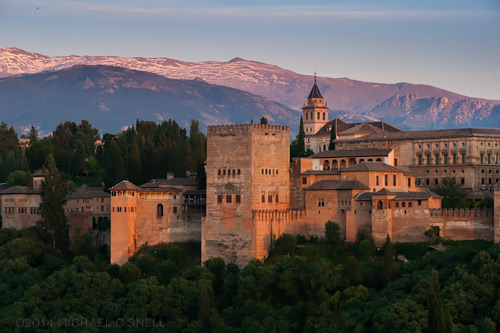
After two visits inside the Alhambra in Granada, Spain, it was time to get some exterior views. The Alhambra has a stunning setting on a hillside above the city with the Sierra Nevada mountains rising behind. Surprisingly, the view is blocked from many of the narrow streets of the Albaicin district, which is situated just across the valley. There are, however, a few spectacular public viewpoints. One of the best — and busiest — is the Plaza of St Nicholas. You can see it in the following photo, taken from a balcony on the Alhambra:

140617granada01_sotc

The white tower is the Church of St Nicholas and the plaza can be seen in front of it — where all of the people are gathering. It seems to always be a busy spot, but especially around sunset as I found out on a second visit a few days later. The first time I arrived on the plaza it was nearly noon and it was still fairly bustling.

140617alhambra02_sotc

The sun was high and there were dense clouds on this day, so when we returned to Granada after a few days of exploring the Tropical Coast, I took advantage of a couple of free hours to re-visit the plaza to catch sunset. The crowds were much thicker but I managed to stake out a spot with my tripod, right along the wall and I captured this view of last light:

140617alhambra03_sotc

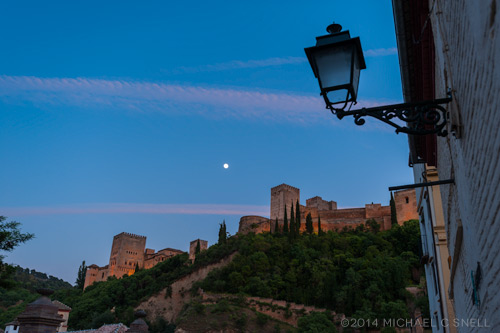
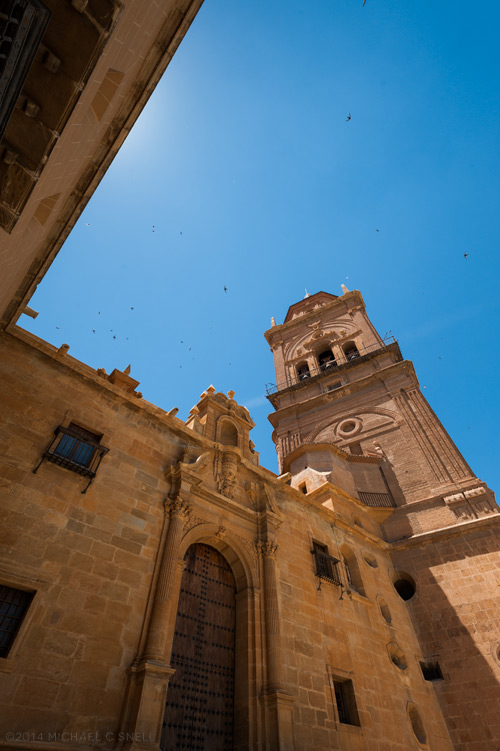
I’ll leave you with one more glimpse — the last that I had of the Alhambra as I made my way back down the narrow streets of the Albaicin on my way back to my hotel. I came to a small plaza with this view of the fortress palace just after the lights had come on and the sun was tinting the contrails pink. Not a bad way to say goodnight to an amazing piece of architecture, and history.
140617alhambra04_sotc

The Alhambra, Day 2

140614charles01_sotc

It’s always great to get a second chance to photograph a place. The first visit is about discovery and it’s sometimes overwhelming as you try and take everything in. The return visit is often more about details or things you just didn’t see the first time. Different light conditions and weather can also dramatically change how a place looks and feels.

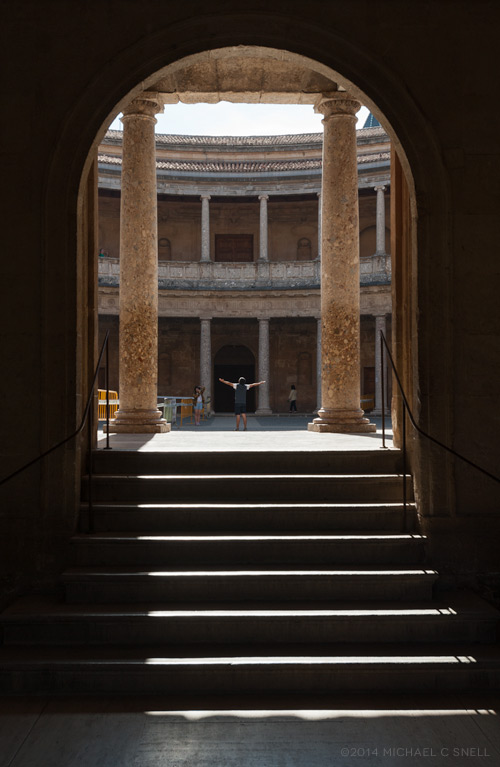
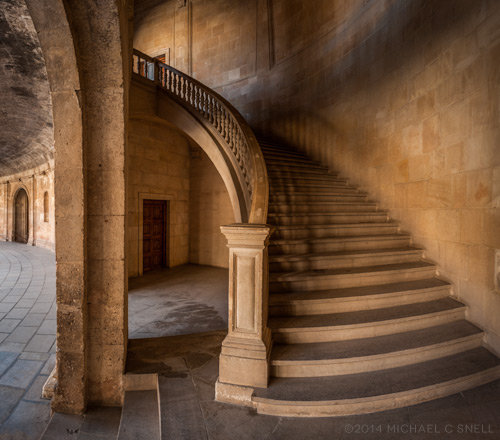
My second day in Granada, Spain, began with a return visit to the Alhambra. This time the first stop was the Palace of Charles V — a building I had bypassed entirely on my first visit. The main space is circular and ringed by a colonnade. Around the periphery are smaller rooms like this one with the staircase (This is actually three photos stitched together in Photoshop):

140614charles02_sotc

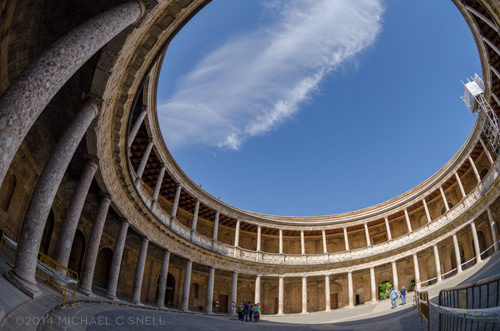
It was hard to get the main courtyard all in-frame and to show it full circle. I went to my rarely used fisheye for this shot and actually like the distortion it creates. I had used this lens in a circular Art Deco church in Tulsa in April, and realized that the distortion is less confusing in round spaces. One of those little tidbits I’ll file away for future shoots. You never know when you’ll find yourself in a round room, right?

140614charles03_sotc

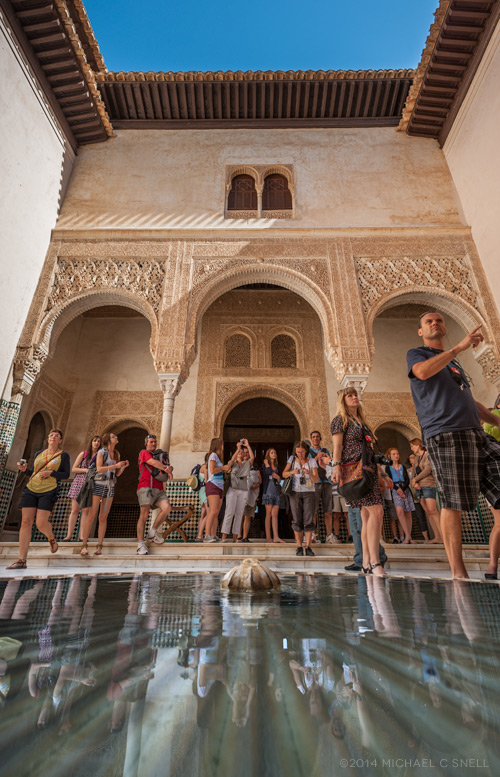
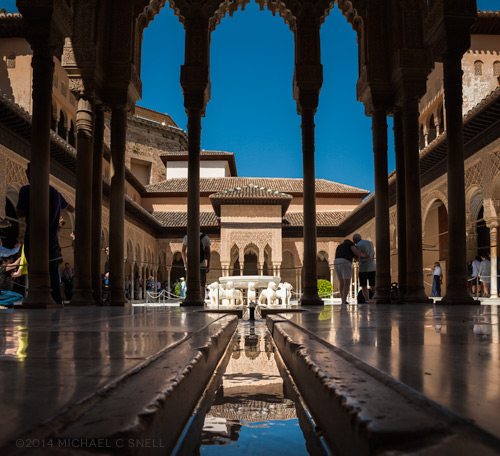
After the Palace of Charles V we followed much the same path on this visit as I had taken on Day 1. Here are just a few more shots of things I saw differently this second time around:

140614alhambra01_sotc

140614alhambra02_sotc

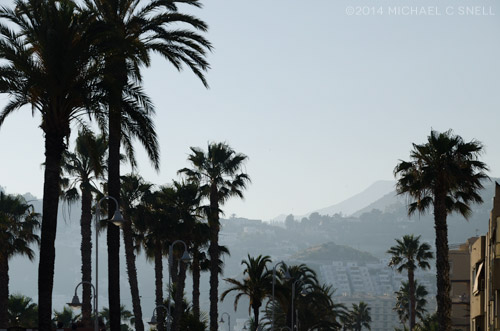
This next photo really shows the advantage of visiting at different times of day. I had photographed this room the afternoon before but the light was not coming through the stained glass as it did this following morning. The patches of colored light on the wall add an altogether different feel to the image and tells more of the story of what’s going on outside of the frame.
140614alhambra03_sotc

More Granada to come…