Category Archives: photography

Special access

When I get special permission to shoot in museums, I take advantage of it. I’ve been in some situations — even on press trips specifically arranged for journalists — where photography was not allowed and note-taking was even banned. As a photographer, that kind of tour is of no use to me. I could enjoy myself as a tourist but as a business person, if I’m not walking out with images on my card, there was no point in my being there. I can tell when the point has really been lost when the museum’s PR person tells me that images are available for free from their office. That’s fine if I’m writing a story on their museum — at least I’d have some way to illustrate it — but I’m a photographer. I make my living by licensing my own images. Knowing that they have images available for free doesn’t really help me. Actually, it doesn’t really help them either as more major publications won’t want to use free images from a PR department because they want something unique and not the same photos that are appearing in every other magazine.

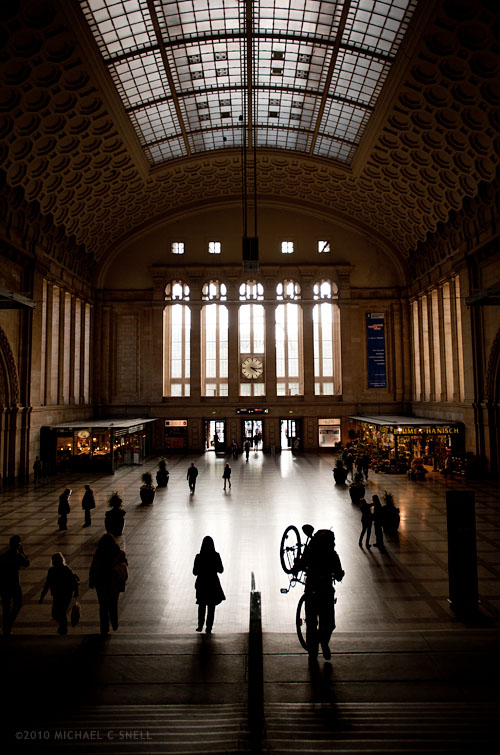
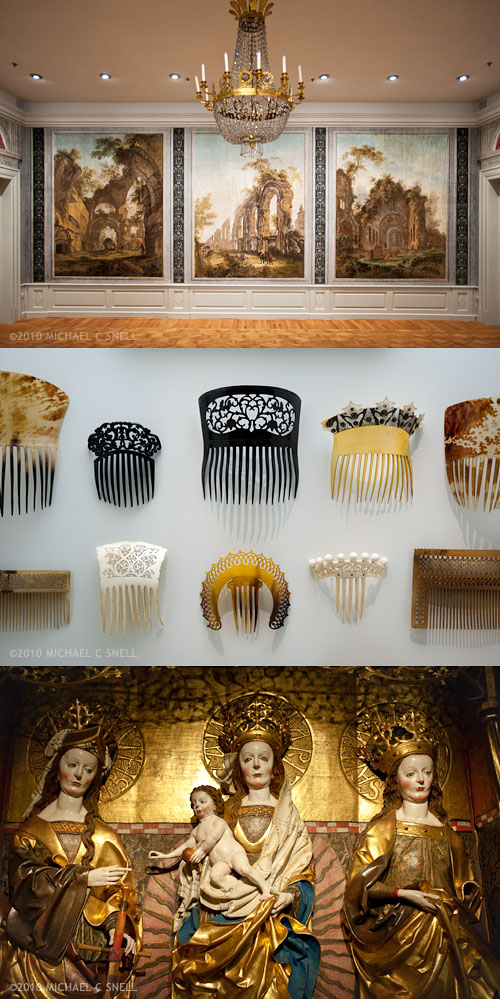
The three photos above came from the Grassi Museum in Leipzig where I was allowed to shoot by special permission. No flash, but that’s fine. I can understand them wanting to limit damage to the artifacts. Thank you, Grassi Museum, for understanding why I was there and seeing the benefit of having more images of your collection available to publishers. I hope that every image I get published sends people through your doors.

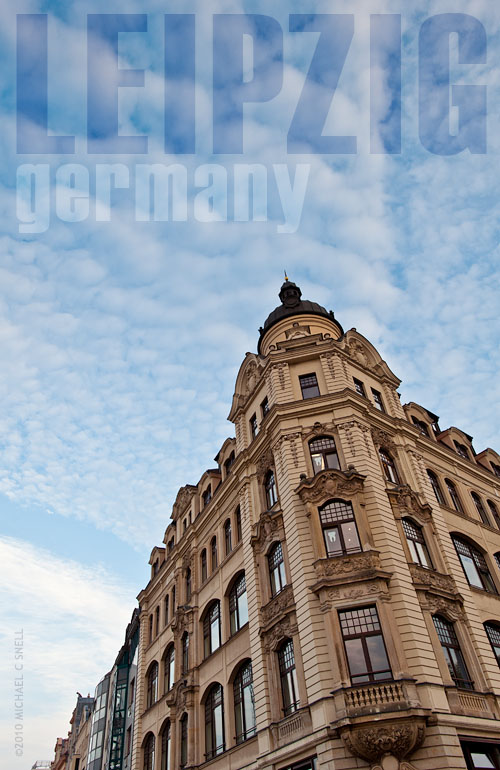
Leipzig in blue

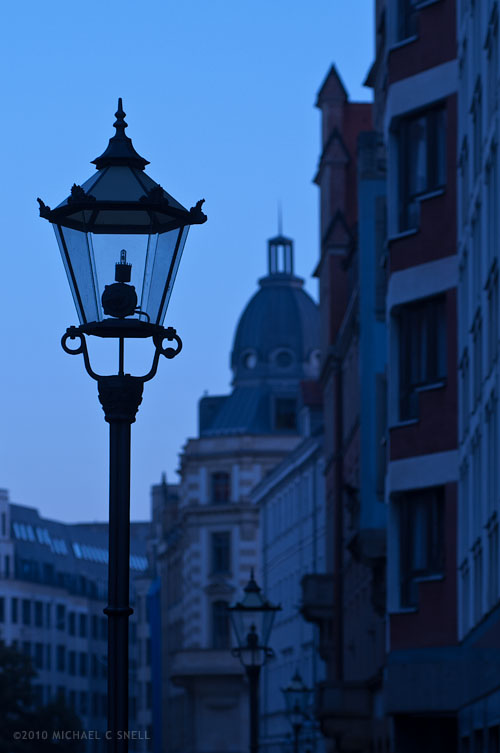
On an early morning walk through the old city of Leipzig, the light was a tad underwhelming. A little overcast and cool in color temperature, my inclination was to warm up the white balance of my Nikons to correct the color to a more pleasing tone. I almost always leave white balance set on cloudy for just this reason. I tend to like the warmer color cast for tourism shots. Back home and looking over the images on the computer screen, however, I found myself second-guessing that decision in this case. This photo didn’t respond very well to the warming and there were some distracting color combinations in the distant buildings that just didn’t come together. I decided to go against my natural tendencies and try a cooler color temperature to enhance the blueness that the scene had naturally and give more of the feeling of that early morning hour. I think it worked. The color pallet is more monochromatic and cohesive. The mood is stronger.

Digital provides so much flexibility in cases like this. I love having the ability to continue to experiment and play rather than having all my decisions set in stone once the initial film choice, exposure settings and filter selections are made on location. It’s a power that shouldn’t be abused, however. I don’t want to push things to a point that they no longer represent the actual scene — at least not for journalistic stock — but having the ability to tweak my on-site choices later, when I’m not pressured for time by changing light and other locational obstacles, is a great thing.

Do I wish that the street lamps had been on? Absolutely. But I stopped myself short of adding a lens flare in Photoshop. You have to draw the line somewhere.

Leaving room for type

One side-effect of my background in graphic design is that I tend to compose images with an art director in mind. When I compose a shot, I’m often leaving room for typography. I suppose if you looked at my photos assuming that I were a fine art photographer, you might think that my compositions are sometimes strange — sometimes leaving large spaces empty — but that’s intentional. A vertical with some empty space at the top makes for a great magazine cover. The title needs to read clearly on the shelf and a busy background can create confusion. A horizontal shot with an open space to one side and an off-center subject can make a nice opening spread. The magazine’s gutter won’t cut directly through the subject and the open space can be used for a headline or the opening paragraphs of the story. Other shots fill the frame but may be graphically simple so that they will hold up at small sizes. Perfect for small “spot” uses to brighten copy-filled pages.

I’m not a fine art photographer. I do sell some prints, but I’m primarily composing with an editorial use in mind. Having been on the other side as an art director with travel and tourism clients, I think back to the images that I would have liked to find when it was me that was laying out that story, or me designing that cover. It’s always interesting to see how other art directors use my images as well. Sometimes I’m amazed that they saw a way of using one of my photos that I would never have thought of. Hopefully, I amaze them every now and then as well.

Arrival: Leipzig

I didn’t arrive in Leipzig by train but the main station — or Hauptbahnhof — was just a few blocks from my hotel so it was one of my first stops. Built in 1915, this grand station was heavily bomb-damaged during WWII and was restored in the 1950s. In the years following the reunification of Germany, the building was modernized to include multiple levels of shopping and dining but the architectural grandeur remains. Even though this was not the portal through which I entered Leipzig, it seemed a fitting place to begin my exploration of this city and the federal state of Saxony. Often the first glimpse of a new place colors your impression of everything that follows. That’s what these train stations were all about. They were symbols of progress and status that left no doubt that you had arrived at a great destination.

Two weeks in Germany

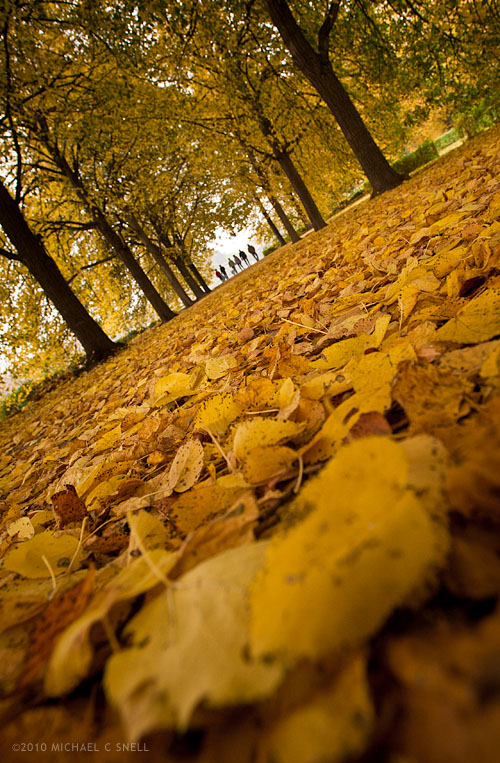
A quick note of apology for my lack of posts recently but I’ve been shooting in Germany and the schedule left barely enough time to offload cards every couple of days (I did, of course, manage to make time for plenty of beer and brats). As of last night, I’m back home and facing a mountain of image editing. Lots to see in the coming weeks — I’ll share as I process the photos — but for now, I’ll leave you with this teaser from a path leading to the Monument to the Battle of Nations in Leipzig.

What a difference a day makes

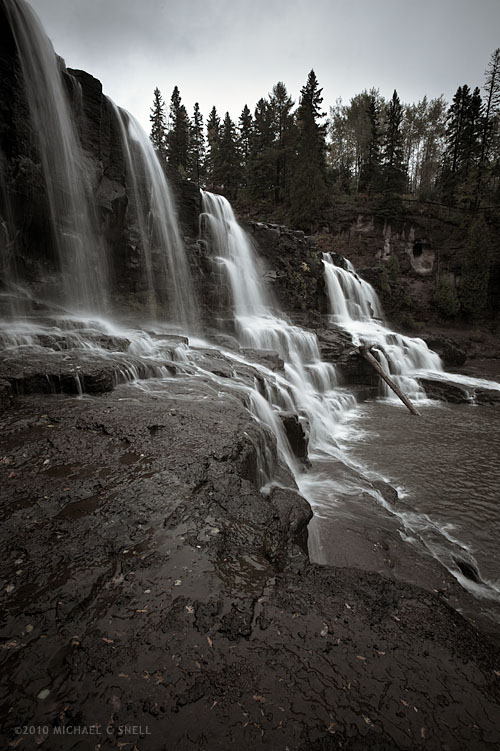
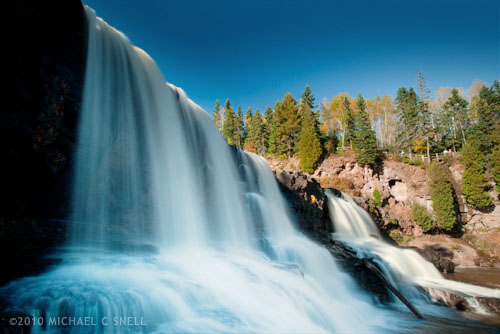
One waterfall, two flavors. The shot above was taken in the rain last Friday. The one below, barely over 24 hours later on Saturday.

I like each for different reasons but I expect the second one will have more value as a stock shot as I’ve found that tourism folks love those blue skies. Myself, I like the feathery nature of the water on the first shot and others from that day. By Saturday, Friday’s rain had made its way into the stream and the falls were much heavier. Still nice, but a different look.

Portrait of Minneapolis

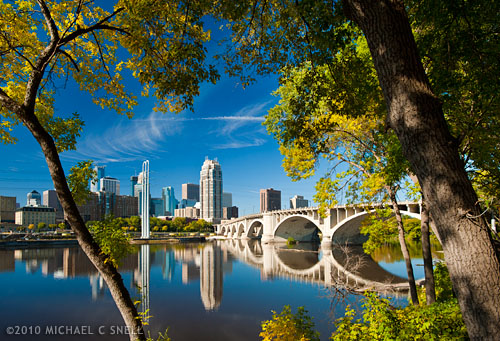
I found this location last week while working on an assignment in Minneapolis/St. Paul but the weather was bad. You’ve probably read about all the flooding southern Minnesota and Wisconsin. Well, I can vouch for the amount of rain they got. Anyway, driving back from the North Shore on Sunday it was nice and sunny and it seemed like it might be worth a quick stop to see if I could get the shot. It was a pretty stunning location. You can always tell when you’ve found “the” spot in any city when there are 500 kids getting their senior portraits made there. I nearly had to stand in line to get this view, but at least I now have a postcard-esque portrait of Minneapolis in the files. And I still made it home in time for the season opener of the Amazing Race (my guilty pleasure). Something about seeing other people having difficulty navigating foreign destinations really makes my day. I’m just glad I’m not behind them in line at the ticket counter.

Lake Superior, North Shore

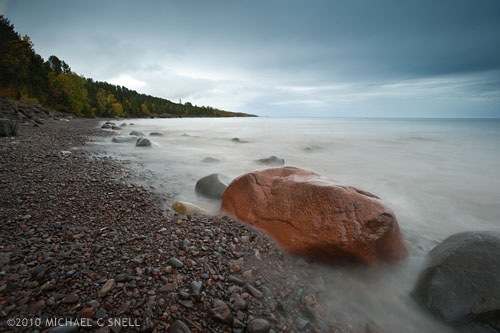
After a couple of assignments in the Minneapolis/St. Paul area, I’ve been working my way up the North Shore of Lake Superior looking for Fall color. It’s here alright, but the weather has been less than cooperative. Heavy rains and high winds are making photography difficult and are threatening to strip the leaves away. There have been breaks, however, and I’ve been making the most of them. The rains have the waterfalls running nice and heavy so I’ve been concentrating on shooting those and the breaking waves on the shore as seen above. I’ve made use of the overcast skies and dim light in both instances to get some slow shutter speeds to blur the water and make it nice and silky. To extend those shutter speeds further, I’ve also been using neutral density filters stacked with a polarizer and I’ve been bumping the ISO artificially down to 100 (200 is the lowest “real” ISO on the D700). In the shot shown above, I even added a graduated neutral density filter to the sky to help balance the exposure.

Shooting through all of these filters is a bit like shooting through welder’s glass but it’s doing the job. This shot was made at f/22 and resulted in a 4 second exposure. The waves crashing around the large rocks look almost like fog.

Tomorrow is supposed to be a little dryer but still cloudy. Sounds good to me. At least I’ll have both hands available for adjusting the tripod again. One was constantly holding an umbrella today.

Lightroom 3: noise reduction

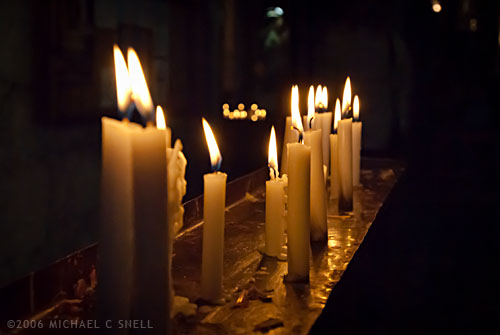
100911candles_sotc

In 2006 I was in Santiago Chile shooting with my new-ish Nikon D200 and I found myself in the dark interior of a 400 year old church. It seemed like the ideal time to play around with the improved high-ISO capabilities of that camera. Back in the film days, I used to shoot with Fuji Velvia that I rated at ISO 40 nearly all the time. I did everything I could to avoid film grain and stepping up to an ISO 100 film was almost extreme for me. As I recall, my D100’s lowest ISO was 200 and it seemed really extravagant at the time to have all that headroom. I rarely moved off of 200, though, as the noise would creep in at 400 and especially noticeably by 800. The D200 had a lower minimum ISO of 100 and felt more in my comfort zone but there were tantalizing reports that it even gave good results at ISOs of 1600 and higher. Each successive body I’ve owned has improved even further but I still tend to stay at minimum ISOs as much as possible. Old habits I suppose, but I just don’t like the look of digital noise at higher ISOs and I like my RAW files to start out as clean as possible.

But back to that church — I didn’t have a tripod with me so I decided to experiment with higher ISOs to at least be able to capture something in that dark, candlelit interior. This shot of the candles themselves was taken at ISO 1600. It was a decent image when I processed it at the time, but there was some noise. I didn’t think much more about it until I was importing my Chile shoot into Lightroom 3 over the last couple of weeks and I decided to give the new noise reduction controls a test.

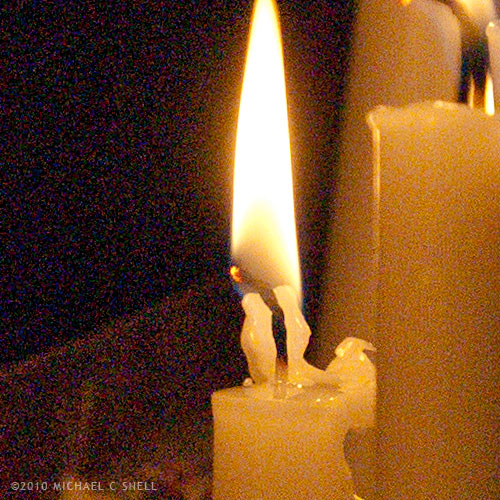
Here’s a crop at 100% of the image with noise reduction off:
100911noise_off_sotc

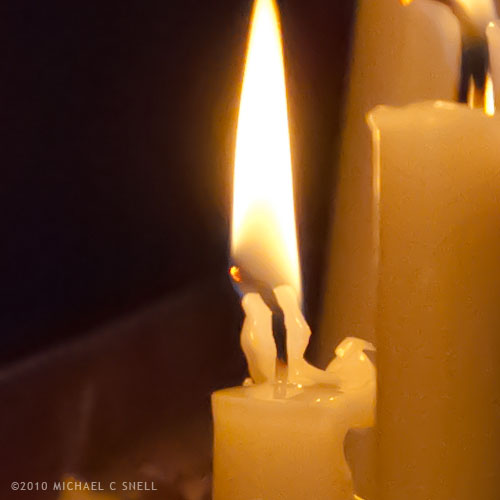
And, to keep these side-by-side in the post, here’s a crop with it on (I’ll explain more after the image):
100911noise_on_sotc

I’ll be the first to admit that this is not a true, scientific test. To be honest, I could have had a better result than that first crop four years ago if I had applied the noise reduction tools that were available at the time. What’s more, I’ve actually increased the noise issue a bit due to some exposure compensations that I’ve made in Lightroom. The idea here is just to show how much noise was in the RAW file, and how much Lightroom 3 was able to remove.

I’ve also really cranked up the noise reduction in Lightroom on the second shot. It’s more heavy-handed that I would typically use but, again, I wanted to kick the tires and see what she’d do. Luminance is maxed out at 100 in that second crop.

Is it perfect? No. There’s a bit of a painterly quality to the gradations, but it’s pretty amazing. You could continue to tweak the settings and maybe even add just a touch of LR3’s new Film Grain to disguise some of those gradation artifacts but, as a quick-and-dirty test, I’m impressed by the possibilities. I’m sure I’ll still stay in the low end of the ISO range 95% of the time, but I certainly won’t let dark conditions prevent me from shooting anymore. It’s comforting to know that even if the results aren’t great now, in four years your tools may improve to the point where you can salvage those images.

And if you’re wondering why I would add film grain after trying so hard to disguise high-ISO noise, it does seem counterproductive but it’s a technique I’ve used for years to disguise areas of retouching. Sometimes you’ll need to add a gradation to a sky or something of that nature and the retouched area looks smoother and more noiseless than the rest of the image, calling attention to your efforts. Adding a little noise or grain will unify the original image and the retouch and make everything blend. In small doses, that added grain never shows up on output. Maybe that will be the subject of a future post…
Hotel shot, take two

100731eldridge_sotc

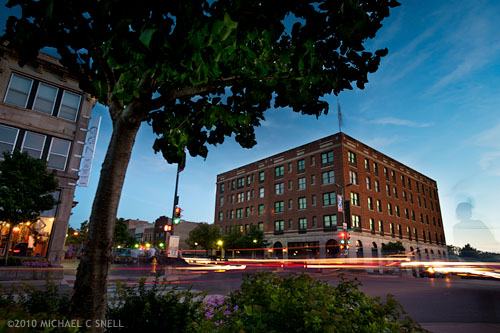
I returned to the Eldridge Hotel for another twilight shoot last night. You may remember a recent post where I shot it from a rooftop across this street. This time I went street-level and parked myself under a tree along the sidewalk catty-corner from the hotel. I was again going for a long exposure with some traffic streaking and a combination of the dying light in the sky and the warm street lights.

I’m discovering that this particular building is not lit very well, nor do there seem to be many lights on in the windows in the early evening. My solution has been to merge several shots together. The image above was a quick attempt this morning to see how it might look, but I’ll need to do a more involved layering later. While I was locked down on a tripod, I was also changing apertures. The differing depth of field between shots means that I need to mask out some areas to preserve the focus where I want it. Otherwise I end up with ghostly halos around the foreground elements.

The advantage I gain by using multiple shots is that I can use one as the base image — here I’ve chosen a later shot with a good sky — and then “paint in” elements from other shots. One example is using a shot taken earlier in the evening where the building itself had more light on it. While it’s nearly silhouetted in the base image, I put the earlier exposure on a layer above, added a black layer mask to hide it entirely, and painted the building back in using white as my foreground color. I could reduce the opacity of the upper layer to better blend it and achieve the level of light that I wanted on the building.

Another advantage was that I could get more traffic streaks than what actually appeared in any one photo. I picked dark shots from my bracketing that had good headlight and taillight streaks, stacked them on layers above the base image and set those layers to “lighten” in the layer mode menu. That made only the areas that were lighter than the base image visible — in this case, the light streaks.

Headlights from the street to my left would also occasionally throw some light into the leaves of the tree above me. I was also able to paint in some detail there using the same technique as I used on the light streaks.

The downside of this kind of shoot is that I’m tied to one position for about an hour. I usually move around and find different angles, trying to make the most of the light as it changes and fades. Here, I need to dedicate myself to one angle and stick with it in order to have all the layers I need for the final product. Last night the sky was surprisingly dramatic for a short period in the middle of this sequence an I regretted positioning that tree where it hid the sky but I was committed to stay put in order to keep all of the images registered. Since this is a local shot for me, it’s not such a bad thing. I’ll just keep going back and trying different things.