Category Archives: architecture

Kansas State Capitol

140415capitol04_sotc

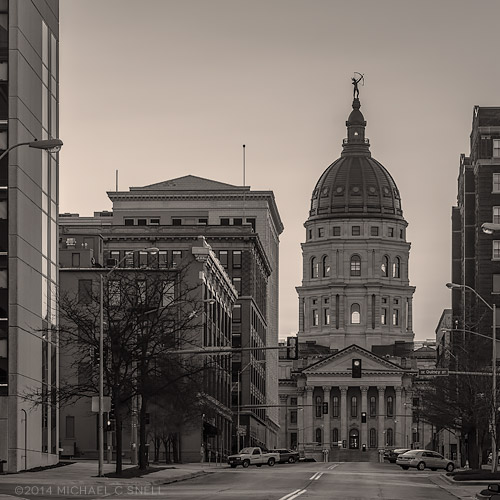
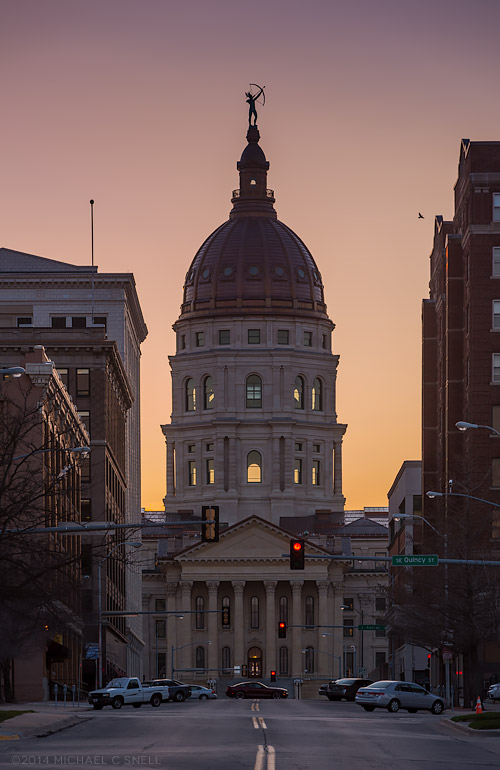
For five years I had an office just around the corner from the State Capitol in Topeka, Kansas. At the time we signed the lease on the place in 2003, I thought it would make for a great opportunity for me to build my library of Capitol photos. After all, I’d walk to work every day so I’d pass the building several times a week in all sorts of weather. What I didn’t realize was that the Capitol was about to undergo a long, long renovation. A renovation that would have it covered in scaffolding for the bulk of the time I officed downtown. When we moved to Lawrence six years ago, it was still impossible to get a clean shot of the most iconic building in Kansas. Only a few weeks ago did the work finish and the scaffolding and cranes came down. In the end, the copper on the dome had been replaced so the green patina is no more and the dome now has the dull sheen of a new-ish penny.

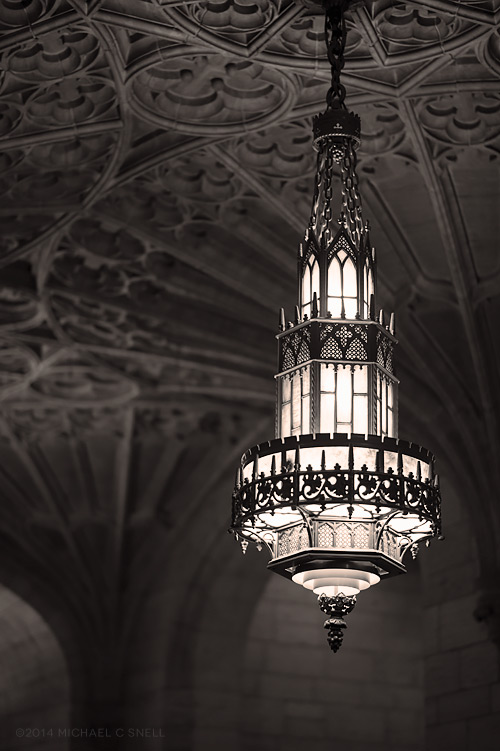
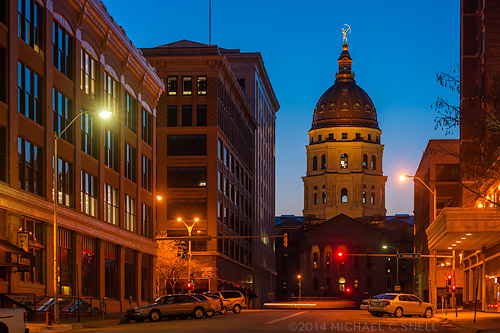
I photographed the interior a couple of weeks ago but with Spring finally arriving, I decided it was time to get back to updating my exterior photo files. Any photos of this building made prior to 2014 are now dated due to the new dome, so I’ll be continuing to revisit the Capitol many times in the coming year(s). Last night I got started by setting up shop on 9th Street — probably the best view of the Capitol if you want to see it in context to downtown. Until about 10 years ago, this was the one downtown intersection that still had historic buildings on all four corners. The northwest corner (in the distant right in this view) has since been redeveloped with a retail/parking structure, but this angle still remains one of the most “historic” views.

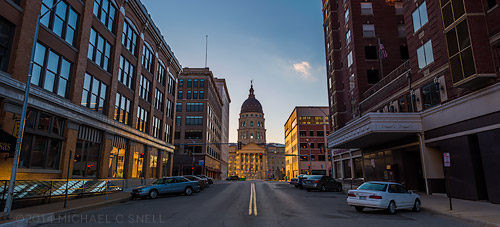
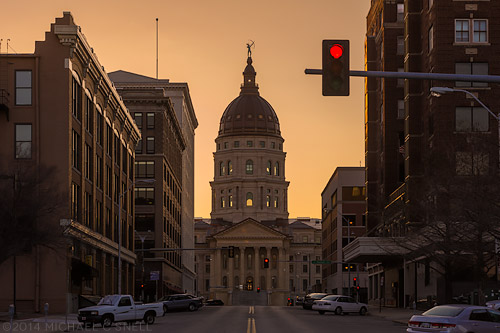
Here are a few more images made while waiting for the sun to set last night and experimenting with some different post-processing effects. All are from more or less the same position but shot with lenses of different focal lengths, each giving more or less prominence to the Capitol in relation to the other downtown buildings.
140415capitol02_sotc

140415capitol01_sotc

140415capitol03_sotc

140415capitol05_sotc

Trujillo, Spain

140118trujillo01_sotc

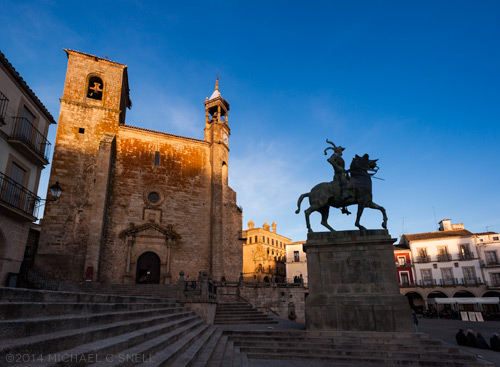
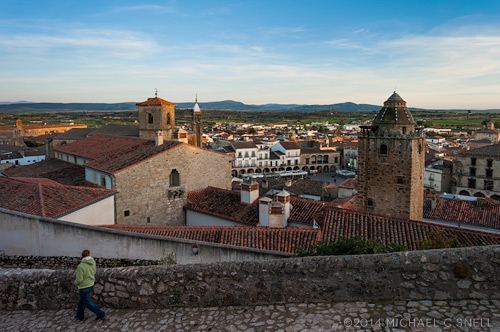
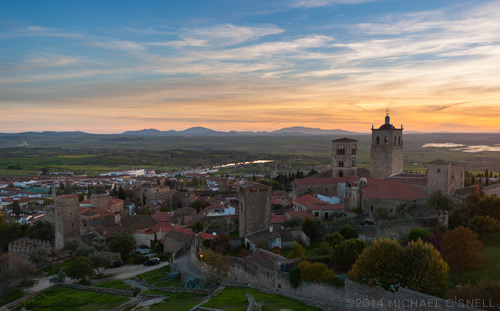
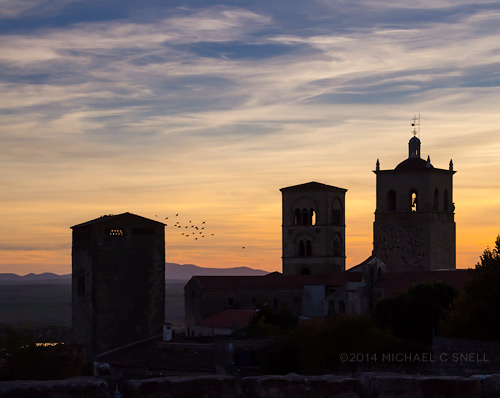
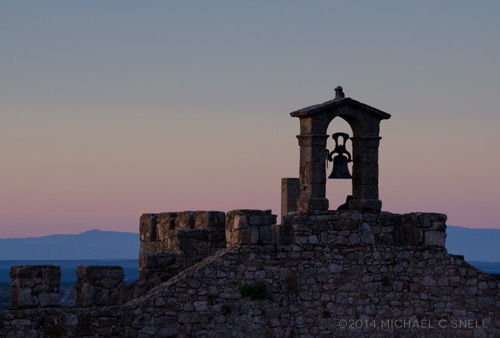
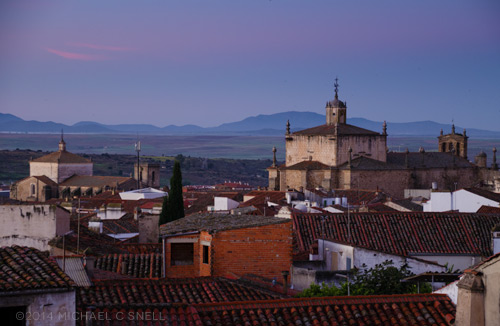
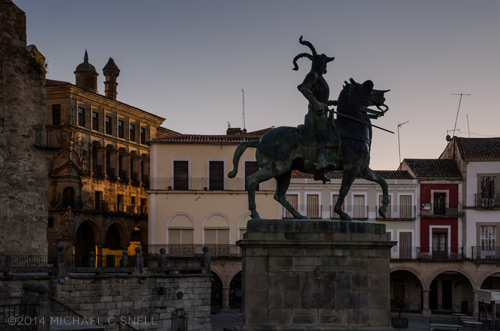
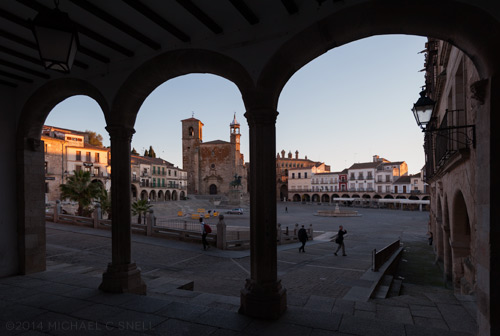
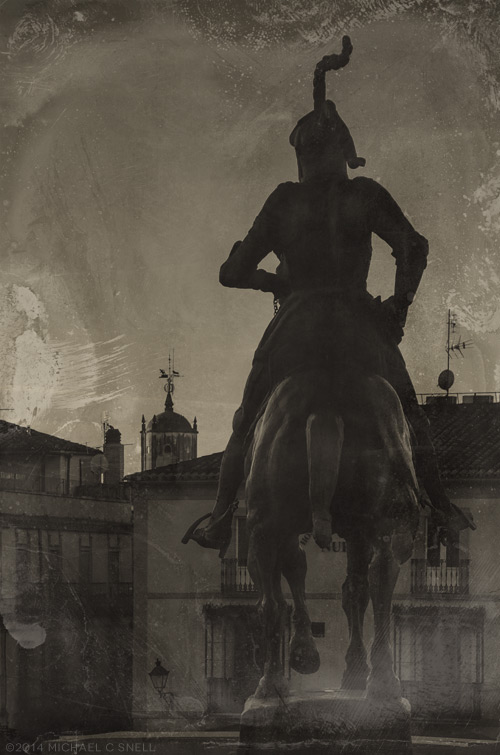
The last overnight during last November’s tour of the Extremadura region of Spain was in Trujillo — birthplace and home to Francisco Pizarro, conqueror of Peru. That’s his statue in the Plaza Major above. We arrived just as the sun was going down and hurried to squeeze in a walking tour of the town while the light held out. We wound our way up switch-back streets, on our way toward an old fortress that provided outstanding views as the sun set.

140118trujillo02_sotc

140118trujillo03_sotc

140118trujillo04_sotc

140118trujillo05_sotc

140118trujillo06_sotc

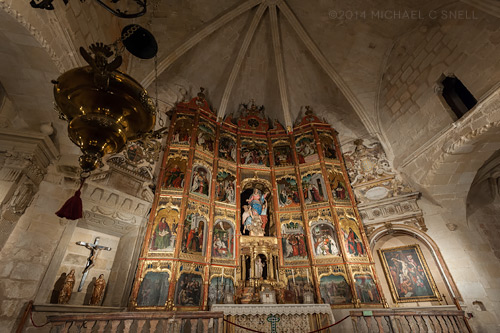
Above, the interior of the thirteenth-century church of Santa María la Mayor with its altarpiece by Fernando Gallego. The church was fairly dark when we entered, but our guide demonstrated a box on the wall where you could insert coins to get the interior lighting to come on for a few minutes. An energy-saving feature and fund-raiser all in one!
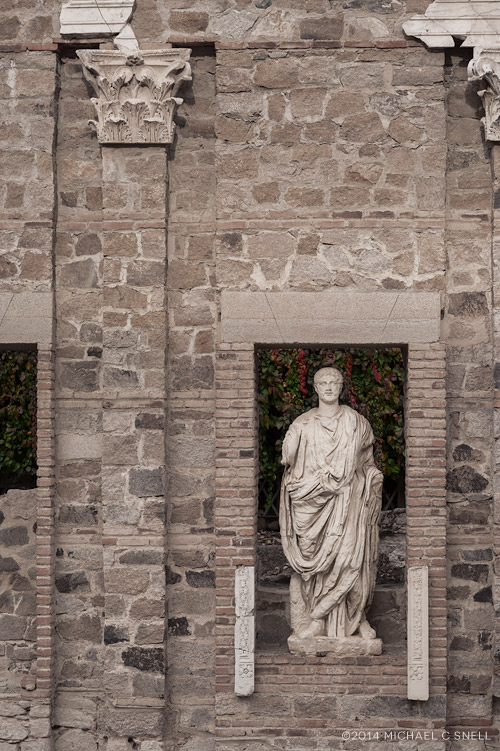
140118trujillo08_sotc

The next morning I awoke early (thanks partially to a temporally-confused rooster outside my window) and took one last walk through the ancient streets before catching my ride back to Madrid.
140118trujillo10_sotc

140118trujillo09_sotc

 140118trujillo11_sotc

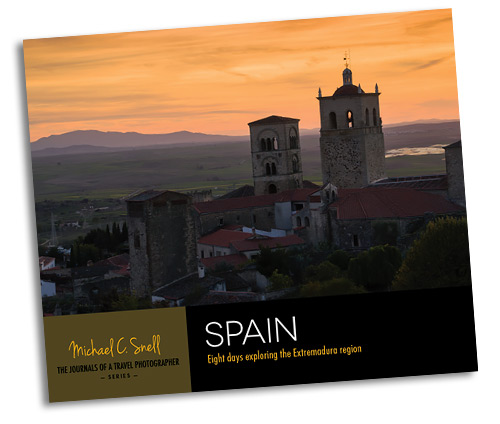
I hope you’ve enjoyed these posts documenting my trip to the Extremadura region of Spain. Many of these images will soon appear in another book in my “Journals of a Travel Photographer” series (you can see other titles in the series here). I’ll post a link here as soon as it’s available but here is a sneak peek of the cover:

 140118spaincover02_sotc     

Roman ruins, Merida, Spain

140109merida01_sotc

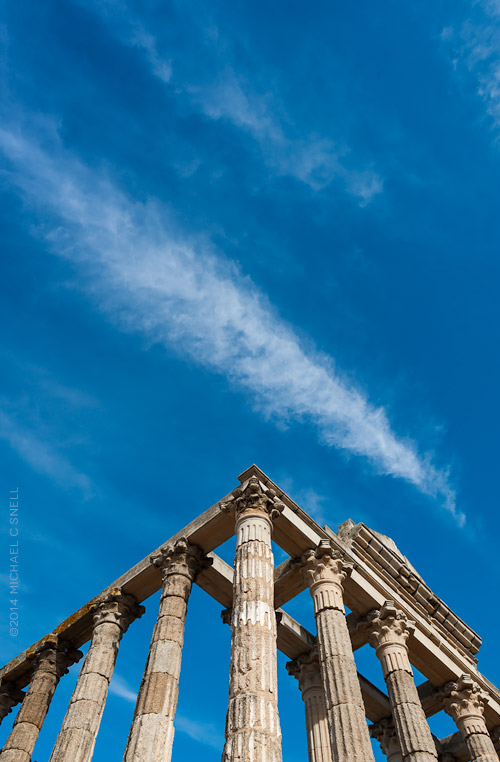
The Temple of Diana, just one of the many Roman ruins scattered about Merida, Spain. Founded in 25 BC as “Emerita Augusta,” this is an old city with layers and layers of history. Here are just a few examples, all in easy walking distance of the city center.

140109merida07_sotc

The Arcade of the Forum.

140109merida02_sotc

140109merida03_sotc

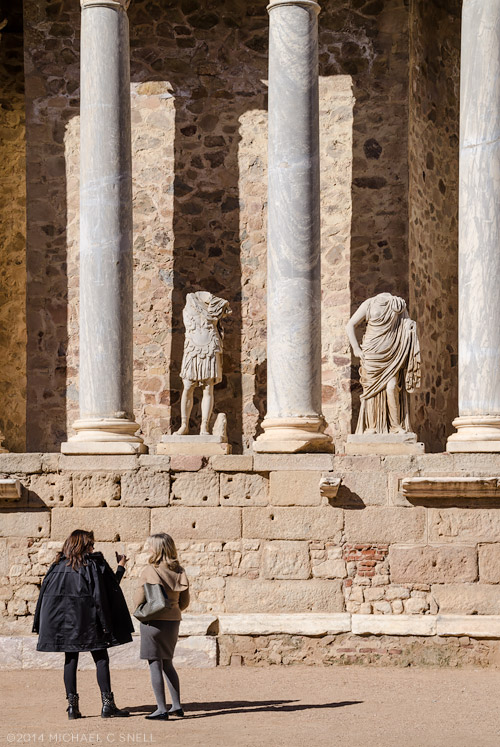
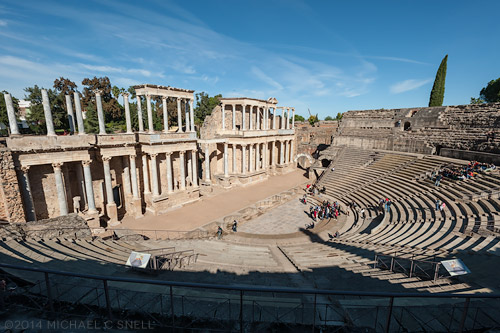
The Roman Theater in Merida. I liked the contrast of the human and marble figures in the second shot.

140109merida04_sotc

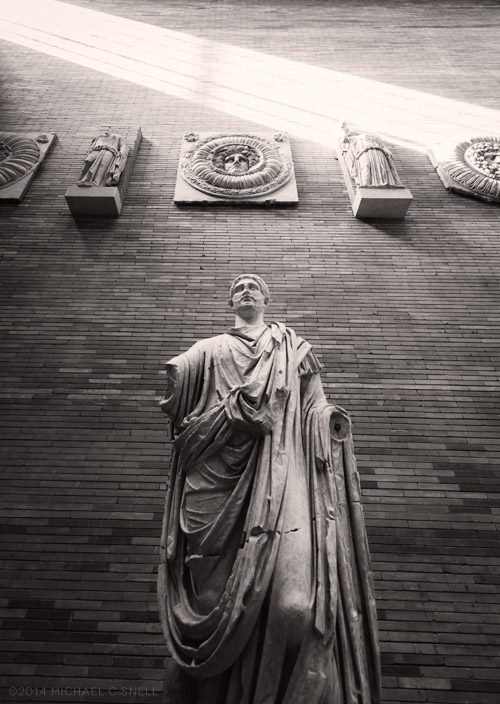
Statuary inside the Museum of Roman Art, just across from the Roman Theater. The architecture of the museum is nearly as interesting as the building’s contents.

140109merida05_sotc

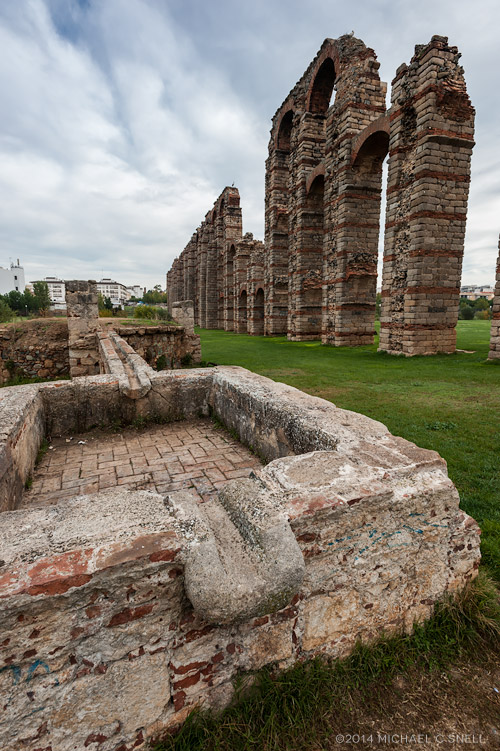
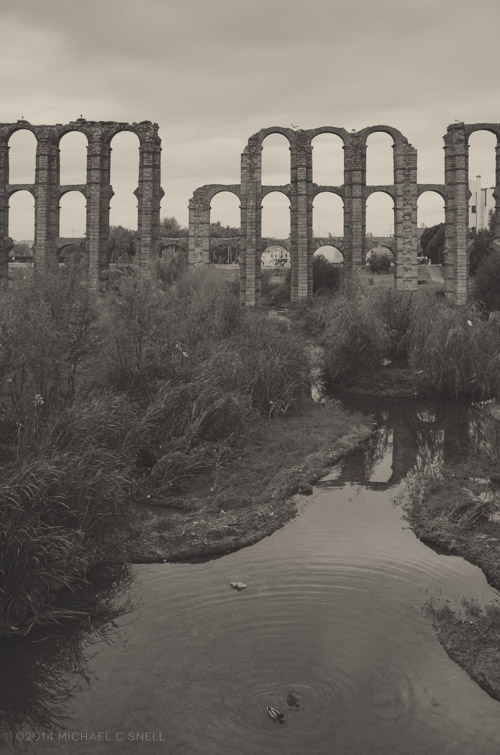
And, finally, two shots of the Miraculous Aqueduct — one of three in Merida. The quantity and scale of the ruins in Merida are stunning. There is plenty else to see in the city (I’ll share more images in my next post), but the Roman sites are easily reason enough for a visit. Learn more here.

140109merida06_sotc

Balcony views

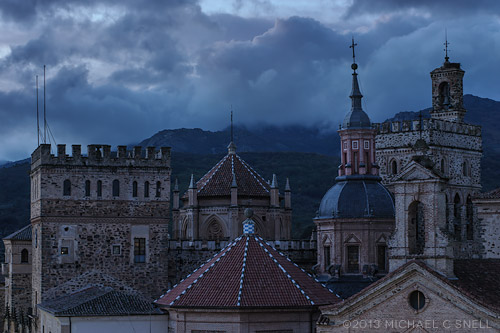
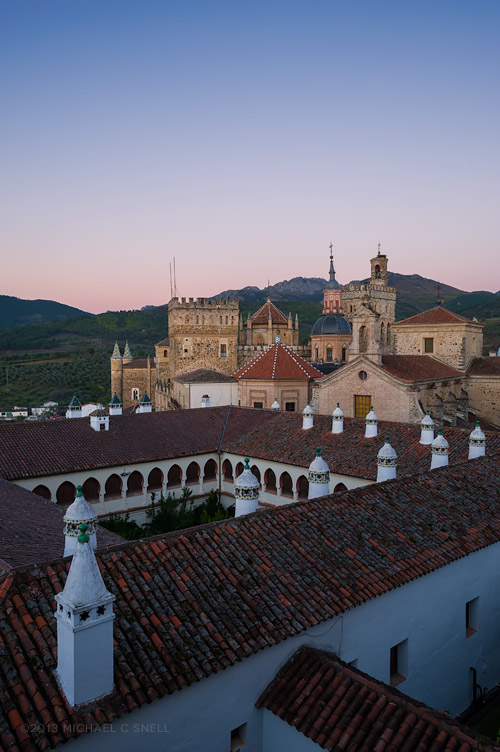
I thought I’d follow up on my last post with a few shots from my room at the Parador de Guadalupe. As I mentioned before, we stayed in Paradores most of our nights in Spain and they never disappointed. Each is unique architecturally, food/service was excellent, and you just couldn’t beat their locations. However, of all of them I encountered, I think I was most taken with the balcony view from my room in Guadalupe. I had very little time to spend in the room, but both sunset and sunrise found me out on the balcony, photographing that view. Sometimes you have to really work hard to find the right location — the perfect angle — and sometimes it’s just handed to you.

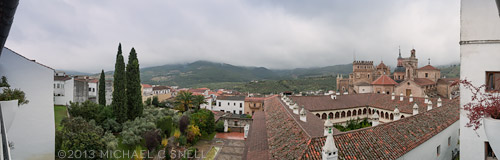
Here is a view of my room and a stitched panorama of the overall view from my balcony:

131226guad20_sotc

131226guad13_sotc

These were taken just after checking in and before taking a tour of the monastery, seen in the right of the panoramic image. By the time I got back to the room, the clouds were more defined and the sun was beginning to set, so out I went on my balcony:

131226guad05_sotc

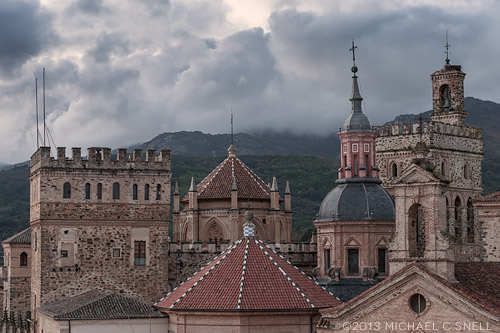
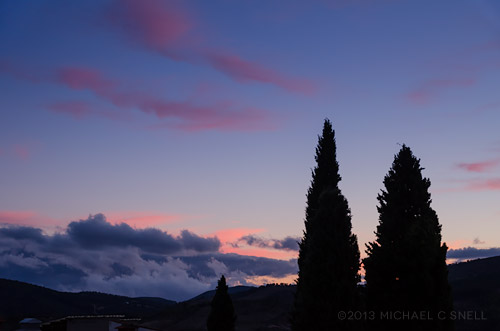
I settled on this view (above) with my full-frame Nikon D700 and locked it down on the tripod to get a series of shots as the light changed. I was hoping that, at some point, some exterior lighting might come on to contrast with the cobalt blue skies that I expected just after sunset. The sun was actually going down to the left of this scene so, while my one camera body was occupied with the monastery, I shot variations of the sunset itself with my D7000:

131226guad12_sotc

The D7000 shots were hand-held so I had to increase my ISO to achieve a faster shutter speed. I knew that would result in more noise, but I was less concerned about that in these shots than in my primary images that I was shooting with the D700.

131226guad10_sotc

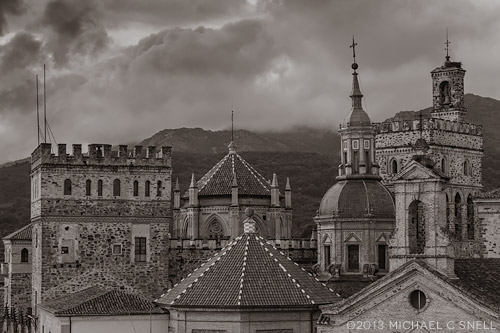
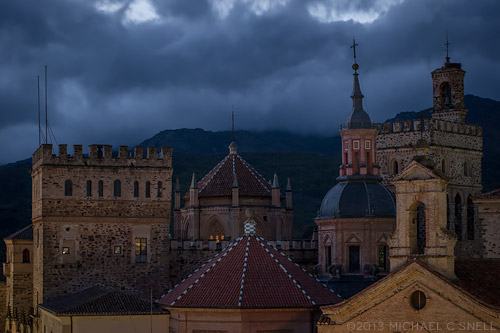
The coloration was less interesting at first, but the clouds were fairly dramatic. Converting some of these early shots to black and white (using Lightroom 5 and/or Photoshop CC) was a nice solution. The next series of images shows the gradual darkening of the sky and the subtle warm colors that began to emerge from the street lights that were bouncing back to illuminate the towers.

131226guad06_sotc

131226guad07_sotc

131226guad08_sotc

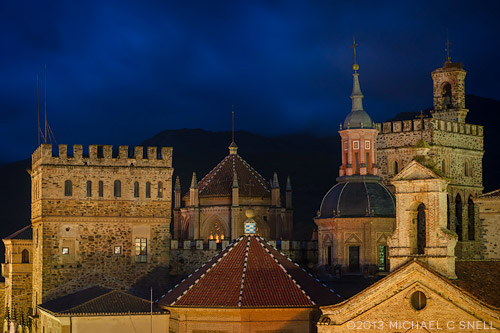
While there never were any floodlights or other exterior illumination on the monastery, the bounced street lights were enough to add quite a bit of warmth as the evening got darker. The shot above was taken well after dark and the intensity of the colors shown here was not visible to the eye. Only the long exposure was able to draw it out, softening the sky at the same time by the blur of the moving clouds. I was using 30-second exposures at this point.

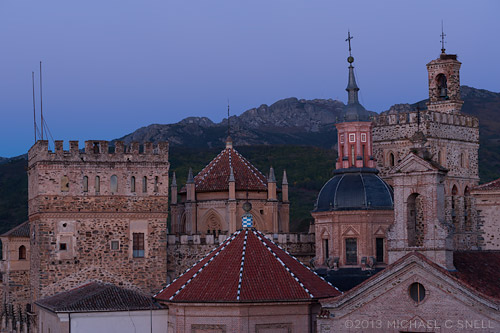
The next morning I resumed my position for sunrise and caught a few pre-dawn images with a beautifully clear sky:

131226guad09_sotc

131226guad11_sotc

One last shot of the monastery just before sunrise with the main courtyard of the Parador seen in the foreground. Once the sun broke over the mountains, the light was actually a little too harsh for my taste and several of the towers were casting harsh shadows on one another. It was time to pack up the gear anyway before grabbing a quick breakfast and heading off to our next stop: Merida, Spain.

You can learn more about the Parador de Guadalupe on their website, which I notice has been redesigned just in the last couple of weeks. Lots of good info there if you’re planning a visit in Spain.

Royal Monastery of Santa Maria de Guadalupe

131226guad14_sotc

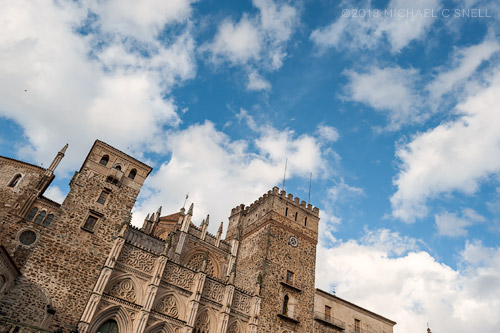
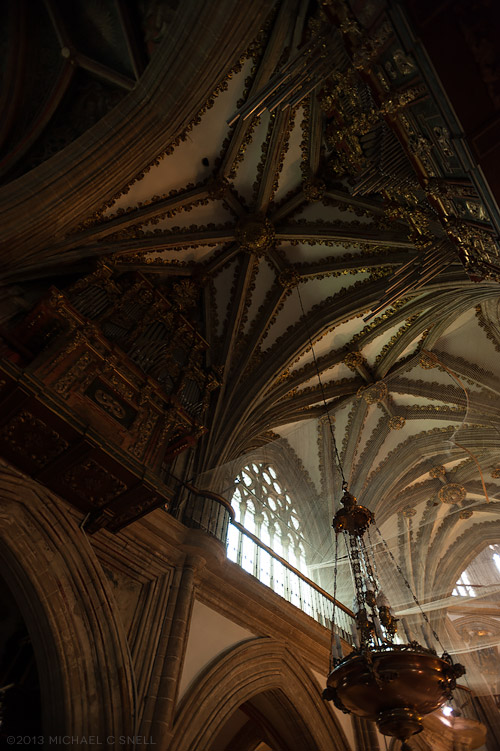
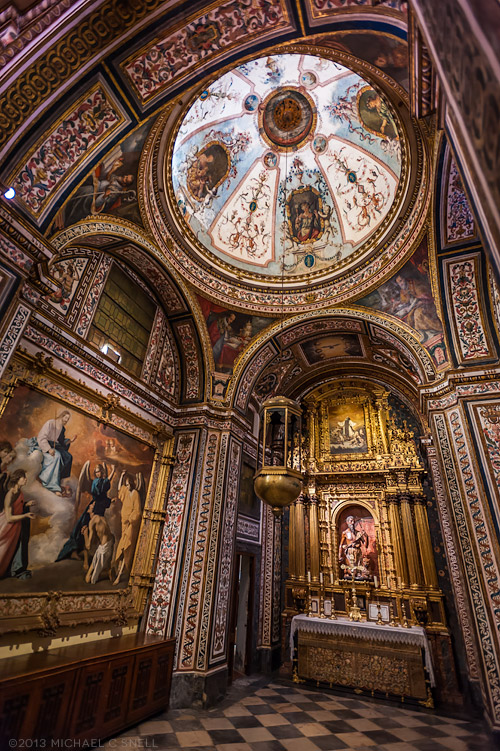
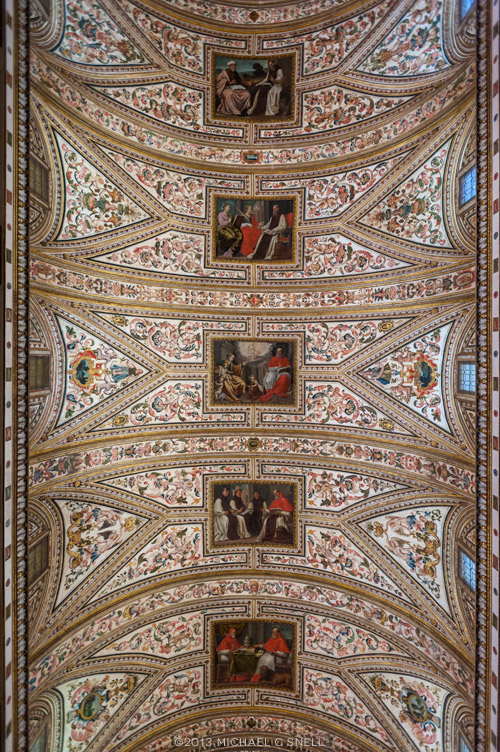
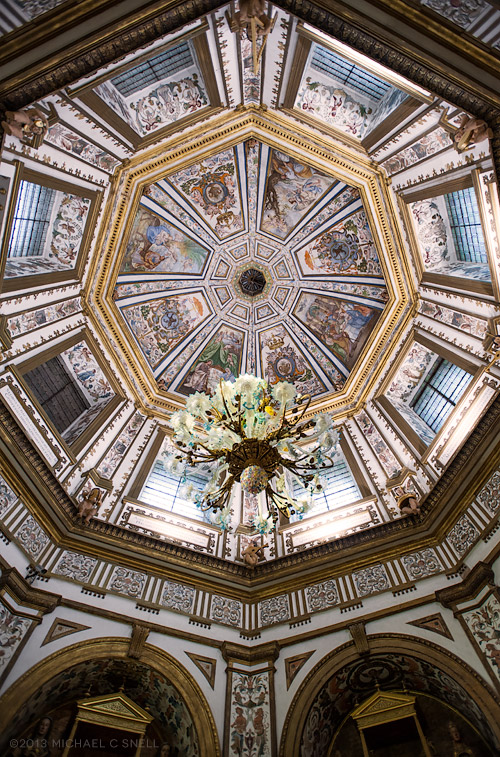
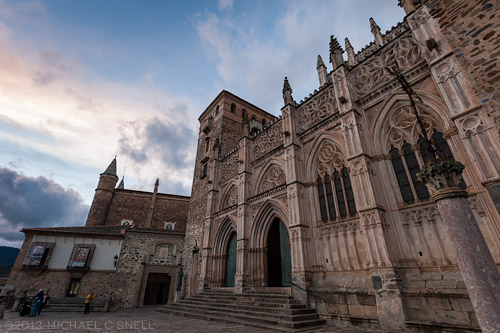
As we continued our circuit through the Extremadura region of Spain, our next stop was Guadalupe. The centerpiece of this town is the Royal Monastery of Santa Maria de Guadalupe, originating in the 13th century and associated with Columbus’ first voyage to the New World in the late 15th century. The monastery’s architecture evolved over that time and on into the 17th and 18th centuries. From the exterior (which you’ll see more of in the next post) the result is a crazy combination of towers and spires in all shapes and sizes. The interior spaces are equally exuberant and even more detailed:

131226guad15_sotc

The main church is dark, but exceedingly grand. Exploring further, styles change to brighter and more elaborate decoration:

131226guad17_sotc

131226guad04_sotc

131226guad16_sotc

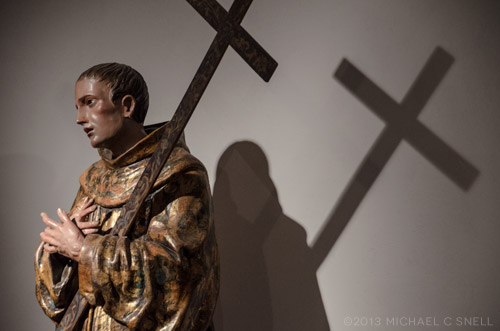
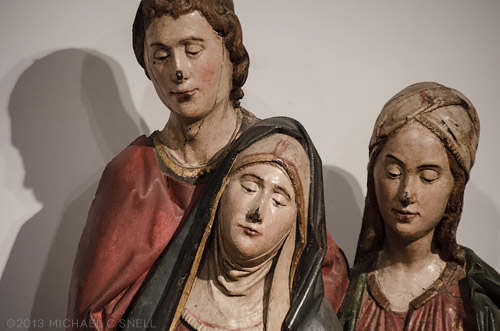
The Monastery buildings also house museums for textiles, paintings, sculpture and more:

131226guad03_sotc

131226guad18_sotc

131226guad02_sotc

We left the Monastery just as the sun was setting and crossed the street to our Paradore. The views of the Monastery from the Paradore were stunning and I spent the rest of the evening, and well into the night, photographing the towers from my balcony. I’ll share some of those images in my next post.

131226guad01_sotc

Cáceres, Spain

131218caceres10_sotc

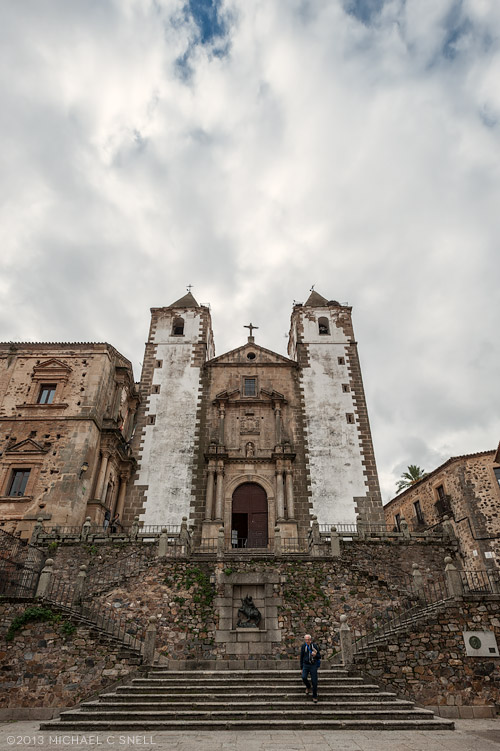
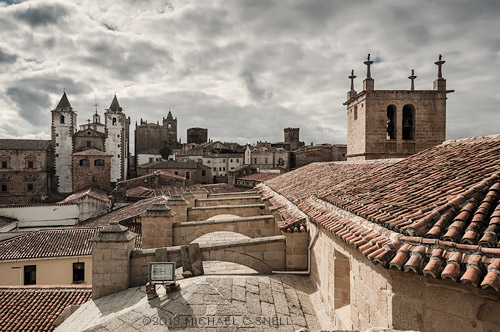
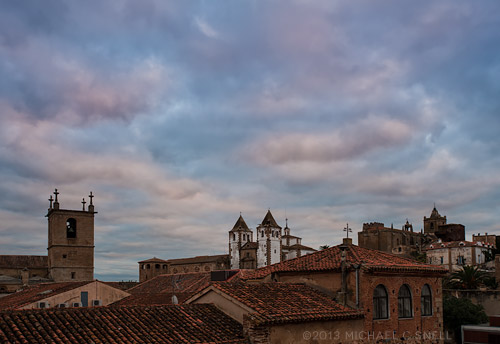
We spent two nights in Caceres, Spain – the only time on the trip that we would have more than one night in one place. Even so, having a full day in this city was not enough. The old, walled portion of the city alone (a UNESCO World Heritage Site) is worthy of several days of exploration.

131218caceres13_sotc

131218caceres14_sotc

131218caceres02_sotc

131218caceres03_sotc

We arrived after dark so a pre-breakfast walk on my own was my first real chance to see this ancient city. I took a map with me, but enjoyed just wandering and getting lost a little, too.

131218caceres04_sotc

131218caceres05_sotc

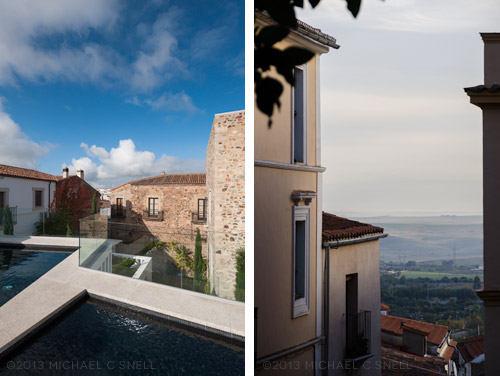
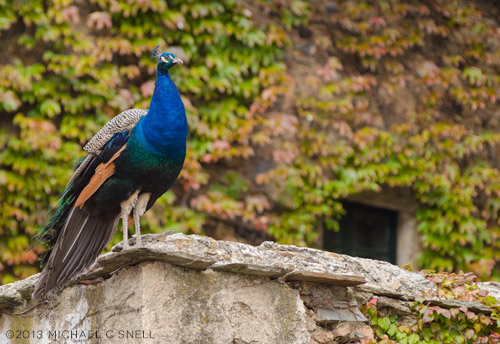
A quick tour of the Atrio Hotel and Restaurant revealed the dual roof-top pools (above left). And the peacock that seemed to live next door (below).

131218caceres06_sotc

131218caceres07_sotc

131218caceres08_sotc

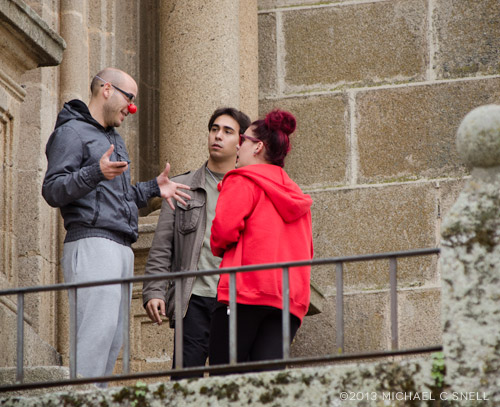
Some things, I have no explanation for (above).

131218caceres09_sotc

131218caceres15_sotc

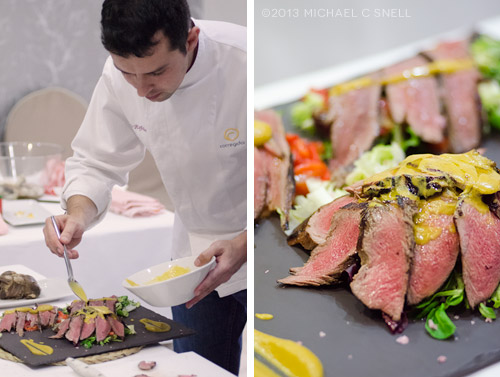
In the afternoon, we had a cooking demonstration at the Restaurante El Corregidor. Next time you fix wild boar at home, it should look something like this (above). Then, a few free moments to find a spot to try and catch the last light on the towers of Caceres:

131218caceres11_sotc

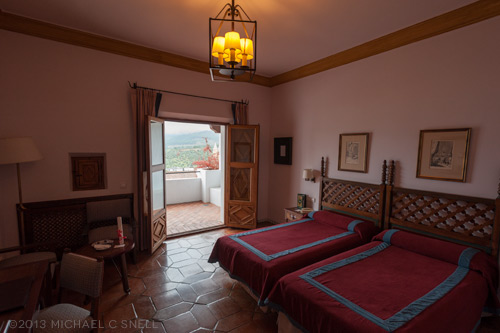
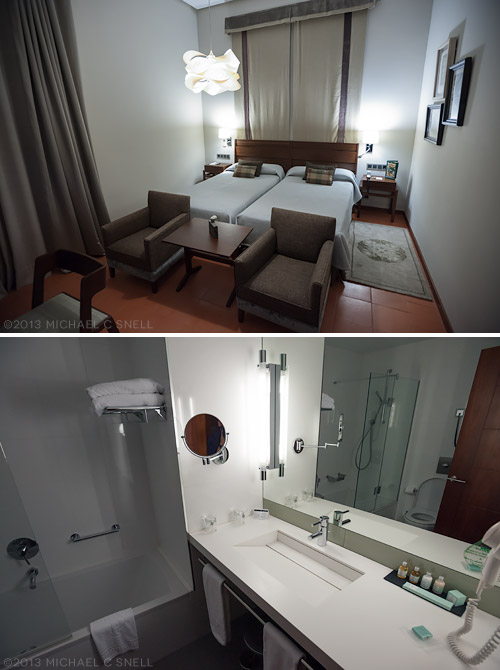
The Parador in Caceres was another stunner. This one built inside a Renaissance Palace. Here are a couple of quick shots from my room, so that you know I wasn’t suffering too much:

131218caceres12_sotc

I could have stayed much longer in this city, but there was more of Extremadura to see…

Plasencia, Spain

131208plasencia3_sotc

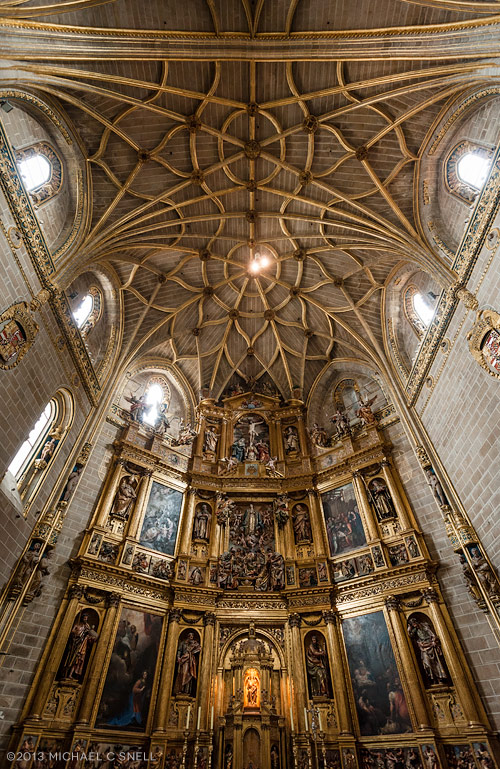
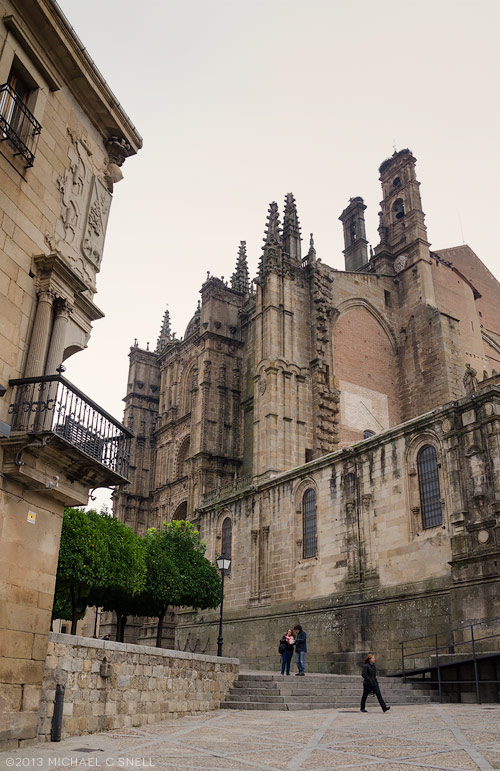
The Cathedral of Plasencia has to be one of the most interesting cathedrals I’ve encountered in my travels – and I’ve seen a fair number of them. What makes this one unique, is that it was originally constructed in the Romanesque style in the 13th century. Then,  in  the 15th century, a new construction was begun over the top of the old, replacing the original structure as the new one marched across it. Work halted in the 18th century with work only partially complete leaving two distinct interiors in one building.

131208plasencia1_sotc

Think of it as a 15th century whale slowly swallowing a 13th century fish, and time freezing mid-way through the process. In the photo above, the old structure is the lower portion on the right and the “new” section towers behind it with its unfinished back wall showing there the large arches are bricked in. Think of that as the mouth of the whale.

131208plasencia2_sotc

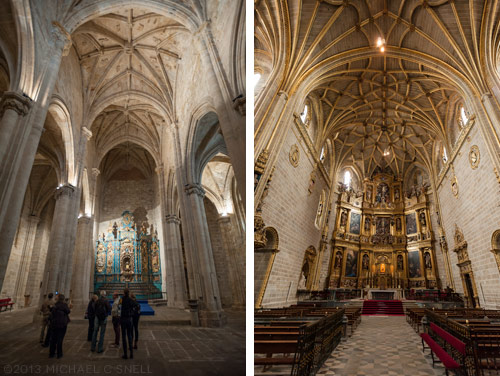
Inside you end up with two half-sanctuaries. The one on the left is the older of the two that would have been demolished had the construction continued. If you could see through the wall where the blue altar piece is, you’d see the new sanctuary that is pictured on the right.

131208plasencia4_sotc

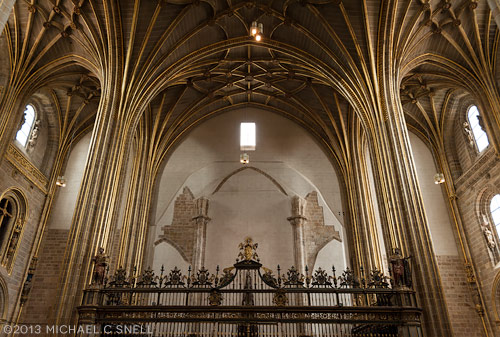
This is the back wall of the new sanctuary, and you can see the ghost of the old sanctuary fading through with its narrower colonnade and lower arch. This really shows the scale of the new cathedral compared to the old. Had the work on the new cathedral been completed, I think the building would tell much less of a story but, as it is, it’s a treasure for people interested in architectural history (as I am) because you can see two time periods and styles simultaneously. More than that, you can see the actual construction techniques where the the new construction stopped and pieces of the old cathedral can be seen being used as fill within the unfinished walls of the expansion. Definitely worth seeing.

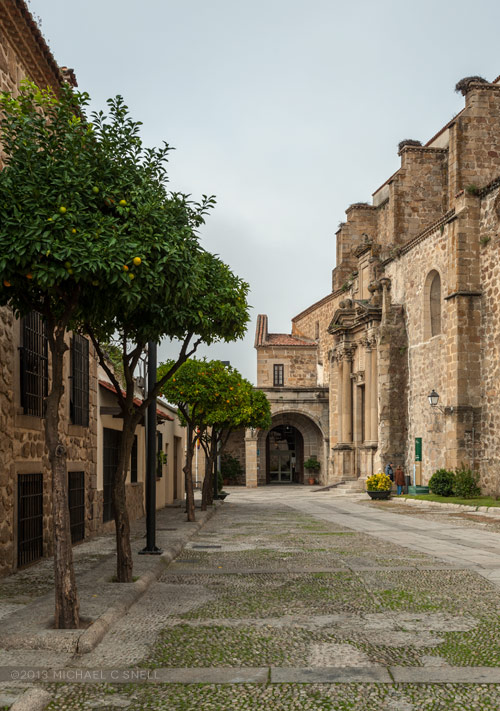
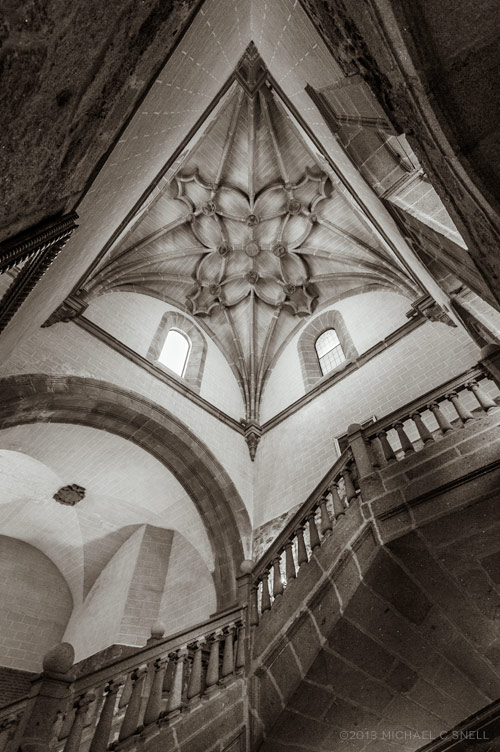
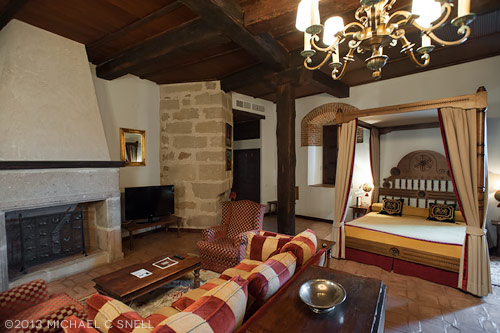
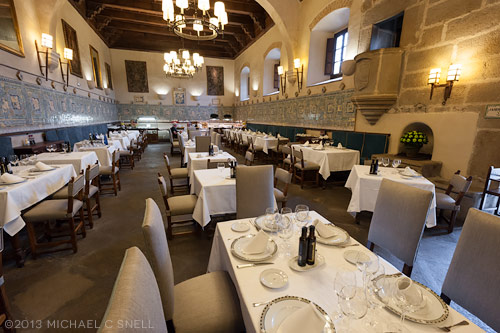
Also worth seeing – and experiencing – was our Parador for the night which was located just a short walk from the cathedral in former convent of Sto. Domingo, built in the 15th – 17th centuries. Here are a few photos of it, starting with the entrance:

131207plasencia1_sotc

131207plasencia4_sotc

131207plasencia6_sotc

131207plasencia7_sotc

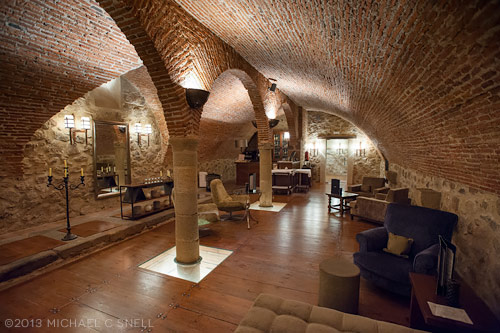
My only regret is that I was unaware of this bar in the cellars until the morning we were checking out. What a great spot to spend an evening:

131207plasencia8_sotc

If you’d like more information about Spain’s Paradores, visit their website here: http://www.parador.es