Category Archives: travel

Vicksburg, Mississippi

120305vicksburg_sotc


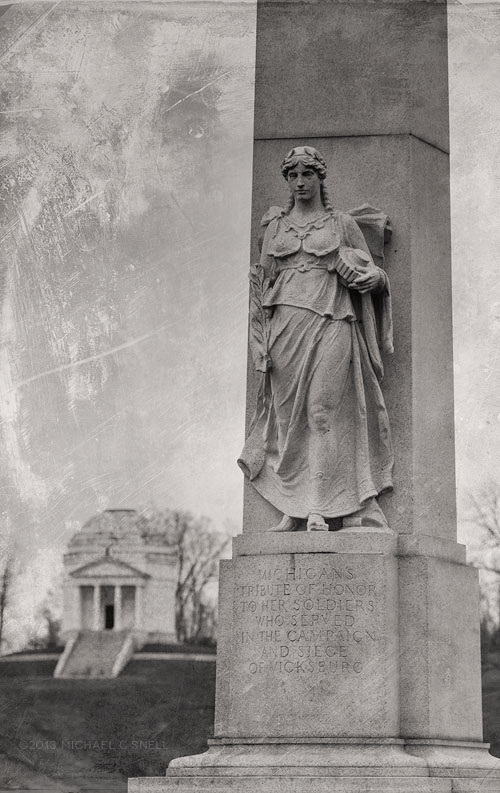
Just a quick note to say that I’m back from a short jaunt to Mississippi. It may give hope to others that live in my part of the country that Spring is only a day’s drive away. While in Jackson, Vicksburg and Natchez, I saw iris, daffodils and forsythia blooming and the tulip trees were actually already past their prime. Spring is on its way, folks. Take heart.

Oh… and the photo is from the Vicksburg National Military Park. More on that and other stops soon.

New book: China

book_china_cover

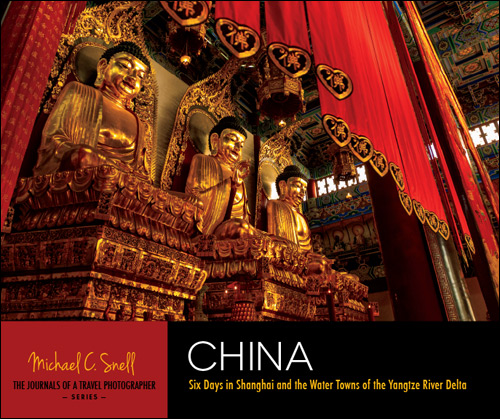
I’m very happy to announce that my new book, “China: Six Days in Shanghai and the Water Towns of the Yangtze River Delta,” is now available through my Blurb.com bookstore.

book_china_int01

This is the first book in a series I’m calling “The Journals of a Travel Photographer.” There are several more planned in this series and a few of them are already well into production, so they should be joining this one in the bookstore soon. Each title in the series will document a particular photo gathering trip that I’ve taken and this first book covers a 6-day press tour to China that I joined in 2008. The photos appear more-or-less chronologically as they were taken throughout the trip. The images do not provide a complete, in-depth study of the region but, rather, document that particular trip and the things I experienced during that week. As the books will illustrate, there wasn’t always time to wait for the perfect weather or perfect light on most of these trips, but many magical moments still managed to occur and — hopefully — I captured a few of them.

book_china_02_sotc

This self-published series is something I’ve wanted to do for a long time. The books will allow me to share images that otherwise may not ever appear in print. They will also allow me to show a broader collection of images from one destination than would typically be possible in a short magazine story or an individual stock placement. Having been on the design side of magazine and book production in the past, I understand that photo editors have their reasons for choosing to use one image over another for their specific purpose. The shot that I like most, might not be the shot that tells the story they need told, or that fits their particular layout. Here, I get to choose the images that are used and I get to tell my own story.

I’m using quite a few images, too. There are over 100 photos in this first 80-page book, and yet several of them are full page or even larger. Text is fairly minimal with a brief introduction about the trip and captions that tell about the location and perhaps a bit about how the photo came about.

book_china_04_sotc

I also see this series of books as being a way for me to say “thank you” to all of the people that have helped give me the opportunity to travel to these amazing places. Some of the trips covered in these books were press trips and I’ve not always had a way of sharing the images I made with the people who hosted me. If I get a clip or two from a stock image placement or a story that I’ve supplied photos for, I send them along, but I often never receive samples of my images in print. These books will give me a way to share more of my images with those people who helped make them possible.

The books in this series will be available in both softcover and hardcover editions, with slightly better paper used in the hardcover editions as well.

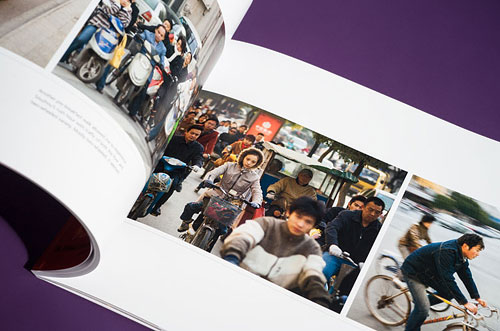
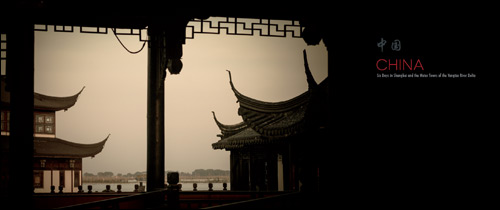
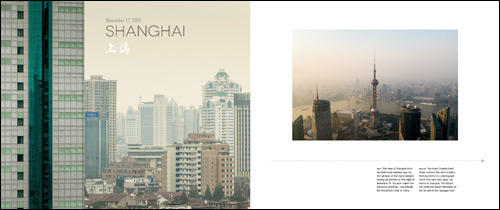
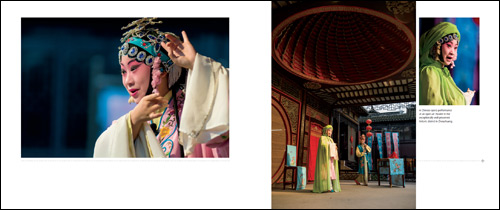
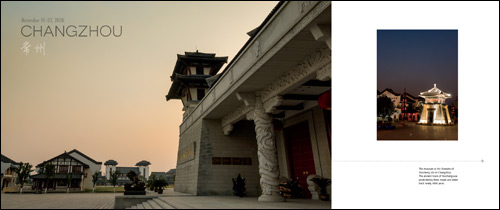
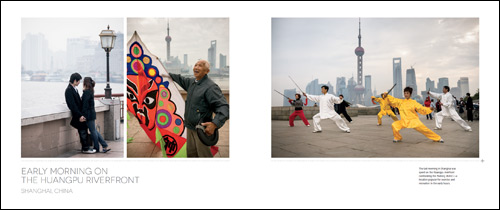
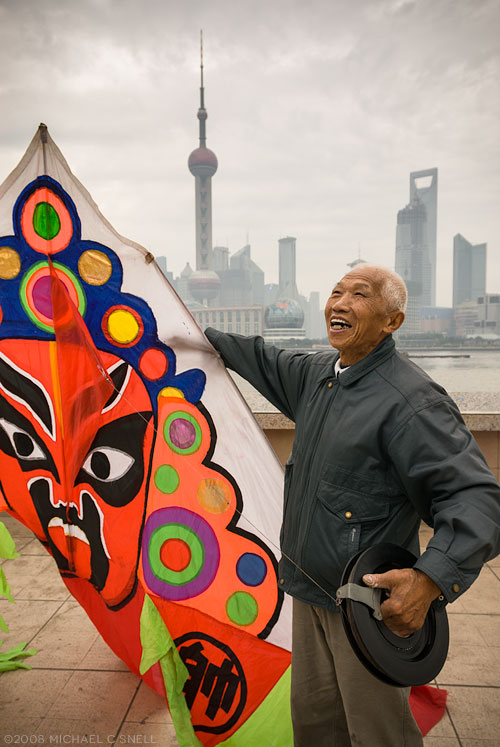
Here are a few sample spreads from the China book. You can find more information on my website or you can “flip through” a partial preview over on the Blurb site.

book_china_sp01

book_china_sp02

book_china_sp03

book_china_sp04

book_china_sp05

As I mentioned earlier in this post, this is just book one in a series. Stay tuned for additional titles, coming soon. And thanks for your interest!

book_china_01_sotc

Hotel Carpet

121216hotelcarpet_sotc

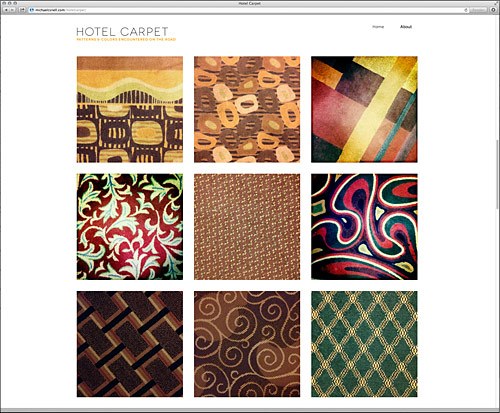
I announced this on Facebook earlier but neglected to do so here. I’ve launched a new site, Hotel Carpet, to showcase photos of rug patterns I encounter while traveling. It’s an idea I’ve had for a while and I wish I’d started documenting these carpets earlier but I haven’t always traveled with my iPhone and that has proven to be the most efficient way of recording these floor coverings. At any rate, I’m doing it now and you can find the results at: http://michaelcsnell.com/hotelcarpet/

There’s not much here in the way of serious intention, more just observation. It seems that – especially among chains in the U.S. – hotels are gravitating toward really wild, bold patterns in their carpets. It’s a trend that I’ve decided to document and share. You’re welcome. 😉

I’ve had questions about whether I’ll accept submissions and, for now, I’m just testing the water with a couple of people. Down the road, I may add a way for more people to participate by uploading their own images but, for now, I’m keeping this simple and manageable. If things change, I’ll announce it on the “about” page of the Hotel Carpet site.

Updates will be sporadic, just like my travels. Enjoy.

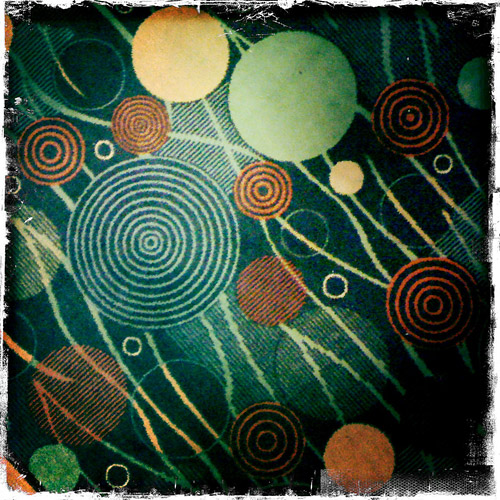
carpet110426_snell

The image I launched the site with, from a hotel in Indianapolis, Indiana. See more at Hotel Carpet.


Fort Scott Candlelight Tour

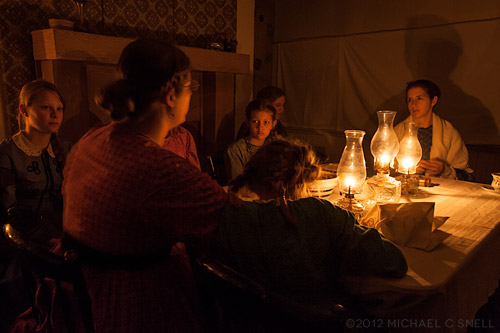
I paid a quick visit to the Fort Scott National Historic Site in Fort Scott, Kansas, last night to photograph their annual candlelight tour. The shot above is something I’ve been playing with lately — creating shallow depth of field images by stitching together multiple frames from a fast normal, to short-telephoto, lens. This one is 13 frames shot on a 50mm lens at f/1.8 and stitched together using Photoshop CS6. It’s an interesting look and reminds me a bit of the old large-format images that might have been made in the late nineteenth century. It seemed appropriate for an evening devoted to recreating the year 1862 on a frontier fort in what had then just become the state of Kansas.

More (single frame) images from last night:

Wichita’s Keeper of the Plains

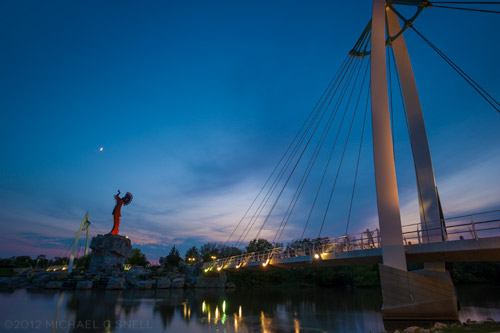
I had a free evening in Wichita last week in between two assignments and decided to update some of my stock photography of that city. I’ve had twilight skyline shots that have done well over the years, especially one where the lights were reflected in the Arkansas River as it cuts through downtown. My initial thought was to update this shot in particular, but the great drought of 2012 caused me to change those plans slightly.

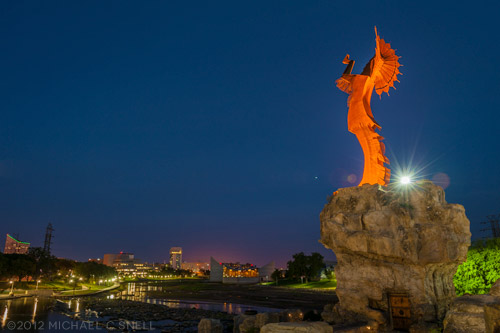
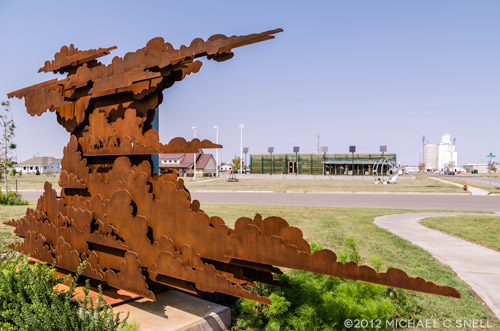
Wichita’s downtown has changed in recent years so I knew I’d need to change my angle of view from my old shooting location to a new one that would include more of the recent landmarks. Using Google Maps, I located downtown and the Exploration Place — which is built out into the river and has a very identifiable shape — and tracked back along a line that would allow me to get both in a shot with the river as a nice foreground. As it happened, it looked like another landmark would make an ideal foreground: The Keeper of the Plains by by Kiowa-Comanche artist Blackbear Bosin. First erected in 1974, it was raised onto a new stone outcropping at the confluence of the Arkansas and Little Arkansas Rivers in 2006. A pair of footbridges echo the sculpture’s shape and provide access to pedestrians and bikes.

Upon my arrival, it was clear that there was not enough water in the Arkansas to make my initially envisioned shot happen. Here’s the best I could do:

Tough to see at this size, but the river is so low that only about a quarter of the skyline is reflected as compared to what normally would be. Luckily there is a bit of a dam on the Little Arkansas at this point so I was able to salvage a shot by crossing on over to the north bank and shooting back at the sculpture and foot bridges as seen in the shot at the top of this post. I got several variations from this point with varying degrees of sunset and twilight and am happy with what I came away with. I’ll just need to keep this spot on my to-do list for next year when the water will hopefully be higher again.

Greensburg, KS, revisited

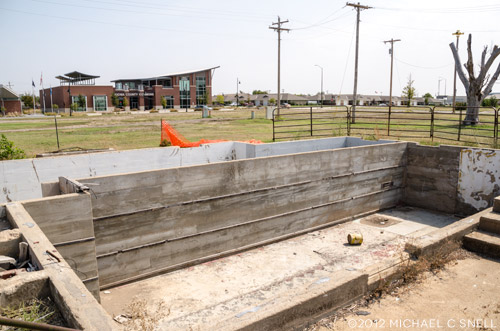
Greensburg, Kansas, was nearly wiped out by a tornado in 2007. Something like 95% of its buildings were destroyed. I used to travel through Greensburg frequently in the 80s and 90s and remember it as a beautiful community with the typical mix of old brick shops downtown and early nineteenth century clapboard houses filling its surrounding neighborhoods. But I remember it most for having what seemed like more than its fair share of shade trees. It was always a truly welcoming place on the prairies of western Kansas. Most people knew it as being home to the World’s Largest Hand Dug Well and, to be honest, most of the images I have in my files from Greensburg are of the staircases leading down to the bottom of that well. I wish now that I would have recorded more of the rest of the town.

It was quite a while after the tornado before I went back to Greensburg and, even then, I just drove through. I didn’t want to just gawk at the destruction and it was a hard thing to come to grips with, seeing a community that you knew for your whole life, now replaced by an open field that you barely recognized.

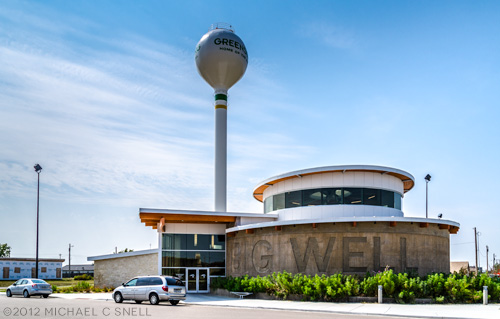
A recent shoot in Dodge City had me driving through Greensburg on the way to my next stop in Wichita. This time I decided to take a little time to see how the community is rebuilding. Of course the first landmark I looked for was the Big Well, which was always easy to find as it was located just beneath the city water tower. The water tower and the museum that sat behind the well (still seen on the Wikipedia page) were both destroyed but a new water tower has replaced the old metal one and a vastly larger and more modern museum has actually been built over the well this time as seen above. As I was running short on time on this visit, I saved the trip down into the well for next time, but I understand the old zig-zagging stairs have been replaced with a circular system that hugs the outer wall of the stone-lined well. If you’re having trouble imagining a well with room for a staircase, we’re talking about a hole 32 feet in diameter and over 100 feet deep.

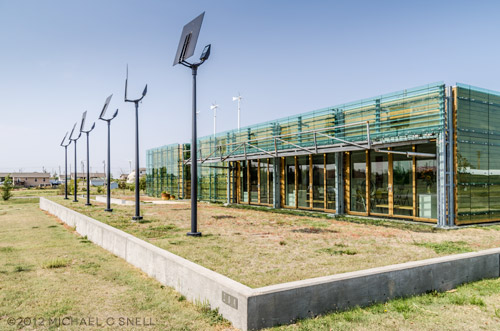
There are still a few damaged trees standing and plenty of sidewalks leading to nowhere, foundations with no homes. But I have to give a great deal of credit to the people of Greensburg and their philosophy about rebuilding. They took a disaster and found an opportunity within it. The townspeople have decided to rebuild better than before, and greener than before. You notice the wind turbines long before you even get to town, then the solar panels. Greensburg now boasts more LEED certified buildings per capita than any city in the world. They have become a testing ground for all kinds of energy-conserving and alternative energy technologies.

It’s nice to see public art being among the first things to return to Greensburg as well. This glass-skinned building is the 5.4.7 Arts Center, the first building in Kansas to receive a LEED Platinum rating.

For me, it’s still a bit painful to walk the streets of Greensburg. In my mind’s eye I’m still seeing what was. But that’s not fair to the efforts of the people who have put such energy into bringing this community back. They have made great strides and I look forward to many future visits to see how they are progressing. The hopes and dreams of these folks are now plainly visible in the new buildings and the new trees and gardens being planted.

Fountain shoot, behind the scenes

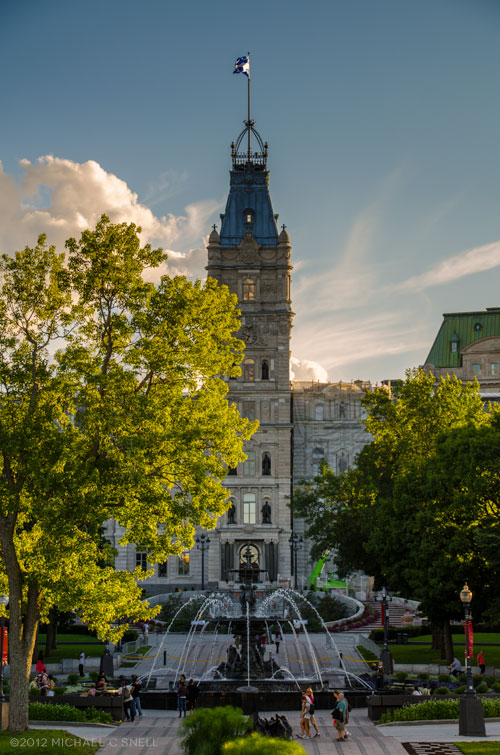
On my last trip to Quebec City in 2007, I never had an opportunity to get a good shot of the Fontaine de Tourny, located in front of the Parliament Building. The fountain was brand new at that time — if you can call something new that was built in France in 1855, put in storage in 1960, and relocated to Quebec in 2007. You can find the whole story here.

Anyway, it’s one of those shots that I felt should be in my files because the fountain has such a great story and it is rapidly becoming yet another landmark of this already beautiful city. So… when I went back to Quebec last month, this fountain was high on my shot list.

I captured the above photo on my next-to-last day in town but it’s not the one I originally had in mind. I really wanted a shot that made the fountain the hero and included the Parliament Building as context. I also wanted to shoot at twilight to get the most impact from the color in the scene.

Early on my first free evening in Quebec I set out with my D700 and a tripod and began scouting out my angle. Things are rarely perfect and this day would be no different. It was cloudy, first of all. Not puffy, dramatic clouds but heavy, overall grey clouds that pretty much made for a dead sky. Grey sky, black fountain, stone building. Not a lot of color so far. Still, you never know what will happen and twilight can be magical in any weather. Secondly, I found that half of the Parliament Building was covered in scaffolding and there was a big, lime-green crane right in front. Scaffolding had been everywhere on this visit — even the most prominent element of the Quebec skyline, the Fairmont Le Chateau Frontenac, was getting a new copper roof. The Parliament Building I could work with, though. It just took a little finesse to hide of the bulk of the scaffolding behind trees and hopefully the green crane would disappear as night fell.

Here’s my initial exposure at 7:29 with the composition pretty much established:
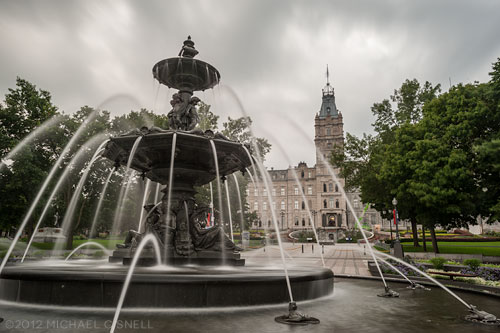
A little grey overall but it was early yet and I knew from experience that even grey skies can go cobalt blue for a few, short minutes at twilight. Patience.

A couple of other details for you photographers: I wanted not only the fountain’s water to blur but also the clouds, which were moving fairly quickly. To achieve this before darkness, I stacked my ND filter and my polarizer to cut down as much light as possible. I stopped down mostly around f/11 or f/16 because I find this lens (my Nikkor 17-35mm)  to be sharper in that range than it is all the way down to f/22. That first shot was 5 seconds at f/16.

Here’s a shot from a bit later in the evening around 7:48 — 30 seconds at f/22 (I accepted the loss of sharpness for more blur on this one):
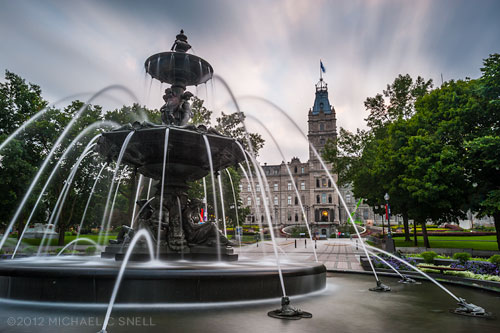
You can start to see the cloud effect in this one. I kept firing a shot off every few minutes, whether it looked like anything had changed or not. I tried some shots with traffic blurring in the background, while on other shots I tried to avoid any cars at all by taking advantage of the nearby traffic signals.

Right around the time of that last shot, this guy shows up:
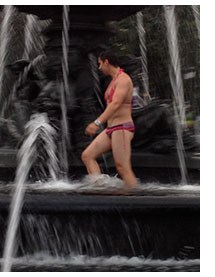
I have no explanation. A group of guys had wandered up with “protest” signs in French, so I had no idea what they said. Then this guy then strips down to his… bikini (mankini?)… and proceeds to strut around in the fountain while all of his buddies video-taped him. Okay, to be honest, I shot some video on my iPhone as well. What are you supposed to do when something like this happens?!? His friends seem thrilled with his performance and were shouting and cheering and egging him on.

Huh. Luckily he didn’t stay around long enough to ruin any of my long exposures during the fleeting prime light.

This is the kind of thing that could easily distract the amateur photographer. But, as a consummate professional (ahem!), I took it all in stride. I shot my little video to share with friends later, and returned my thoughts to the task at hand. There would be time to ponder this moment later. Strange as it may seem, this isn’t the craziest thing I’ve encountered on a shoot.

I’m starting to get a little color in the sky at this point and there are even occasional cloud breaks and patches of blue. Happily most of the breaks occurred right about sunset time, giving some really nice color for just a brief period of time:
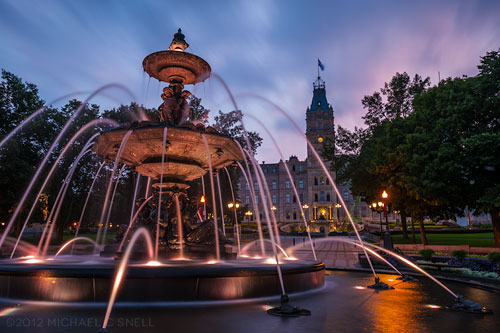
That’s about 8:03, 13 seconds at f/11. The fountain lights were coming on just as the sky was getting nice. I’m liking the balance here. But there’s still more to come. Little by little more lights come on. I notice the floodlights on the front of the parliament building come on extremely green at first but, after they “warm up” a bit, they gradually become a more pleasing tungsten-like color. A good reminder to not pack up too early but to wait and see what happens with time.

During all of this time I played with different apertures and color balances. The latter is mostly just to experiment in-camera. I can easily change the white balance later in Lightroom but it’s interesting to see the changes it makes in such a mixed bag of color temperatures while on location. I tend to like a fluorescent balance on the camera’s screen but I do still tweak it considerably later in Lightroom. Here’s where I was at by 8:24 (30 seconds at f/8):
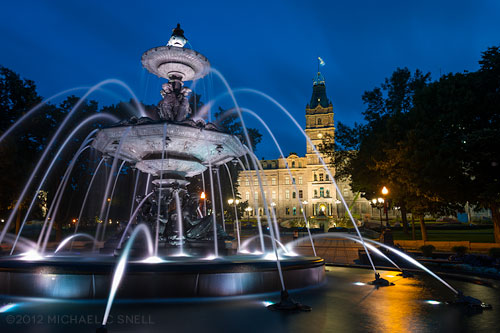
This is closest to the shot that I had pre-imagined, but I now actually like some of the earlier shots better. Even with the cloudy sky, I knew I had a good shot at getting that cobalt blue color after sunset (which contrasts nicely with the warm artificial light on the building), but the earlier pinks and purples in the sky were an unexpected treat.

In the end, that’s about an hour of actual shoot-time but it yielded quite an array of looks. Some of the early, grey shots might make really dramatic black and whites, while I have three or four pretty different twilight looks that might each appeal to different buyers when these get into the stock libraries.

Not bad for an evening’s work.
Cirque du Soleil in Quebec

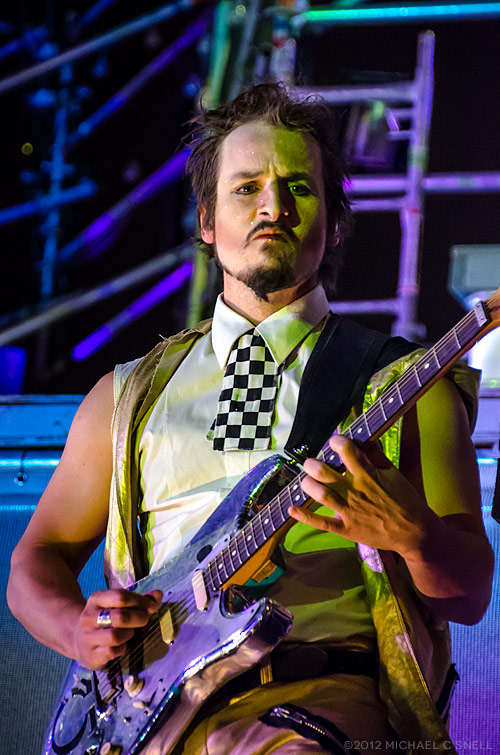
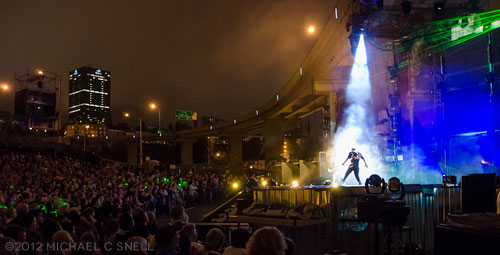
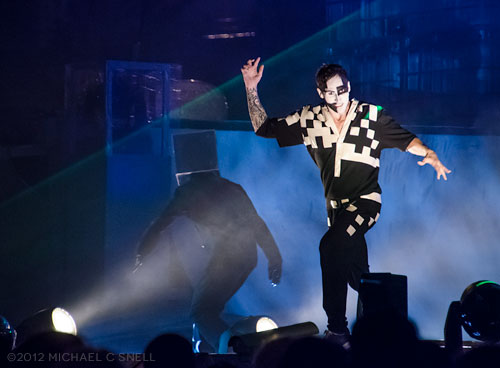
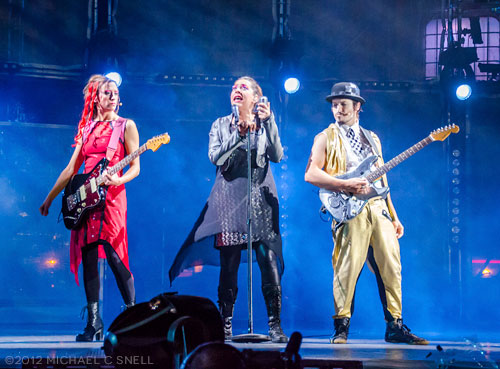
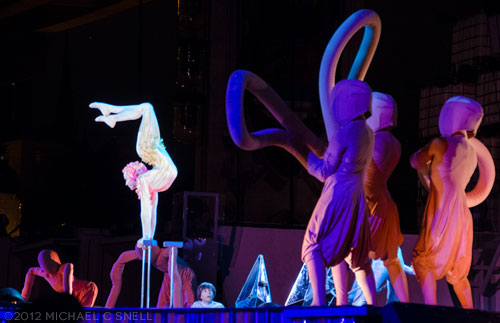
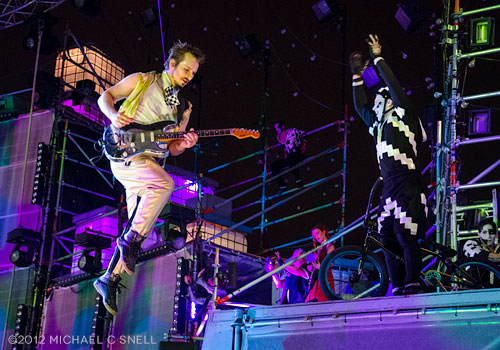
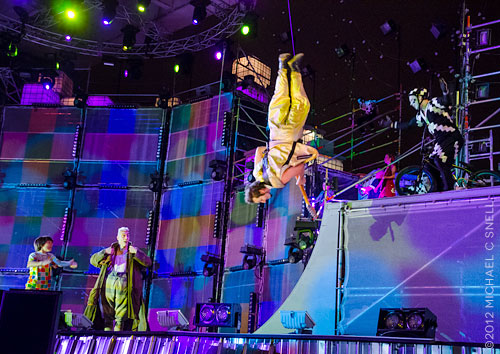
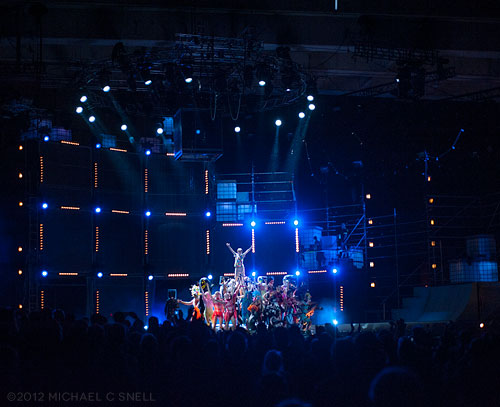
One of the highlights of this month’s trip to Quebec City was an evening spent shooting the Cirque du Soleil show, Les Chemins Invisibles. A couple of things about this show are remarkable (but then… aren’t all Cirque shows remarkable?): one, it’s free and, two, it’s staged under a highway overpass in the Saint-Roch district. The project began as a part of Quebec’s 400th birthday celebration and the show has been kept on for four years now. Let’s hope it continues for many more. If this is not the coolest way to use the space under a highway overpass, I don’t know what is.
Special thanks to my friends at Tourisme Quebec and the folks at Cirque du Soleil for assisting me with access and permissions for this shoot. What a great night!

Acadian celebrations

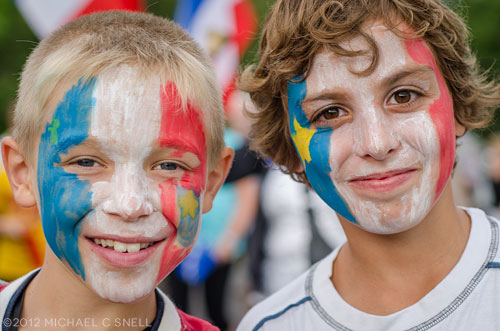
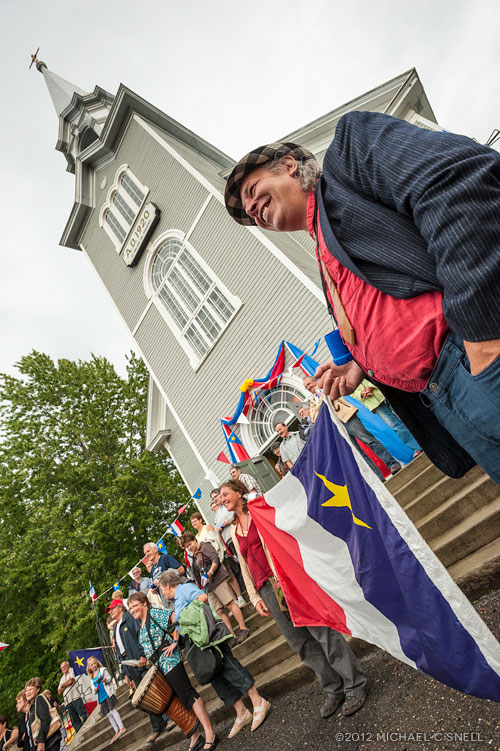
Our recent trip to eastern Canada and Maine coincided with National Acadian Day. The shot above and the two that follow are from the Tintamarre in Squatec, QC. (Think of a “Tintamarre” as a very loud parade. People march through the town banging on pots and pans, blowing horns, etc., creating an undeniably fun and festive atmosphere.)

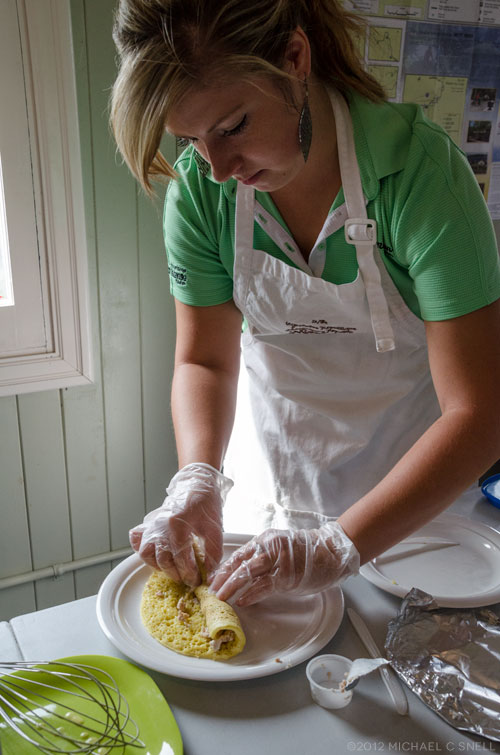
A ployes-making demonstration made for a tasty break in Edmundston, NB. Ployes are made from buckwheat flour and are like light pancakes or crepes that can be sweet or savory, depending on their filling:

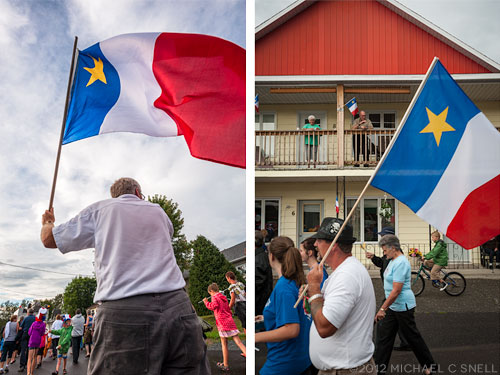
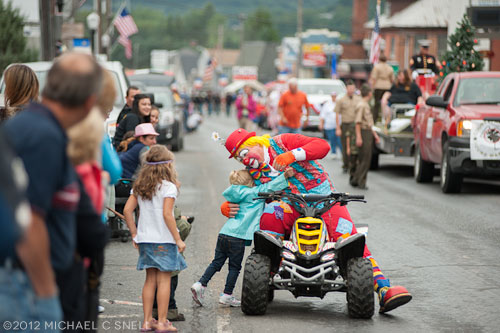
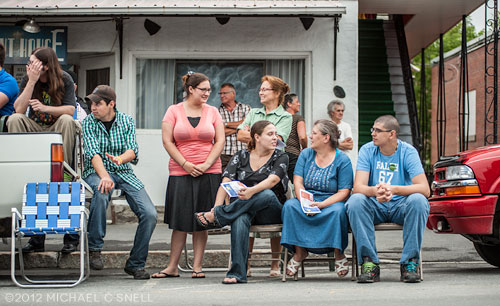
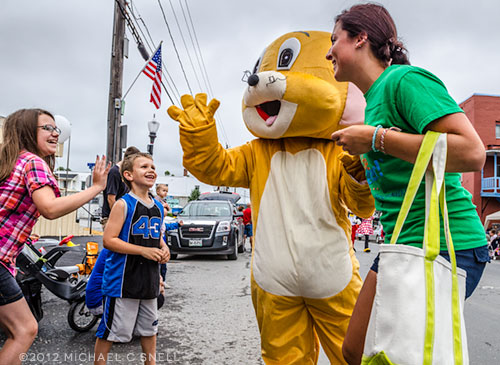
We dipped back into the USA for a couple of days as well, in part to catch the Acadian Festival parade in Madawaska, Maine: