Category Archives: kansas

Flames in the Flint Hills

140407fire01_sotc

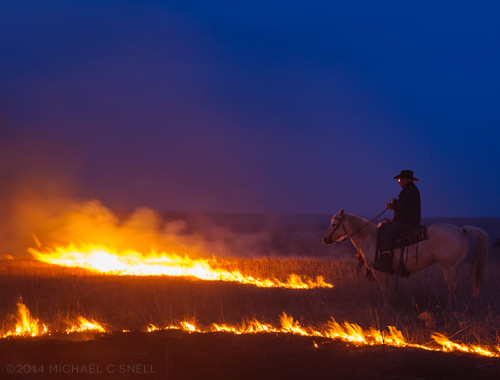
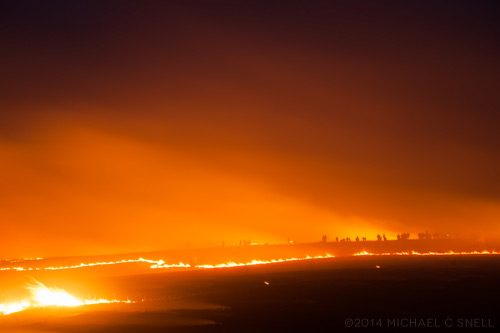
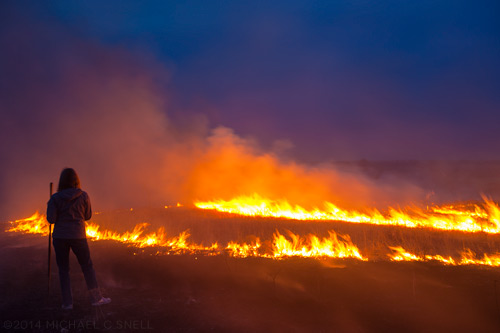
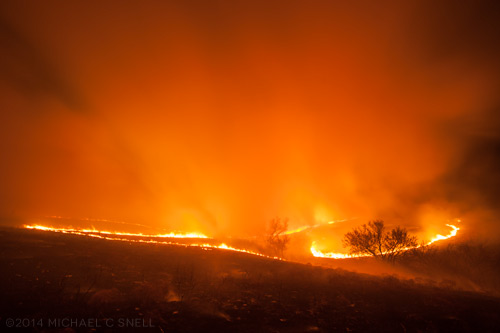
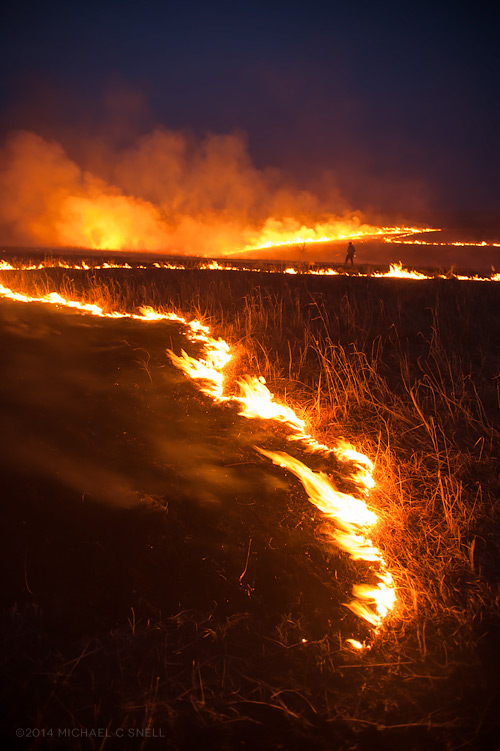
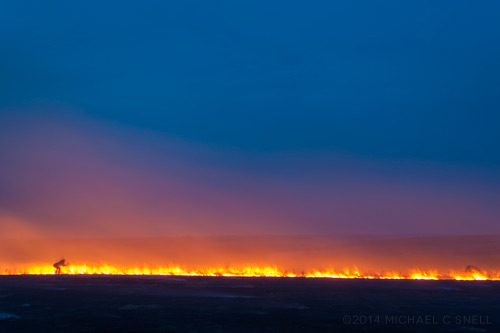
Flying W Ranch near Clements, KS, puts on a great show with their Flames in the Flint Hills. Ranchers in this part of Kansas burn their grass in the early Spring to encourage new growth and Josh and Gwen Hoy make an event out of it. Typically a sold-out event, at that. For those of us that live around the Flint Hills, the smell of burning grass is a sure sign of Spring. It’s not uncommon to see fires in the distance from the highway, but to be on foot right in the midst of the burn at twilight… well… that’s something special.

Here are a few of my favorite shots from Flames in the Flint Hills last Saturday night:

140407fire03

140407fire06

140407fire04

140407fire02

140407fire05

Spring is coming

140314snow_sotc

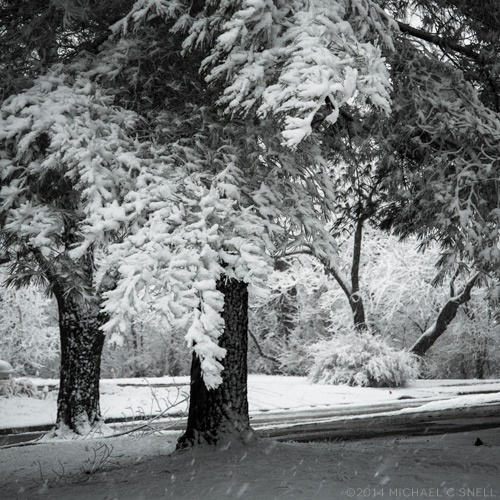
This has seemed like an incredibly long winter. However, as I looked back through my image files this morning to see what photos I’d shot on previous March 14ths, I found this image I took in our neighborhood on March 14, 2010. With high temps predicted today in the mid 60s, this just goes to show that it could be — and has been — worse. Everywhere I look around the yard, bulbs are coming up, the witch hazels are blooming and there are signs of things thawing out. Spring is coming folks. Hang in there.

Sports shooter for a day

130907rugby08_stoc

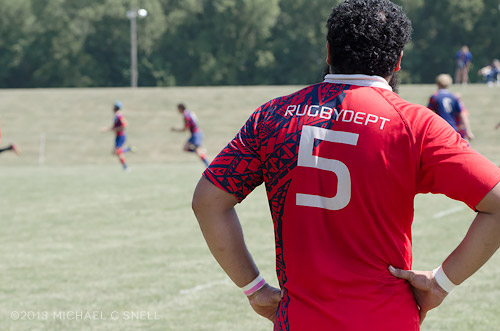
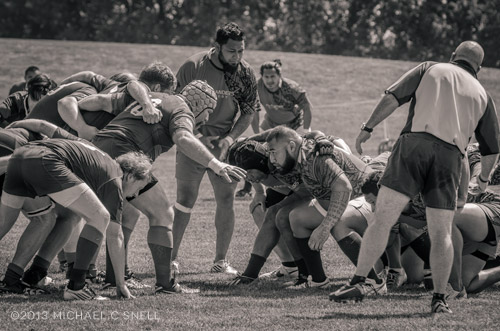
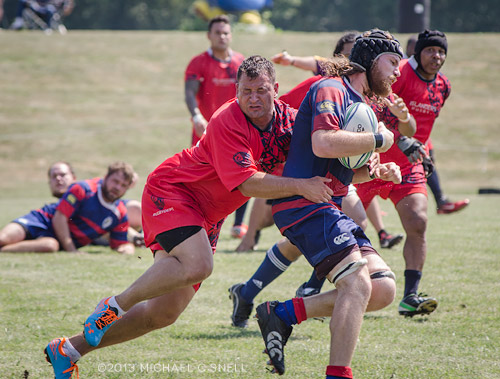
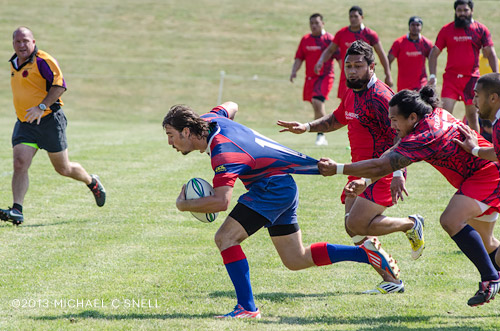
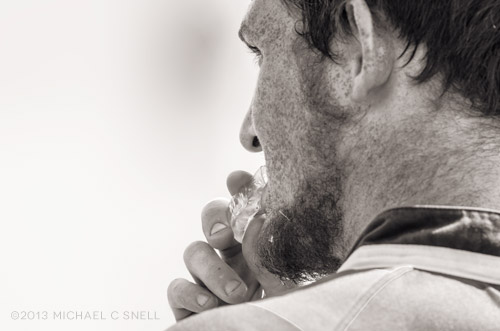
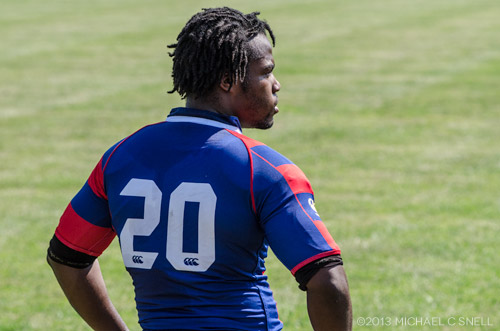
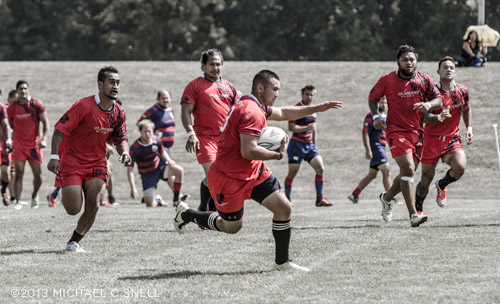
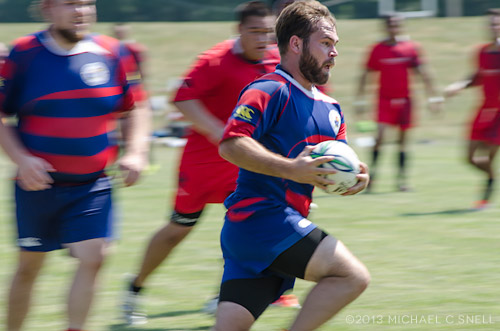
I’ve never been into sports. Probably because I can’t play any. But for some reason, I’ve really started to enjoy rugby. Today we attended our first local match and I decided to play sports photographer for a day — something else I have never done, but it seemed like a good opportunity to play with some of my Nikon’s focus-tracking features that I’ve seldom used but probably should more.

The Jayhawks were playing the KC Islanders. For the sake of the Jayhawks, I’ll just say that the score wasn’t important. It was a hard-fought game and I thoroughly enjoyed myself! The Nikon performed beautifully. I tend to not trust automation enough sometimes and I always think I can focus more accurately myself but, in a case such as this, the 3D auto-tracking, continuous servo focusing of my D7000 was a huge help. Every now and then it would pop to a player that I didn’t intend but that was rare and my keeper ration was much higher than it would have been if I had relied on my own focusing skills.

All-in-all, a great – if not brutally hot – day!

130907rugby06_sotc

130907rugby07_sotc

130907rugby02_sotc

130907rugby04_sotc

130907rugby01_sotc

130907rugby03_sotc

130907rugby05_sotc

Flint Hills cattle drive

130822flinthills_sotc

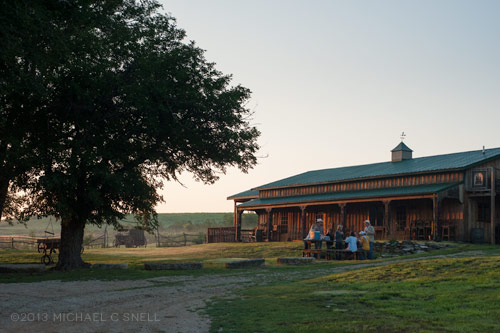
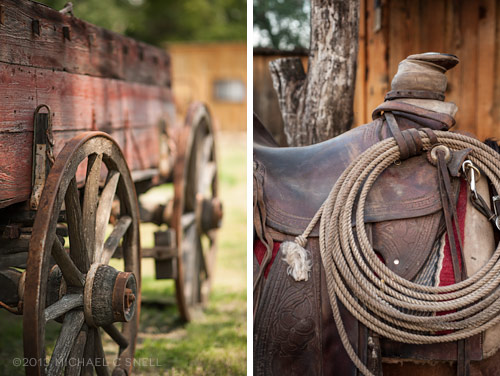
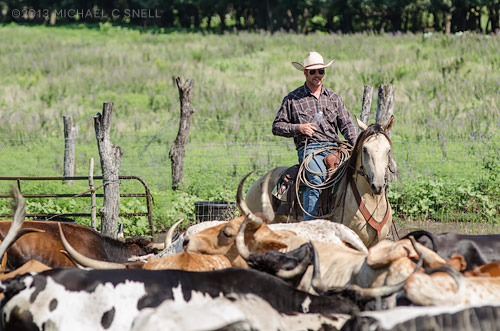
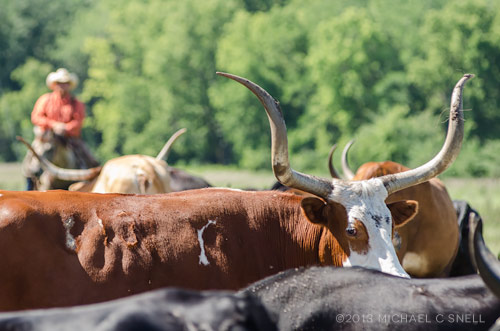
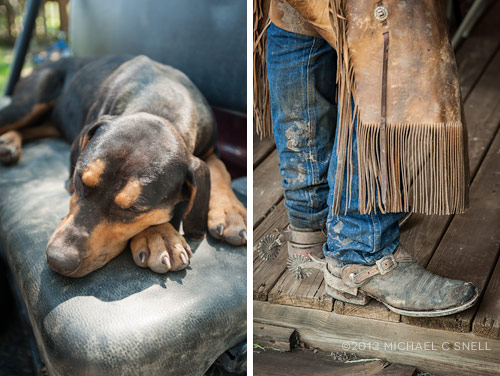
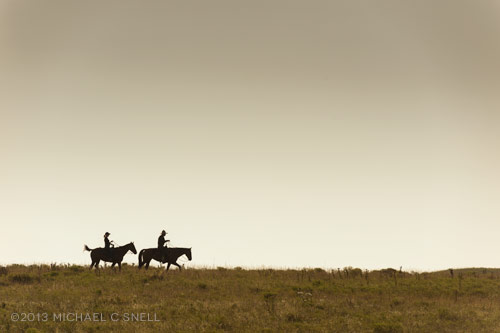
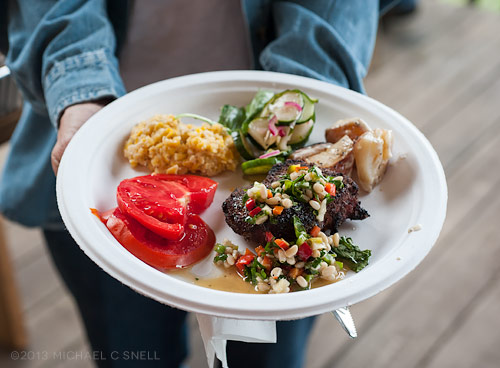
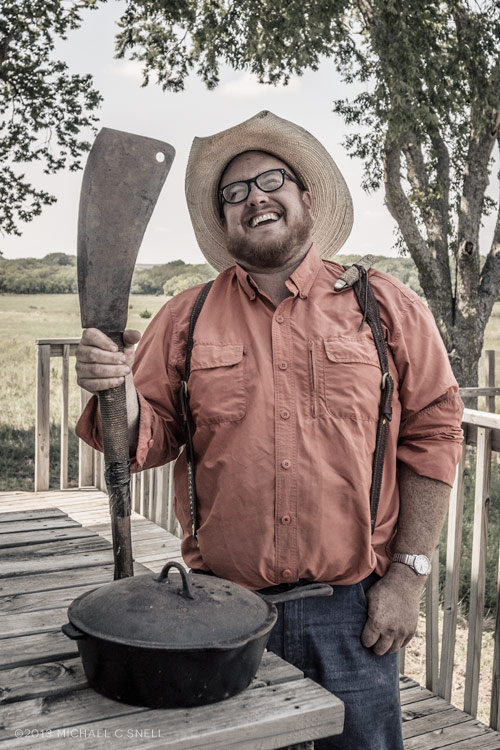
It was a near-perfect weekend for shooting a Kansas cattle drive and sampling the cooking of Josh Hoy. Josh and Gwen Hoy operate the Flying W Ranch near Clements in the Kansas Flint Hills and have opened some of the working cattle drives to guests. Josh’s cooking may be more of the draw than the cattle, in my opinion, but the whole package was amazing. For a real Kansas experience, this is tough to beat. I’ll just let the photos do the talking:

130822breakfast_sotc

130822details_sotc

130822cowboy_sotc

130822cattle_sotc

130822dogboots_sotc

130822pair_sotc

130822steak_sotc

130821josh_sotc

SATW CS Awards

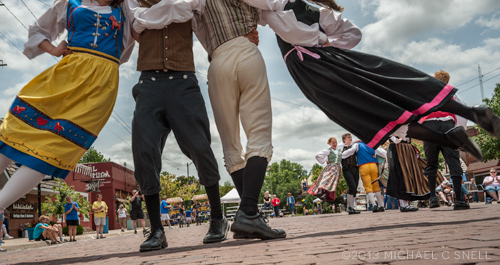
130629lindsborg_sotc

I recently returned from the Central States Chapter meeting of the Society of American Travel Writers (SATW), where I’m proud to say that I was awarded the 2013 Photographer of the Year Award. The photo above of a group of Swedish festival dancers in Lindsborg, Kansas, sealed the deal. It won first place in the “Action or Motion” category and was then judged best of all of the first place category winners. I don’t enter a lot of competitions but the SATW ones mean a lot to me because of all the great shooters that belong to that organization. The fact that a Kansas shot won over images made all around the world also made me very happy. For those interested in getting into travel photography, it’s a lesson that you don’t have to go to distant, exotic destinations to make interesting photographs. There is often plenty of material right in your own backyard.

Here are a few other images of mine that placed in the SATW CS competition:

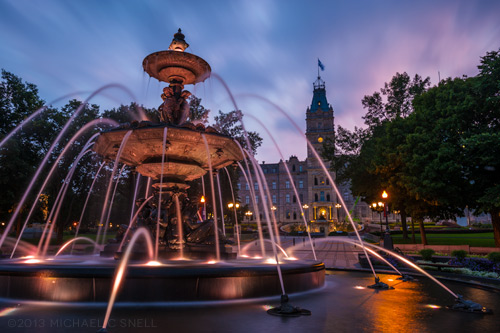
130629fountain_sotc

This shot from Quebec City took second place in the “Places/Scenery Featuring U.S./Canada” category.

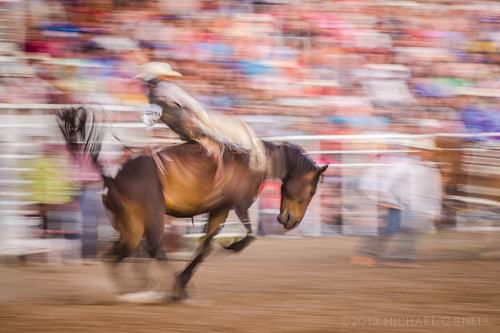
130629rodeo_sotc

Another Kansas shot from a rodeo in Phillipsburg took third place in the “Action or Motion” category.

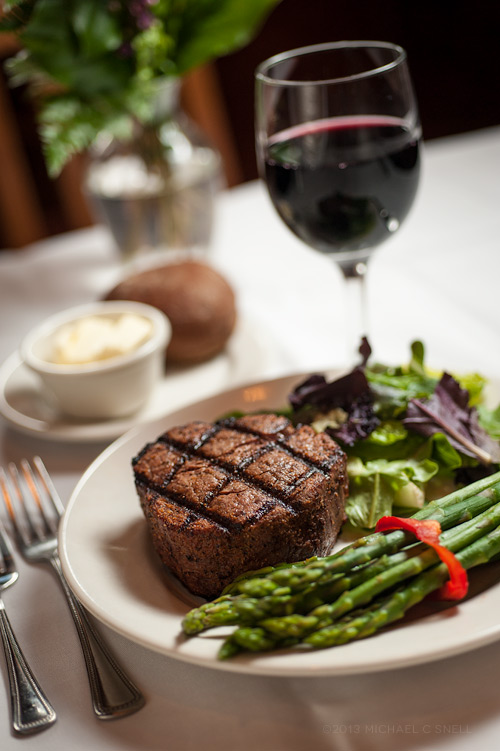
130629steak_sotc

And yet another Kansas shot of a steak dinner at the Grand Hotel restaurant in Cottonwood Falls took third place in “Food Reflecting Local Cultures.”

I also tried my hand at my first ever Photo Shootout at the Central States meeting, held in Little Rock, Arkansas. Basically, participating photographers have 24 hours to shoot images in five categories and then a few more hours to assemble a 10-image portfolio for submission. The following are a couple of my images that placed in that competition:

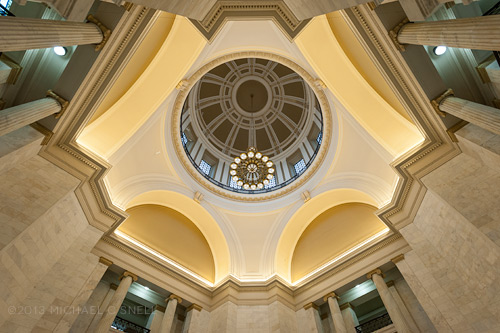
130629capitol_sotc

This shot of the interior of the Arkansas State Capitol took first place in “Architecture.”

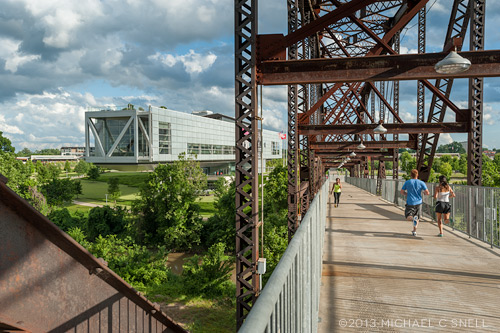
1300629bridge_sotc

This shot of the Clinton Library and the adjacent pedestrian bridge took first place in “Bridges” category.

My congratulations to everyone else who won awards at our Central States meeting. It was great seeing and traveling with you all and I look forward to doing so again soon.


Testing a new lens

130603lenstest7_sotc

Gear is a funny thing. You can become obsessed with it — always wanting the newest, the fastest, the most megapixels — but it’s a trap. At least I feel that it can be a distraction from paying attention to the things that really matter: composition, mood, light, message.

I don’t buy new gear all that often and I try and really think through and make purchases that will last. I’ve had a solid stable of bodies and lenses for a while now and have the whole range of focal lengths covered from 17mm to over 400mm (if you consider the 1.5x of my crop-sensor D7000).

So what more could I want or need?

I’ve thought about this a lot lately and have decided that what I’m looking for now are not necessarily the tools that test out as having the “best quality,” but rather tools that have a “unique quality.” It’s a fine distinction, but what I’m looking for are a few lenses, in particular, that have a uniqueness about them. They deliver something special. They may not be the most expensive, rugged or sharpest, but they will bring a capability to my kit that I didn’t have before.

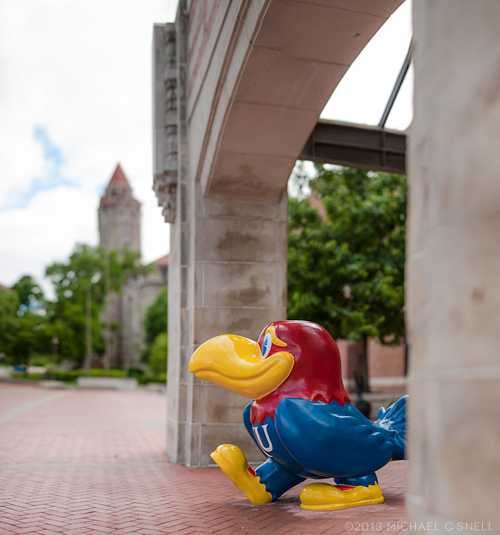
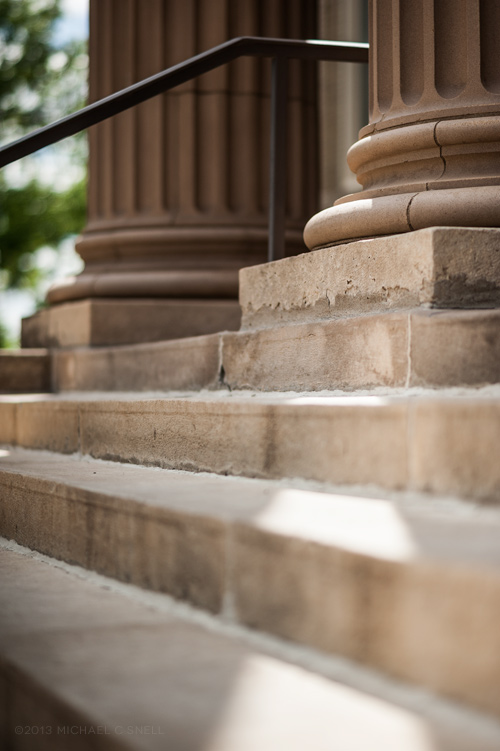
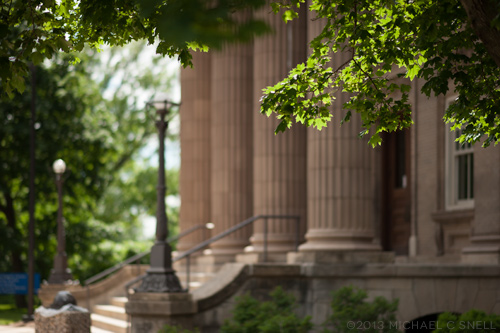
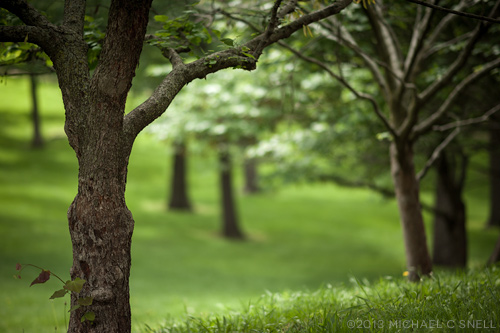
My most recent addition arrived on Saturday: a Rokinon 85mm f/1.4. I took it out for a quick walk around the KU campus yesterday to see what it could do. I was drawn to this lens for the shallow depth of field and creamy bokeh (out of focus areas). It’s manual focus as well, which slows me down and makes me more thoughtful. So far, I’m not disappointed. See what you think of these initial test shots:
130603lenstest6_sotc

130603lenstest1_sotc

130603lenstest5_sotc

130603lenstest4_sotc

The Jayhawk shot above is actually stitched from 18 images in a pano-grid method I’ve written about before. It lends the shallow depth of field to a wider angle of view.
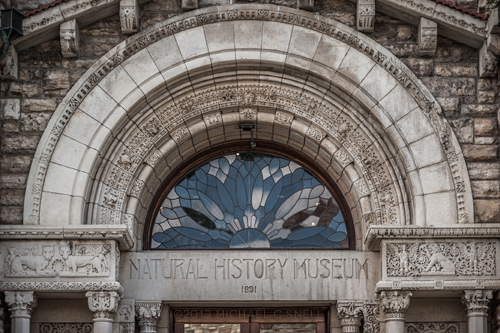
130603lenstest2_sotc

These last two shots are of mounts on display in the Natural History Museum — they’re not wildlife shots. I was just looking for some tighter settings to try the close focus and shallow depth of field:
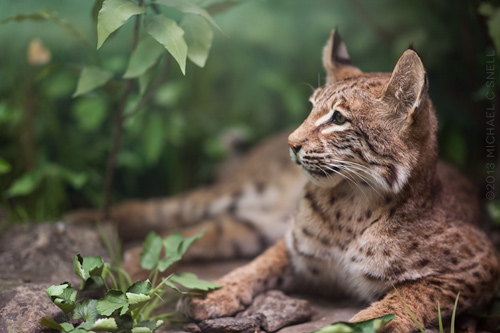
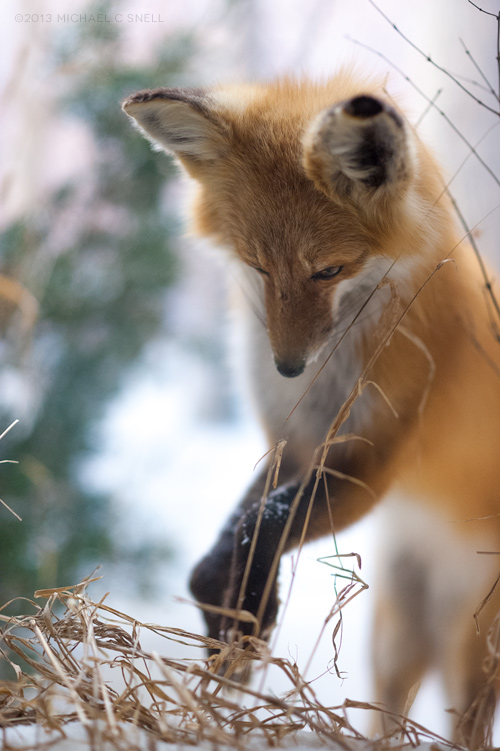
130603lenstest3_sotc

130603lenstest8_sotc

So far, I’m impressed and happy with my purchase — and anxious to get this lens out in the field for some real travel work.
Fort Larned National Historic Site

130527larned2_sotc

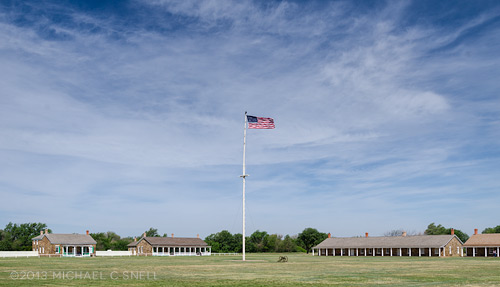
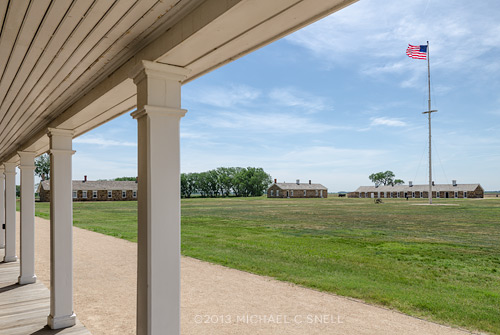
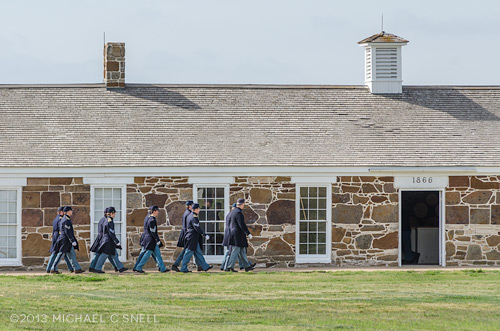
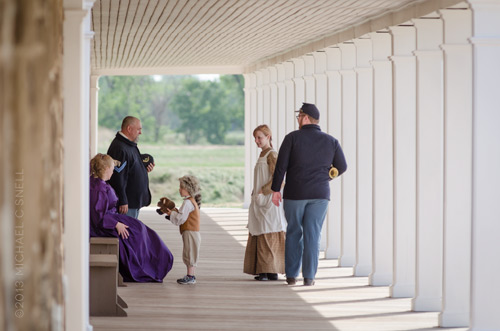
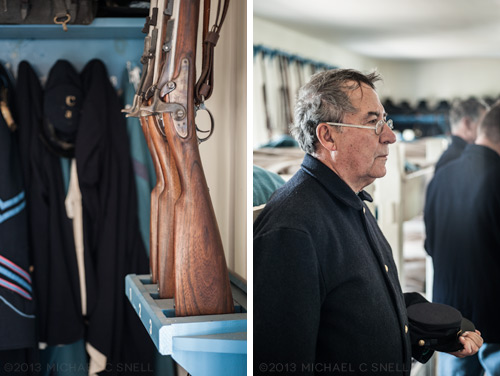
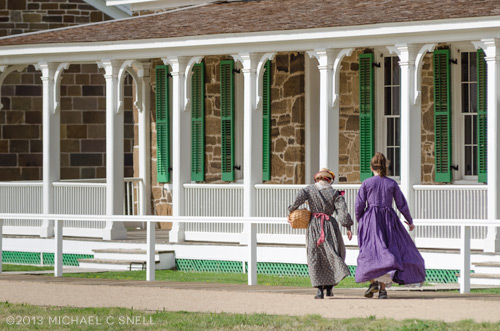
I almost didn’t go. Memorial Day and Labor Day are the two times a year where Fort Larned National Historic Site formally features groups of re-enactors. I’ve shot the 1860s-70s era fort many times but not when it was populated by soldiers, wives and craftsmen in period dress. It’s been on my list for years, but it has just never come together. This year looked good, but weather became a worry as the weekend approached.

It’s a four hour drive for me, so I got up early (about 3:30) Sunday morning to check the weather radar. It didn’t look good. There was a large storm cell just west of the fort, moving east. A second line appeared to be forming behind it. The predicted 30 mile an hour winds didn’t look good either. I pretty much decided to skip the trip and try again on Labor Day but, while watching the weather breaks during the morning news, I saw the thunderstorm break up and dissolve. At 5:00, I made the decision to go after all. In the end, I was glad I did. Here’s a brief photo essay of my visit:

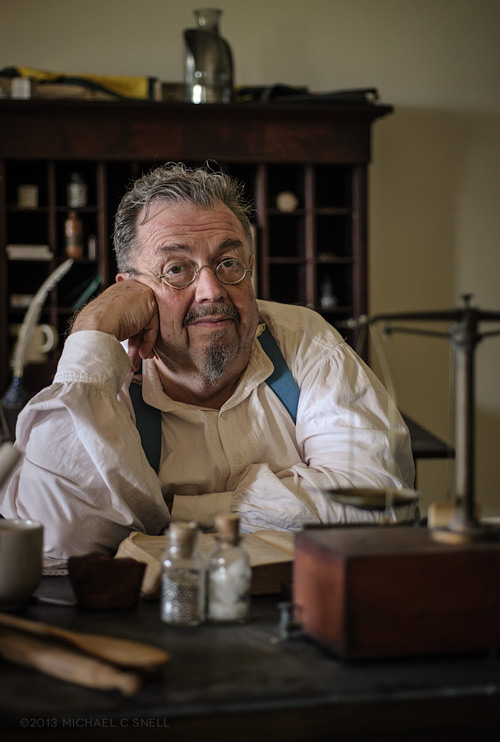
130527larned1_sotc

The doctor is in. A re-enactor portrays a post surgeon at Fort Larned National Historic Site near Larned, Kansas.

130527larned6_sotc

130527larned5_sotc

130527larned3_sotc

130527larned7_sotc

Barracks inspection at 10:00.

130527larned4_sotc

130527larned8_sotc


Glacial erratics

130112glacial1_sotc

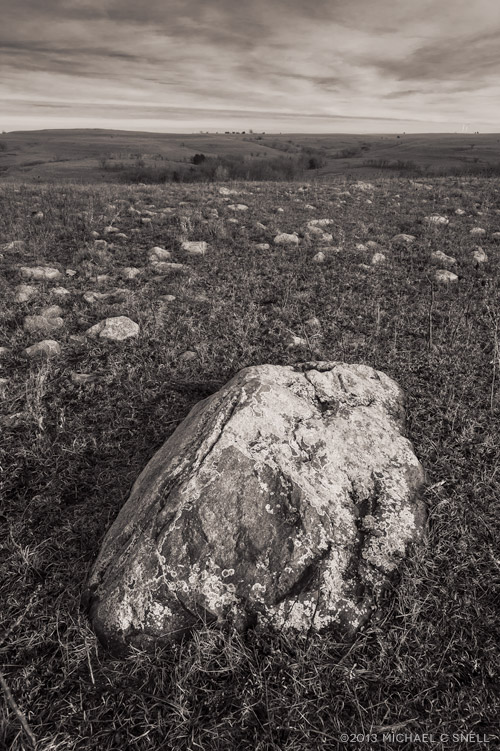
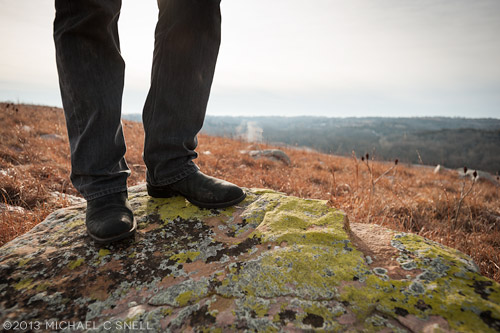
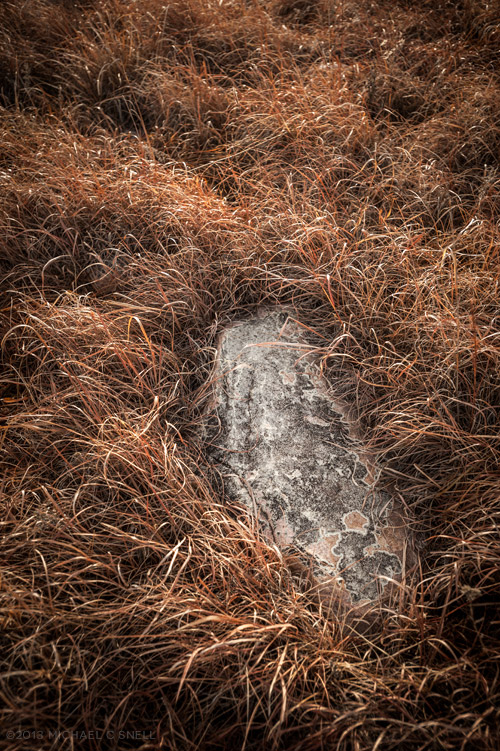
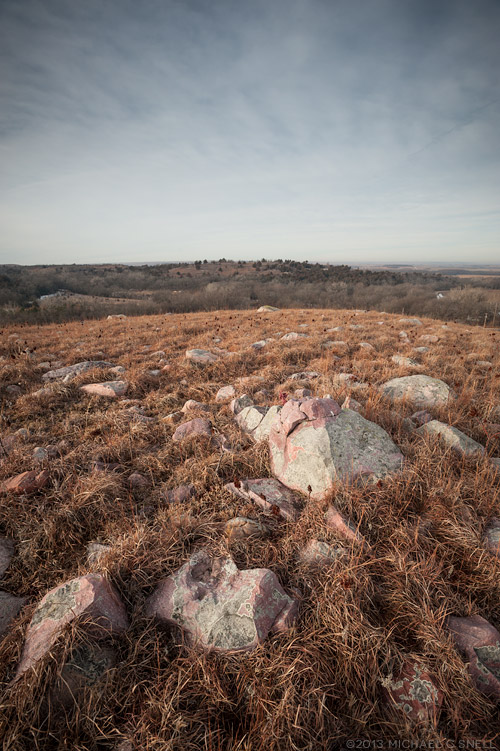
I had long heard about a mound in the Kansas Flint Hills that was littered with glacial erratics. These lichen-covered pink and purple boulders stand out among the region’s pale yellow limestone and in the northeastern part of the state you’ll occasionally see one, either in a rancher’s field or propped up in a city park with a plaque on it (There’s one right here in Lawrence in Robinson Park). The ancient glaciers only ever reached this one corner of Kansas and it’s thought that this erratic-littered hill was right at the very edge of the glaciers furthest advance. Basically, the glacier pushed all of these rocks along its leading edge for hundreds of miles and then left them behind when it retreated.

With the help of some geological books and the ever-handy Google Maps satellite view, I found that hill last week:

130112glacial2_sotc

130112glacial3_sotc

Fellow photographer and road-tripper, Doug Stremel, kindly provided some scale to this shot.

130112glacial4_sotc

The River

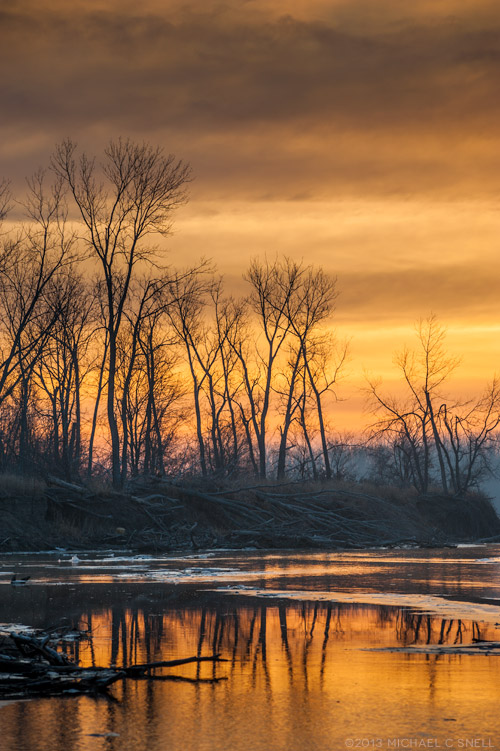
130111riverblu_sotc

I evidently hibernate in winter (my last post being nearly a month old now), but my friend and fellow photographer, Doug Stremel, and I ventured out early Wednesday morning for a day filled with finding images in the winter Kansas landscape. It’s a season that I don’t shoot enough but am striving to photograph more often. Winter was the favorite season for my college painting instructor, Robert Sudlow. I remember him once telling me that he had difficulty painting Kansas landscapes in summer because it was just “too green”. He found more subtlety and variation on those grey, overcast days when the snow was melting away. I’m understanding the beauty of that subtlety more and more myself as I continue to update my Kansas image files.

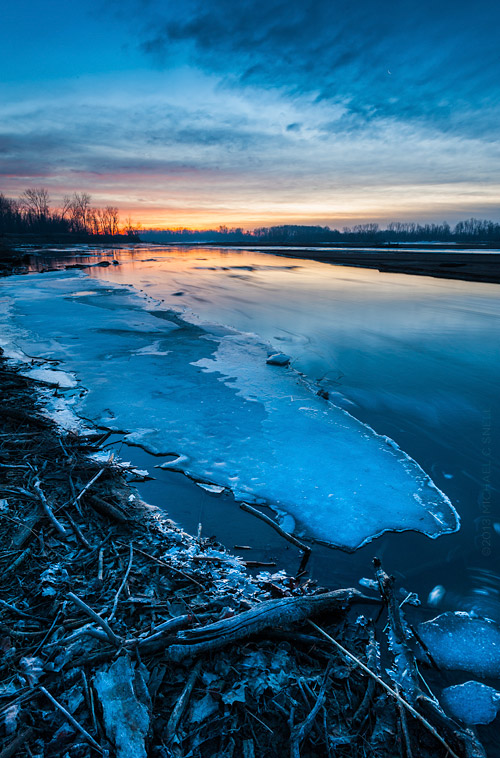
A different destination drew Doug and I out on Wednesday (more on that in the next post) but it wasn’t in a place that would work well at sunrise so we looked for another, nearby spot to take advantage of first light. Since water effectively doubles your sunrise impact by reflecting the colors, we headed for the Kansas River. Hiking down to the water’s edge in near total darkness provided its own challenge, but it was worth it when the light came up to reveal the melting ice flows. We heard them before we could see them, crashing into one another as they drifted downstream.

The shot at the top of this post is, I believe, the second frame I’ve shot in 2013.

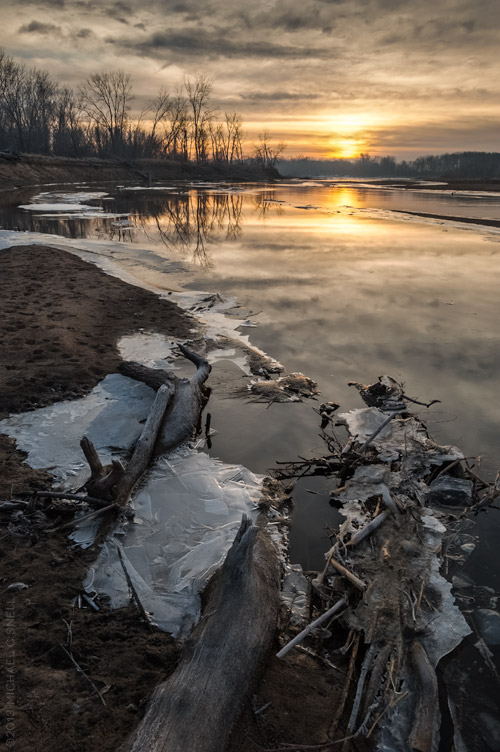
130111sunrise_sotc

As the sun rose, the colors shifted dramatically and offered a fantastic range of photo options. The following photo was taken about 35 minutes after the first and both are fairly true to the actual colors we were seeing.

130111rivergold_sotc

This is also an HDR shot (High Dynamic Range) assembled from three separate bracketed captures spanning six stops. The process allowed me to get a much wider range of contrast into one image, something that was more and more necessary as the sun rose higher — getting brighter — while the foreground shadows remained very dark. I don’t like to push HDR as far as some do to get that other-wordly effect that so many relate to the process but, instead, I like to use it to get closer to what the scene actually looked like to my eye at the time of capture.
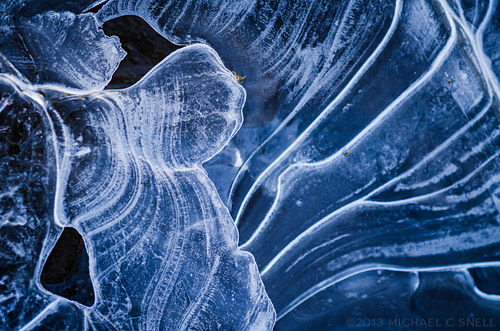
130111ice_sotc

There were also plenty of options for detail shots of the melting ice along the river bank. All-in-all, a good start to the day, and a great start to 2013. I’ll continue with more of Wednesday’s locations in the following post.


Fort Scott Candlelight Tour

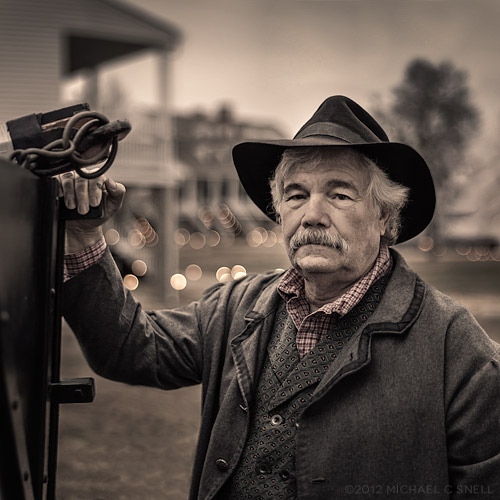
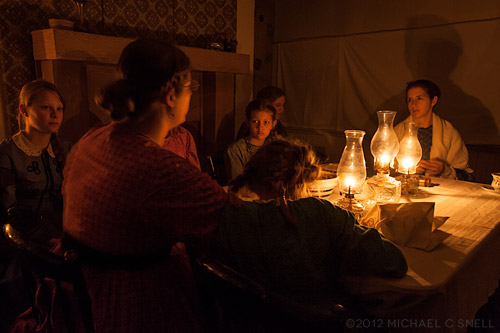
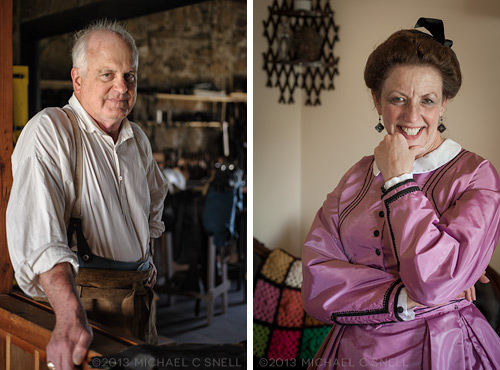
I paid a quick visit to the Fort Scott National Historic Site in Fort Scott, Kansas, last night to photograph their annual candlelight tour. The shot above is something I’ve been playing with lately — creating shallow depth of field images by stitching together multiple frames from a fast normal, to short-telephoto, lens. This one is 13 frames shot on a 50mm lens at f/1.8 and stitched together using Photoshop CS6. It’s an interesting look and reminds me a bit of the old large-format images that might have been made in the late nineteenth century. It seemed appropriate for an evening devoted to recreating the year 1862 on a frontier fort in what had then just become the state of Kansas.

More (single frame) images from last night: