Category Archives: photography

Shooting local

100716campus_sotc

An assignment in my own home town has spurred a new personal project. When I moved to Lawrence, Kansas, a couple of years ago (has it been that long already?) I had intended to begin documenting the town photographically. While it seems like shooting in your own “back yard” would be the easiest thing in the world, it’s amazing how hard it can be to actually get out and do it. It’s too easy to get distracted by work, or mowing the lawn, or just plain every day life. When I’m on the road, I’m there to shoot and nothing else so it’s easy to stay focused. Even if the weather isn’t perfect, I’m out shooting because I only have limited time on location. When I’m home, it’s easy to say “maybe the light will be better tomorrow night”.

But nothing kicks me into action like a paying gig so, when an assignment came along for a story on some local civil war sites, it finally got me out of the house. First stop: the Eldridge hotel.

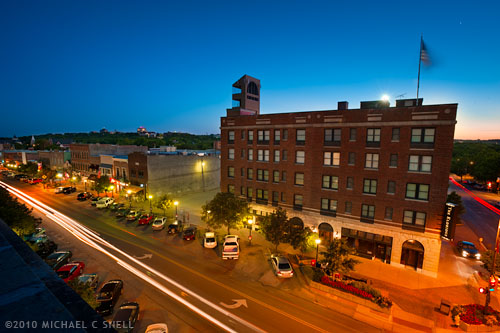
The Eldridge was burned down on multiple occasions during the years leading up to the civil war by pro-slavery raiders. Rebuilt each time, it is now a local landmark. I wanted a new angle so I contacted my friend, Doug, who offices across the street to see if he could get me on the roof. Being the great guy that he is, he did just that.

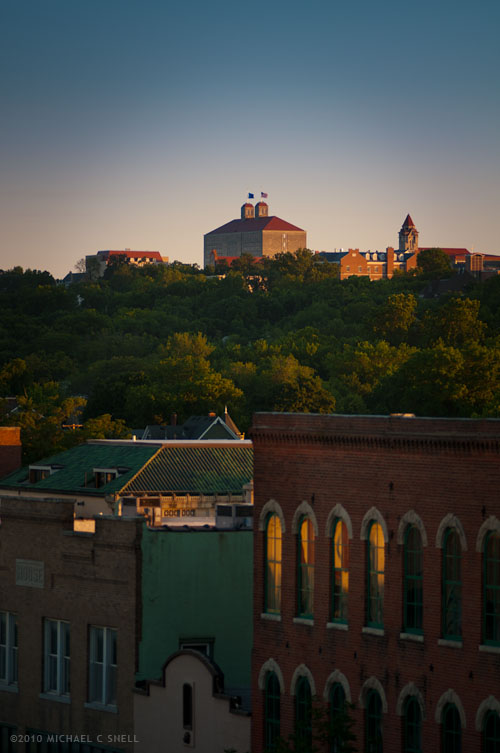
After popping off a few exposures of the KU campus (above) I settled into the shot I had in mind for the Eldridge. I wanted a long twilight exposure that mixed the sunset with the street lights below. I framed it up on the tripod and attached the release cord. Then it was just a matter of firing off a few shots every few minutes as the light faded and the shop lights came on.

In the end, I combined a few shots to get this one:

100716eldridge_sotc

Since I had shot several variations while locked down on the tripod, I could easily stack different exposures on layers and “paint in” elements of each using layer masks. The bulk of this image is one shot, from late in the set where the sky was darkest, but I did paint in some of the facade of the hotel from a shot prior to sunset to give more detail and balance the contrast a bit. I also painted in a few people on the sidewalk that appeared in various exposures.

I’m going to keep exploring other angles for this shot. The microwave tower behind the hotel is distracting (I could Photoshop it out but not for an editorial shoot – darn those ethics) and I would rather be on an angle with the hotel to add some dimension to it. Next time I’ll try shooting from street level, diagonally across from the building and see how that works.

It’s nice to have plenty of time for this project. Unfortunately, I can’t always spend so much time on each shot but, in this case, I’m looking at the assignment as an excuse to do some work I’d wanted to be doing for myself anyway. And it all goes into the stock files eventually.

Locals vs. Tourists

4671581511_f522ed2180

While upgrading my computer, I figured it was a good opportunity to start fresh with my browser bookmarks and get rid of the masses of links that I had that no longer went anywhere. Clean house, you know? Of course, there are still bookmarks that I need — things I look at every day or nearly every day — and I’m going through the process of deciding what to re-bookmark, and what to let go of.

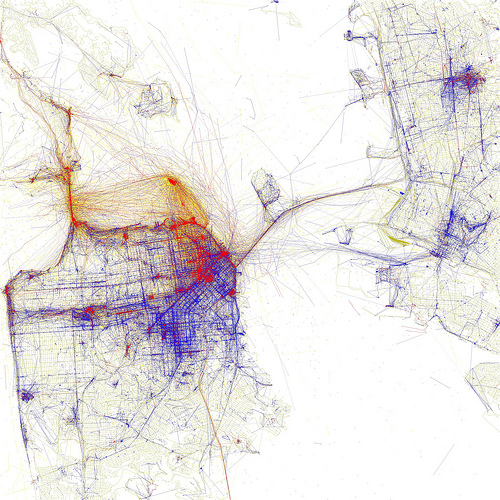
John Nack’s Adobe-centric blog is a keeper and it was on his site that I discovered this post that led to the cool graphic posted above. What is it? It’s one of a series of maps on Eric Fischer’s Flicker page (this one is San Francisco) that shows where, in several cities around the world, locals take photographs (blue points) vs. where tourists take them (red points). The yellow points show where it can’t be determined whether it was a local or a tourist taking the photo. There’s an explanation of how the data was compiled on Eric’s page. It may not be 100% scientifically accurate but it’s a really interesting look at how cities cater to different populations. I could look at these things for hours.

Can this be a useful resource to a travel photographer? Possibly. It might show where there are some landmarks or scenic areas that only the locals seem to know about. On the other hand, a dense blue spot might just indicate where some guy lives that takes 30,000 photos of his cat each day. But, given enough data, you’d think some real trends would emerge that would cancel out the flukes. I just think they’re fun to look at.

Google maps to the rescue for keywording

100619wat_sotc

I’ve been meaning to write this post for a long time. While finishing up the keywording of my Thailand files in the last couple of weeks, I ran across a good example of what I’ve been wanting to discuss, and that is: how I use Google Maps to help me identify my images.

Of course, taking notes on site is always the best practice. I carry a small notebook in my camera bag but, in truth, I tend to take most of my notes with the camera itself. Here’s an example: on my last day in Chiang Mai, I had a few hours in the morning to stroll the old city on my own and photograph the various Wats, Chedis and Prayer Halls. I had heard that Chiang Mai has over 1000 Wats so, suffice it to say, it’s important to keep track of which is which when it comes time to keyword and label for my stock agencies.

I set out from the hotel before dawn and headed for the original, walled city. Once inside the walls, I would pass a small temple complex nearly every half a block. While I had been driven through these streets regularly for three days, I never would have seen many of these buildings without being on foot. They are tucked away and need to be sought out.

When I would begin to shoot a temple site, I would first look for a sign with the name in english and photograph that first. This is my way of taking notes. The images can always be sorted by capture time and I’ll have an “opening title” for each location I visited. Hopefully it will even be spelled correctly, but, you never know.

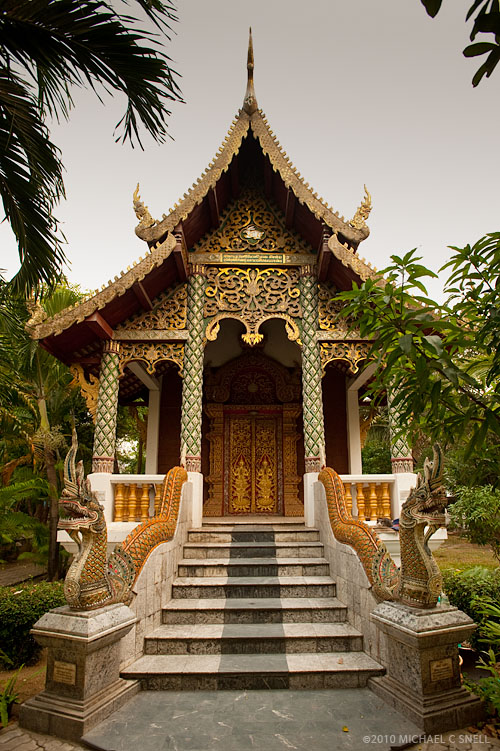
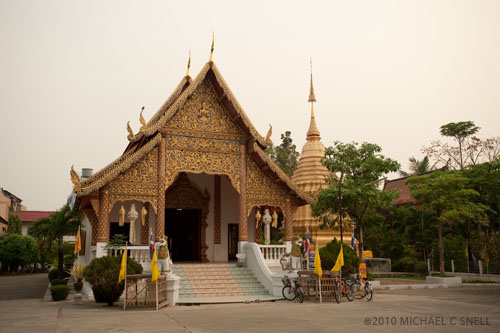
When I arrived at the Wat at the top of this post, I couldn’t find a sign in english anywhere. Nor was there anyone around that could tell me what it was save for a group of monks (who I opted not to bother), chanting inside this main building:
100620chedi_sotc

The site was a monastery comprised of a viharn (the building in the foreground), a chedi (the gold spire behind it) and a ubosot (the roof seen peeking over the trees in the back on the right). The english terms for these might be an assembly hall, a reliquary, and a prayer room or ordination hall. The ubosot, or prayer room, is what is pictured in the opening photo.

As it turned out, I never had the opportunity to speak with my local guide again and I continued on my way to Bangkok. Once back in the office at home, I could have tried to contact him by email but decided to do some detective work on my own first. This is where Google Maps comes in.

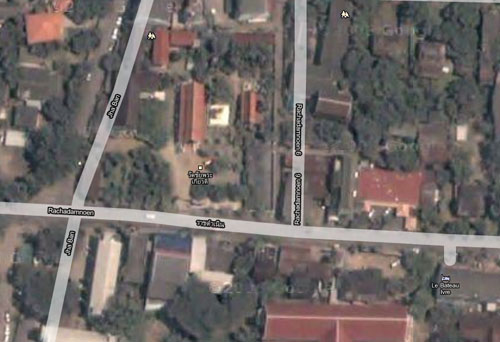
I knew the route that I had walked through the walled city, and I knew from signage, what the names were of the Wats on either side were. I zoomed in close in this area with Google Maps and switched to the satellite image view. There was my Wat:
100620map

You can see the shiny gold chedi in between the two red-roofed buildings just above and to the left of center in this screen capture. There is a label, but it’s in Thai. I tried using an online translator but didn’t trust it so I tried using Google’s street level viewer in Google Maps. That’s the tool shaped like a little man. While the area had not been mapped for street level views, the tool did show several blue dots for the positions of still images that were on file for the site. Sure enough, by looking at some of these images, I was able to confirm that this was the Wat I was looking for and that it was named Wat Chai Phra Kiat, or Monastery of the Renowned Victory.
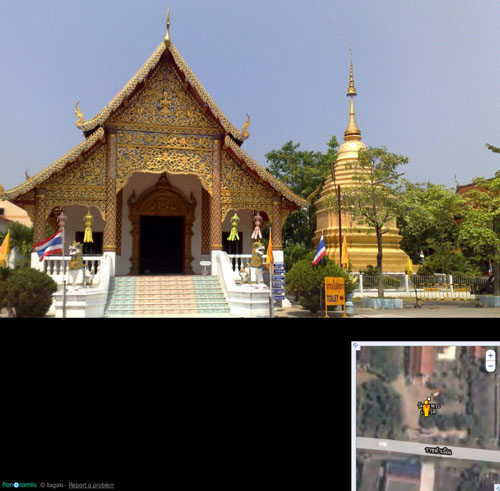
100620streetview

That’s the image that convinced me. Still, just to be safe, I Googled the name and found several other sites that confirmed it was what I was looking for and provided me with some alternate spellings.

The internet has been one of my most valuable tools for researching images and compiling keywords. I would hate to imagine the time it would take to track sites like this down through books, emails to local guides, etc. I still do my best to identify sites while I’m on location — there’s no substitute for that — but at least in situations like this, I can feel confident that I can come up with the information later when necessary.
Studio work

100604glass_sotc

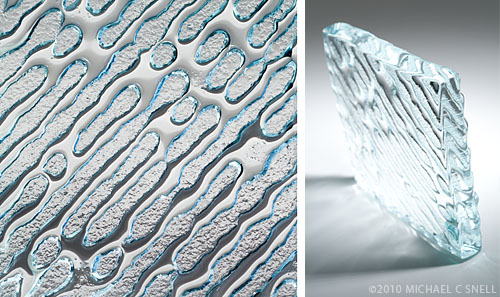
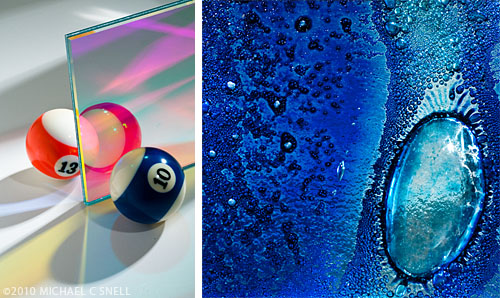
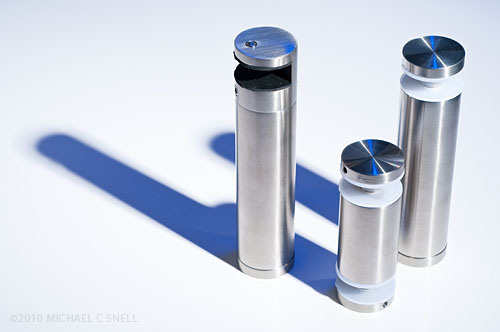
I’ve had fewer hours on the road lately but I’ve still been shooting fairly heavily. Instead of travel images, I’ve been working in the studio on some tabletop product shots. I could never be one of those catalog guys that does this stuff day in, day out, but I enjoy it as a break from field work. It stretches a different part of the brain.

When shooting travel, I work in a more documentary way. I shoot 99% available light and tend to work with what’s there. I don’t do a lot of posing or manipulating of objects in a shot, I look for the best angles given what I encounter. In short, I move myself and the camera rather than the subject for the most part. Given that my subjects are often architecture or landscapes, it’s really necessity that I be the moving element.

In the studio it’s different. I’m not working with available light, but typically a set of hot lights on stands. I can move them and alter their qualities with diffusers and gels in ways that I can’t affect the light in the field. There are a lot more decisions to be made in the studio due to these extra elements that are within my control. I choose backgrounds, positioning of elements, light, color, etc. Many of the shoots I’ve been doing over the last couple of weeks have involved glass and mirrored products so lighting and reflected light have been a real challenge. I’ve been having a lot of fun experimenting with these products and how different lighting can enhance them and show off their unique qualities.

100604glass2_sotc

I find the studio work experience useful in my travel work as well. Having control over lighting helps you to understand the qualities of light so that when you’re in the field, you better understand how to make use of the light you’re given. The light that you can’t control. The sun does move, it just doesn’t always go where you want it or as fast (or slow) as you wish. Clouds and haze can act as diffusers. The difference between the studio and the field photography is really how you choose to control the situation. In the studio, you can control it by acting: moving a light, adding another, etc. In the field, with the kind of travel photography I tend to do, it’s more about reacting: change your position due to sun position, wait for a cloud to pass (or move in front of the sun), warm a cloudy scene by adjusting white balance in-camera rather than gelling the light source, etc.

I’ll be back in the field soon enough. I have some local projects that I want to work on for myself and my stock files and travel is always on the horizon. In the meantime, I’ve been enjoying the air conditioning and the lack of need for bug spray.

100604hardware_sotc

Ayutthaya, Thailand

100516ayutthaya2_sotc

After an ugly week in Bangkok, the protests have been dismantled and everyone seems to be waiting to see what happens next. This has been a tough time for Thailand. For a country that thrives on tourism, more tough times will likely be ahead. But this is a resilient region and hopefully the situation will remain calm and the tourists will return soon.

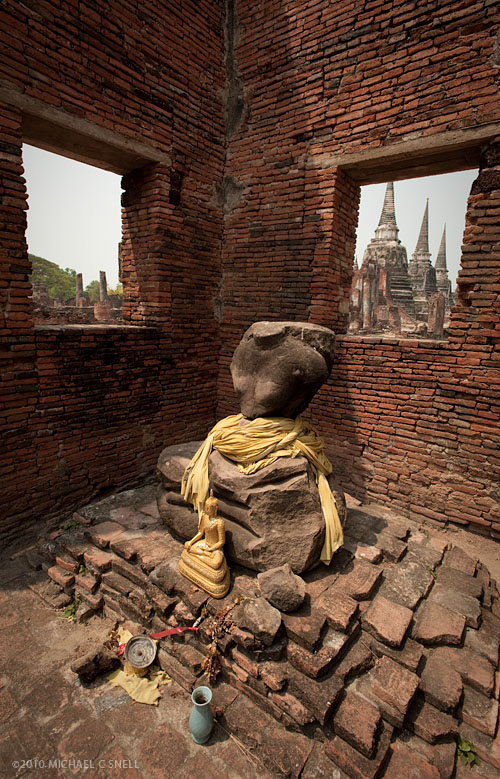
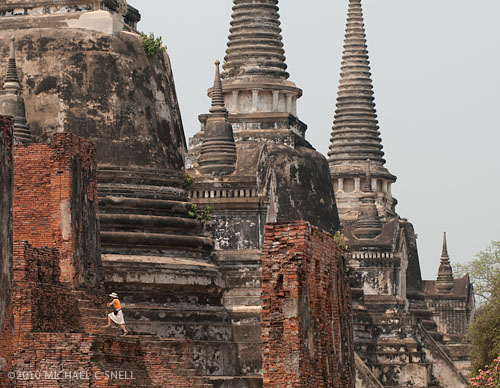
If and when you do find yourself in Bangkok, make sure you get to nearby Ayutthaya, a UNESCO World Heritage Site. The three chedis of Wat Phra Sri Sanphet are shown in both of the photos here. Ayutthaya was the second Siamese capital (founded in 1350) and the city was nearly burned to the ground in 1767 when the Burmese invaded — proof that this region has bounced back before. The remaining ruins are scattered on and around an island created by the confluence of three rivers — the Chao Phraya, the Lopburi and the Pa Sak — as seen on this map from Travelfish. I only visted three or four of these sites and could easily spend a week or more here continuing to explore.

100516ayutthaya_sotc

I’d seen photos of these ruins prior to visiting but still wasn’t prepared for their scale. The woman in the white skirt (above) gives you some idea of just how big these chedis — the bell-shaped towers — are. In this case, the three chedis were built to house the ashes of kings.

One day here was not nearly enough. While it would be hard to say what my favorite spot in Thailand was, this would certainly rank up there in terms of places I wish I could have spent more time. There is so much to see and I only scratched the surface.

Googling myself

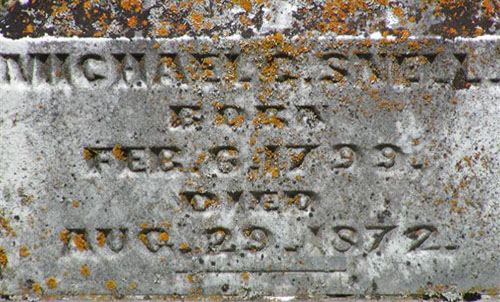
From time to time I make a point of googling around to see if I spot any unlicensed photo uses or even licensed uses that I just hadn’t seen reported yet. This time I turned up something even more interesting:

100510headstone

I found this photo, provided by a Sharon McClure, on a Ripley County, Indiana geneaology site. You can learn so much by googling yourself. In this case, I’ve learned that, not only will I die in 1872, but I will also invent a time machine. Or at least own one… or borrow one for a day. Why I’ll visit 19th century Ripley County is a still a mystery. I guess I’ll just have to wait for those details to unfold.

I also did find a couple of interesting photo uses. My shot of the lighthouse in Grand Haven, Michigan turned up on the CNBC site, and this one from Kalamazoo appears on Forbes.com. Congrats to Grand Haven/Holland for being named one of America’s happiest cities and to Kalamazoo for being named one of the best cities for doing business. And thanks for providing me a little business along the way.

Now, off to start googling for time machine plans…

Wat Chedi Luang, Chiang Mai, Thailand

100414luang_sotc

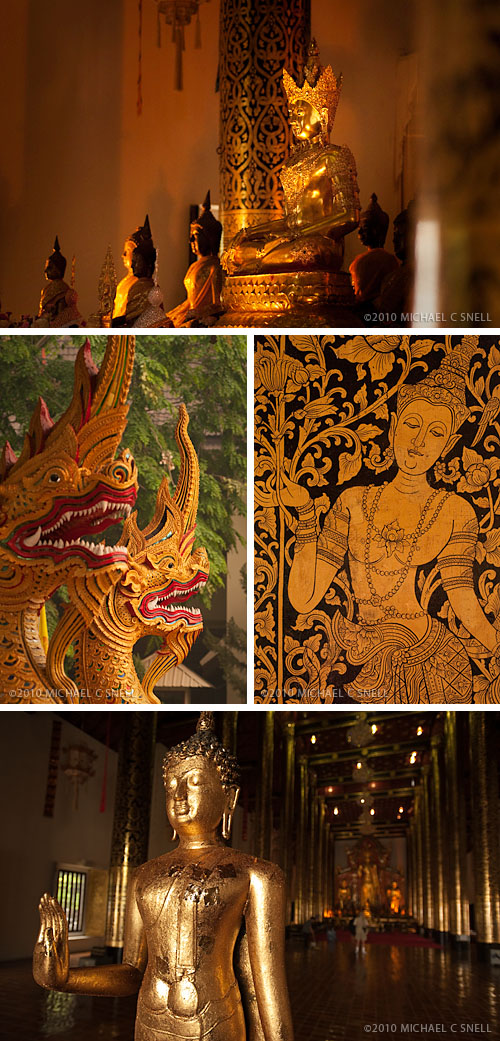
Wrapping up day two of my Thailand trip were visits to a few temples including Wat Chedi Luang. Images from its prayer hall appear above. There are many, many temples in Chiang Mai — I believe I heard the number put at 1038 which hardly seems possible. On my fourth and last day in Chiang Mai, I took a long morning walk through the old, walled city and found that there were temples hidden around nearly every corner. You wouldn’t know it driving through town but on foot these hidden gems are revealed. More on that walk in a few posts. I’ll try and stay somewhat chronological as I go through the images from this trip.

A visit to the hill tribes of Thailand

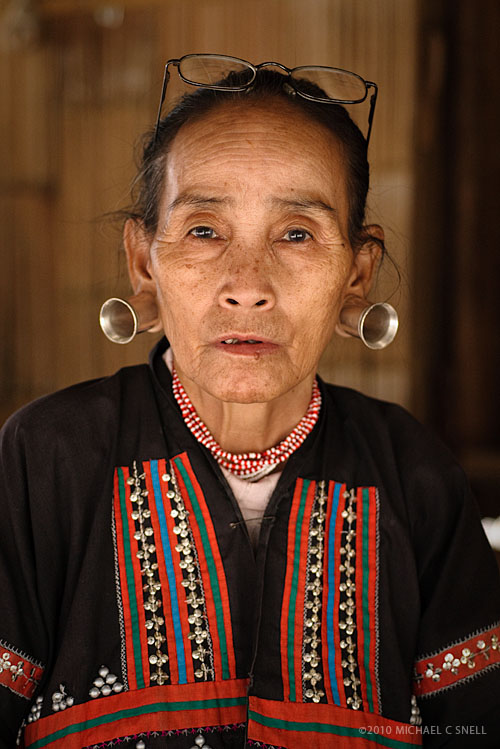
100413earring_sotc

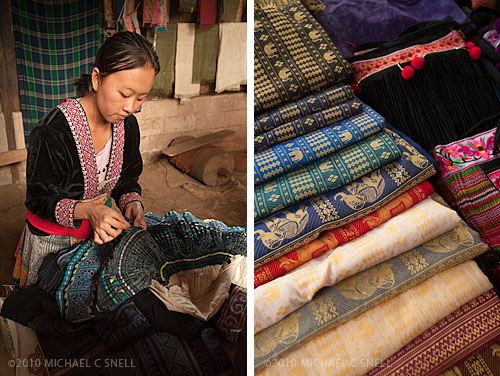
In the afternoon of my second day in Thailand, I visited some highland villages north of Chiang Mai. The people who live in this area migrated to Thailand over the last few centuries from China and Tibet. My first stop was a working village that was largely agricultural but had a couple of small stands where they sold their traditional woven fabrics to the occasional tourists that ventured up.

100413fabric_sotc

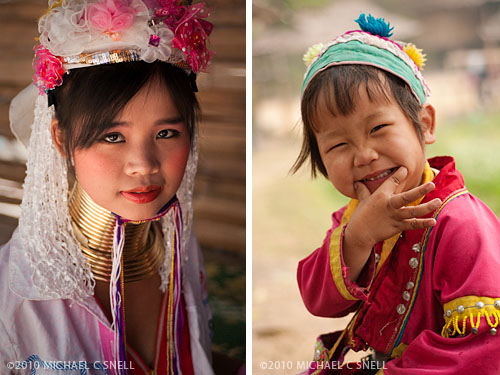
I posted a couple of other shots from this village in an earlier post. The shot at the top of this post and those that follow came from another village that is more of a tourist-centered, cultural village. This felt like much less of a real, working village and more like something that was created to show off the crafts of each of several tribes. Each grass-roofed “house” had someone weaving or sewing on the porch. Among the tribes represented were the Long Neck Karen, whose women are known for wearing the heavy brass rings on their necks.

100413hilltribes_sotc

One can argue the merits of this second type of village. As tourism grows in an area, these types of villages are ways to present local cultures to tourists in a way that is easily accessible to travelers (no need to venture high into the mountains to some remote village with no services, for instance). That also reduces the impact of tourism on the real, working villages where people want to just live their lives and maybe don’t want tour busses rolling through on the hour. On the other hand, you’re hardly seeing the real way of life of these people in such a controlled display. It’s a form of packaged tourism rather than a true experience. I don’t have an answer for what is right but I do hope that, whichever route is taken, it is good for the local people. Tourism may be key to their survival as their old ways of nomadic farming become nearly impossible with the onset of modern development on all sides. The world is changing and I think many cultures are desperate to find ways to assimilate while keeping something of their own cultural identities intact.

Traffic at the night market

100409nightmarket_sotc

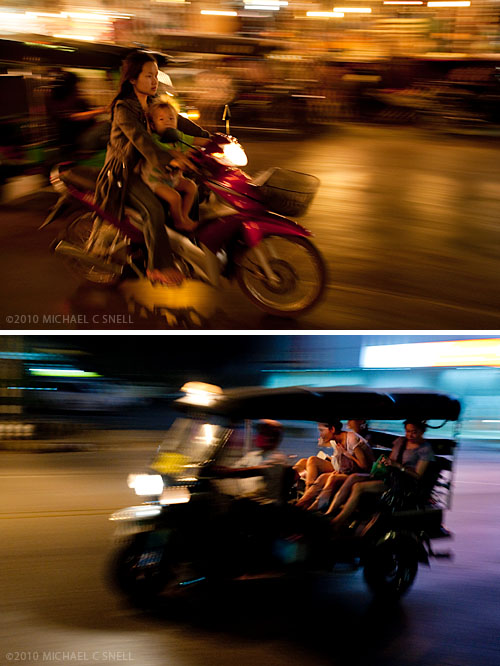
I ended day one in Thailand at the night market in Chiang Mai. The market itself was fairly touristy — lots of t-shirts and trinkets — but the local traffic was colorful enough for me. I enjoy places where a large percentage of the traffic is on fewer than four wheels and Thailand is full of scooters, motorcycles and tuktuks. It’s a hobby of mine to lock the shutter speed at 1/15th of a second and pan with these commuters in the evening to turn the background into a chaos of color. Obviously not every shot will be great but you end up with a few and I’m not paying for film and processing anymore so what’s it really matter? Chalk up another win for digital — it frees you to experiment and from failure comes the occasional wild success. As with the lottery, you don’t win if you don’t play.

I haven’t mentioned much about the Red Shirt protests in Bangkok. They began around March 12th and I arrived on the 15th. During my two weeks in Thailand — about half of that spent in Bangkok — the protests remained quite peaceful. You would see the occasional street blocked off or a group of riot police at a checkpoint but you could easily go about your day without any problems. On only one day did a tour get cancelled due to street closures and traffic problems due to the protests. When I flew out of Bangkok on the 28th, there were signs of enhanced security near the airport but things remained peaceful.

That has unfortunately changed in the last couple of days. While I had been having to check the news on BBC’s Asia-Pacific page, the Bangkok protests have now appeared on the front page of CNN’s site. The situation has worsened with at least 20 dead now and hundreds more wounded. It’s hard as an outsider to fully understand the state of affairs or to know from half way around the world what the current condition is or why things went south. I can only hope that we’ve seen the worst and that soon Thailand can move beyond the violence. It’s a beautiful country with amazingly kind people that deserve to live in peace.

Of course, photographers have been on scene throughout. The Boston Globe’s Big Picture ran a series of images from the “unrest” on April 9th. I’ve also been following the coverage of Bangkok-based photographer Gavin Gough on his blog (search it for “red shirt” and you’ll see several entries). I think you’ll find from these image galleries that things are not entirely black and white. They never are.