Category Archives: travel

Old Quebec

I’ve been back in the office for a week now after spending some time working on stories and generating stock images in eastern Canada and Maine. It’s a region that I can go back to again and again without ever tiring of photographing it. This time I went “old school” by leaving all of my images on the CF and SD cards until returning home. It was almost like shooting film again when you wouldn’t get your images back from the lab for days or even weeks after a shoot. Of course, I had the advantage this time of being able to check shots on the camera’s screen to make sure I was getting what I thought I was getting but, once the cards were swapped out for fresh ones, I didn’t see the images again until I was back in the office and had them imported into Lightroom.

I don’t want to continue to work this way. I much prefer backing up to multiple portable drives while on the road just in case something gets lost or corrupted. But this is the way we always worked with film, wasn’t it? You never had back-ups until you had dupes made at the lab much later. With all the worry about image back-up these days I marvel at how we would ship rolls and rolls of film to the lab, crossing our fingers that there would be no problems in development and wondering if the package would make it back home safely.

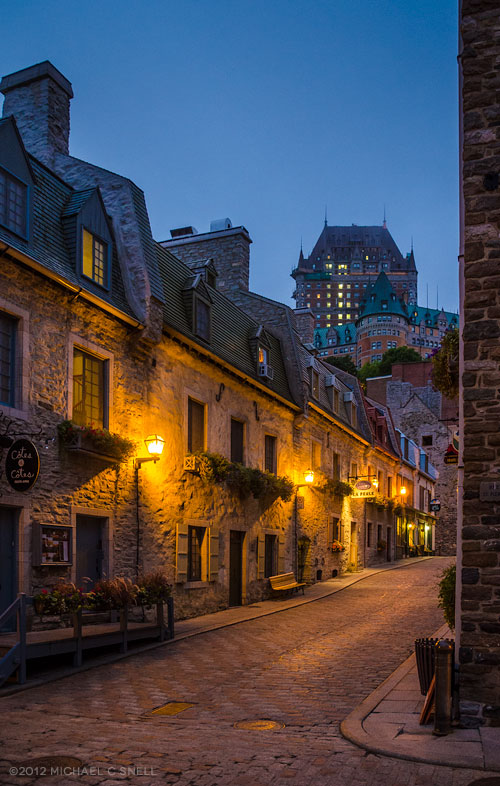
Anyway, I digress. This past week has been a little bit of a reminder of those wonderful days when the film would come back from the lab and I’d pour over everything with a loupe on the lightbox, finally seeing what I’d managed to capture. Not having downloaded any of these images onto the laptop while traveling, I didn’t know what I really had until the first pass reviewing them in Lightroom this week. And the images didn’t disappoint. I’ll share more as I continue to fit the post-processing in around other work but, for now, just this one from the Lower Town of Old Quebec City with the Fairmont Le Chateau Frontenac standing tall in the background.

More to come…

Midsummers Festival, Lindsborg, KS

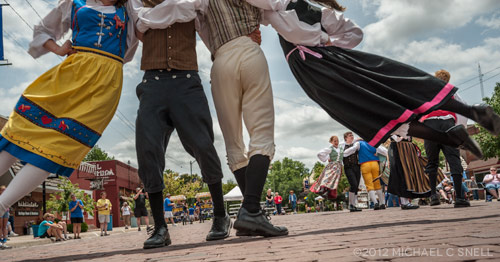
I spent part of last saturday shooting the Midsummer’s Festival in Lindsborg, Kansas — also known as Little Sweden, USA. I love Lindsborg’s festivals but I hadn’t shot this one since back in my film days so I was long overdue for a return.

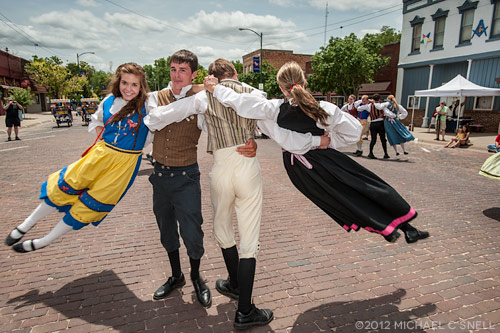
The dances on Main Street have always been great for photos and I decided to shake it up a bit and use some flash to try and overpower the sun a bit. I didn’t want an unnatural look but was hoping to underexpose the bright skies in the backgrounds to pop the foreground dancers out with the flash. I had totally forgotten about this particular dance (above) where the men swing the women completely off their feet as they spin round and round. It doesn’t last long and I was happy to find myself in a fairly decent position when it happened.

It actually happens twice in this particular dance and for the second time, I decided to try and shoot from a very low angle — basically shooting blind with a wide angle held right down on the brick street. My aim was not perfect, however, and I cropped the heads off of the dancers in nearly every frame. That’s one of the main rules of photography, right? Don’t crop heads off. Well, the more I looked at these shots, the more I thought there was still something there. I cropped a bit more, dodged and burned to redirect the eye, and ended up with this:

Would I have shot it this way purposefully? Probably not. But I now consider it a happy accident. When viewed large, there are some great expressions on the dancers faces in the background on the right side. They actually become the subject and the foreground dancers become more of a frame. I’m liking this shot more each time I look at it.

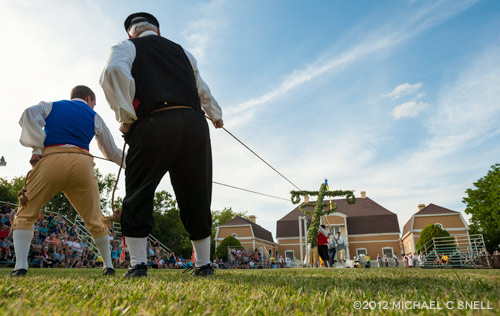
Here are a couple more from the raising of the Maypole. Many thanks to Jim Richardson who was kind enough to wander over before the proceedings and give me a little preview of what would happen. Jim’s a great and generous photographer. If you ever find yourself in Lindsborg, be sure to look up his Small World Gallery on Main.

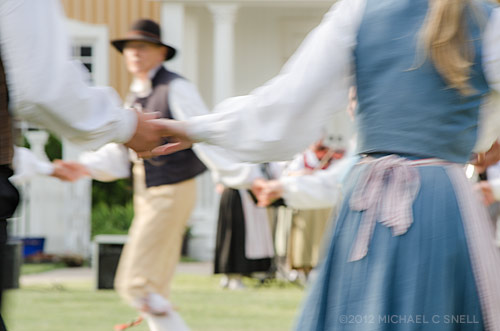
And one last telephoto shot, intentionally blurred for a little movement:

I think my comments are still non-functional here so if you want to leave a note, I’ve also shared this post on Facebook.

Gypsum Hills of Kansas

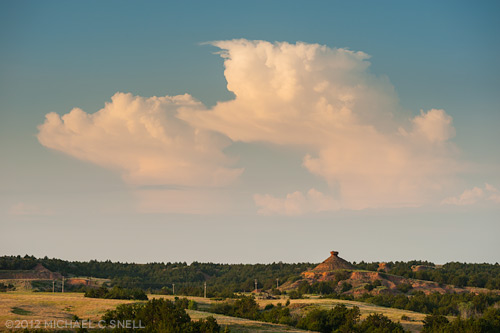
I spent a couple of days on the road last week with my friends over at Gizmo. They were documenting the Gypsum Hills Scenic Byway and I tagged along to grab some fresh stock photography. I hadn’t been on the backroads in this part of south-central Kansas for a few years so it was fun to reacquaint myself with one of the more unusual scenic regions of the state. I found some of my old favorite spots nearly unchanged and others — like my favorite little reflecting pool — to be entirely missing. The formation above was a new surprise. I’d been down this particular road before but evidently not quite this far because I don’t recall ever seeing that balanced rock before. As much as I’ve traveled this state, it is surprising to continue to run across these little treats. You’d think I’d have found them all by now but that’s the beauty of Kansas. The longer you look, the more you see, and exploration is nearly always rewarded.

On other fronts, this seems to be the season for software issues. As I mentioned previously, it appears that my recent WordPress update has disabled the comments on this site. I’ll continue to try and rectify that situation but I’m also investigating new platforms for some new features that I hope to add to my website yet this year.

I’ve also been working toward upgrading all of my Adobe software to CS6. I’m already running Lightroom 4 and have been using the beta version of CS6 for weeks but as of the end of May, the beta version was discontinued since the final version had been released. My transition was slowed somewhat this time due to a special offer I took advantage of where I was able to upgrade to CS5.5 in early May and a free update to CS6 would be provided by the end of May for me to download. Given the amount of Adobe software that I use, this added up to a substantial discount so I purchased my CS5.5 upgrades and waited for my download link for 6 to arrive. By May 30, I still hadn’t received it. I contacted Adobe and they manually added me back into the system and I finally received my link last thursday. On Saturday, I worked through the update process and it went very smoothly (thankfully). Until Mountain Lion is released, that should be the last of my upgrades for awhile. Good news, since I now need to get up to speed on all of the new features of the entire Adobe Creative Suite. At least I have a head start on Photoshop, having used the beta. All-in-all, it feels good being caught up again and feeling like I can get back to work.

New Orleans revisited

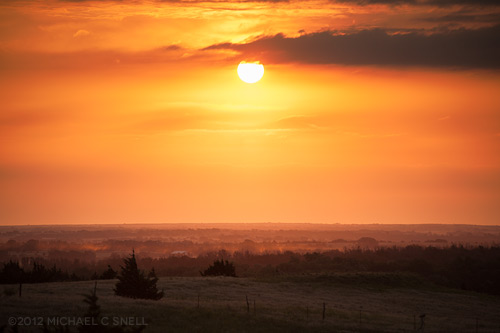
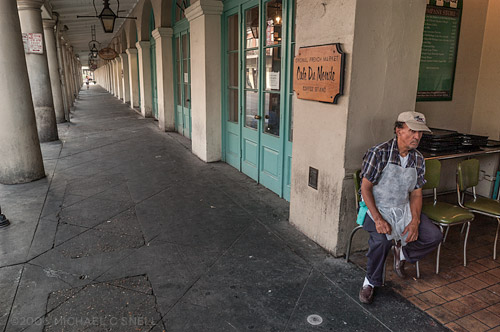
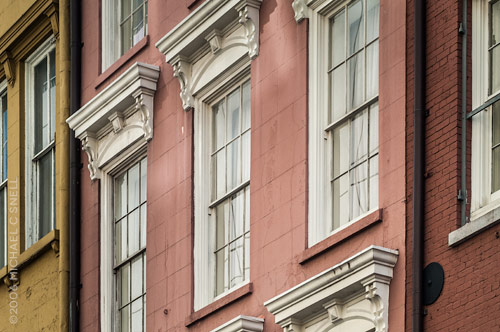
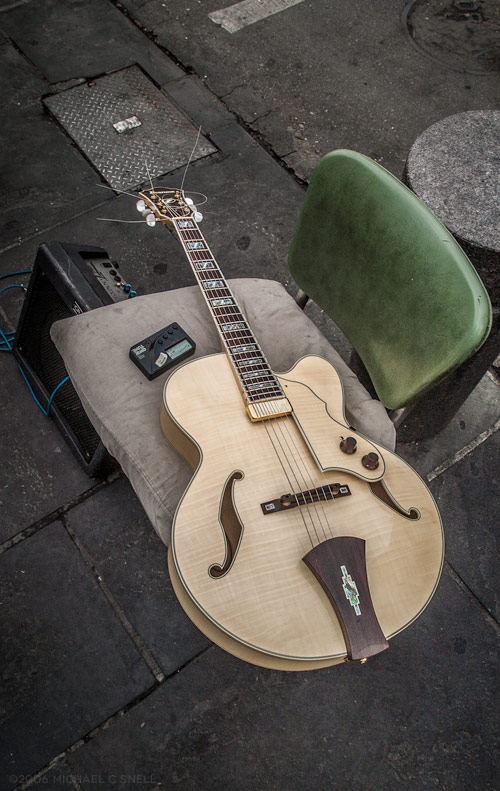
Now that I’m running both Lightroom 4 and Photoshop CS6 (if only in beta), I’m going through old files to see what the new software can do for some images that I never quite felt were finished. Back in the days of the darkroom, it was a good idea to work a print and then set it aside for a time before coming back to it, reassessing, and trying some new ideas. That’s basically the way I treat digital files as well. I process them almost immediately after capturing them, but I like to come back later to take a fresh approach. These files from New Orleans are from 2006, less than a year after Katrina hit. We made the visit with a group of journalists at the invitation of the tourism bureau to help get the word out that the main tourist areas were largely unaffected and open for business. The impact in tourism numbers was very evident, however, in the quiet streets and restaurants.

In reprocessing these images, I tried to focus on that quiet feeling of a nearly abandoned city. The texture of New Orleans also comes through. It’s an old city by American standards and after all that it had been through it seemed to be feeling its age. I look forward to my next trip there, to see what has changed in six years.

In Print

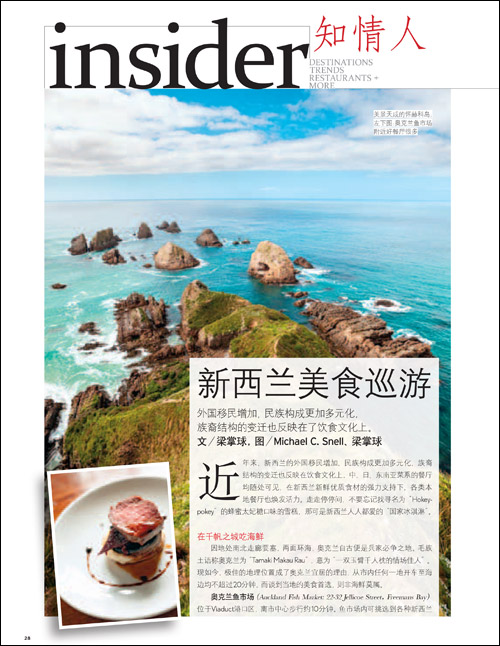
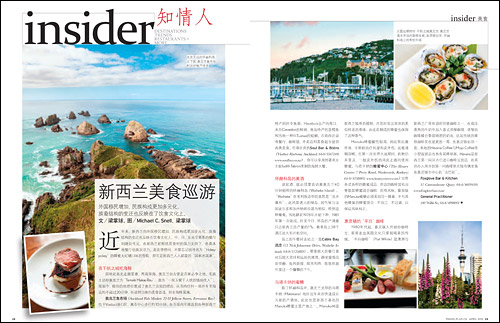
Here’s a fun clip for the portfolio: I supplied several photos for an article on New Zealand’s food scene by my friend David Lang that just ran in the Chinese edition of Travel+Leisure. I think it looks great.

It may be surprising but I don’t often see the finished pieces that use my photography. Stock sales are often reported rather vaguely so I only know that I have a full page image in a North American text book or a cover for a travel guide to be distributed in Korea. It’s fun to actually see a piece in print occasionally. It’s more fun when that piece is well designed, and even more fun yet when it’s in Chinese. Thanks to David for giving me the chance to collaborate on this project. I hope we get to do it again soon.

That’s the opening page above but here’s the entire spread (full disclosure — the food shot on the bottom of the second page is actually David’s, not mine):

Flint Hills Discovery Center

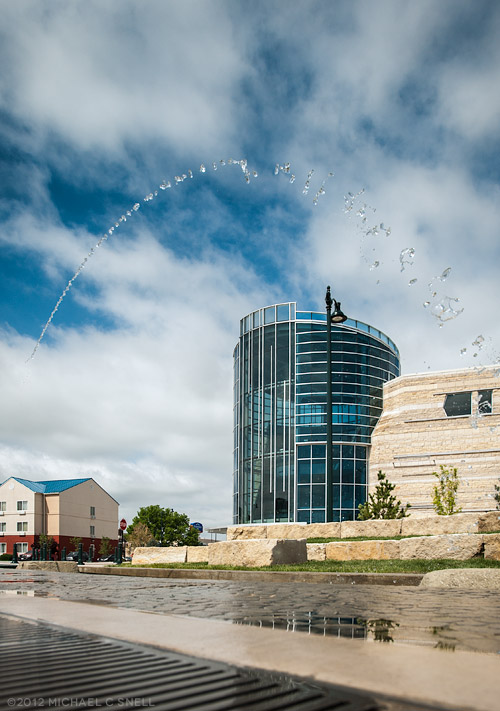
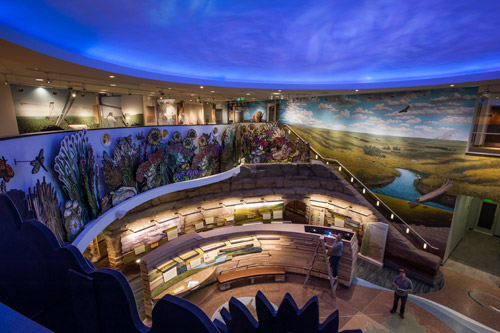
As members of the media, we were given a sneak peak of the new Flint Hills Discovery Center in Manhattan, Kansas on Thursday morning. The area’s tallgrass prairies are often taken for granted so this is a welcome addition to the scenic byway, Tallgrass Prairie National Preserve and scenic overlooks that have brought more understanding of this vast natural resource over the past few years. The Flint Hills have long been a favorite region of mine and many other Kansans, and now it’s great to have a place to point people to where they can learn more about what makes them so unique and special.


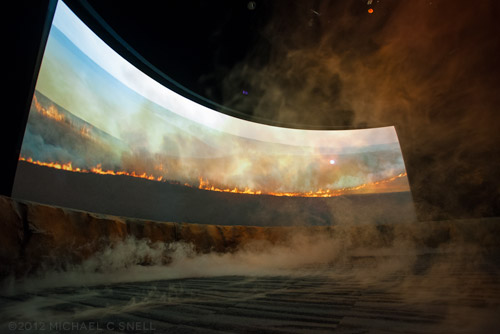
Above: Techs fine-tuning the ceiling projectors in the lobby of the new Flint Hills Discovery Center.

The opening of the Flint Hills Discovery Center is set for April 14th. While you’re there, be sure to check out the film in triple-wide high definition. The addition of breezes and fog put you right in the hills during the Spring burning scenes:

Year in Review: 2011

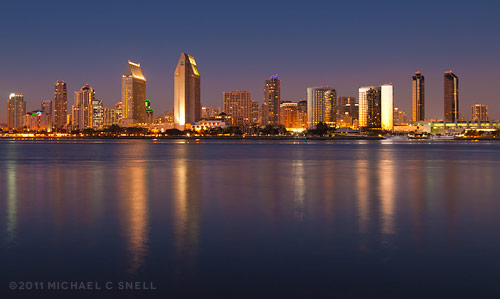
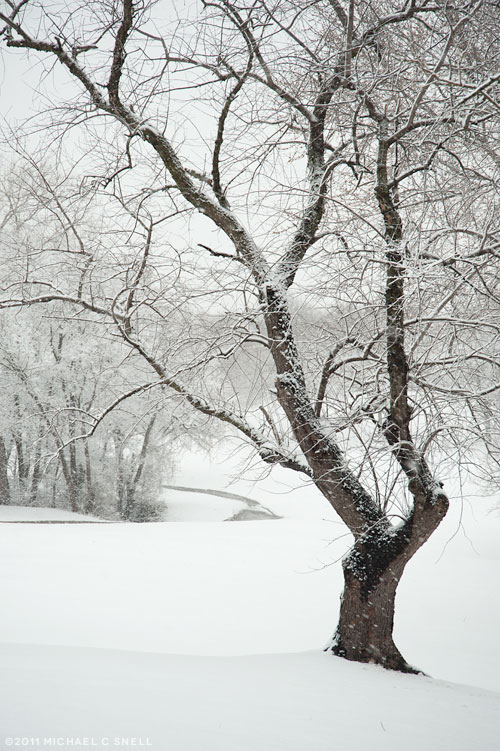
Travel started earlier than usual for me in 2011 with a short trip to San Diego in January. The warm weather was welcome as we were having one of our snowiest years on record back home:

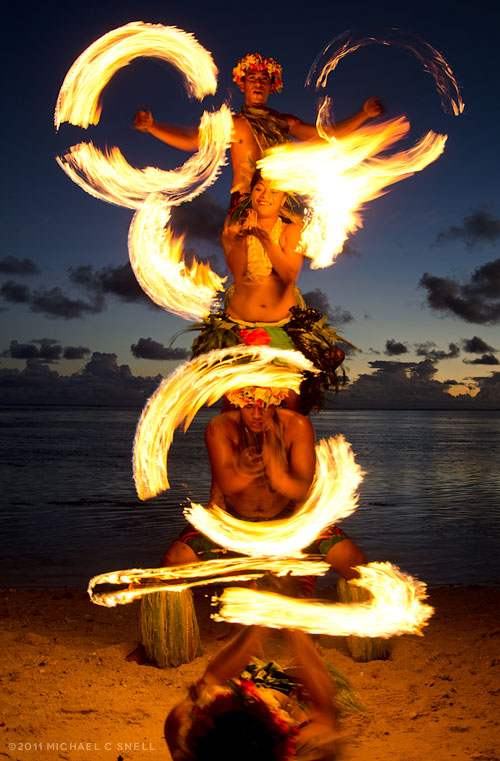
In early April, I escaped the cold once more for a couple of weeks in Fiji. I was there for a Society of American Travel Writers Freelance Council meeting. It was my last year as Chair of the Freelance Council and Fiji would be the last Council meeting under my term. It was a great meeting and a wonderful destination. One of my favorite memories was an evening on the beach with a bunch of fire dancers. There’s not much that’s more fun to shoot than people spinning burning torches on a beach at sunset. If you haven’t tried it, take my word for it.

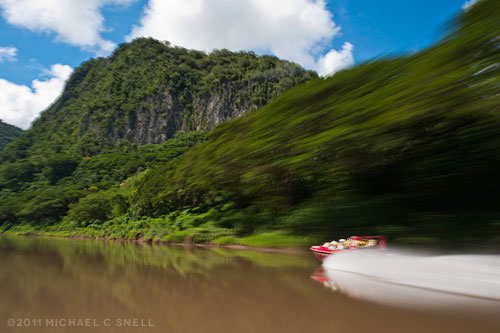
It was very warm in Fiji — even without the fire. A jet boat trip up the Sigatoka River was the only time I remember actually feeling chilly:

If those cliffs look familiar, I was told that some of the scenery for Avatar was shot in that area.

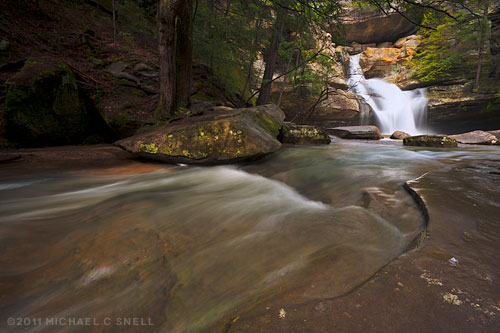
I wasn’t back in the states for more than a week before driving to Ohio for a couple of stories. I made sure to schedule in another trip to Hocking Hills to try and get some waterfall shots. The last time I’d tried, it was an unusually dry season and it was like the tap had been turned off. Much better results this year.

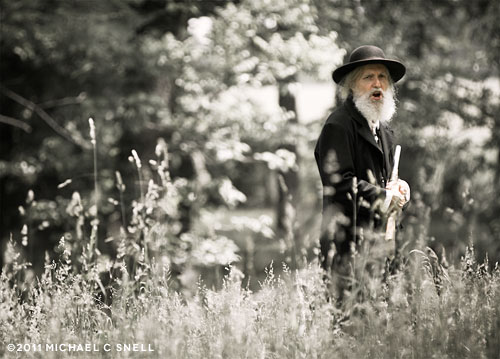
Back home in June, I managed to photograph a few Kansas events that had eluded me for years. One was the Symphony in the Flint Hills (which is just as amazing as it sounds — an orchestra playing out in the middle of acres and acres of tallgrass prairie and rolling hills) and the reenactment of the Battle of Black Jack. Here’s a shot of “John Brown” from that day:

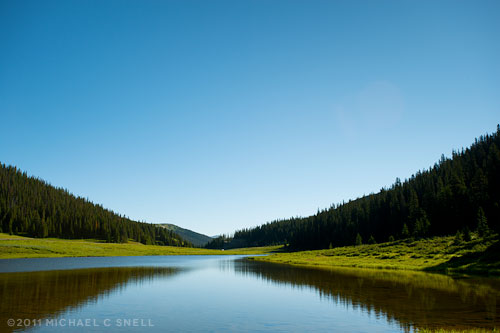
A trip to Colorado and over the Continental Divide followed. Here’s a lake that sits nearly on the Divide at Milner’s Pass, elevation 10,759 feet:

Quite a few regional shoots followed which I’ll share later after the stories have run. In September, we were on the road again making a big loop through southeastern Iowa:

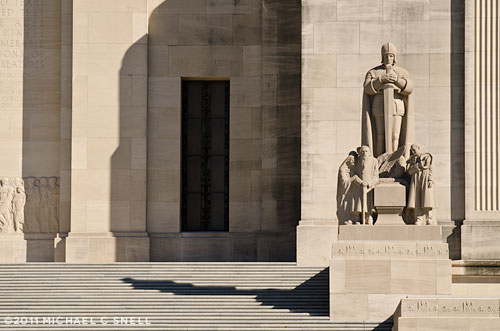
and down the Mississippi to Baton Rouge, Louisiana. Here’s a shot of the Louisiana State Capitol:

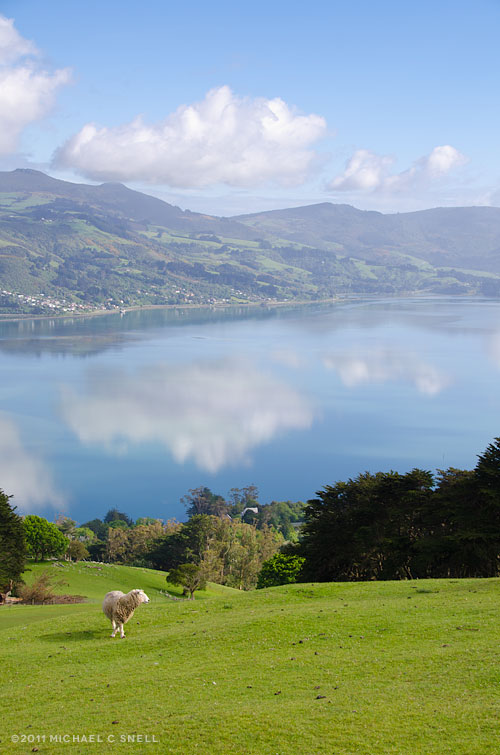
Rounding out the year in November was one more trip over the Pacific, across the equator and the International Dateline to New Zealand. This was SATW’s Annual Convention and I officially ended my term as Chair of the Freelance Council and became the much less encumbered Immediate Past Chair. I truly enjoyed my two years in office and serving on the Society’s Board of Directors but it will also be good to step away for a bit and re-focus on my photography business. The New Zealand Convention was great and I especially loved the four days I spent afterward exploring the Southland from Dunedin down to Stewart Island. Here’s one from the Otago Peninsula near Dunedin:

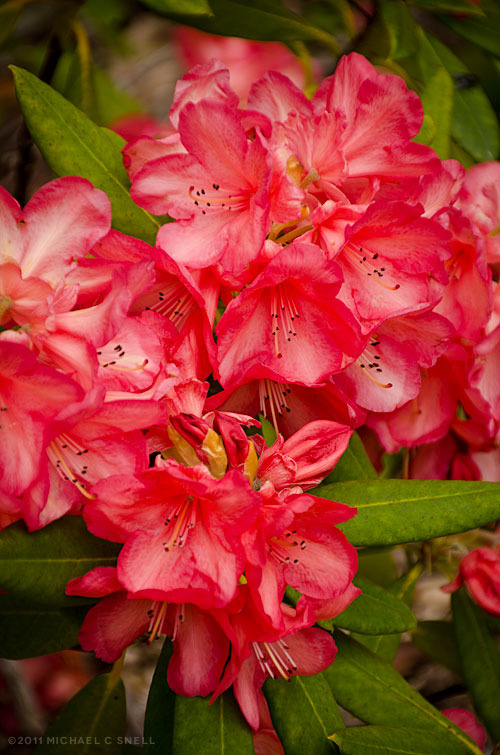
And I’ll leave you with flowers that were blooming in Queens Park in Invercargill, NZ. It’s not bad to end a year with a second season of Spring:

Ulva Island details, New Zealand

Happy New Year, everyone! I’m wrapping up my New Zealand posts with some details from the Ulva Island hike I wrote about in my last post. Some more New Zealand shots may appear later on, but I think I should shake things up for a little variety around here. I’ve been spending the holidays working on revamping my website and that has also had me exploring the archives, looking for photos to feature. I found some oldies but goodies that I plan on sharing during the next few months, since I don’t have much travel on the schedule for a while. Of course, I’ll also let you know when the new site launches. Stay tuned…

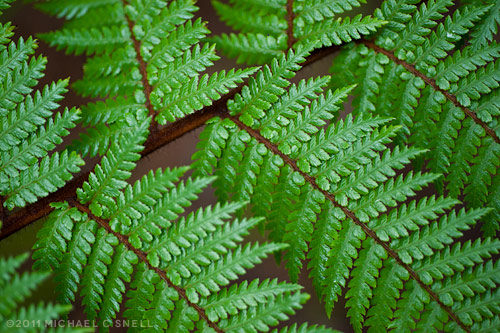
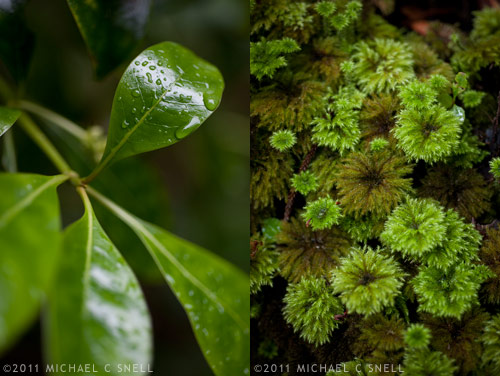
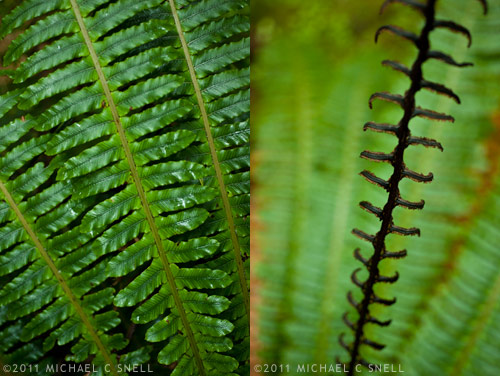
So, back to Ulva Island and the walk in the rain. The light was actually quite beautiful and the colors were lush. I decided to go macro for most of my shots that day to focus on details and textures and to take advantage of the water droplets and sheen caused by the misting rain. I also wanted to take advantage of the shallow depth of field provided by my 60mm f/2.8 to isolate individual plants and leaves from the distracting background branches, etc.


Sometimes I think that a series of tight little shots like this convey more about a place than one wide shot that tries to take it all in at once.

Rainy day strategies

[sponsored post]

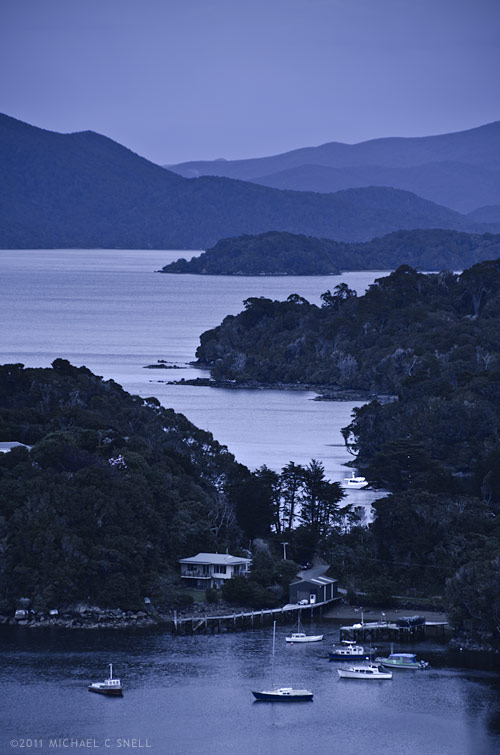
Stewart Island lies off the southern tip of New Zealand’s South Island. In this shot we’re just over the peninsula from the Island’s one town, Halfmoon Bay, and are overlooking Golden Bay, Thule Bay and the Paterson Inlet. Today’s destination is Ulva Island — a small, 670 acre island in Paterson Inlet that is being restored to its original predator-free ecosystem.

It’s also raining, which can make shooting photos during our walking tour challenging. I don’t have any waterproof housings but I do have a jacket and opt for a two body, two lens operation today. I’ll take the Nikon D700 with a 60mm macro lens and the D7000 with the Tamron 18-270. Here’s my thinking:

We’ll largely be in fairly dense rainforest where the reduced contrast of the overcast sky will actually help even out the light. I won’t want to include a lot of sky in any shots since it’s flat grey so I will instead focus on details — macro shots of the plants that we encounter on the walk. It will also allow me to shoot downward for the most part, eliminating the problem of rain getting on the front element of my lens. Neither camera-lens combination is large, so I can keep them both tucked into my partially zipped jacket and retrieve them only when needed. The second body with the 18-270 will be reserved primarily for those times when I encounter something that suddenly requires more than a prime 60. That might be a wide shot where the trail opens out onto a beach, or a telephoto shot of a bird. Birds are a large part of the visitor experience to Ulva Island so I hope to get something along those lines. By taking the 18-270 and a macro, I figure I’m set for nearly anything and I won’t have to deal with changing lenses in the rain.
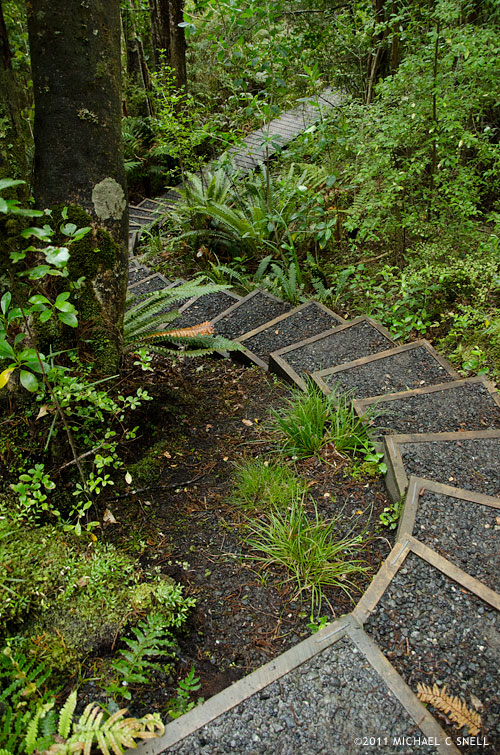
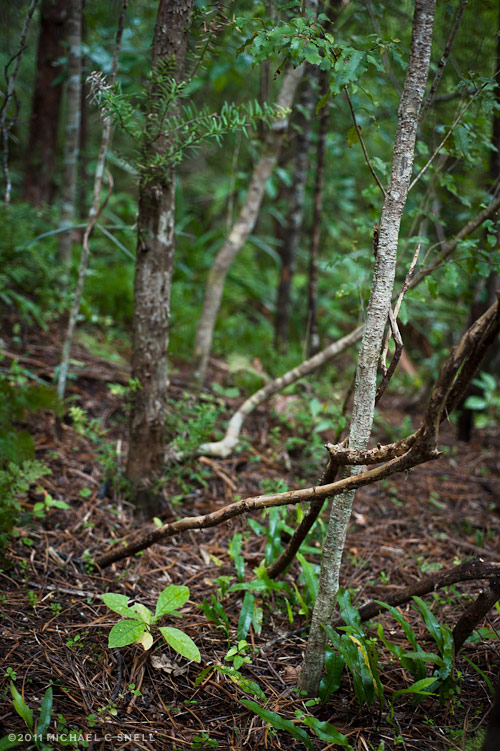
Overall, this plan worked well. Once we made our way off of the beach and into the understory, the rain effect was lessened by the trees overhead, although the occasional drop that would land now was a much larger drop from a leaf than the small, misty raindrops on the beach. The trails wound through ferns and forgotten-looking plants that gave a real sense of what New Zealand must have once been like, before the main islands were largely cleared of trees for cultivation. I’ll show some of the macro shots in the next post but first I’ll show a couple of shots that made me thankful to have had the 270 end of the Tamron 18-270 zoom.
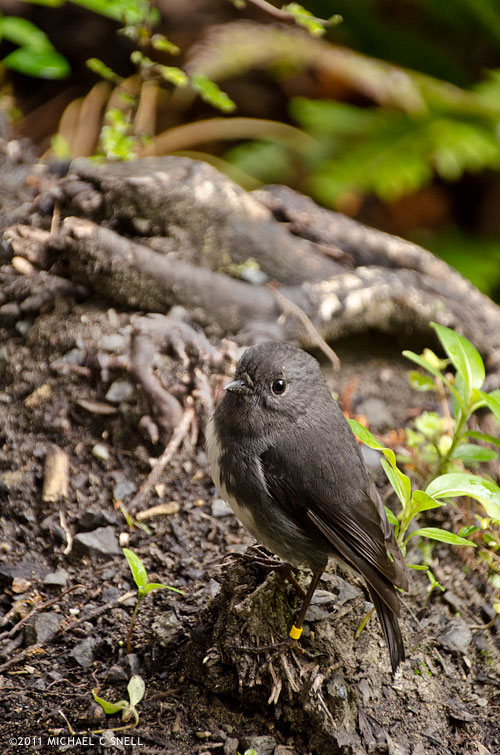
This tiny bird is a Toutouwai, or Stewart Island Robin. On the much larger end of the scale is this South Island KaKa:
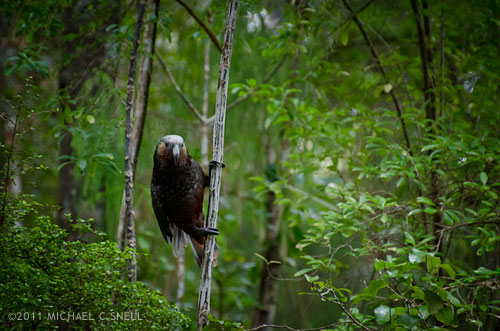
A member of the parrot family, Kakas are about 18″ long and weigh a pound on average. That’s a pretty sizable bird. The Kaka didn’t come nearly as close as the Robin. There was another group a few yards ahead of us that he was curious about but the addition of our group coming up behind eventually proved too much and he took off. I was happy to get the images I did with the 18-270, but can only imagine the shots that a person could get with a little more time and patience on this island. For the most part, the birds are not that suspicious of people and will come fairly near. The haven’t really learned fear.

In the next post, I’ll share a few of the detail shots I took on this hike with the macro. Given the weather and limited time, I think the two lenses really allowed me to cover a lot of ground photographically speaking.

I should also mention one other foul-weather tip — the landscape at the top of this post (also shot with the Tamron 18-270) was fairly grey and colorless due to the overcast skies and impending rain. Once I brought it into Lightroom, I opted to alter the white balance to give the scene a cooler, blue cast. The result resembles the light you might get just before dawn or after sunset, even though it was shot near mid-day. Filters can also be used on-camera for this effect but, anymore, I prefer to leave my options open for playing with different color temperatures at the point of post-processing instead. By shooting in RAW, I have the ability to make several versions in different tones without any damage to the original image. One of the great benefits of today’s digital photography tools.
Nugget Point, NZ

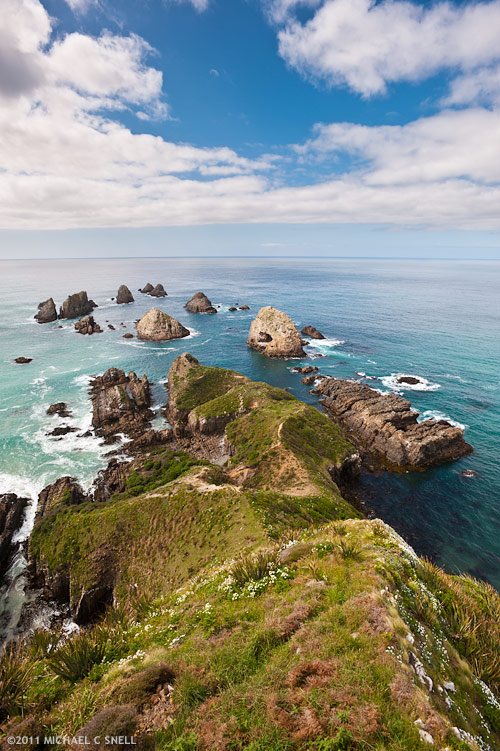
The view from the platform of the Nugget Point Lighthouse on the southeast coast of New Zealand’s South Island. Few places I’ve been have felt more like standing at the end of the world. The next thing over that horizon is Antarctica. An amazing spot, but not our last stop. We were still heading south…