Category Archives: travel

Packing light

As I prepare to leave for New Zealand, I’m mentally working my way through some new packing ideas. It’s a difficult balance to make sure you’re prepared for whatever might come your way on an international shoot and yet not overpack to the point that you are crippled by your own gear. In the past I’ve loved traveling with a backpack but then I began to realize that, while I had everything I needed in my pack, I didn’t often go to the trouble to take it off to get into my gear. When you have two cameras around your neck getting tangled in backpack straps, it’s not that convenient. A while ago I wrote about switching to a ThinkTank sling bag. It’s a little smaller than my backpack so it forces me to edit my gear a little right off the bat, but the real convenience comes from being able to swing it around and access it without taking it off. So far it has been working well.
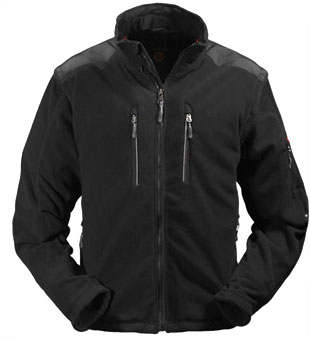
On this trip, I’m adding another new element: a Scottevest. This thing is loaded with pockets of all sizes and most of them are secured with zippers. I’m hoping that it will work well for getting a lot of my little gadgets (ipod, headphones, paperback, phone, magazines, etc.) through the airports. It gets them out of my camera bag but doesn’t add another carryon. Then, once on location, I hope to often be able to leave the bag behind for a day and just load those same pockets up with small lenses, flash, filters, etc.

I’d better get back to some actual packing now but I’ll report back on how everything is working when I get some miles behind me. I hope to post from the road but, if that’s not possible, I’ll have plenty to share when I’m back.
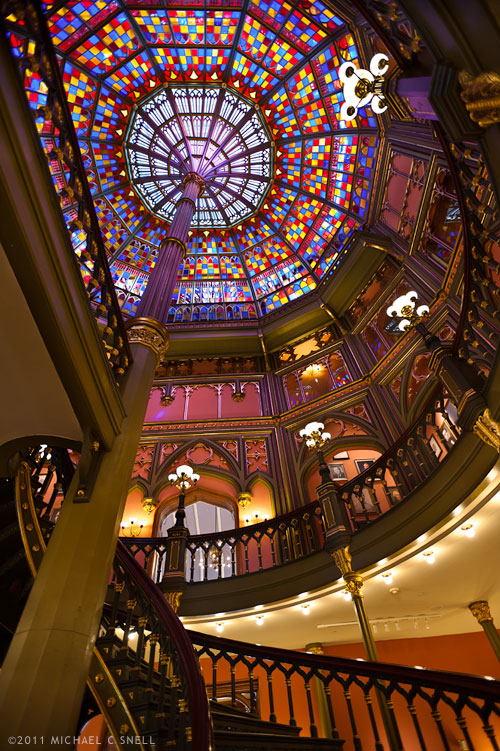
Stained glass dome

In my last post you saw the current Louisiana State Capitol Building but — just a few blocks away — Louisiana’s Old State Capitol still stands and it is now operated as a museum. Built between 1847 and 1852, the castle-like building was gutted by an accidental fire in 1862. Louisiana had seceded the previous year and the Union was using the building as a prison and garrison at the time of the blaze. The interior was completely rebuilt in 1882 with the addition of this central staircase and stained glass dome. The building remained Louisiana’s Capitol until the new one was built in the 1930s. If you want to know more about its history, pay a visit and be sure to see the “Ghost of the Castleā€ immersive theater presentation. It’s incredibly well done and I don’t think you’ll be disappointed.

Tamron 18-270mm lens

[sponsored post]

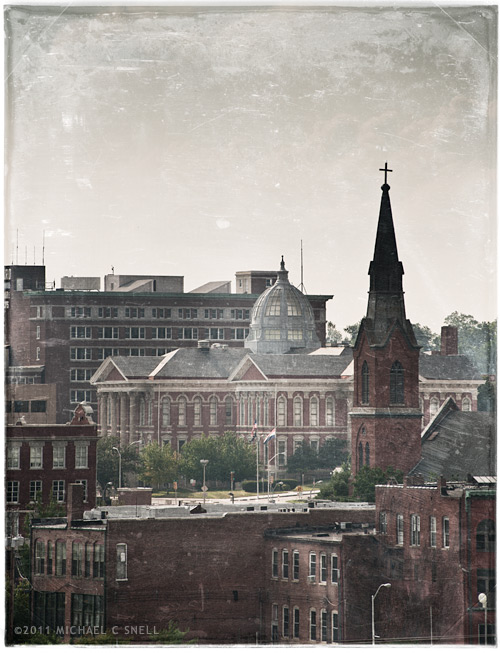
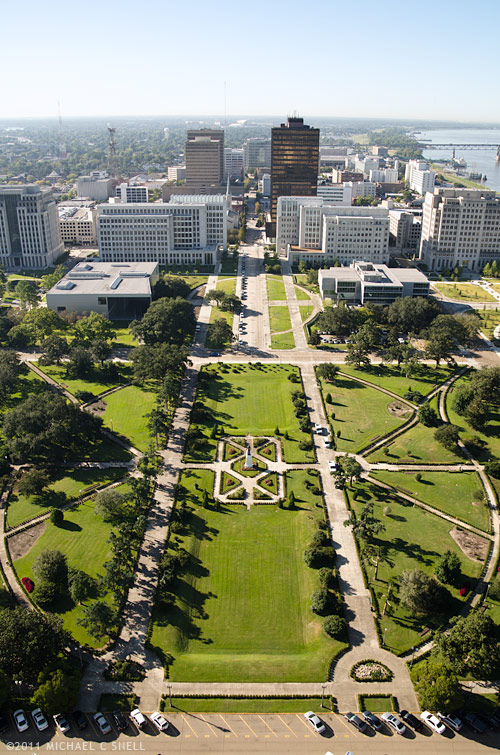
I recently had an opportunity to try out the Tamron 18-270mm zoom lens on a shoot in Louisiana (The full name of this lens is the Tamron 18-270mm f/3.5-6.3 Di II VC PZD). The shot above is of downtown Baton Rouge, taken from the 27th floor observation deck of the State Capitol Building. That’s the wide end of the lens — 18mm. Now check this out:

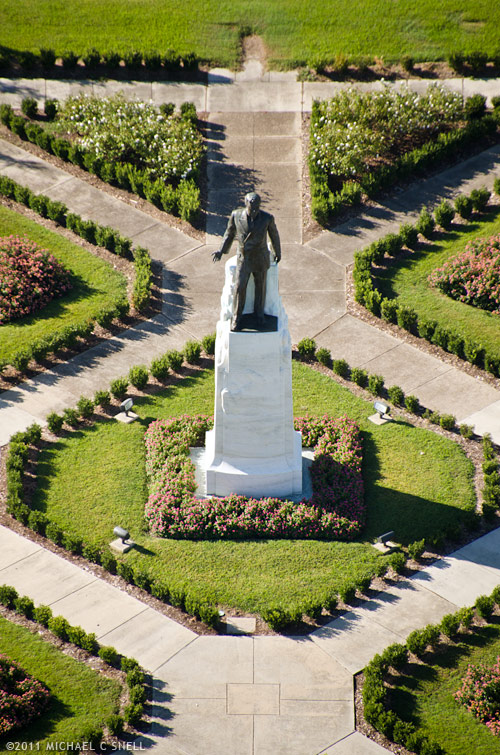
That’s the Huey Long statue on the Capitol grounds shot from the same spot with the lens zoomed all the way to 270mm. These were taken my Nikon D7000 so, given the cropped sensor, the zoom range would be the equivalent of 27mm to a little over 400mm on a full-frame DSLR (Tamron Di II lenses are not built for full-frame sensors, however. Their Di lenses are the full-frame models). That’s pretty significant coverage. And it’s small — less than a pound and it takes 62mm filters.

To a travel photographer, the idea of having one lens that does everything while being lightweight and compact… well… that’s pretty appealing. Of course, you can’t have it all. No one lens can do everything. But this one does a lot.

There are shooting situations that require that you “go light” and not take all your gear. An example might be a day out in a kayak. You don’t have space to take a lot with you and it might be inconvenient — if not dangerous — to try and change lenses while out on the water. That’s where I see a lens like this really shining. It would get you through almost any situation you might encounter from wide shots of your companion kayakers that show the surrounding scenery, to tight telephoto shots of wildlife that might appear with little warning.

To achieve a zoom range like this and to keep the lens light, you need to give up some speed and the Tamron 18-270 is an f/3.5-6.3. Almost everything I carry is f/2.8 or faster so this might seem slow — especially if you’re hand-holding it and shooting telephoto — but the 18-270 does have very capable stabilization and — let’s face it — with today’s DSLRs it’s no longer such a big deal to crank up the ISO a little.

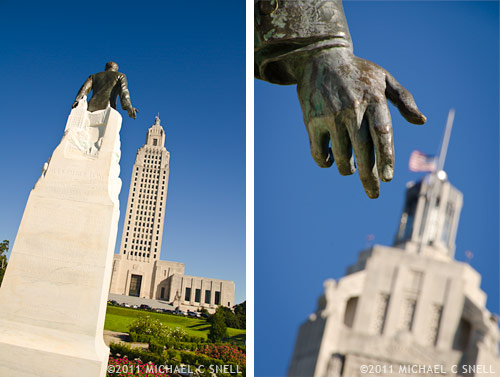
As another example of the Tamron’s range and the creative potential that it brings: here are two shots from the reverse view of those at the top of this post. These are taken from behind the Huey Long statue, looking back up at the Louisiana State Capitol Building (Long was instrumental in its construction, by the way, and was assassinated inside it). I took a few steps in between these two images but they are shot from more or less the same position. The shot on the left at 18mm (27mm equivalent) and the one on the right at 270mm (400+).

I shot a lot with this lens while on my Louisiana road trip and will share more images later. The Tamron 18-270 impressed me enough that it’s earned a place in my bag when I go to New Zealand next month. Then we’ll really see what she can do.

Chasm Falls, Colorado

Okay, this time my lack of posts is not (entirely) my fault. Last week was spent shooting in Colorado and on the first day of the trip my internet accounts were “compromised” (my hosting company’s term) and I lost all ability to send and receive emails or to log into any of my sites and blogs. Really convenient. At any rate — it’s fixed now and all is well.

The break from the heat was welcome. The day we left home, it hit 111 degrees. We, however, were quickly gaining altitude and getting out from under the “heat bubble” that’s been crippling the central US for the last month or more. It was cooler in Fort Collins and along the front range, but where we really felt the difference was in Rocky Mountain National Park. We drove the just-opened Fall River Road (it opened about a month late this year due to last year’s huge snowfalls and late melts) and back east on Trail Ridge Road — “the highest continuous motorway in the United States” according to the National Park site. At the highest point, the road reaches 12,183 feet and there was a definite chill in the air. I’m guessing mid-thirties with a blasting wind that had your fingers stinging about two minutes after leaving the comfort of the car.

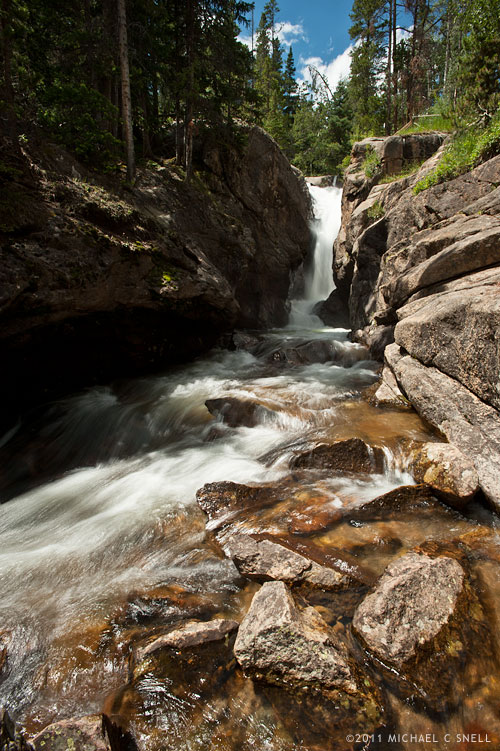
This shot was taken much lower just a few miles into the Fall River Road at Chasm Falls. It’s a short but steep little hike down to the falls from the road but worth it. Also worth it were the tripod and neutral density filter that I’d brought along. With the filter and an aperture of f/22, I was able to slow the shutter to 1/5 of a second — just enough to get some softness in the rushing water.

Wicked weather

I’m still catching up from having been gone the better part of April. In some ways my days seem to be mirrored by the current Midwestern weather — chaotic and unpredictable. Thankfully my situation is far less dangerous than the weather system. My heart goes out to all of those who have been affected by the recent tornados and other severe weather in Missouri, Kansas, Oklahoma, Alabama… seems like just about everywhere this year. I’ve lived in the central part of the U.S. all of my life and can’t remember another year like this one.

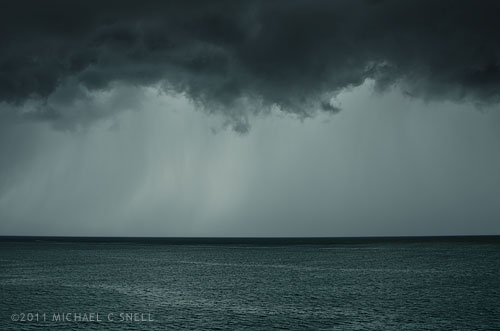
The shot above is not from this weather system but from a brief rainstorm in the South Pacific last month. Lightroom’s contrast, curves and clarity provided a little extra intensity. You can practically make a sunny day look like a supercell megacyclone with the tools we have available to us these days.

Hocking Hills State Park, Ohio

I’m back from a week of shooting in the Midwest — mostly Ohio and Indiana. It’s always bothered me, that name “Midwest”. I live very near the center of the U.S. and the Midwest is east of me. Seems like “Midwest” ought to be Utah — halfway between the center and the west coast. Shouldn’t Ohio be “Mideast”? But I digress…

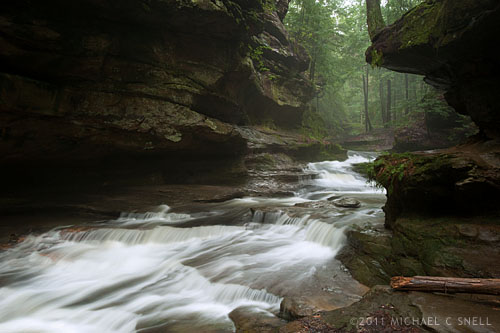
Most of the work I was doing on this trip was on assignment and, unfortunately, I can’t share it prior to publication. I did squeeze in a quick trip to Hocking Hills State Park for my own stock, however. I’d visited before about a year and a half ago, but lack of water made for no waterfalls to shoot. This time was much different. Parts of the park were closed due to flooding but the parts that were open were stunning. I got absolutely soaked by the on-and-off rain, but enjoyed the heck out of it. I know I’ve just come from Fiji — many people’s dream location — but it’s really these dark, misty, craggy, rocky places that I love the most. I’m not sure what that says about me.

I should also mention that I found two pieces of equipment essential for the Hocking Hills shoot. First, a tripod was an absolute must. Without long exposures, the water didn’t have nearly as much movement or mood. The other thing that aided in the long exposures was my 8 stop neutral density filter. It adds no color to the scene (thus the name “neutral”) but it cuts the light down so that I can get much longer exposures than even my lowest ISO and smallest aperture will allow. NDs and polarizers are the only filters I carry any more because they both have abilities that I can’t mimic later in Photoshop or Lightroom. When I reeeally want to cut the light down — say, for a long exposure in full daylight to show clouds streaking across the sky — I’ll stack up all of my NDs and polarizers to the point that it’s hard to see anything through the viewfinder.

More from this shoot and Fiji in the coming days.

Fire dance

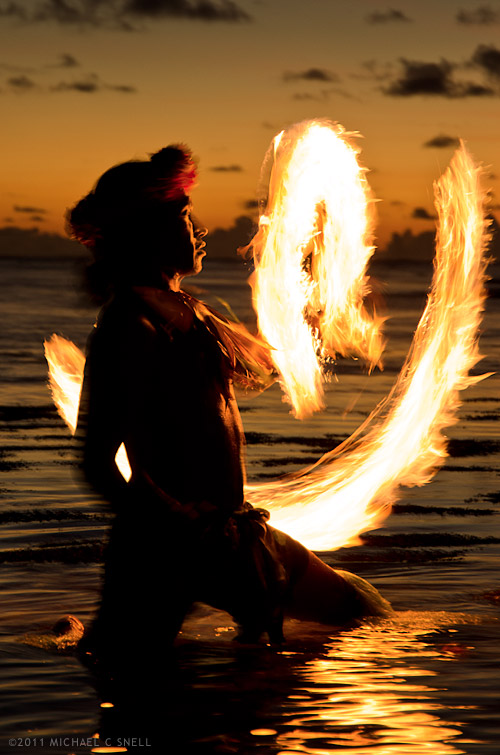
The coming week is going to be busy and there’s a good chance that I won’t have an opportunity to post anything so I’ll leave you with a fun shot today, just in case you end up having to stare at it all week. This one’s from an evening spent photographing fire dancers on the beach in Fiji. Not really an evening as much as a few minutes. There’s a brief period when the sky is dark enough but not too dark to balance with the fire and the light being cast by the fire. It’s fast and exhilarating — made more so by the bits of flaming material that occasionally gets flung in your direction. These guys and gals were amazing and put on quite a show.

For those of you interested in technical stuff, this was f/5.3 at 1/6th of a second. It was shot at 6:28. The entire shoot lasting from 6:17 until 6:37. 400 shots in 20 minutes (I’m glad I wasn’t having to change film). There are plenty more fun ones from this series which I’ll share in the coming weeks.

Palm trees, two ways

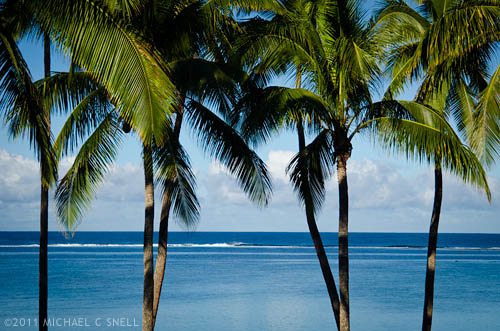
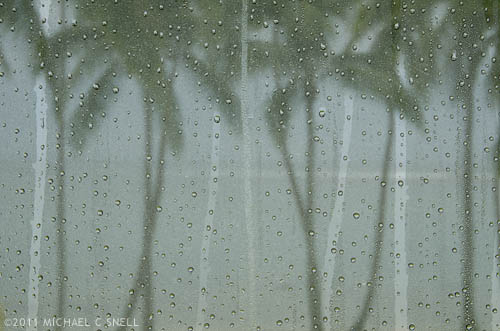
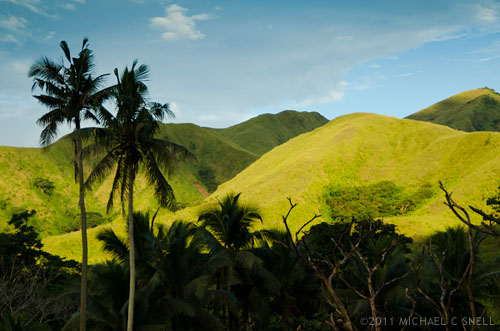
This is the idyllic view that I had from my hotel room for most of my time in Fiji. Abstracted to just palm fronds, trunks and ocean, it tells the story of a perfect vacation spot. I shot this view several times over the course of my stay, taking advantage of different lighting, clouds, etc., but perhaps my favorite version of it was the first one I shot, and in the most imperfect situation:

It was hot in Fiji. And humid. And when I checked in to my room, the air conditioning was cranked to the point that water was condensing on the sliding patio door to my balcony. It was also a bit cloudy that first day which, in combination with the “rain” on the glass, painted a very different picture. As a stock image, I like the way this shot says “the vacation that wasn’t”, “rained out”, etc.

When traveling — and certainly when on vacation — I would much rather have the first scene be the one outside my window, but I’m very much hoping that some photo editors out there are in need of the second version.

Back from Fiji

The Society of American Travel Writers Freelance Council (which I currently chair) held its Spring meeting in Fiji last week. In between business meetings, professional development sessions, and some spectacular events put on by our hosts, there were a few hours left to squeeze full of all manner of touring and photo opportunities. Caving, cruising, fire dancing — you name it. Quite a week indeed.

This was my first outing with the Nikon D7000 and my new Think Tank Photo sling bag. Both performed admirably. The sling was a bit less comfortable than my old backpack on long airport treks between gates (anyone dashed the several blocks between LAX’s terminal one and the international terminal lately?) but it more than made up for it when it came to accessing gear. It’s really nice to be able to swing it around and open it up from the top, regardless of which shoulder you’re wearing it on. Nice work Think Tank! The smaller size made it super easy to get into overhead compartments, too.

The D7000 and I had a few issues at first but we’re working them out. The focus seems a bit quirky to me but I probably just need to explore the various settings a bit more. The really odd thing to me is that I always have to refocus when shooting video. I tend to take a still first to test exposure, but when I then switch on live view it’s out of focus and requires another half-press of the shutter release — which is kind of counter-intuitive given that you have a separate button on the back for video. I don’t know what’s up with that. I also had some trouble early on getting my exposure to match my manual settings for stills but then realized there is a menu setting where you can turn on “manual movie settings”. It’s off by default, evidently. I guess I should have devoted a bit more time to reading the manual before I left. Oh, well.

Anyway… more on all of this soon. The mad rush to get these images catalogued before the next trip is on. As usual, I’ll share a few shots as I make my way through the shoot.